Injection Molding
Tooling and molding for your repeat plastic parts.
From prototype to production, coordinated manufacturing solutions for your custom parts.
View All Services →
Precision parts for your tight tolerances and complex geometry.
Tooling and molding for your repeat plastic parts.
Metal casting options for your part and production volume.
Cutting, forming and welding for your fabricated parts.
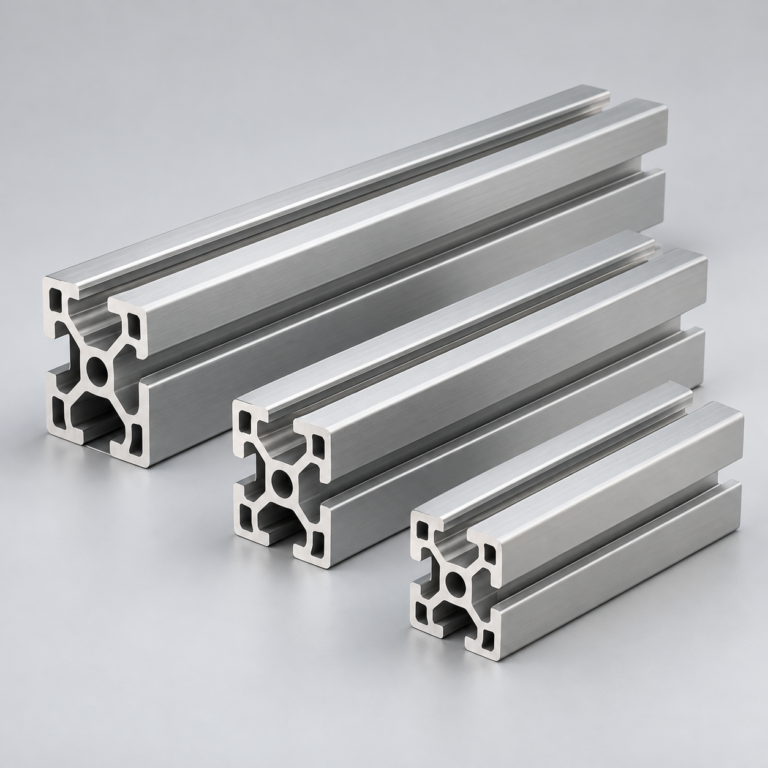
Custom profiles for your section, length and finish requirements.
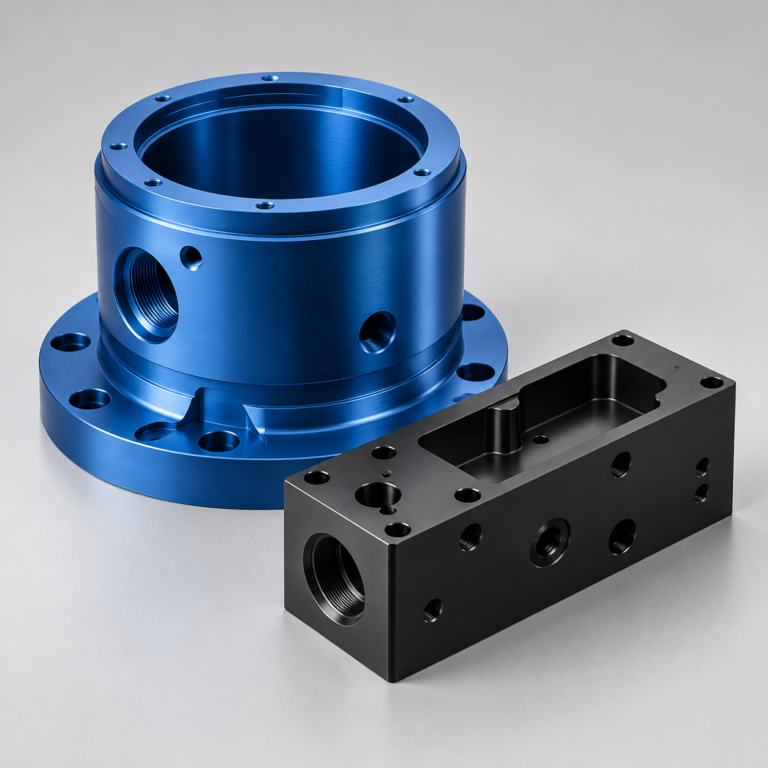
Finishes for your appearance, corrosion and wear requirements.
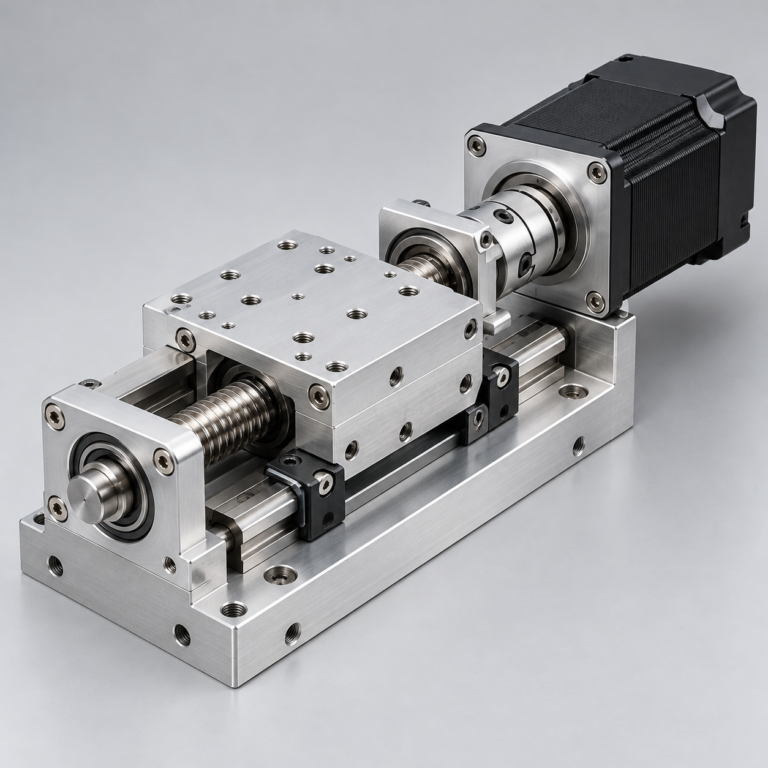
Sub-assemblies and final builds for your production program.
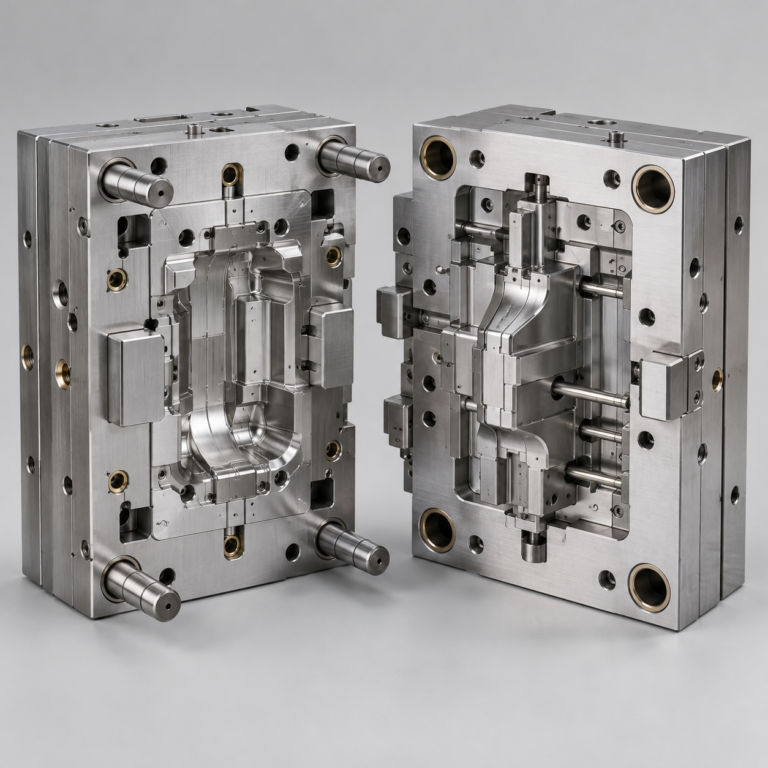
Production tooling built around your process and volume.
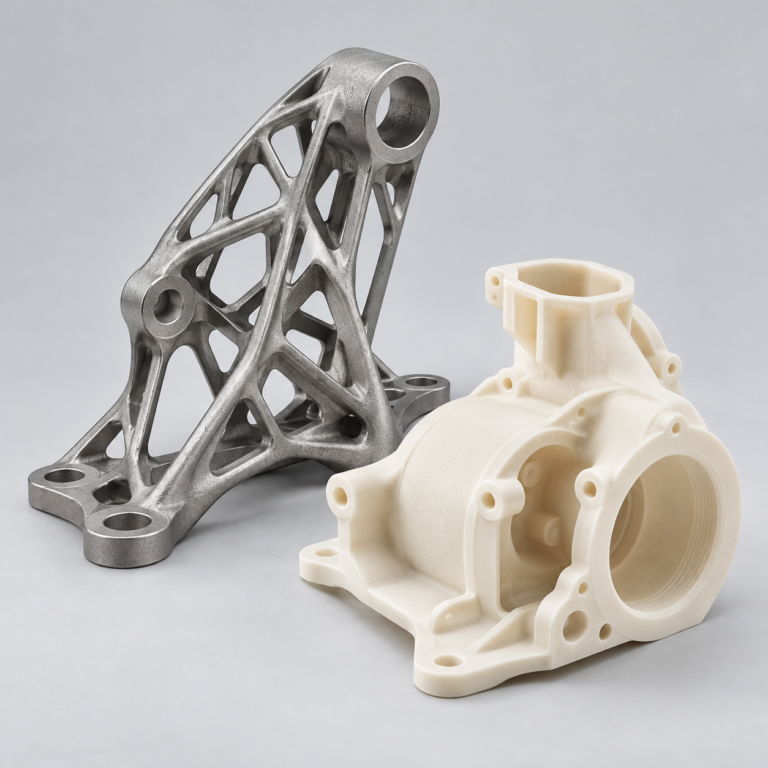
Prototype parts to check fit, function and design.
DFM, process planning and production support for your project.
Inspection, documentation, inventory and delivery planning for your program.
Choose air- or liquid-cooling components around your thermal and mechanical requirements.
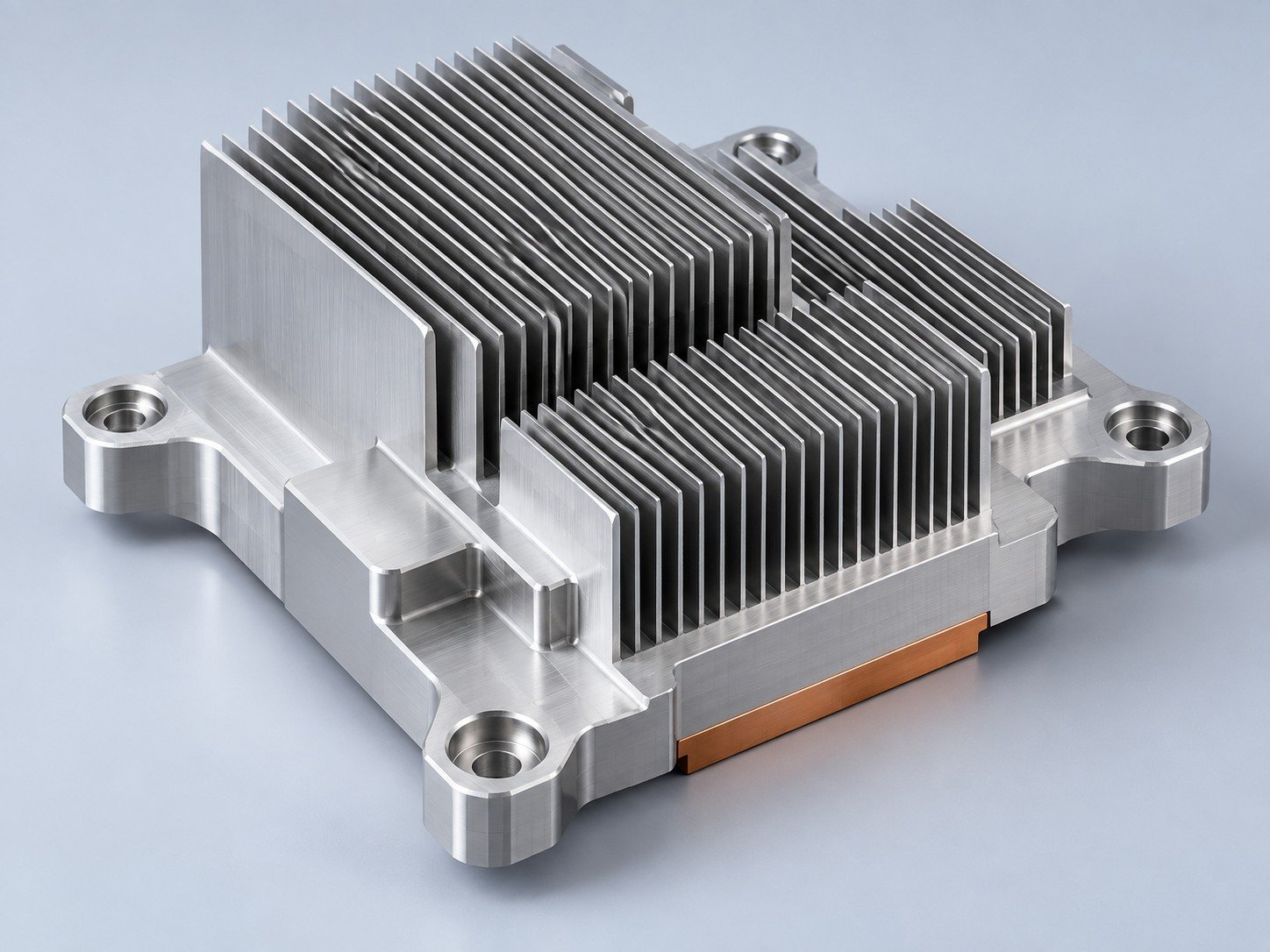
Manufacturing support for your cold plates, manifolds and cooling assemblies.
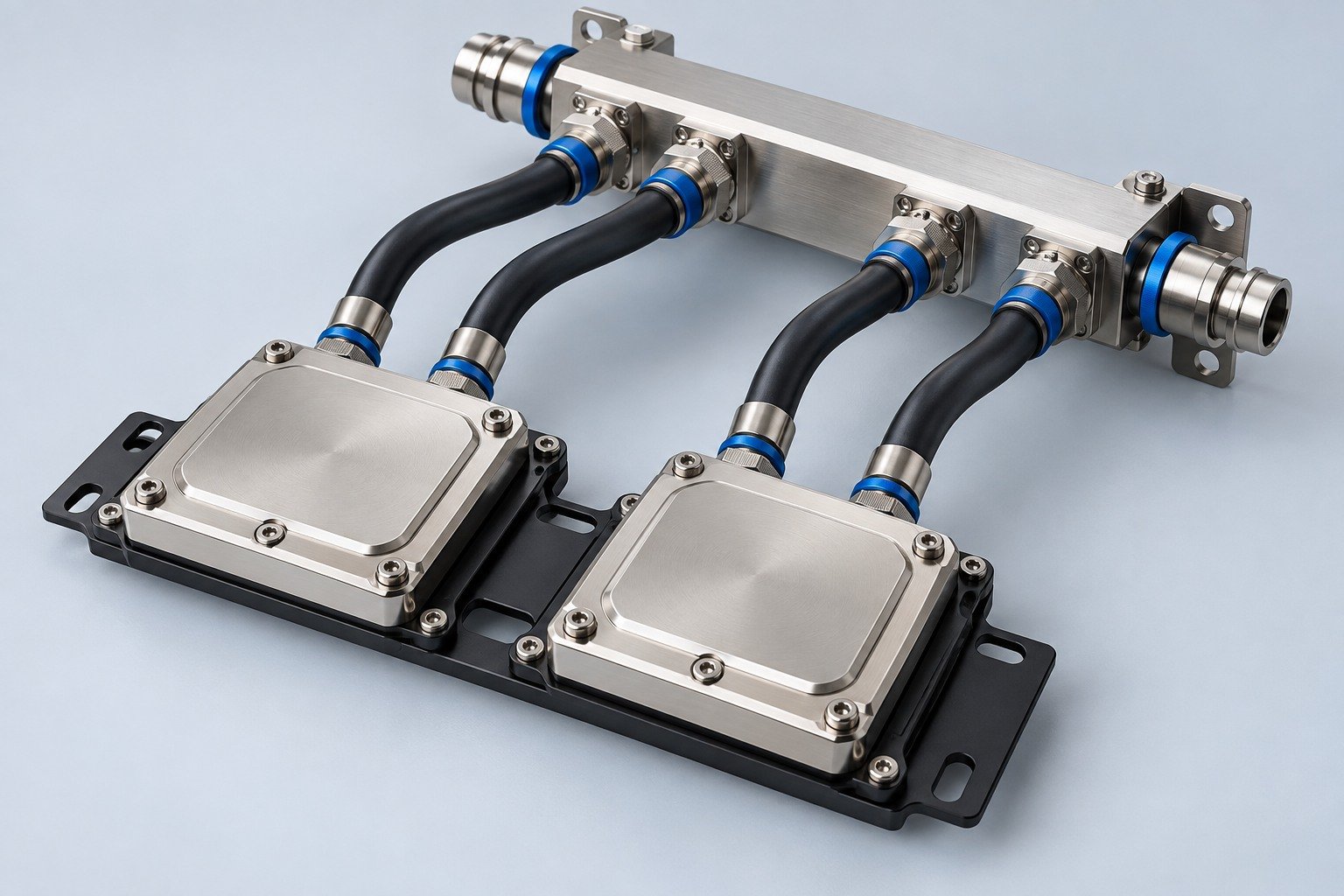
Find components for your power electronics, energy, laser and telecom application.
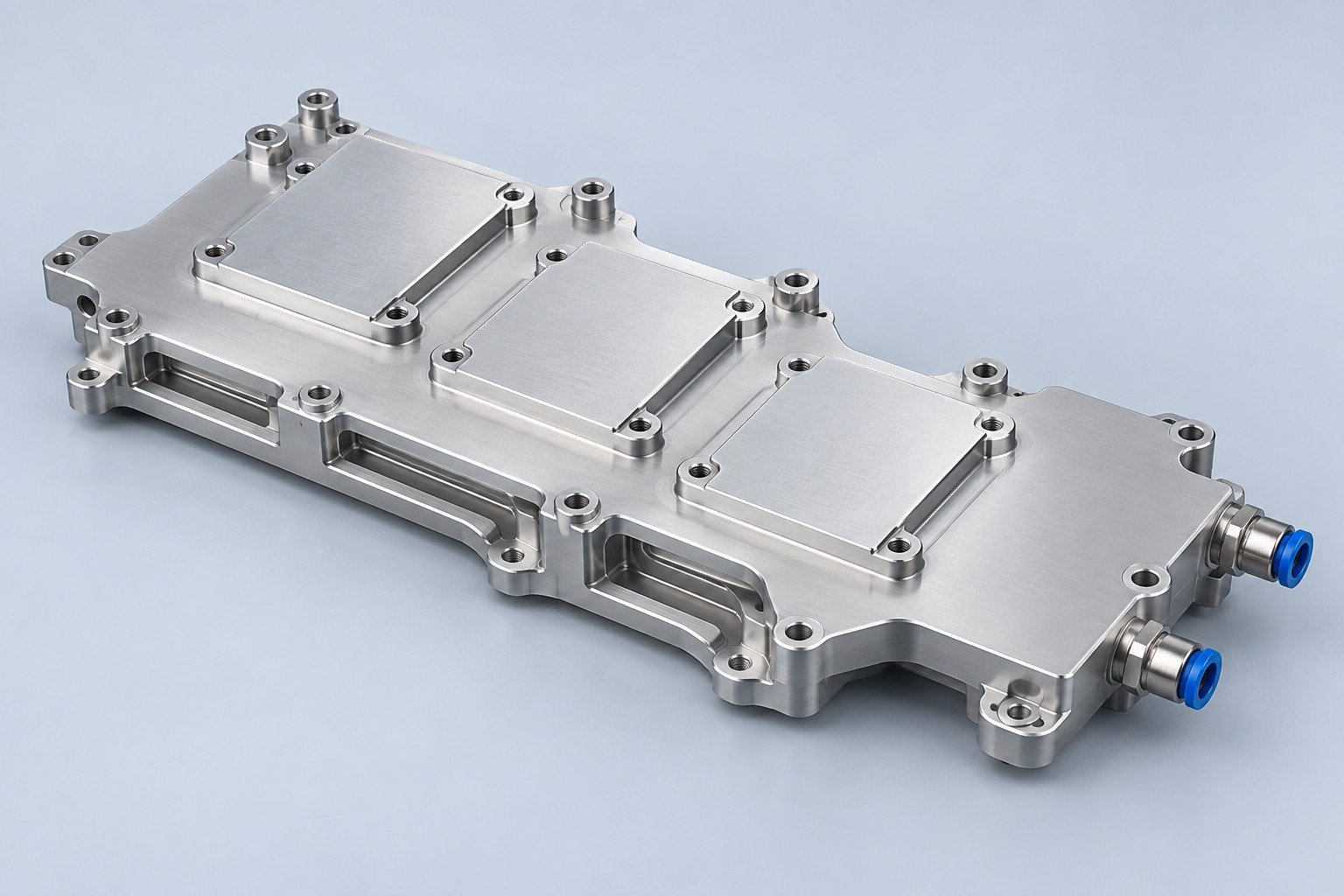
Components for your electronic systems.
Start with your functional and quality requirements.
Build around your operating environment.
From prototype to production, review material performance, manufacturability and cost for your part.
Review grade, temper and finish for your metal parts.
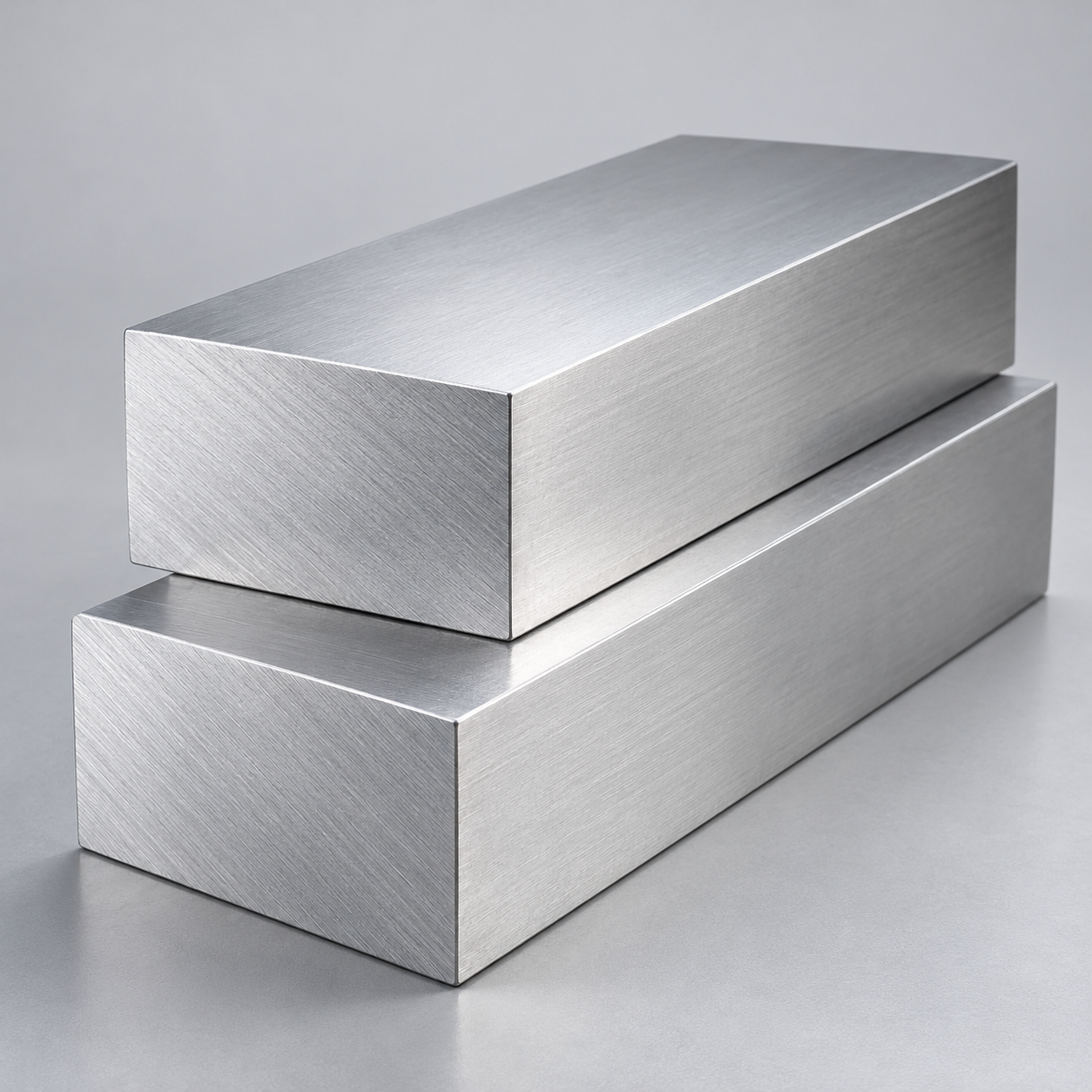 AluminumStrength, weight and machining›
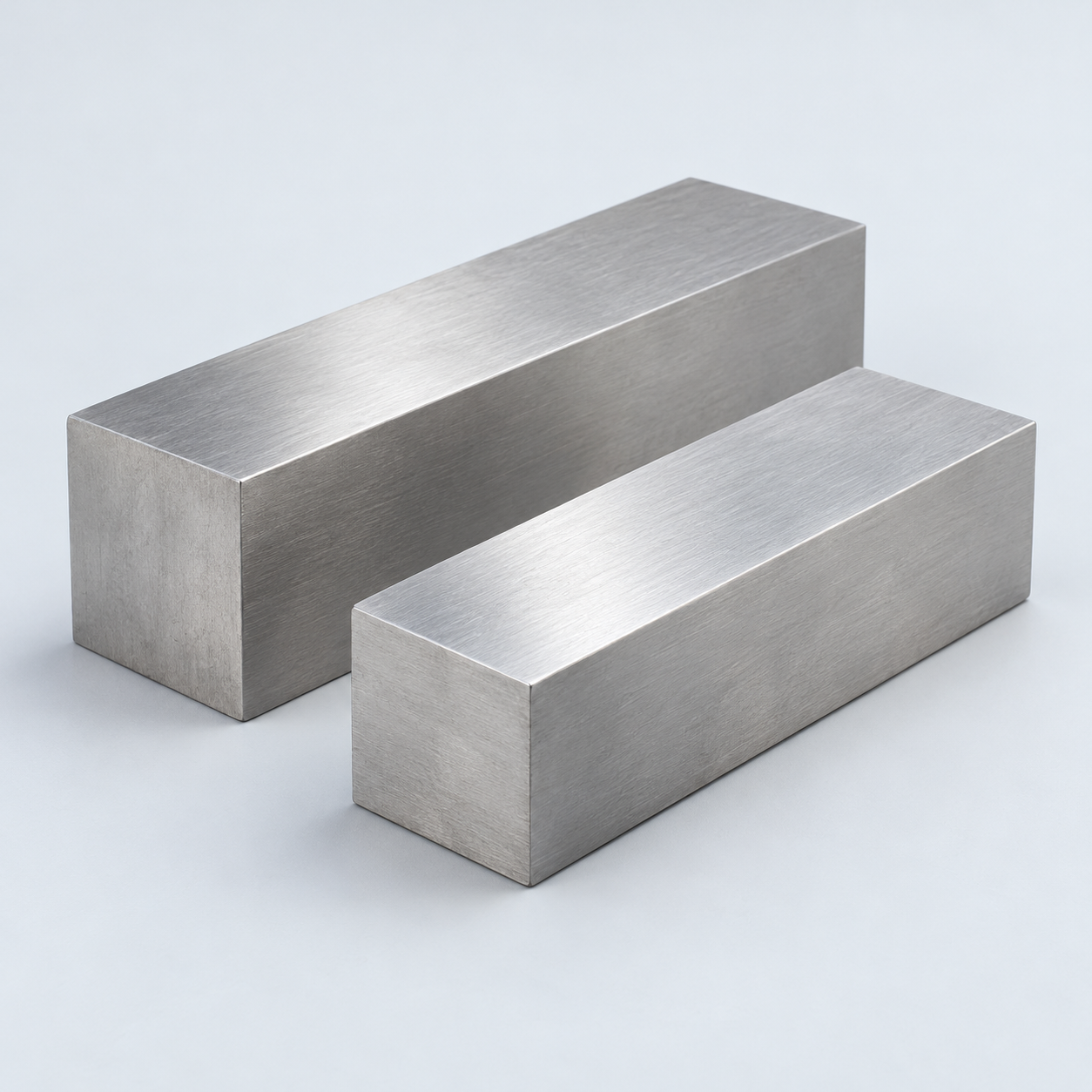 Stainless SteelCorrosion and finish requirements›
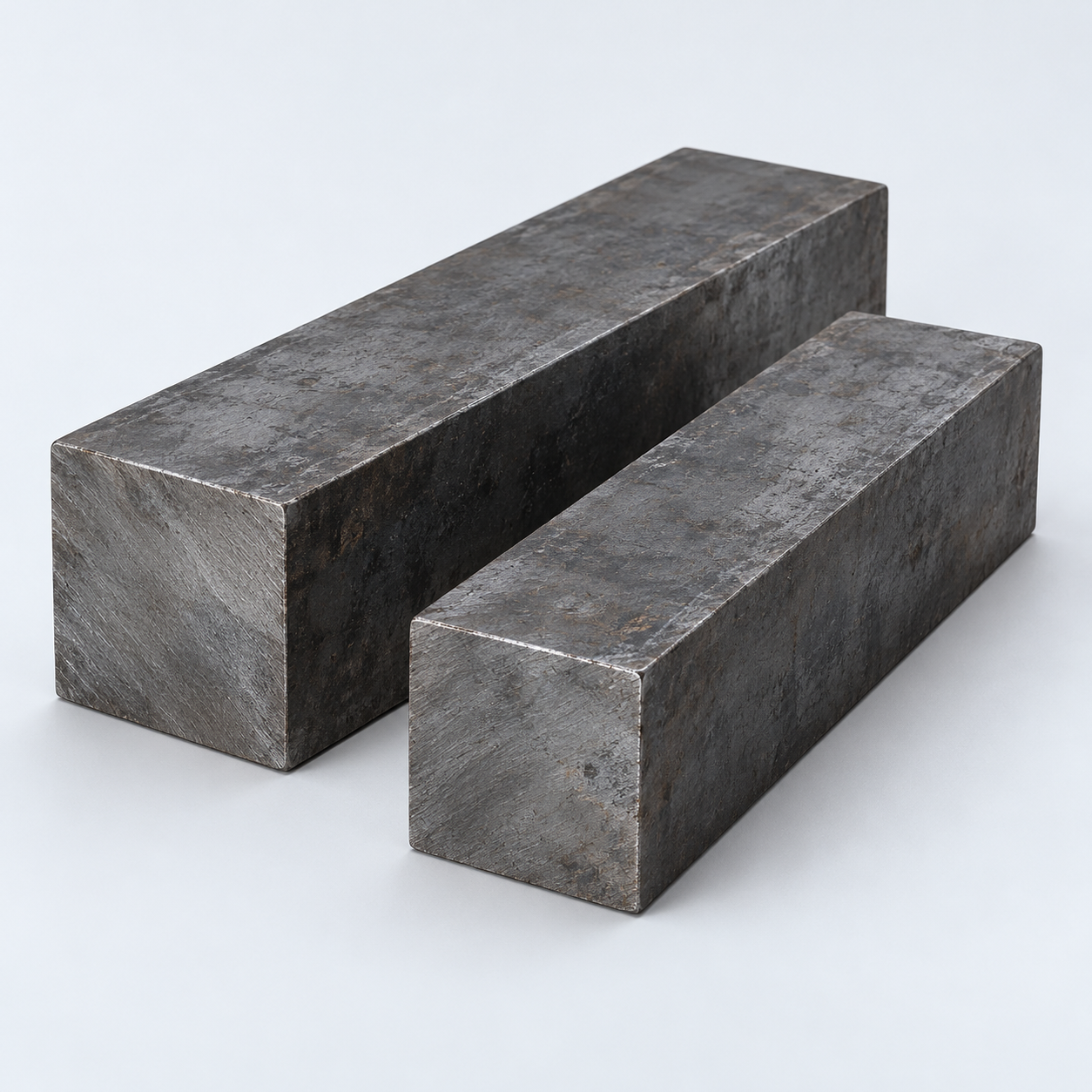 Carbon & Alloy SteelDiscuss grade and heat treatment›
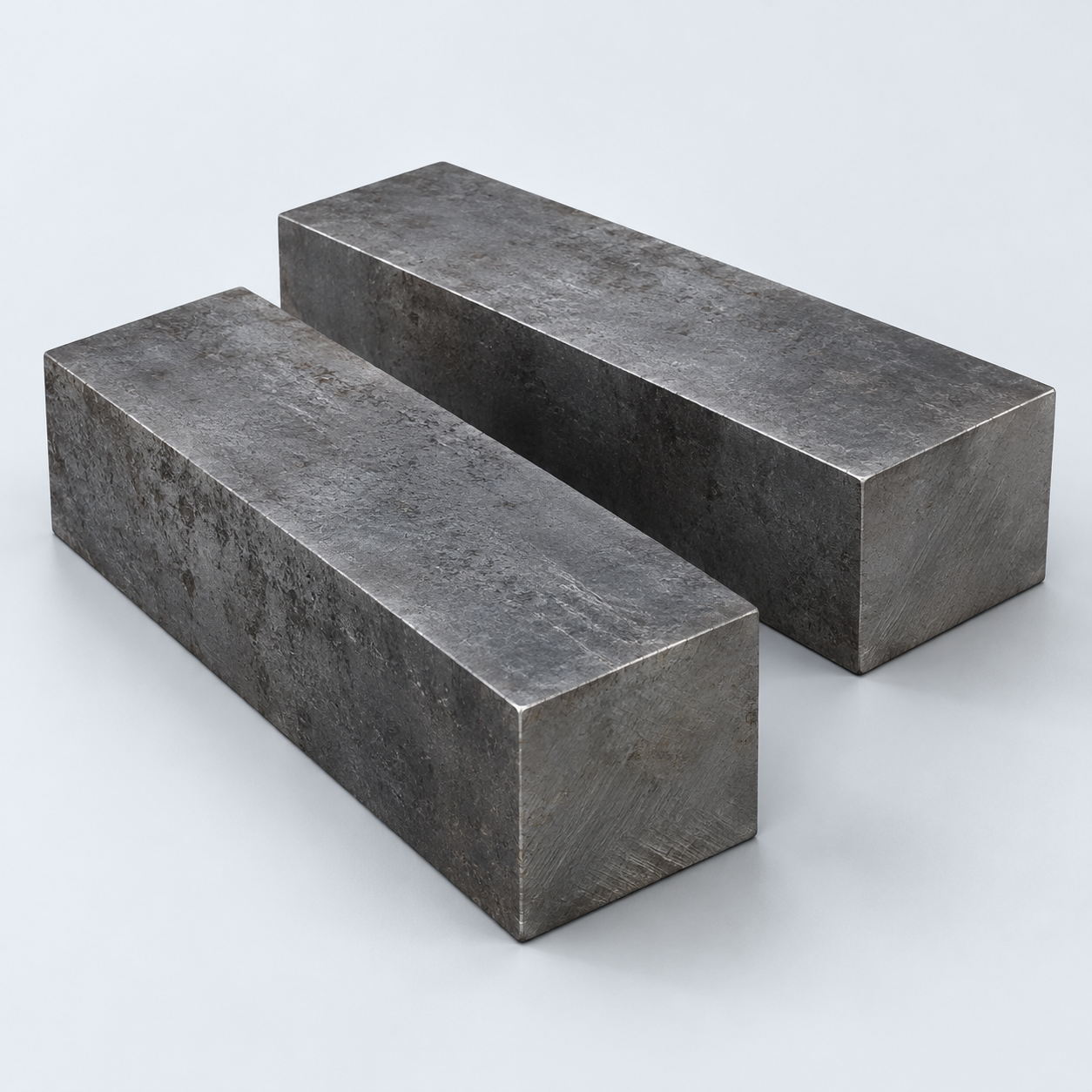 Tool SteelDiscuss tooling and wear needs›
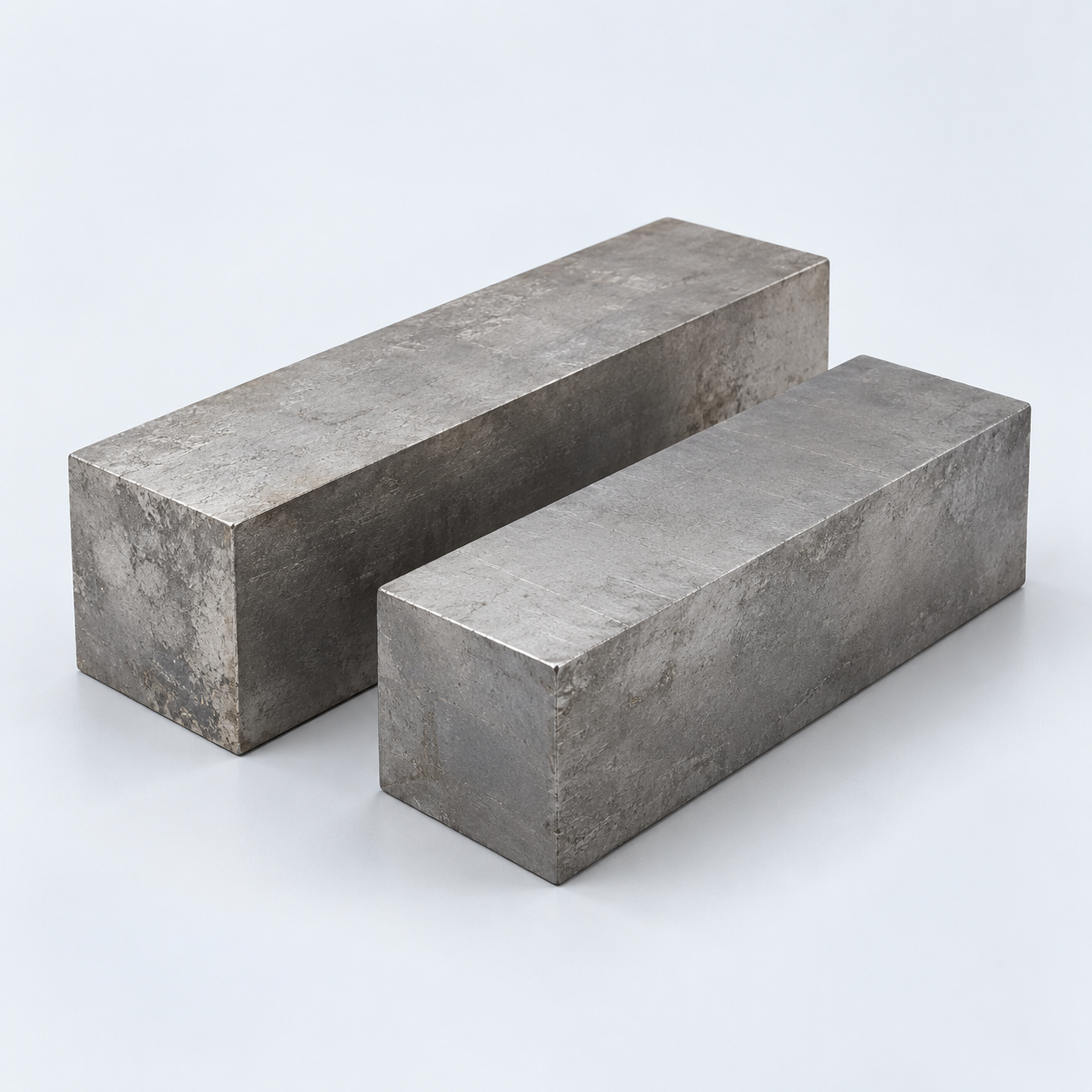 TitaniumReview grade and part geometry›
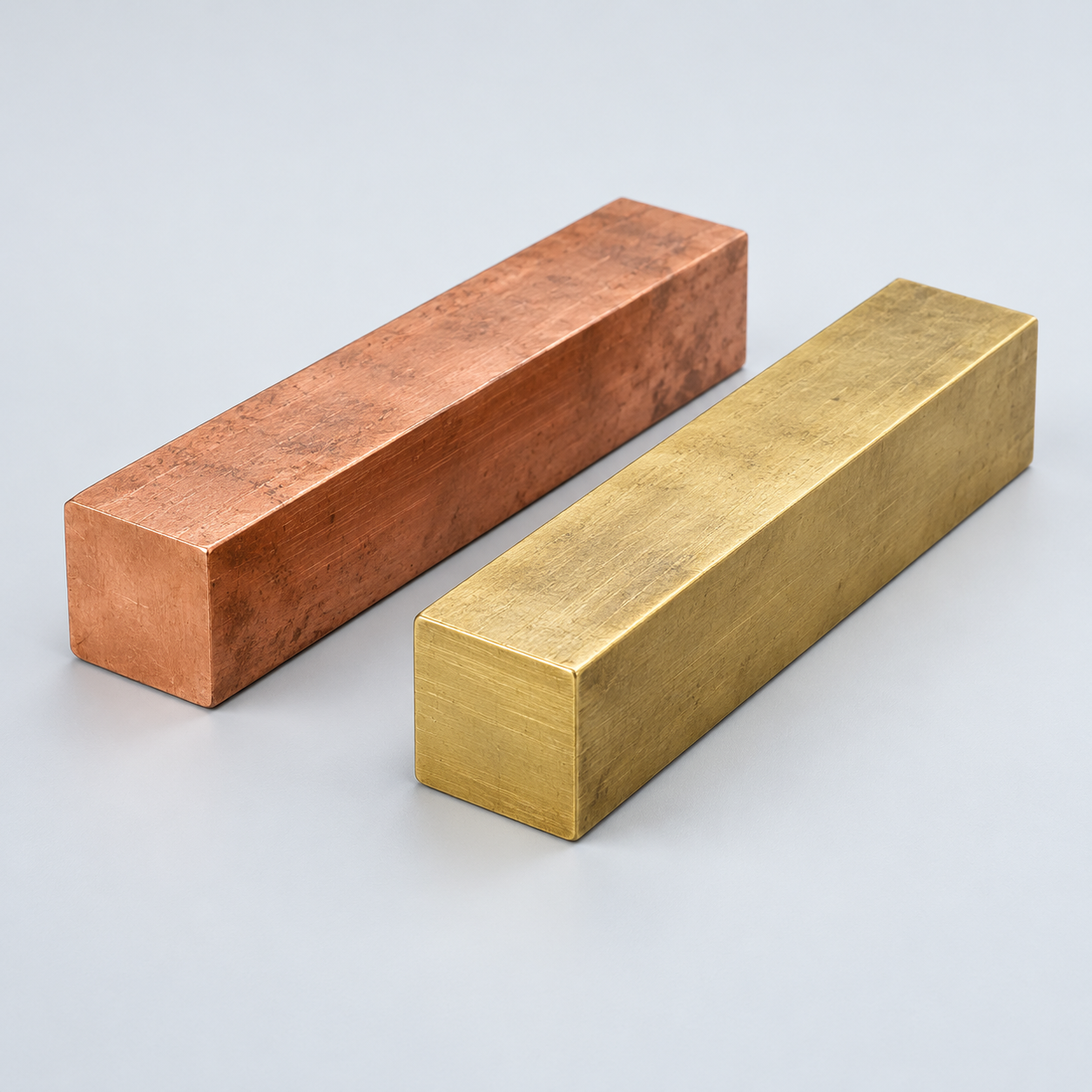 Copper & Brass & BronzeDiscuss conductivity and machining›
Match your polymer to function, process and environment.
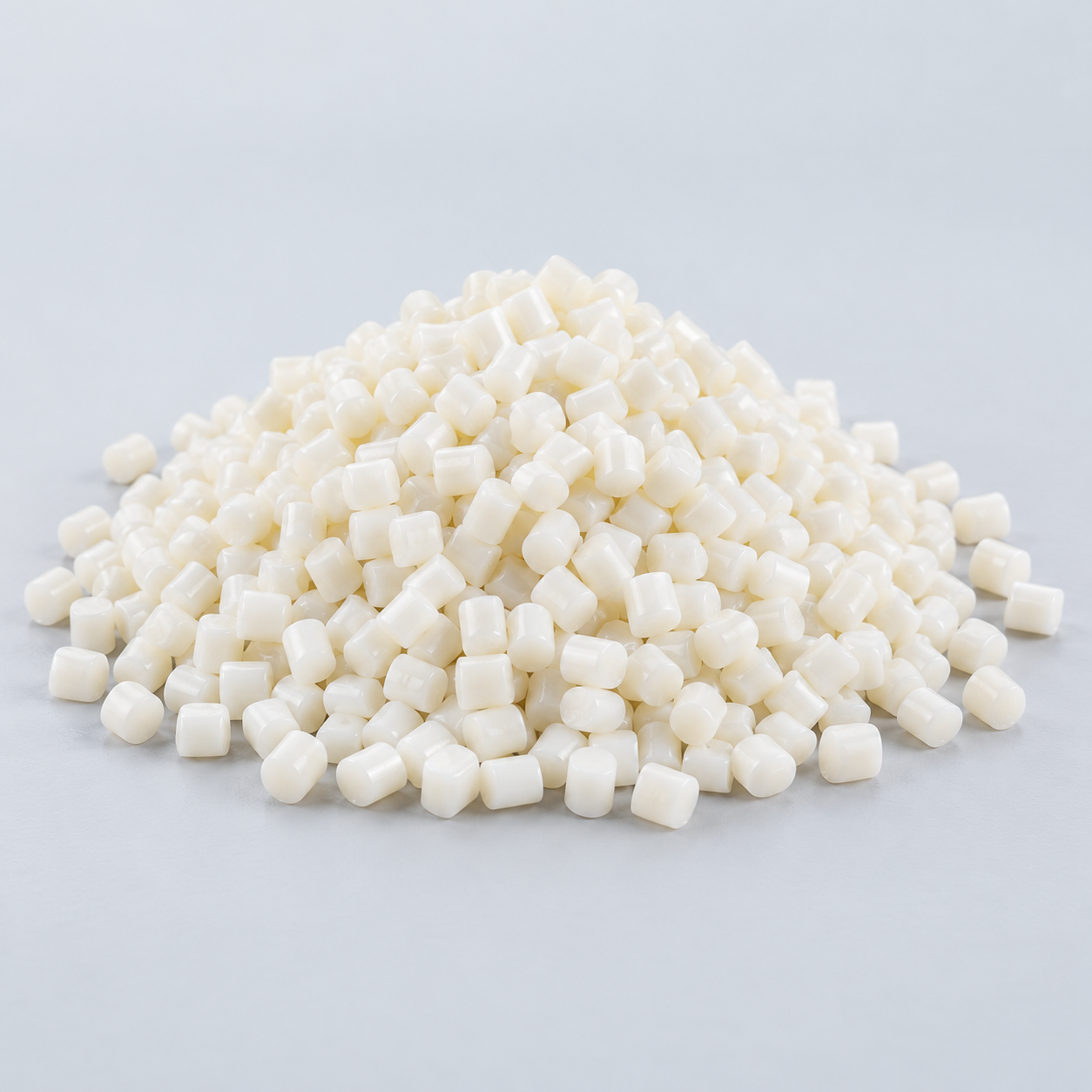 ABSReview enclosure and molding needs›
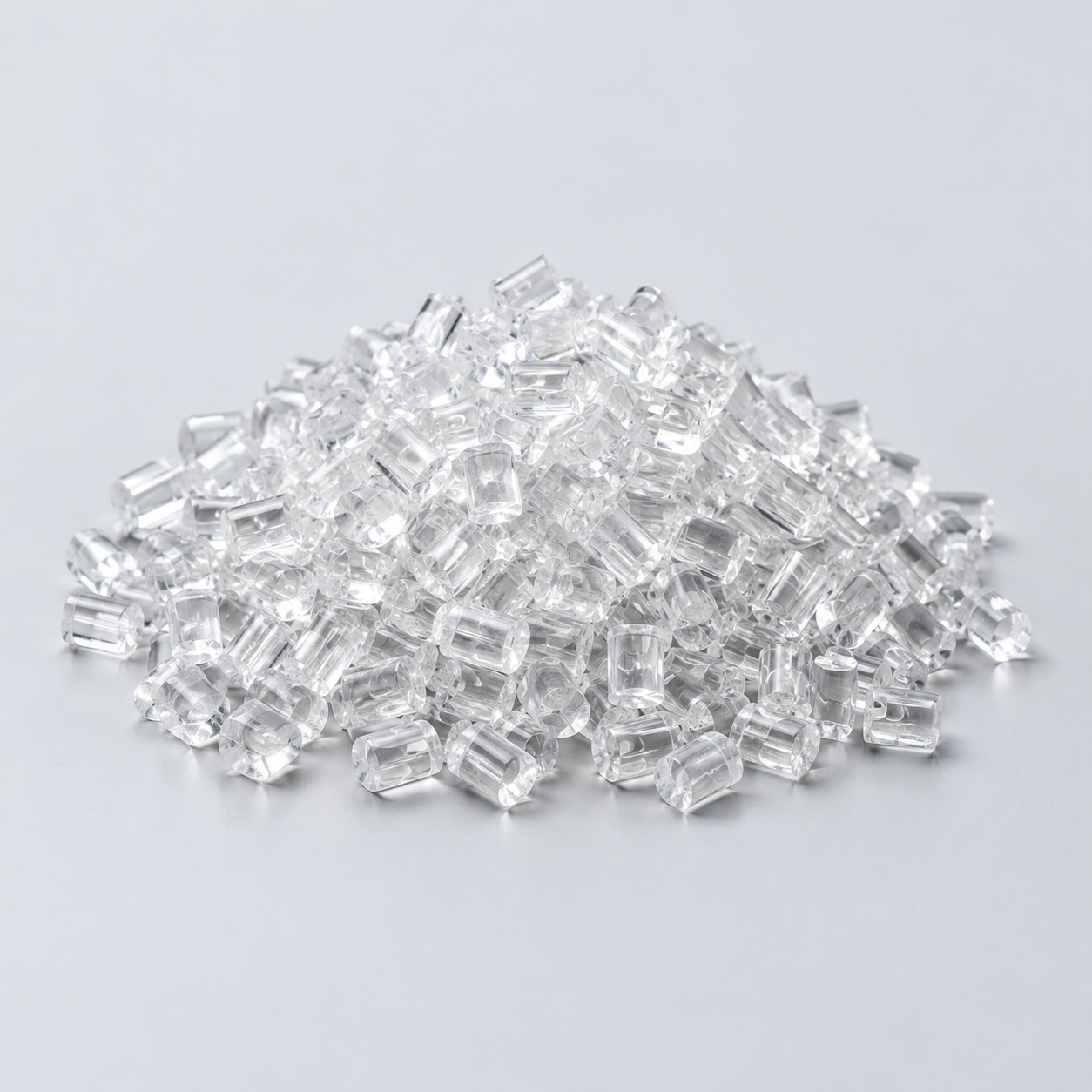 Polycarbonate (PC)Discuss clarity and impact needs›
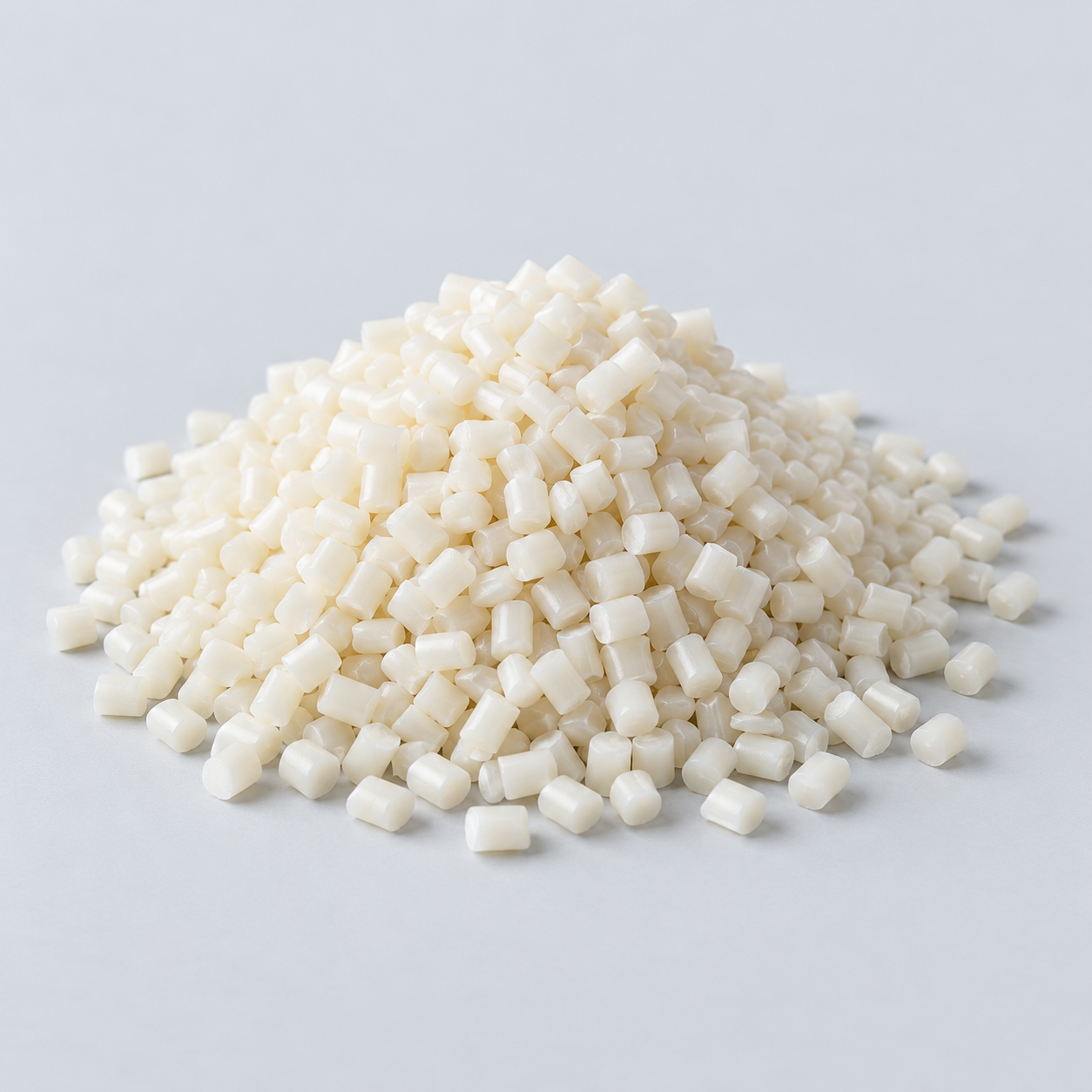 Nylon (PA)Review moisture and wear conditions›
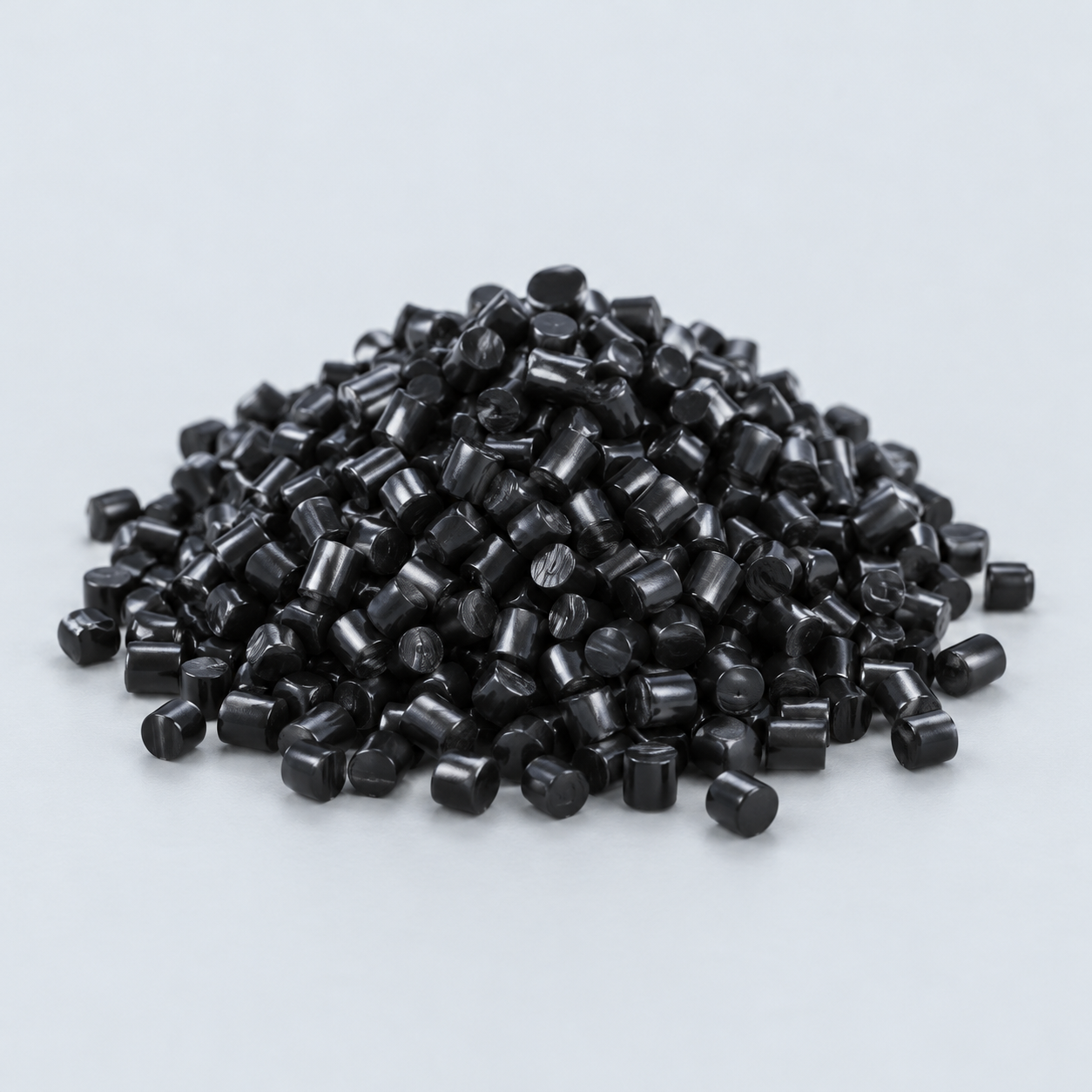 POM / AcetalReview fit and sliding features›
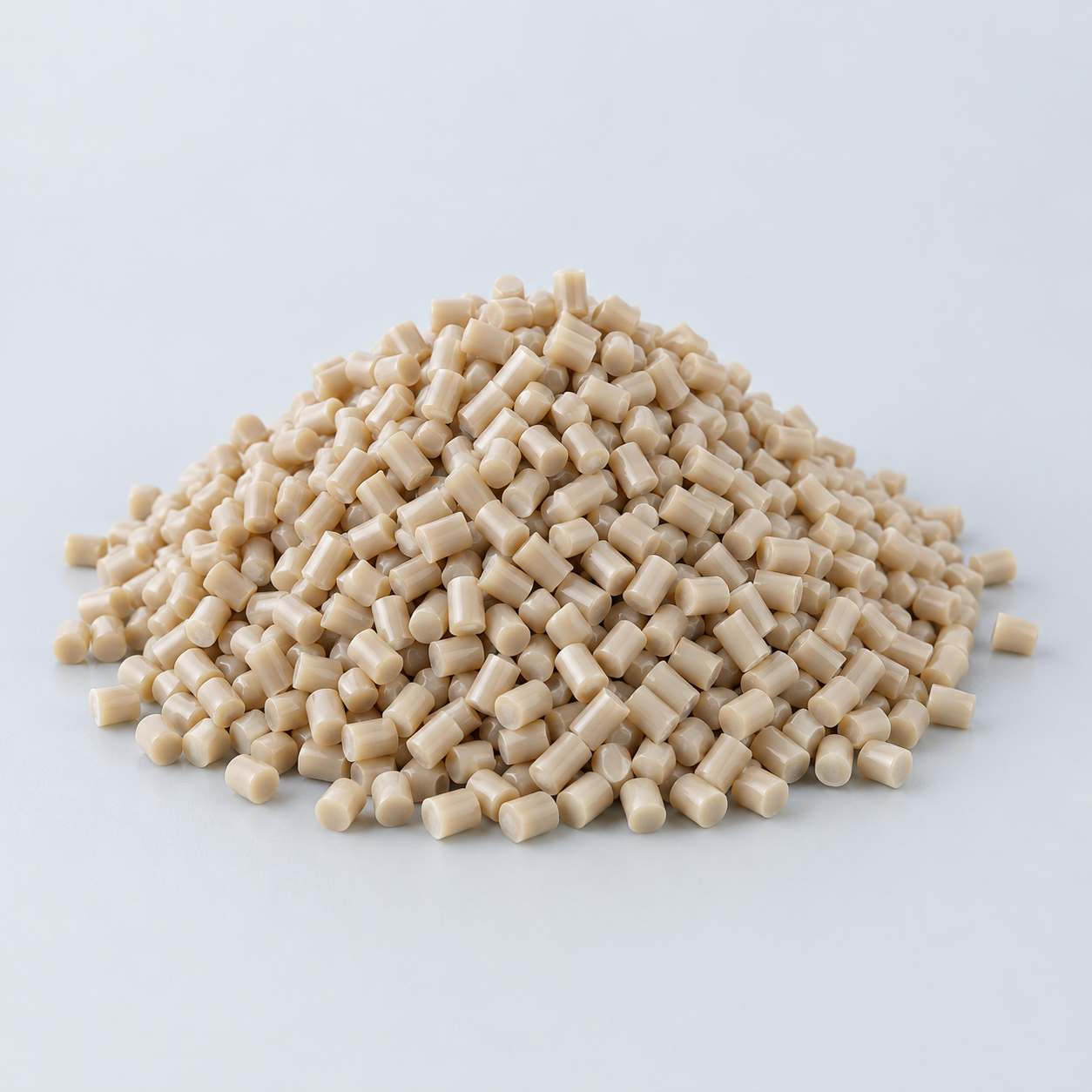 PEEKDiscuss operating conditions›
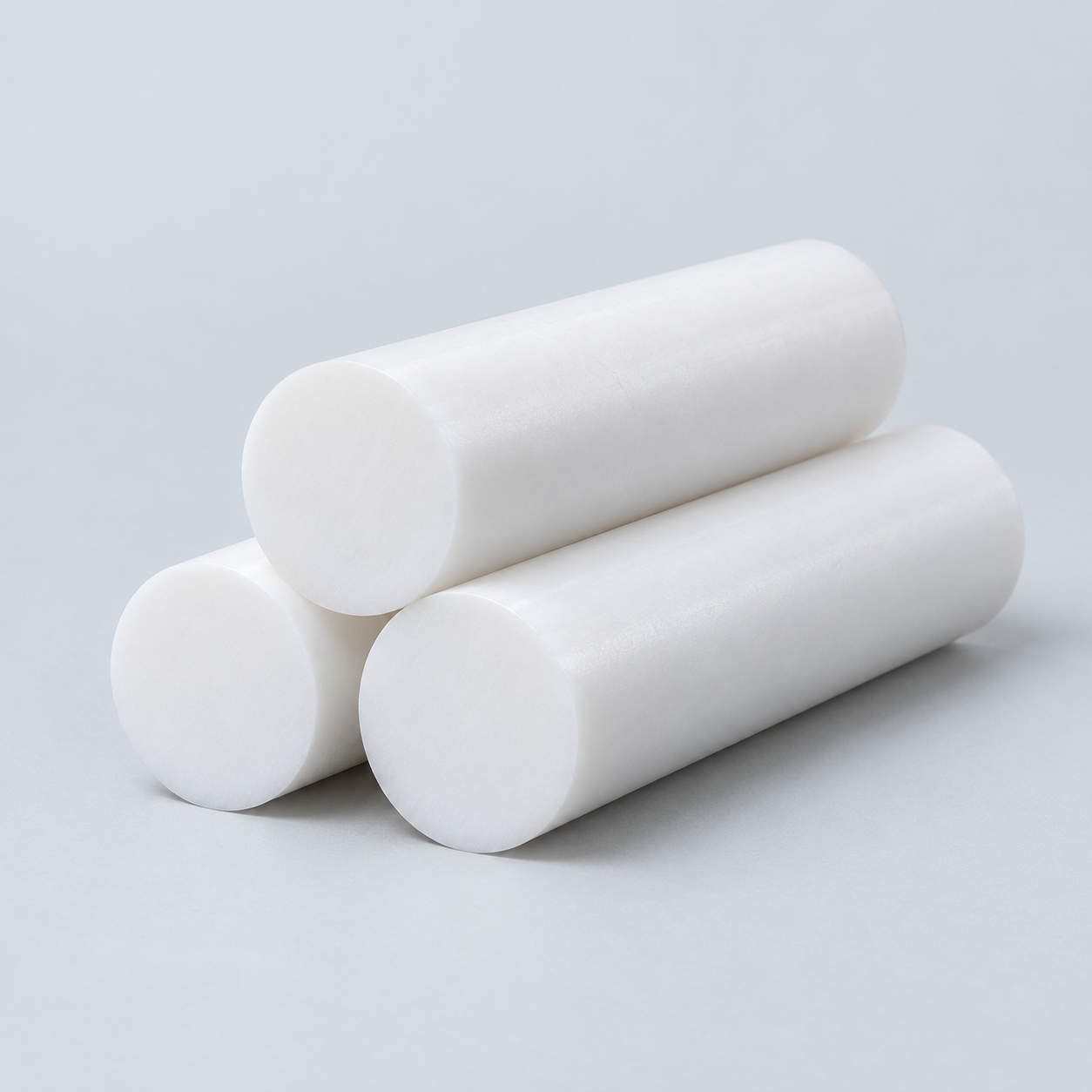 PTFEReview friction and chemical exposure›
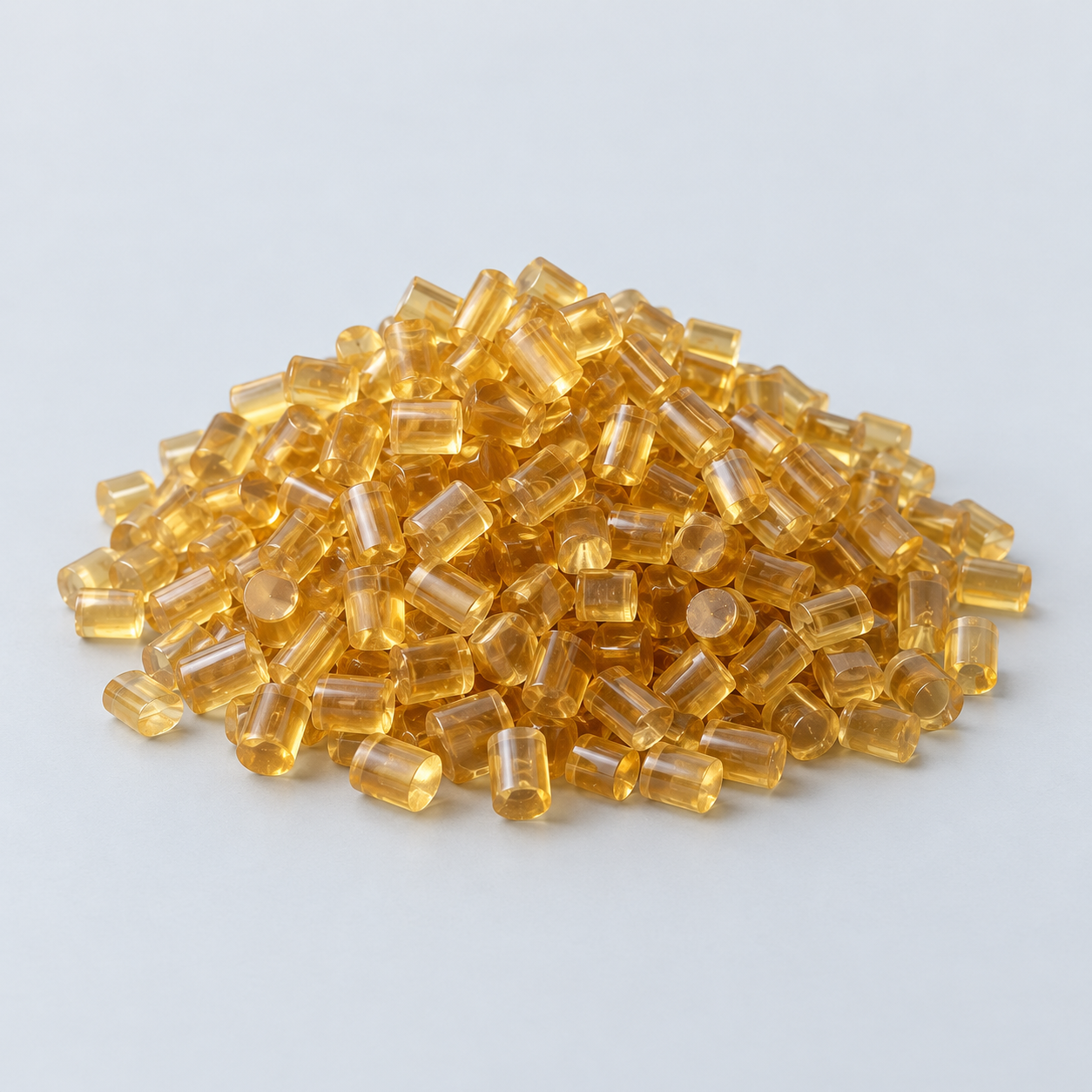 ULTEM / PEIDiscuss thermal and electrical needs›
Confirm grade availability and application requirements.
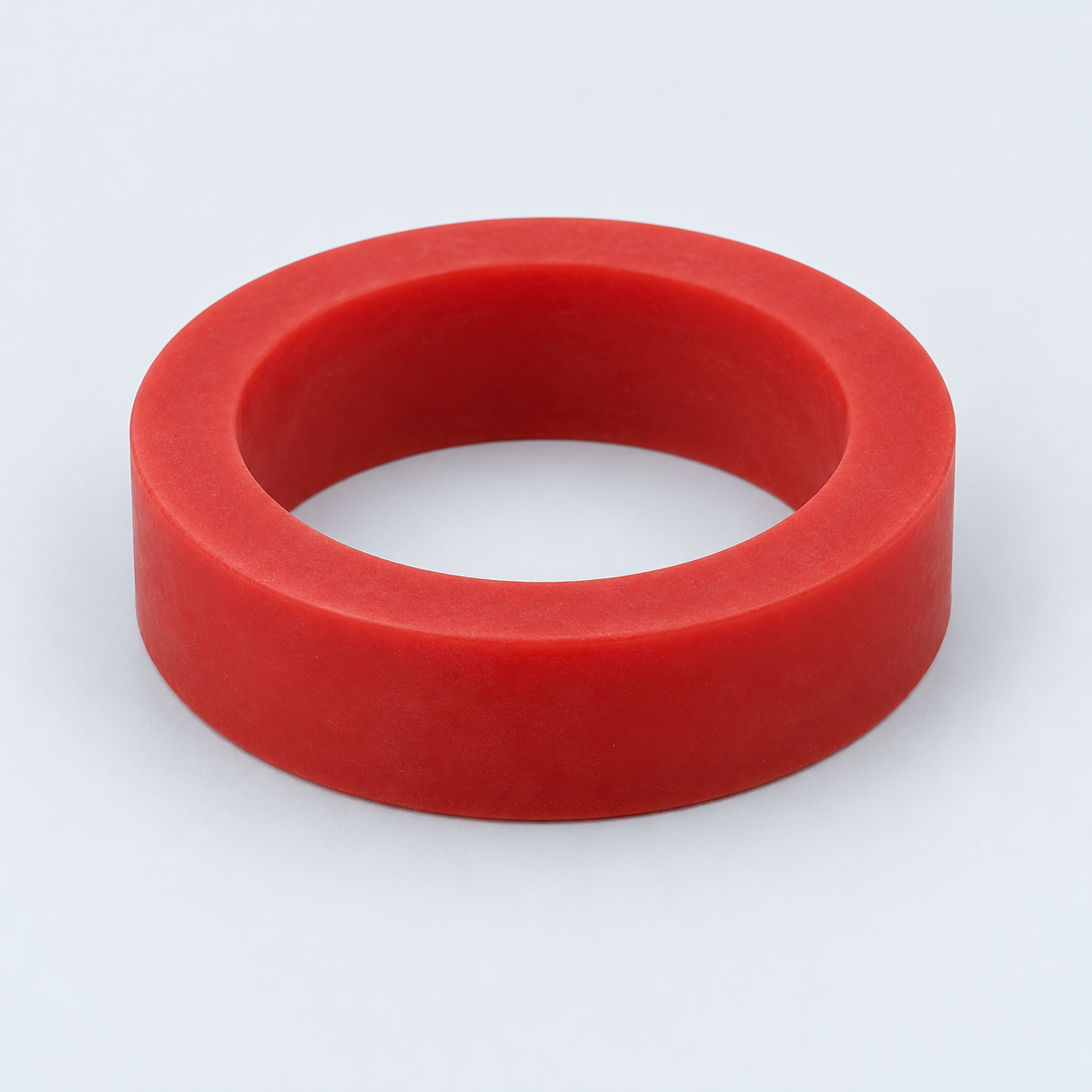 Silicone / LSRDiscuss flexible component needs›
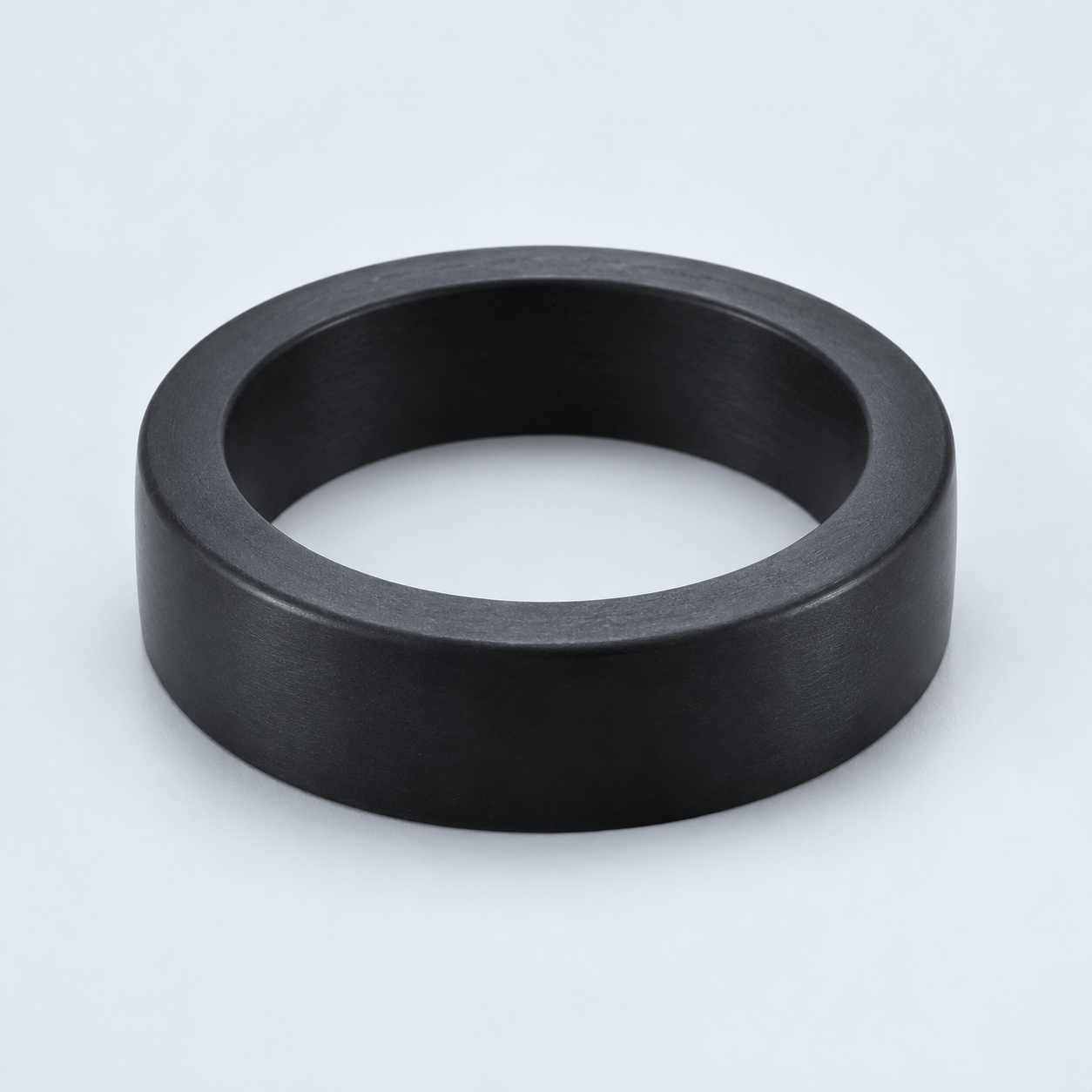 TPU / TPEReview flexibility and processing›
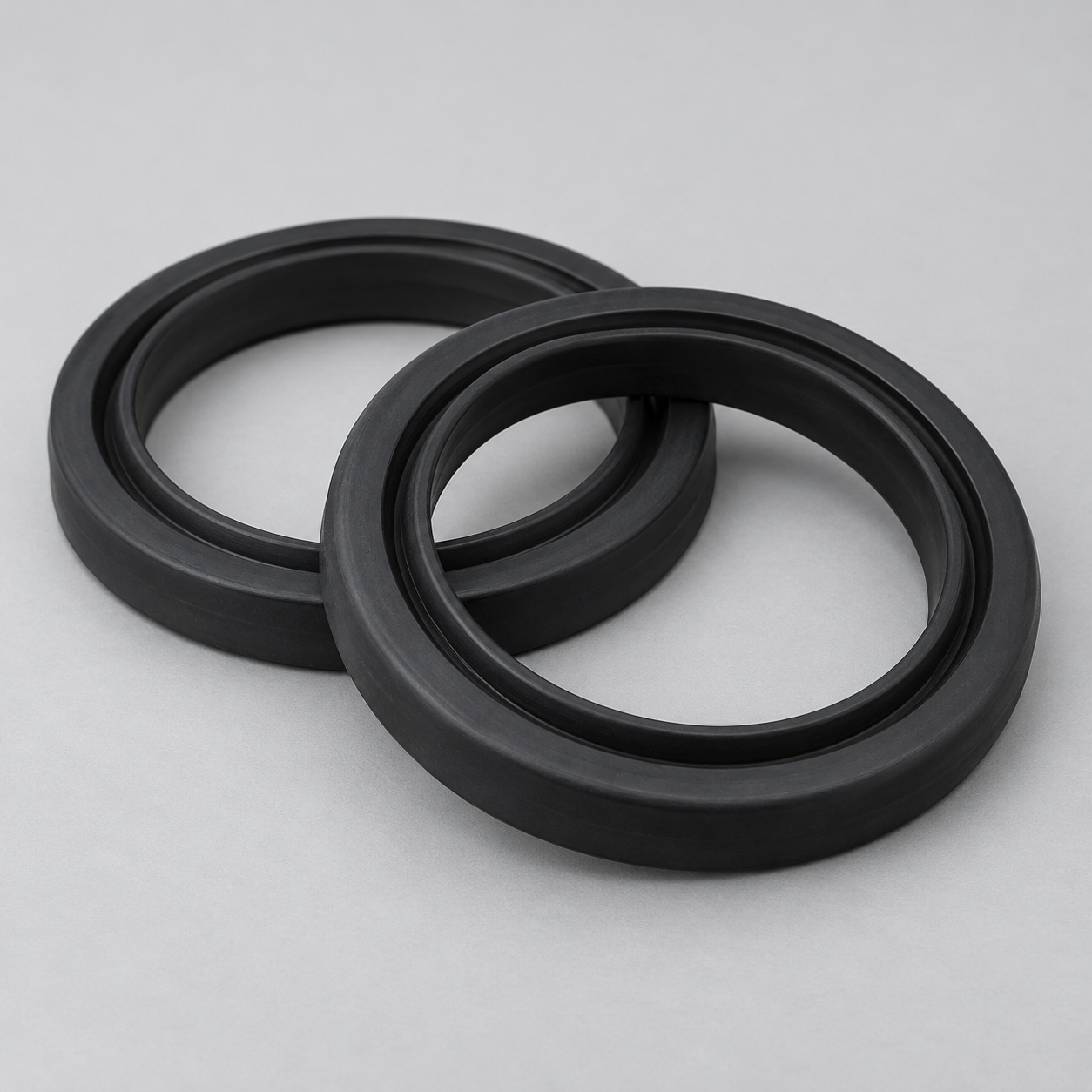 EPDMReview weathering and chemical exposure.›
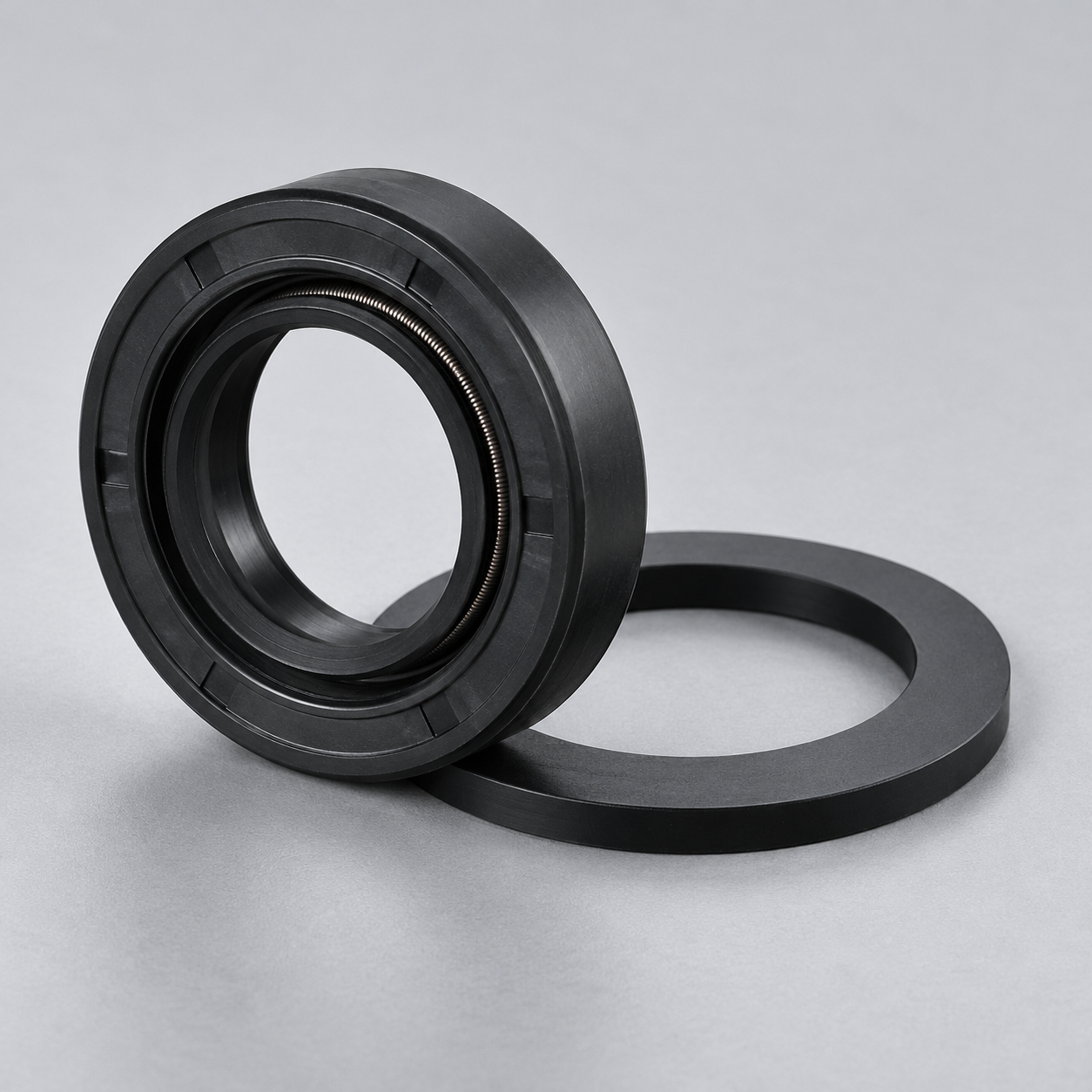 NBRReview oil and fuel exposure.›
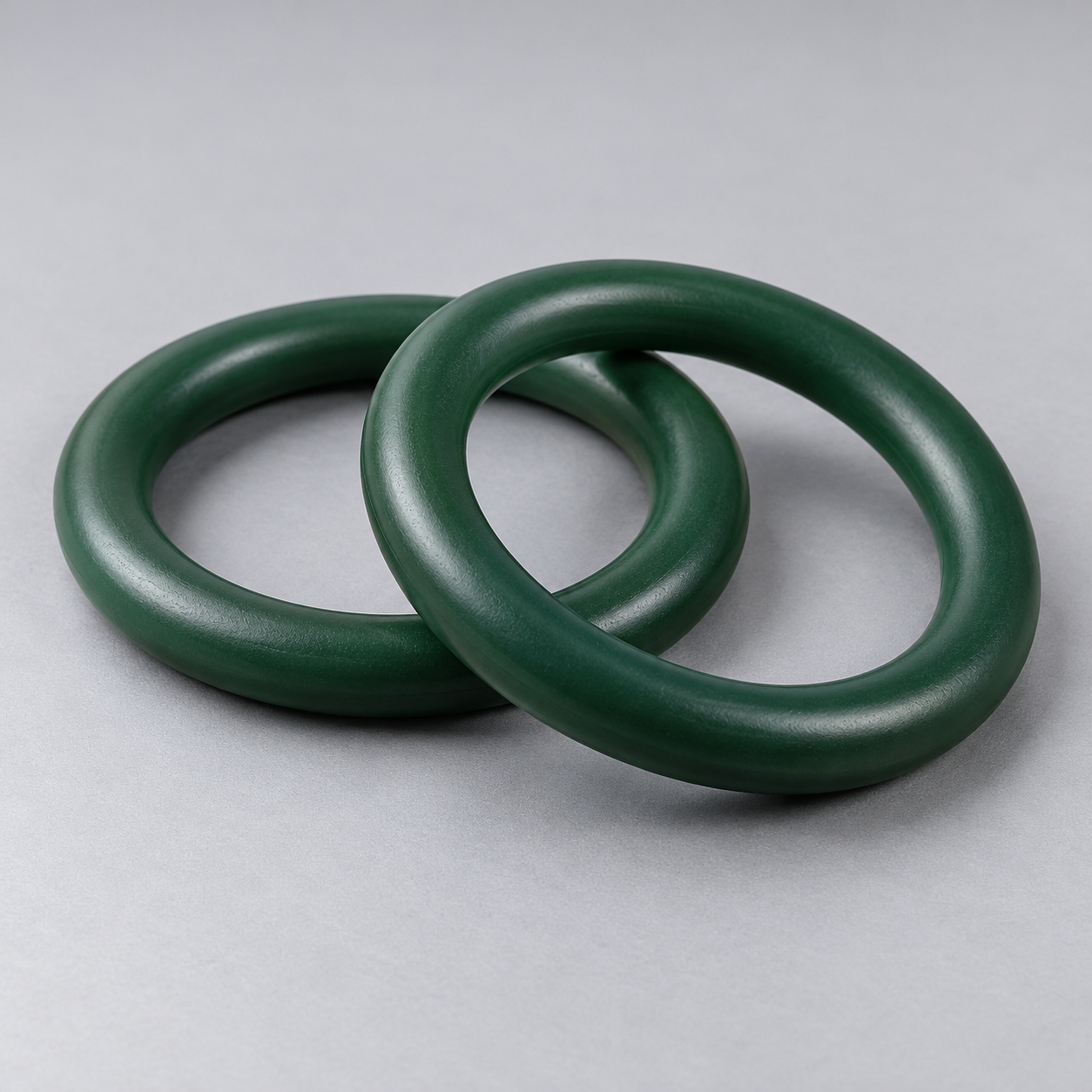 FKMReview temperature and chemical exposure.›
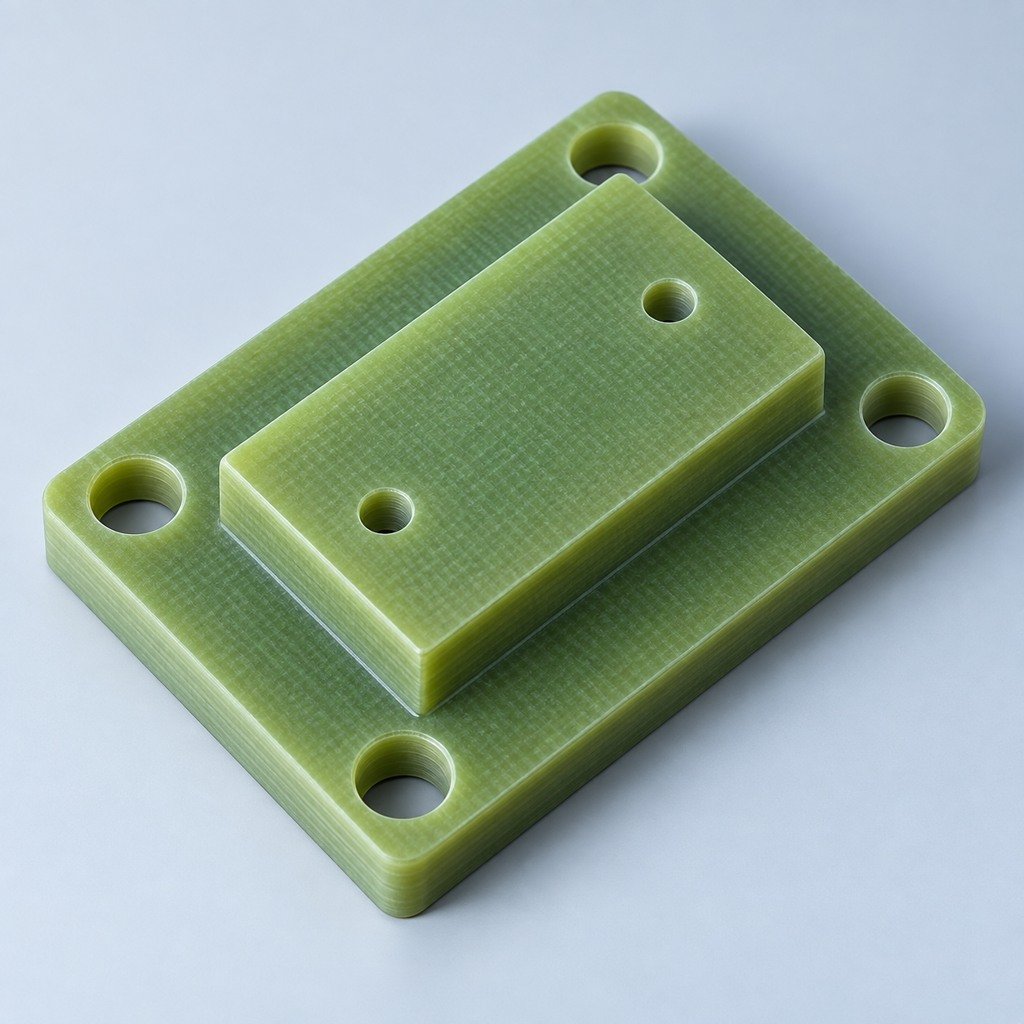 G10 / FR4Review insulation and laminate needs›
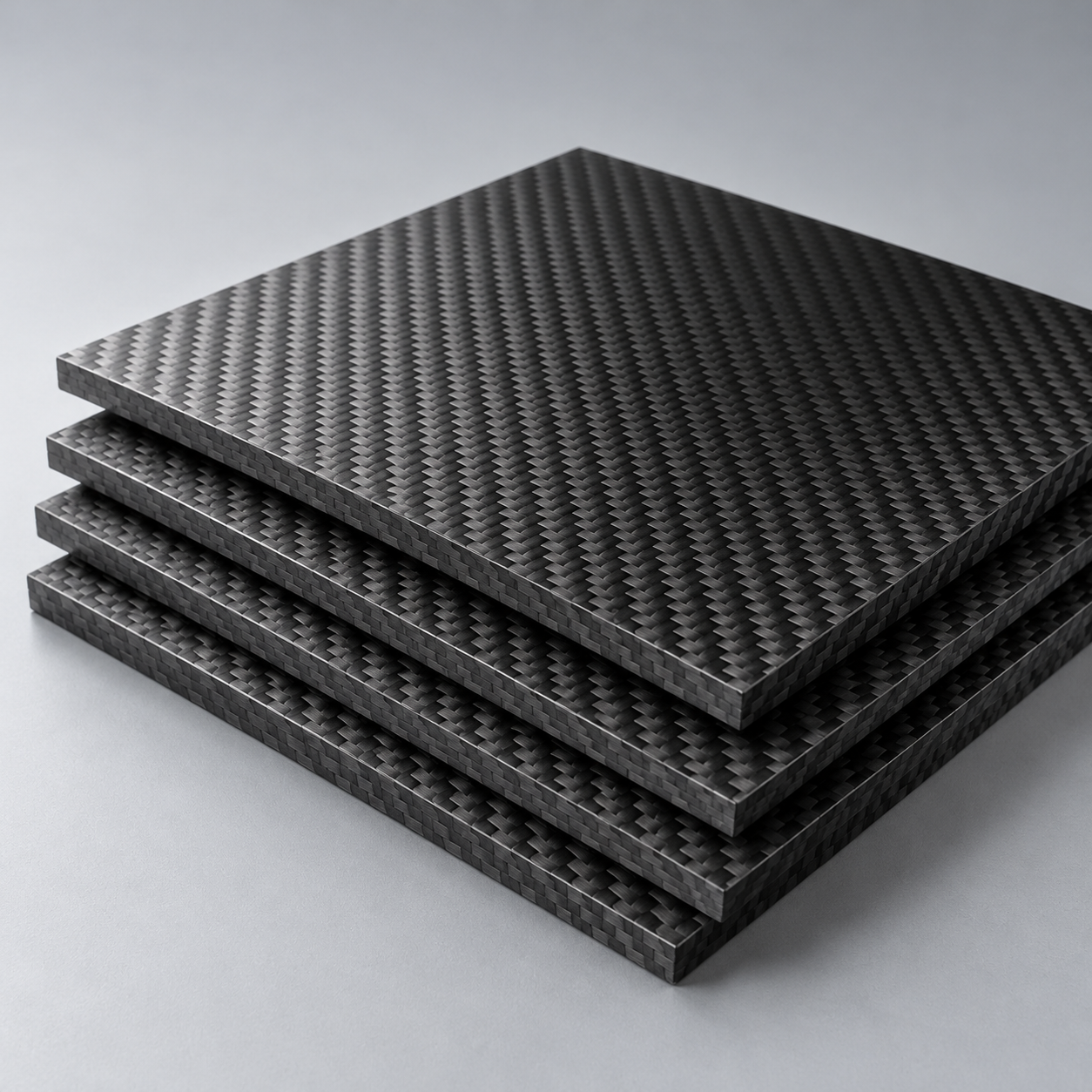 CompositesReview stiffness, weight and laminate.›Customer-Specified MaterialsConfirm your grade and requirements.›Other Specialty MaterialsDiscuss your application and grade.›
Practical guidance for your part geometry and material decisions.
Prepare your process, budget and sourcing questions.
Build your knowledge before production.
Learn who we are and how we operate.
Find our U.S. support team or start a conversation.
YOUR GRADE. YOUR LOAD. YOUR FINISHED FIT.
Plan your PTFE CNC machining project around the exact product, pressure, media and finished fit. Confirm stock, seal surfaces and acceptance before production.
Material availability and manufacturing scope are confirmed for your drawing.
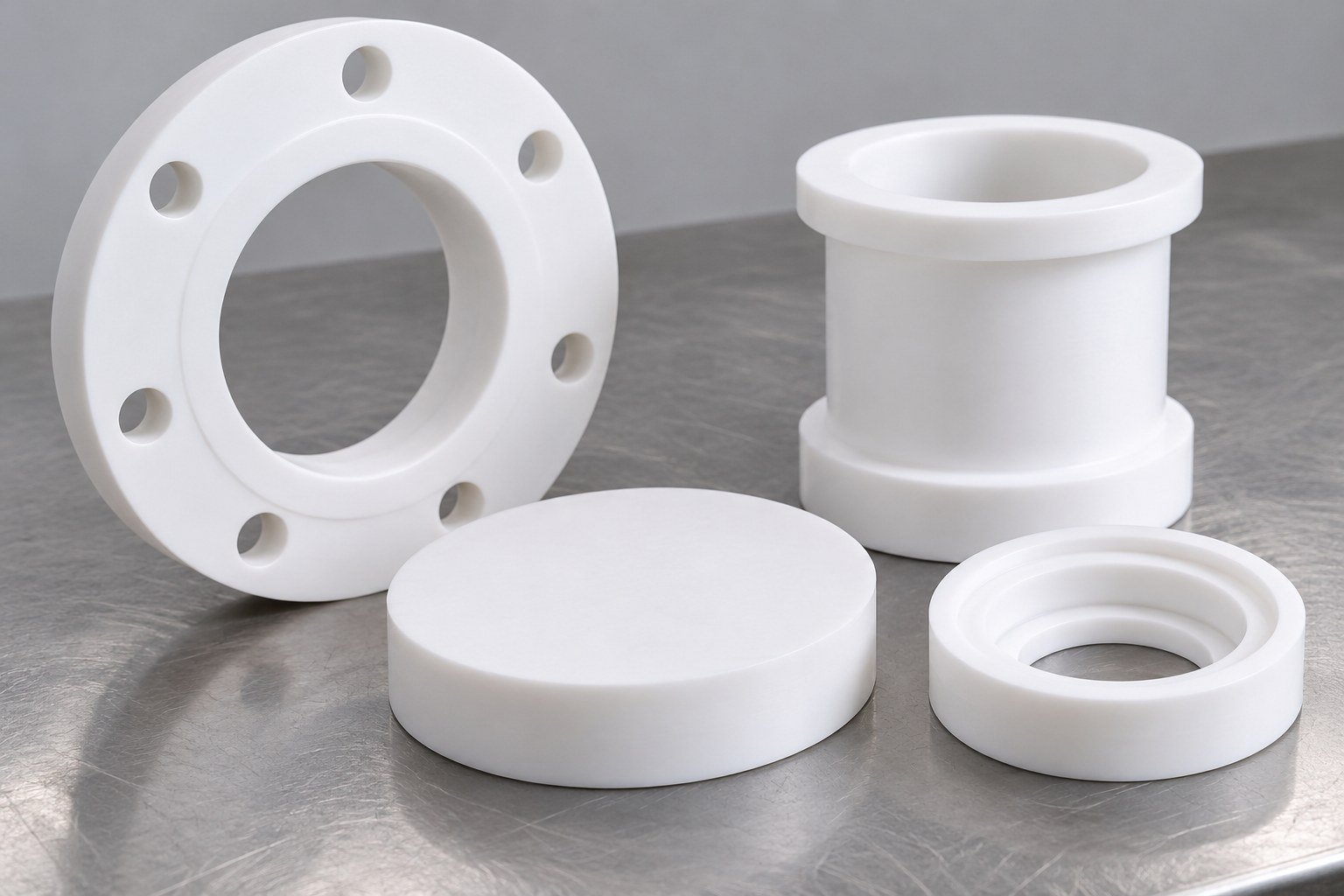
Specify the product you are buying, not only the polymer name.
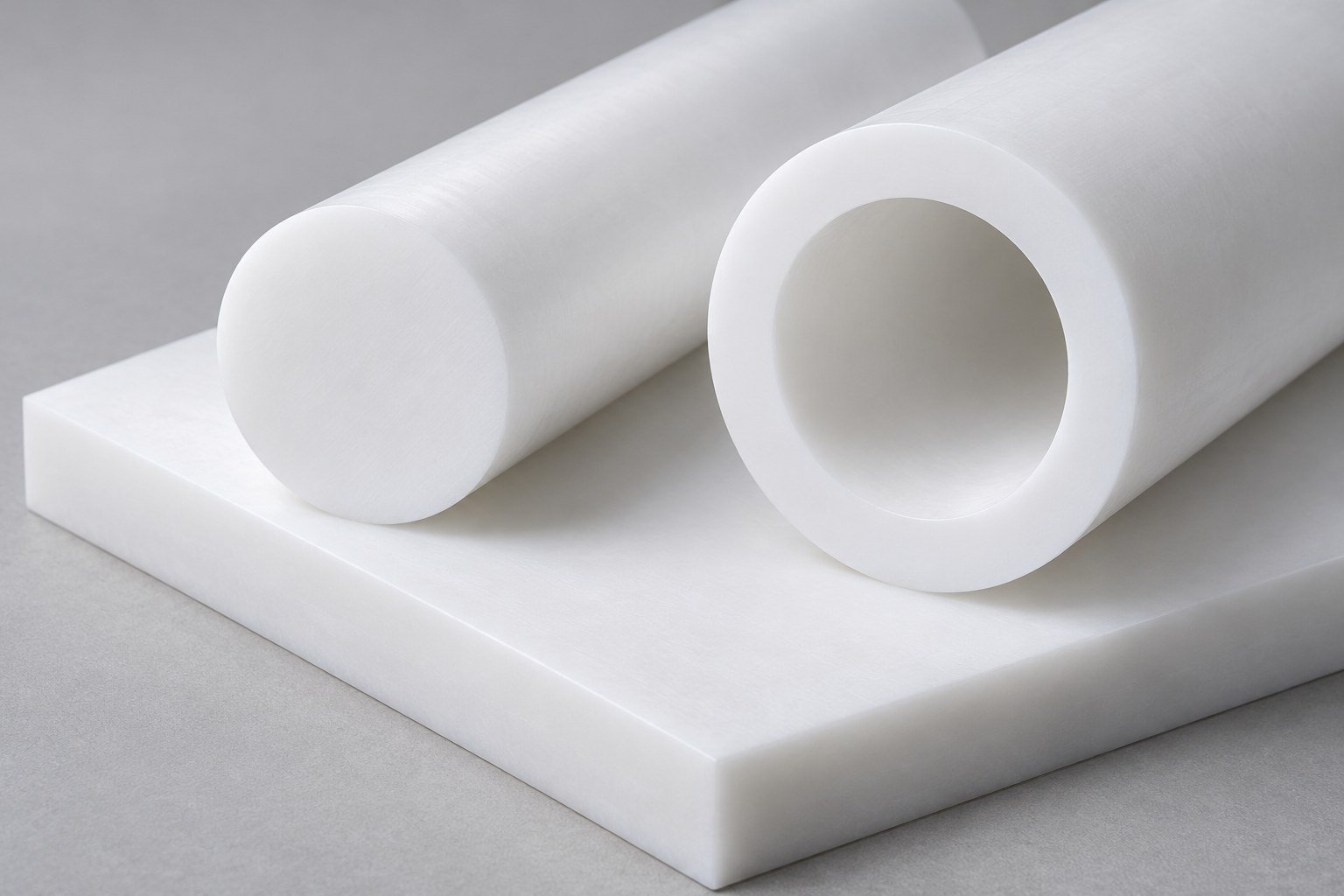
Identify manufacturer, full product, filler, form and lot before cutting. Stock records and your final-part checks serve different purposes.
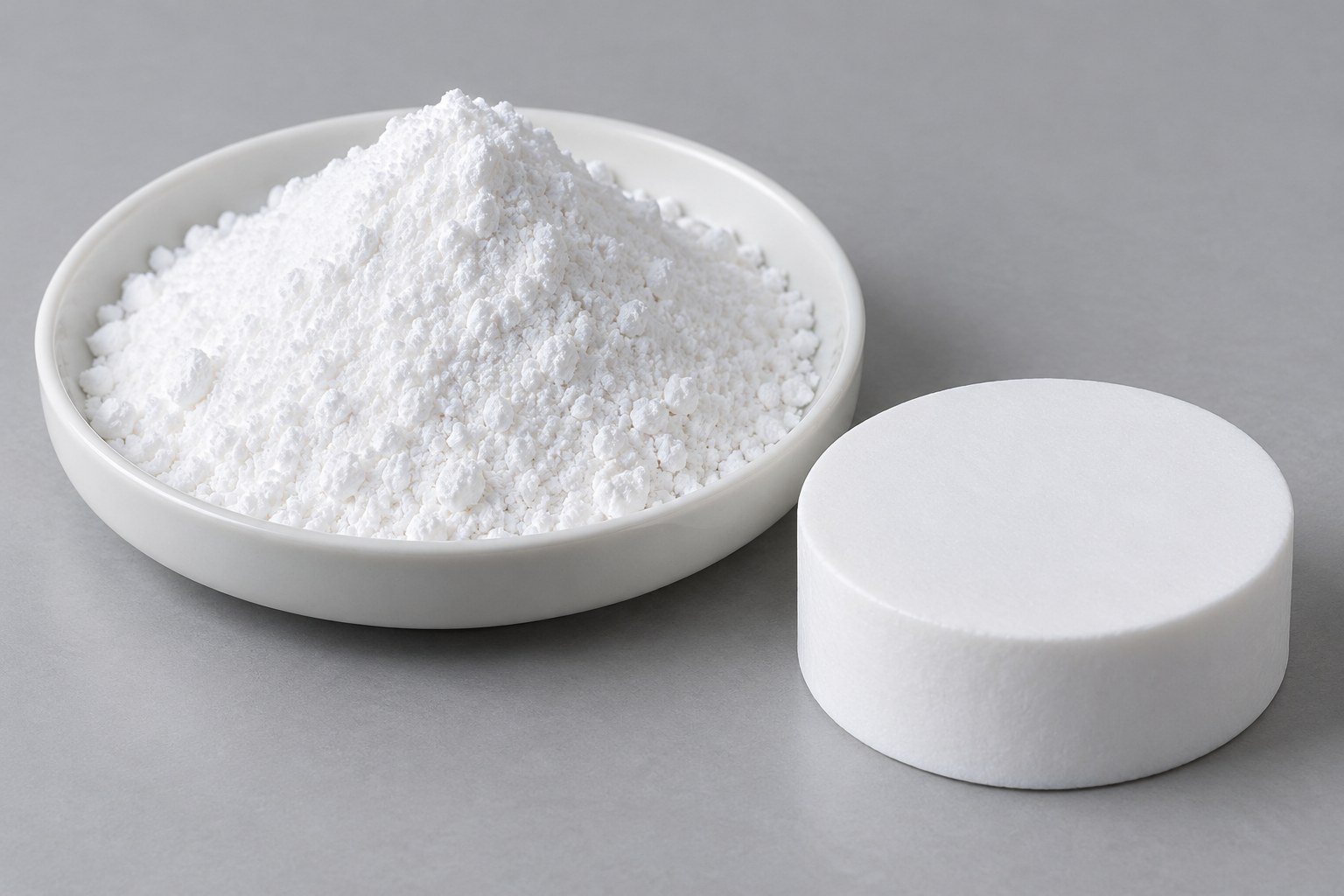
For PTFE compression molding, agree preforming, PTFE sintering and subsequent machining. Powder identity does not establish the finished billet or seal.
Conventional PTFE is not processed by ordinary melt injection molding. Teflon is a Chemours trademark, not the name of every PTFE product.
Four starting points for your review — not interchangeable substitutes or inventory promises.
Review your seals, valve seats and insulating components around the actual stock product.
| Your reference | What to confirm |
|---|---|
| Manufacturer | Ensinger |
| Material | Unfilled PTFE |
| Purchasing form | CNC stock |
| Your review | Media, load, final fit and records |
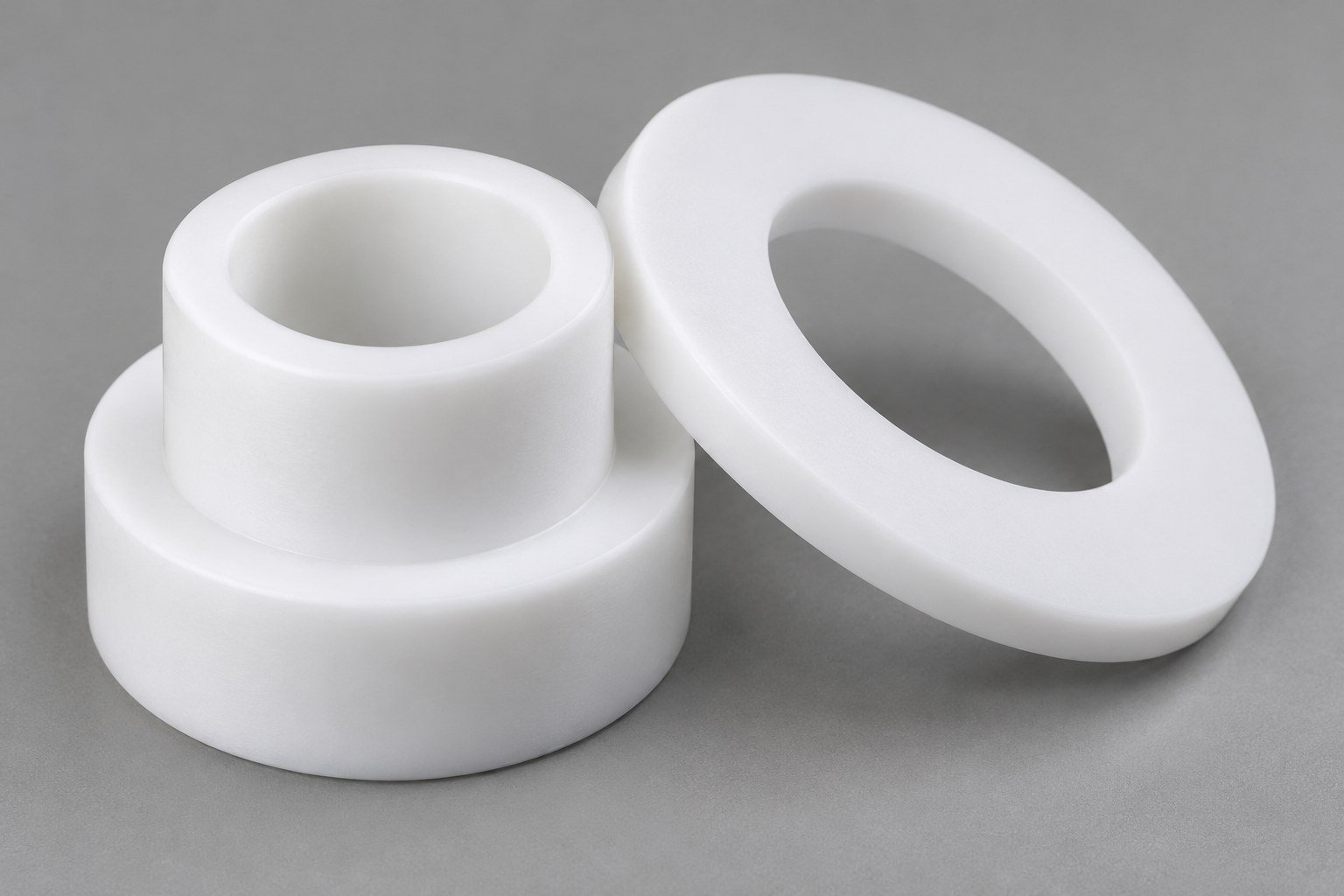
Review the selected product under actual assembly conditions. PTFE creep and cold flow depend on load, temperature, time and confinement.
| Your reference | What to confirm |
|---|---|
| Sustained load | Pressure and duration, not nominal dimensions alone |
| Mating system | Counterface, clearance and support |
| Acceptance | Leakage, wear or electrical checks as specified |
Confirm the actual stock manufacturer and billet or compound route. For filled PTFE machining, review edges, clamping and critical sealing faces.
| Your reference | What to confirm |
|---|---|
| Stock | Sheet, rod or tube, complete product and lot |
| Processing | Agreed blank route, sintering and machining allowance |
| Separate forms | PTFE skiving produces sheet/film; film is not automatically equivalent to machined plate |
No intentional filler specified; retain product and lot identity. Maintain PTFE compound batch traceability separately from finished-part inspection.
| Your reference | What to confirm |
|---|---|
| Material identity | Full product, filler, form, color and actual lot |
| Finished dimensions | Temperature, support and measuring force |
| Function | Agreed sample and specified tests |
Review load and mating-surface wear together before choosing glass filled PTFE.
| Your reference | What to confirm |
|---|---|
| Manufacturer | Ensinger |
| Material | Glass-filled PTFE reference |
| Purchasing form | Confirm current stock product |
| Your review | Media, load, final fit and records |
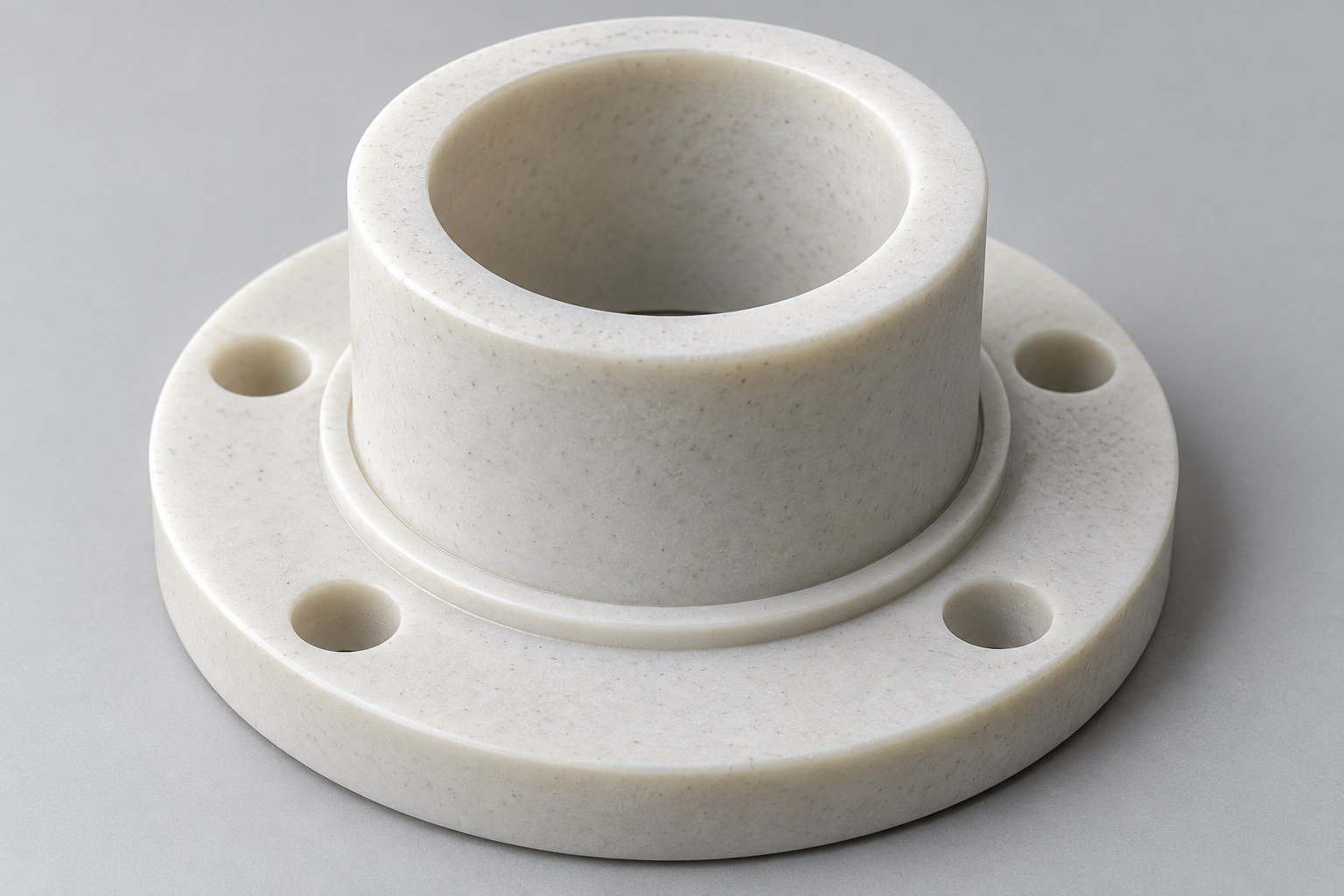
Review the selected product under actual assembly conditions. PTFE creep and cold flow depend on load, temperature, time and confinement.
| Your reference | What to confirm |
|---|---|
| Sustained load | Pressure and duration, not nominal dimensions alone |
| Mating system | Counterface, clearance and support |
| Acceptance | Leakage, wear or electrical checks as specified |
Confirm the actual stock manufacturer and billet or compound route. For filled PTFE machining, review edges, clamping and critical sealing faces.
| Your reference | What to confirm |
|---|---|
| Stock | Sheet, rod or tube, complete product and lot |
| Processing | Agreed blank route, sintering and machining allowance |
| Separate forms | PTFE skiving produces sheet/film; film is not automatically equivalent to machined plate |
Retain complete GF25 product designation; confirm declared composition and supply status. Maintain PTFE compound batch traceability separately from finished-part inspection.
| Your reference | What to confirm |
|---|---|
| Material identity | Full product, filler, form, color and actual lot |
| Finished dimensions | Temperature, support and measuring force |
| Function | Agreed sample and specified tests |
For your seal and bearing review, evaluate confinement, sustained load and service temperature.
| Your reference | What to confirm |
|---|---|
| Manufacturer | Mitsubishi Chemical Group |
| Material | Filled PTFE stock |
| Purchasing form | Dimensional-stability review |
| Your review | Media, load, final fit and records |
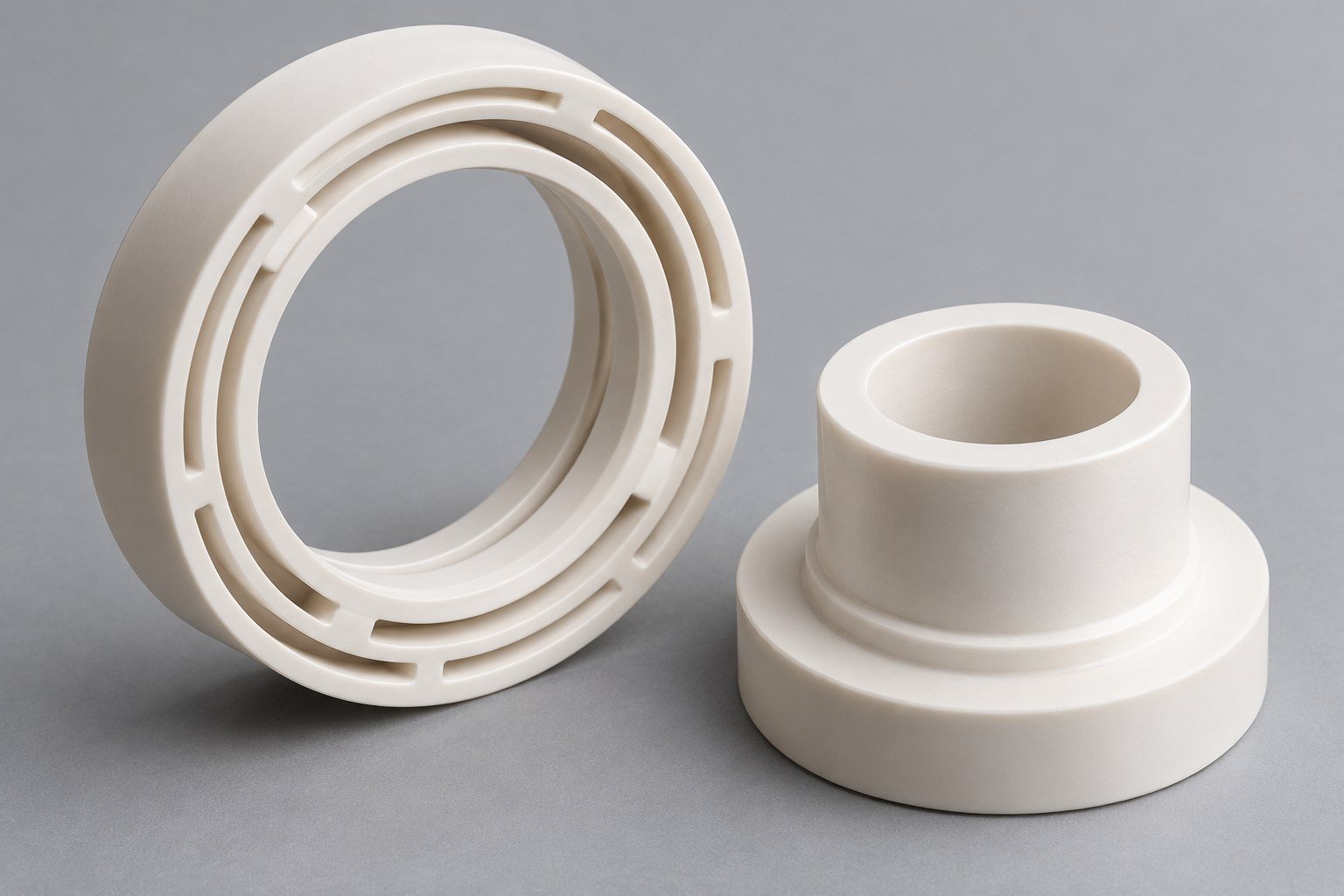
Review the selected product under actual assembly conditions. PTFE creep and cold flow depend on load, temperature, time and confinement.
| Your reference | What to confirm |
|---|---|
| Sustained load | Pressure and duration, not nominal dimensions alone |
| Mating system | Counterface, clearance and support |
| Acceptance | Leakage, wear or electrical checks as specified |
Confirm the actual stock manufacturer and billet or compound route. For filled PTFE machining, review edges, clamping and critical sealing faces.
| Your reference | What to confirm |
|---|---|
| Stock | Sheet, rod or tube, complete product and lot |
| Processing | Agreed blank route, sintering and machining allowance |
| Separate forms | PTFE skiving produces sheet/film; film is not automatically equivalent to machined plate |
Supplier filled formulation; do not infer a universal filler content from the brand. Maintain PTFE compound batch traceability separately from finished-part inspection.
| Your reference | What to confirm |
|---|---|
| Material identity | Full product, filler, form, color and actual lot |
| Finished dimensions | Temperature, support and measuring force |
| Function | Agreed sample and specified tests |
For your seats, bushings and guides, review the mating system and the exact chemical exposure.
| Your reference | What to confirm |
|---|---|
| Manufacturer | Mitsubishi Chemical Group |
| Material | Filled PTFE stock |
| Purchasing form | Sliding and media review |
| Your review | Media, load, final fit and records |
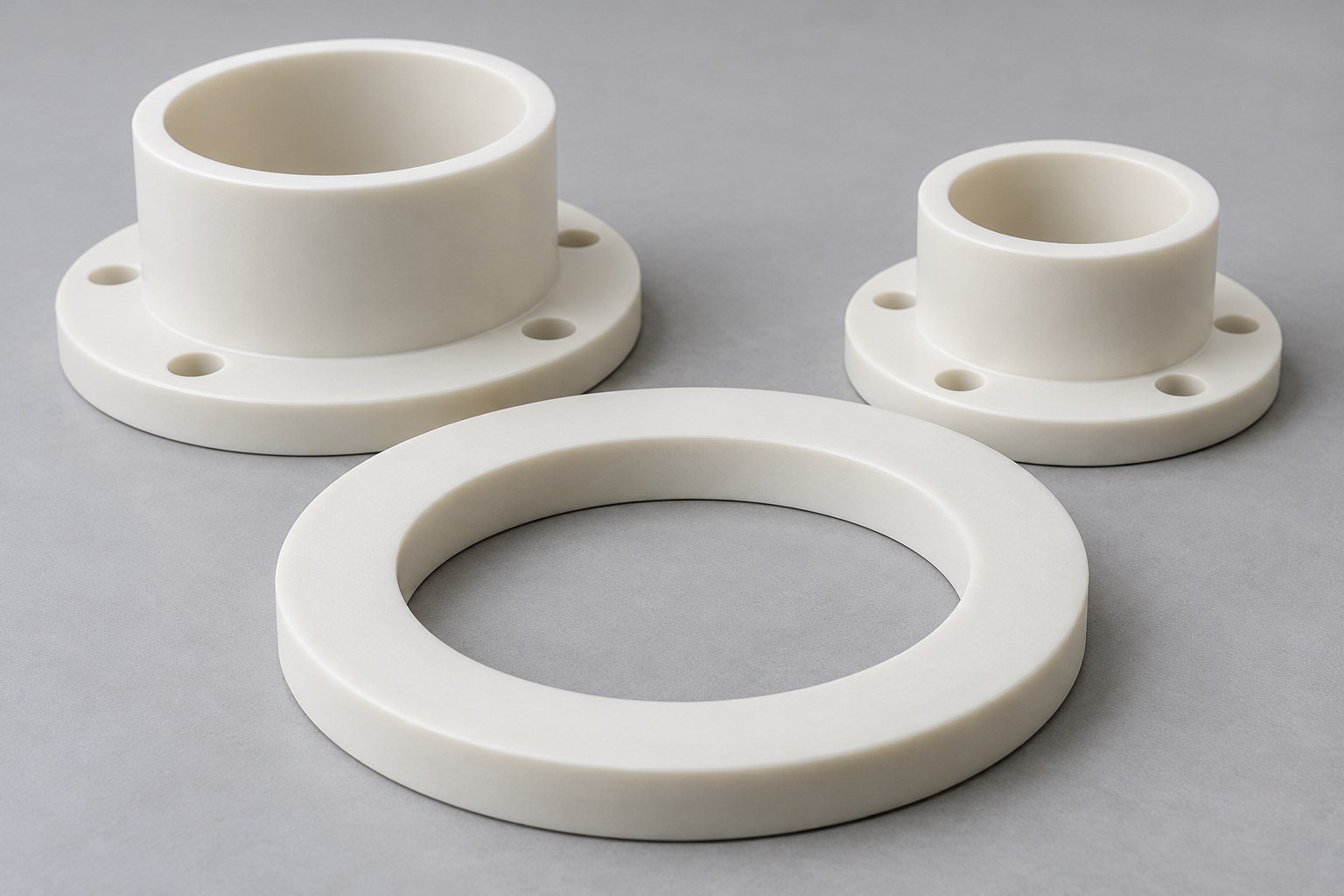
Review the selected product under actual assembly conditions. PTFE creep and cold flow depend on load, temperature, time and confinement.
| Your reference | What to confirm |
|---|---|
| Sustained load | Pressure and duration, not nominal dimensions alone |
| Mating system | Counterface, clearance and support |
| Acceptance | Leakage, wear or electrical checks as specified |
Confirm the actual stock manufacturer and billet or compound route. For filled PTFE machining, review edges, clamping and critical sealing faces.
| Your reference | What to confirm |
|---|---|
| Stock | Sheet, rod or tube, complete product and lot |
| Processing | Agreed blank route, sintering and machining allowance |
| Separate forms | PTFE skiving produces sheet/film; film is not automatically equivalent to machined plate |
Specific supplier product; any regulated end use needs separate product evidence. Maintain PTFE compound batch traceability separately from finished-part inspection.
| Your reference | What to confirm |
|---|---|
| Material identity | Full product, filler, form, color and actual lot |
| Finished dimensions | Temperature, support and measuring force |
| Function | Agreed sample and specified tests |
Review the exact compound against the function of your finished part.
| Material direction | Your review focus | Do not assume |
|---|---|---|
| Unfilled PTFE | Media, electrical function and fit | No creep under sustained load |
| Glass filled | Load, mating surface and wear | The filler suits every counterface |
| Carbon filled | Wear system and electrical behavior | A defined ESD or insulation rating |
| Bronze filled | Load, heat transfer and media | Unfilled-PTFE chemical resistance |
Percent stated in the manufacturer product designation
Composition labels, not a laboratory analysis or performance ranking. These are different filler systems. Do not infer other grades, a guaranteed finished-part result or an unlisted formulation.
Carbon product source → Bronze datasheet →Additional product references — photographs do not establish grade or filler identity.
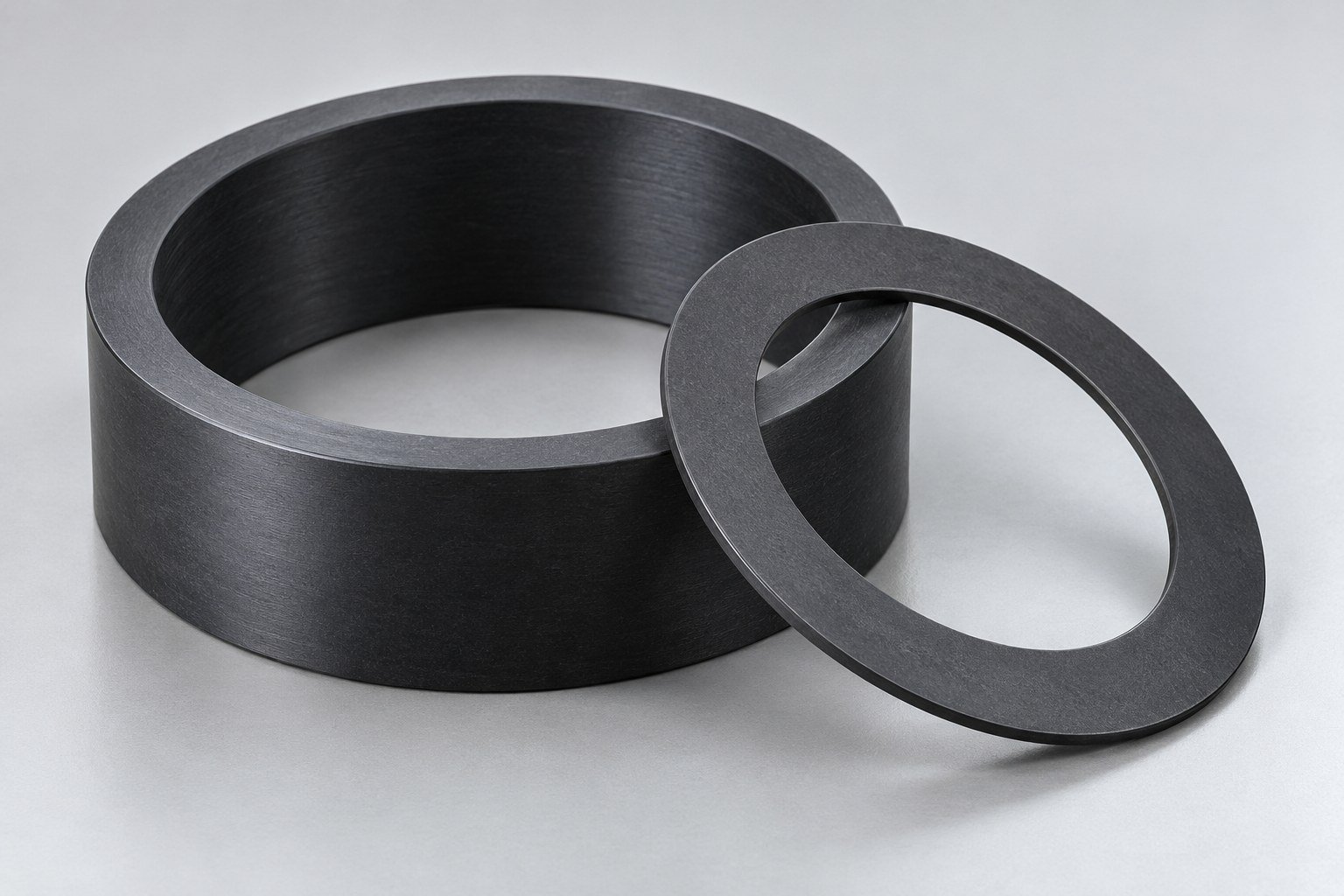
Review wear, media and electrical requirements. Carbon filled PTFE is not automatically electrically insulating.
Manufacturer reference →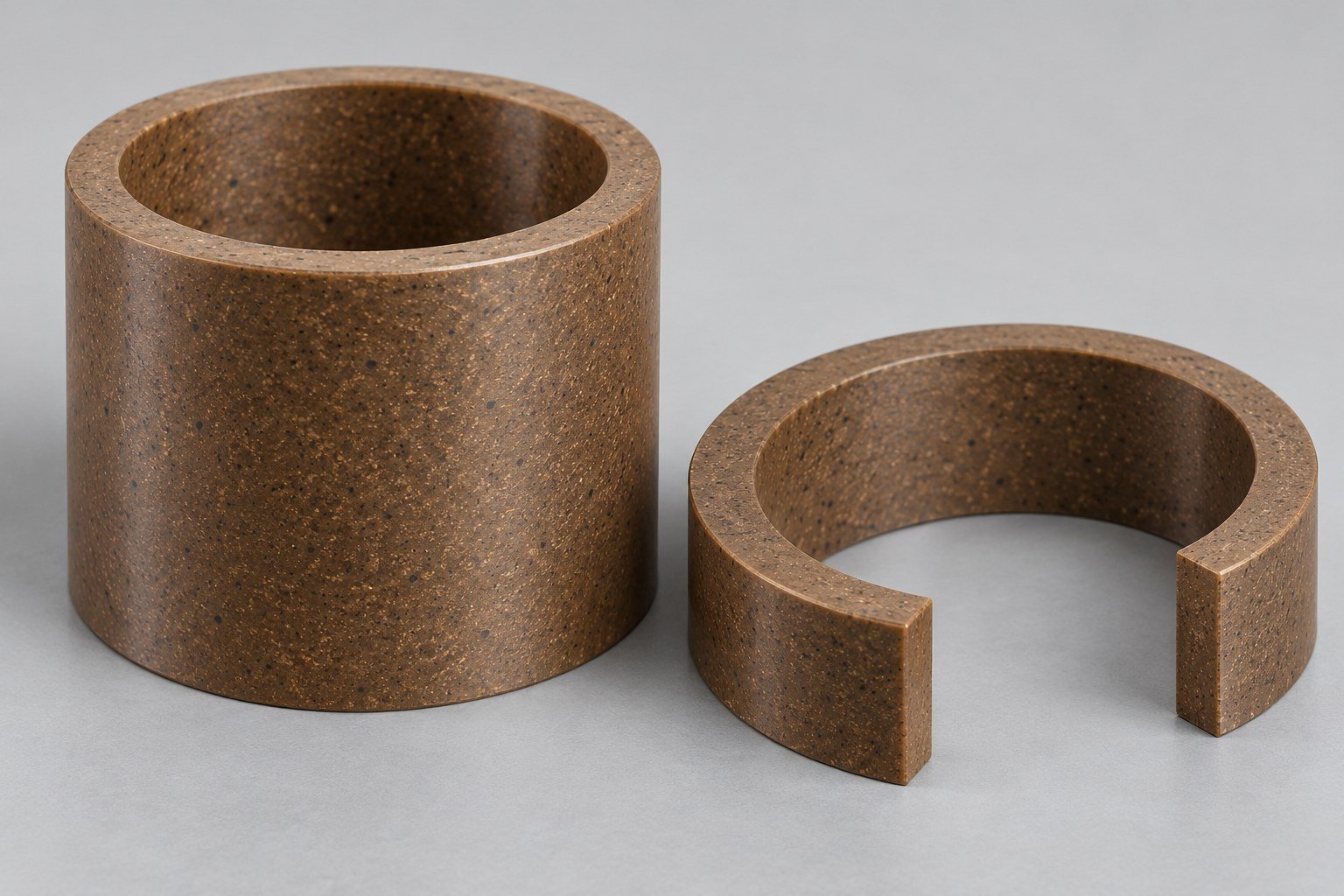
Review load and heat transfer; check chemical resistance separately.
Manufacturer reference →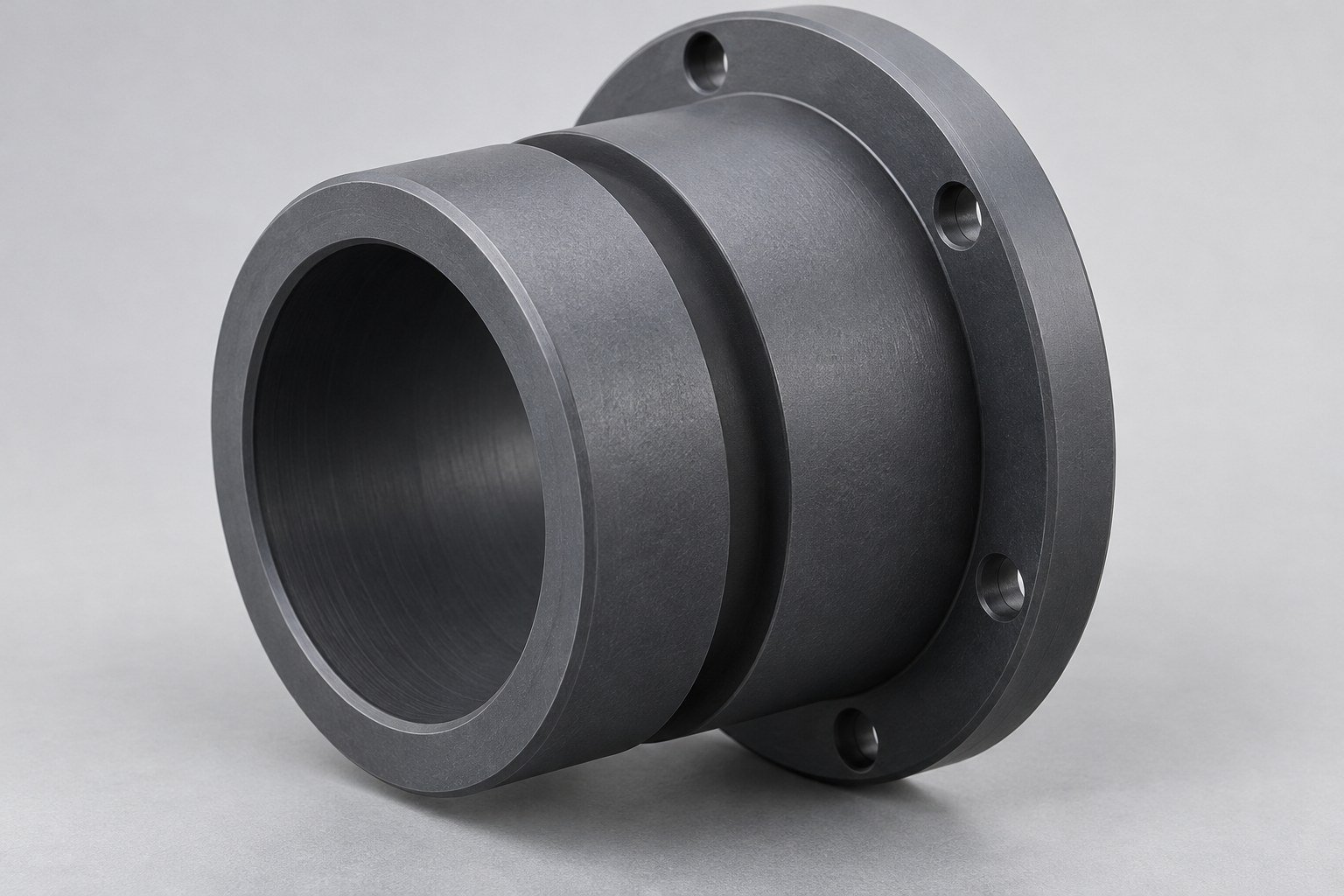
Review pressure, speed, lubrication and counterface. Validate your actual bearing conditions.
Manufacturer reference →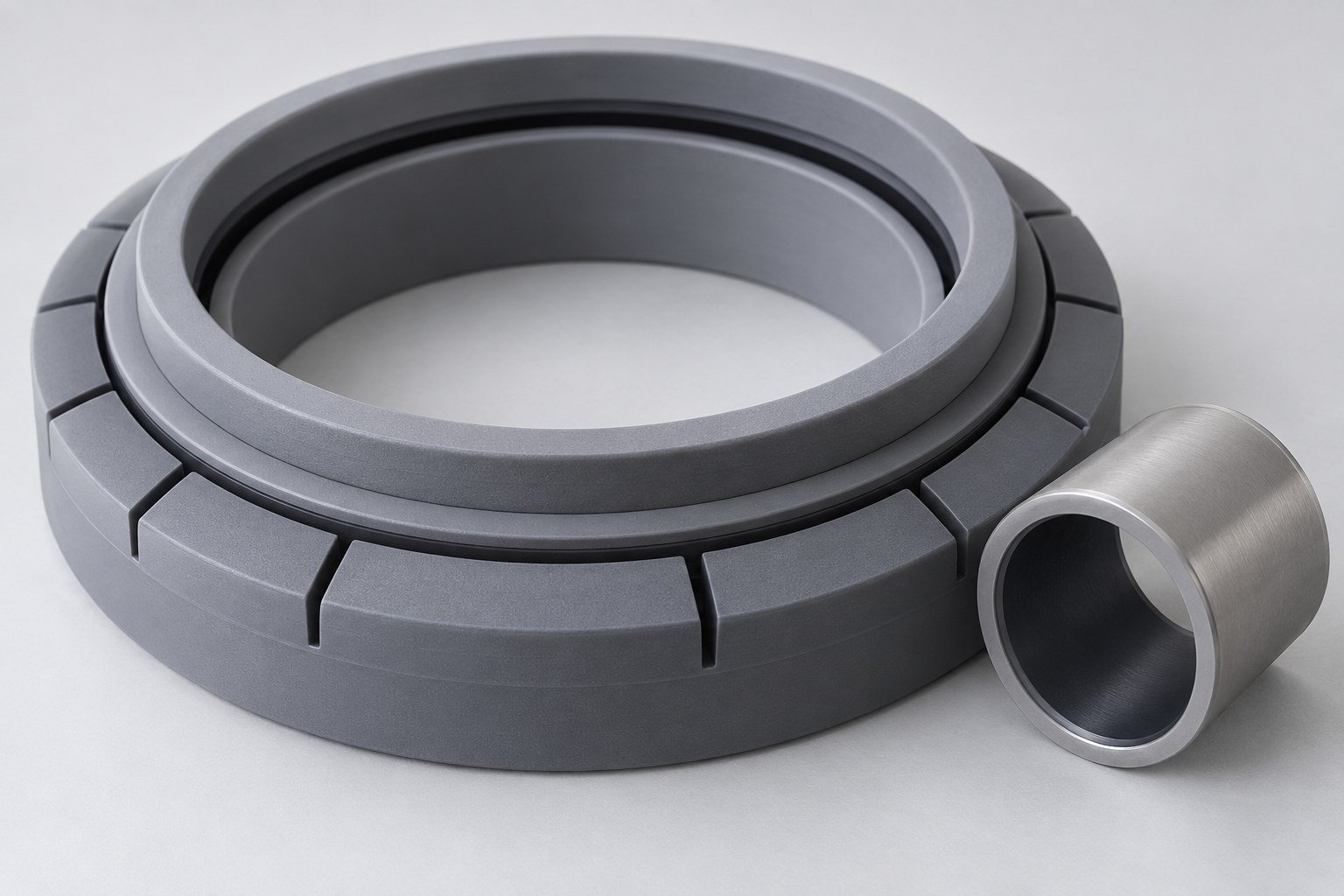
Review heat and mechanical load together with finished fit. Confirm the exact current stock product.
Manufacturer reference →Chemours Teflon PTFE NXT 70 is a chemically modified granular resin intended for compression molding and subsequent sintering. Confirm the exact resin, preform and billet process. It is not a general melt-injection grade, and its data does not identify unspecified CNC stock.
NXT 70 manufacturer information →| Composition / identity | What your purchase order should retain |
|---|---|
| PTFE / polytetrafluoroethylene | Exact manufacturer product, supplied form and lot |
| Unfilled PTFE | Do not infer purity, recycled content or approval from white color |
| Glass / carbon / bronze filled | Specified filler type and supplier-declared content; other additives separately |
| Modified PTFE | Exact product and modification; not interchangeable with a filled grade |
| Material analysis report | Actual sample/lot, agreed method and report scope |
Review the conditions your PTFE part must meet, not only its nominal dimensions.
Define loaded and unloaded acceptance separately. Review sustained force and the mating gap before approving your drawing.
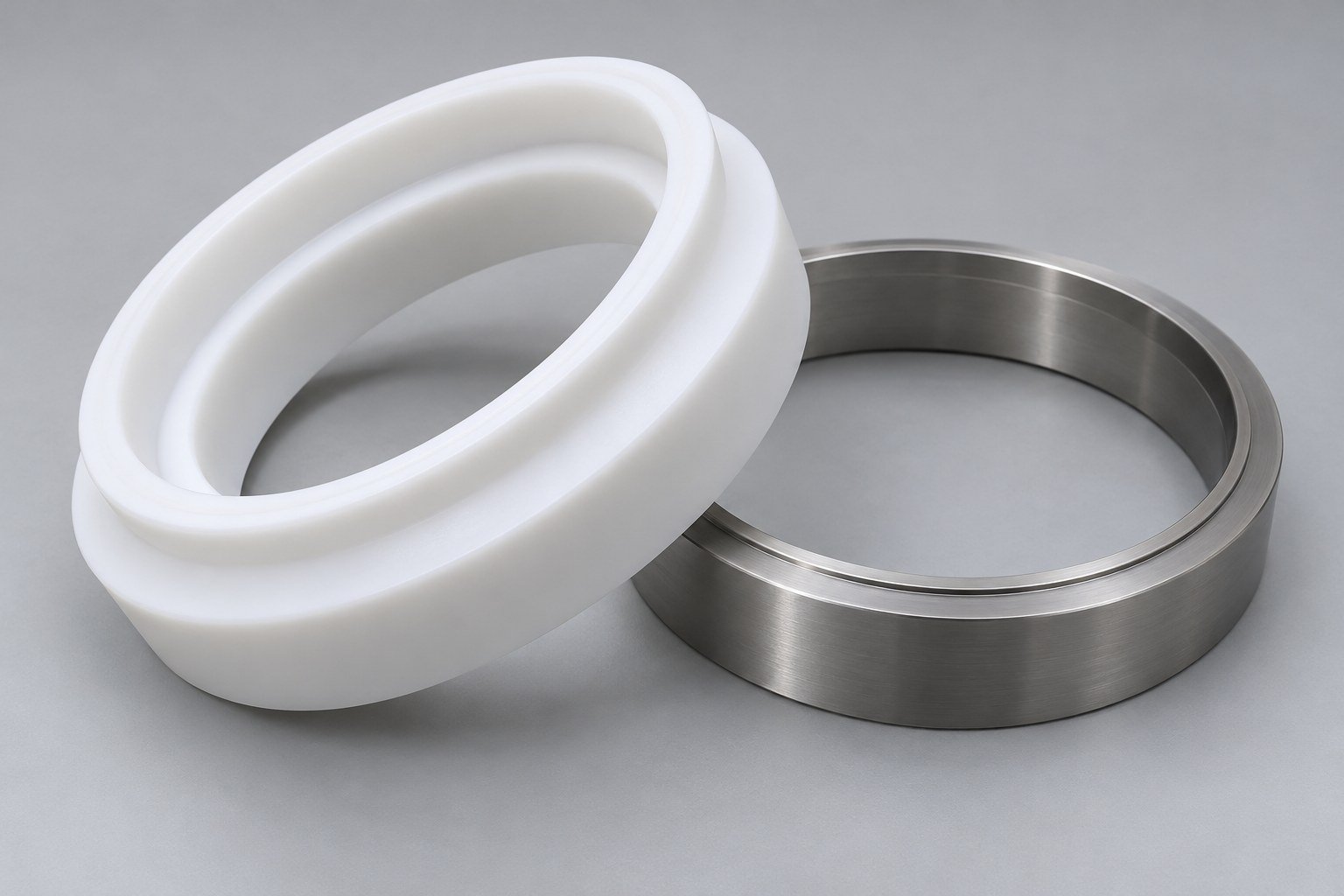
Temperature affects the PTFE part and its mating component differently. Agree stabilization, assembly temperature and clearance before approving a bushing.
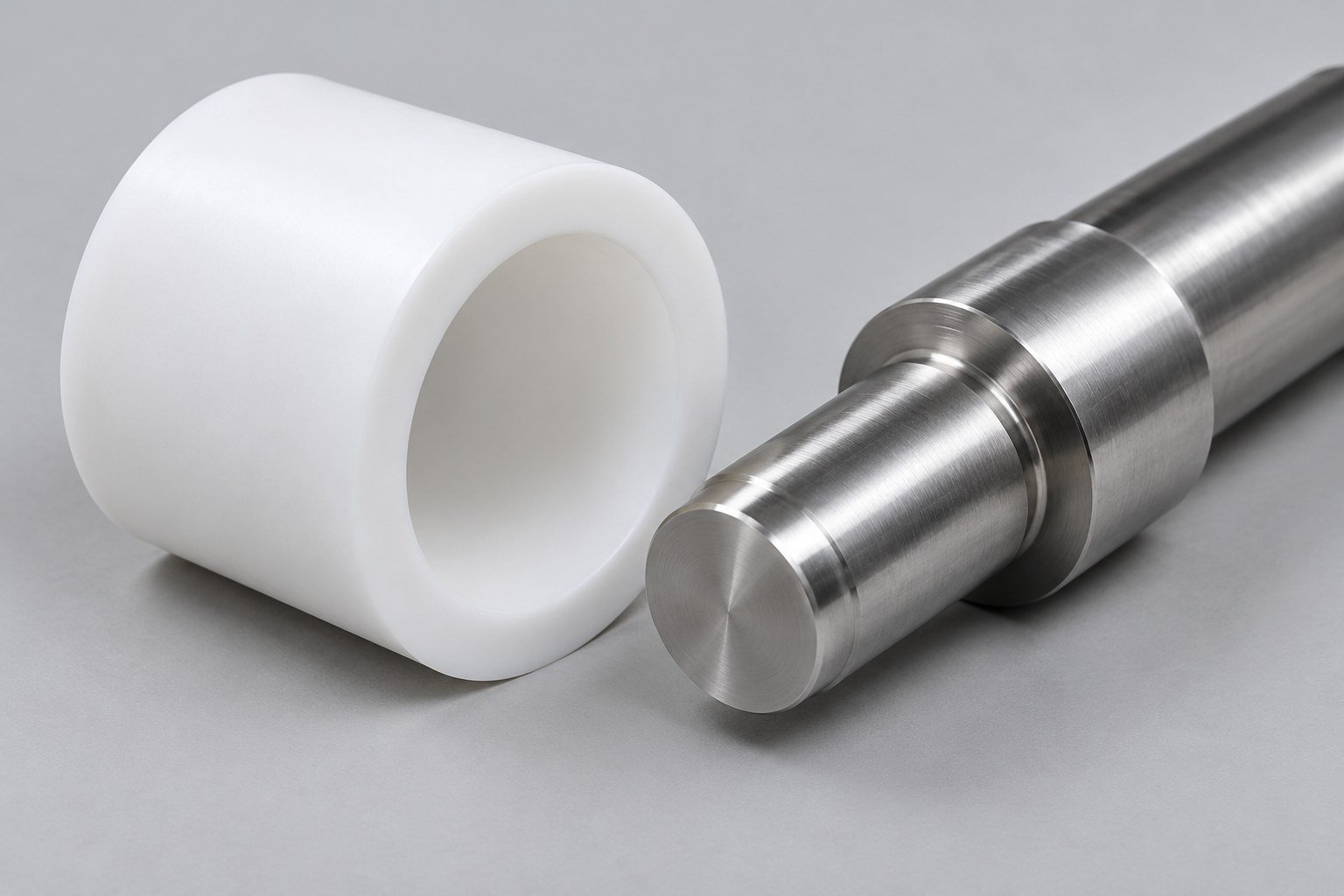
For thin PTFE components, agree burr, edge and cleanliness requirements. Use a supported inspection method that does not distort the feature.
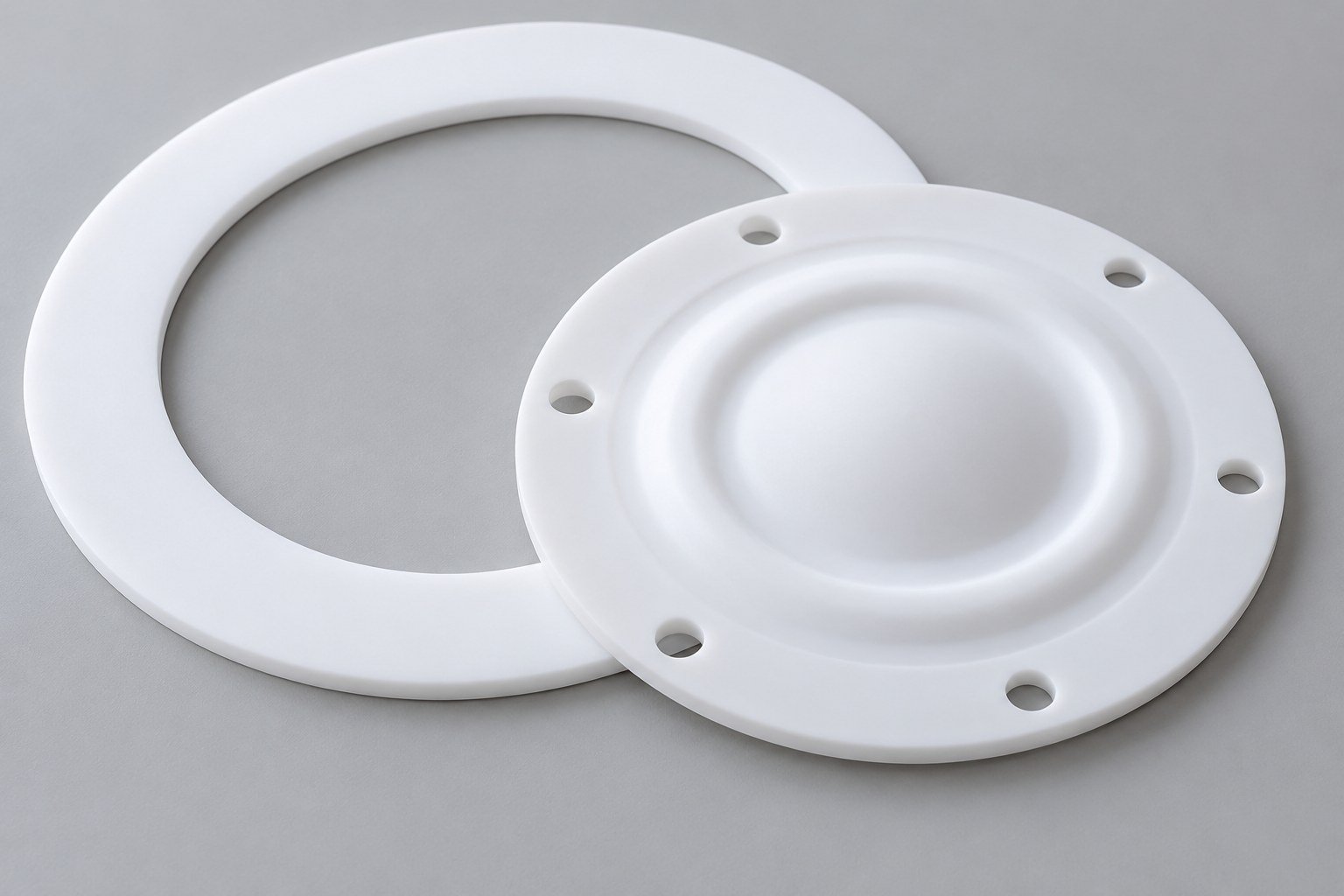
Review motion, speed, load and lubrication. A generic friction coefficient is not a reliable acceptance value for every filled formulation or assembly.
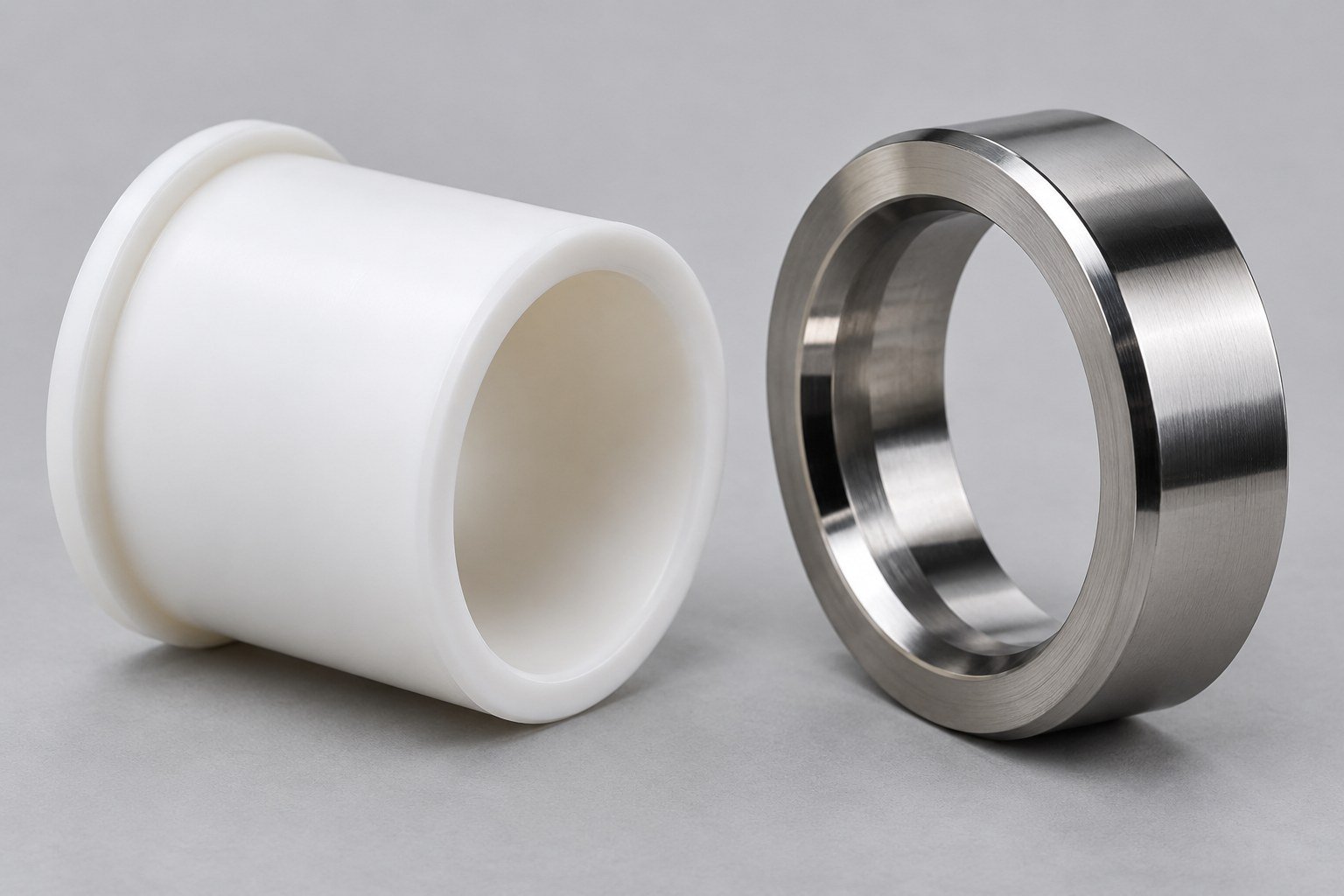
Glass, carbon and bronze formulations change the review. Specify chemical, concentration, stress and exposure time before approving a substitute.
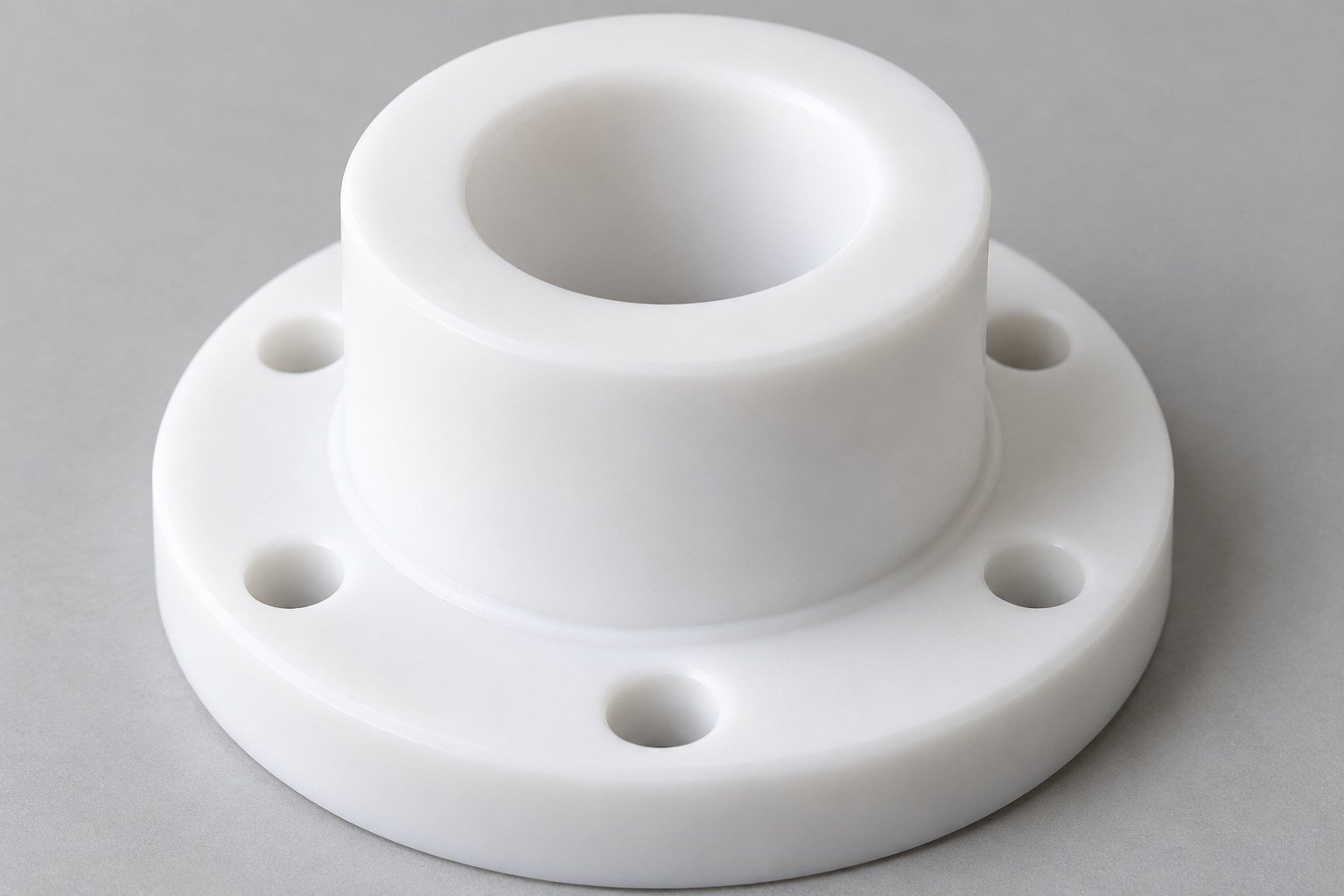
For a machined PTFE sealing face, specify the counterface and leakage acceptance. Bonding, etching, coating or texturing need product-specific trials; do not promise adhesion from the polymer name.
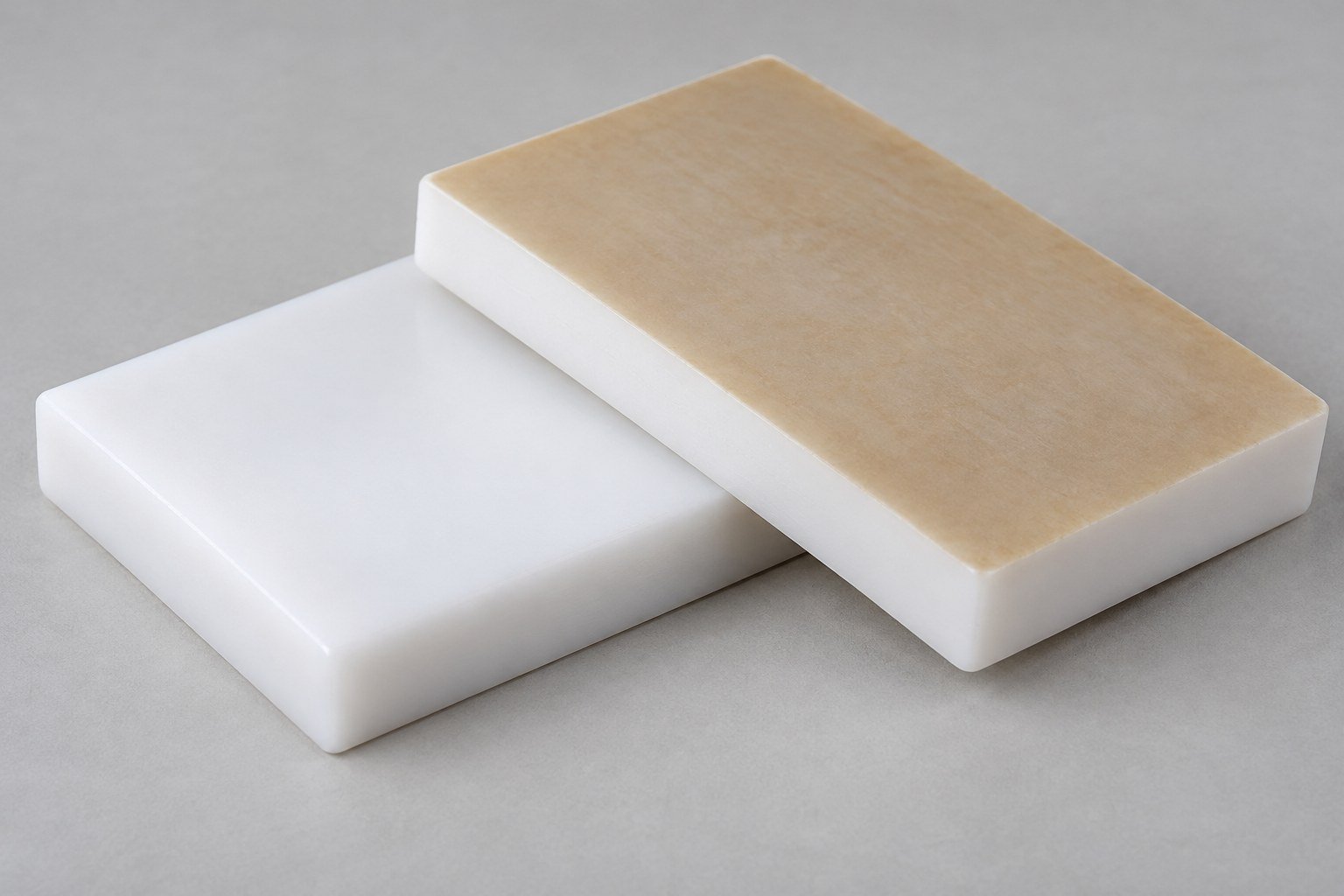
The selected product and agreed project scope determine the manufacturing route.
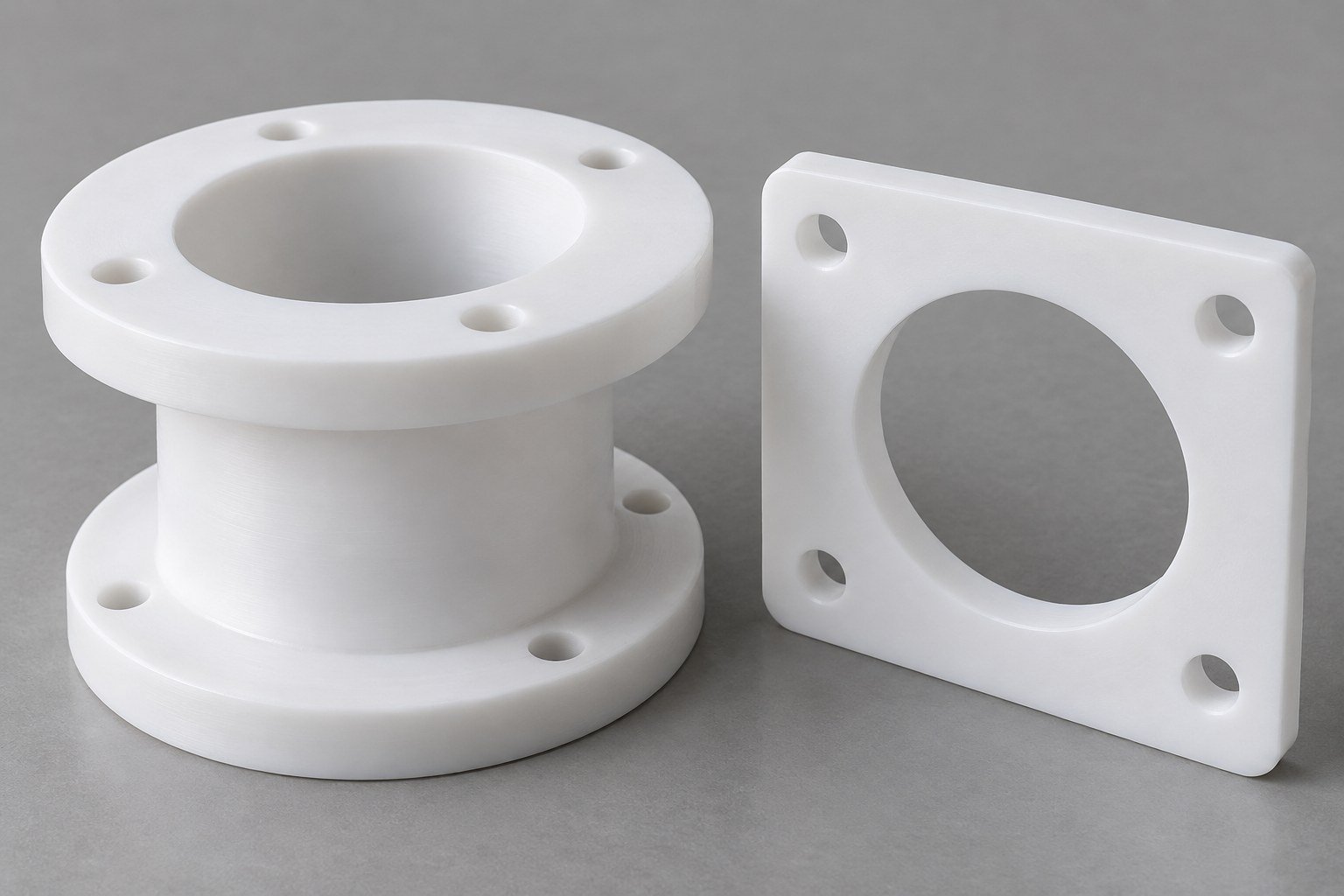
Plan stock, support, critical features and final measurement.
Explore CNC machining →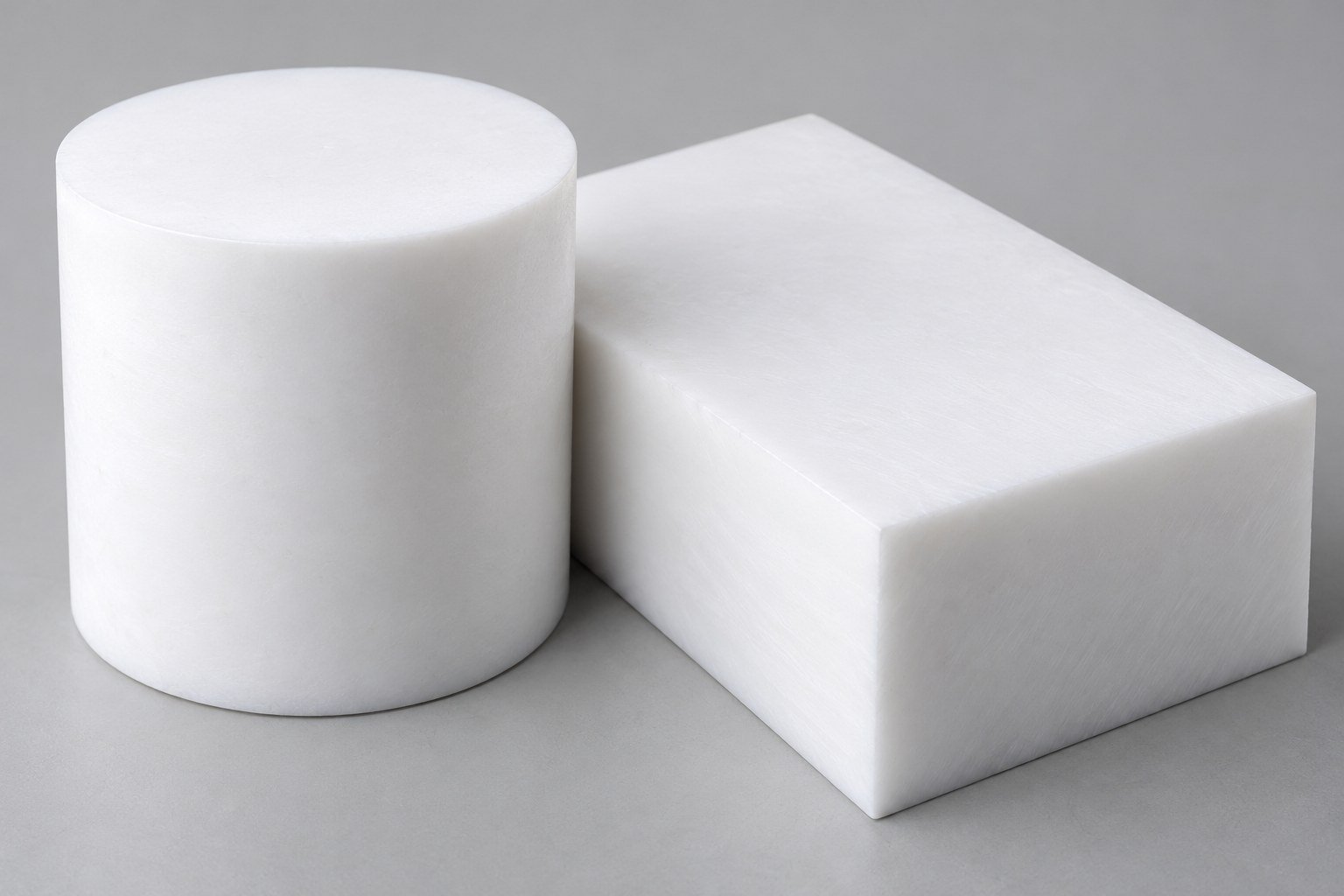
Confirm powder, preform, sintering and stock evidence. Review availability for your project.
Review blank scope ↓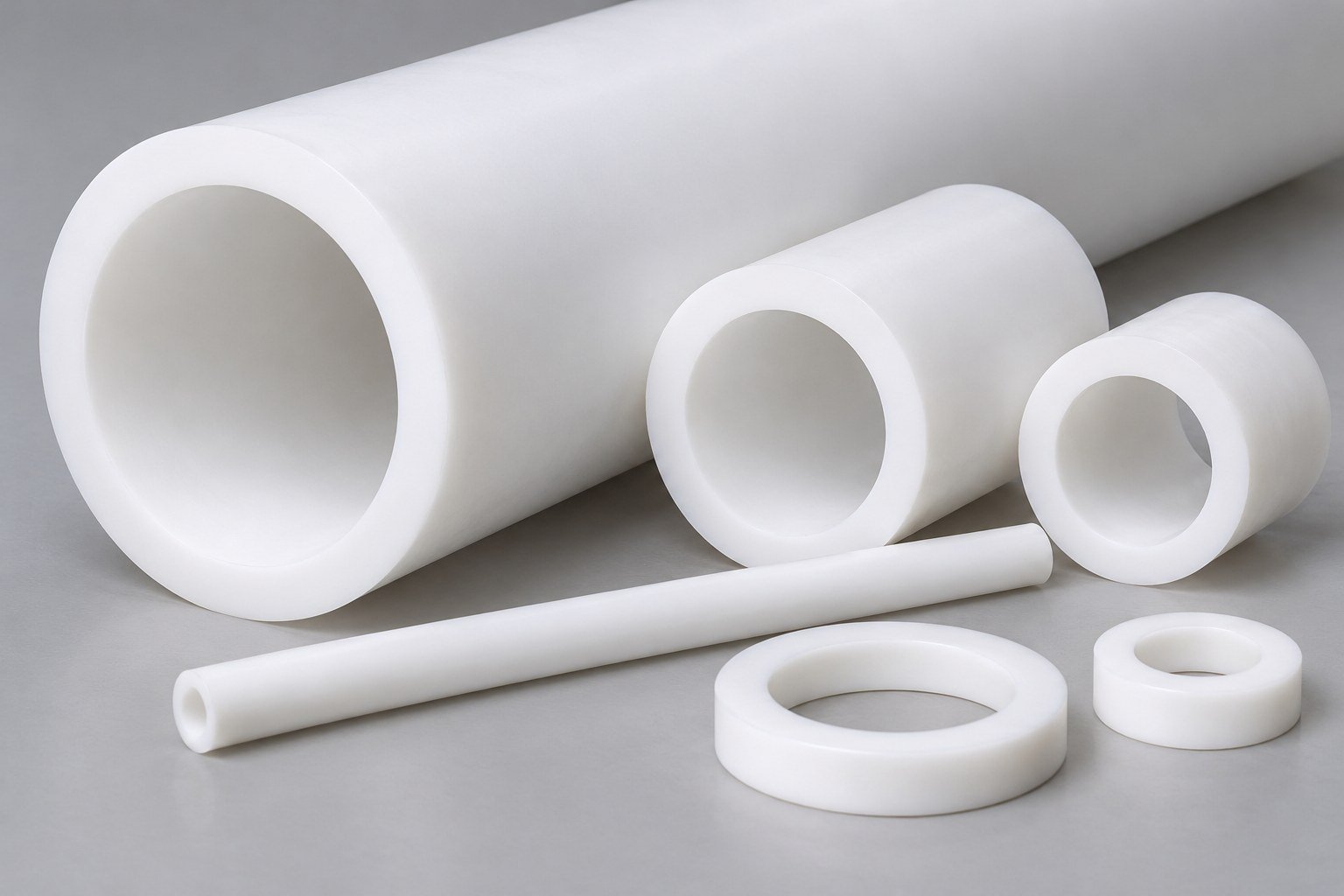
Confirm ram or paste extrusion for the specified resin and required product form.
Review extrusion scope →Illustrative concepts. Images do not establish material identity, process capability or equipment availability. Scope is confirmed in your quotation.
Full product, filler, form and actual lot.
Temperature, support, measuring force and datums.
Agreed leakage, wear or electrical checks.
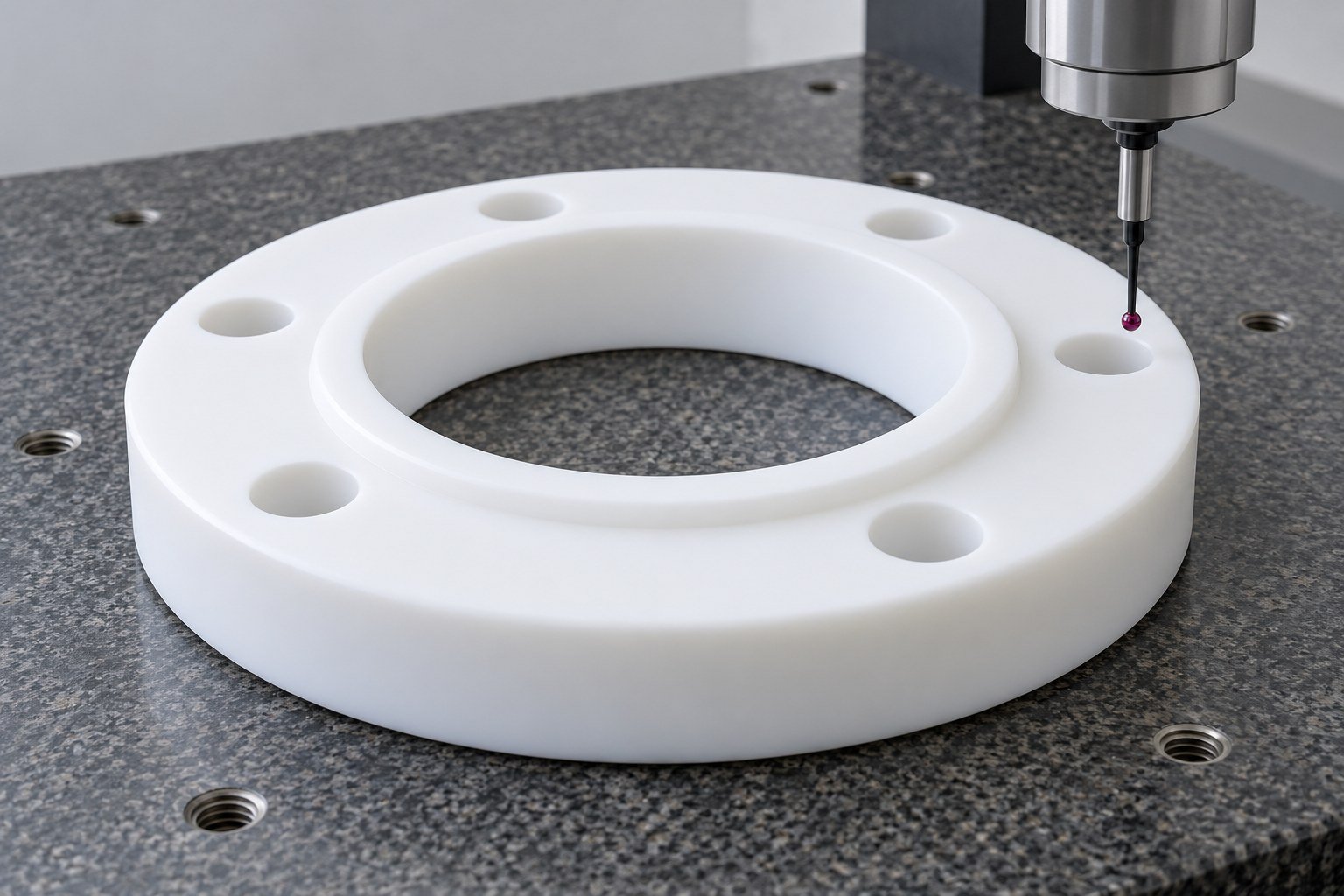
A dimensional report alone does not establish sealing performance. Test scope and sampling are agreed for your project.
Material and blank · Forming or machining · Finish · Inspection · Delivery
For your PTFE machining quote, send CAD, controlled drawing, quantities, full grade and filler, stock form, critical fits, media, pressure, motion, temperature and inspection records. For custom PTFE gaskets, include the mating flange and leakage acceptance.
Keep formulation and process representative, and validate leakage, wear and service conditions. When reviewing a PTFE seals manufacturer, distinguish dimensional sample approval from functional production evidence.
No. PTFE is the polymer name; Teflon is a Chemours trademark. Specify the actual manufacturer, full grade and product form rather than treating a brand name as a universal material certificate.
Specify the formulation, supplier evidence, lot and any agreed analytical method. PTFE compound batch traceability identifies a product chain; photographs, color and a dimensional report do not establish filler content.
No blanket approval follows from the polymer name. Exact product, formulation, color, processing, intended use and current applicable documentation require separate review.
Agree temperature, stabilization time, support, contact force and repeat-check method. For PTFE sealing face flatness inspection, define the datums and how the flexible face is supported.
Temperature, stress release, clamping and deformation can affect readings. Review removal sequence, conditioning and measurement for your actual stock and geometry; do not apply a universal tolerance promise.
Evaluate temperature difference, mating materials and assembly conditions together. When reviewing a PTFE bushings manufacturer, agree the finished diameters and clearance at the specified inspection state.
Specify the mating surface, medium, pressure and leakage acceptance. Agree roughness, allowed marks and edge condition for the actual seal rather than one generic finish number.
Review PTFE creep under sustained load together with temperature, time and confinement. Separate unloaded dimensions from loaded functional acceptance and validate the actual mating gap.
Compare quantities, geometry, blank yield, preforming, sintering and machining allowance. PTFE skiving, molding and CNC machining produce different forms and evidence; confirm project scope before choosing.
Conventional PTFE is not an ordinary melt-injection material. Confirm the exact resin and its specified compression, ram or paste route. Do not apply the processing route of PFA or FEP to PTFE.
Not automatically. Reassess the medium, load, counterface, wear, electrical behavior and end-use requirements. Filled PTFE machining and unfilled stock require identification of the complete product.
Agree edge quality, support, cleaning and sample approval. Check that deburring and handling do not damage the sealing surface or deform the feature.
Material references: Ensinger · Mitsubishi Chemical Group · Röchling · Chemours. Confirm full product and current documents for your order.
Engineering Plastics → Quality Assurance →