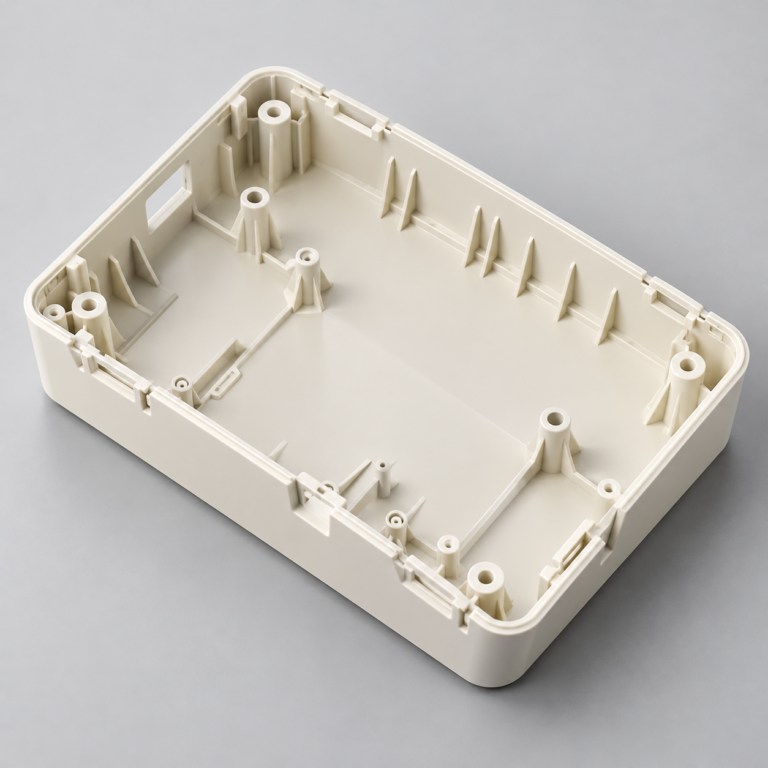
Injection Molding
Tooling and molding for your repeat plastic parts.
From prototype to production, coordinated manufacturing solutions for your custom parts.
View All Services →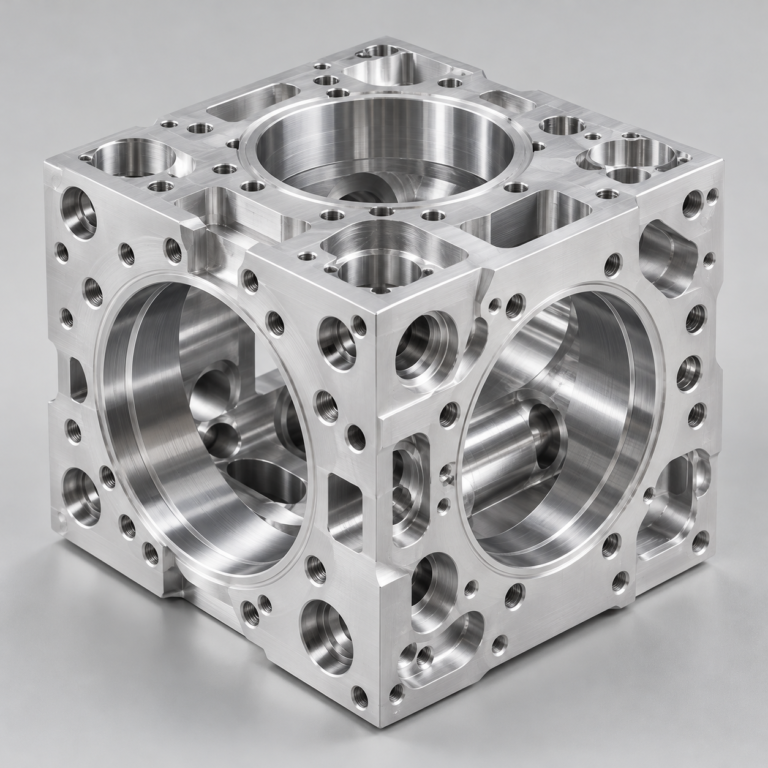
Precision parts for your tight tolerances and complex geometry.
Tooling and molding for your repeat plastic parts.
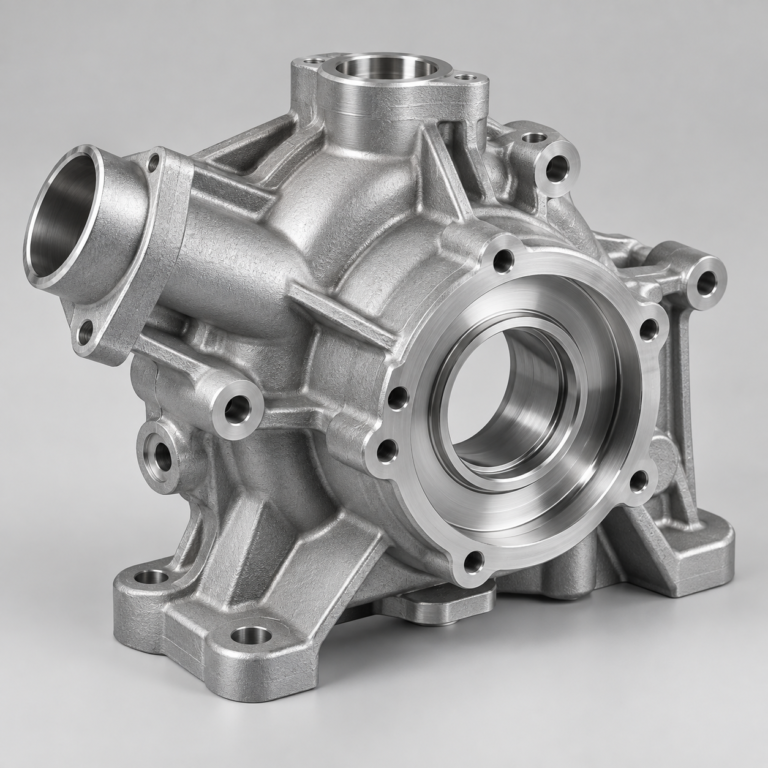
Metal casting options for your part and production volume.
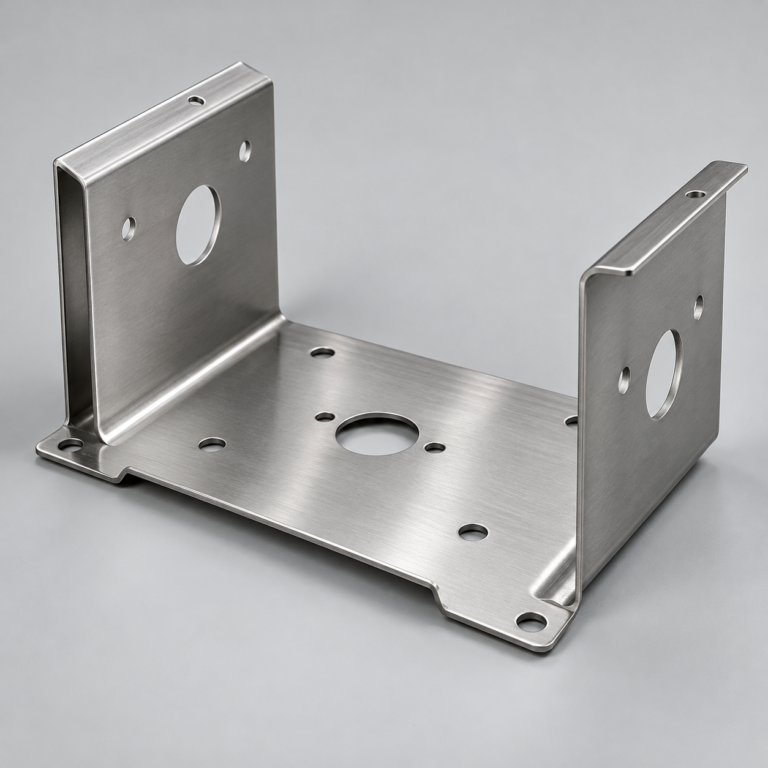
Cutting, forming and welding for your fabricated parts.
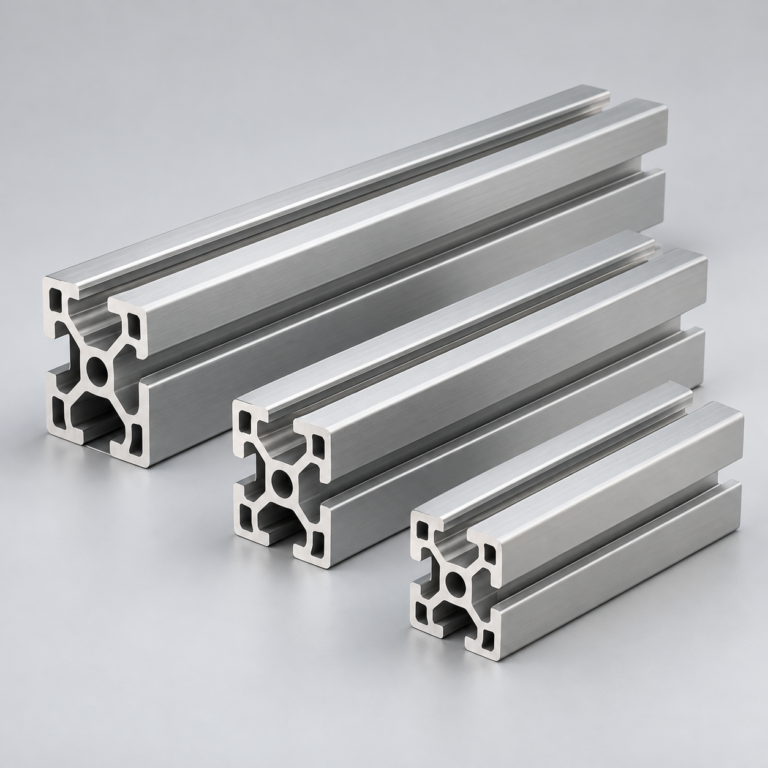
Custom profiles for your section, length and finish requirements.
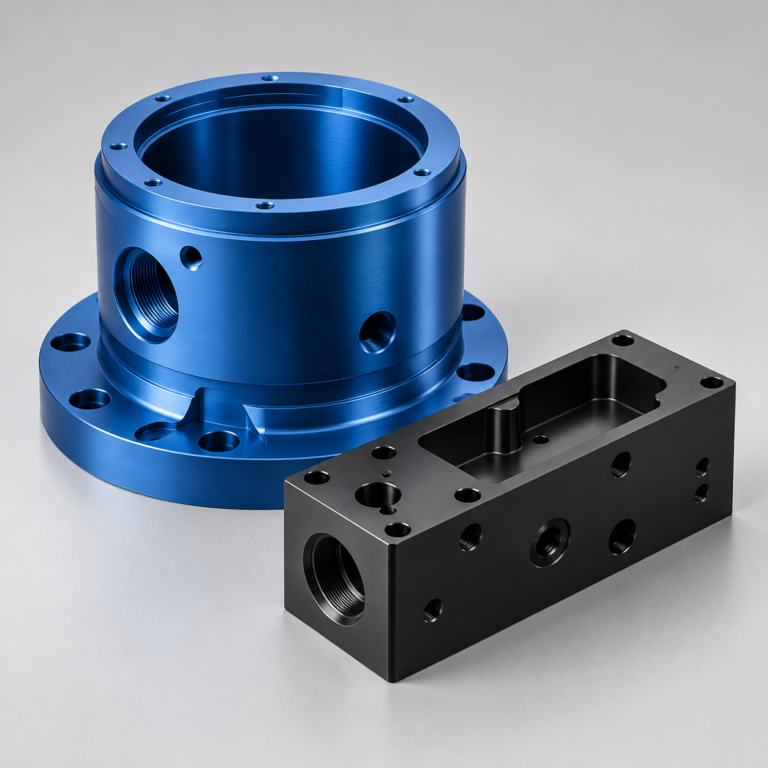
Finishes for your appearance, corrosion and wear requirements.
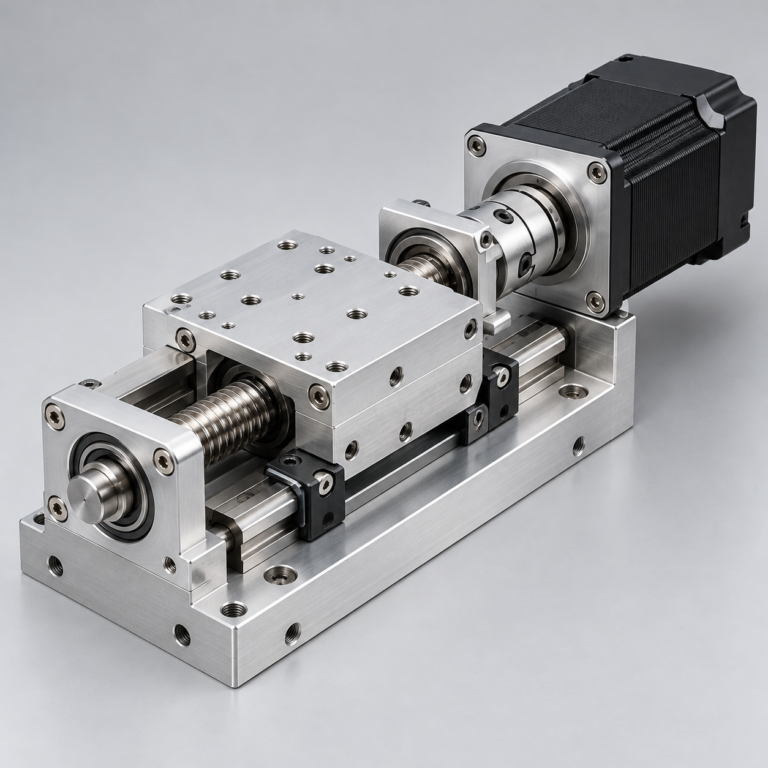
Sub-assemblies and final builds for your production program.
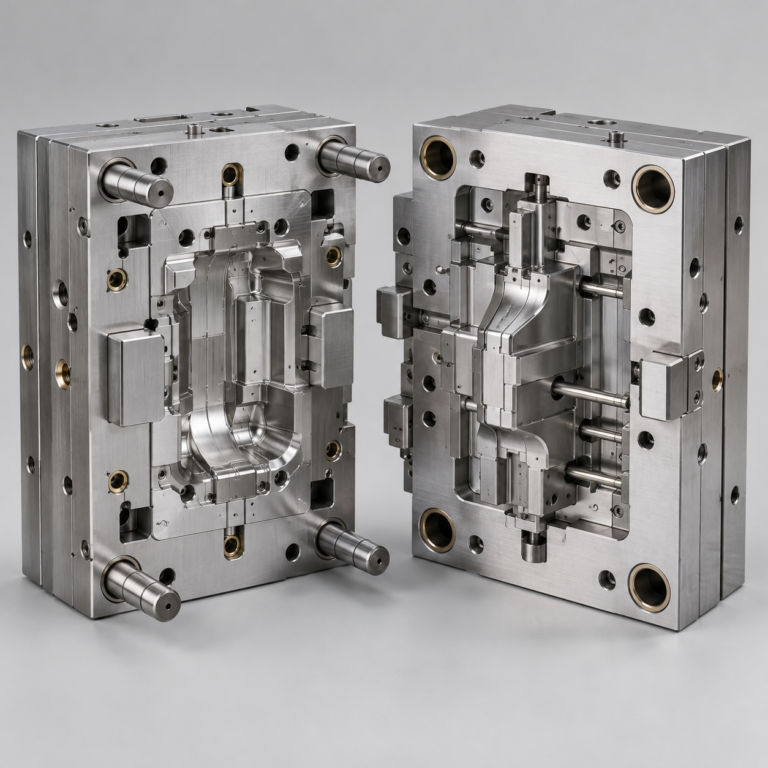
Production tooling built around your process and volume.
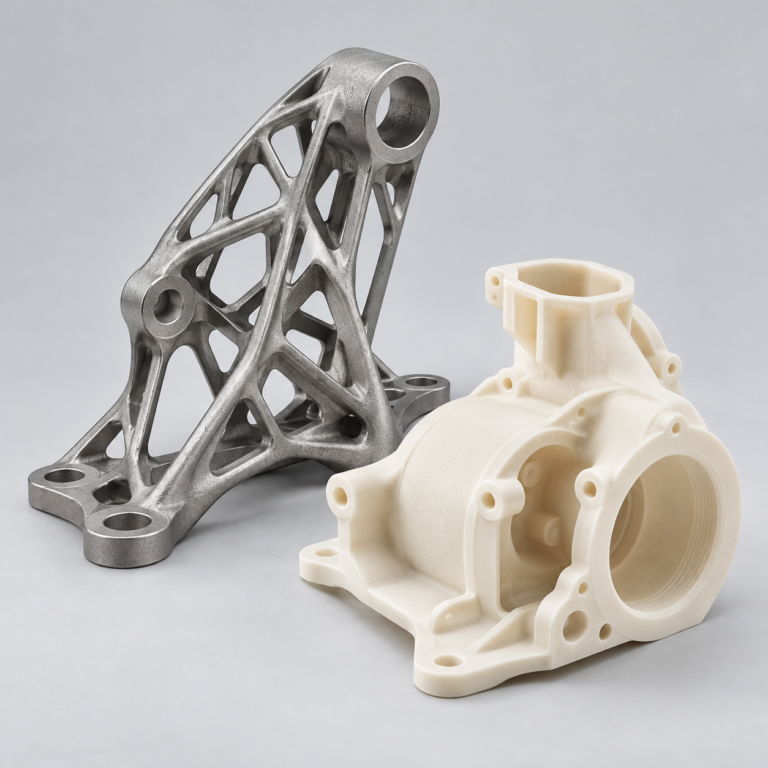
Prototype parts to check fit, function and design.
DFM, process planning and production support for your project.
Inspection, documentation, inventory and delivery planning for your program.
Choose air- or liquid-cooling components around your thermal and mechanical requirements.
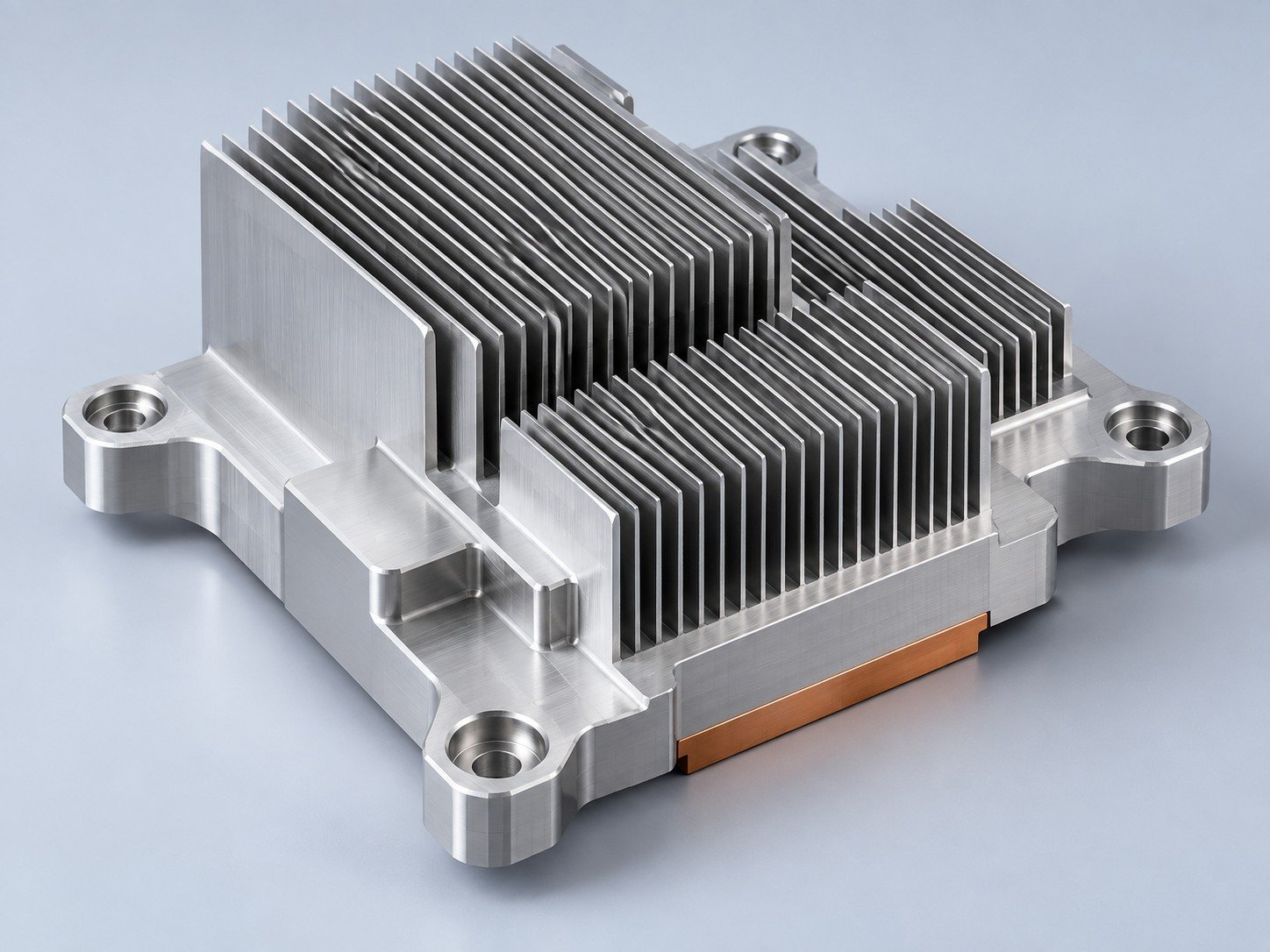
Manufacturing support for your cold plates, manifolds and cooling assemblies.
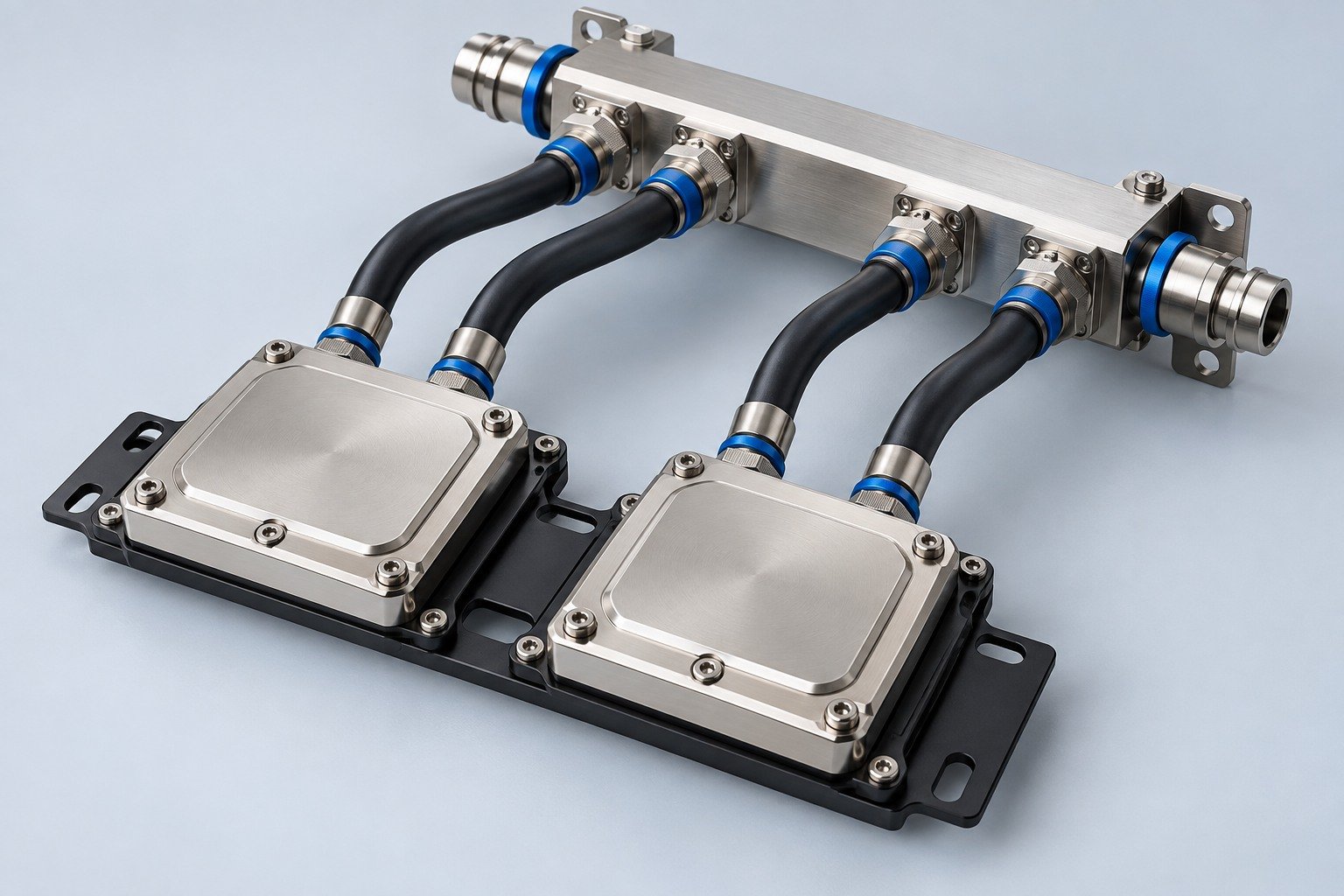
Find components for your power electronics, energy, laser and telecom application.
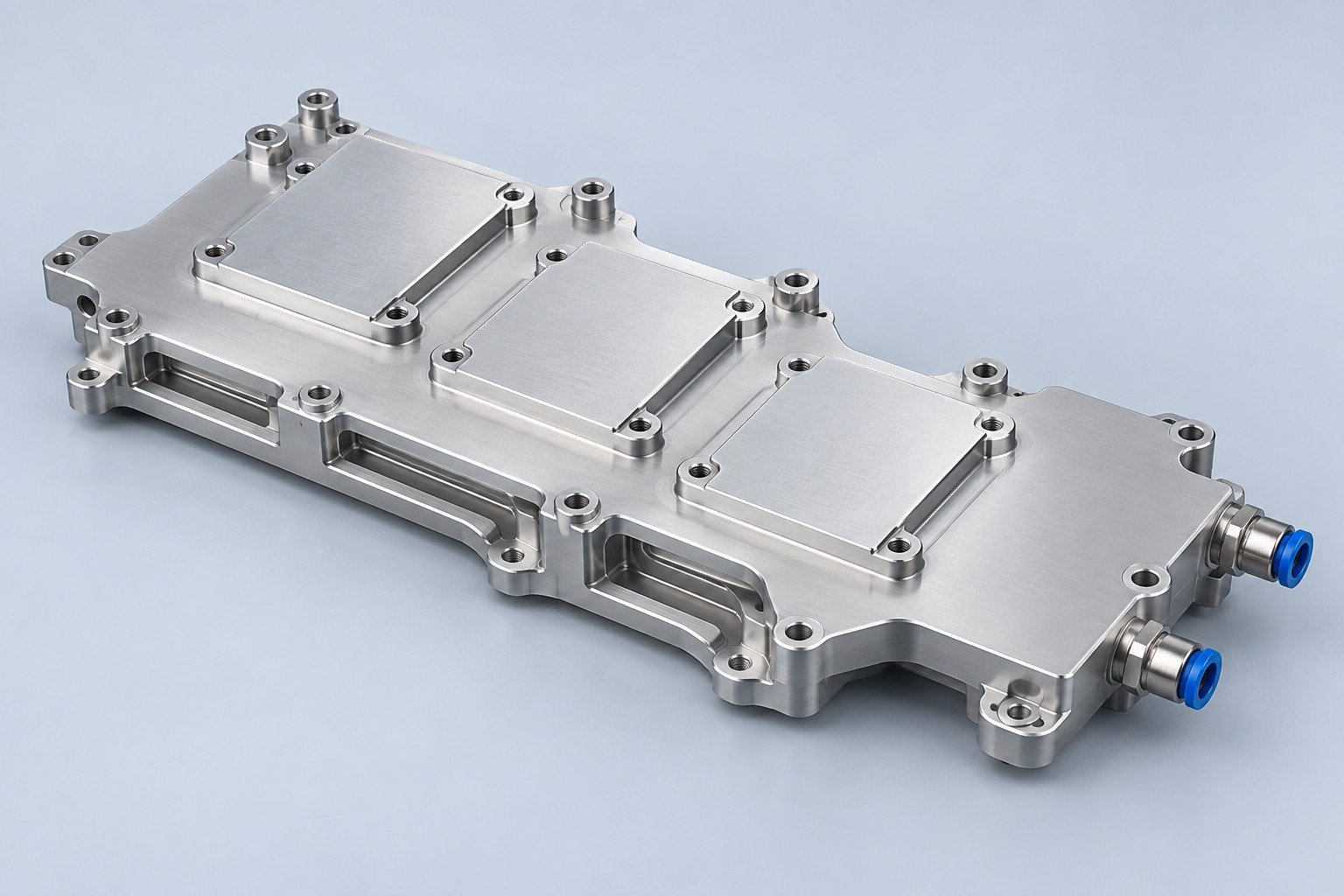
Components for your electronic systems.
Start with your functional and quality requirements.
Build around your operating environment.
From prototype to production, review material performance, manufacturability and cost for your part.
Review grade, temper and finish for your metal parts.
 AluminumStrength, weight and machining›
 Stainless SteelCorrosion and finish requirements›
 Carbon & Alloy SteelDiscuss grade and heat treatment›
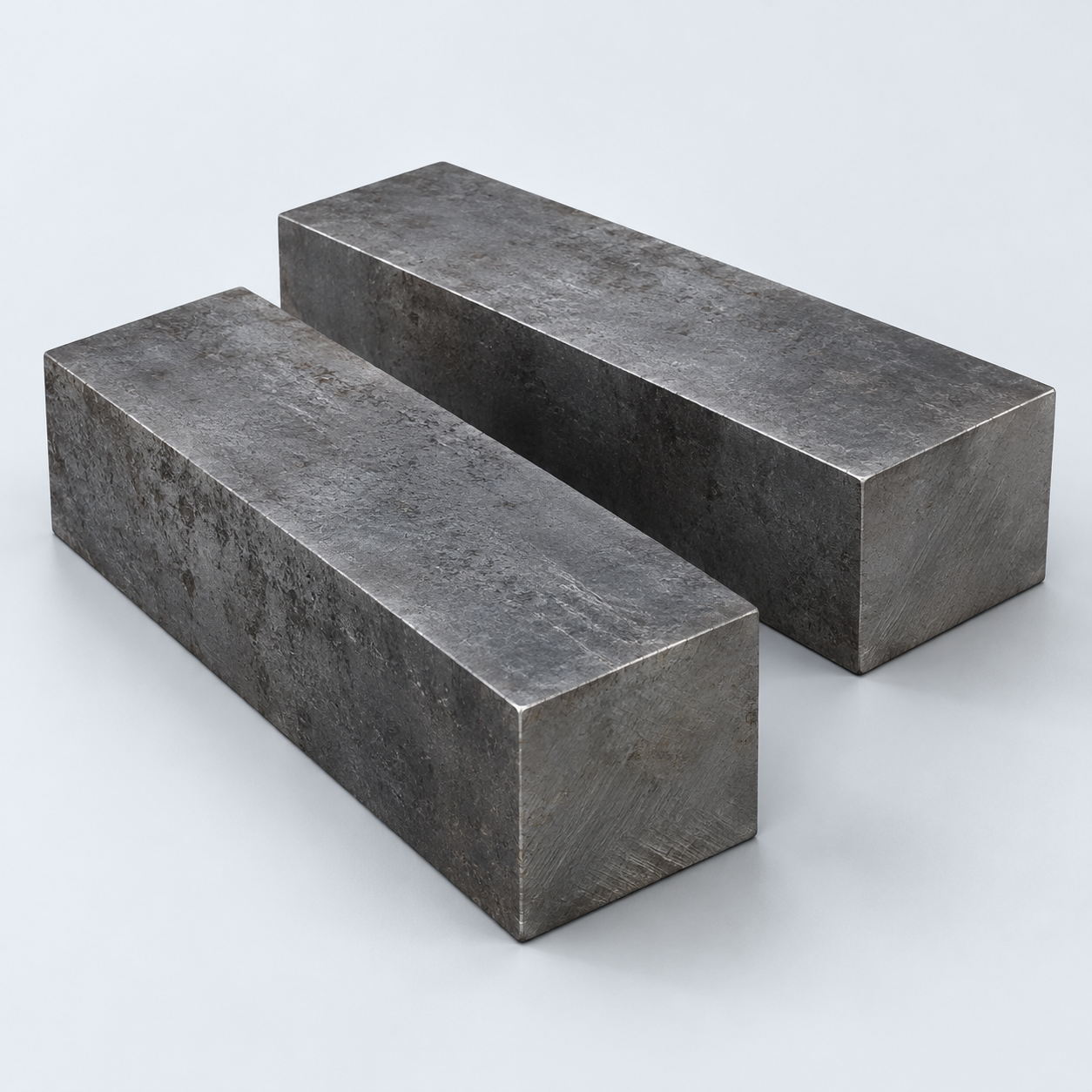 Tool SteelDiscuss tooling and wear needs›
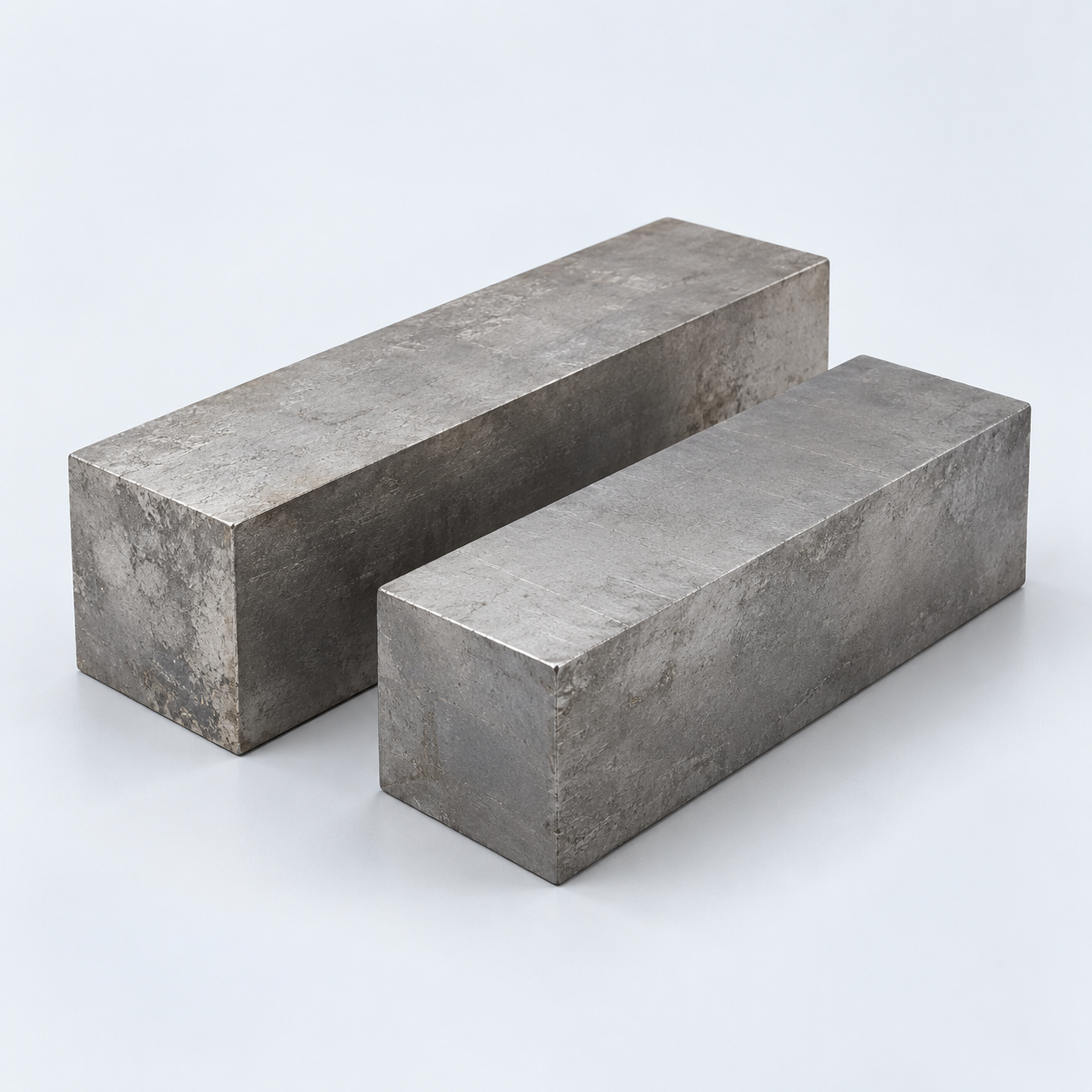 TitaniumReview grade and part geometry›
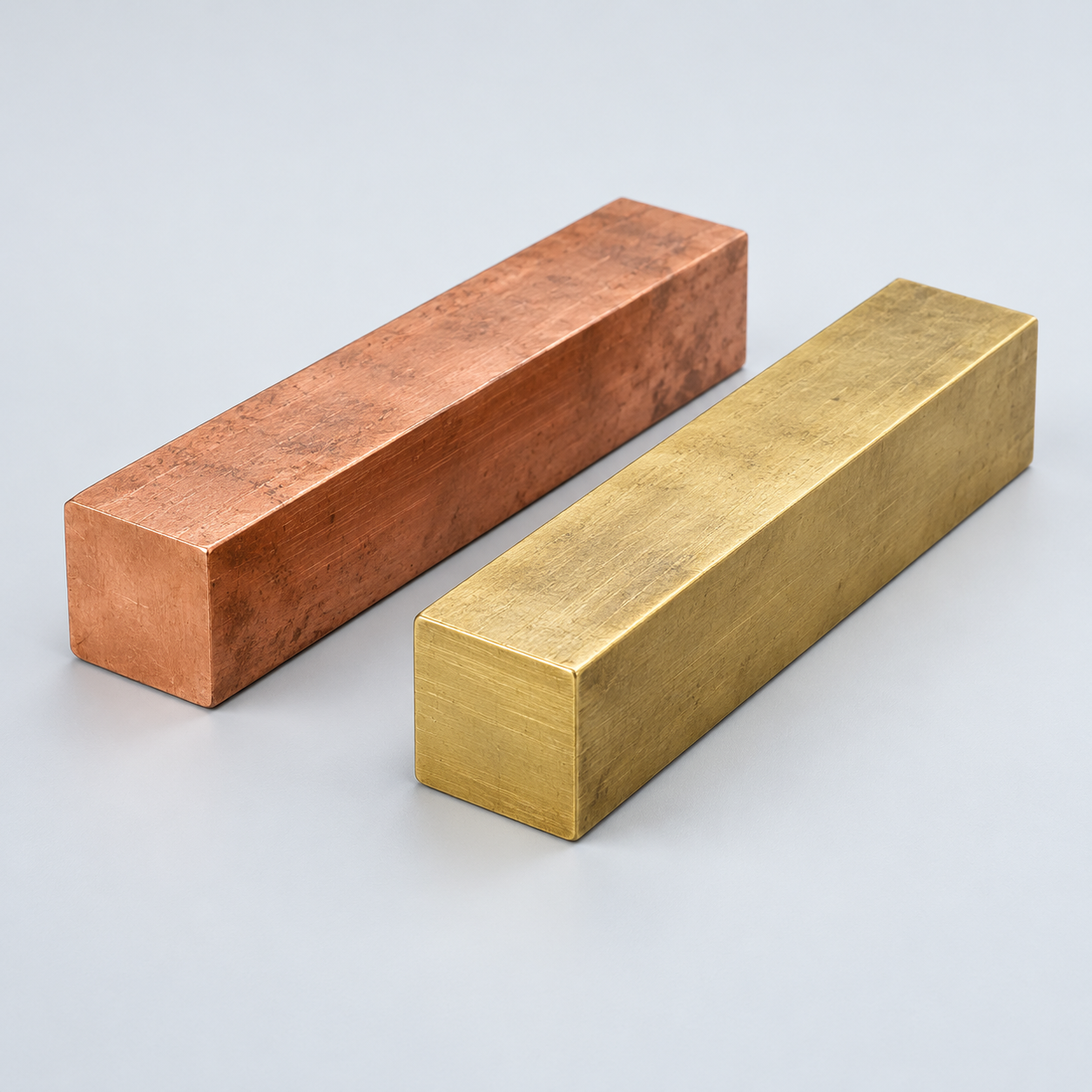 Copper & Brass & BronzeDiscuss conductivity and machining›
Match your polymer to function, process and environment.
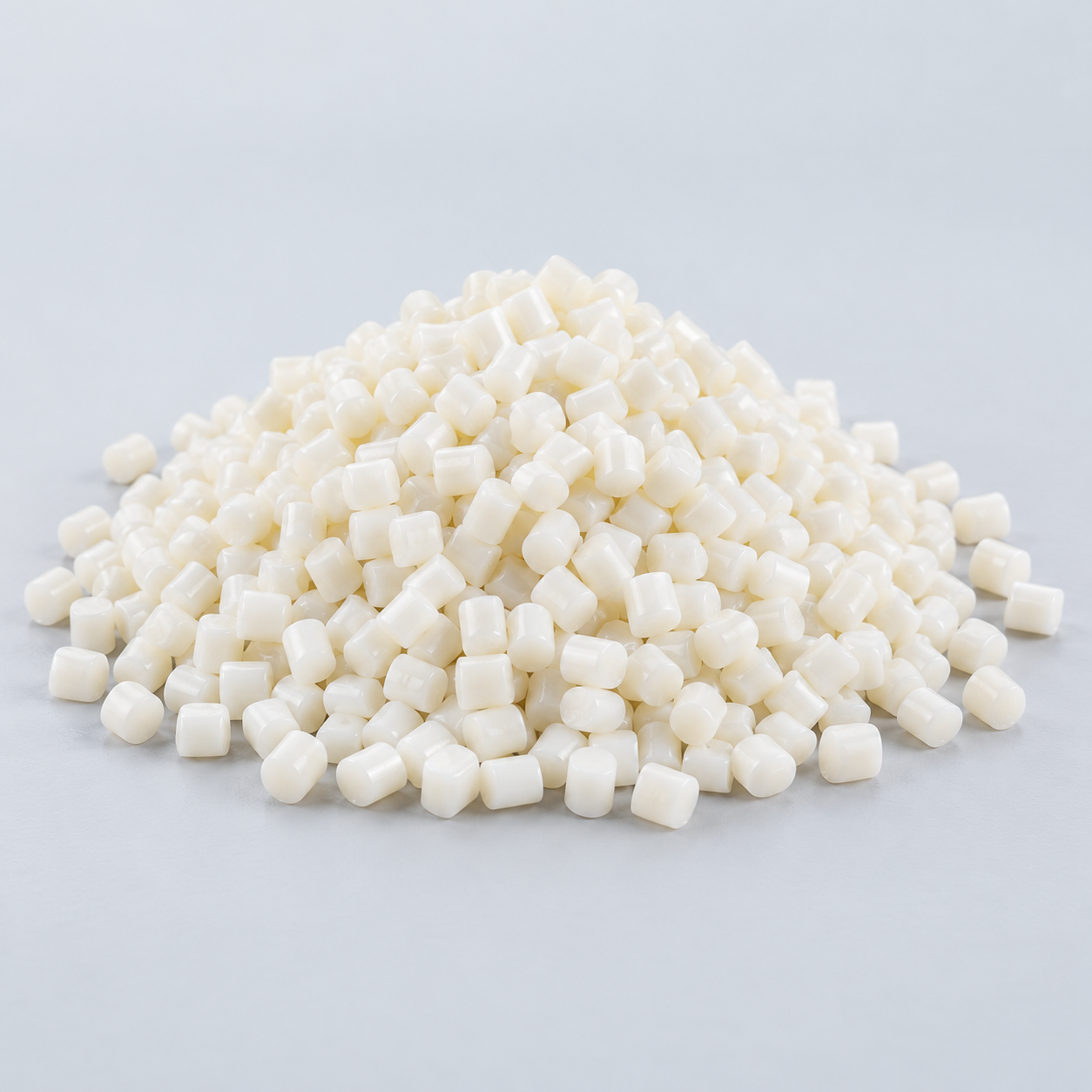 ABSReview enclosure and molding needs›
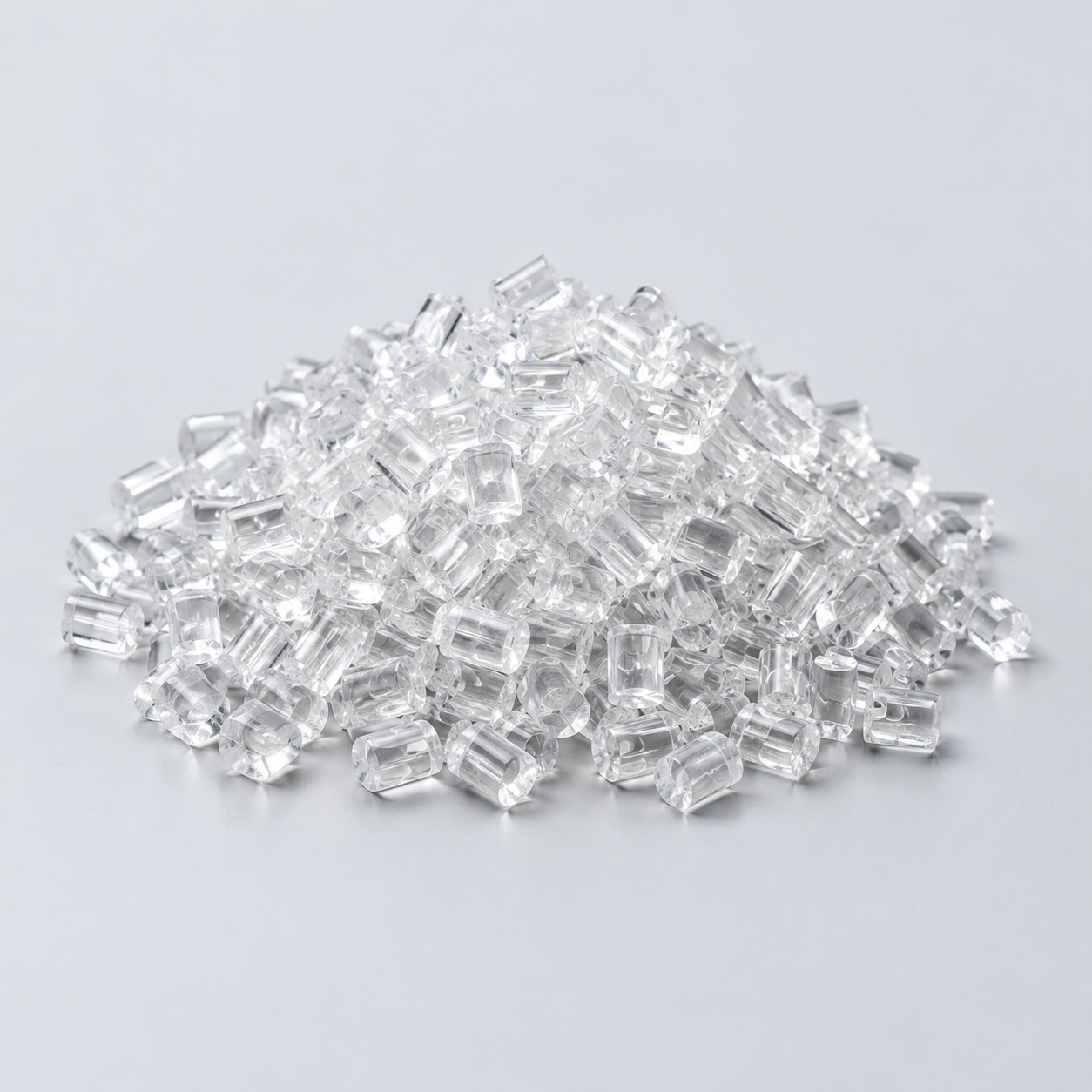 Polycarbonate (PC)Discuss clarity and impact needs›
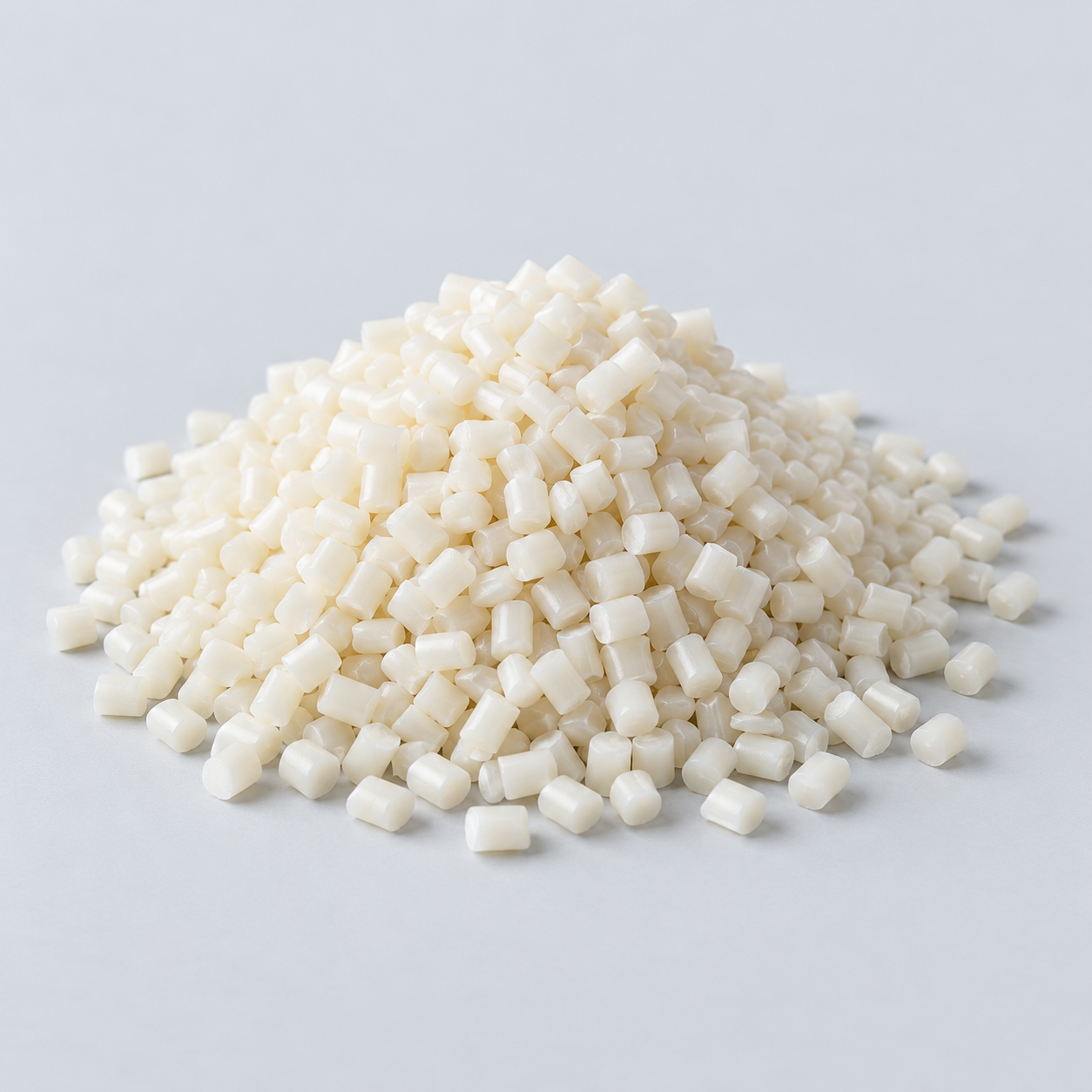 Nylon (PA)Review moisture and wear conditions›
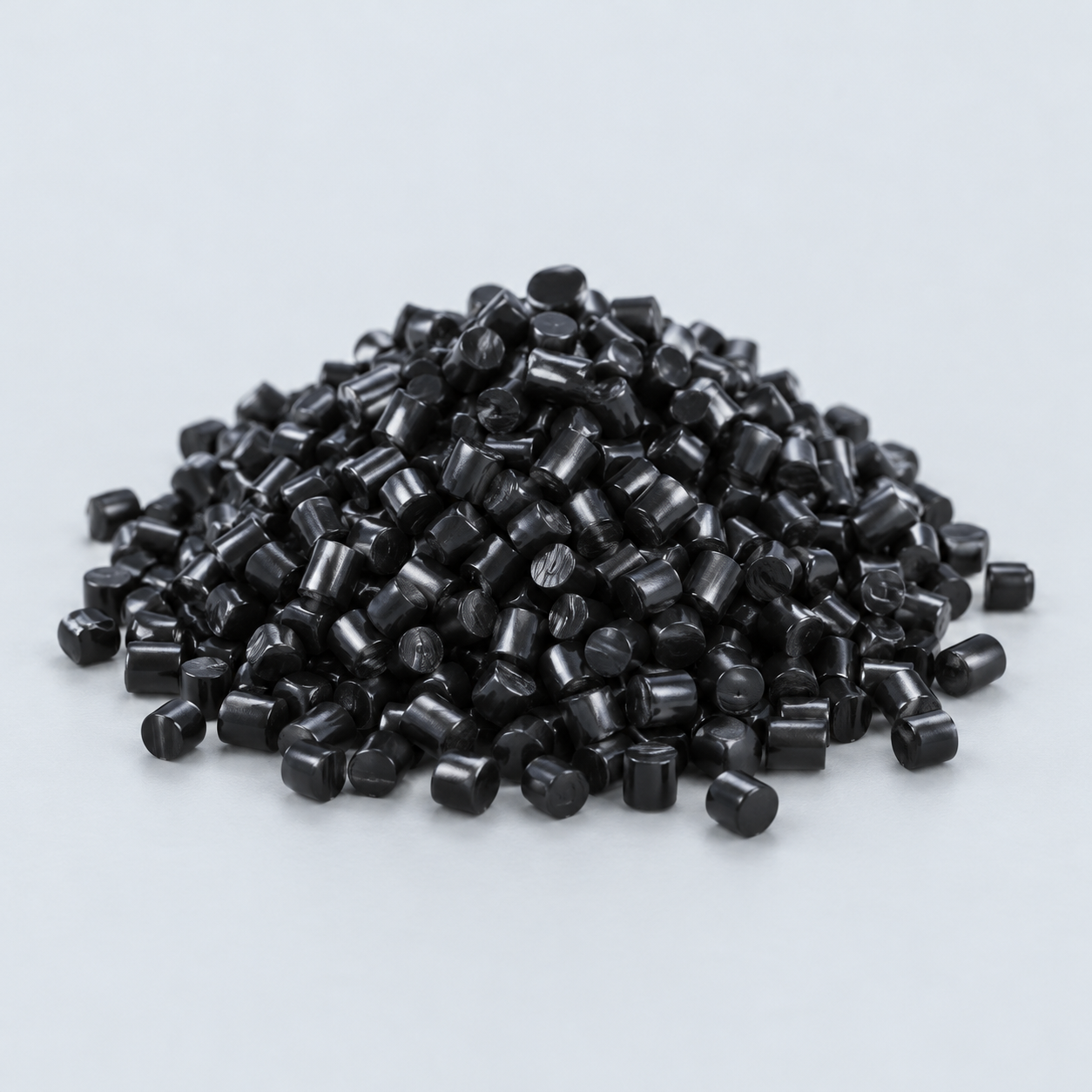 POM / AcetalReview fit and sliding features›
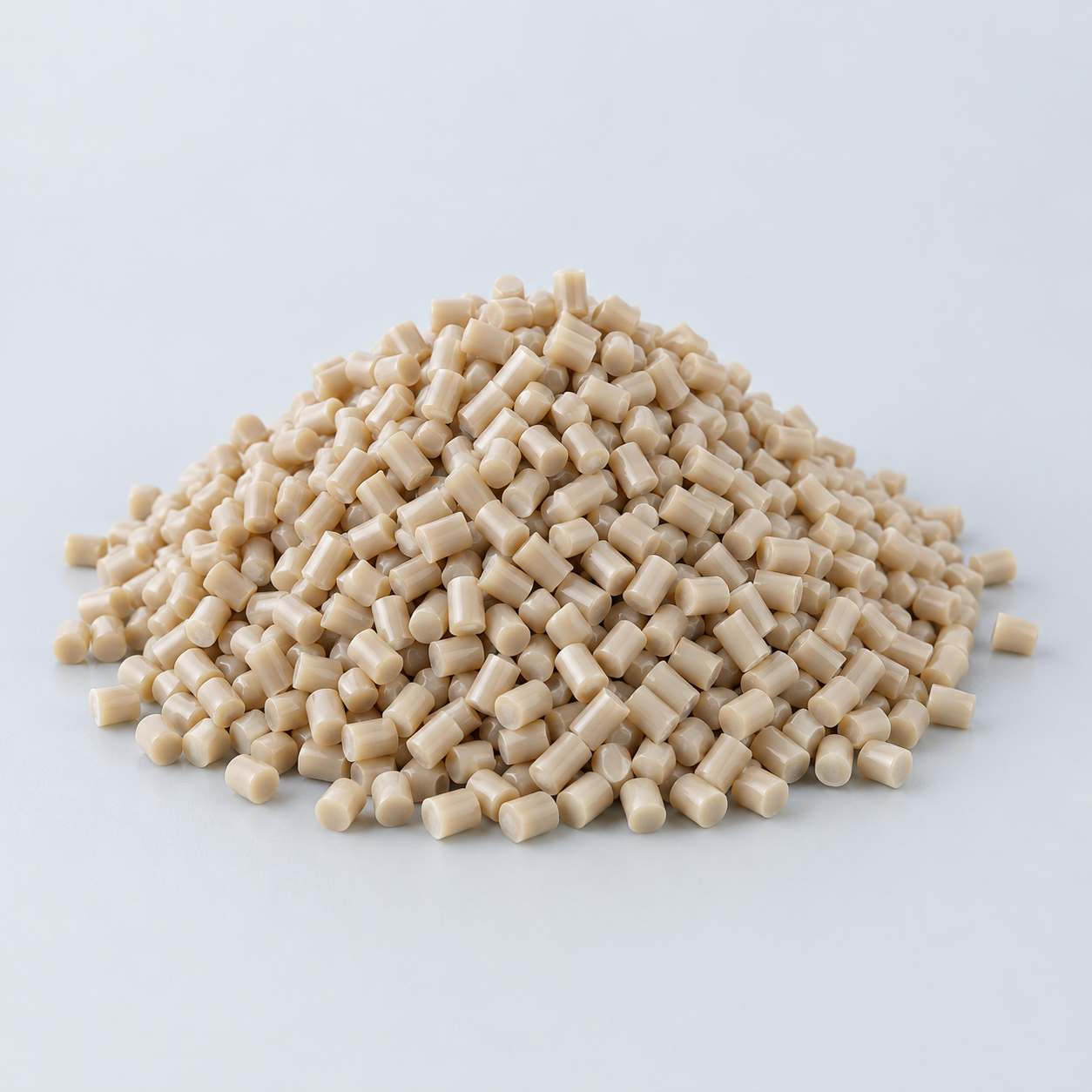 PEEKDiscuss operating conditions›
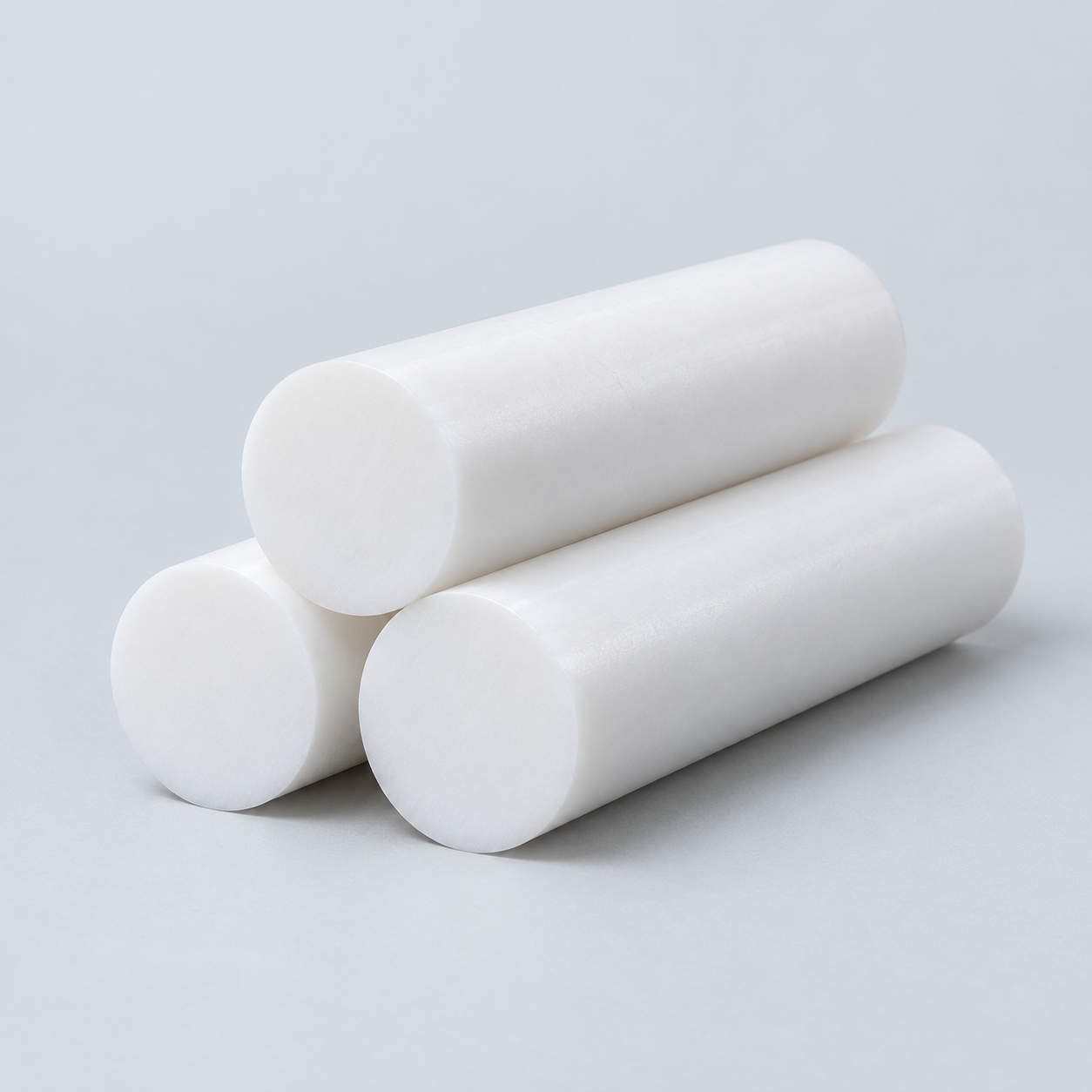 PTFEReview friction and chemical exposure›
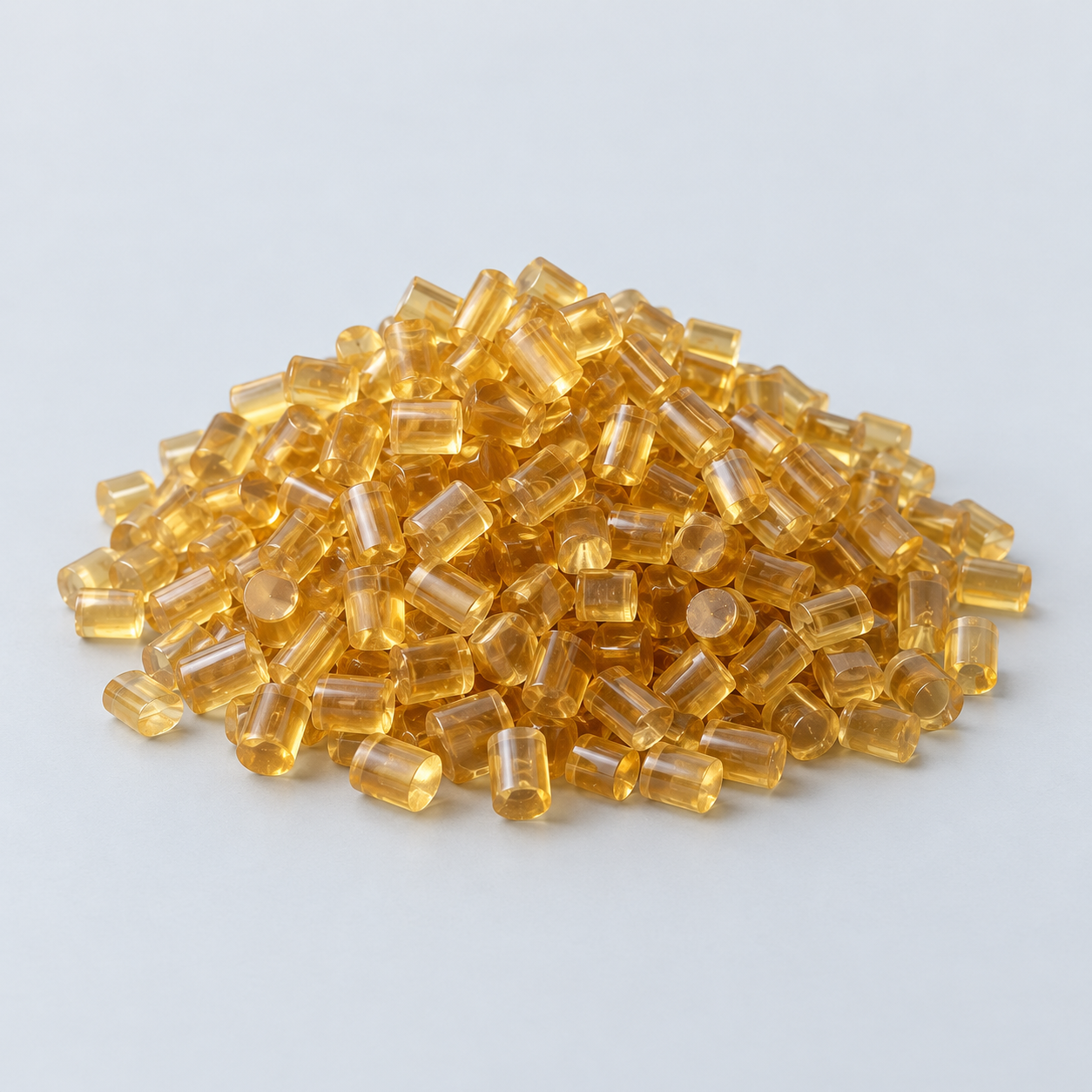 ULTEM / PEIDiscuss thermal and electrical needs›
Confirm grade availability and application requirements.
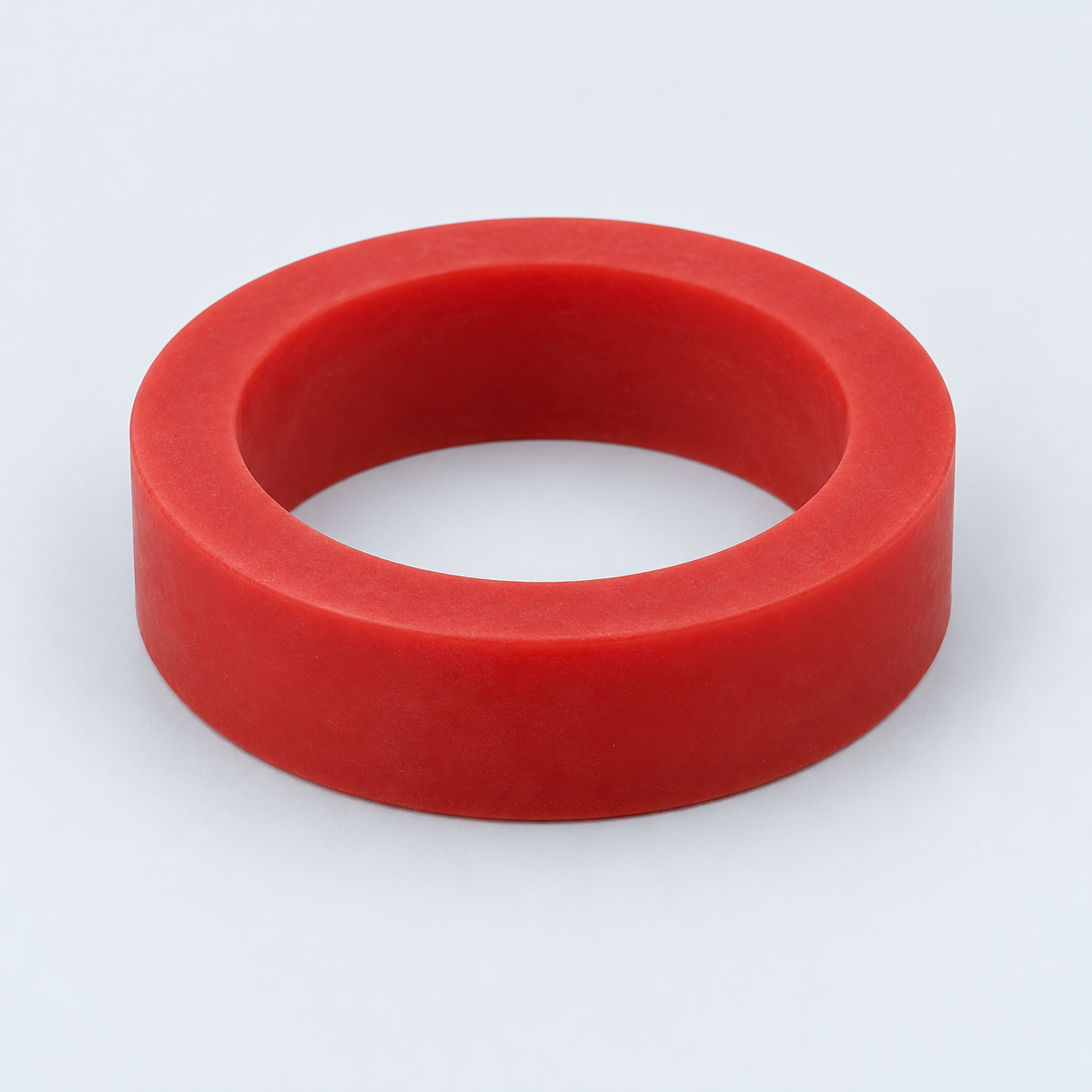 Silicone / LSRDiscuss flexible component needs›
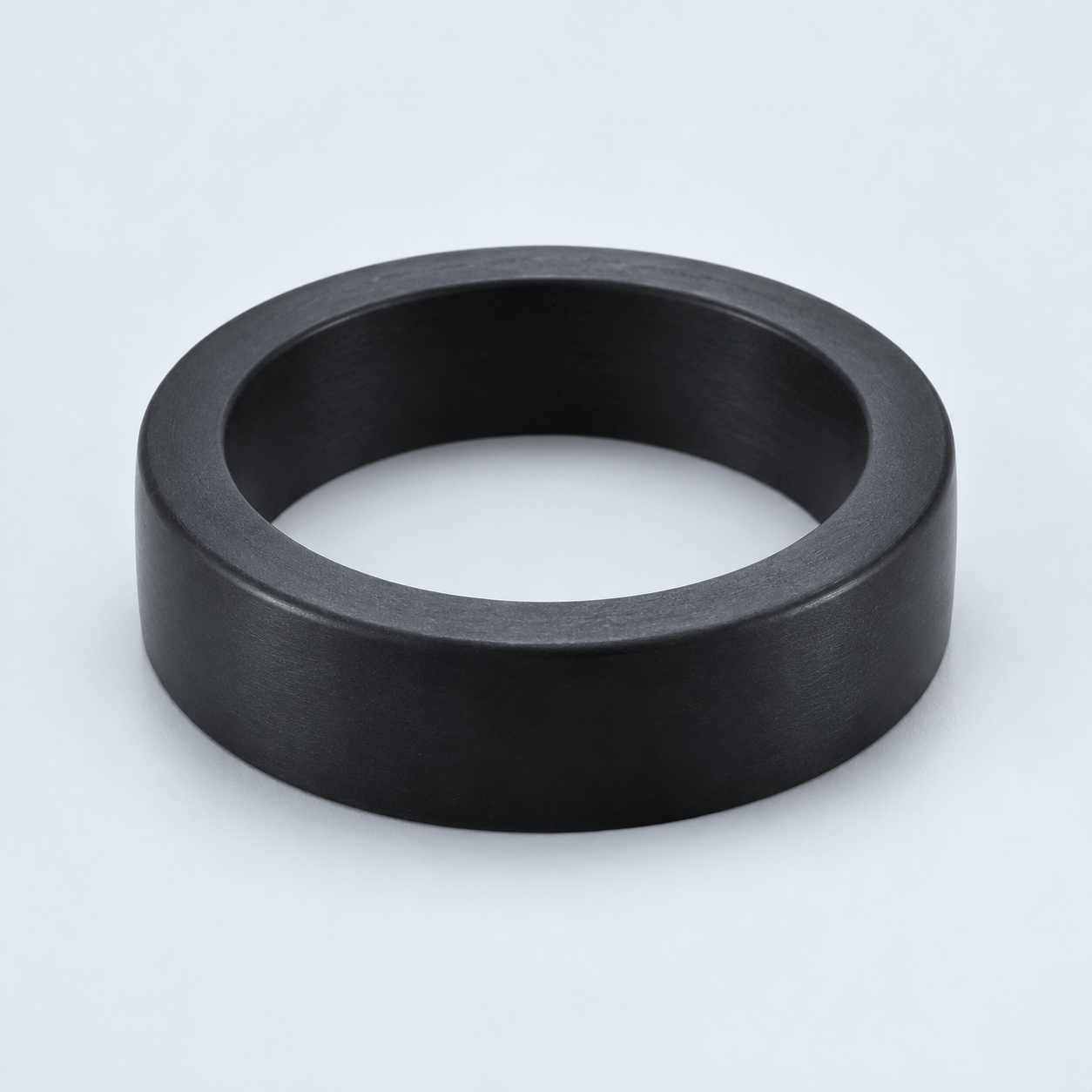 TPU / TPEReview flexibility and processing›
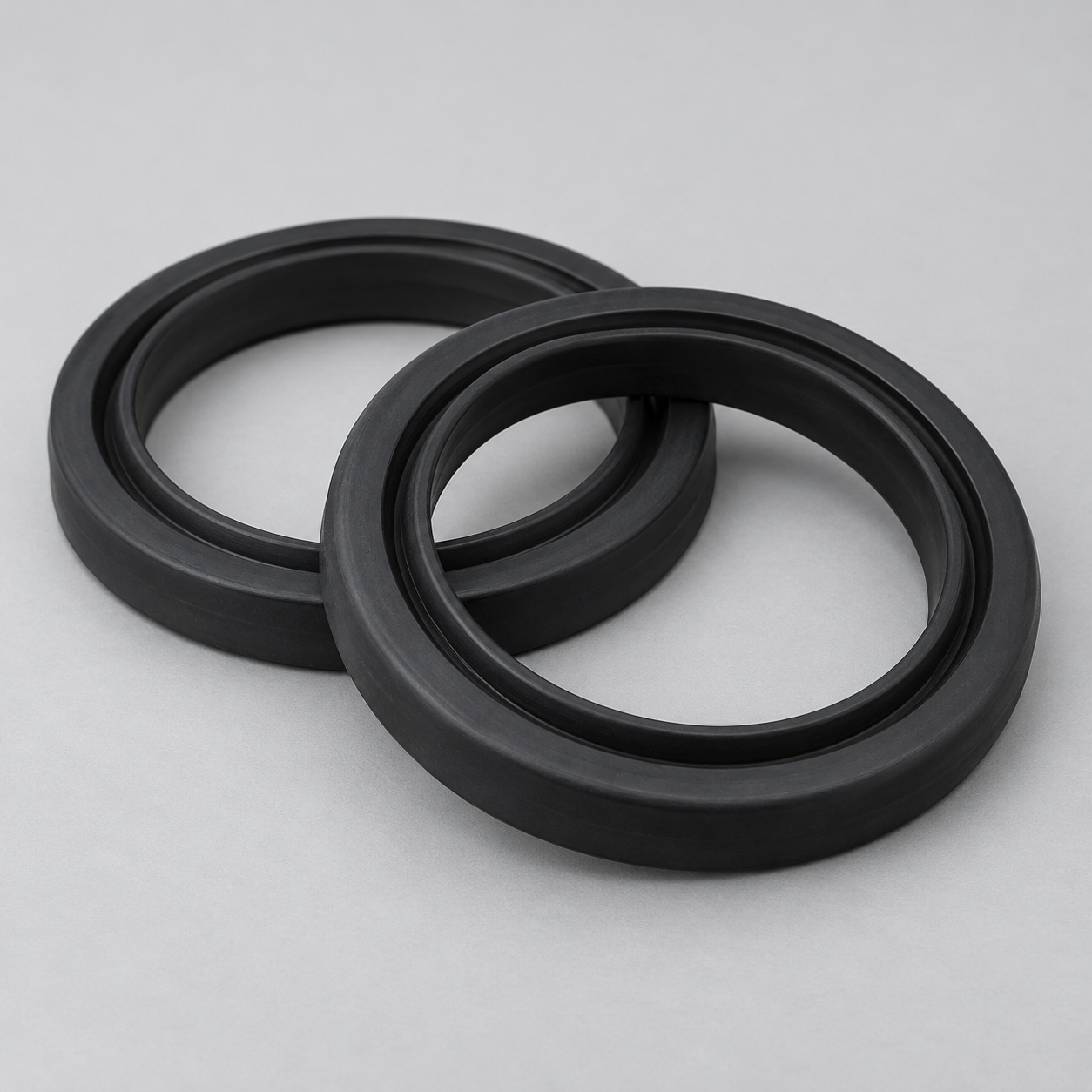 EPDMReview weathering and chemical exposure.›
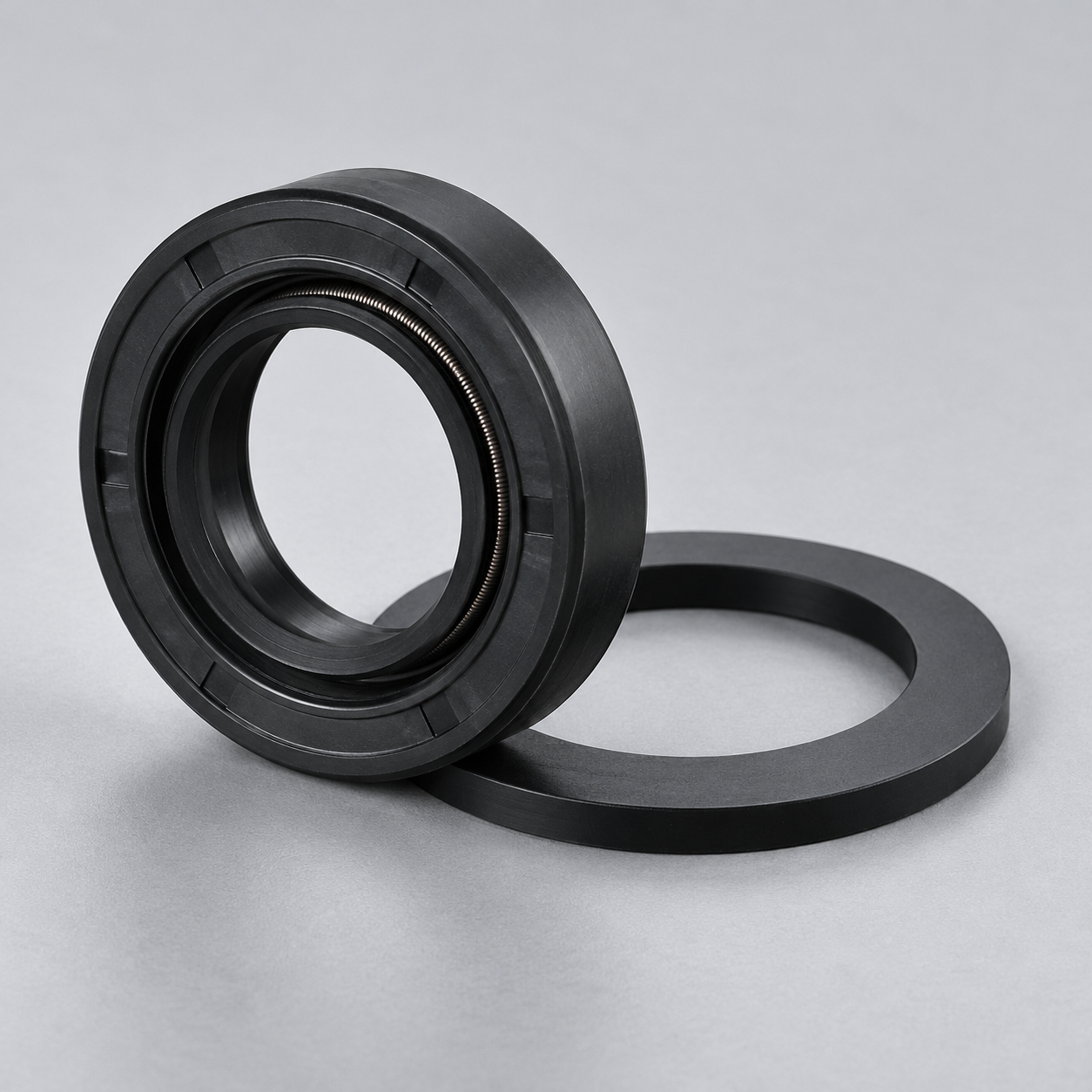 NBRReview oil and fuel exposure.›
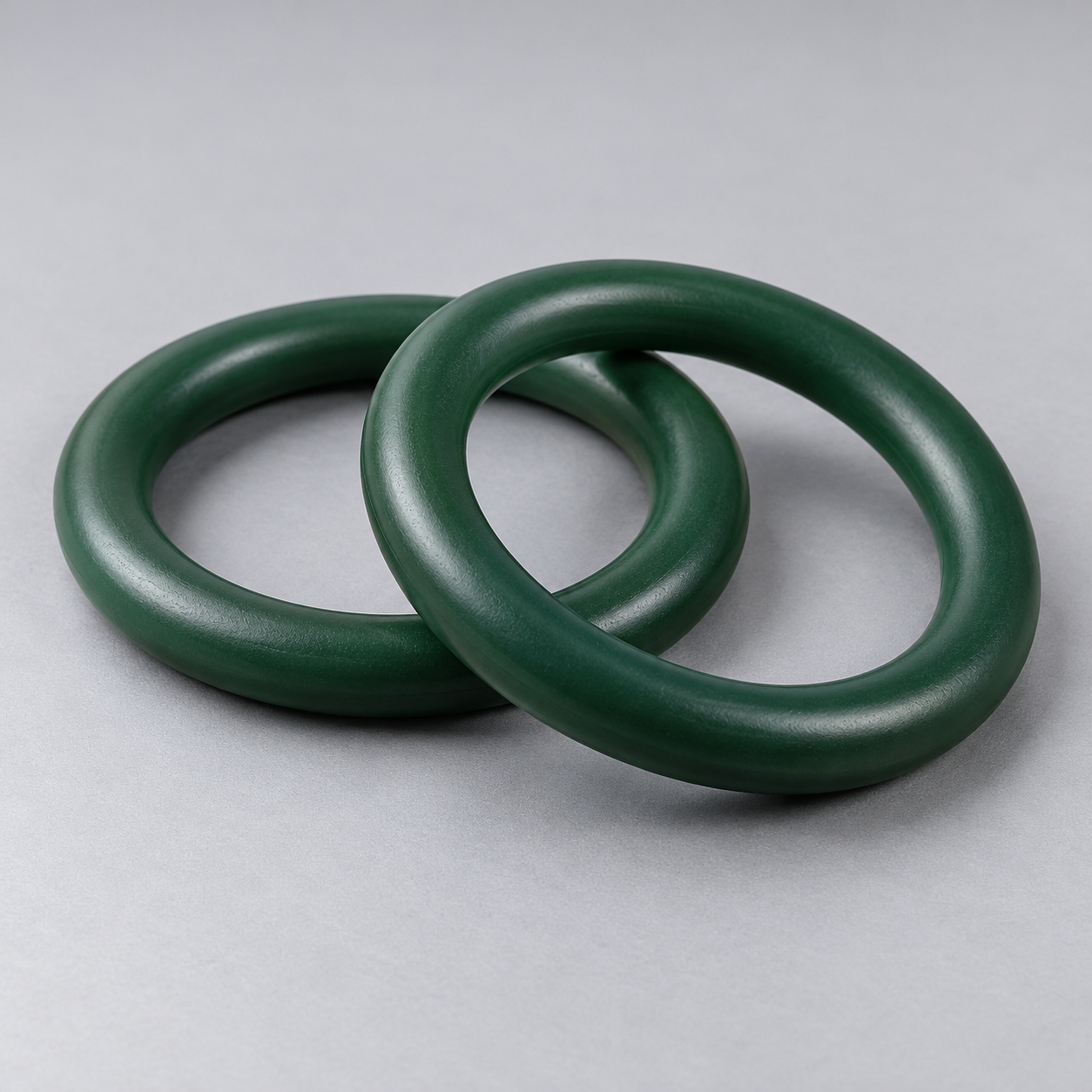 FKMReview temperature and chemical exposure.›
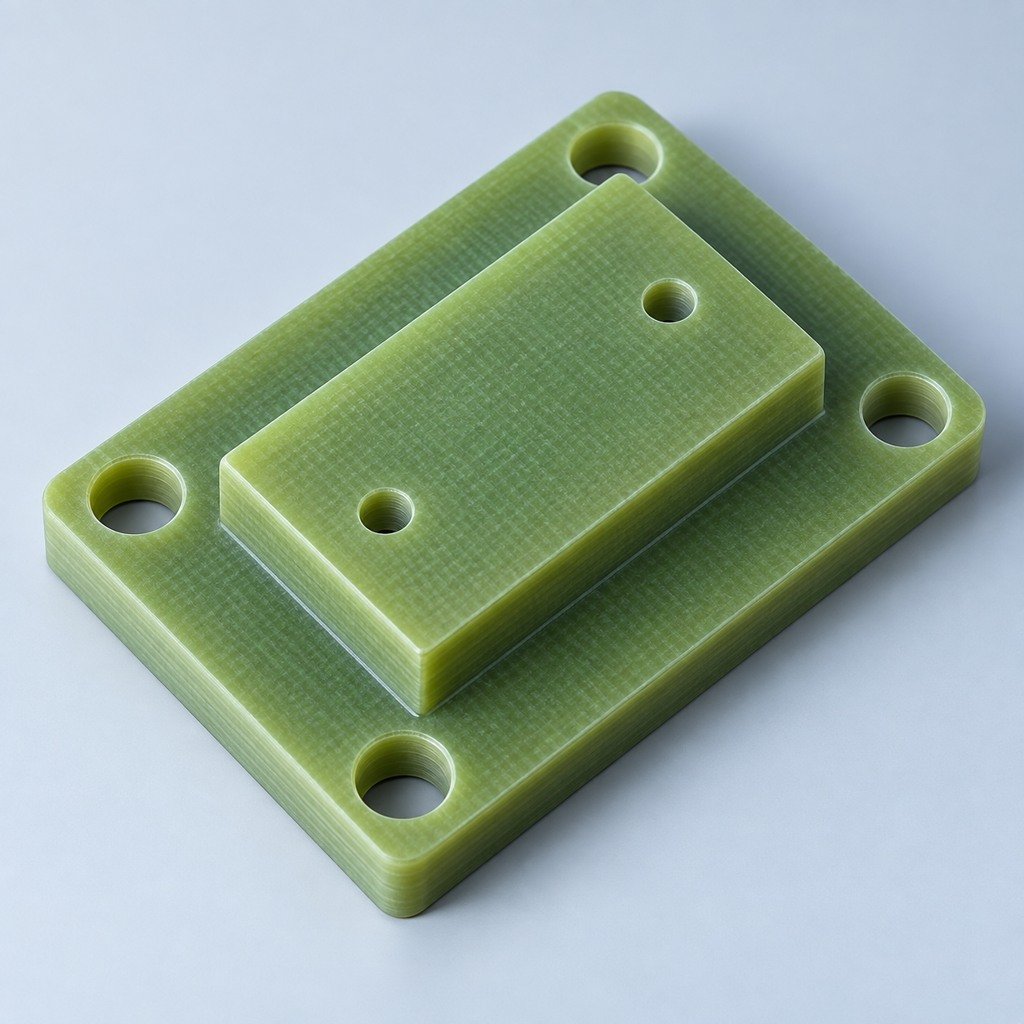 G10 / FR4Review insulation and laminate needs›
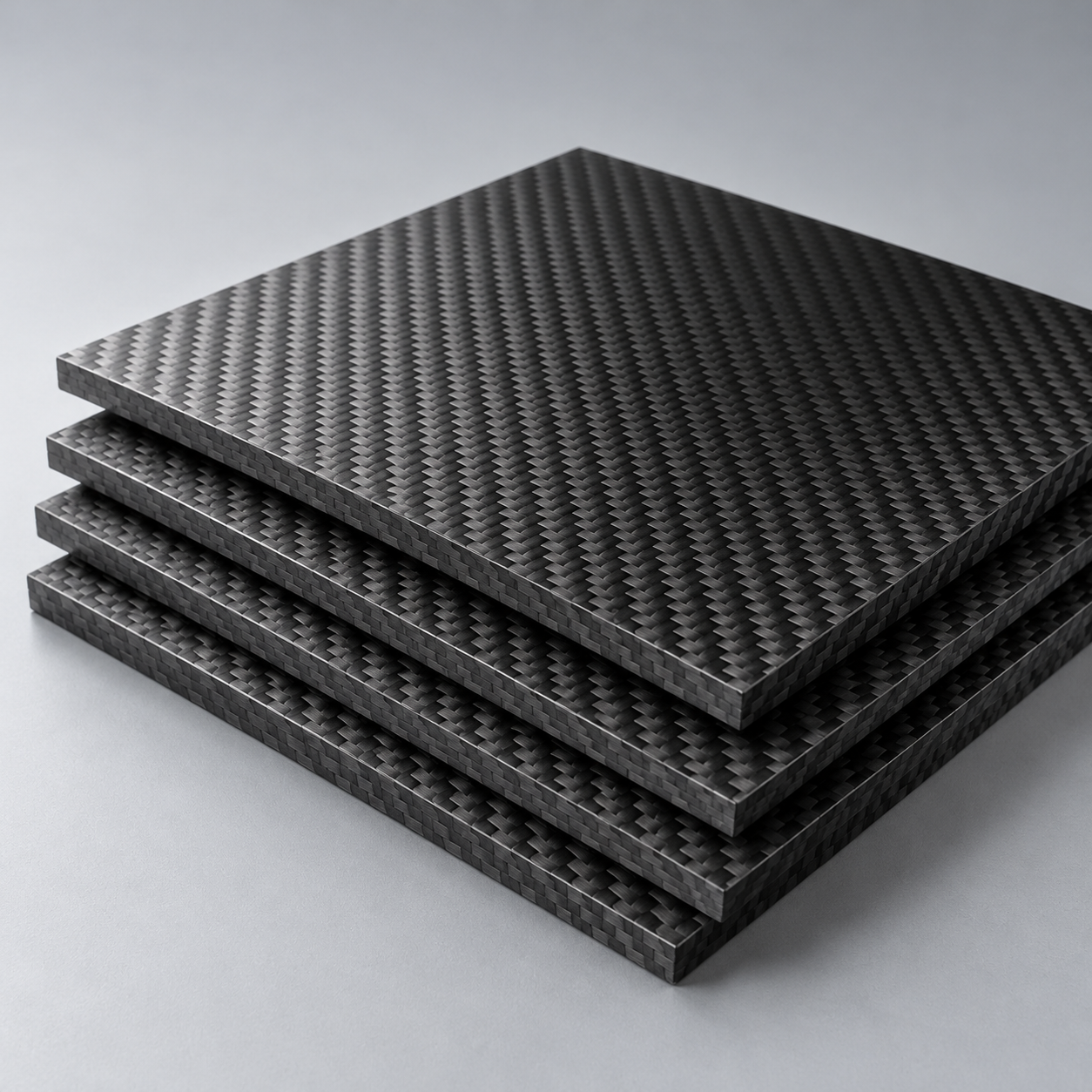 CompositesReview stiffness, weight and laminate.›Customer-Specified MaterialsConfirm your grade and requirements.›Other Specialty MaterialsDiscuss your application and grade.›
Practical guidance for your part geometry and material decisions.
Prepare your process, budget and sourcing questions.
Build your knowledge before production.
Learn who we are and how we operate.
Find our U.S. support team or start a conversation.
YOUR GRADE. YOUR MOTION. YOUR FIT.
Review your polymer family, stock or resin, and finished-part requirements. For your POM machining services enquiry, plan CNC machining or molding around your load, motion and assembly fit.
Material availability and process scope confirmed for your drawing.
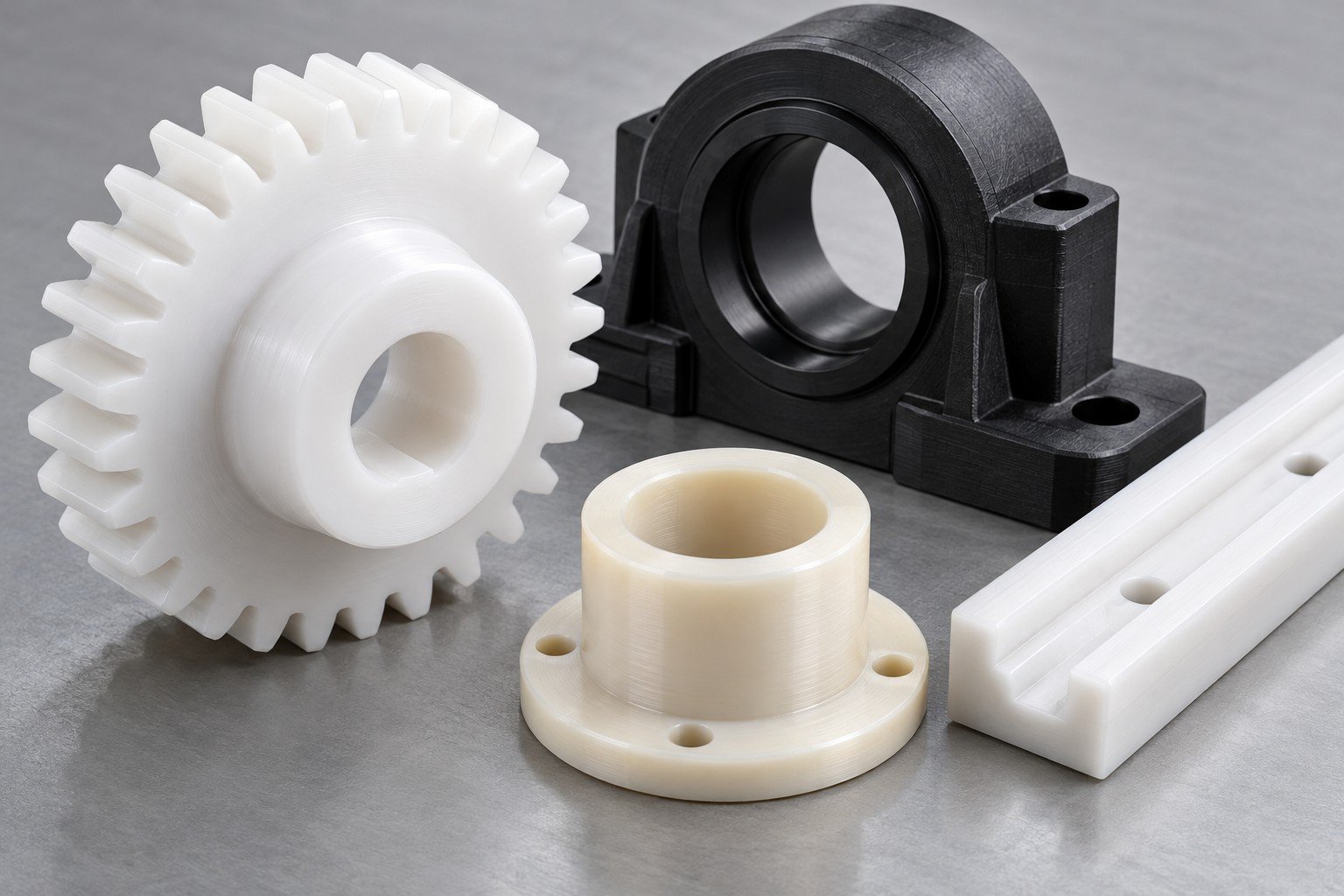
Specify both the polymer family and the form you are buying.
TECAFORM AH natural: POM-C. TECAFORM AD natural: POM-H. Confirm the stock product, color and lot before cutting your acetal machined parts.
Delrin 500P: POM-H resin. DURACON M90-44: POM-C resin. Define the exact formulation and approve a molded sample for your application.
Delrin is a brand, not a name for every POM. A resin datasheet does not identify unspecified CNC stock.
4 starting points for your material review — not interchangeable substitutes.
For your custom acetal parts, confirm the actual stock product before cutting. Identify plate, rod or tube, color, size and incoming condition.
| Your reference | What to confirm |
|---|---|
| Manufacturer | Ensinger |
| Material family | POM-C / acetal copolymer |
| Product form | CNC stock |
| Your review | Full product, color, lot and final fit |
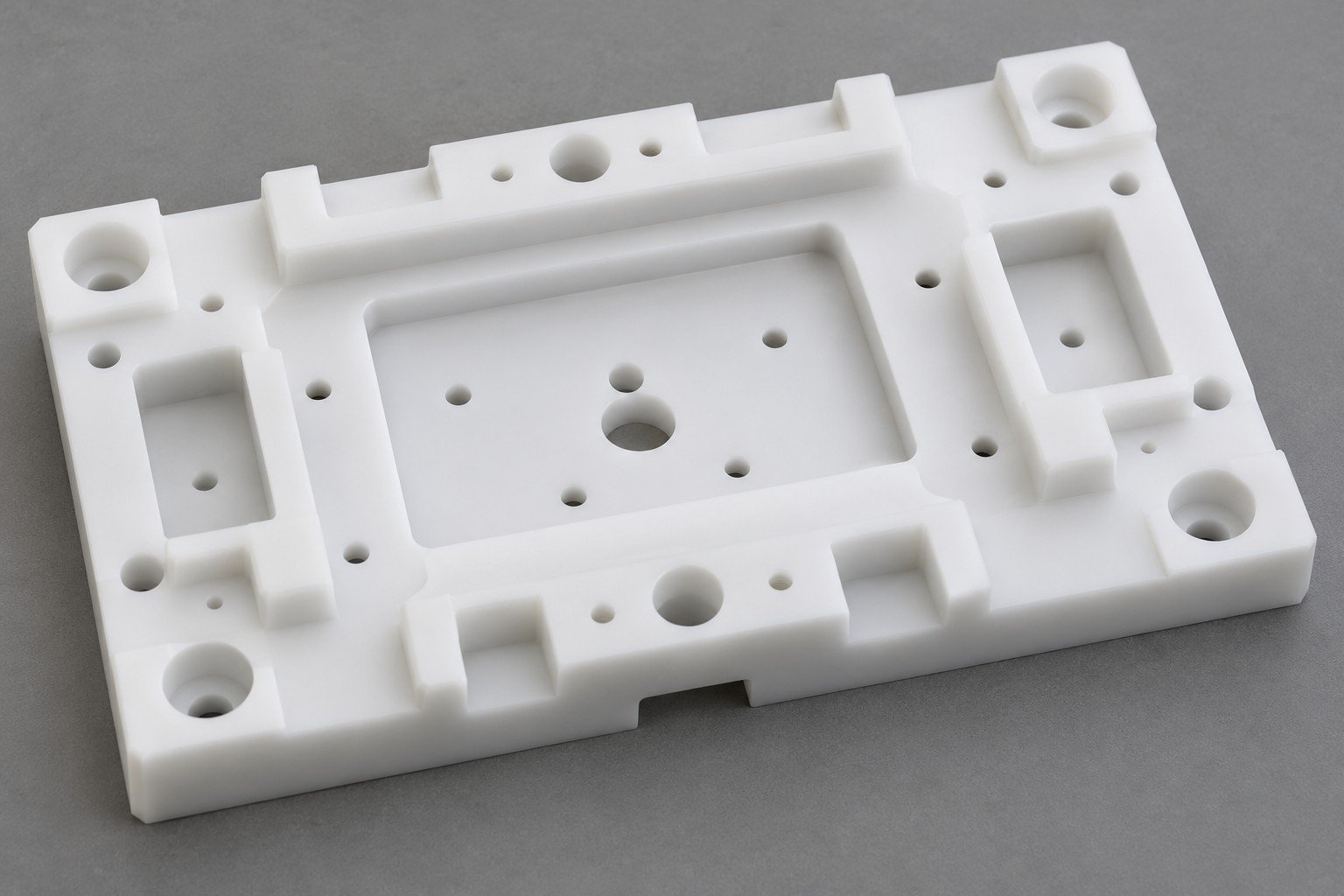
For your acetal material selection, compare the current datasheet for this exact product. Temperature, conditioning, test method and specimen direction matter. No single friction coefficient or tolerance applies to every finished part.
| Your reference | What to confirm |
|---|---|
| Stock or resin | Keep product-form datasets separate |
| Load & motion | Speed, cycles, contact pair and lubrication |
| Your exposure | Temperature, duration and cleaning fluids |
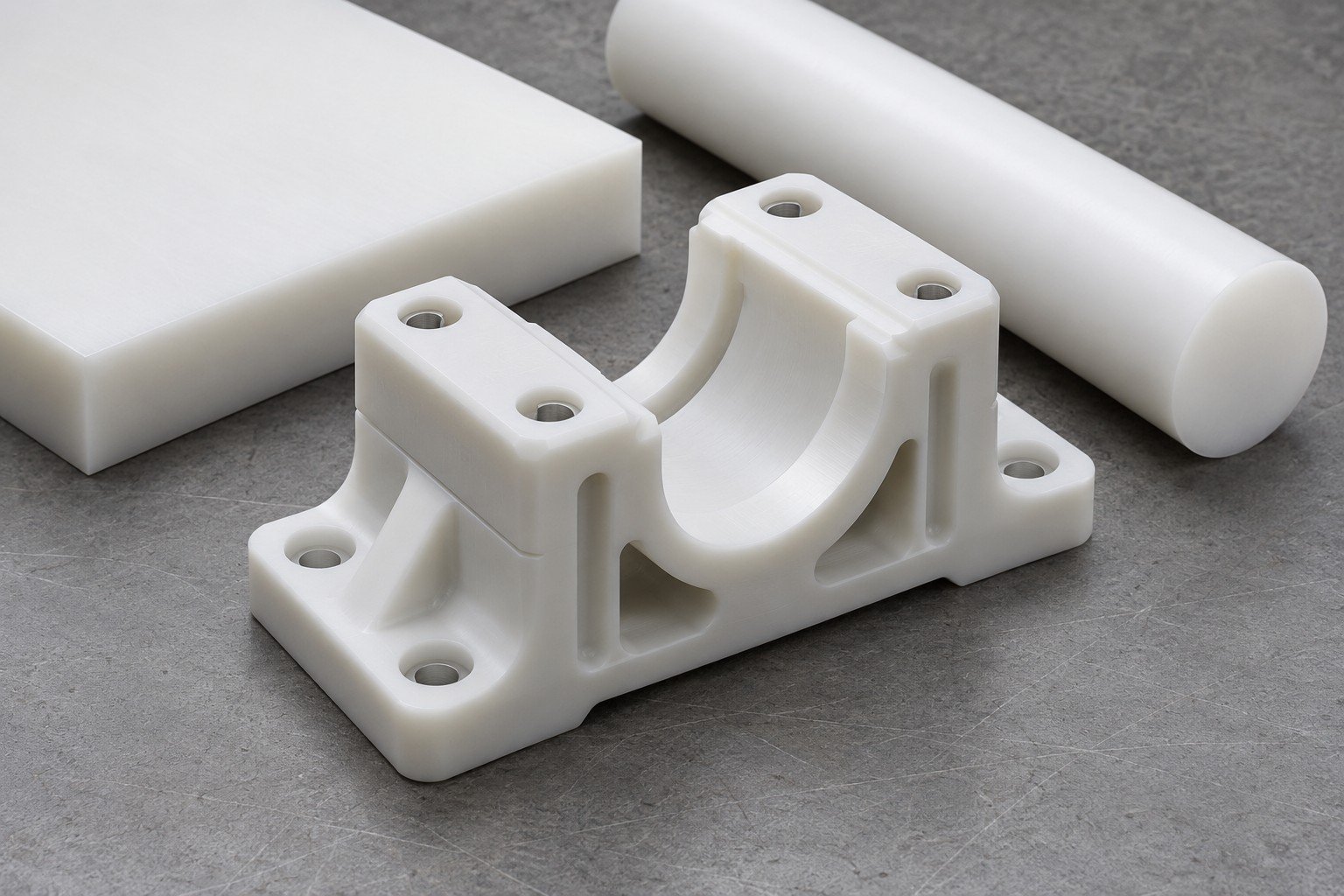
For your POM machined or molded components, identify critical bores, contact lands and accepted edges. A machined prototype can confirm assembly geometry; it does not establish molding shrinkage or production wear life.
| Your reference | What to confirm |
|---|---|
| CNC stock | Support, balanced removal and final measurement state |
| Molding | Gates, wall transitions, shrinkage and sample approval |
| Final fit | Mating part, working temperature and agreed checks |
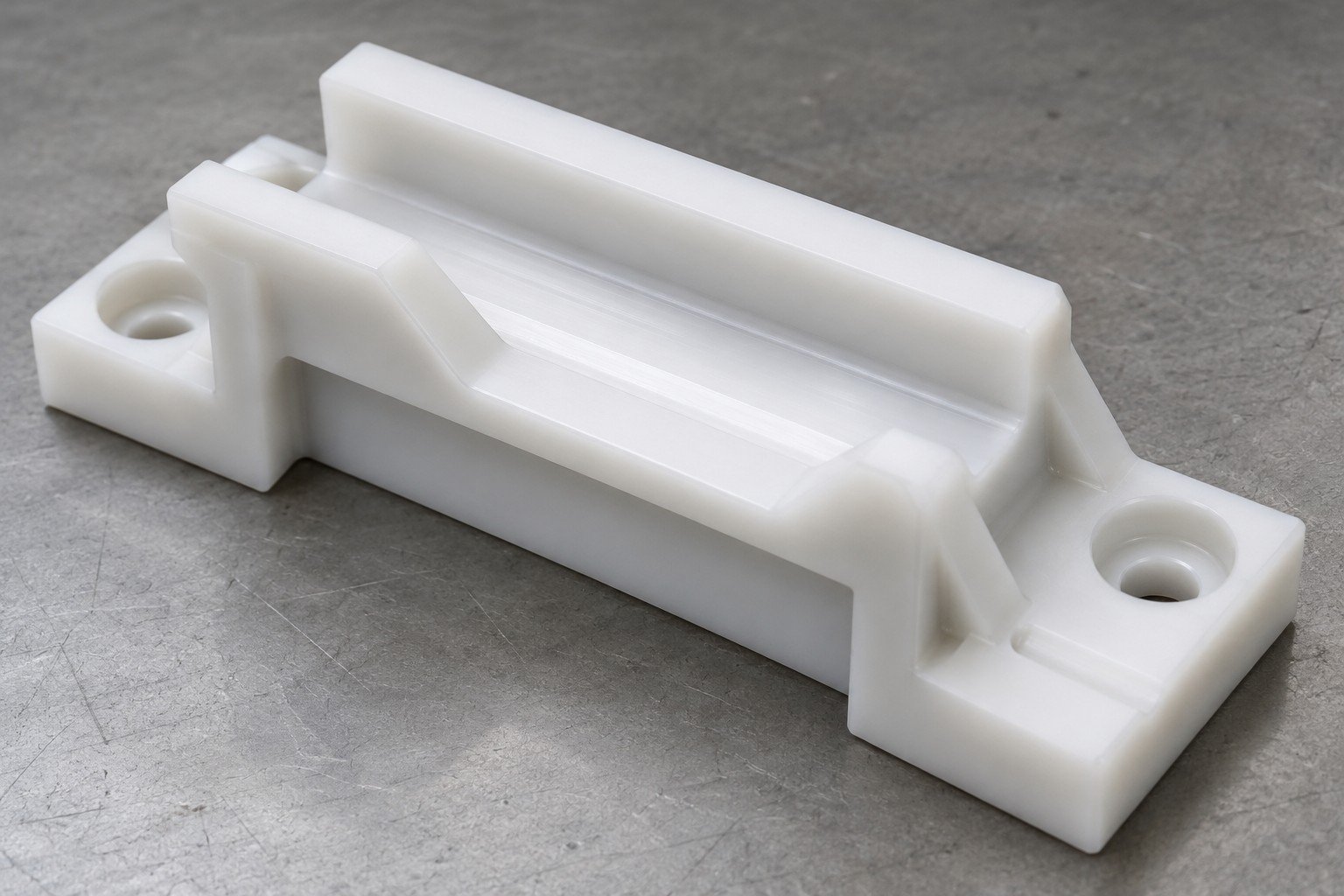
For your acetal parts quotation, link the full material callout to a controlled drawing. Agree material identity, dimensional records and any separate functional test before production.
| Your reference | What to confirm |
|---|---|
| Identity | Manufacturer, grade, color and lot |
| Dimensions | Datums, condition, sampling and method |
| Approval | Change control and agreed sample evidence |
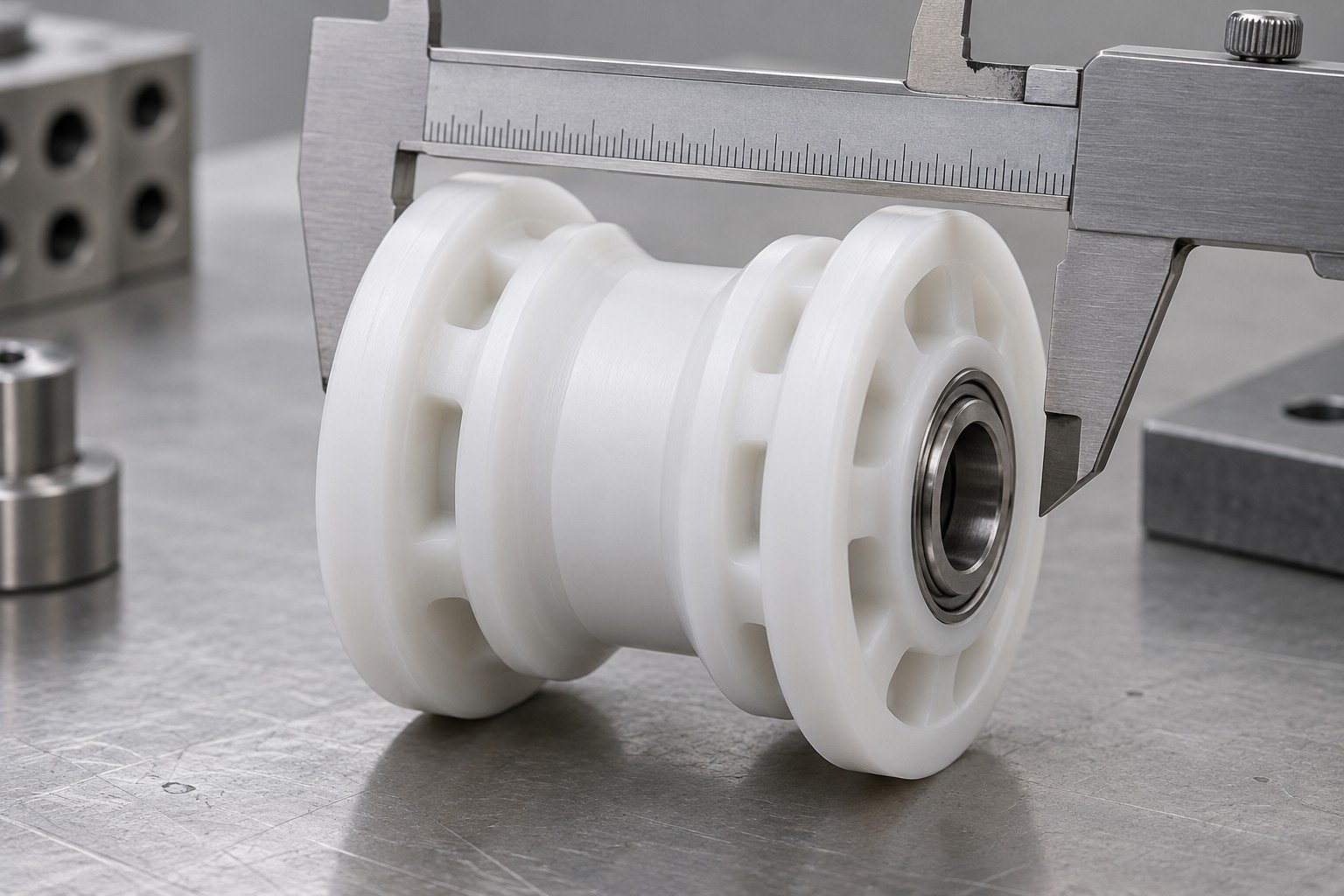
For your POM-H CNC machining review, retain the stock manufacturer and product name. Review unsupported spans, datums and the finished measurement state.
| Your reference | What to confirm |
|---|---|
| Manufacturer | Ensinger |
| Material family | POM-H / acetal homopolymer |
| Product form | CNC stock |
| Your review | Full product, color, lot and final fit |
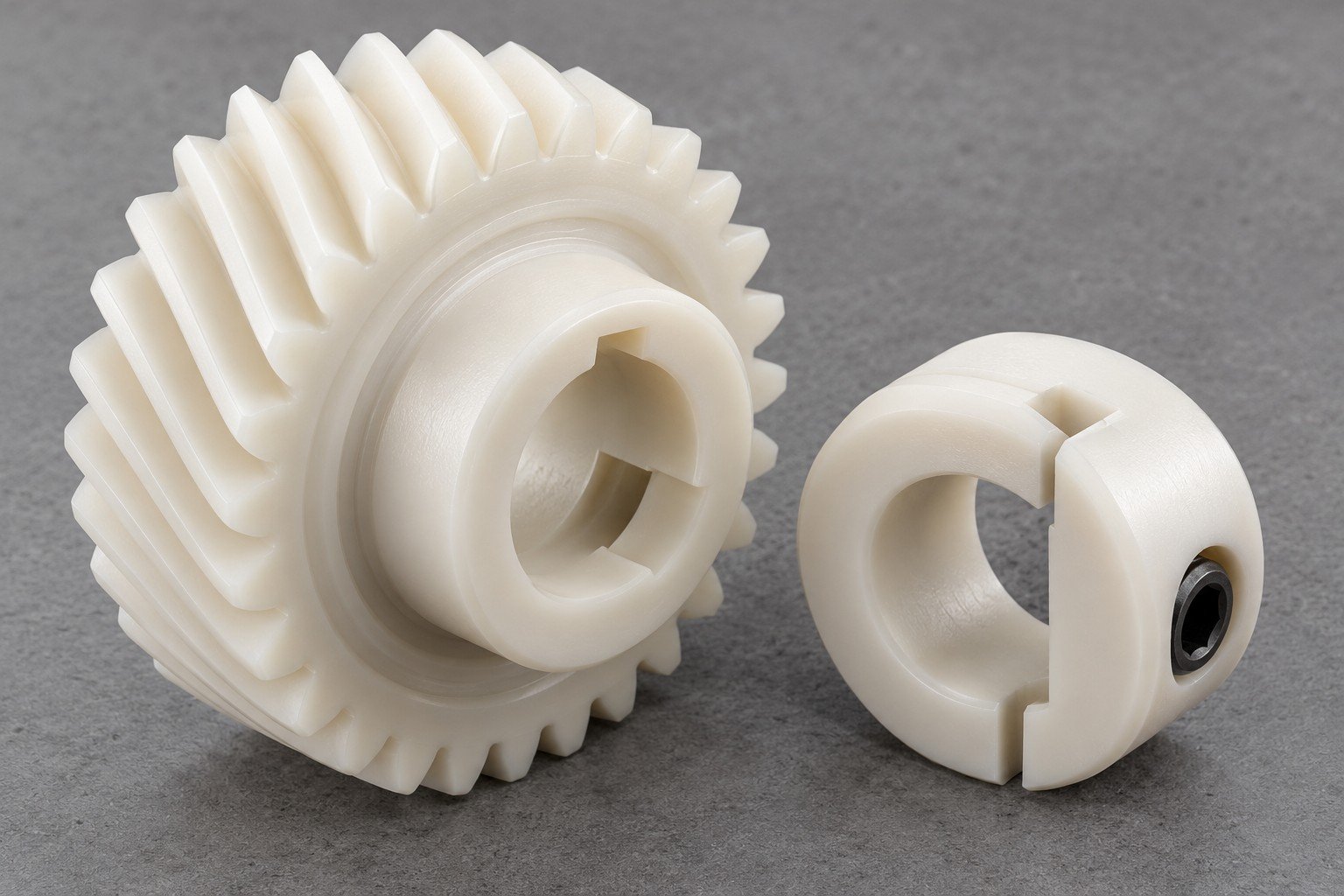
For your acetal material selection, compare the current datasheet for this exact product. Temperature, conditioning, test method and specimen direction matter. No single friction coefficient or tolerance applies to every finished part.
| Your reference | What to confirm |
|---|---|
| Stock or resin | Keep product-form datasets separate |
| Load & motion | Speed, cycles, contact pair and lubrication |
| Your exposure | Temperature, duration and cleaning fluids |
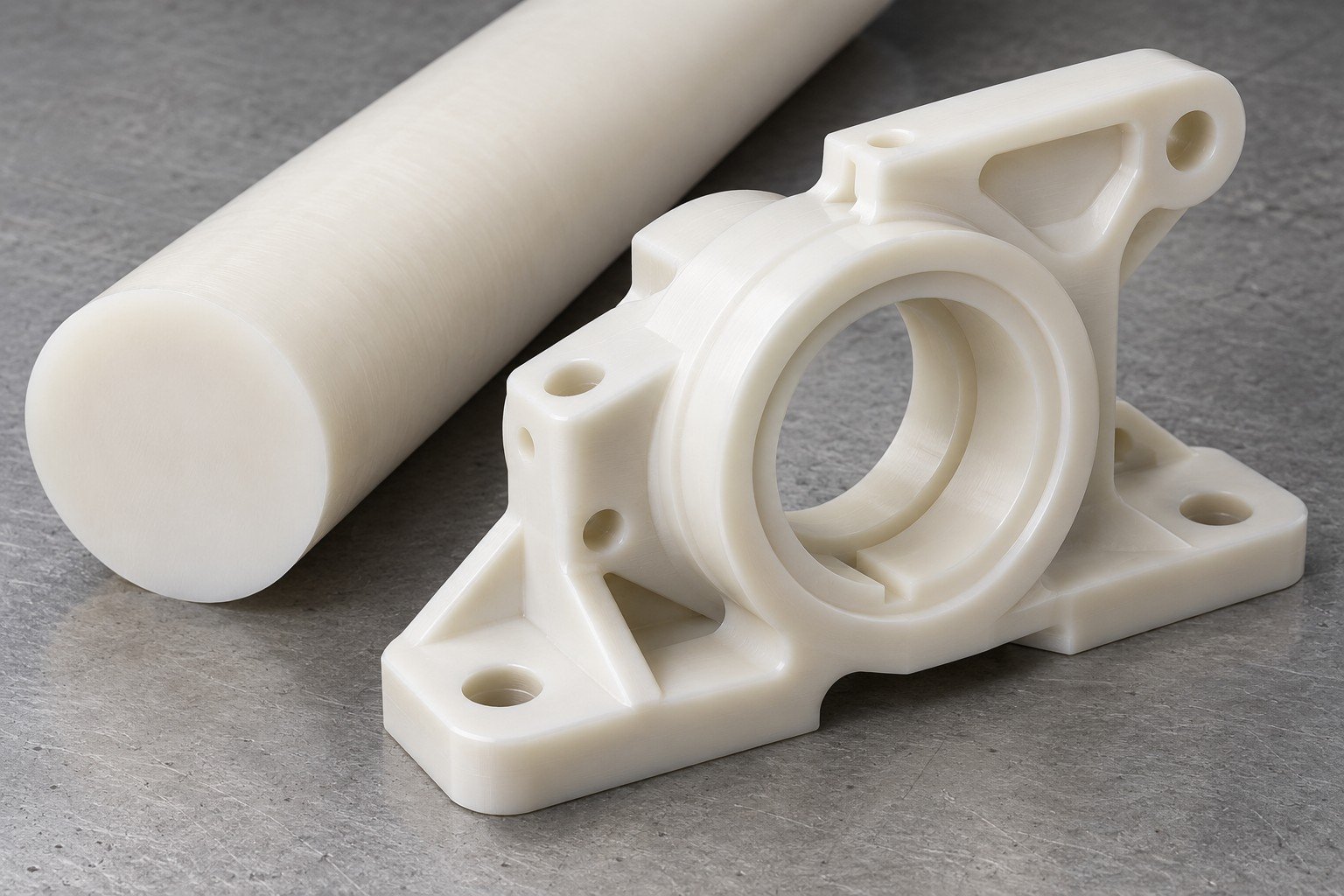
For your POM machined or molded components, identify critical bores, contact lands and accepted edges. A machined prototype can confirm assembly geometry; it does not establish molding shrinkage or production wear life.
| Your reference | What to confirm |
|---|---|
| CNC stock | Support, balanced removal and final measurement state |
| Molding | Gates, wall transitions, shrinkage and sample approval |
| Final fit | Mating part, working temperature and agreed checks |
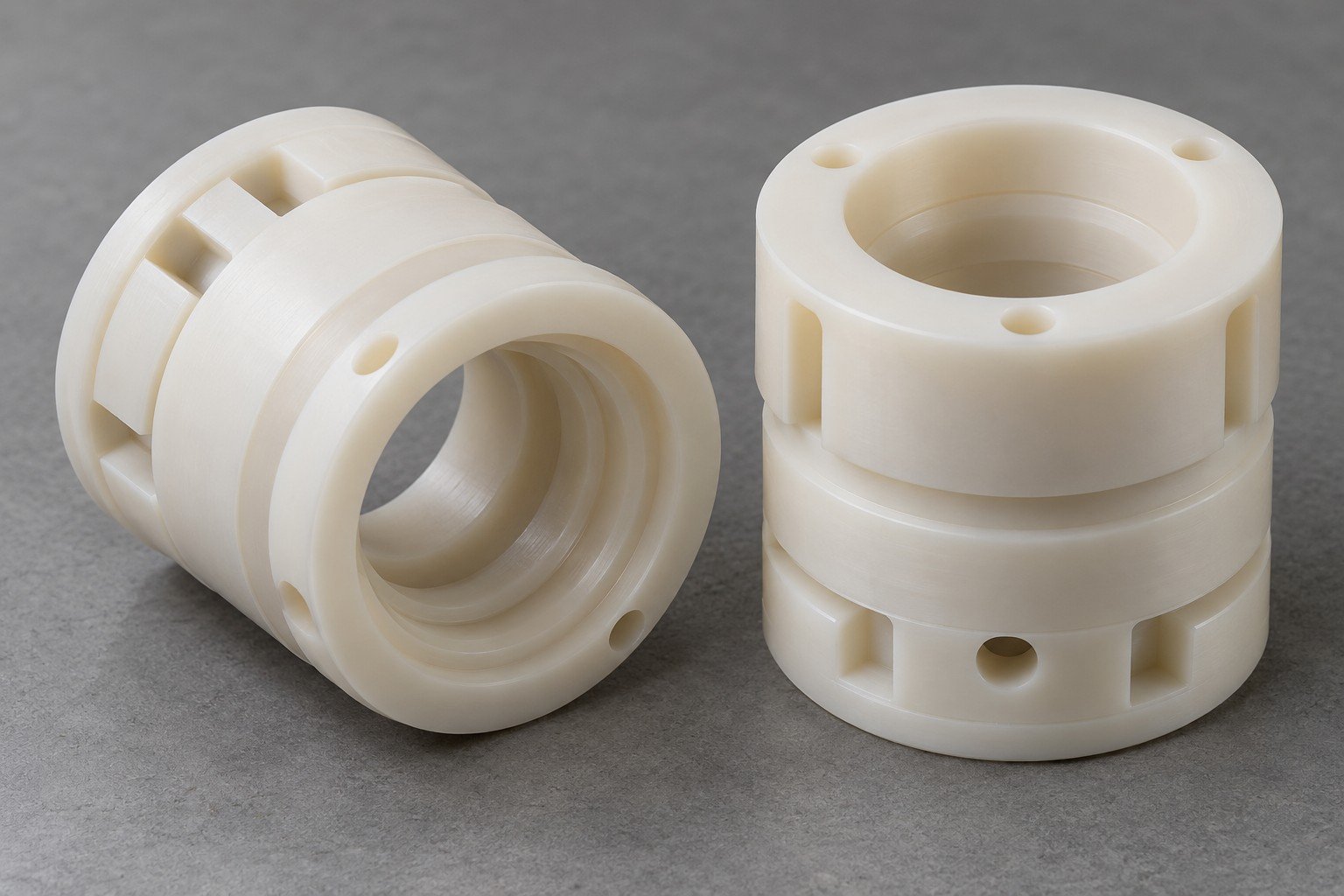
For your acetal parts quotation, link the full material callout to a controlled drawing. Agree material identity, dimensional records and any separate functional test before production.
| Your reference | What to confirm |
|---|---|
| Identity | Manufacturer, grade, color and lot |
| Dimensions | Datums, condition, sampling and method |
| Approval | Change control and agreed sample evidence |
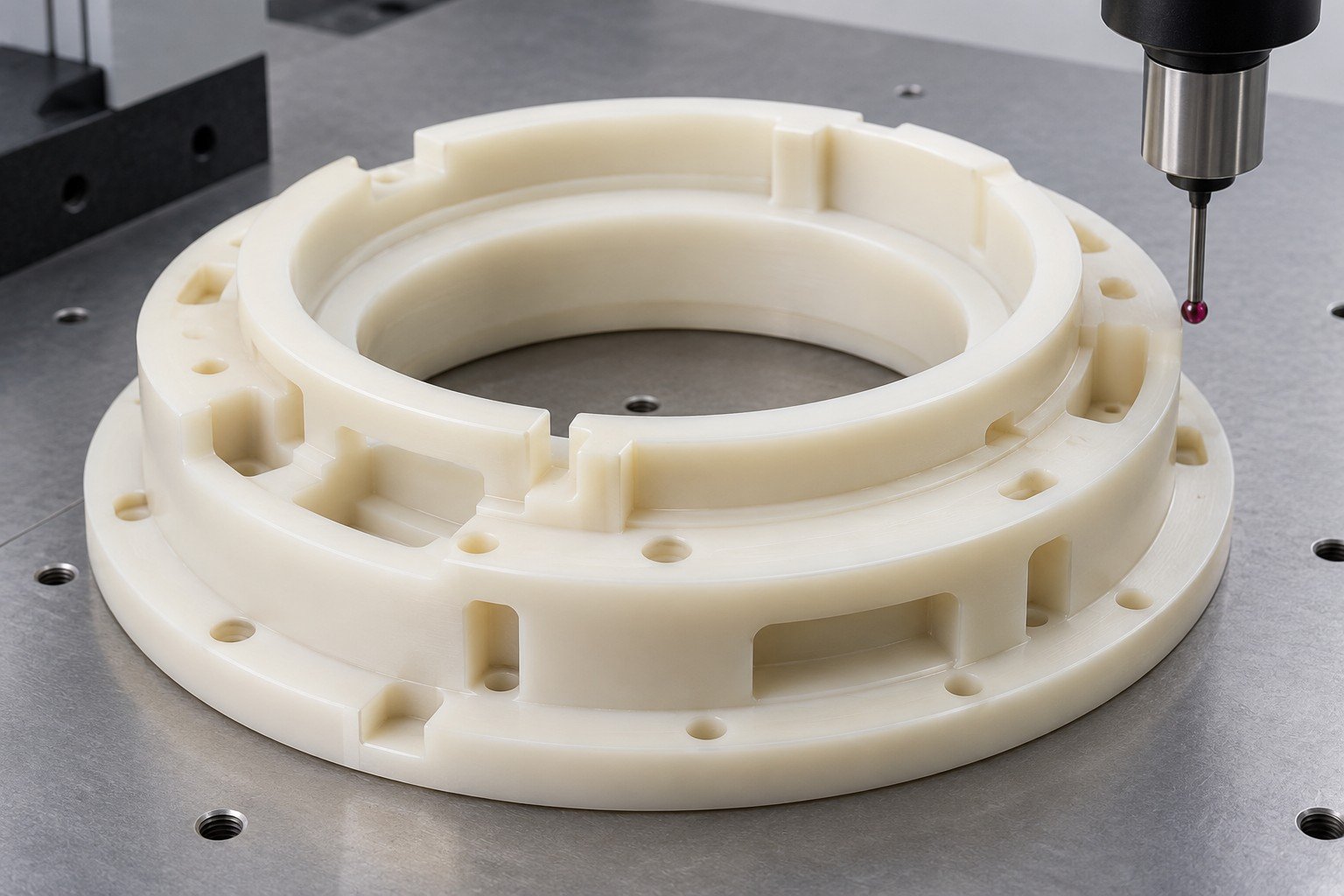
For your Delrin injection molded parts, specify the full resin grade and color. Resin flow, shrinkage and part geometry need one approval plan.
| Your reference | What to confirm |
|---|---|
| Manufacturer | Delrin |
| Material family | POM-H / acetal homopolymer |
| Product form | Molding resin |
| Your review | Full product, color, lot and final fit |
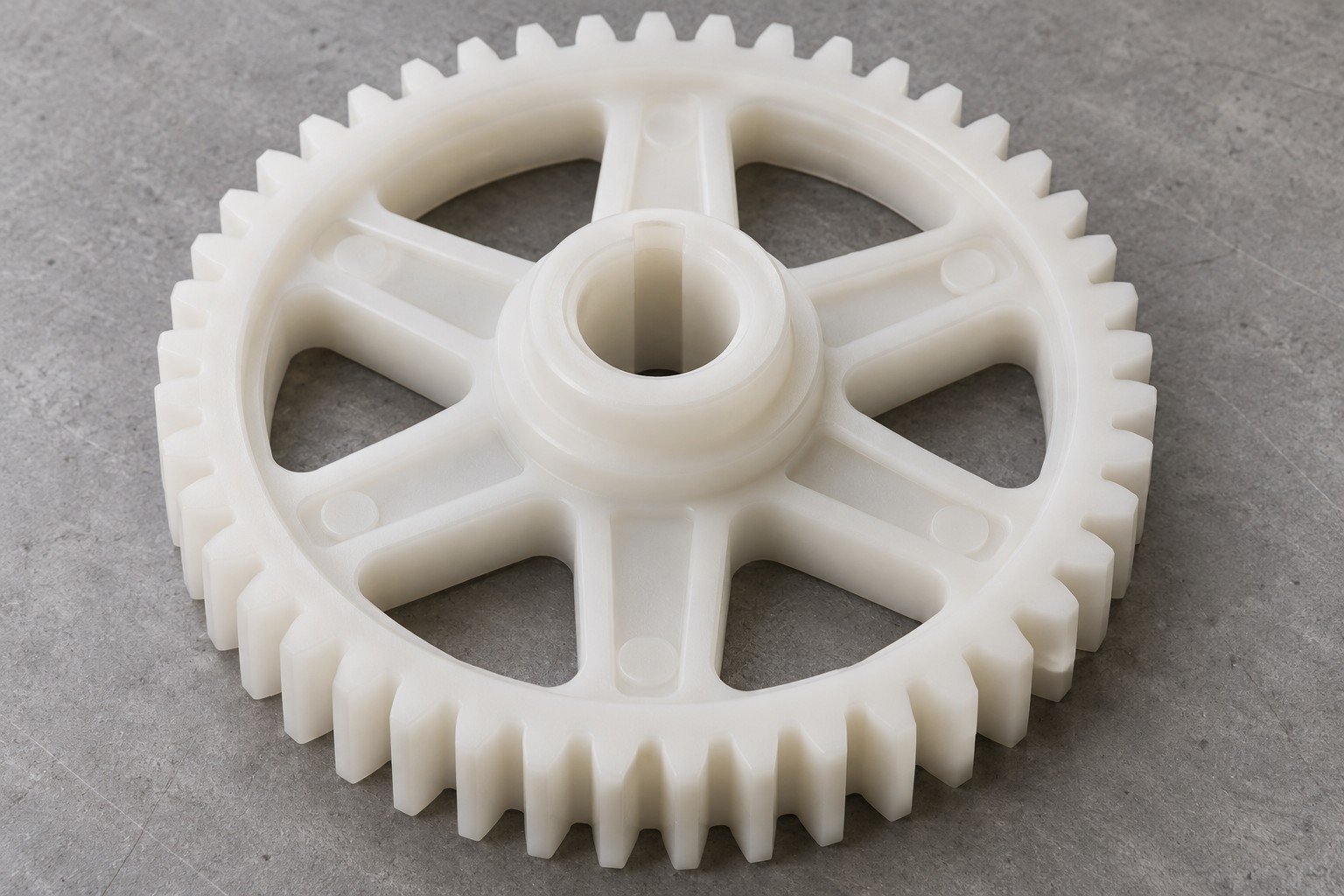
For your acetal material selection, compare the current datasheet for this exact product. Temperature, conditioning, test method and specimen direction matter. No single friction coefficient or tolerance applies to every finished part.
| Your reference | What to confirm |
|---|---|
| Stock or resin | Keep product-form datasets separate |
| Load & motion | Speed, cycles, contact pair and lubrication |
| Your exposure | Temperature, duration and cleaning fluids |
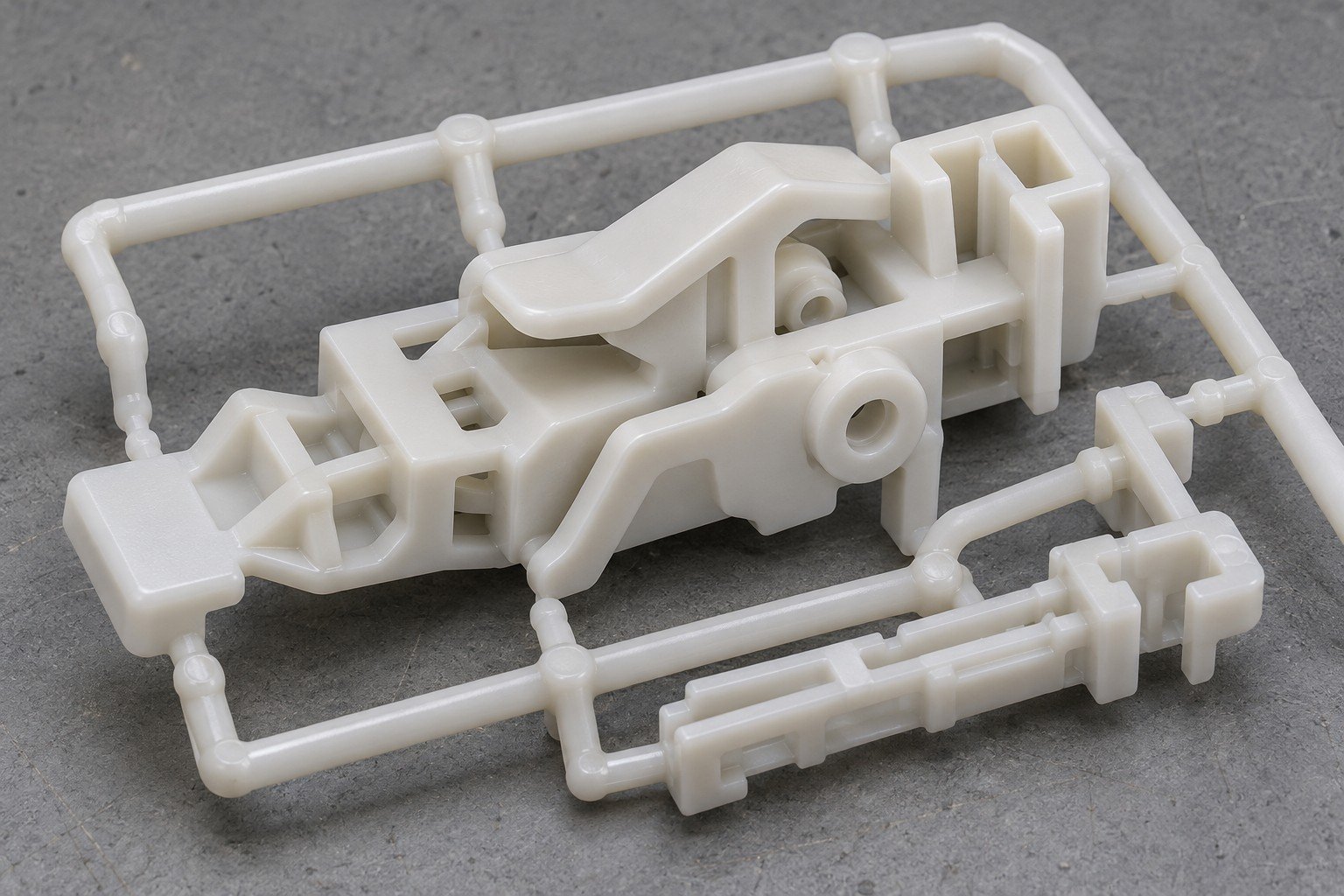
For your POM machined or molded components, identify critical bores, contact lands and accepted edges. A machined prototype can confirm assembly geometry; it does not establish molding shrinkage or production wear life.
| Your reference | What to confirm |
|---|---|
| CNC stock | Support, balanced removal and final measurement state |
| Molding | Gates, wall transitions, shrinkage and sample approval |
| Final fit | Mating part, working temperature and agreed checks |
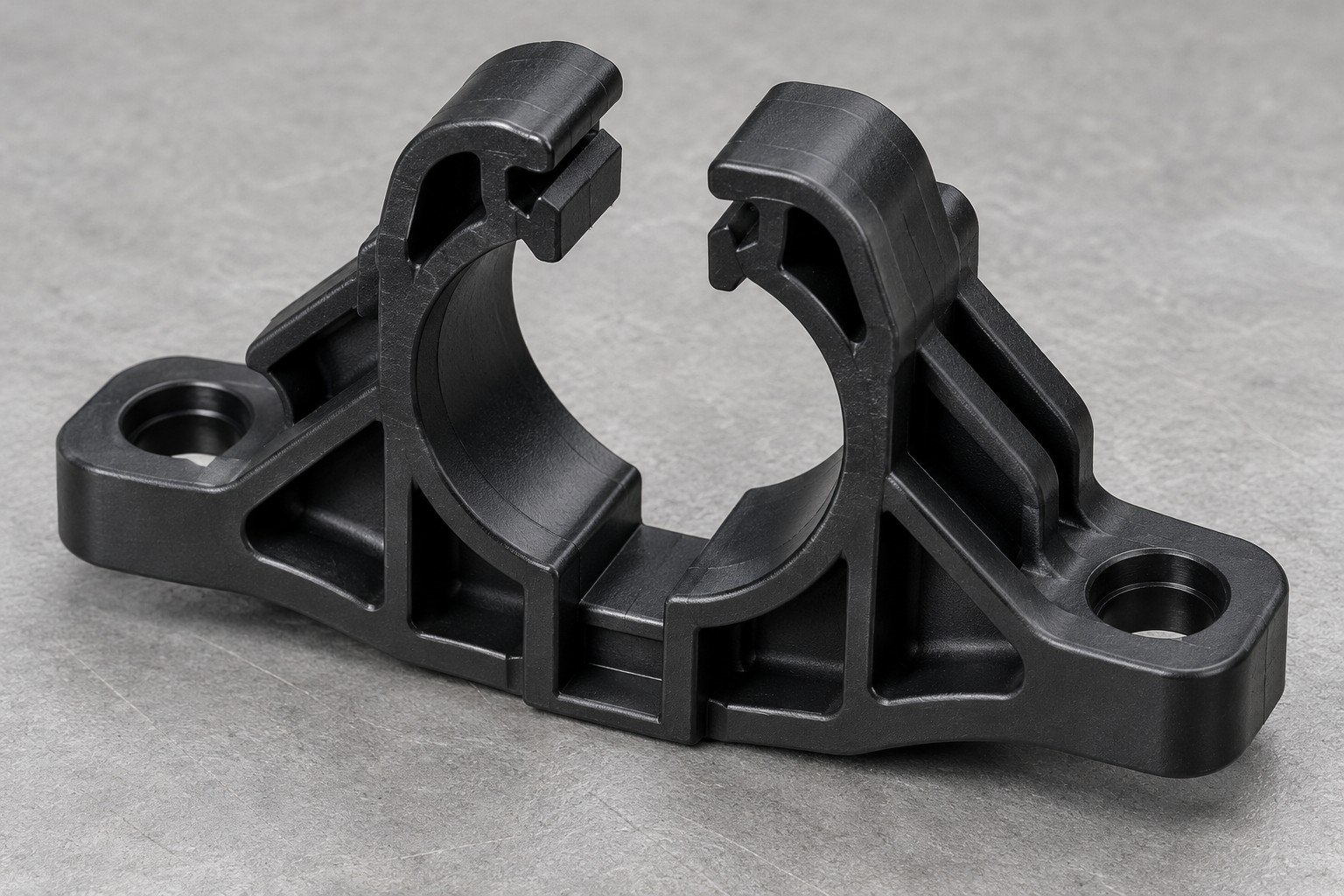
For your acetal parts quotation, link the full material callout to a controlled drawing. Agree material identity, dimensional records and any separate functional test before production.
| Your reference | What to confirm |
|---|---|
| Identity | Manufacturer, grade, color and lot |
| Dimensions | Datums, condition, sampling and method |
| Approval | Change control and agreed sample evidence |
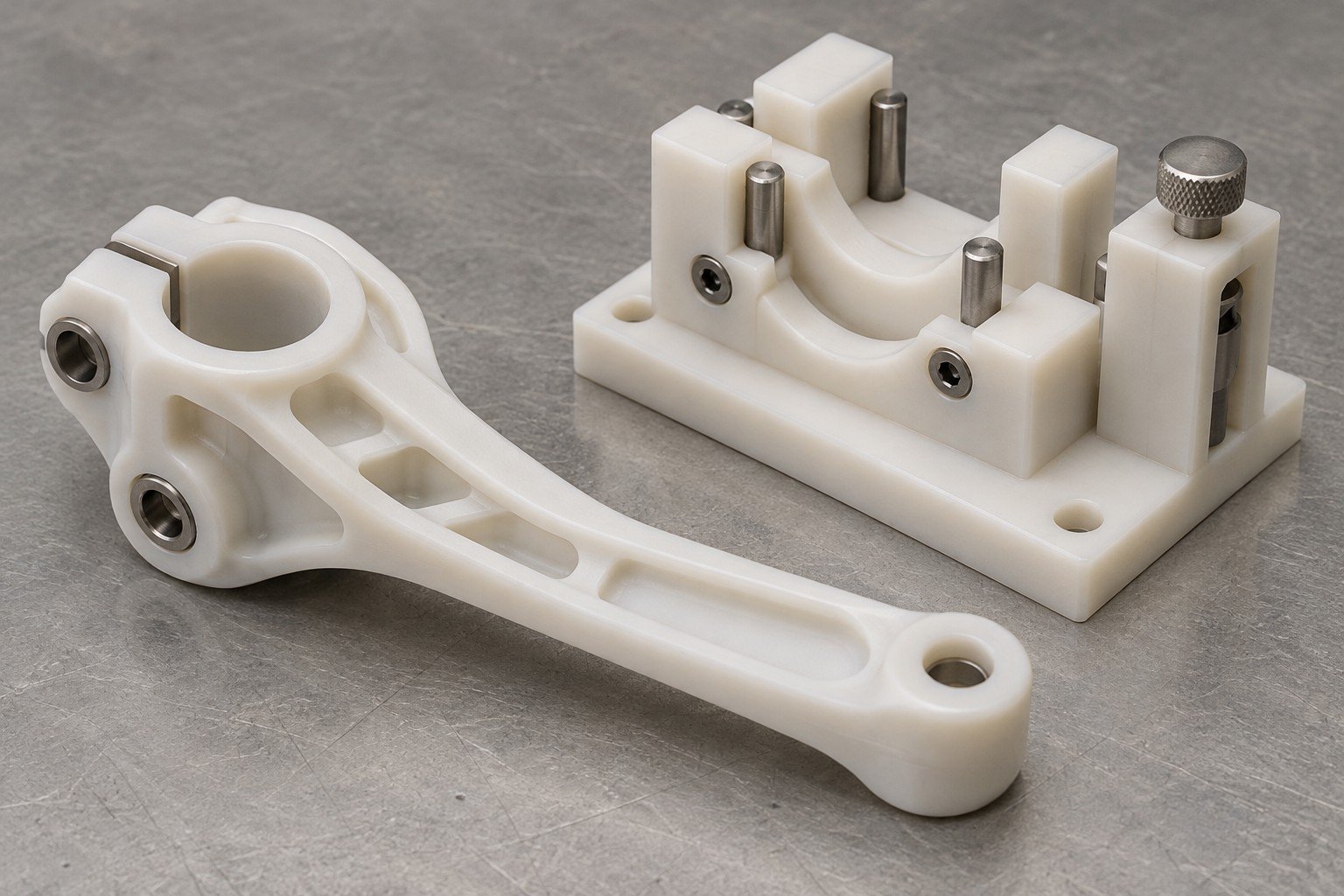
For your POM injection molding project, compare the exact resin and the accepted molded part. A family name alone does not define your fit or wear performance.
| Your reference | What to confirm |
|---|---|
| Manufacturer | Polyplastics |
| Material family | POM-C / acetal copolymer |
| Product form | Molding resin |
| Your review | Full product, color, lot and final fit |
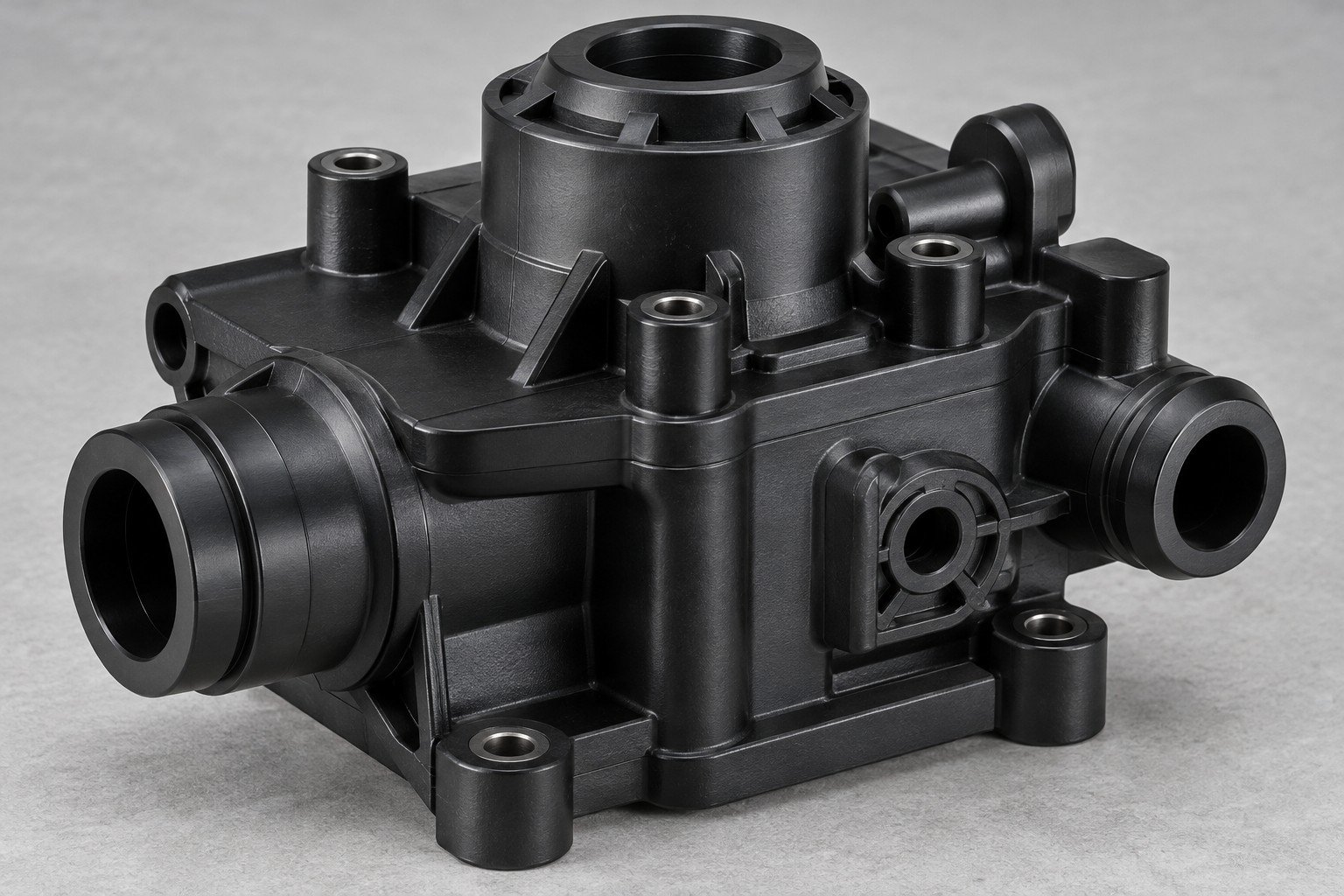
For your acetal material selection, compare the current datasheet for this exact product. Temperature, conditioning, test method and specimen direction matter. No single friction coefficient or tolerance applies to every finished part.
| Your reference | What to confirm |
|---|---|
| Stock or resin | Keep product-form datasets separate |
| Load & motion | Speed, cycles, contact pair and lubrication |
| Your exposure | Temperature, duration and cleaning fluids |
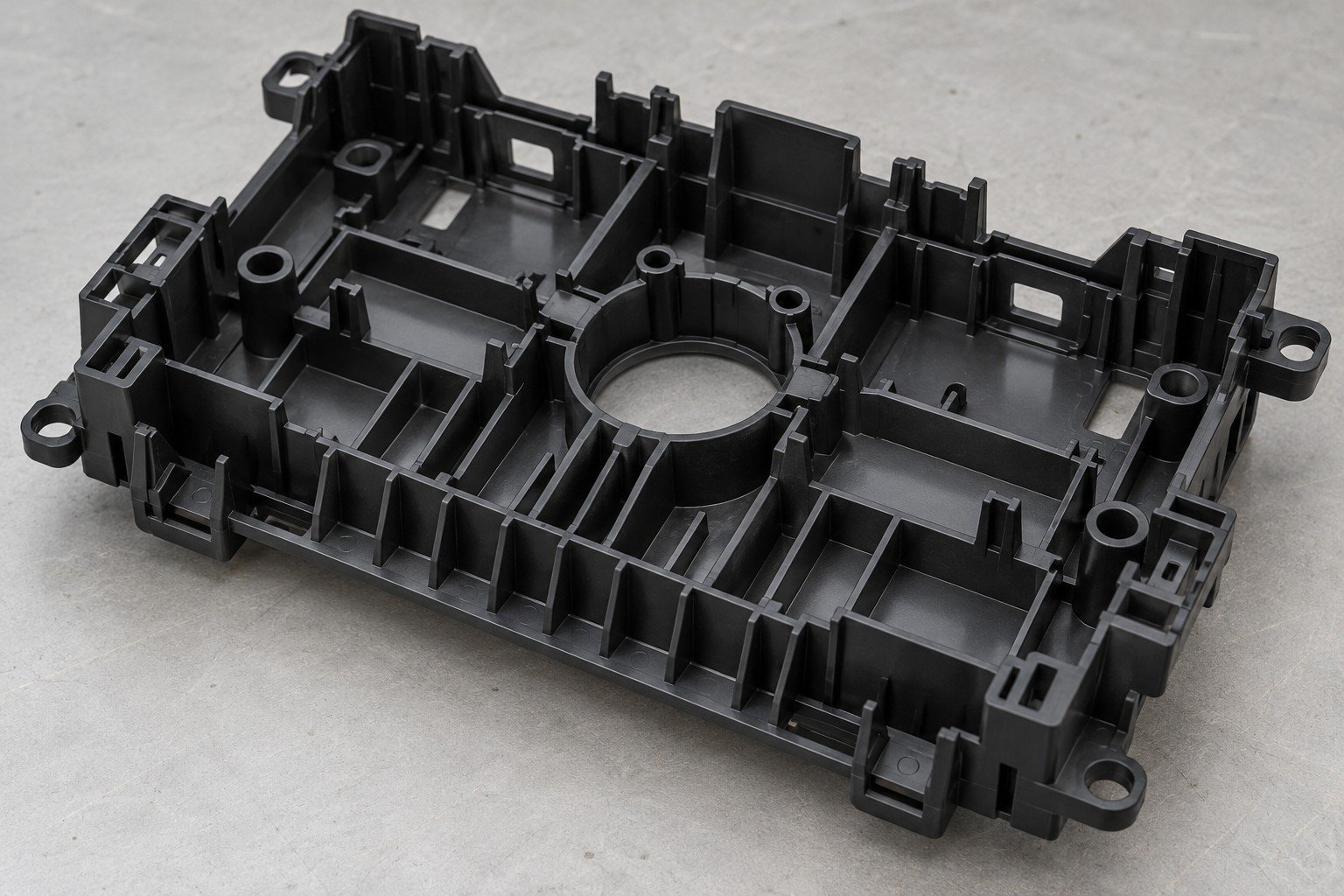
For your POM machined or molded components, identify critical bores, contact lands and accepted edges. A machined prototype can confirm assembly geometry; it does not establish molding shrinkage or production wear life.
| Your reference | What to confirm |
|---|---|
| CNC stock | Support, balanced removal and final measurement state |
| Molding | Gates, wall transitions, shrinkage and sample approval |
| Final fit | Mating part, working temperature and agreed checks |
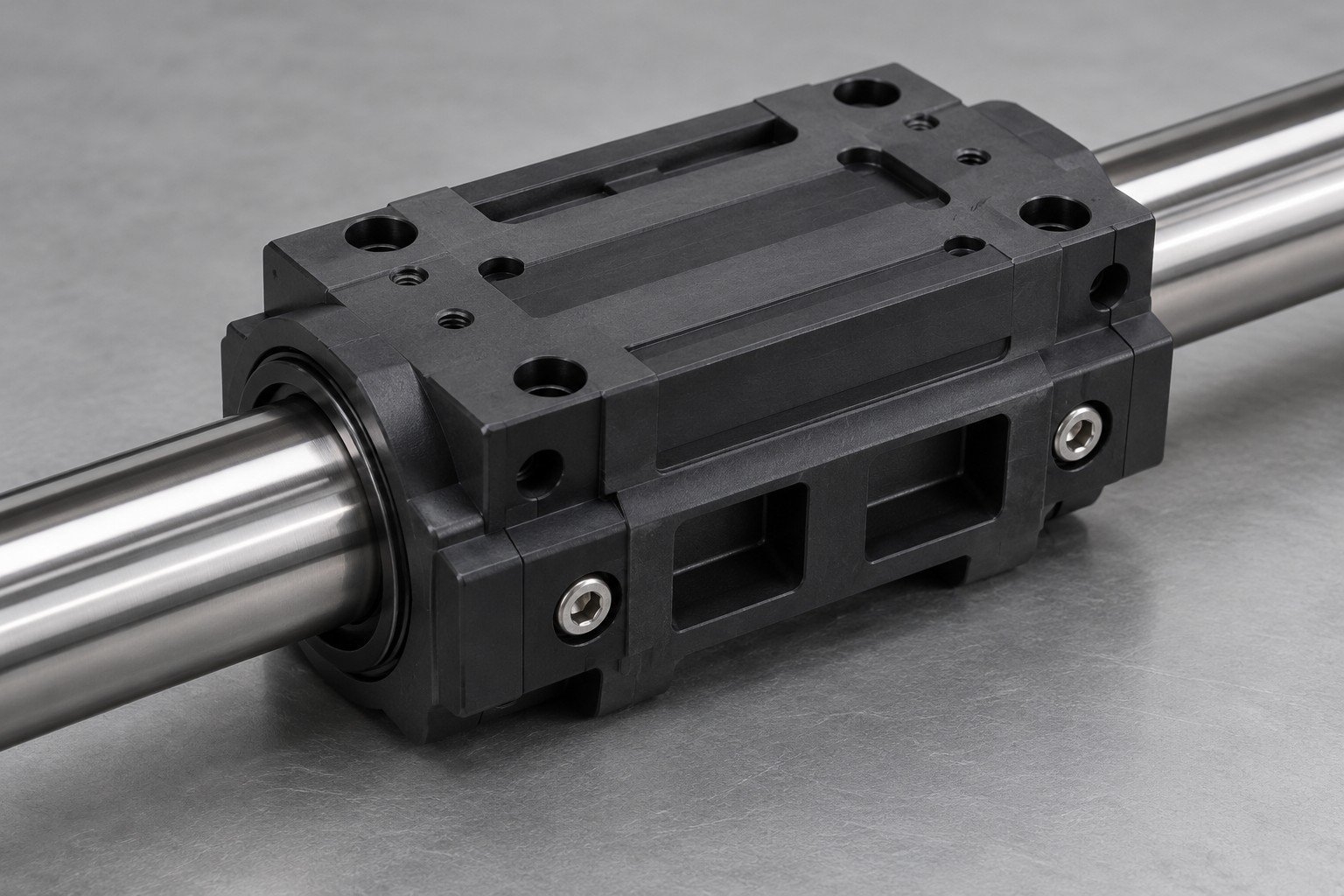
For your acetal parts quotation, link the full material callout to a controlled drawing. Agree material identity, dimensional records and any separate functional test before production.
| Your reference | What to confirm |
|---|---|
| Identity | Manufacturer, grade, color and lot |
| Dimensions | Datums, condition, sampling and method |
| Approval | Change control and agreed sample evidence |
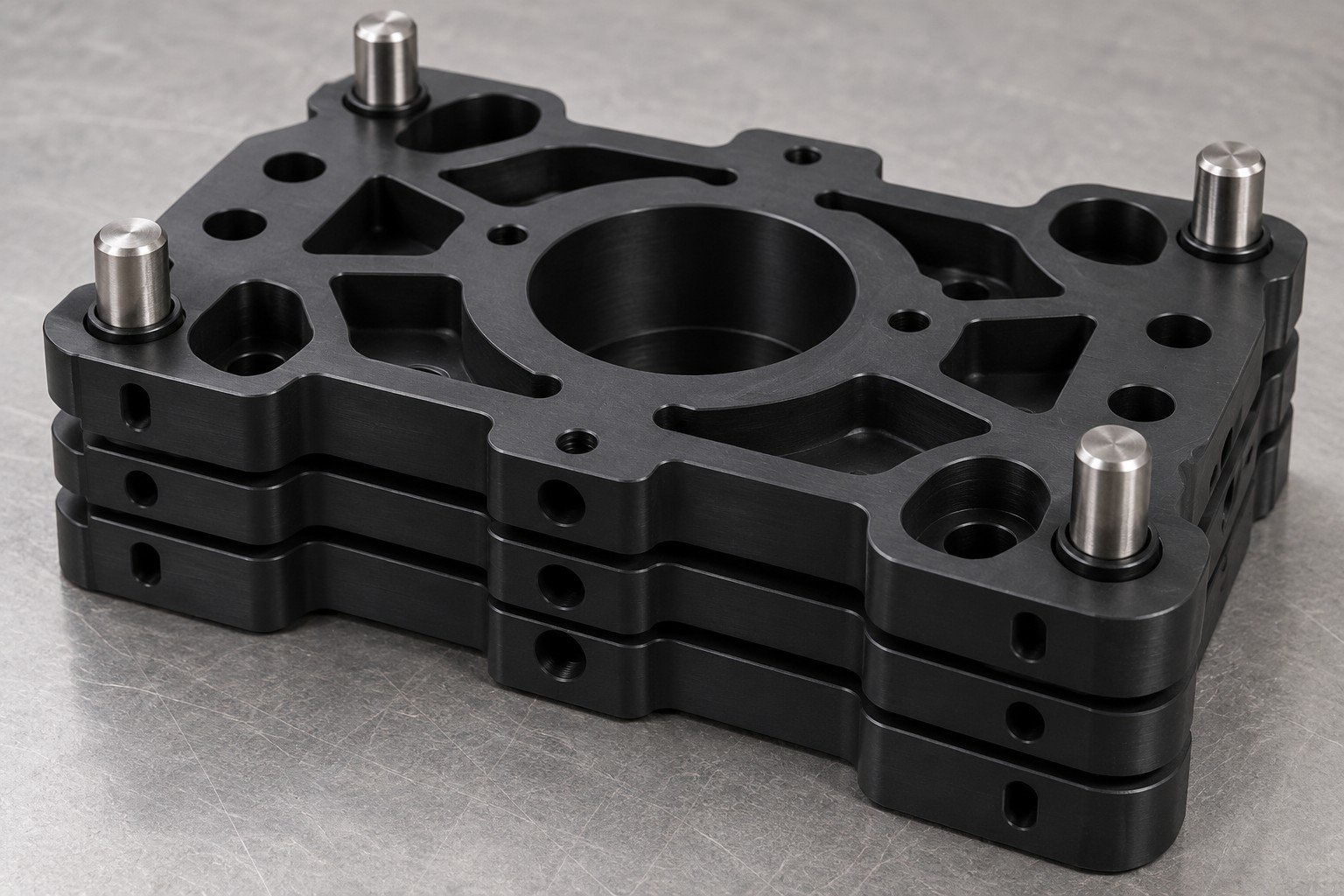
Same family does not mean interchangeable grades. Supply and suitability are confirmed for your project.
Same manufacturer and test conditions. Higher melt flow is not a strength or wear-life rating.
190°C / 2.16 kg · ISO 1133 · g/10 min
Typical resin references. MFR is not MVR. Do not apply these values to unspecified CNC stock.
Define load, speed, cycles, mating material and lubrication.
Confirm temperature, duration, cleaning fluids and contact conditions.
Agree critical dimensions, conditioning and measurement methods.
Source: Polyplastics DURACON M90-44 / M270-44 ISO data, colors CF2001/CD3068. Confirm the current TDS. Not design allowables or guaranteed part performance.
M90-44 source → M270-44 source →8 additional products, grouped by the requirement you need to review.
Review filling, geometry and required part performance.
Review fine features and the flow–performance trade-off.
Confirm the counterface, load, speed and lubricant requirements.
Retain the full suffix and agree the required emissions evidence.
Specify the resistance target, test method and conditioning.
Review stiffness and possible wear of the mating surface.
Specialty grades need project review. Glass reinforcement can wear the mating surface; ESD needs a specified test. C 9021 XAP3 is not ordinary C 9021. No stock or processing capability is implied by this selection list.
| Family / composition | What your order needs |
|---|---|
| POM / polyoxymethylene | Acetal / polyacetal family; identify POM-C or POM-H |
| POM-H | Acetal homopolymer; product-specific stabilizers and modifiers |
| POM-C | Acetal copolymer; exact co-monomer and additives depend on formulation |
| Fillers, lubricant, pigment | Retain exact trade grade and color; no universal composition percentages |
| Material analysis report | Actual lot identity, agreed method and supplier evidence |
Review actual machining requirements together with your geometry and working conditions.
To review acetal warping and acetal dimensional stability, discuss initial stock, support and removal sequence. Material removal and clamping can change the part shape as residual stresses redistribute. Define whether free-state or installed dimensions are accepted.
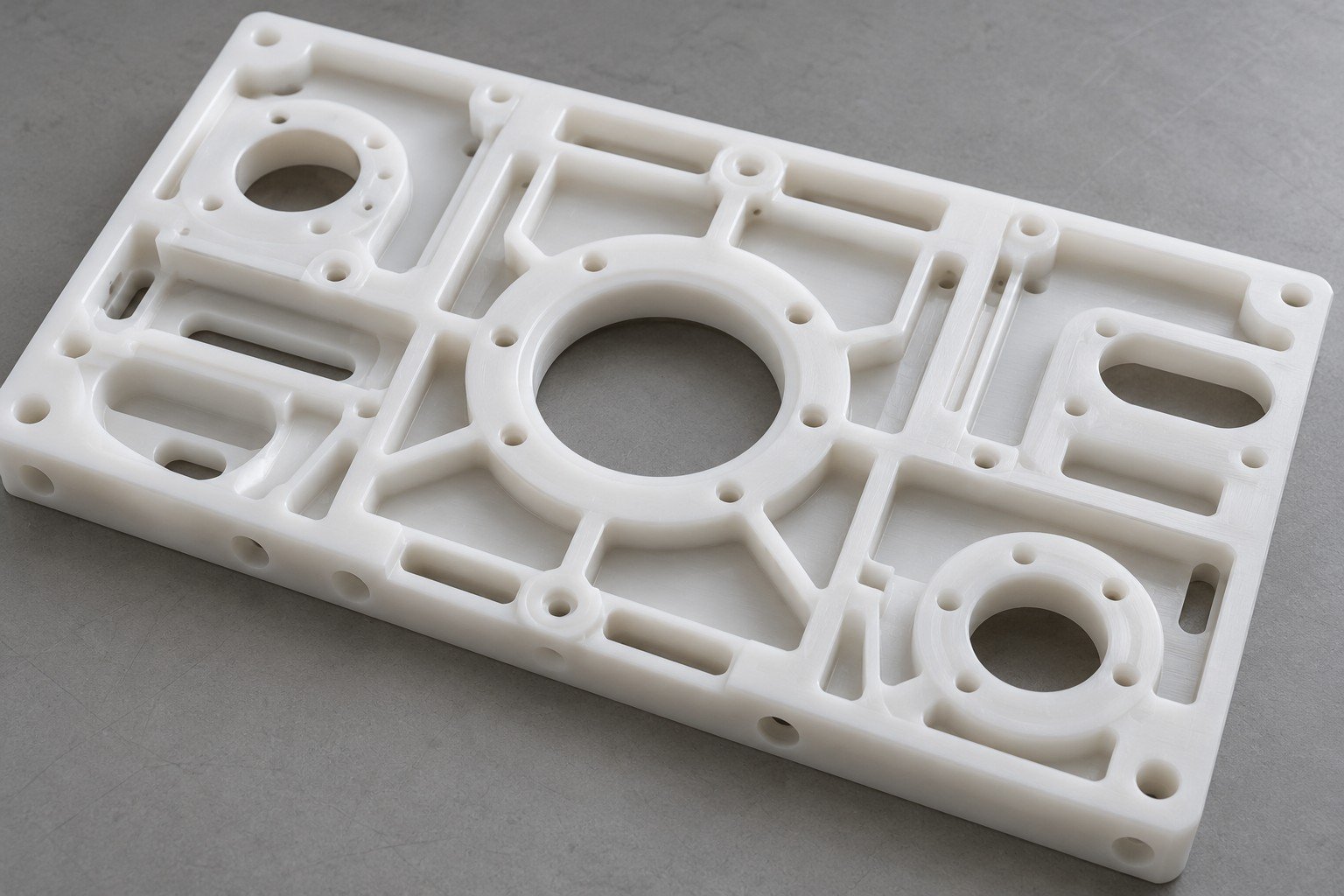
Review wall transitions, unsupported spans and the features that must retain assembly fit after release. Specify accepted edge breaks and allowable burrs on critical interfaces.
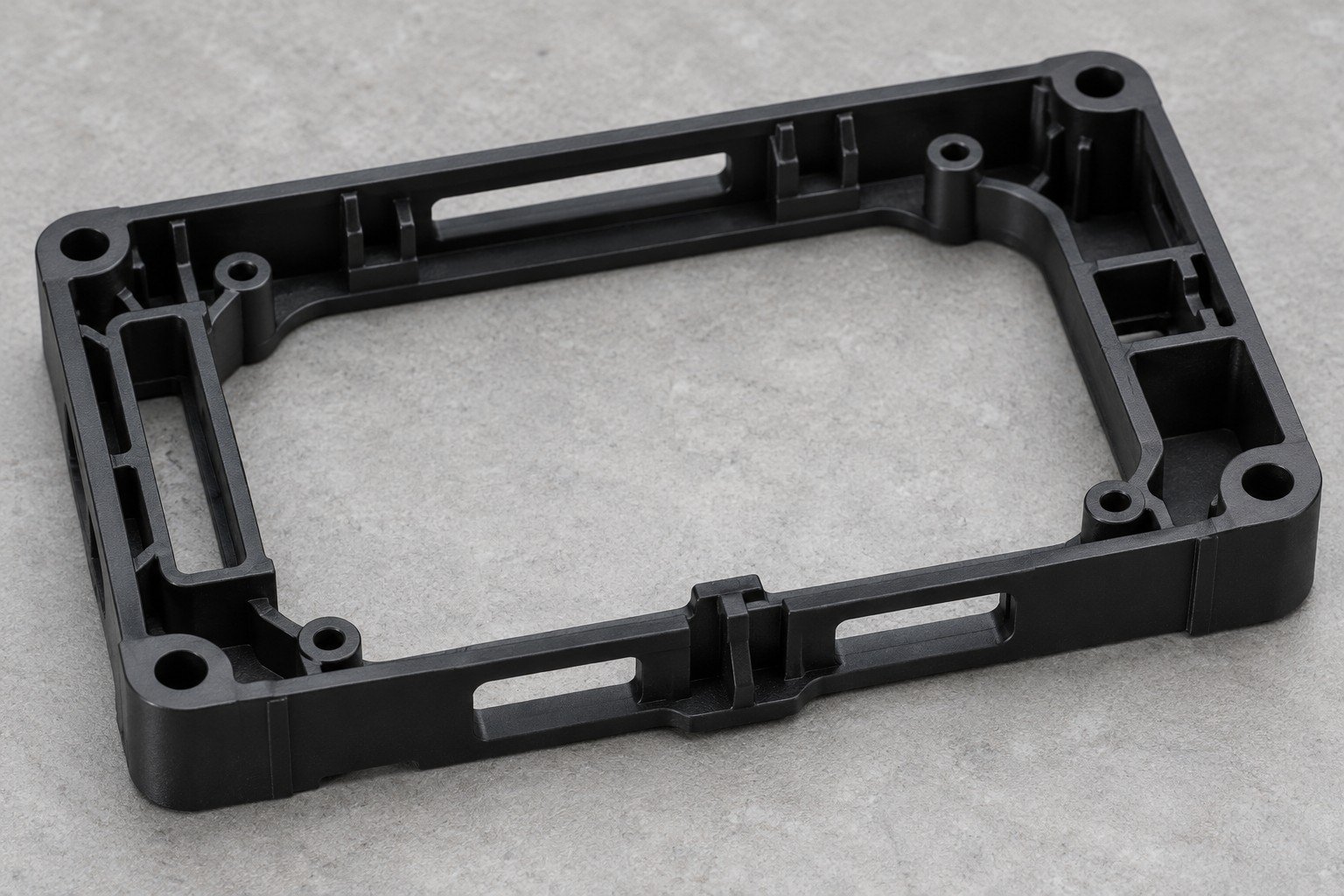
For an acetal press fit or sliding interface, agree conditions before choosing a wear-modified grade. Acetal machining tolerances need the actual stock, feature size and measurement state.
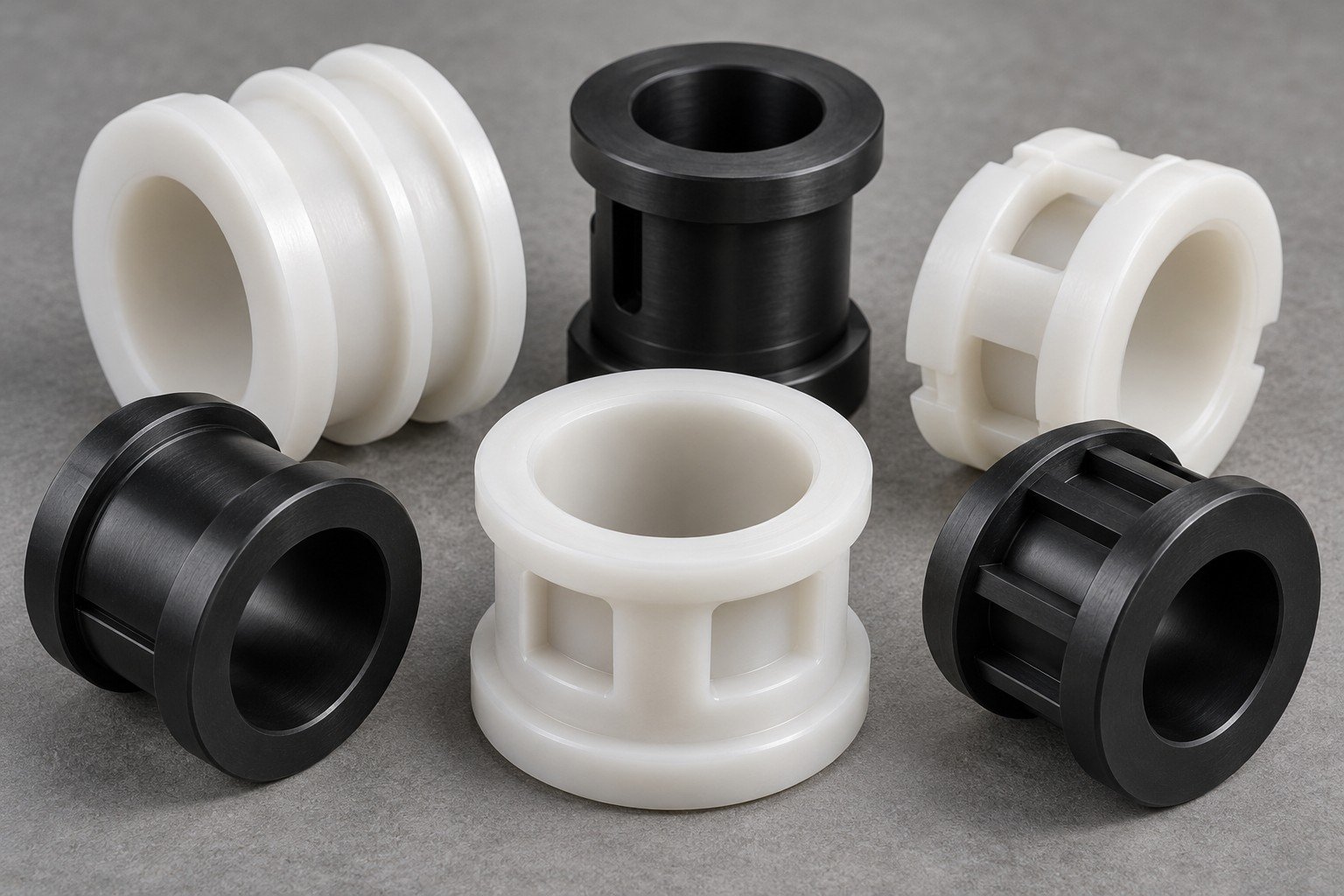
Account for acetal thermal expansion: a room-temperature check does not define a hot or cold running clearance. Review the mating material and operating range.
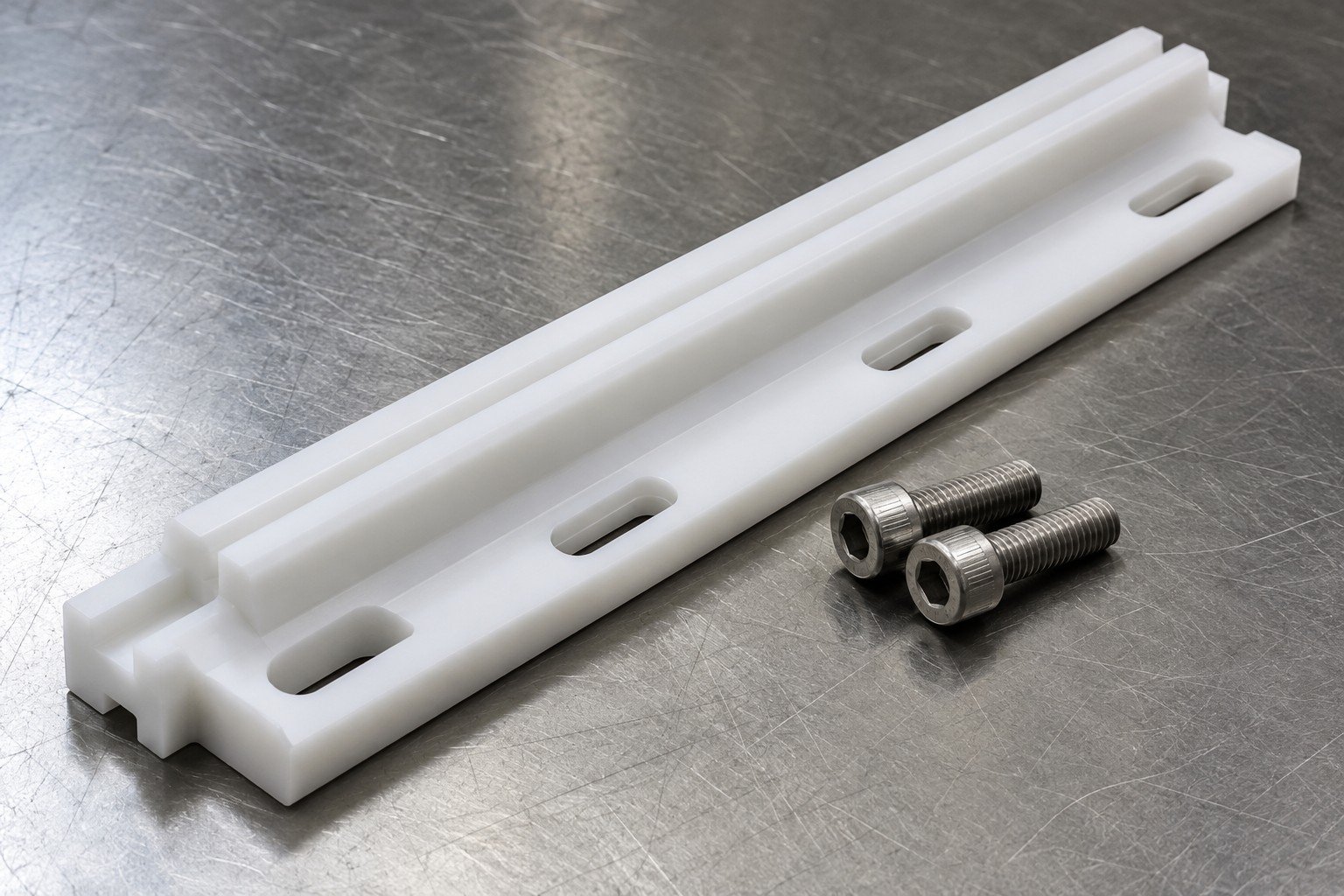
POM is difficult to bond or paint. Review mechanical retention, supplier-approved preparation and validation of the actual joint.
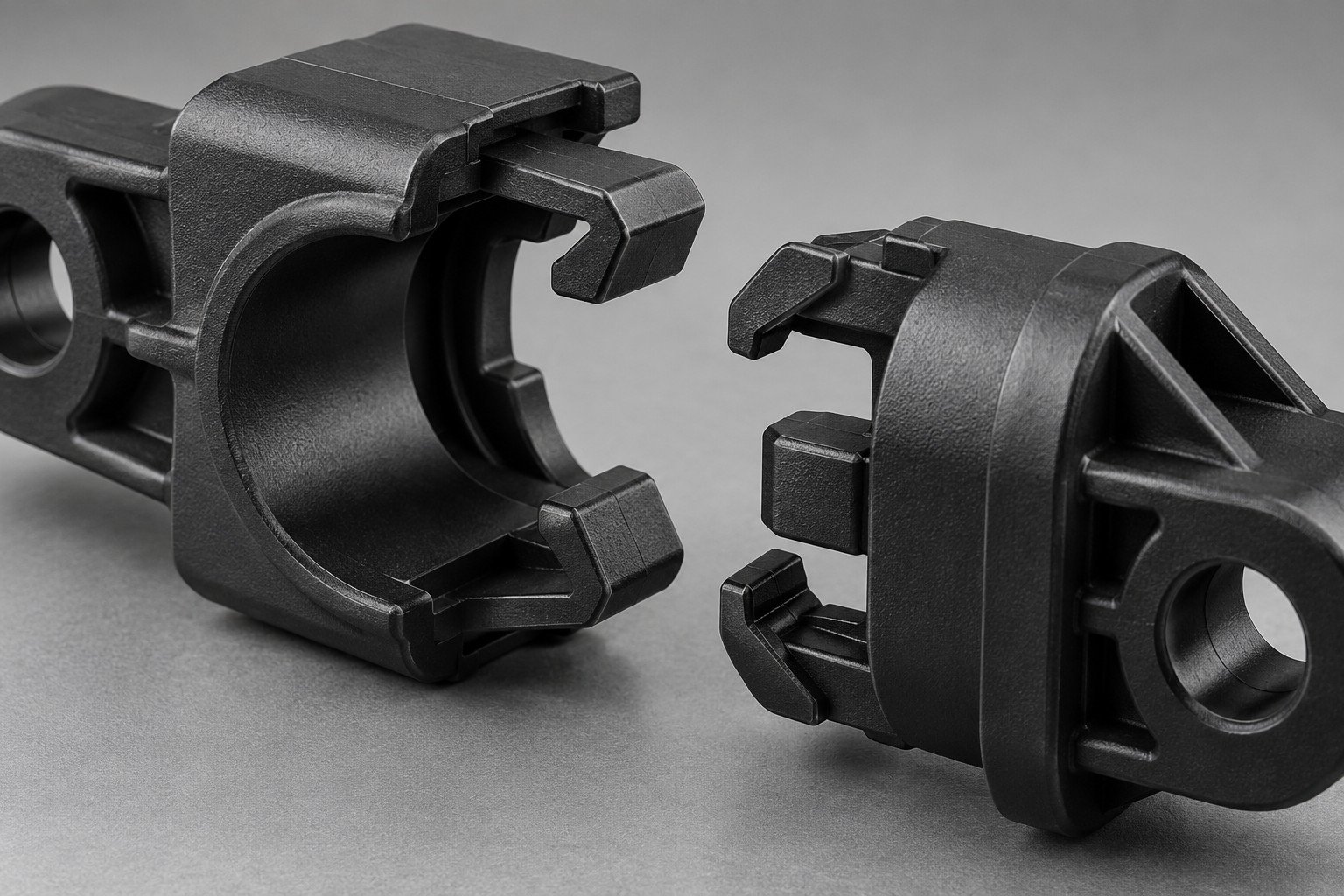
Agree tool marks, burrs, cosmetic faces and sliding lands. Coatings and laser marking need product-specific trials.
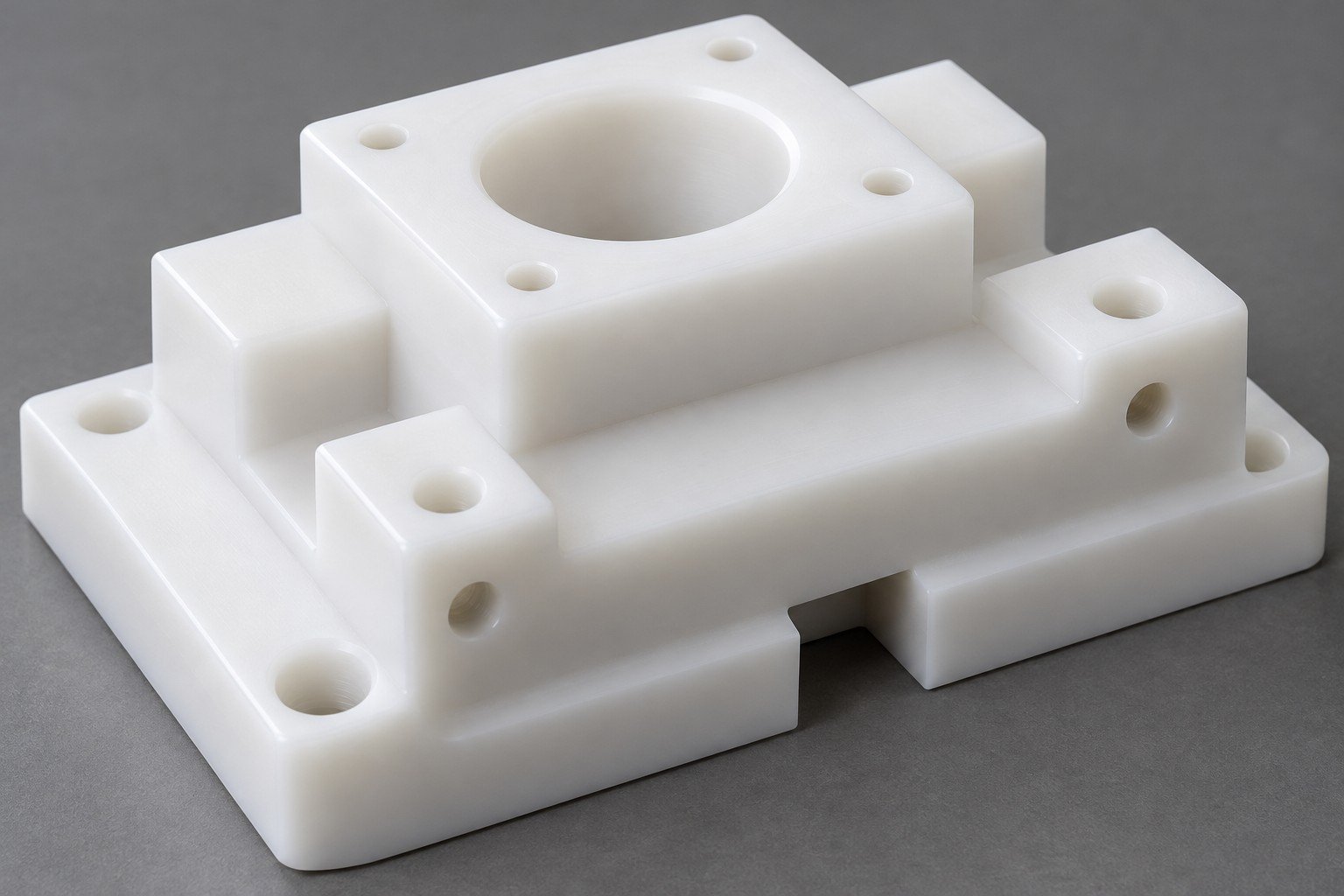
Select the material form and manufacturing route together.
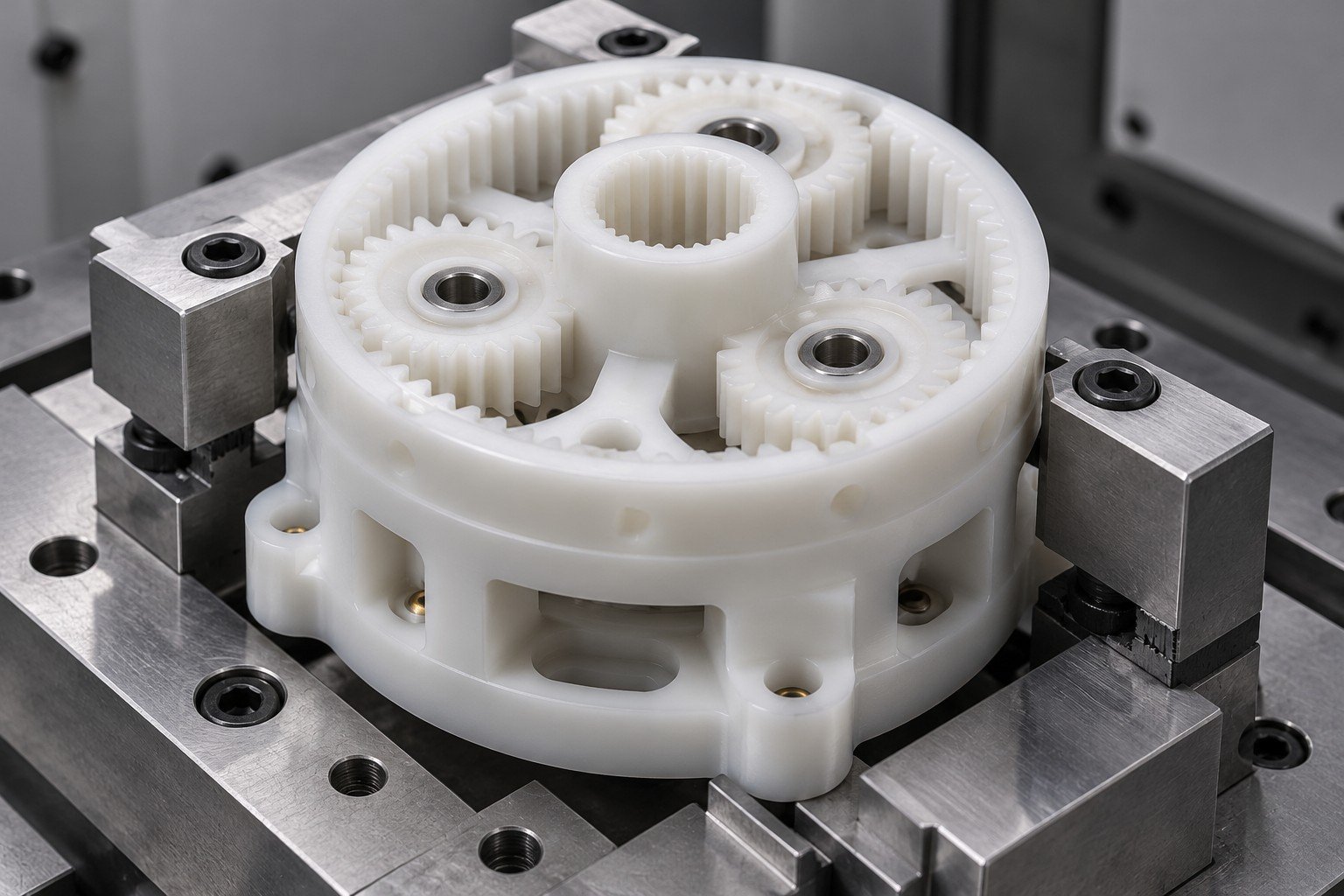
Review your acetal prototype machining around stock, material removal, datum features and final fit.
Explore service →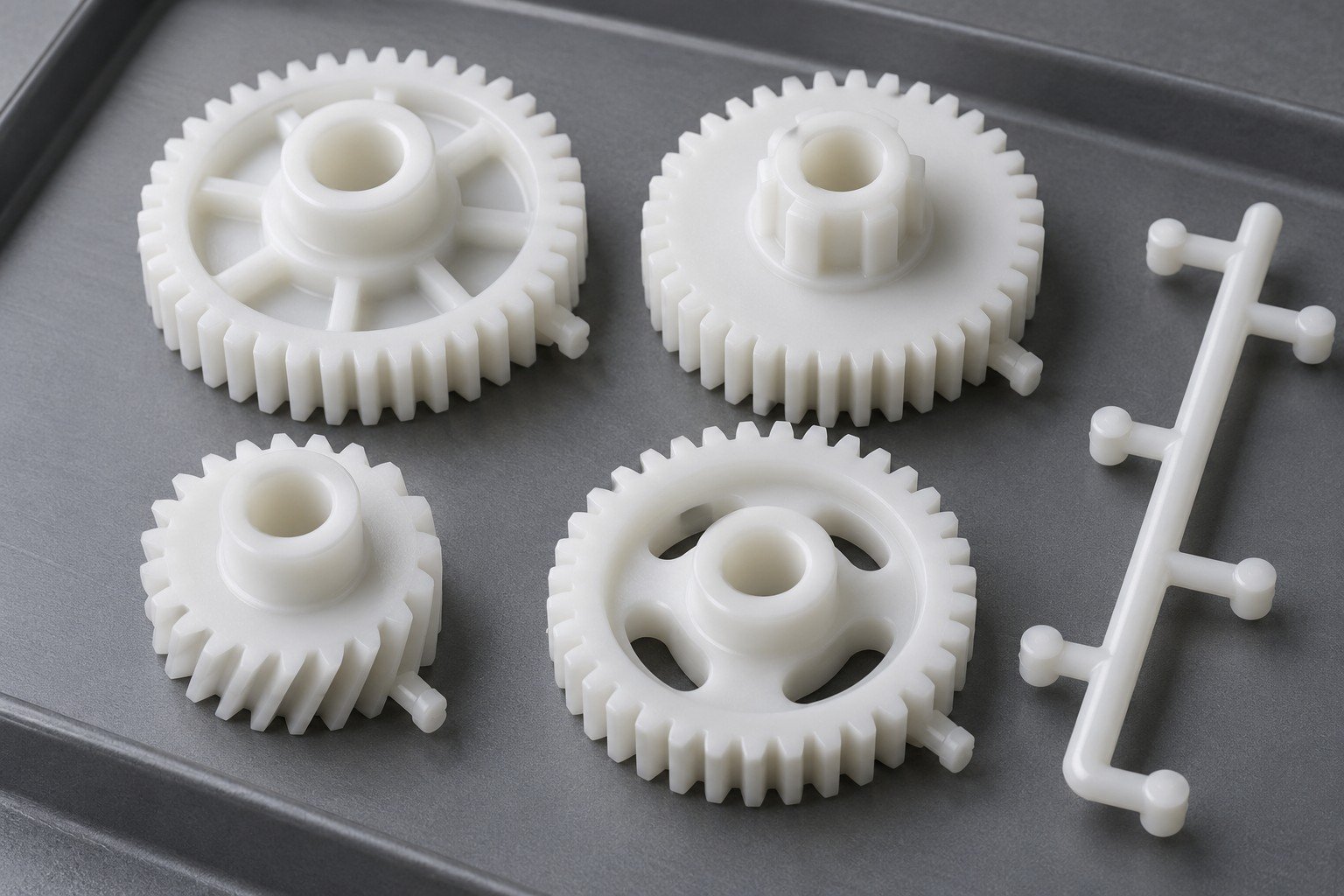
Review resin, shrinkage, tooling and approved molded samples. Review local thick sections and rib transitions with the mold designer when agreeing sink marks and appearance.
Explore service →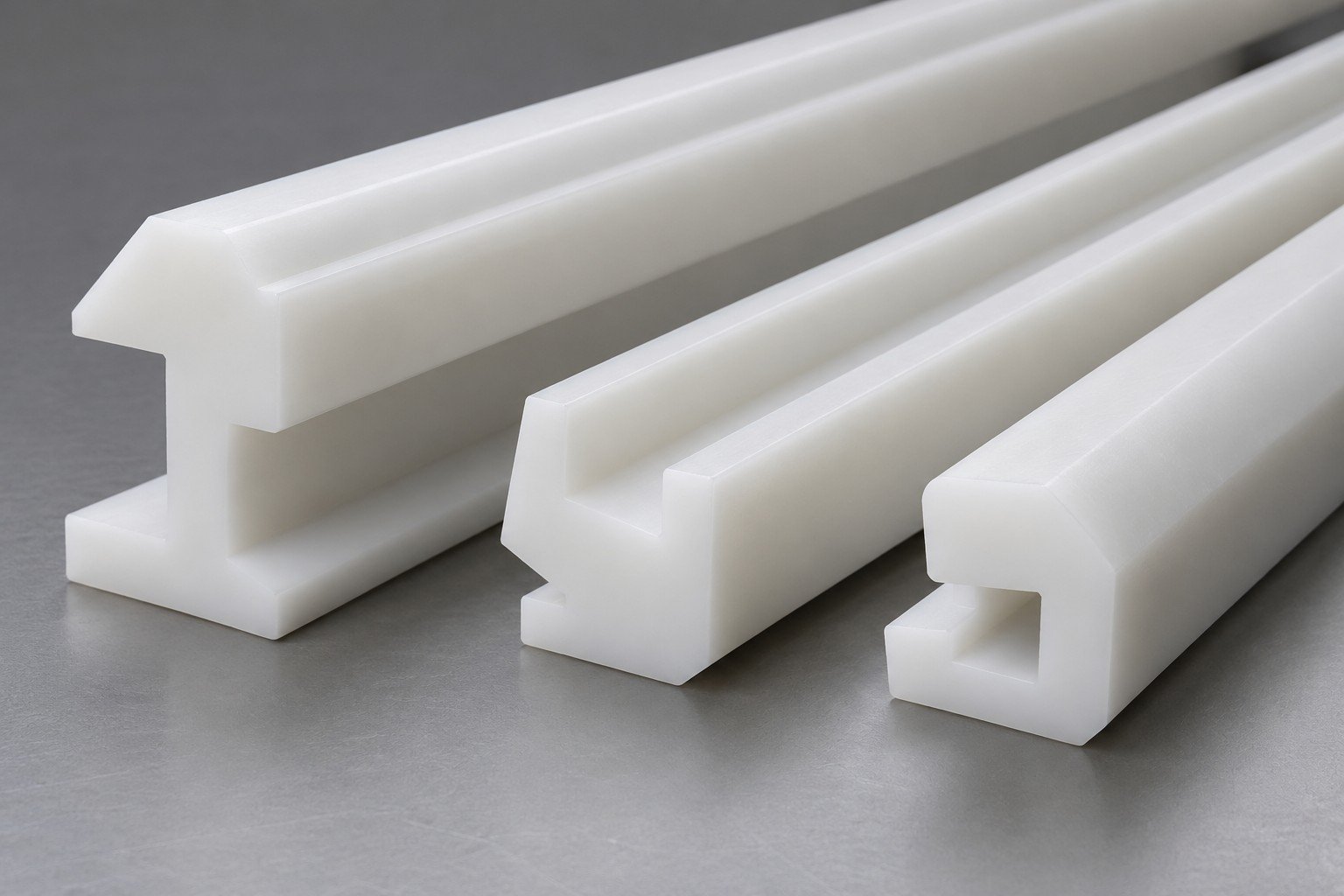
Illustrative concepts. A machined prototype does not establish molding shrinkage or molded-part life. Material and process scope are confirmed on your quotation.
Define acetal gear inspection requirements and the checks your project requires. For acetal material certification for machined parts, agree the actual supplier documents and lot link.
Full product, color, supplier documents and traceability tied to the actual material lot.
Datums and measurement conditions.
Agreed tests and sample approval.
Document scope and sampling are agreed for your part.
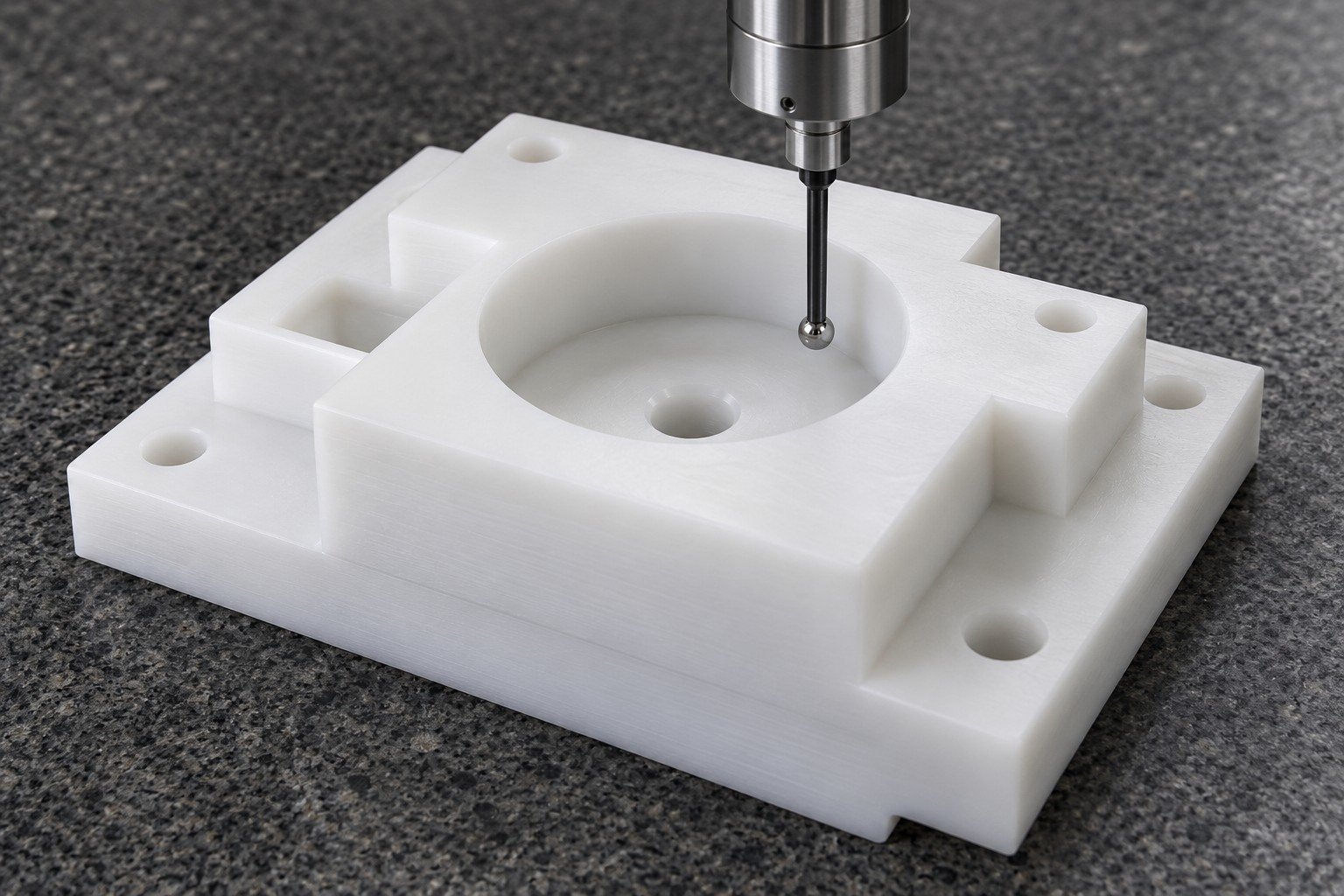
Material · Machining or tooling · Inspection · Secondary work · Delivery
For an acetal machining quote or POM injection molding quote, send CAD and controlled drawing, full product name and color, quantities, critical fits, service conditions, finish and inspection requirements.
For your custom acetal gears, compare quantity, tooling, geometry and the sample purpose. Machining can evaluate fit from specified stock; production resin, molded geometry and functional tests need separate approval.
When comparing an acetal bushings manufacturer, provide both mating materials, sizes, loads, temperature range and accepted assembly condition. Agree interference and inspection for the actual joint; do not apply one universal allowance.
Agree the actual material, temperature, time and free-state or installed measurement condition with the drawing authority. Record these conditions with critical dimensions instead of assuming one universal conditioning time.
No. POM is a polymer family; Delrin is a brand of acetal homopolymer. Confirm the manufacturer, complete grade, color and product form.
Not automatically. Compare the exact products, stock or resin route, environment, geometry and required acceptance. Obtain drawing-authority approval before substitution.
No. Specify the actual sheet, rod or tube product, manufacturer, color and lot. A molding-resin reference does not identify unspecified stock.
POM is difficult to bond and paint. Review mechanical retention or a qualified surface and adhesive system, then validate the actual joint under its intended exposure.
Material product, usable stock, tooling, geometry, quantities, critical fits, inspection and secondary work affect your quotation. Compare the same drawing revision and acceptance scope.
Material references: Ensinger · Delrin · Polyplastics · Celanese. Confirm current documents for your exact product and form. Availability and acceptance requirements are project-specific.