Injection Molding
Tooling and molding for your repeat plastic parts.
From prototype to production, coordinated manufacturing solutions for your custom parts.
View All Services →
Precision parts for your tight tolerances and complex geometry.
Tooling and molding for your repeat plastic parts.
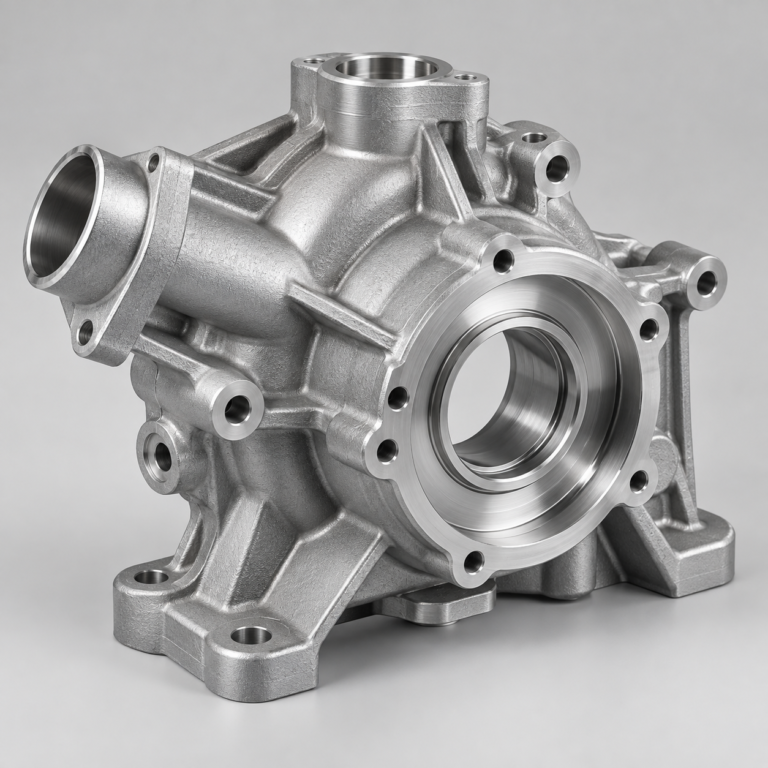
Metal casting options for your part and production volume.
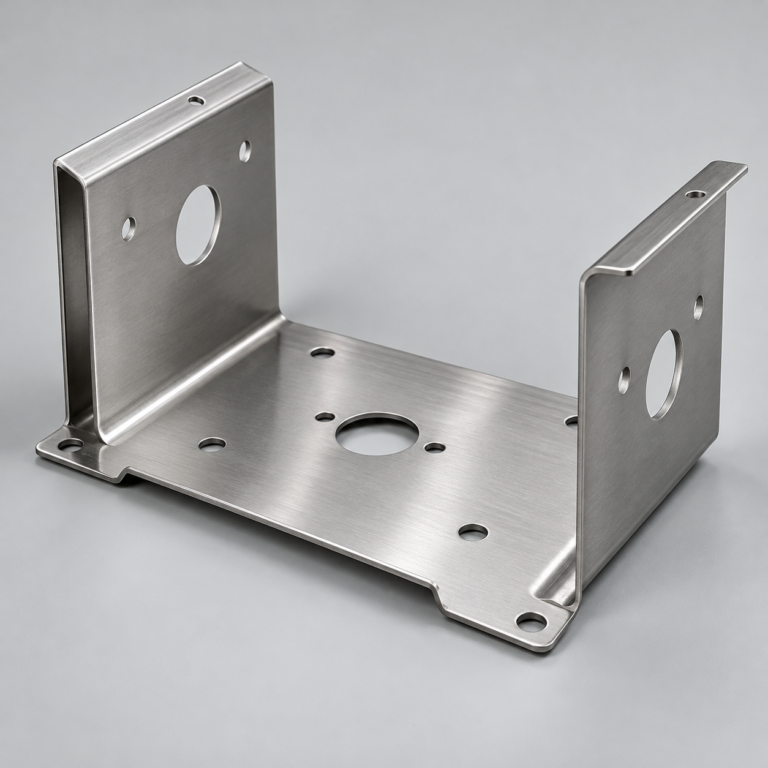
Cutting, forming and welding for your fabricated parts.
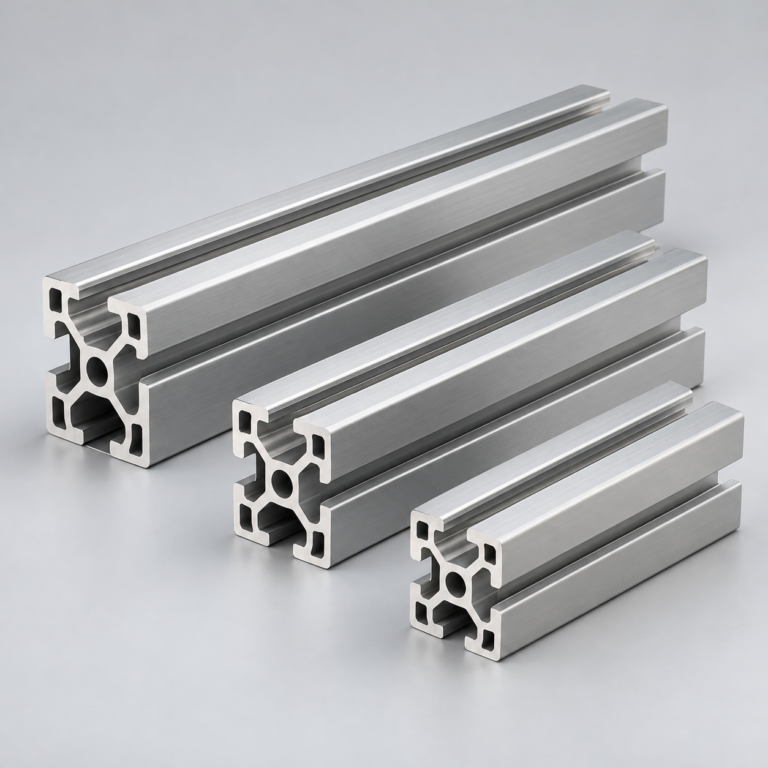
Custom profiles for your section, length and finish requirements.
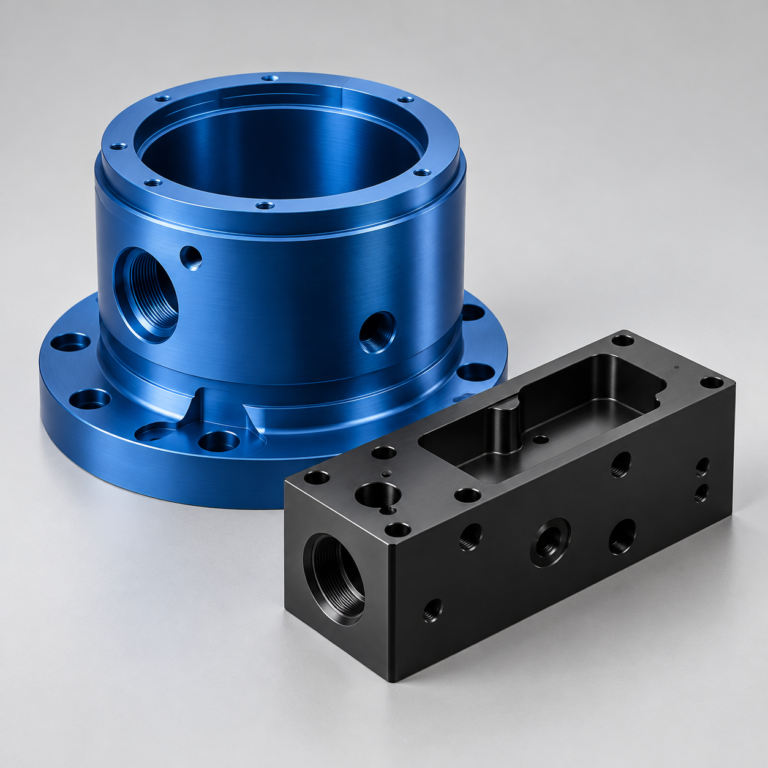
Finishes for your appearance, corrosion and wear requirements.
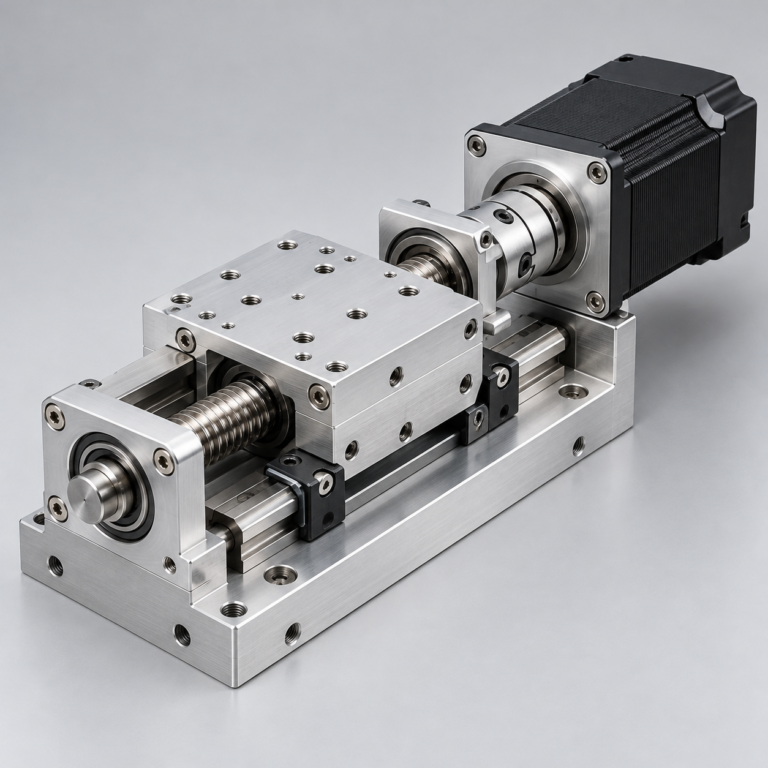
Sub-assemblies and final builds for your production program.
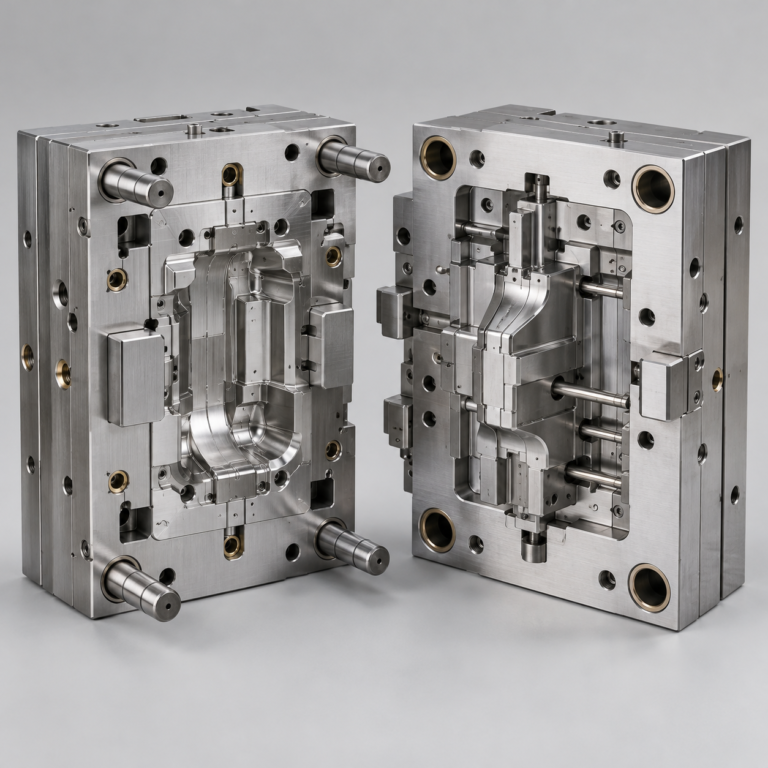
Production tooling built around your process and volume.
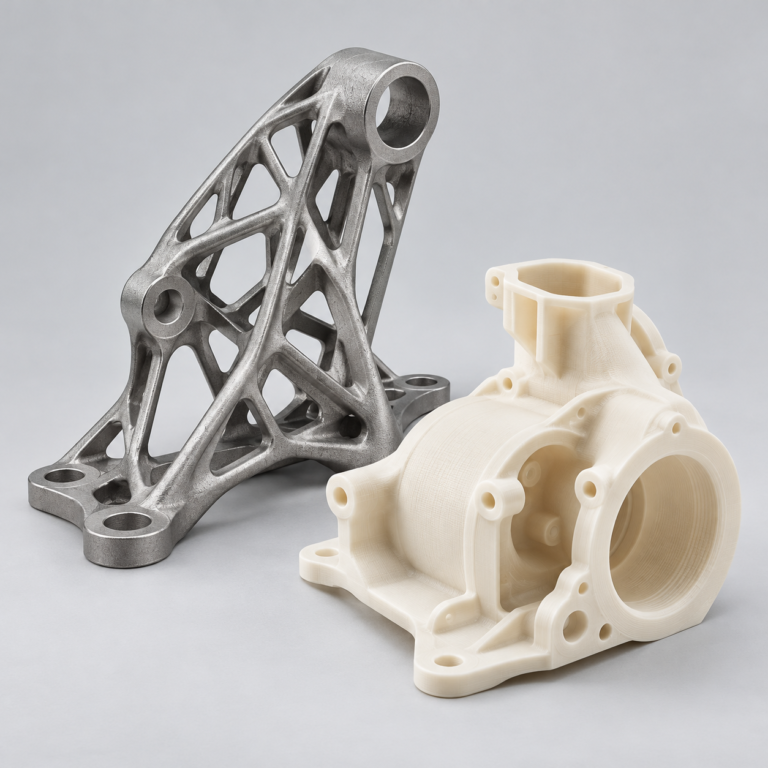
Prototype parts to check fit, function and design.
Choose air- or liquid-cooling components around your thermal and mechanical requirements.
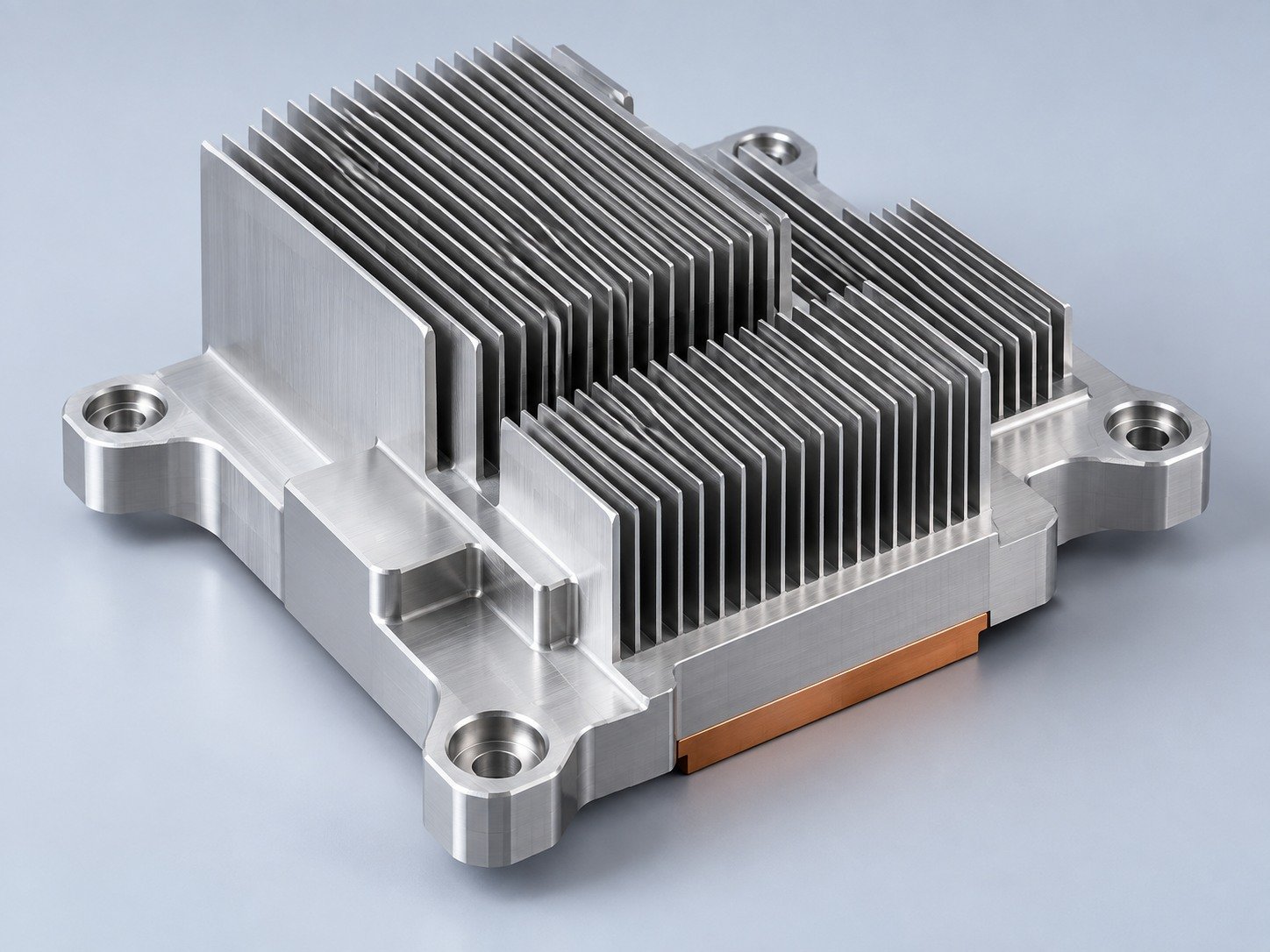
Manufacturing support for your cold plates, manifolds and cooling assemblies.
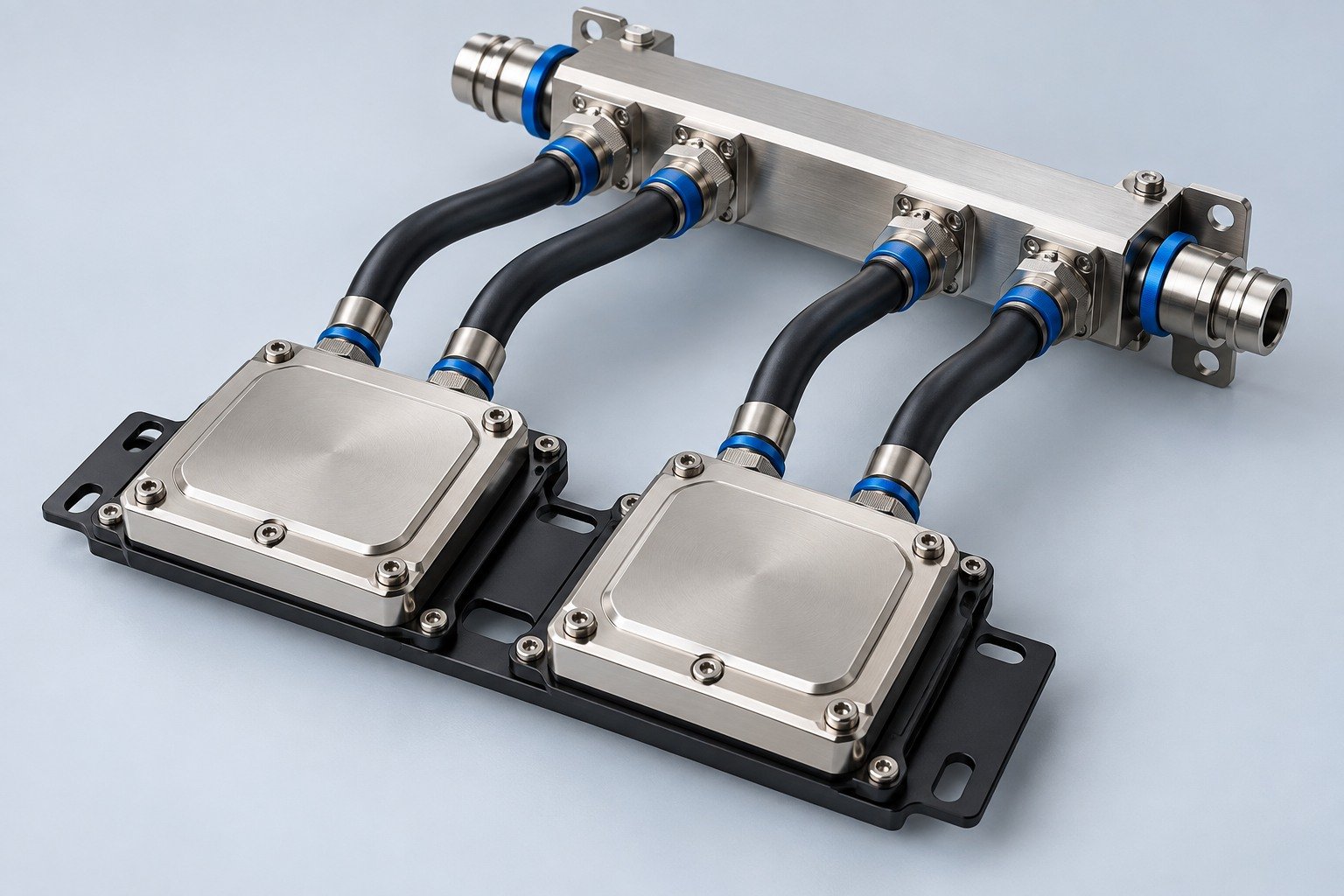
Find components for your power electronics, energy, laser and telecom application.
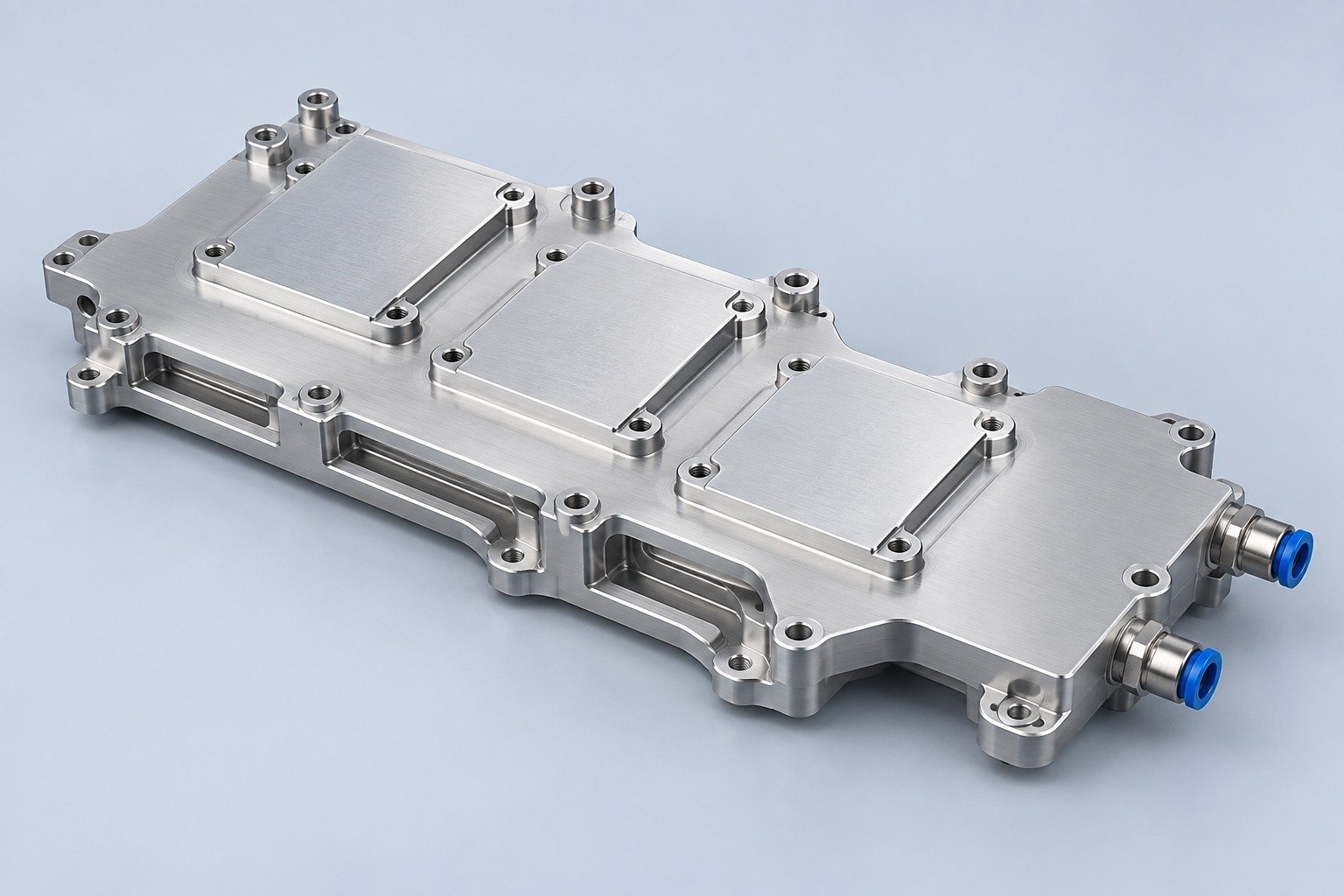
Components for your electronic systems.
Start with your functional and quality requirements.
Build around your operating environment.
From prototype to production, review material performance, manufacturability and cost for your part.
Review grade, temper and finish for your metal parts.
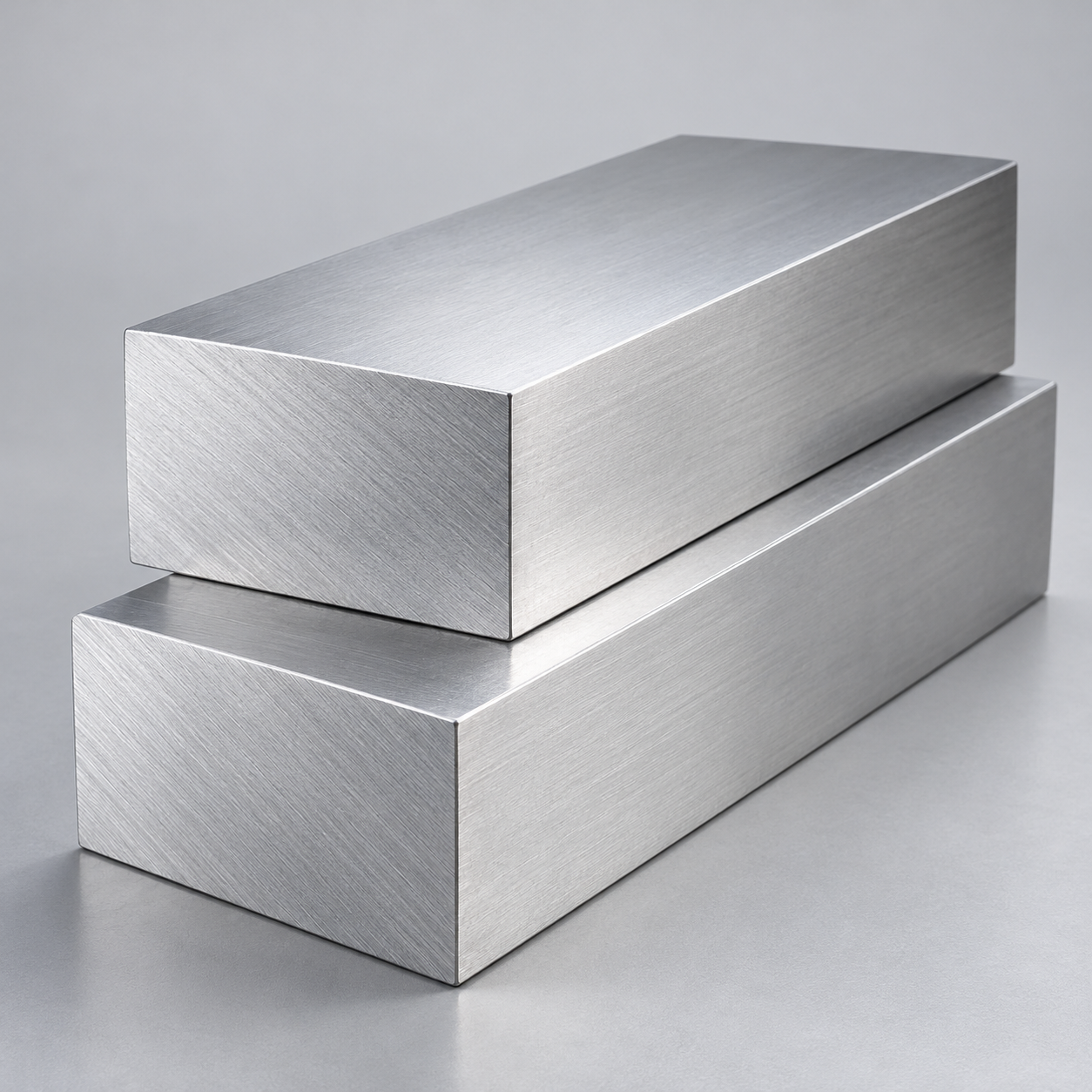 AluminumStrength, weight and machining›
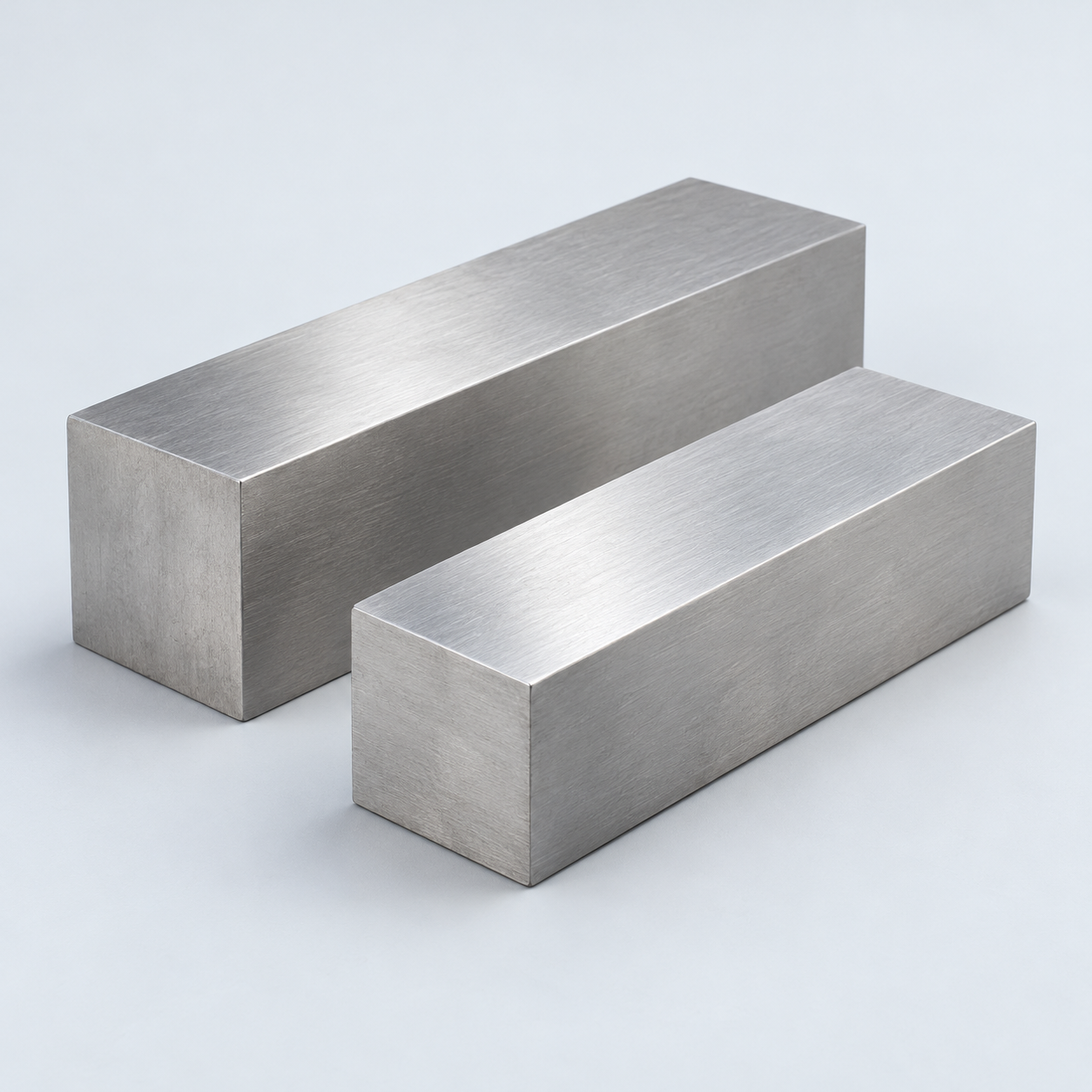 Stainless SteelCorrosion and finish requirements›
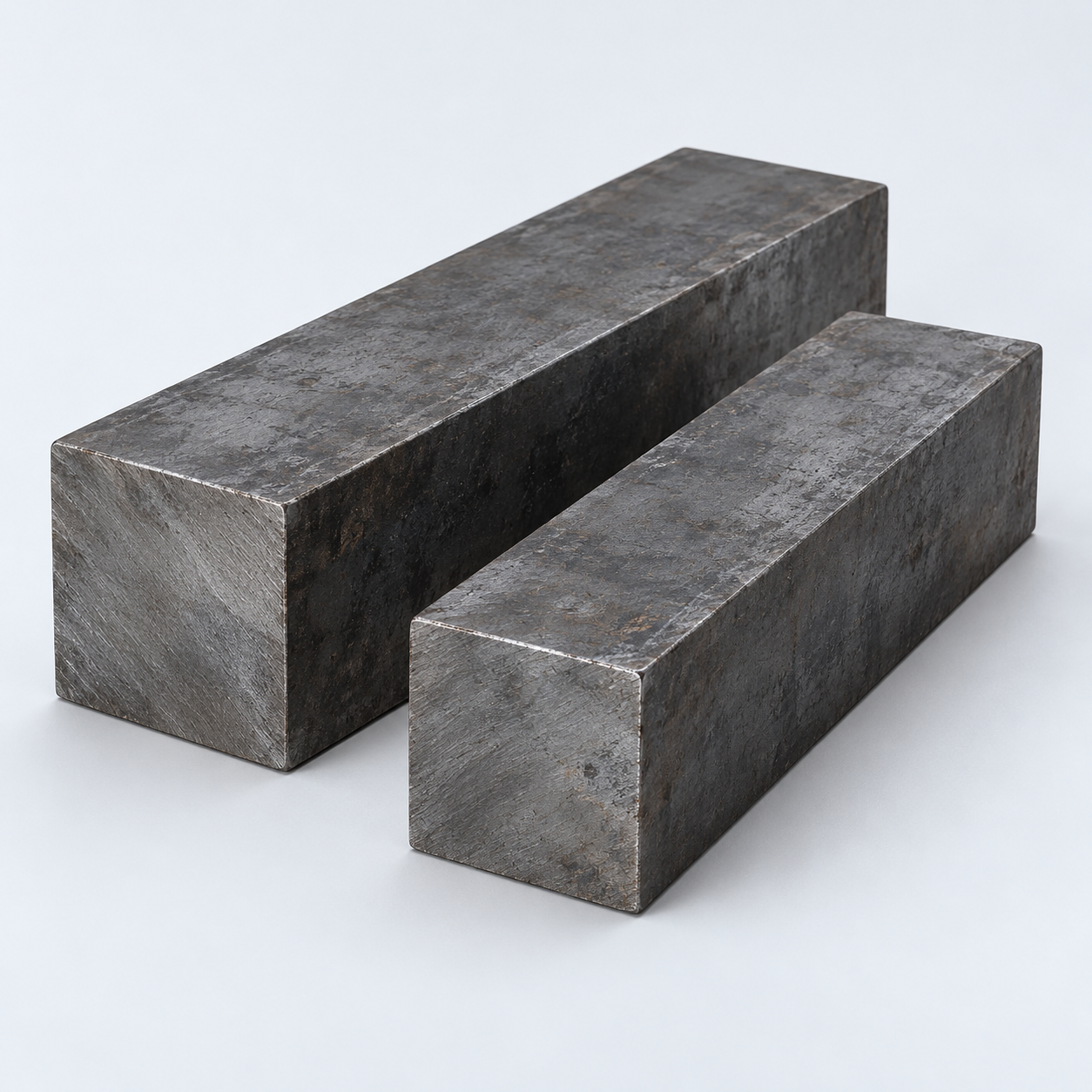 Carbon & Alloy SteelDiscuss grade and heat treatment›
 Tool SteelDiscuss tooling and wear needs›
 TitaniumReview grade and part geometry›
 Copper & BrassDiscuss conductivity and machining›
Match your polymer to function, process and environment.
 ABSReview enclosure and molding needs›
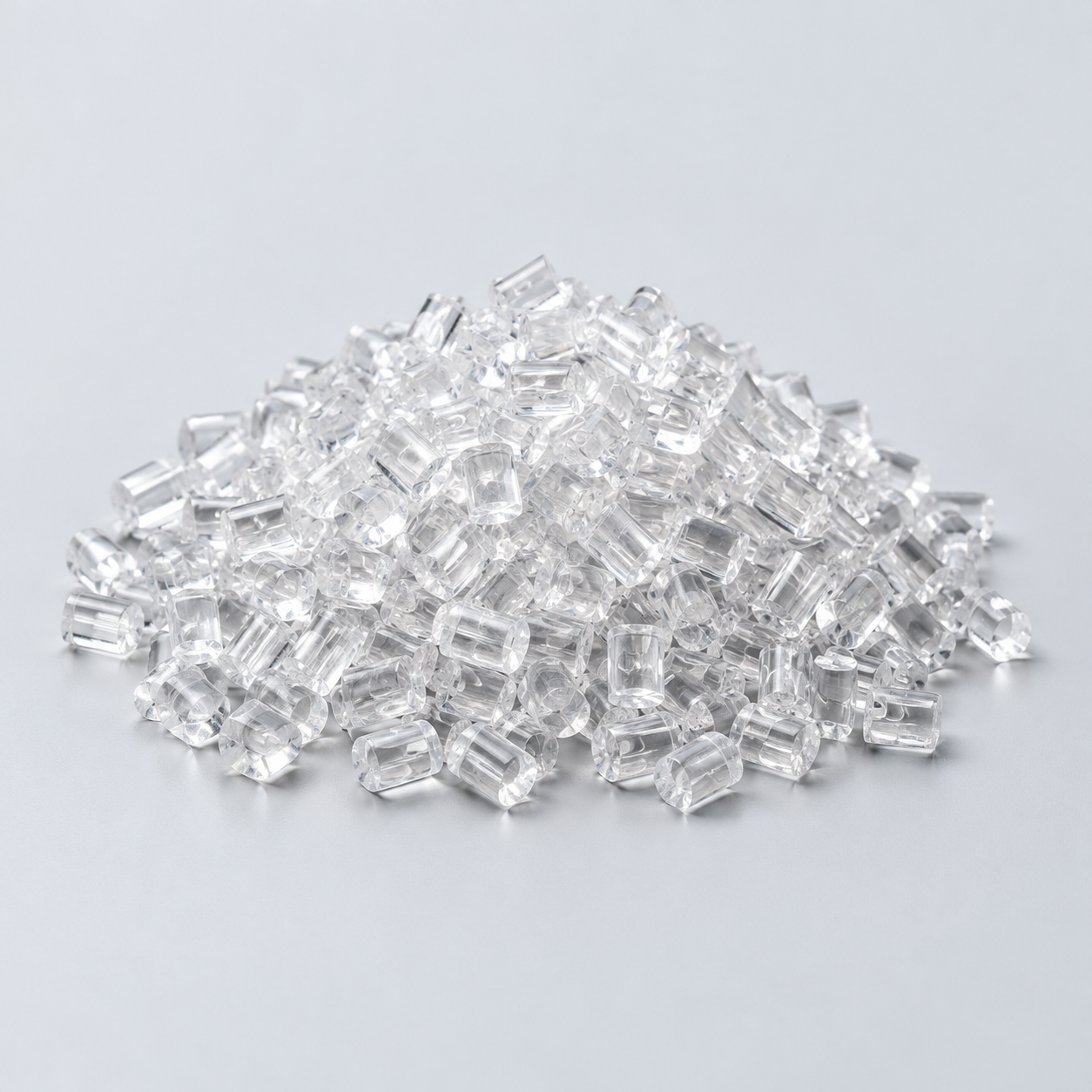 Polycarbonate (PC)Discuss clarity and impact needs›
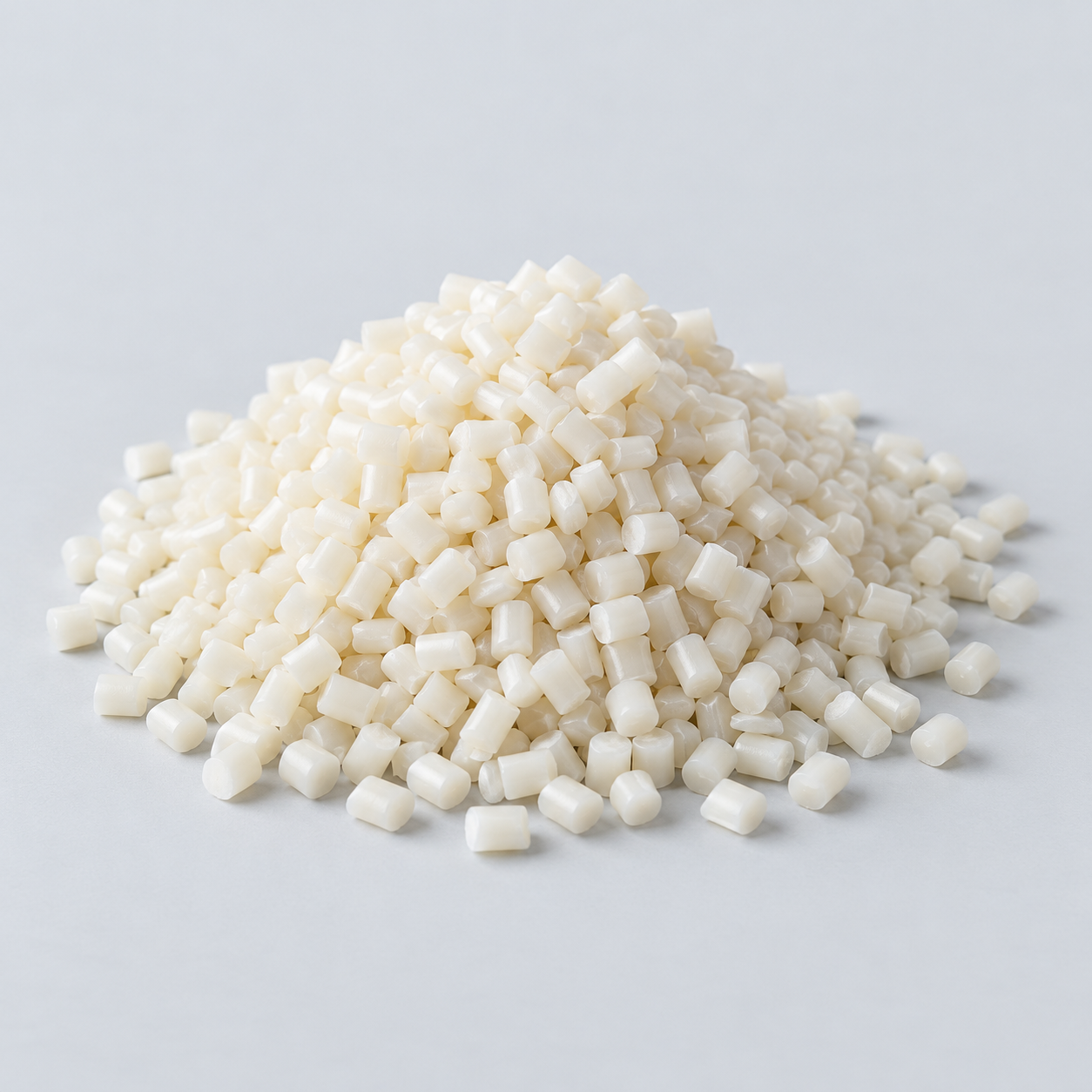 Nylon (PA)Review moisture and wear conditions›
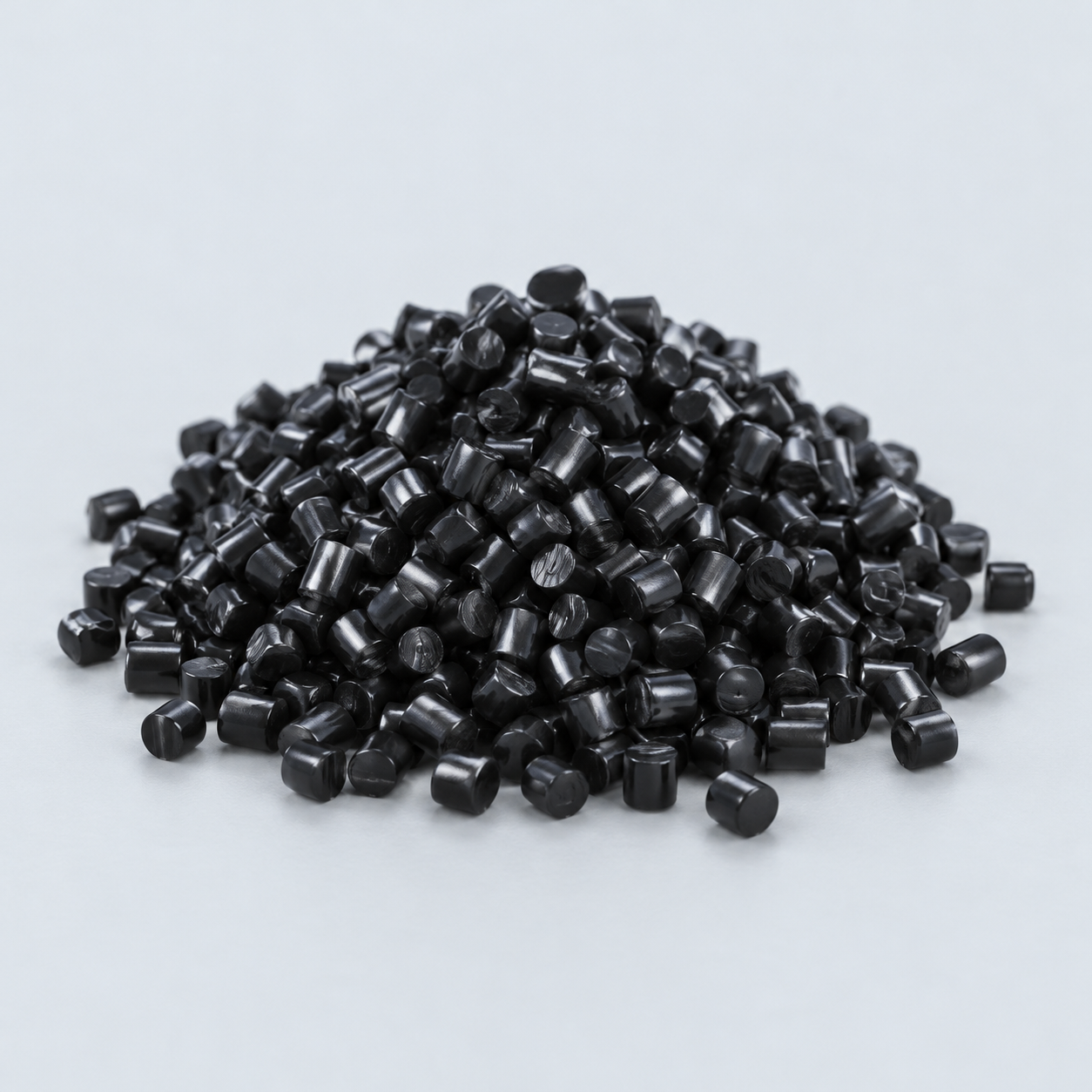 POM / AcetalReview fit and sliding features›
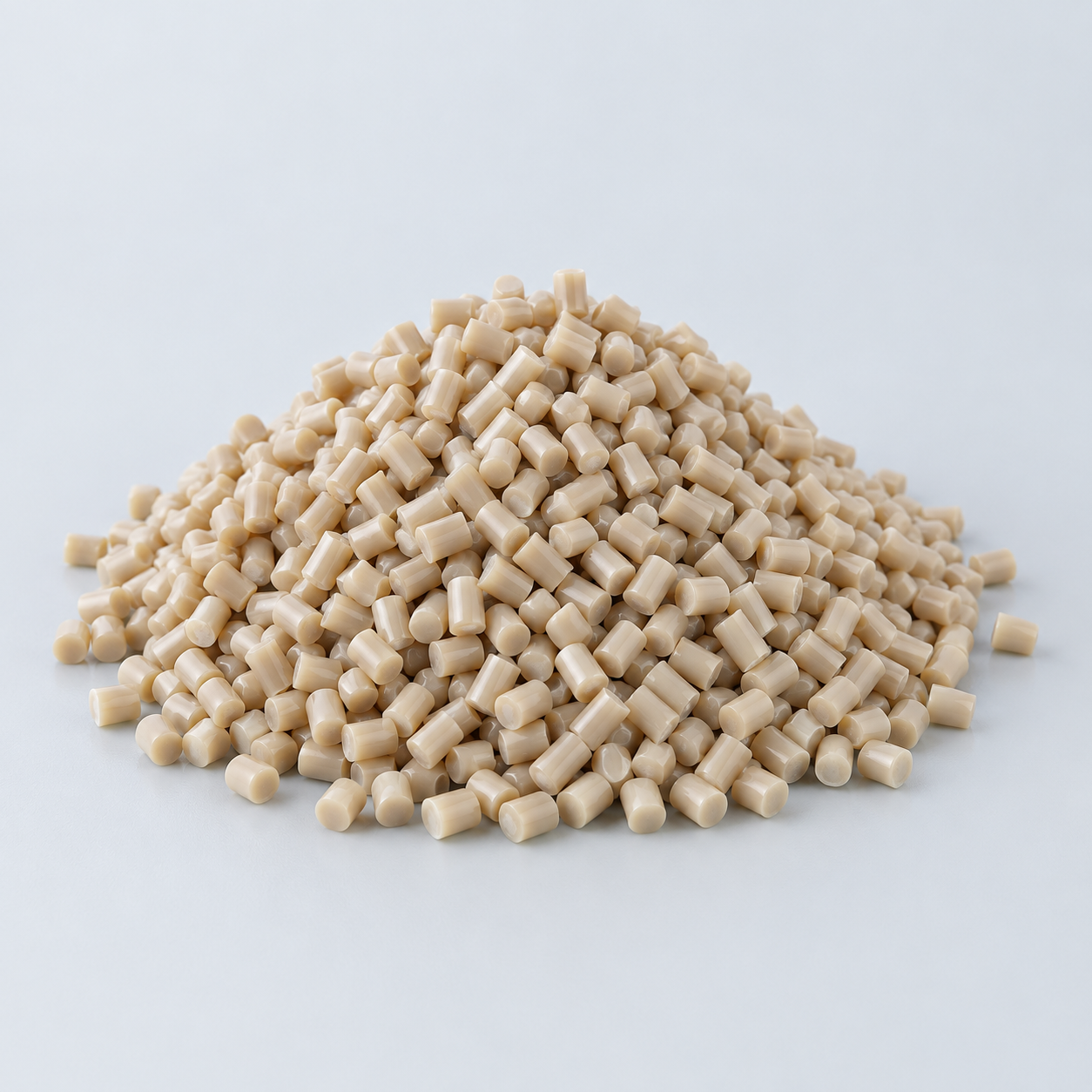 PEEKDiscuss operating conditions›
 PTFEReview friction and chemical exposure›
 ULTEM / PEIDiscuss thermal and electrical needs›
Confirm grade availability and application requirements.
 Silicone / LSRDiscuss flexible component needs›
 TPU / TPEReview flexibility and processing›
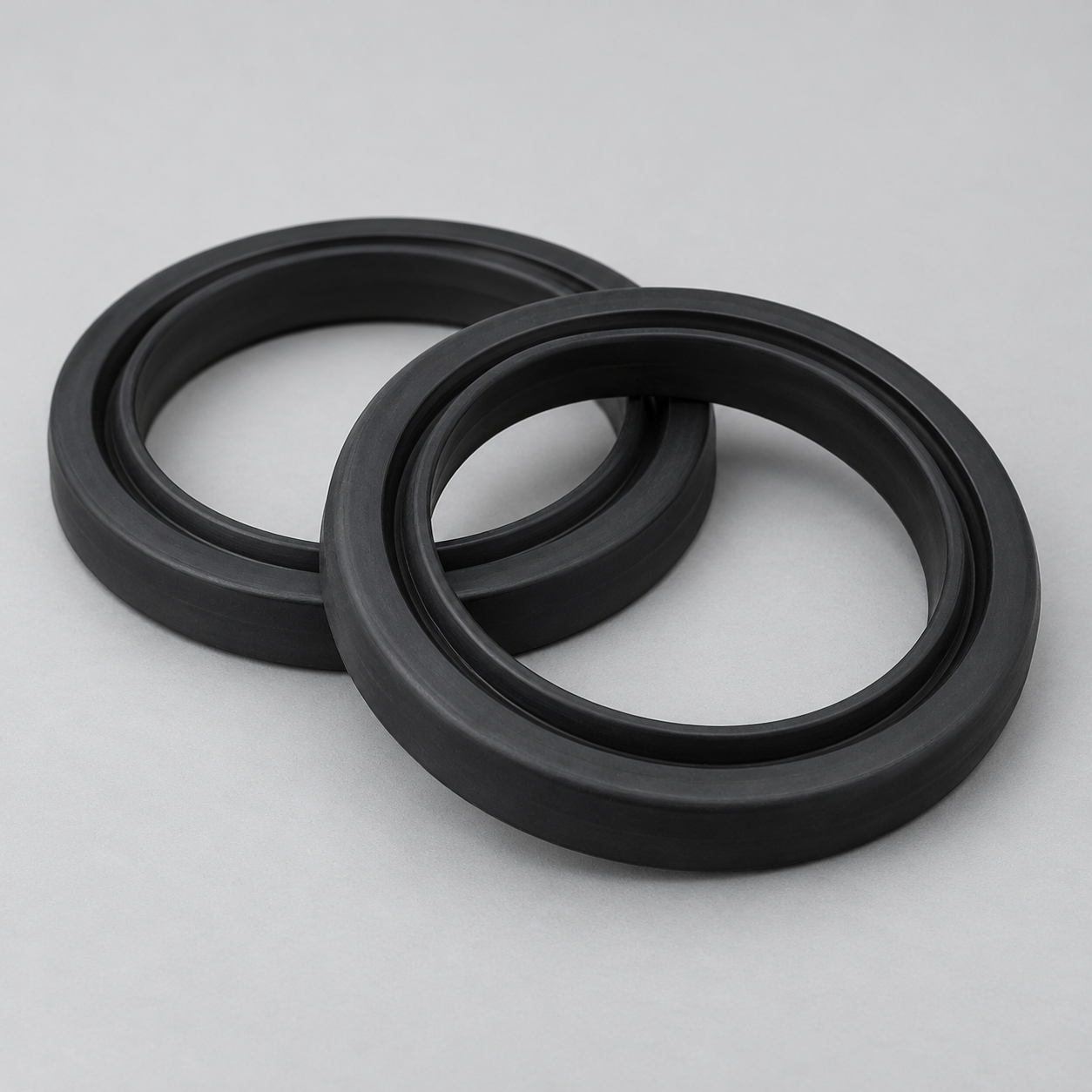 EPDMReview weathering and chemical exposure.›
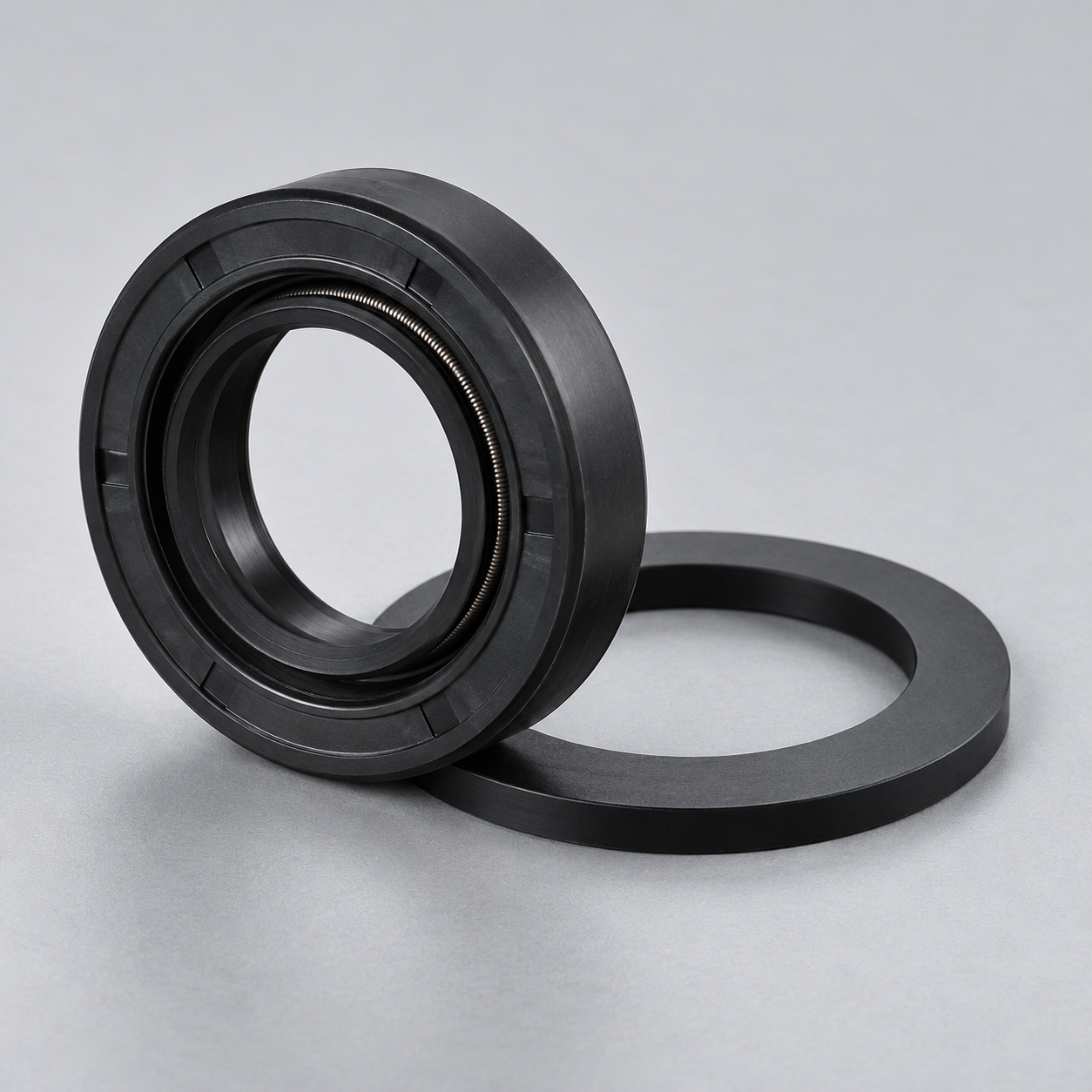 NBRReview oil and fuel exposure.›
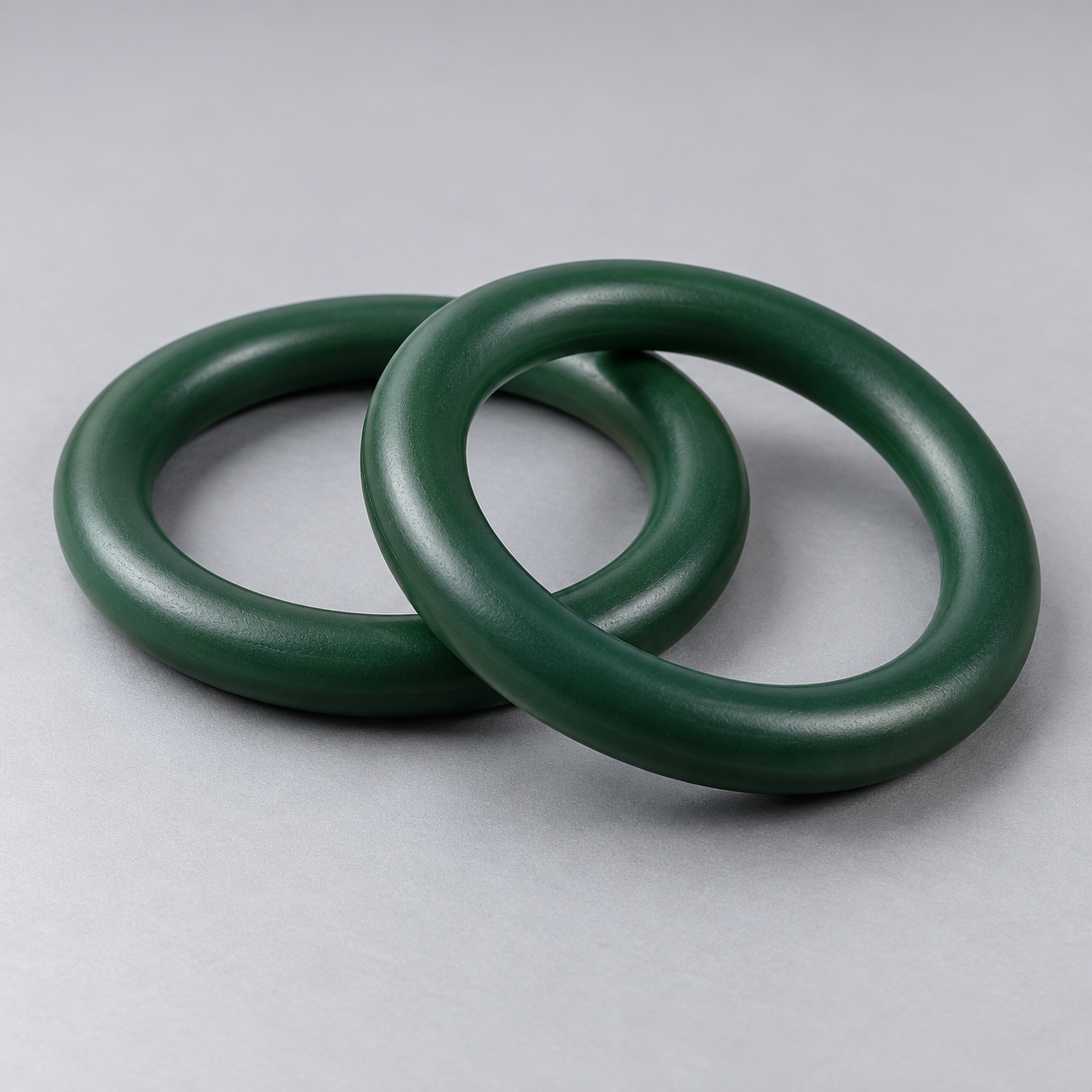 FKMReview temperature and chemical exposure.›
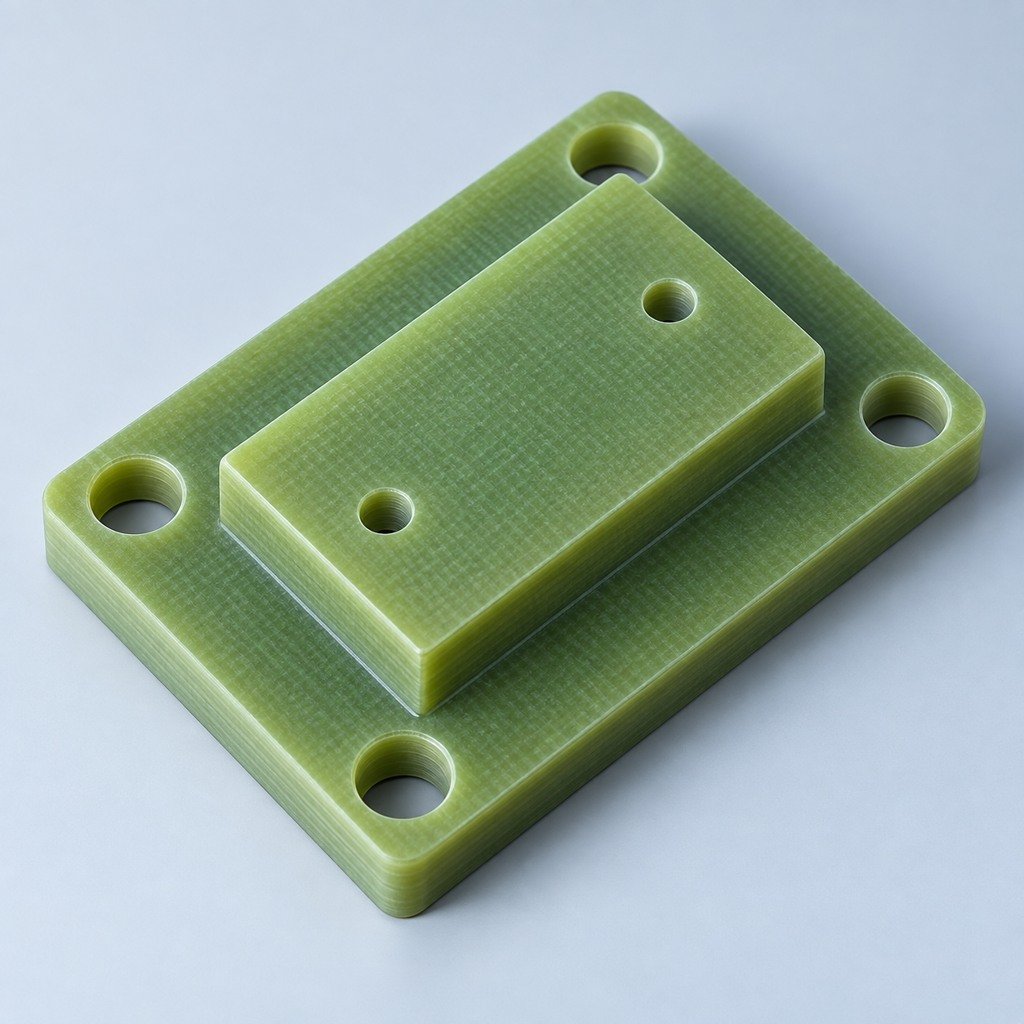 G10 / FR4Review insulation and laminate needs›
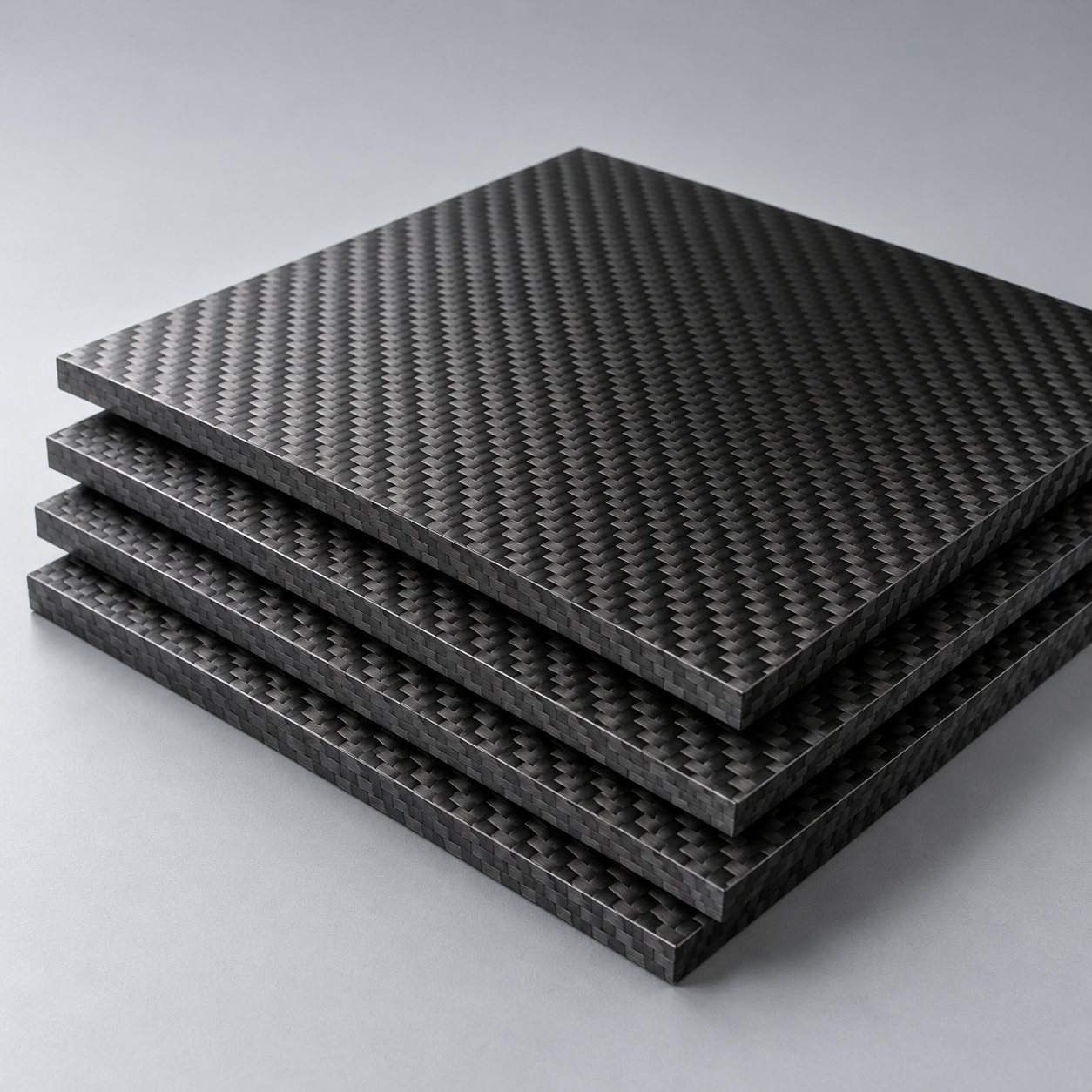 CompositesReview stiffness, weight and laminate.›Customer-Specified MaterialsConfirm your grade and requirements.›Other Specialty MaterialsDiscuss your application and grade.›
Practical guidance for your part geometry and material decisions.
Prepare your process, budget and sourcing questions.
Build your knowledge before production.
Learn who we are and how we operate.
Find our U.S. support team or start a conversation.

Bring your inserts, resin and critical interfaces into one reviewed molding plan. Define position, thread protection and joint requirements before your tool is built.
Get Your Part QuotePart CAD · insert drawing · resin · quantity · target delivery
Insert molding places a preformed component in the mold before resin is injected around it. Your insert and plastic become one molded assembly.
Compare 5 insert types. Select an insert to review the details for your application.
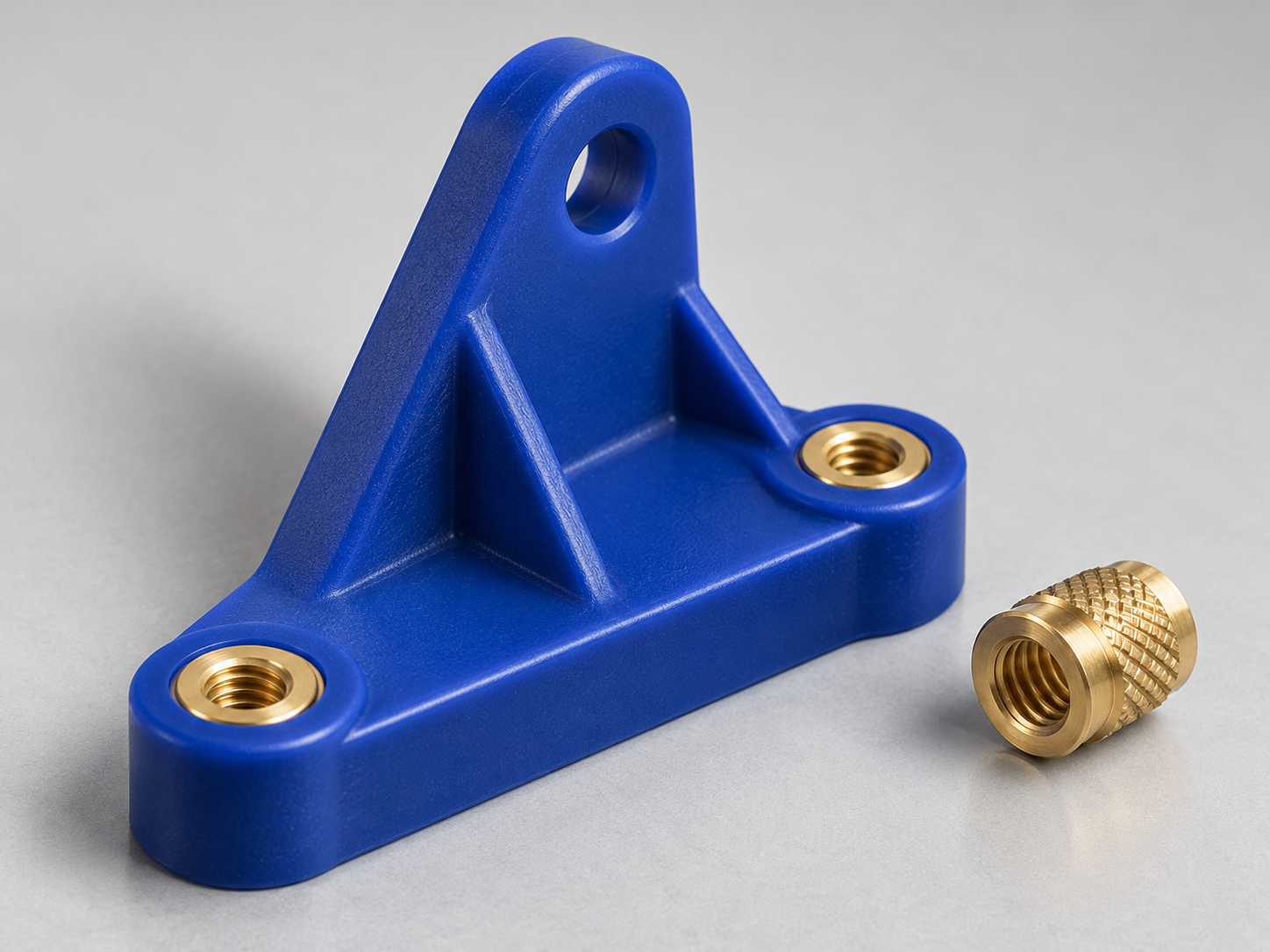
Review thread size, insert geometry and the loads your joint must carry.
| Insert spec | Drawing, thread, alloy and coating |
|---|---|
| Mating features | Joint loads and usable thread depth |
| Resin pairing | Grade, filler and molding conditions |
Final insert selection is reviewed for your application.
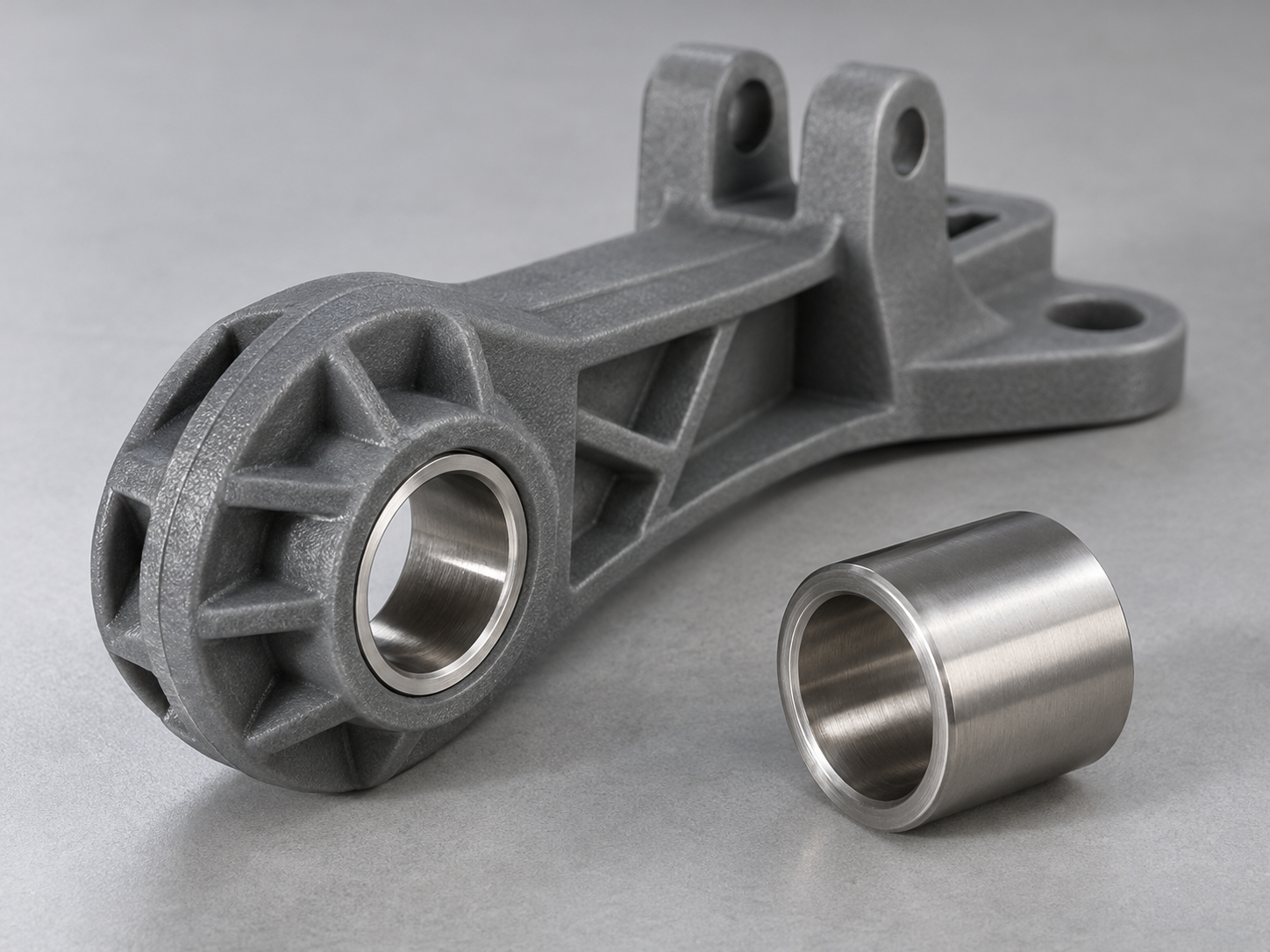
For metal insert molding, define the bore and exposed faces needed for motion or clamping.
| Insert spec | Bore, outside diameter and sleeve length |
|---|---|
| Mating features | Clearance, bearing load and alignment |
| Resin pairing | Shrinkage, wall support and service temperature |
Final insert selection is reviewed for your application.
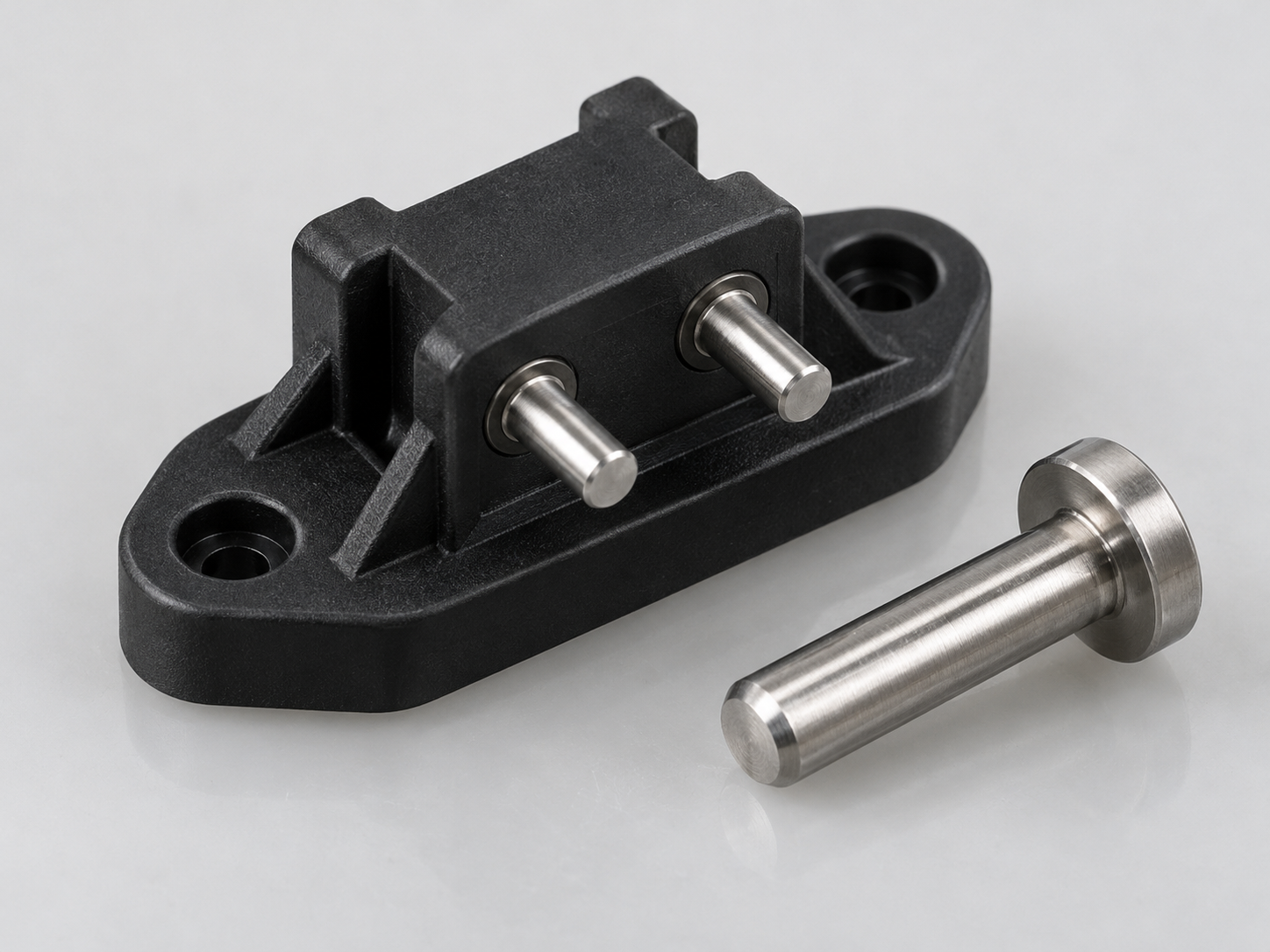
Specify which end locates your assembly and which portion is captured by the plastic.
| Insert spec | Pin or stud drawing, alloy and surface |
|---|---|
| Mating features | Position, orientation and exposed length |
| Resin pairing | Retention geometry and thermal movement |
Final insert selection is reviewed for your application.
For insert molding connectors, separate exposed mating surfaces from resin-covered support features.
| Insert spec | Contact drawing, plating and lot identity |
|---|---|
| Mating features | Pitch, orientation and mating envelope |
| Resin pairing | Insulation, temperature and requested ratings |
Final insert selection is reviewed for your application.
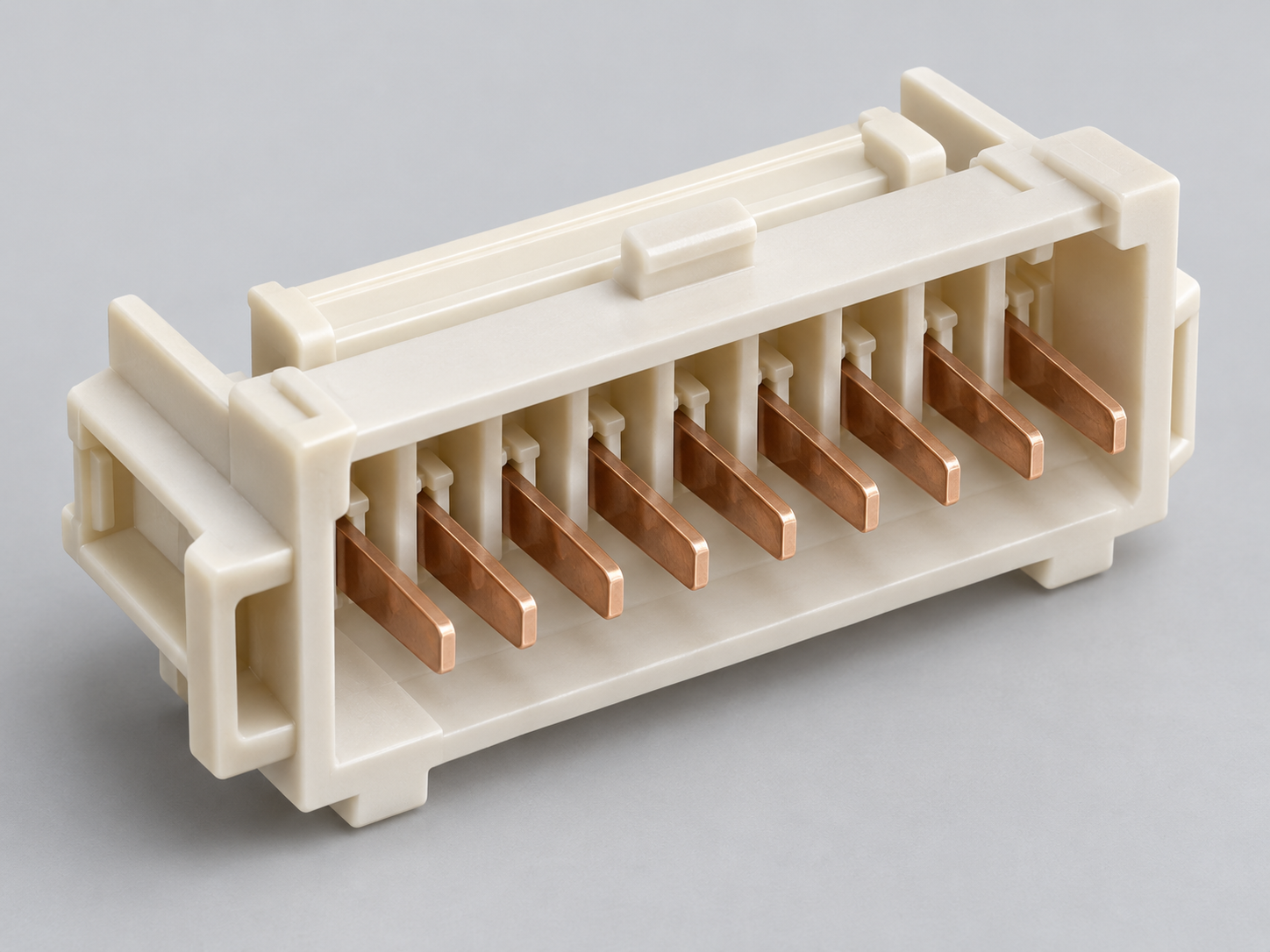
Bring nonstandard hubs, brackets or inserts into the tooling review before committing to supply.
| Insert spec | Controlled drawing and inspection scope |
|---|---|
| Mating features | Joint function and loading orientation |
| Resin pairing | Resin compatibility and mechanical interlock |
Final insert selection is reviewed for your application.
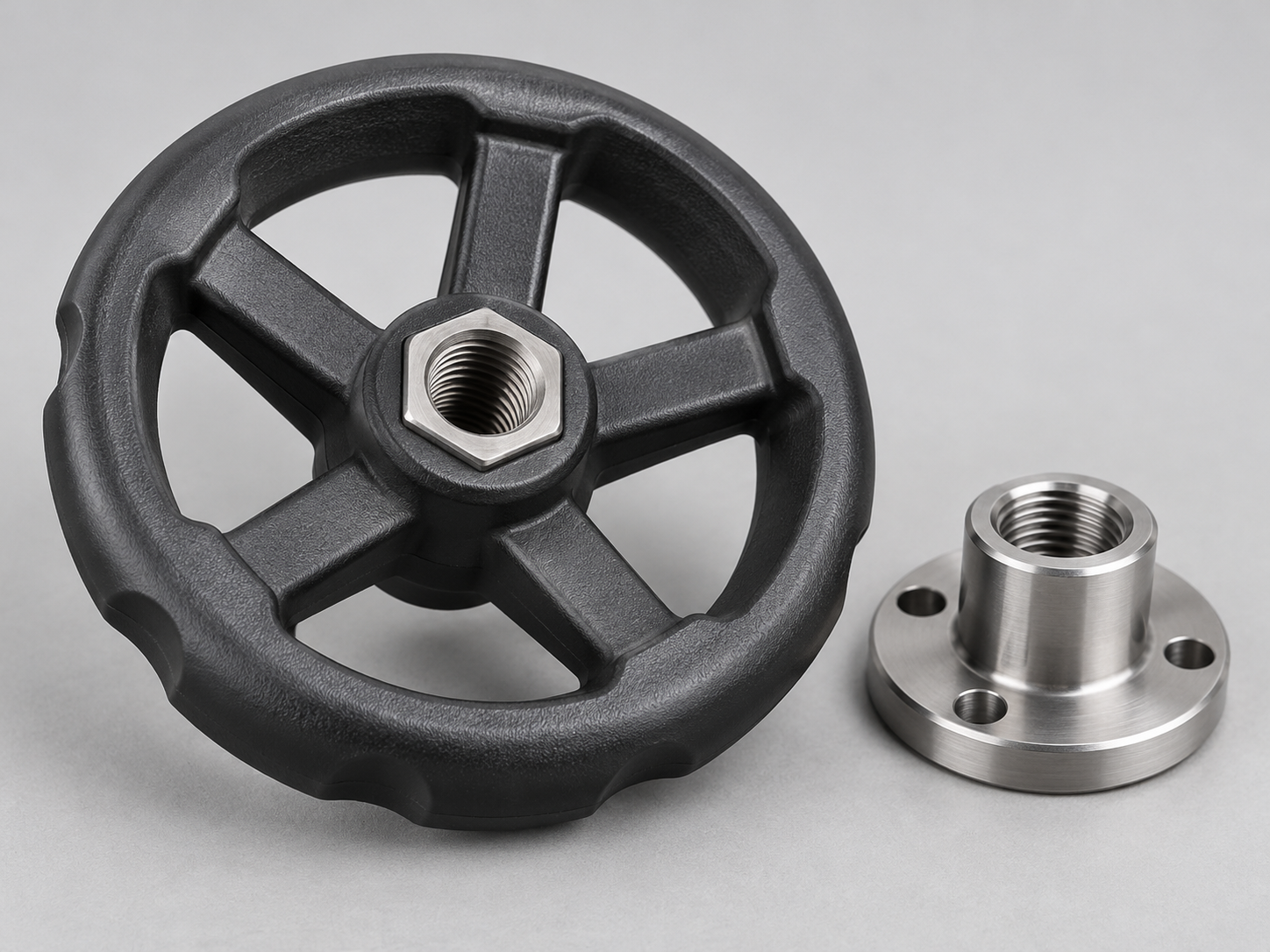
Select one of 6 topics to see what we review before tooling.
Review locating features, seating and orientation before tooling. Mark the interfaces that control your fit.
| Your input | Datums, exposed length and orientation |
|---|---|
| Our review | Insert location, seating and tool support |
Insert molding tolerances are agreed by feature and measurement condition.
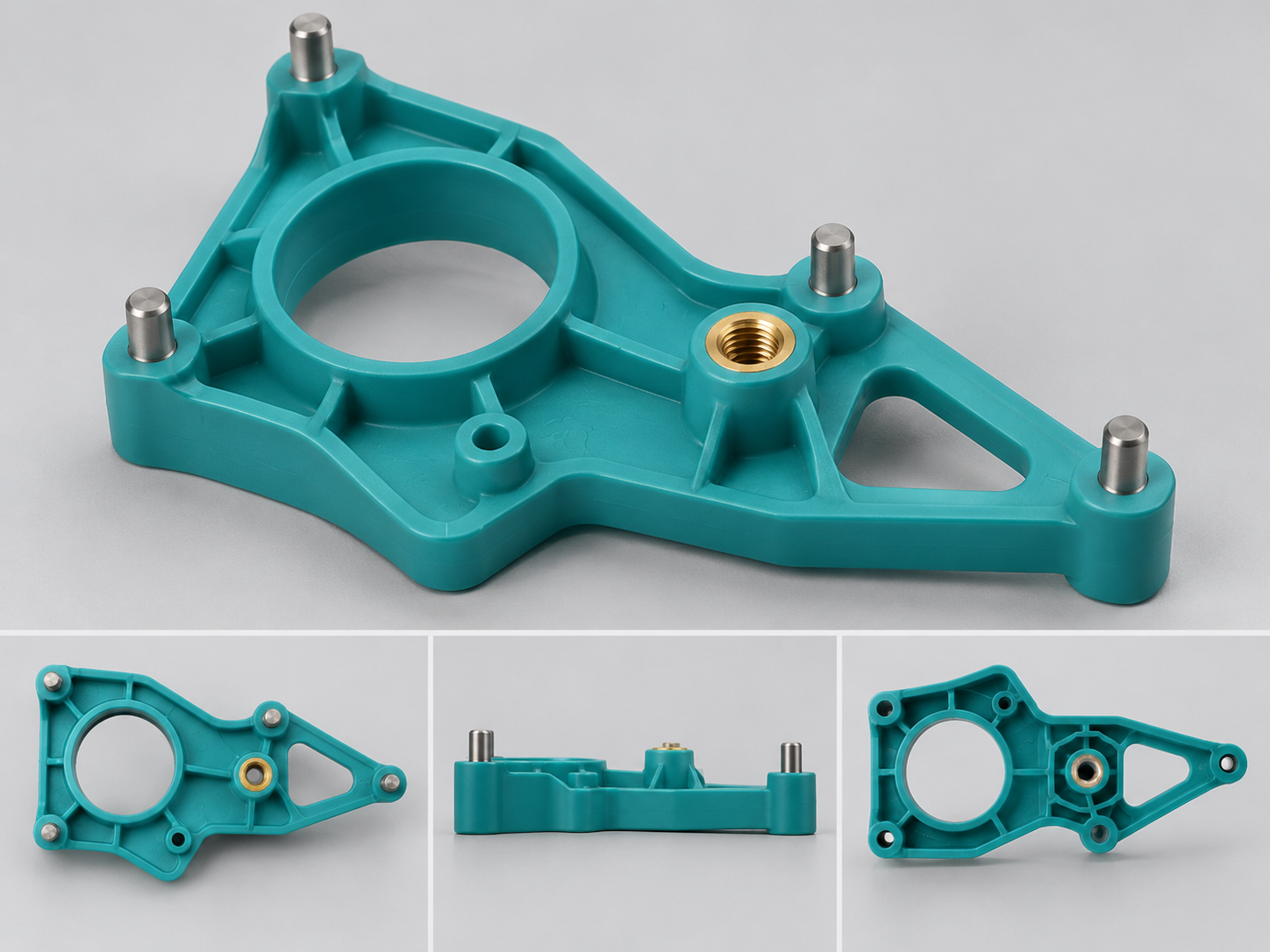
Mark surfaces that must remain exposed. Review locating and shut-off details around threads, bores and contact faces.
| Your input | Protected surfaces and usable thread depth |
|---|---|
| Our review | Locating features and shut-off interfaces |
Acceptance criteria are agreed for your drawing.
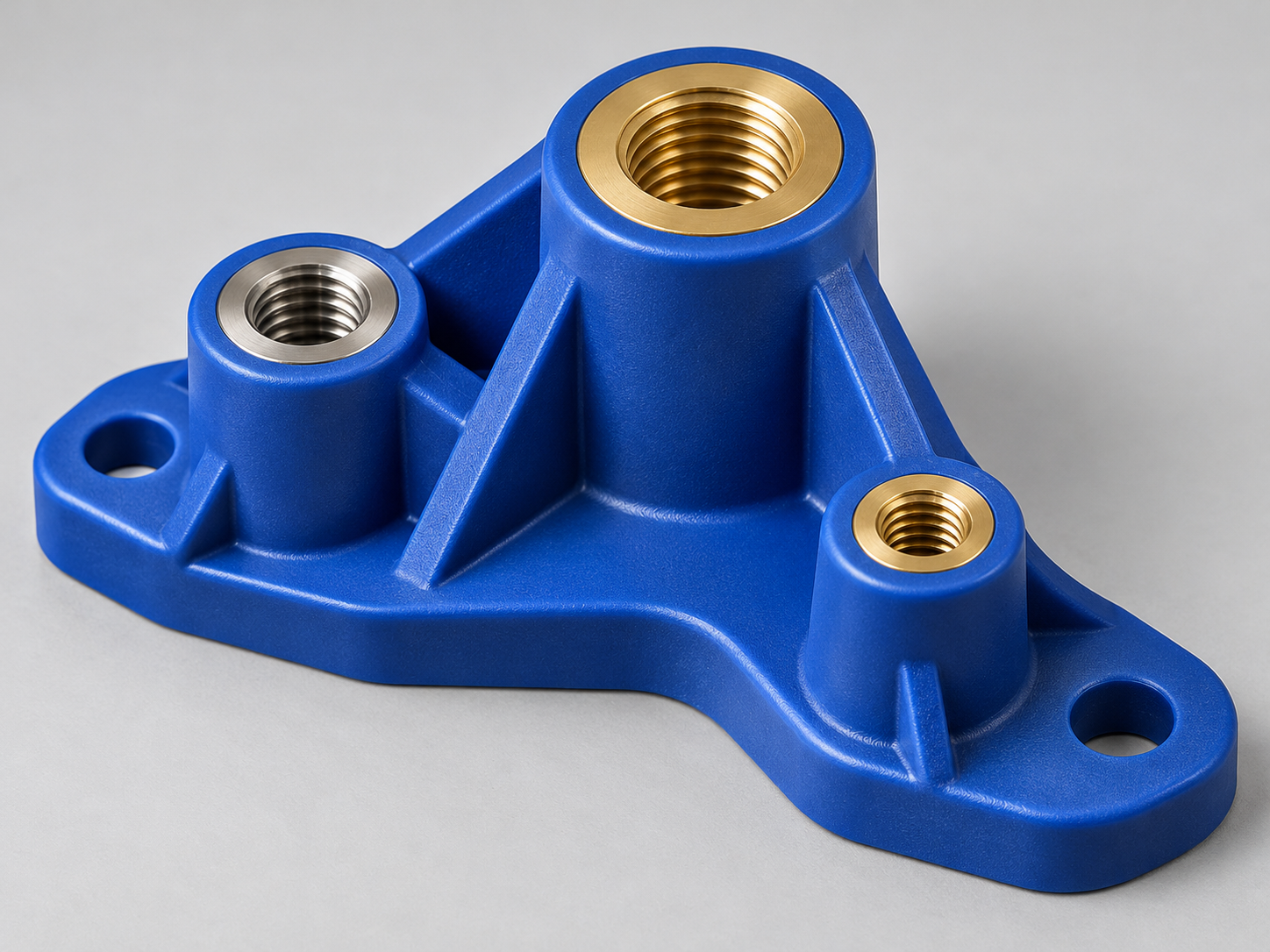
Review knurls, grooves and shoulders with the surrounding plastic. Match the geometry to your resin and assembly needs.
| Your input | Load direction, mating parts and use conditions |
|---|---|
| Our review | Mechanical interlock and plastic coverage |
Final performance is assessed using agreed sample tests.
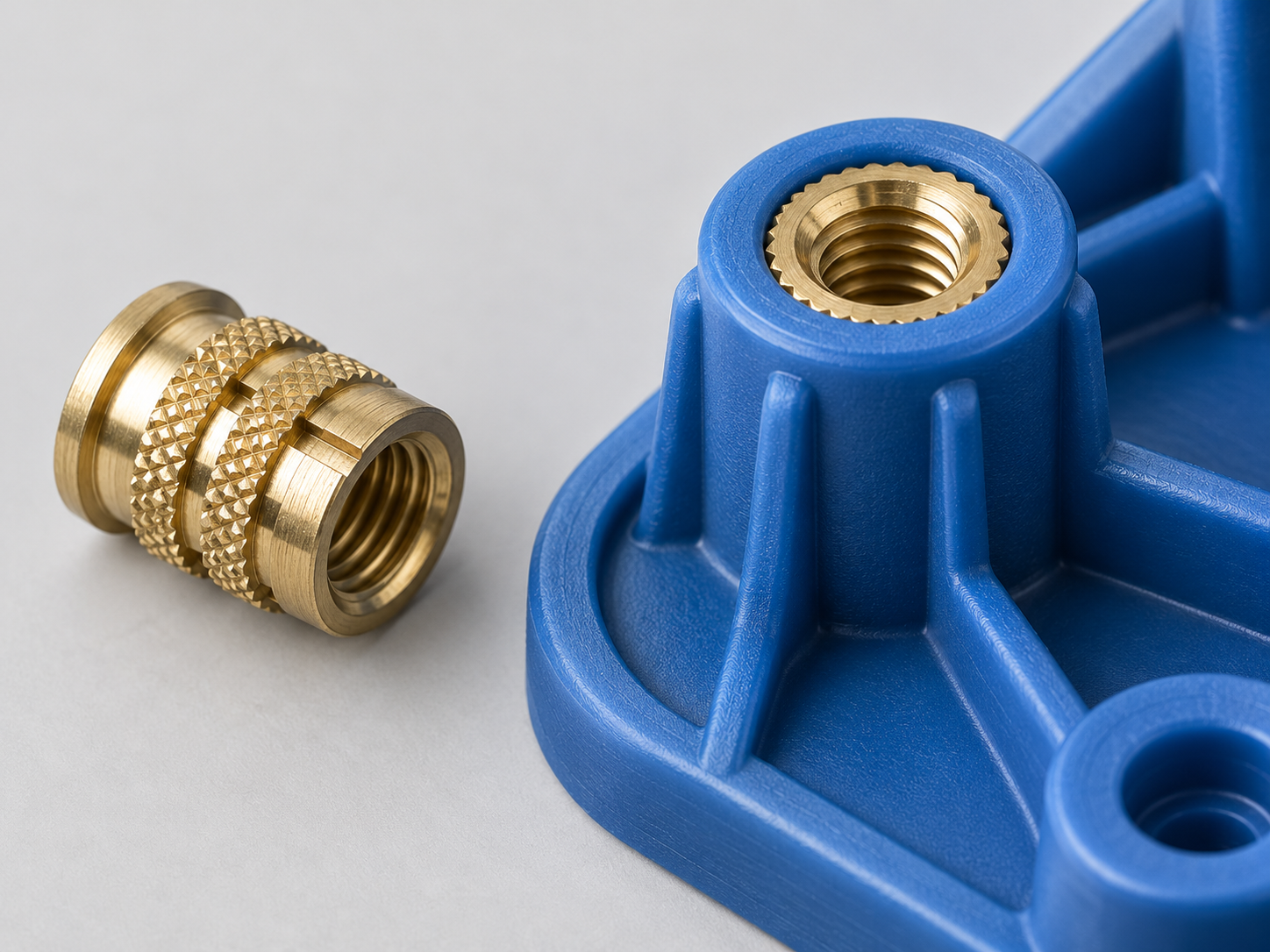
Review wall transitions, fillets and resin shrinkage around the insert. Thick bosses alone do not establish joint strength.
| Your input | CAD, loading, temperature and chemicals |
|---|---|
| Our review | Plastic coverage, stress concentrations and cooling |
Recommendations depend on insert geometry and the selected resin grade.
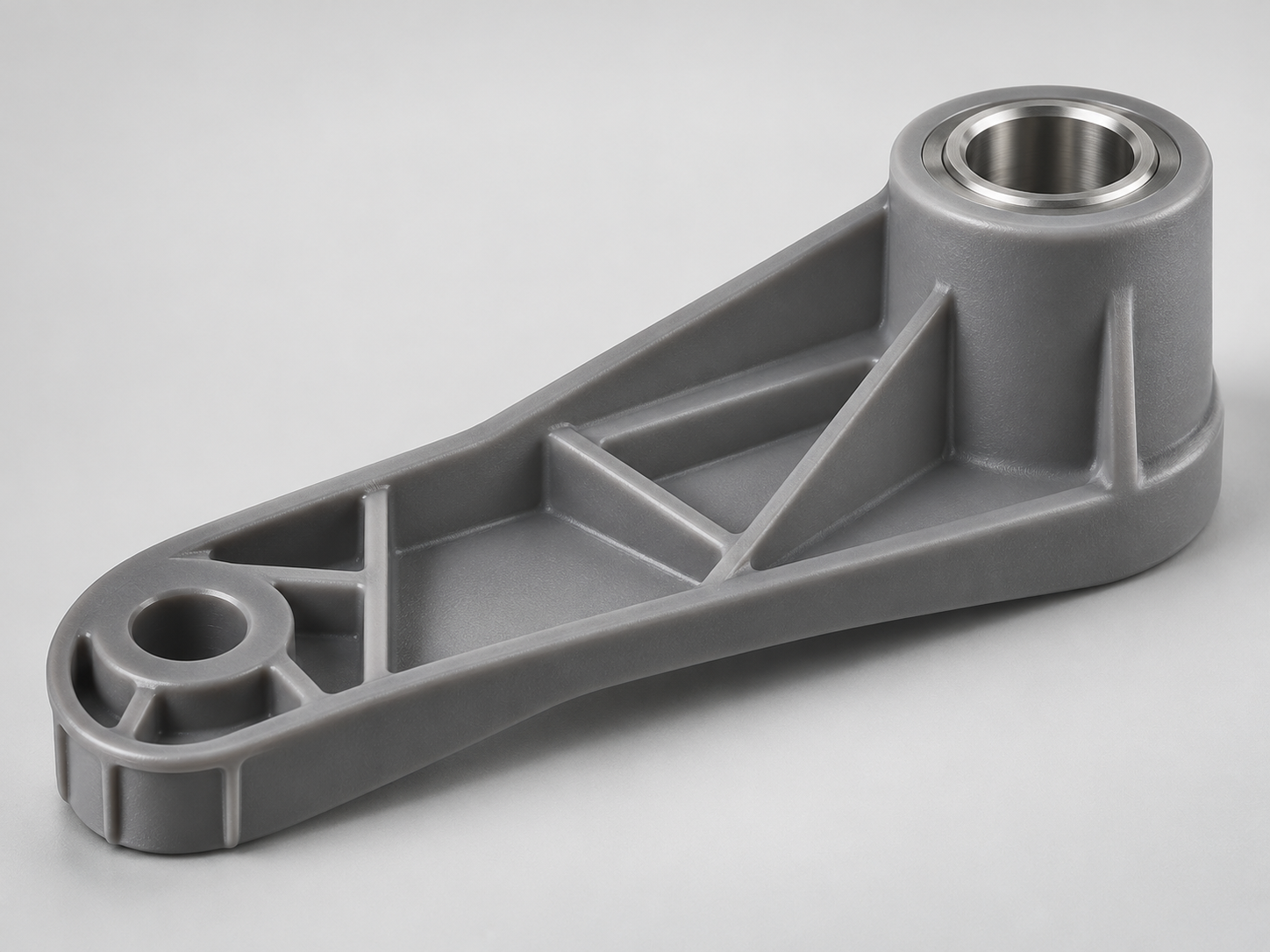
Discuss gate location and flow paths around metal features before they affect a load-bearing joint.
| Your input | Load paths, visible faces and gate restrictions |
|---|---|
| Our review | Flow obstruction and weld-line locations |
Simulation and validation scope, when required, are agreed in your quote.
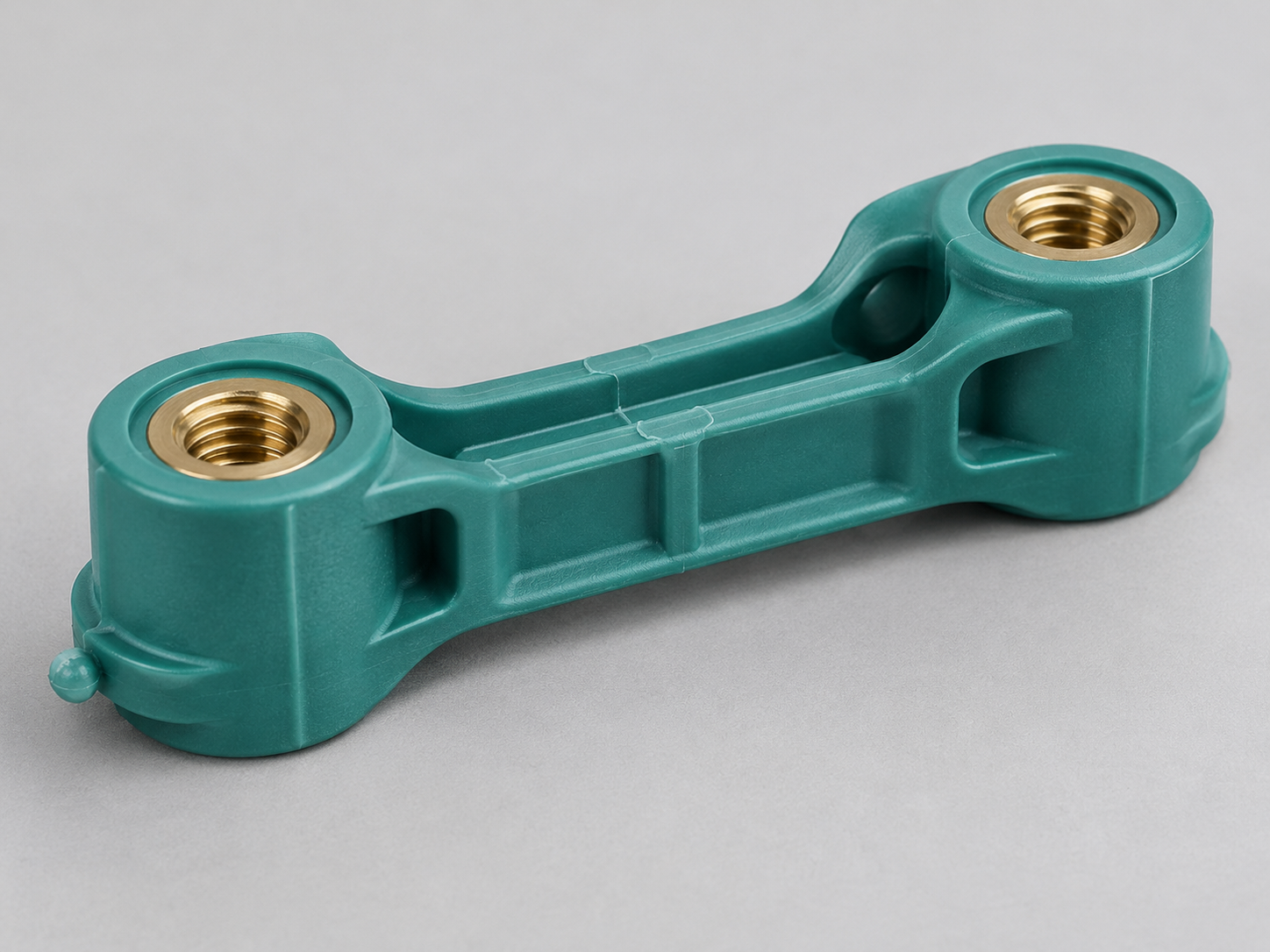
Review differential thermal movement, moisture and exposure when pairing brass or stainless inserts with plastic.
| Your input | Alloy, coating, resin grade and service environment |
|---|---|
| Our review | Thermal movement, conditioning and compatibility |
Nylon insert molding requires an agreed moisture condition for fit and testing.
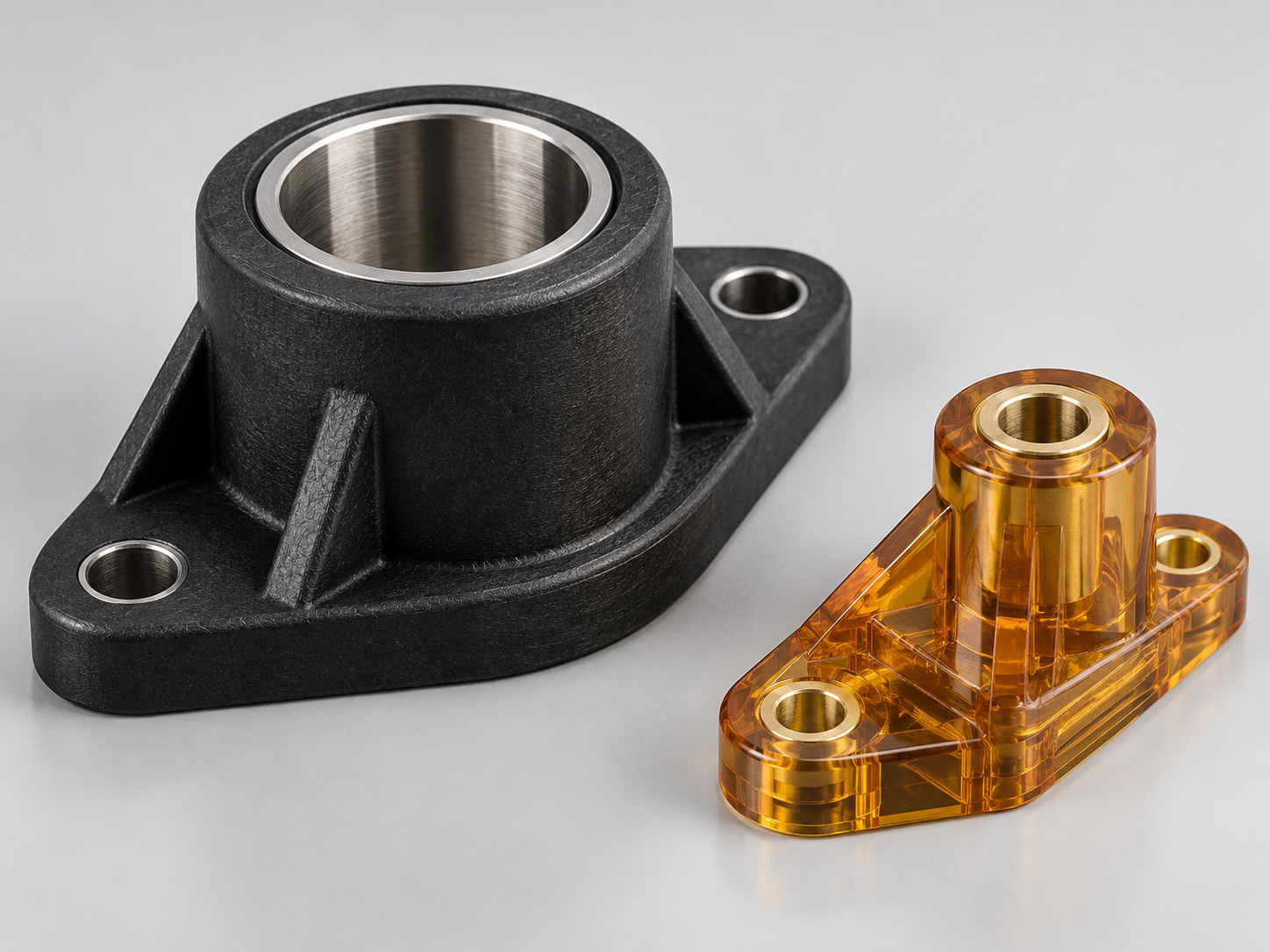
Select one of 4 checkpoints to review your sample and production requirements.
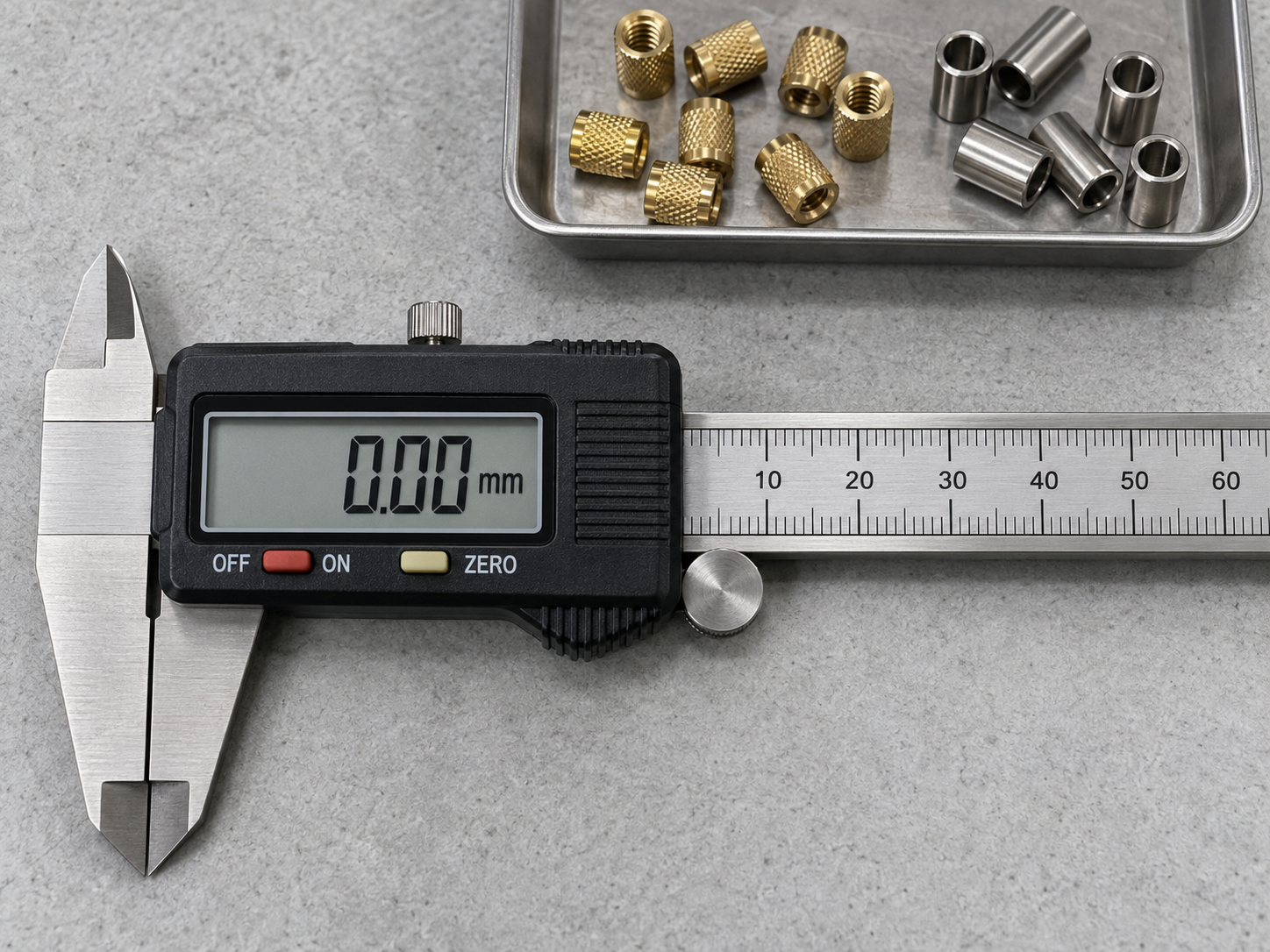
Review your controlled insert drawing and lot before loading.
Acceptance methods and limits are agreed for your project.
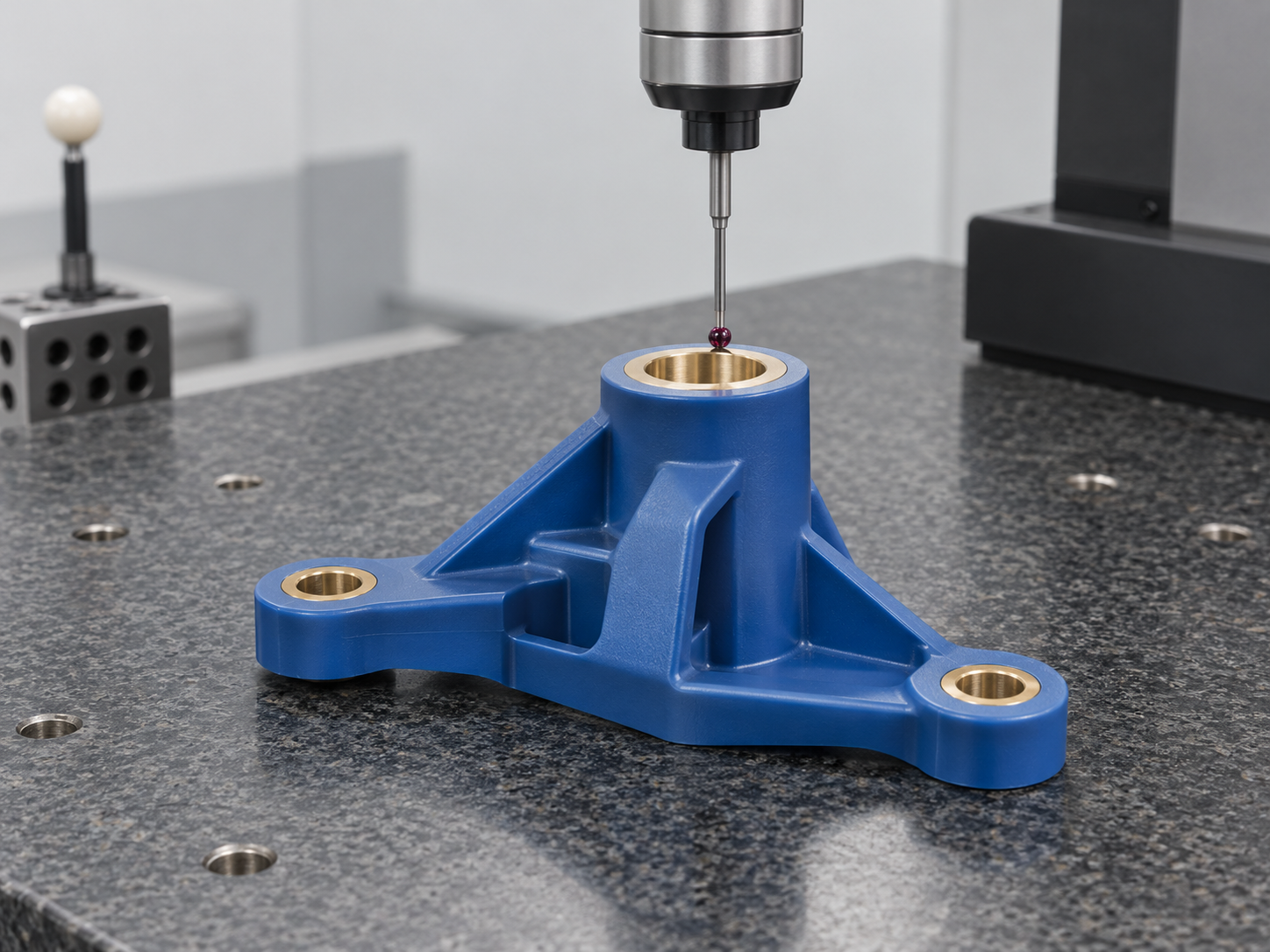
Review the molded part against the agreed insert drawing, location and thread requirements.
Acceptance methods and limits are agreed for your project.
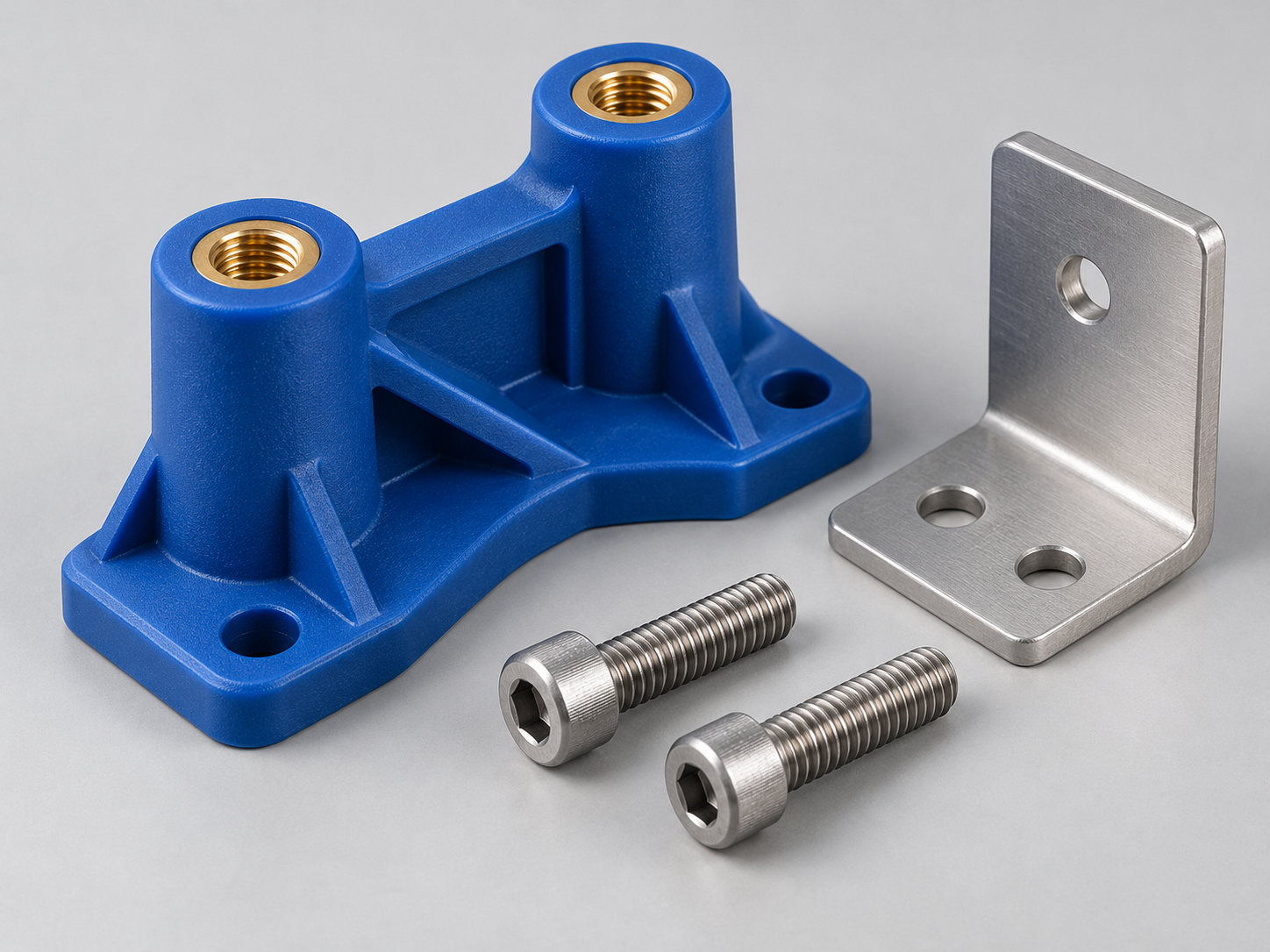
Define retention and fastening requirements around your actual assembly.
| Your requirement | What to define |
|---|---|
| Pull-out resistance | Axial load, fixture and pull-out acceptance limit |
| Torque-out resistance | Test method and torque-out limit |
| Assembly torque | Fastener, mating part and assembly tightening conditions |
Acceptance methods and limits are agreed for your project.
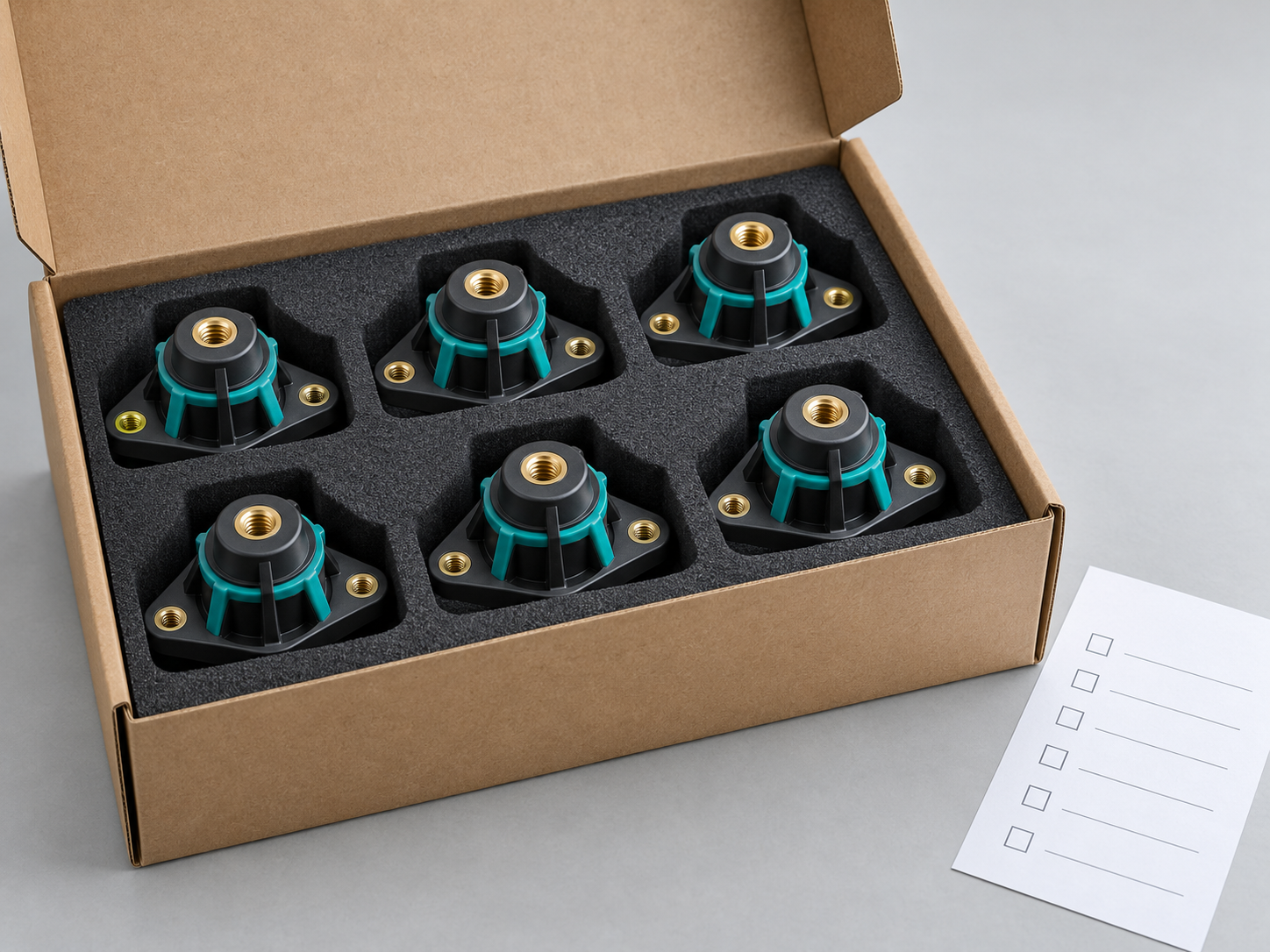
Review insert identity, molded acceptance and part protection before dispatch.
Acceptance methods and limits are agreed for your project.
| Supply route | Customer-supplied, specified purchase or custom sourcing |
|---|---|
| Control | Drawing revision, alloy, coating and lot identification |
Confirm who supplies and replenishes inserts, incoming acceptance and responsibility for rejected lots.
Compare 4 cost drivers: tooling, insert loading, validation and secondary assembly. Your quantity and insert supply route shape the quote.
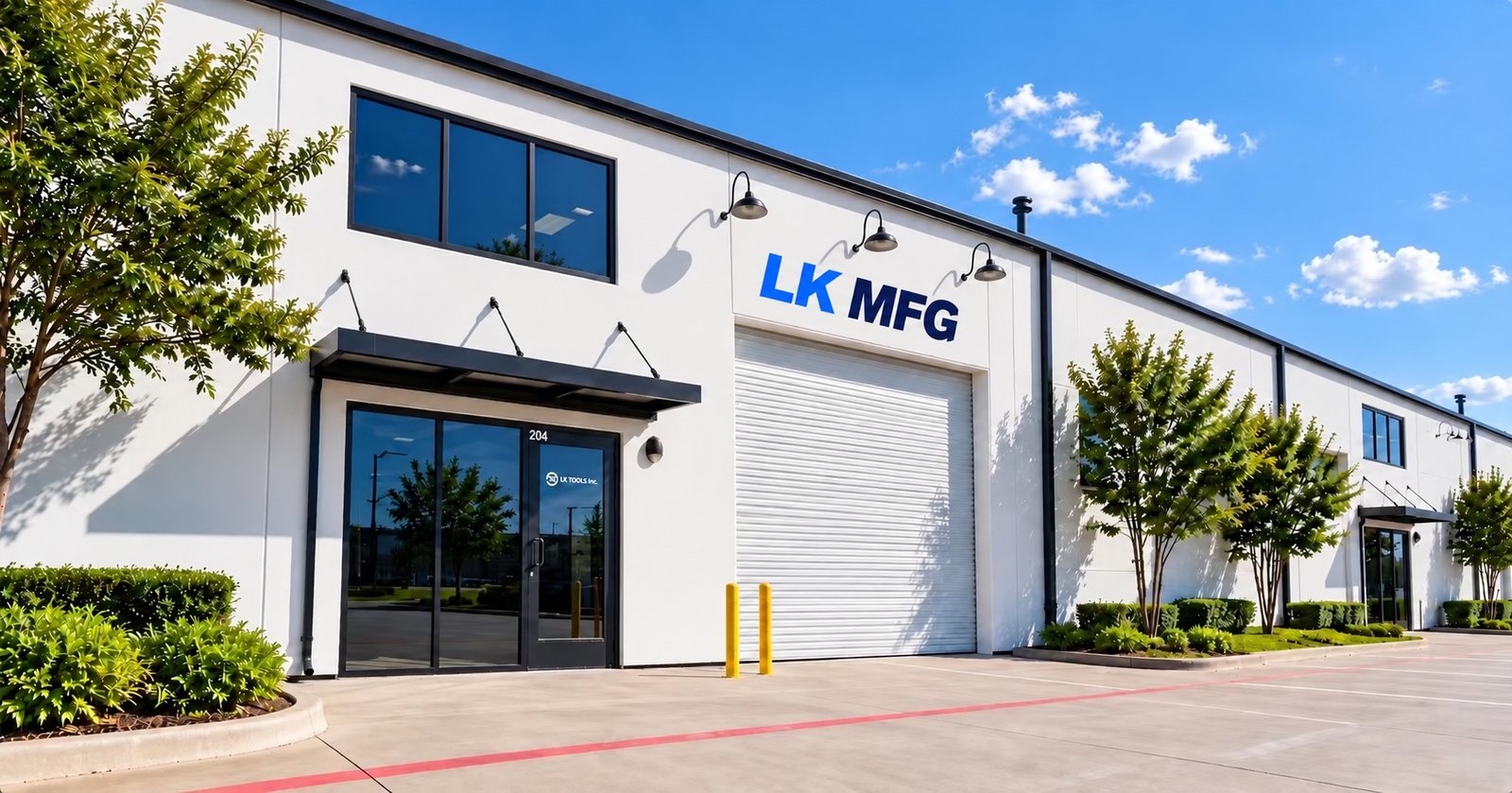
Coordinate your engineering review, manufacturing and delivery requirements. Confirm the production and support scope in your quote.
Mold-in inserts are positioned before injection. Thermal, ultrasonic and press-in methods add suitable inserts after molding. Review the route against your design, material and expected volume.
Customer-supplied inserts can be reviewed for your project. Share the controlled drawing, material, coating, lot records and replenishment plan. Agree incoming acceptance and responsibility for rejected lots before production.
Insert molding captures a preformed component, often metal, within molded plastic. Overmolding often adds another material onto a substrate. Identify your component and required interface first so the process scope is clear.
Changes can affect location, shut-off, shrinkage and retention. Review the revised drawing or grade and agree sample checks before releasing the next order.
Custom insert molding quotes depend on geometry, loading method, insert sourcing, resin, order quantity and validation. Supply part CAD, the insert drawing and first-order plus annual demand; minimum order and tooling lead time are confirmed in your quote.