Injection Molding
Tooling and molding for your repeat plastic parts.
From prototype to production, coordinated manufacturing solutions for your custom parts.
View All Services →
Precision parts for your tight tolerances and complex geometry.
Tooling and molding for your repeat plastic parts.
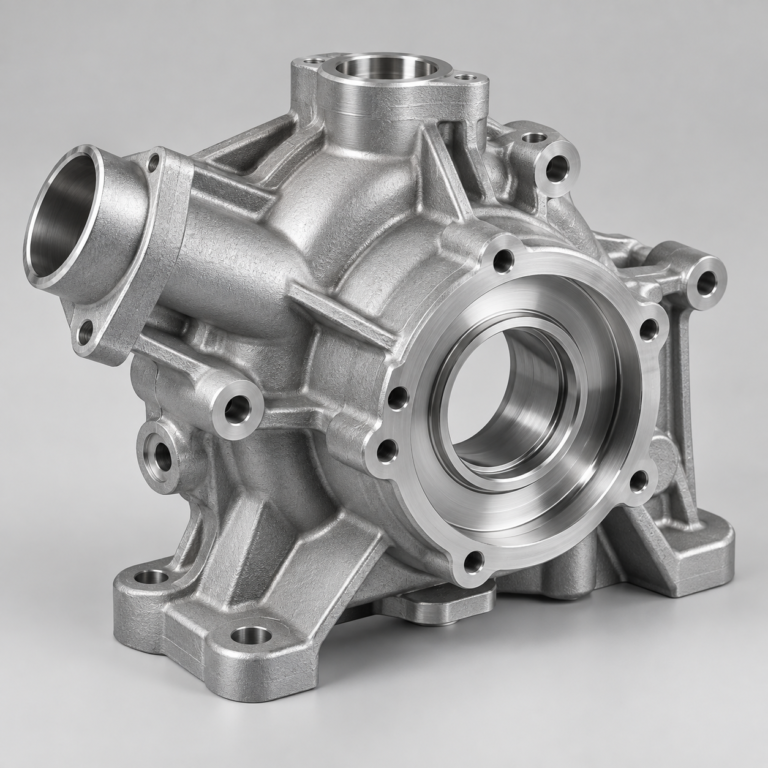
Metal casting options for your part and production volume.
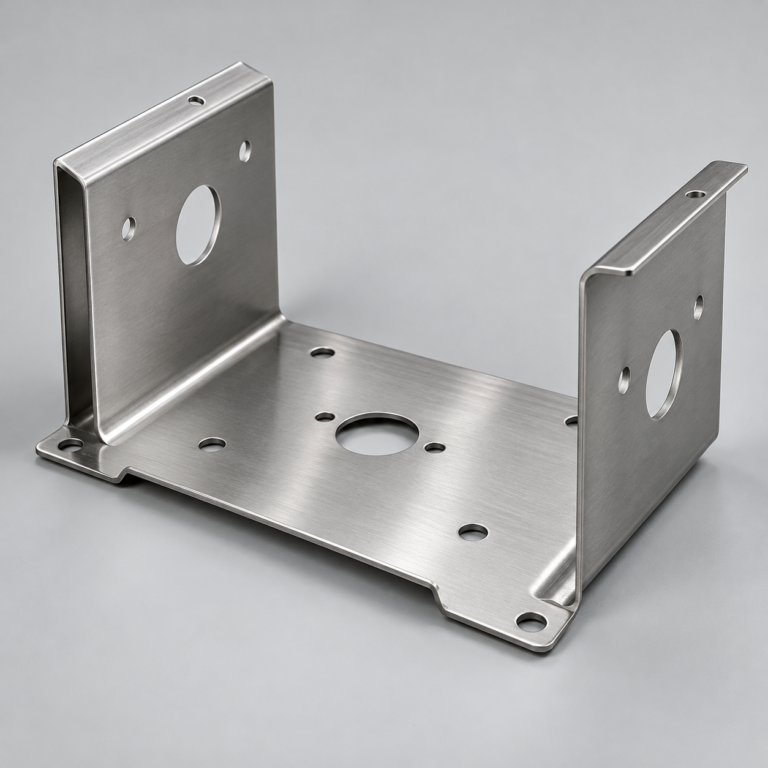
Cutting, forming and welding for your fabricated parts.
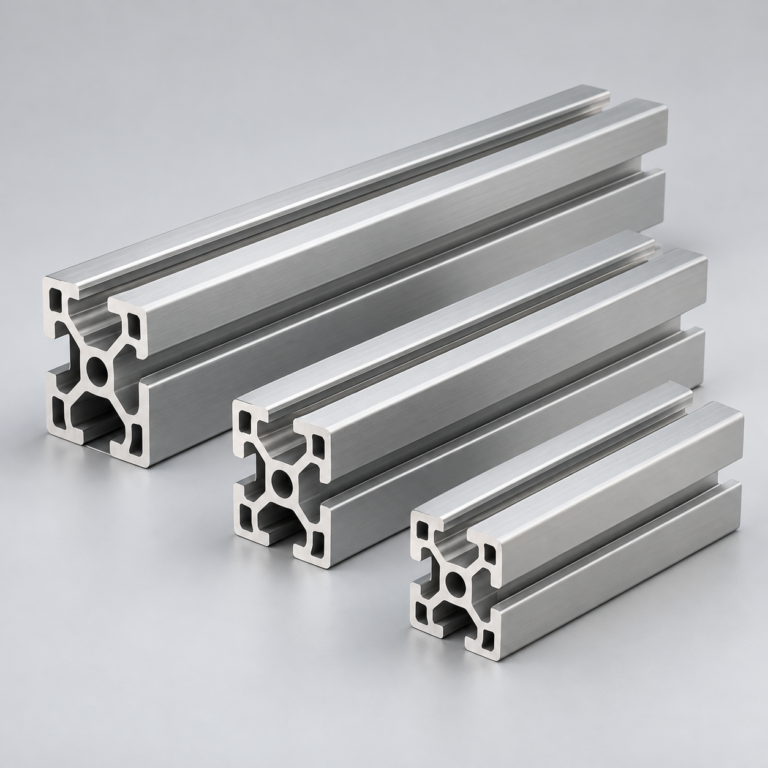
Custom profiles for your section, length and finish requirements.
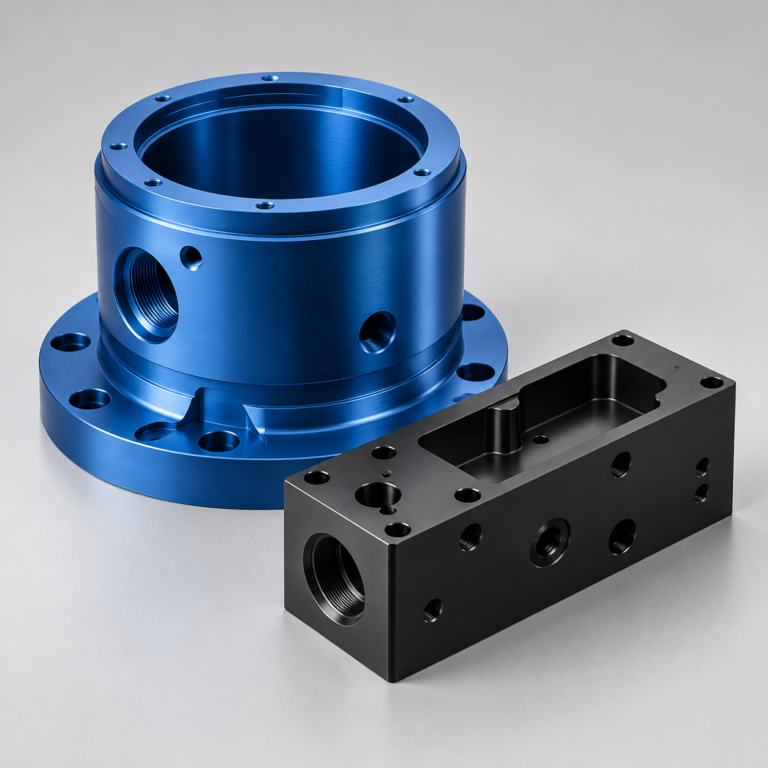
Finishes for your appearance, corrosion and wear requirements.
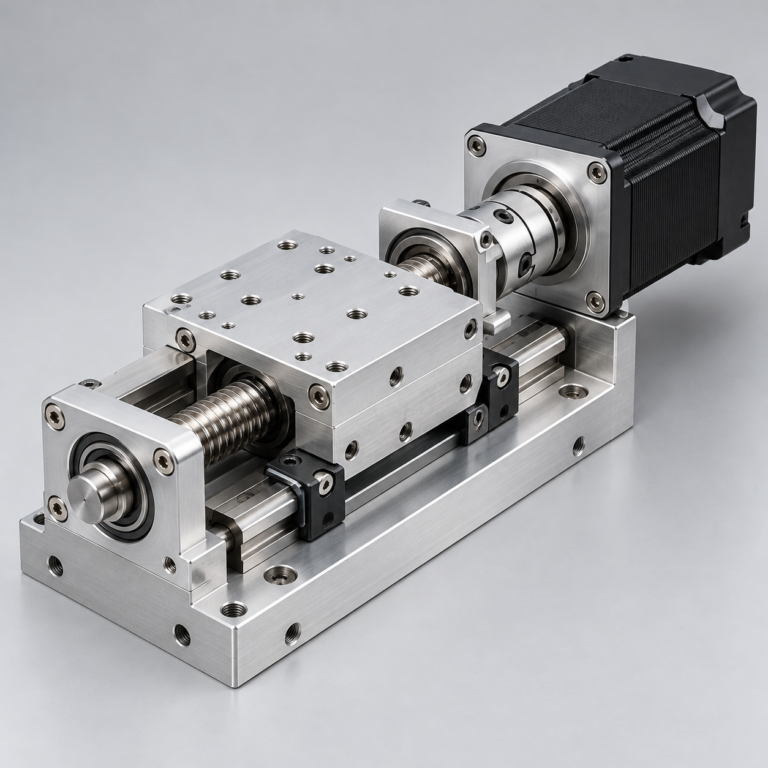
Sub-assemblies and final builds for your production program.
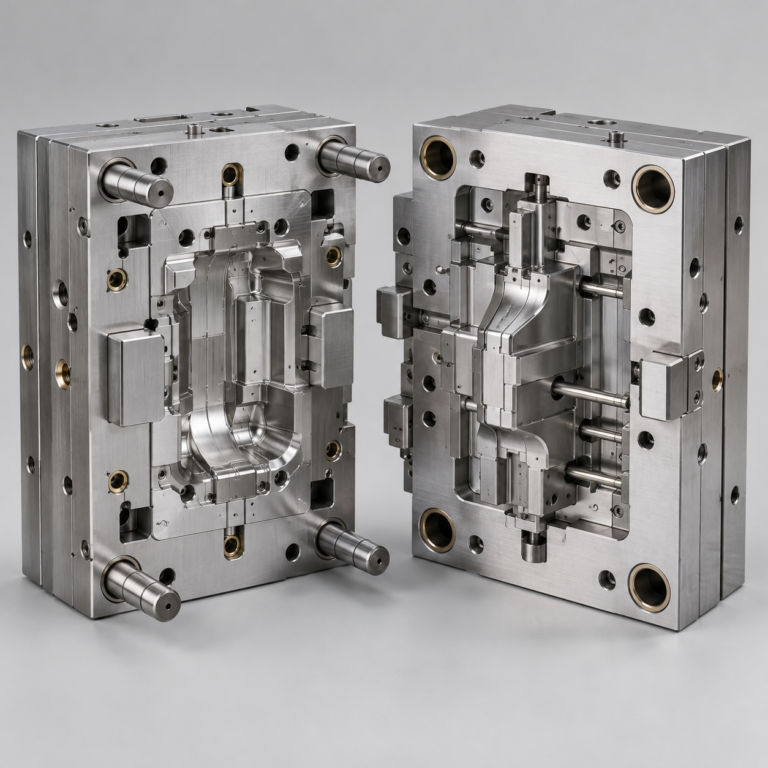
Production tooling built around your process and volume.
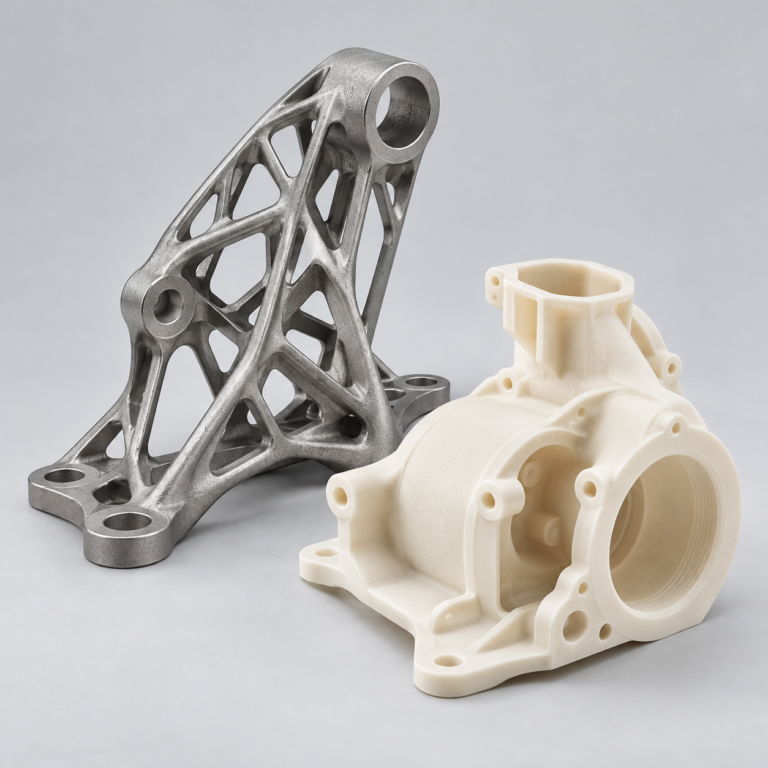
Prototype parts to check fit, function and design.
DFM, process planning and production support for your project.
Inspection, documentation, inventory and delivery planning for your program.
Choose air- or liquid-cooling components around your thermal and mechanical requirements.
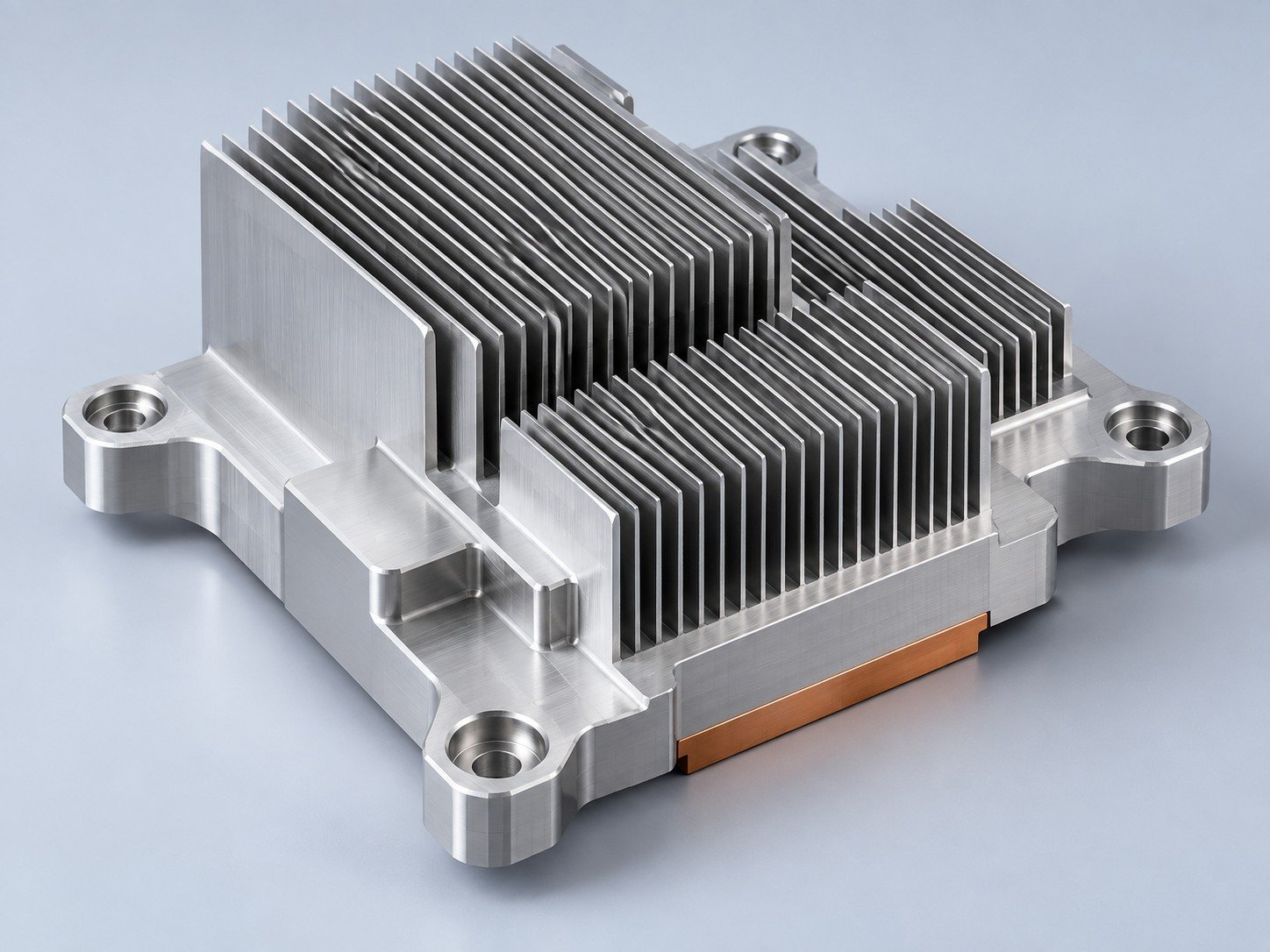
Manufacturing support for your cold plates, manifolds and cooling assemblies.
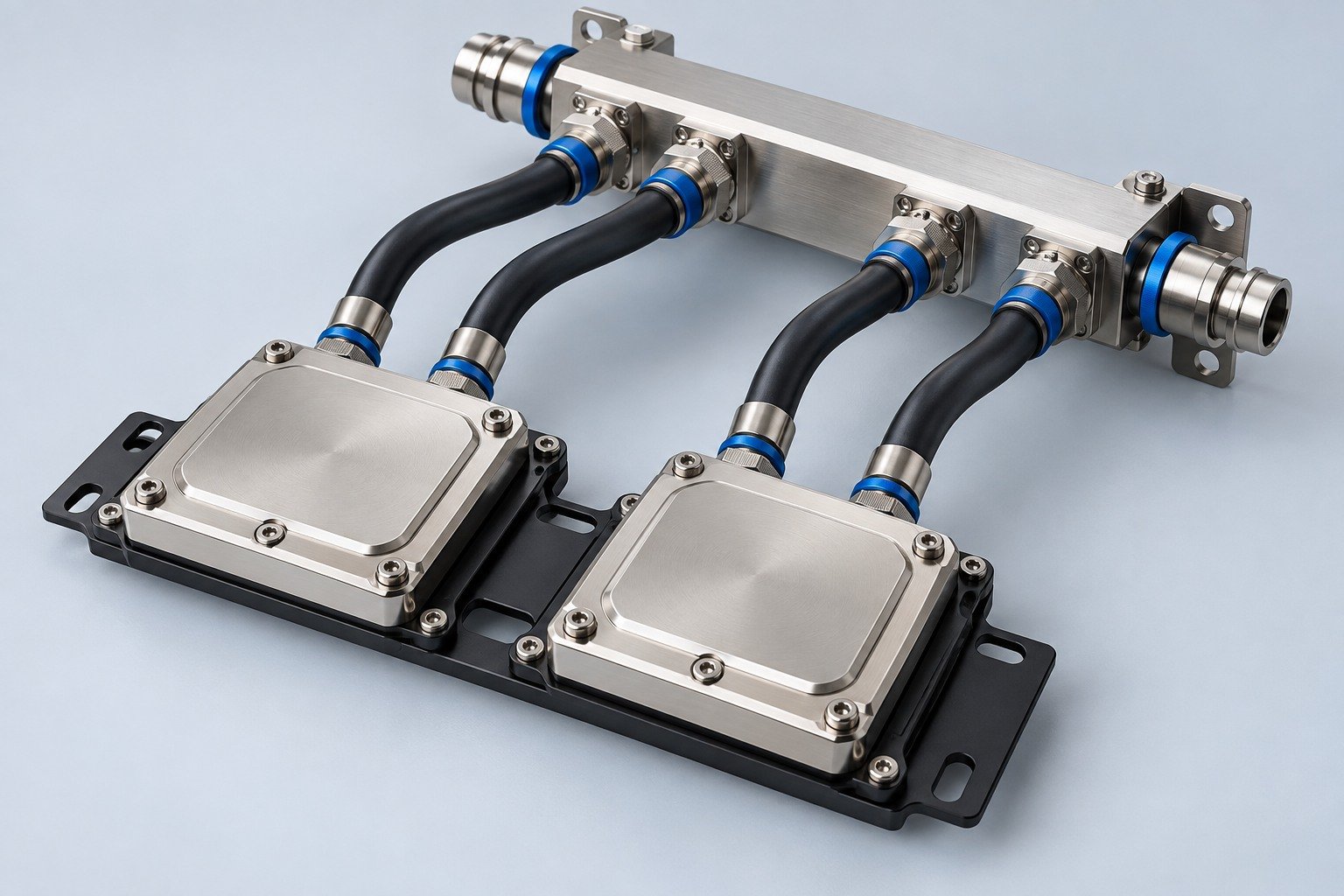
Find components for your power electronics, energy, laser and telecom application.
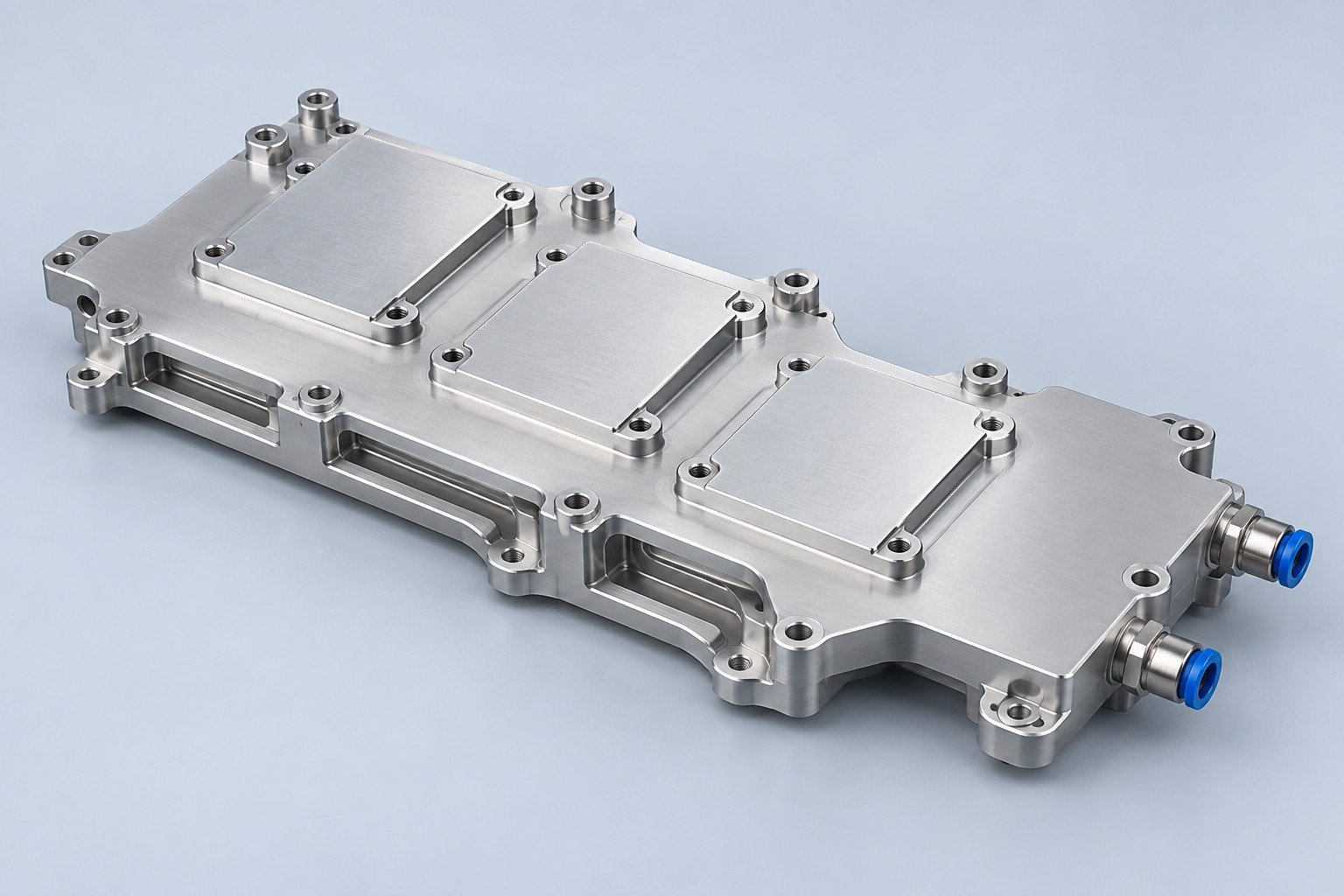
Components for your electronic systems.
Start with your functional and quality requirements.
Build around your operating environment.
From prototype to production, review material performance, manufacturability and cost for your part.
Review grade, temper and finish for your metal parts.
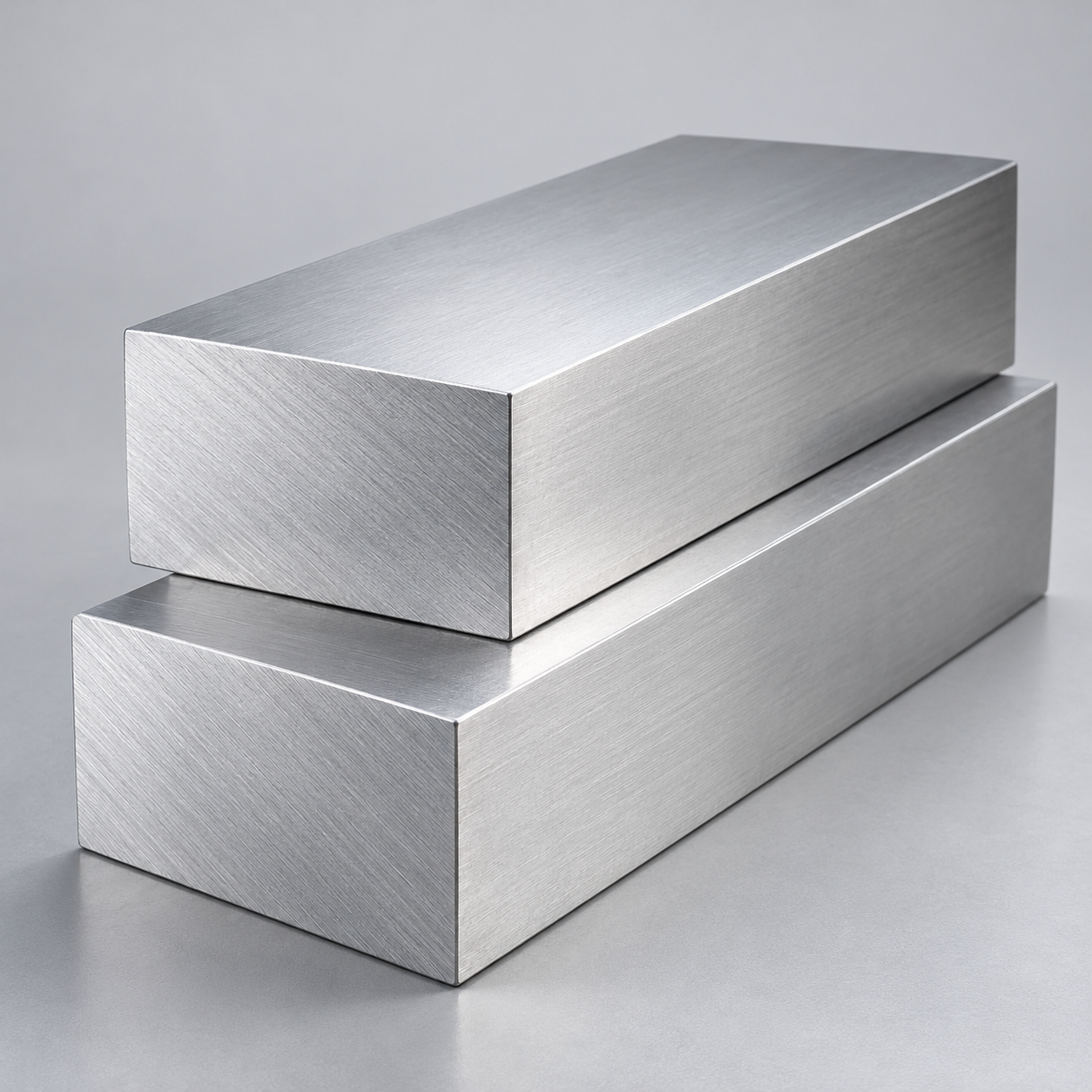 AluminumStrength, weight and machining›
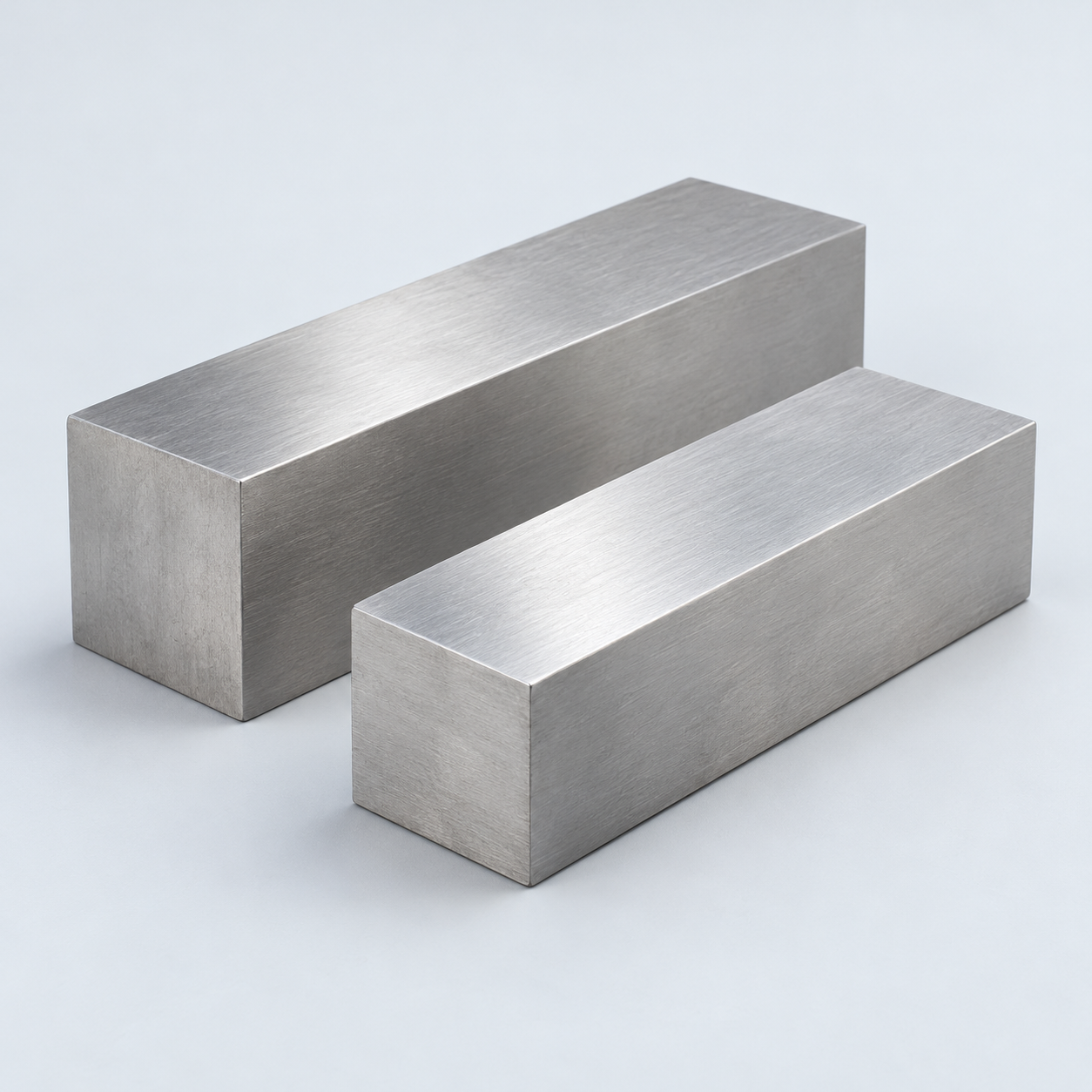 Stainless SteelCorrosion and finish requirements›
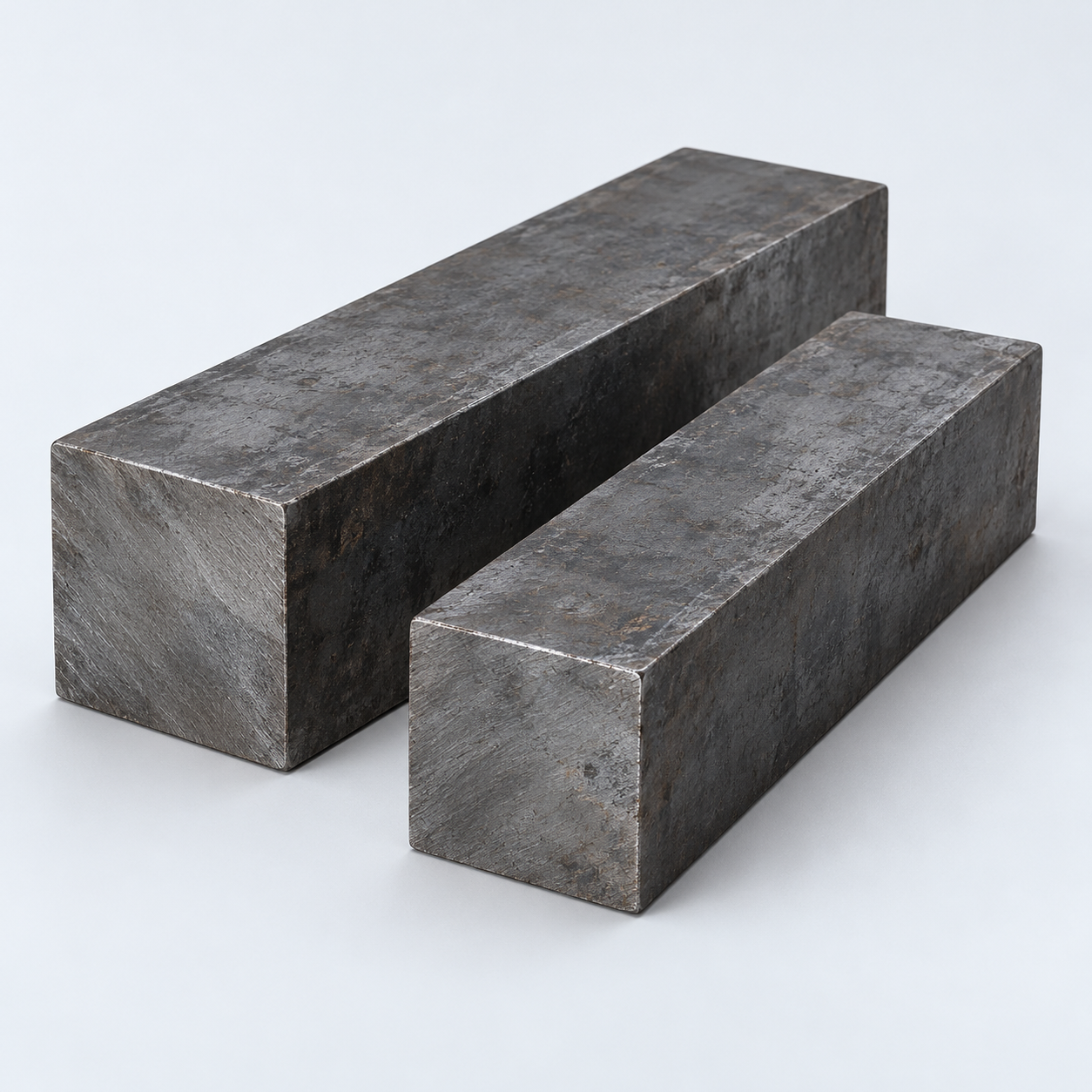 Carbon & Alloy SteelDiscuss grade and heat treatment›
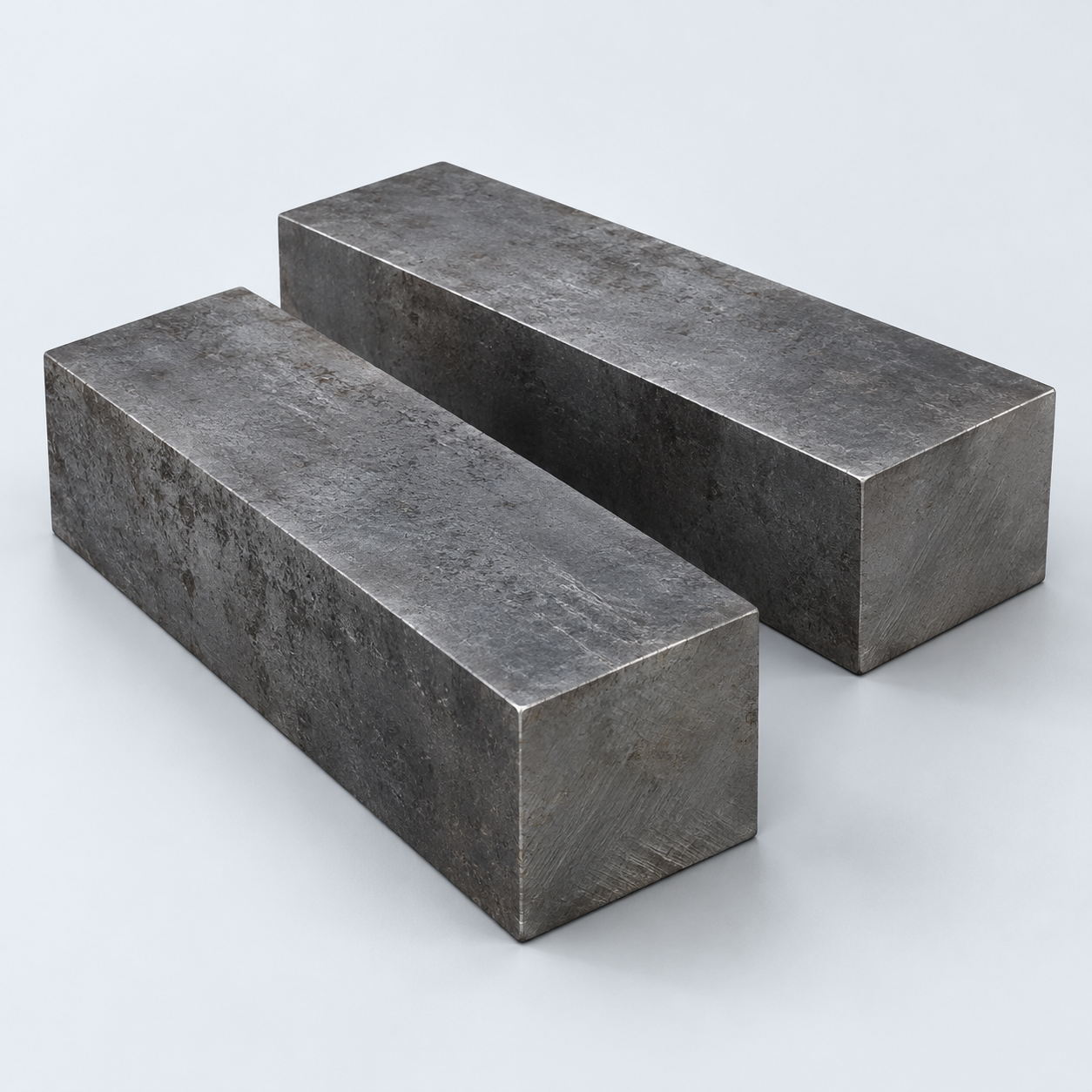 Tool SteelDiscuss tooling and wear needs›
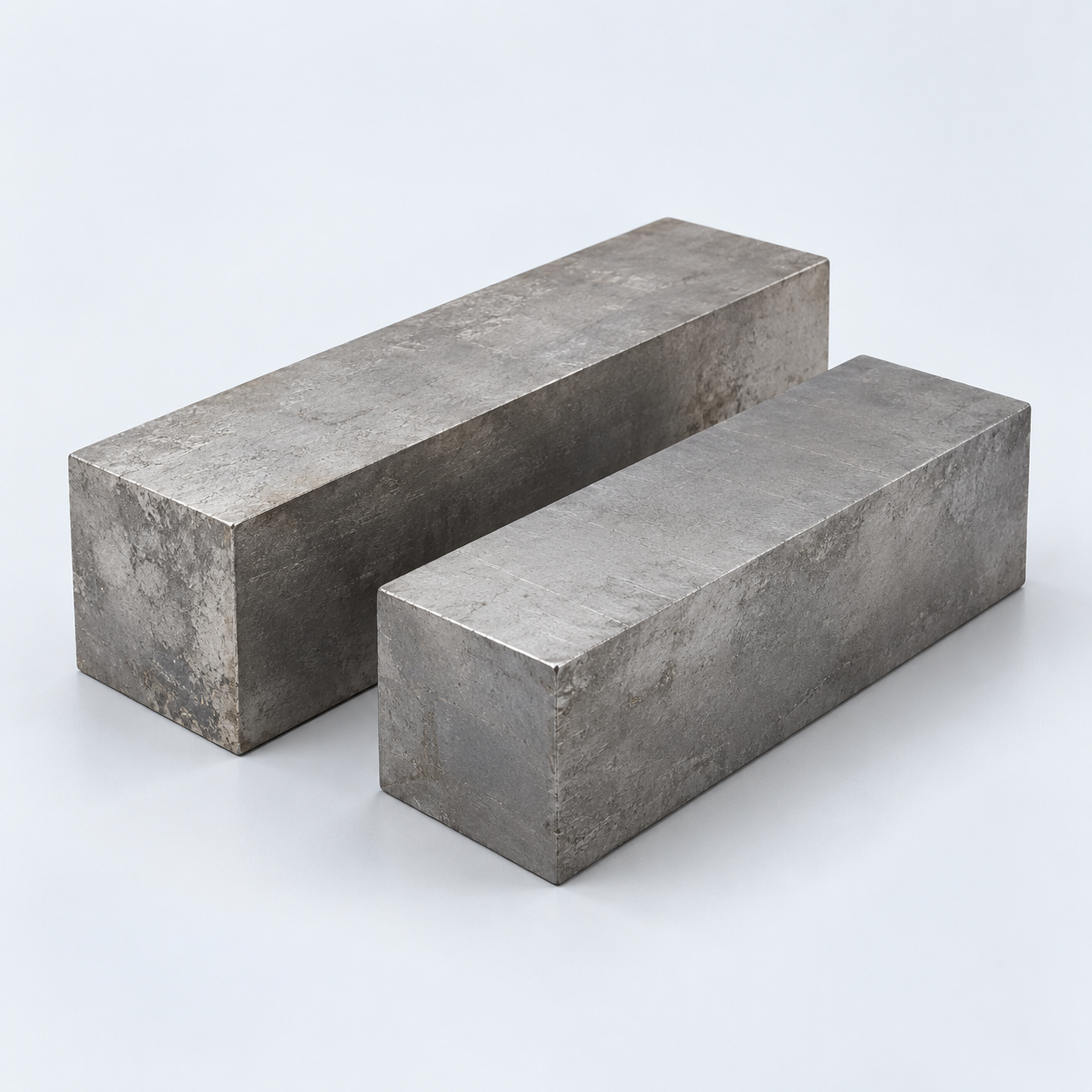 TitaniumReview grade and part geometry›
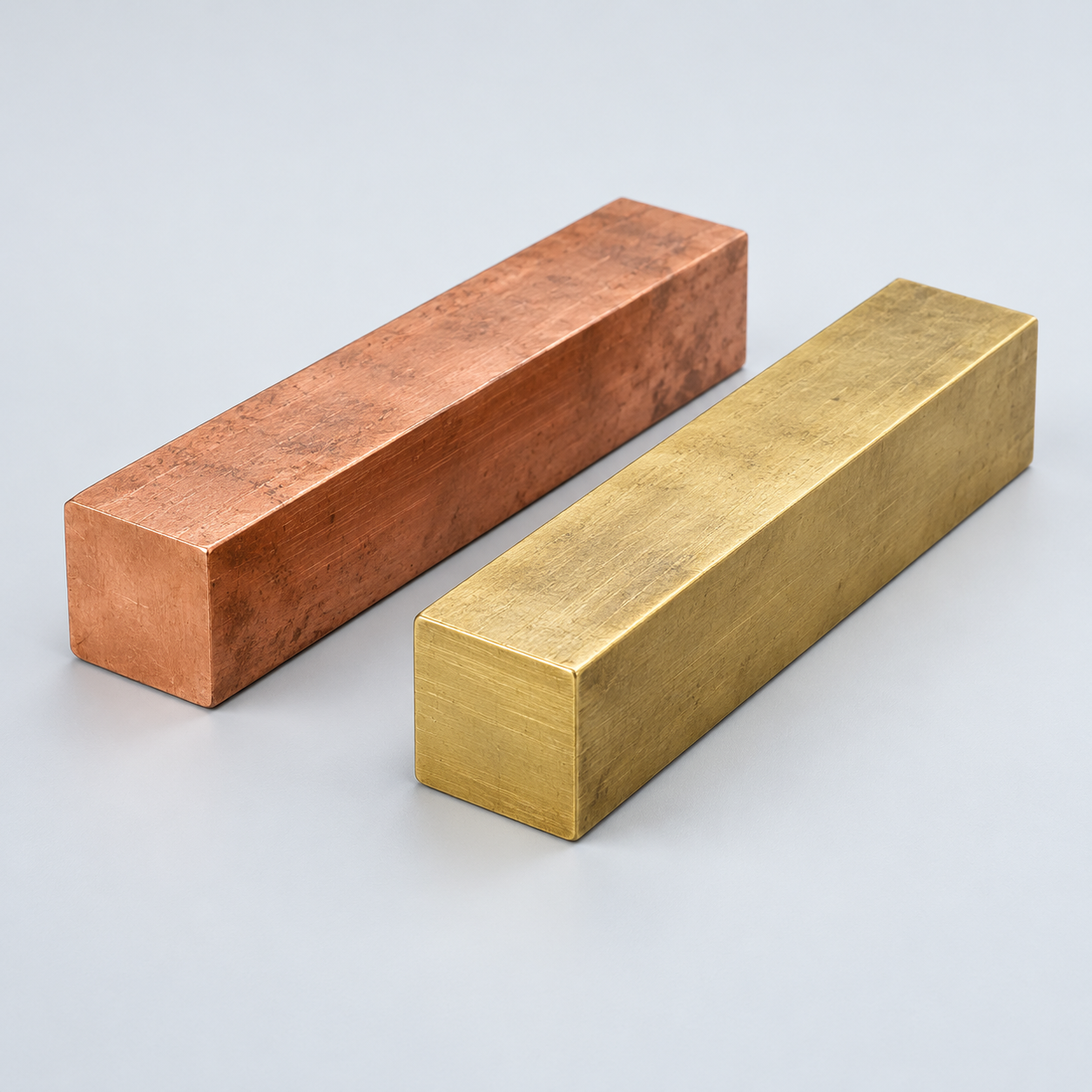 Copper & Brass & BronzeDiscuss conductivity and machining›
Match your polymer to function, process and environment.
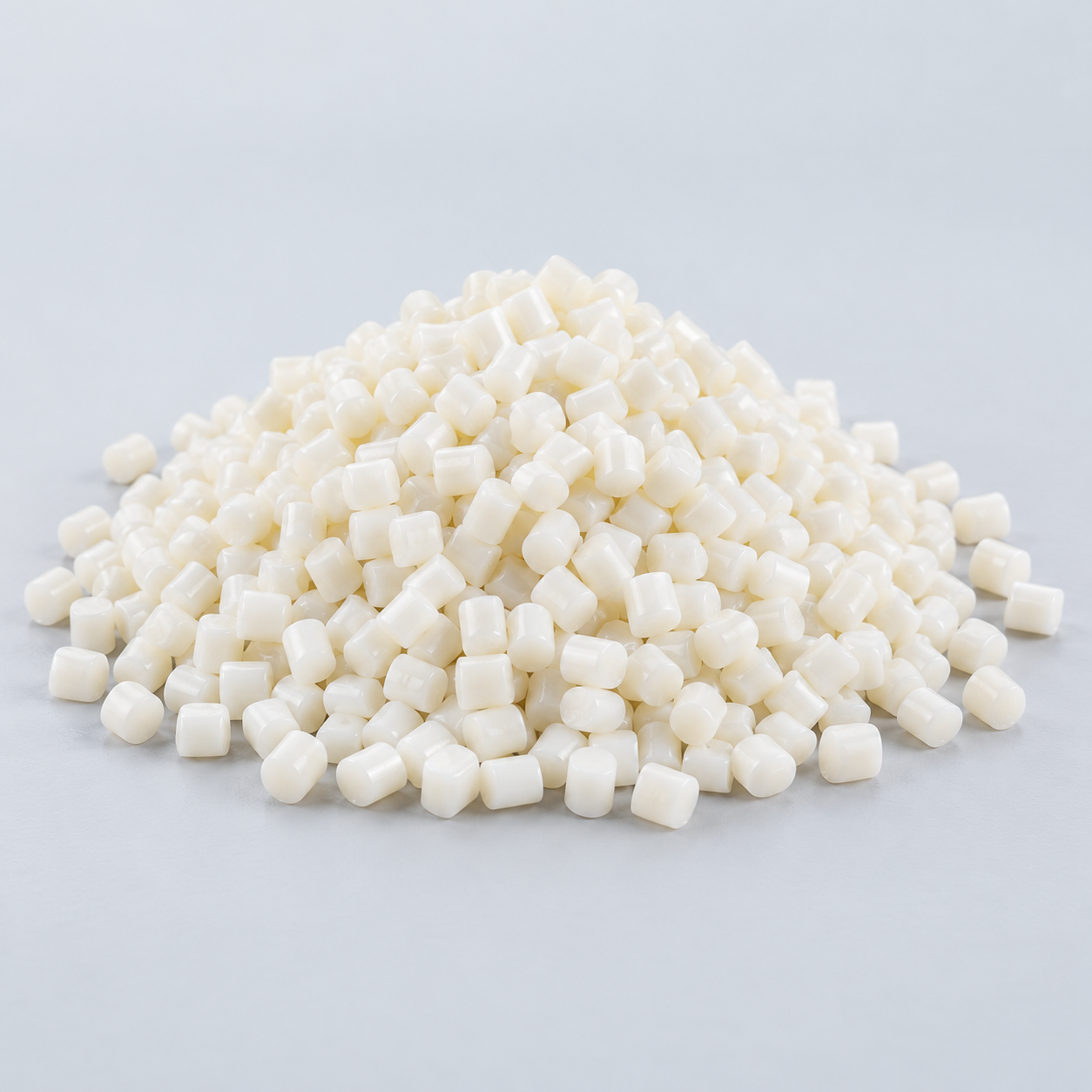 ABSReview enclosure and molding needs›
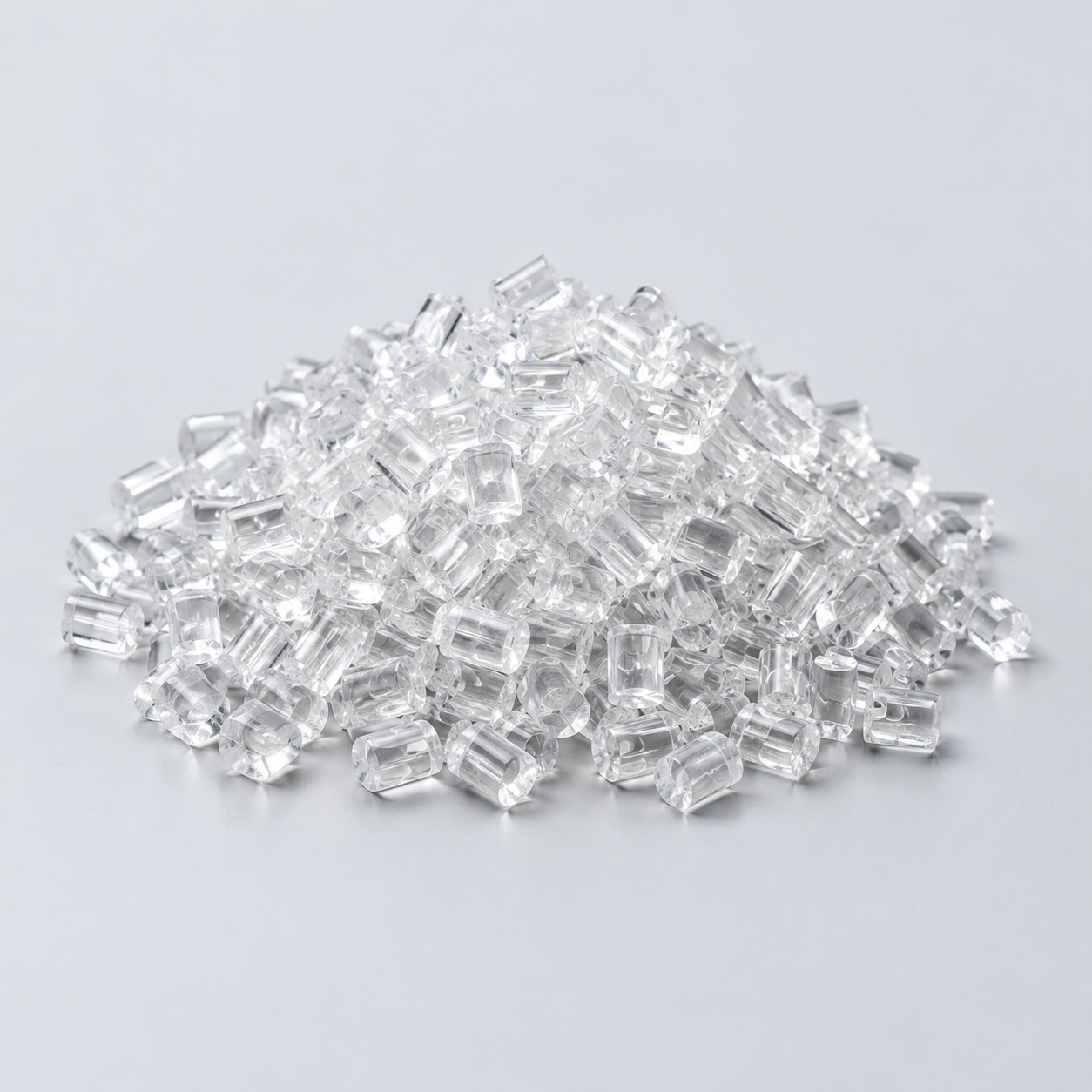 Polycarbonate (PC)Discuss clarity and impact needs›
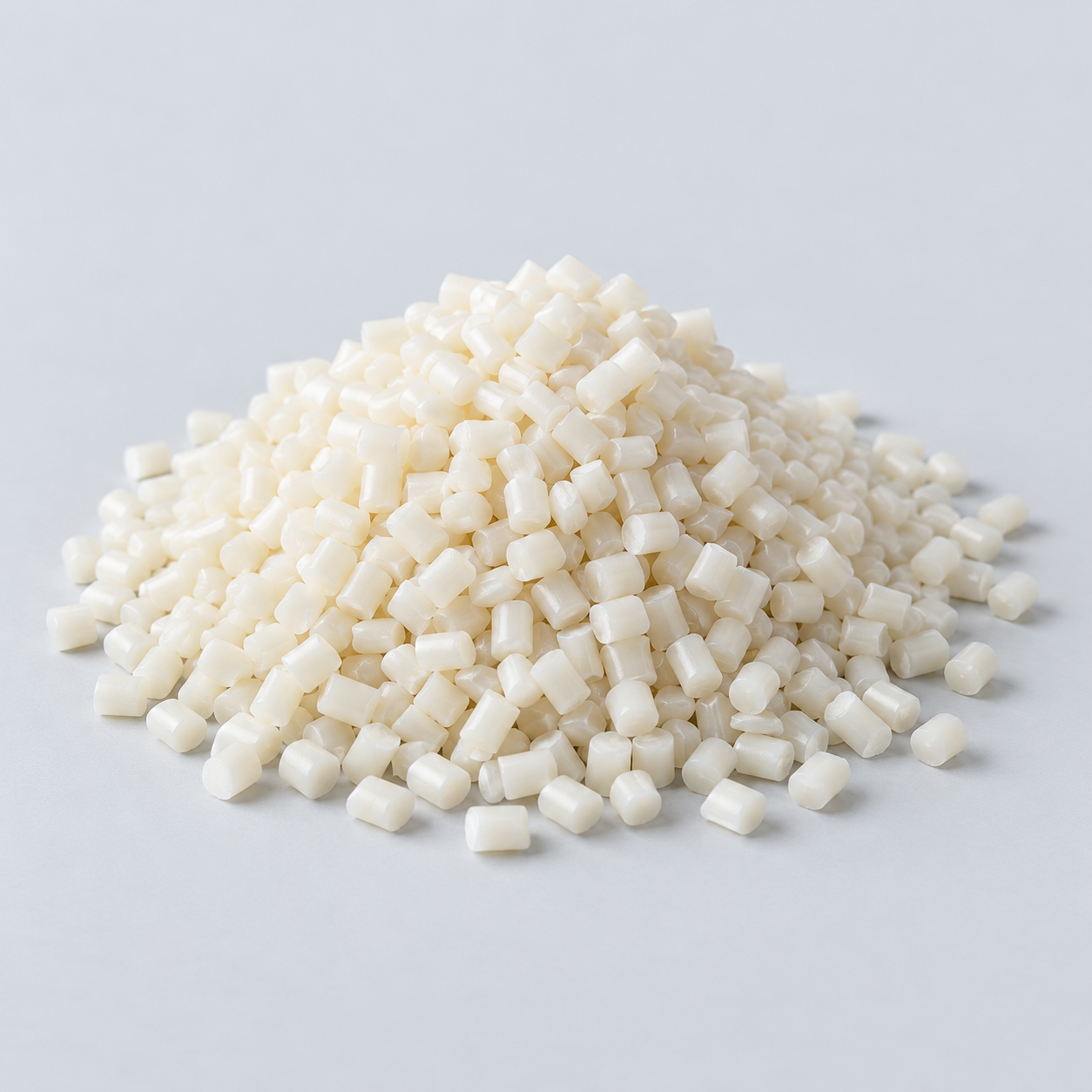 Nylon (PA)Review moisture and wear conditions›
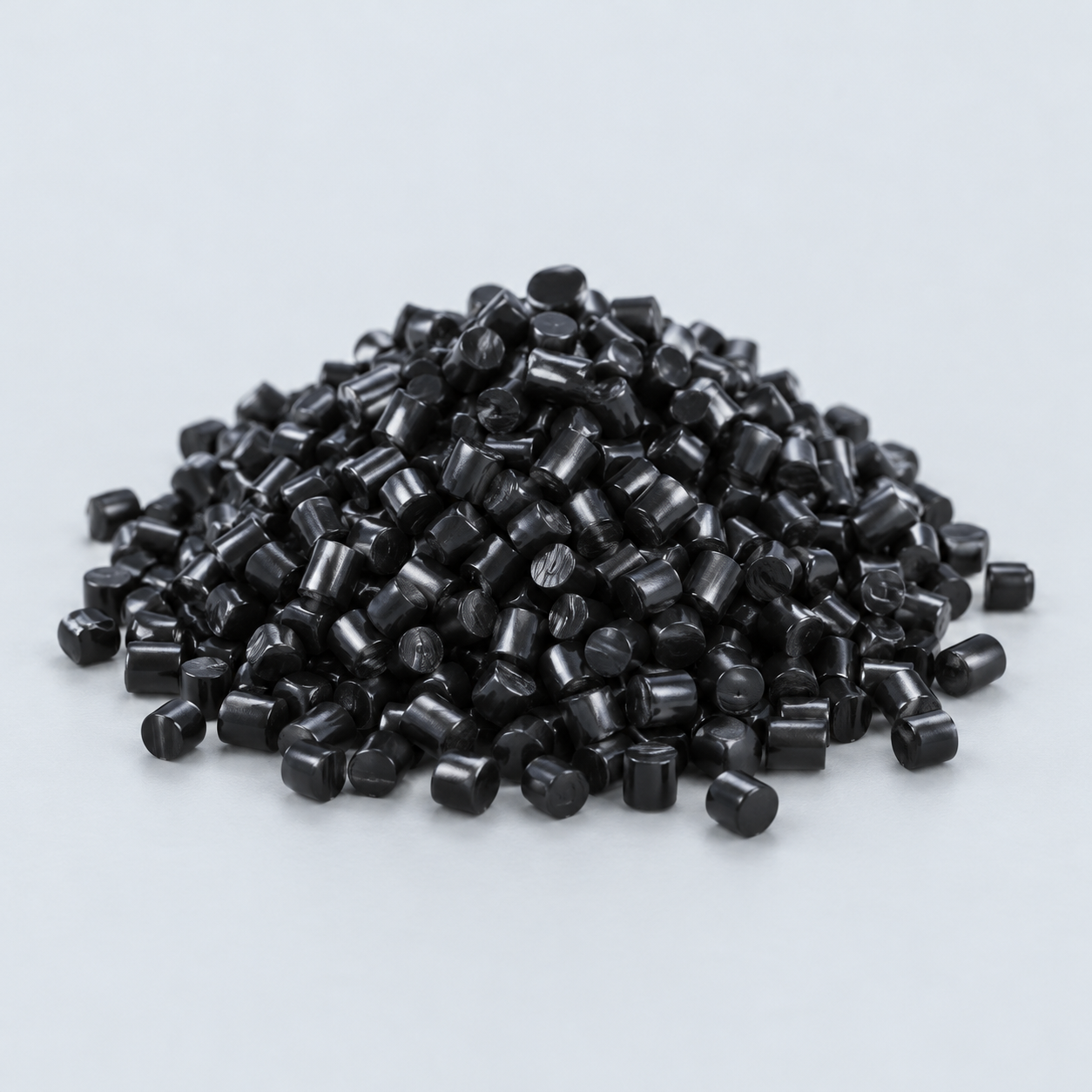 POM / AcetalReview fit and sliding features›
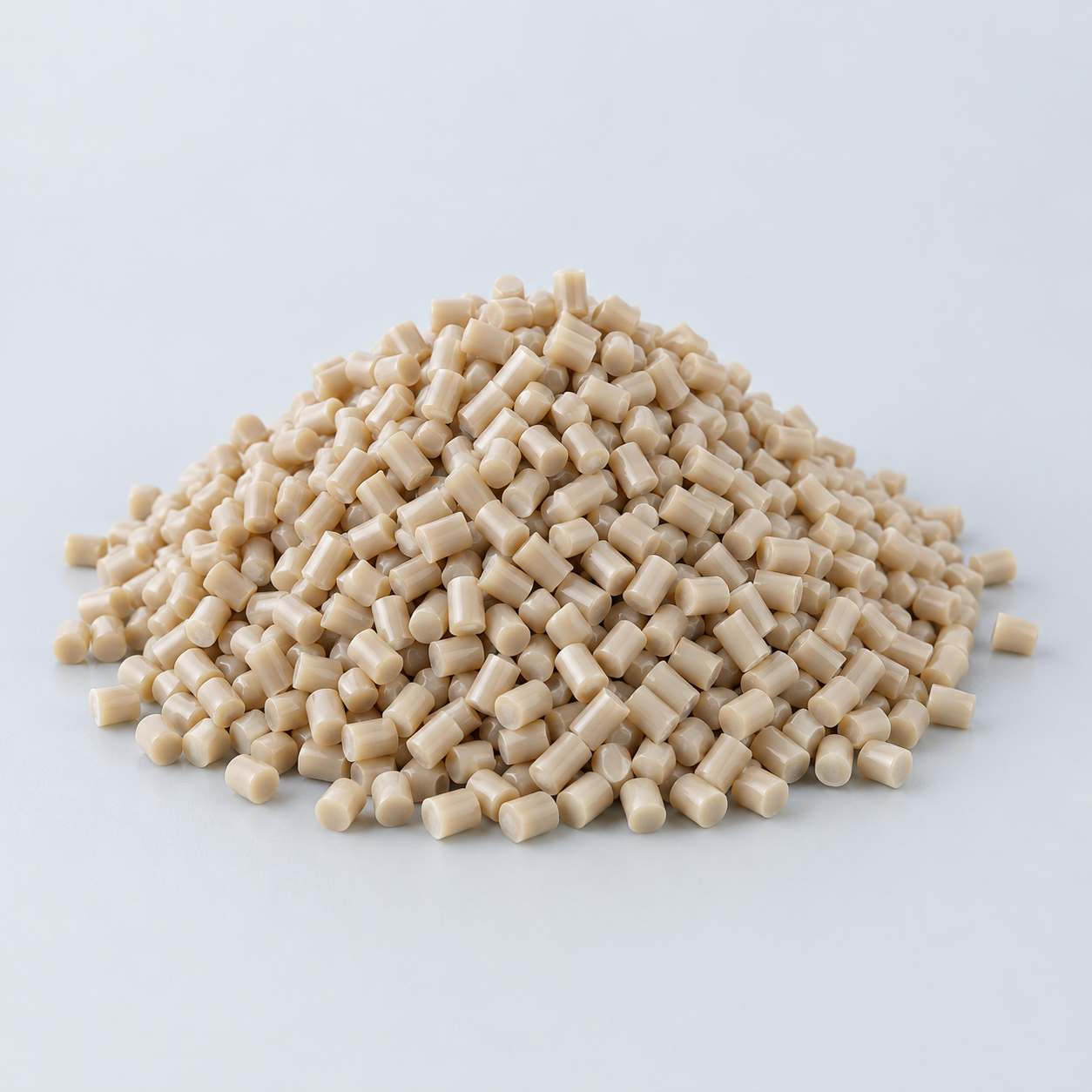 PEEKDiscuss operating conditions›
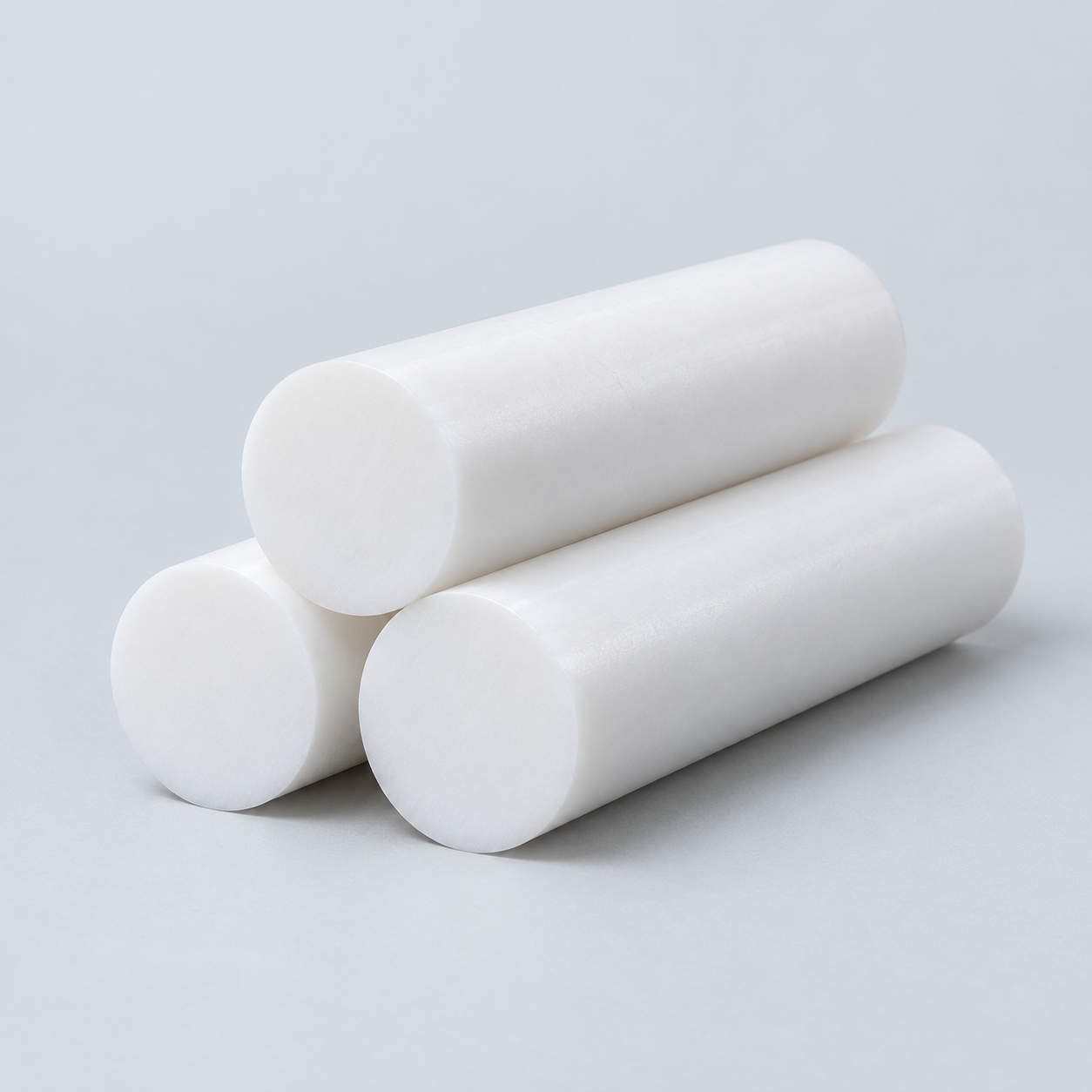 PTFEReview friction and chemical exposure›
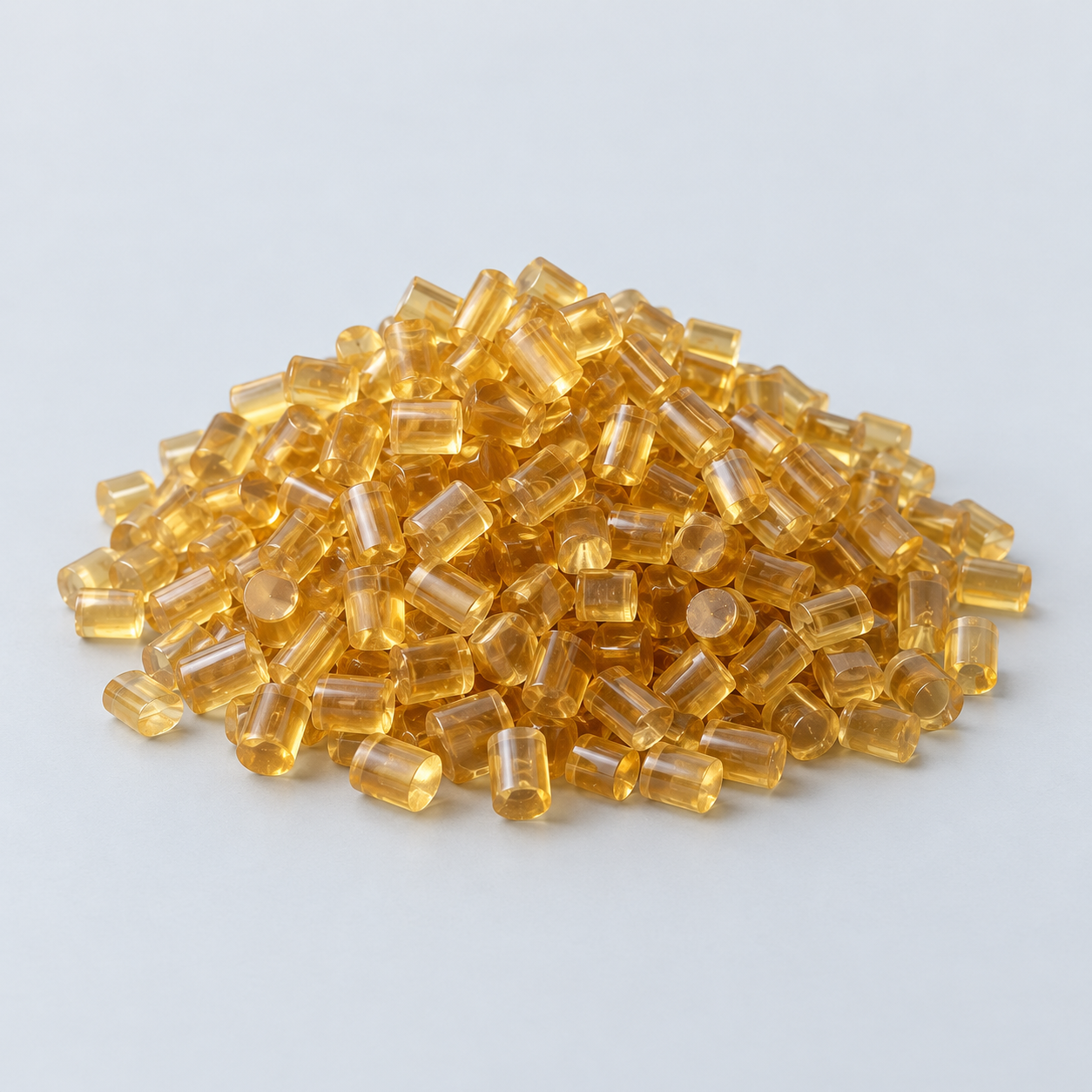 ULTEM / PEIDiscuss thermal and electrical needs›
Confirm grade availability and application requirements.
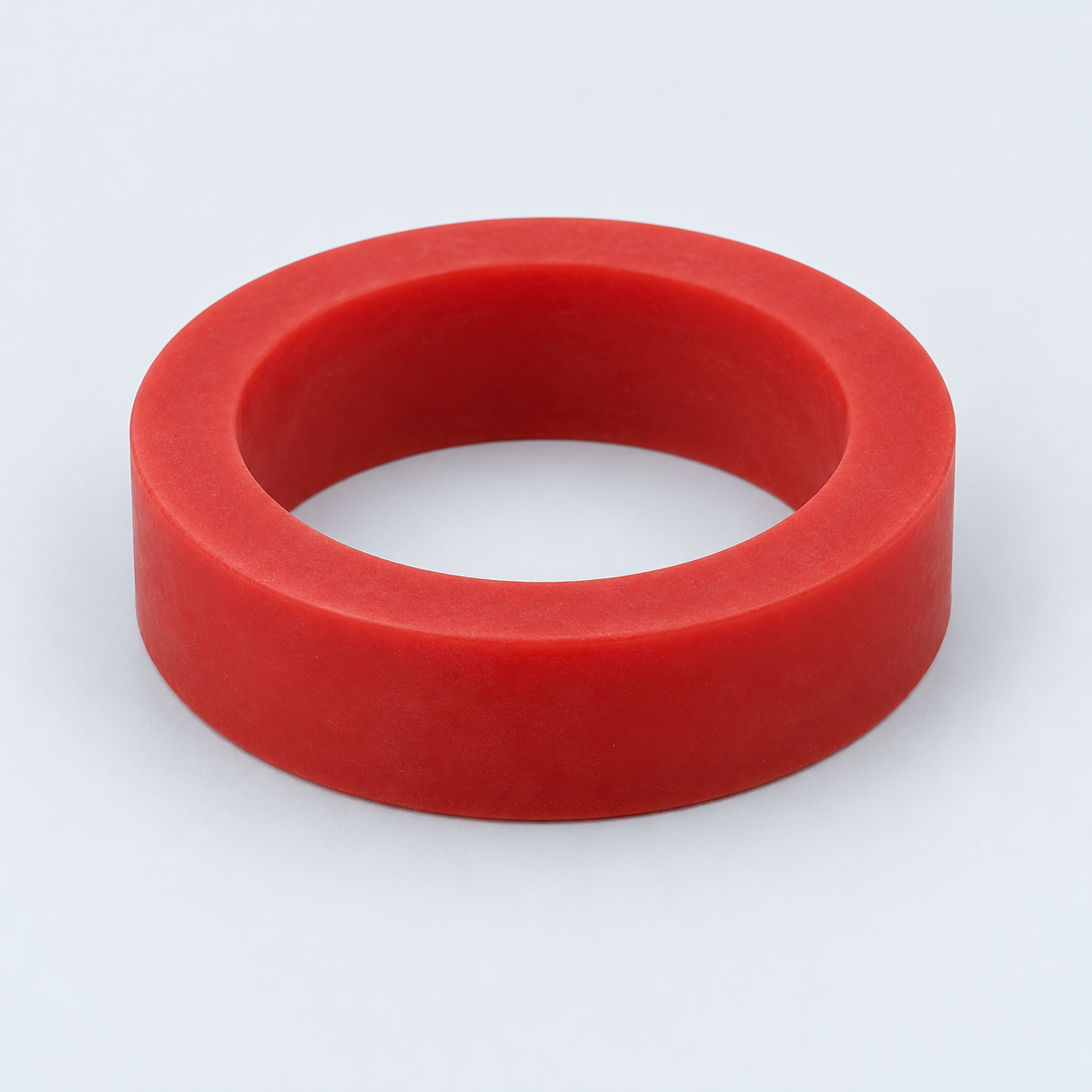 Silicone / LSRDiscuss flexible component needs›
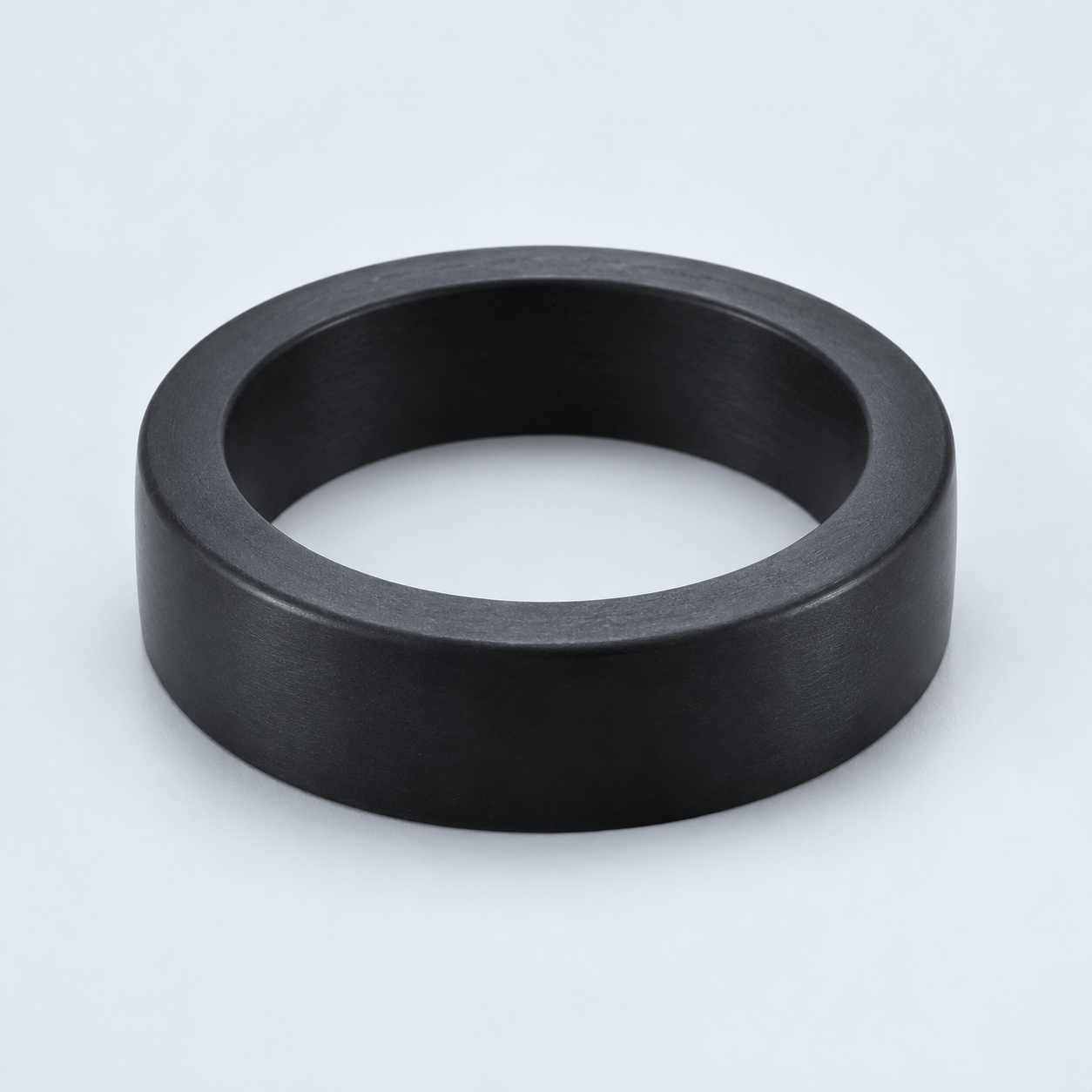 TPU / TPEReview flexibility and processing›
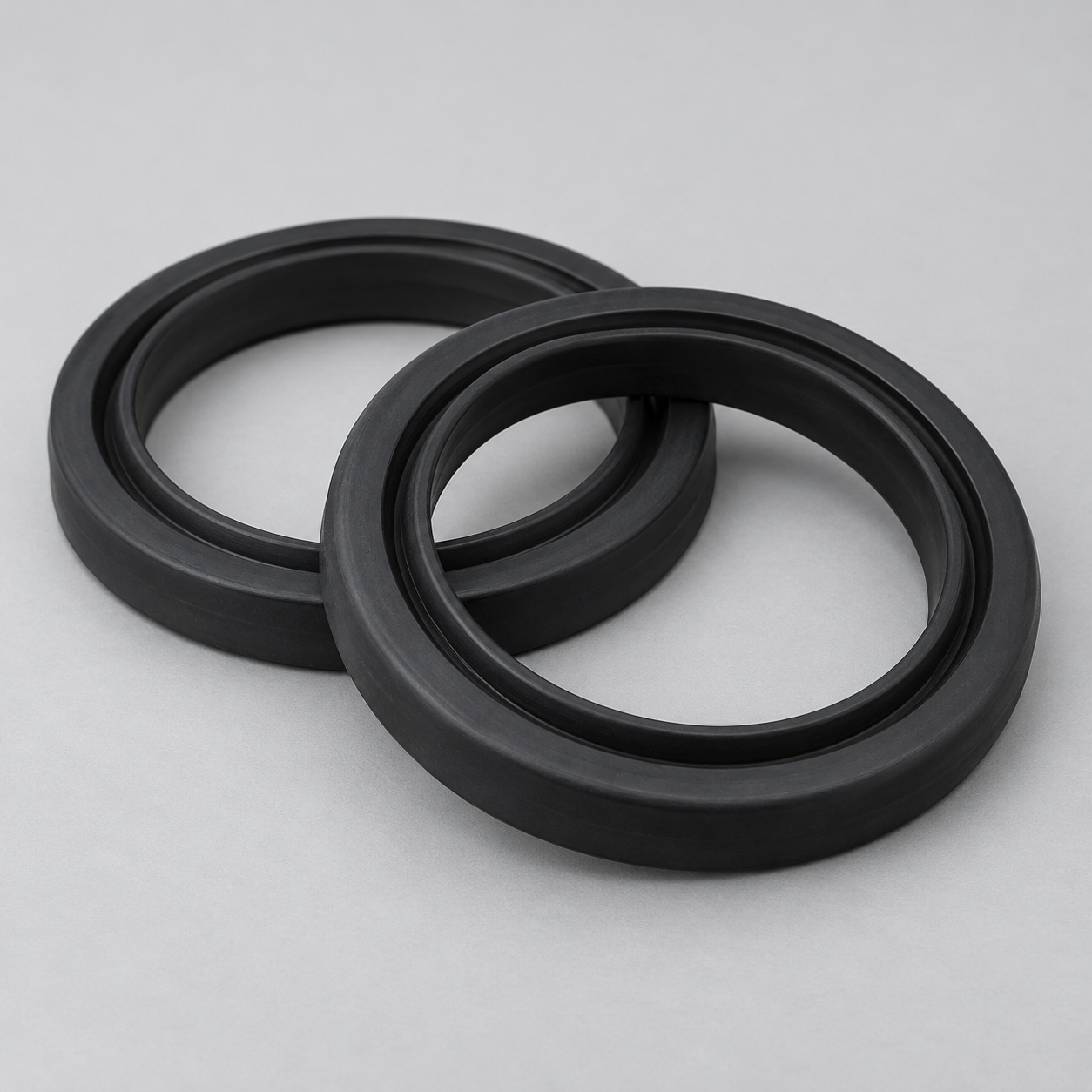 EPDMReview weathering and chemical exposure.›
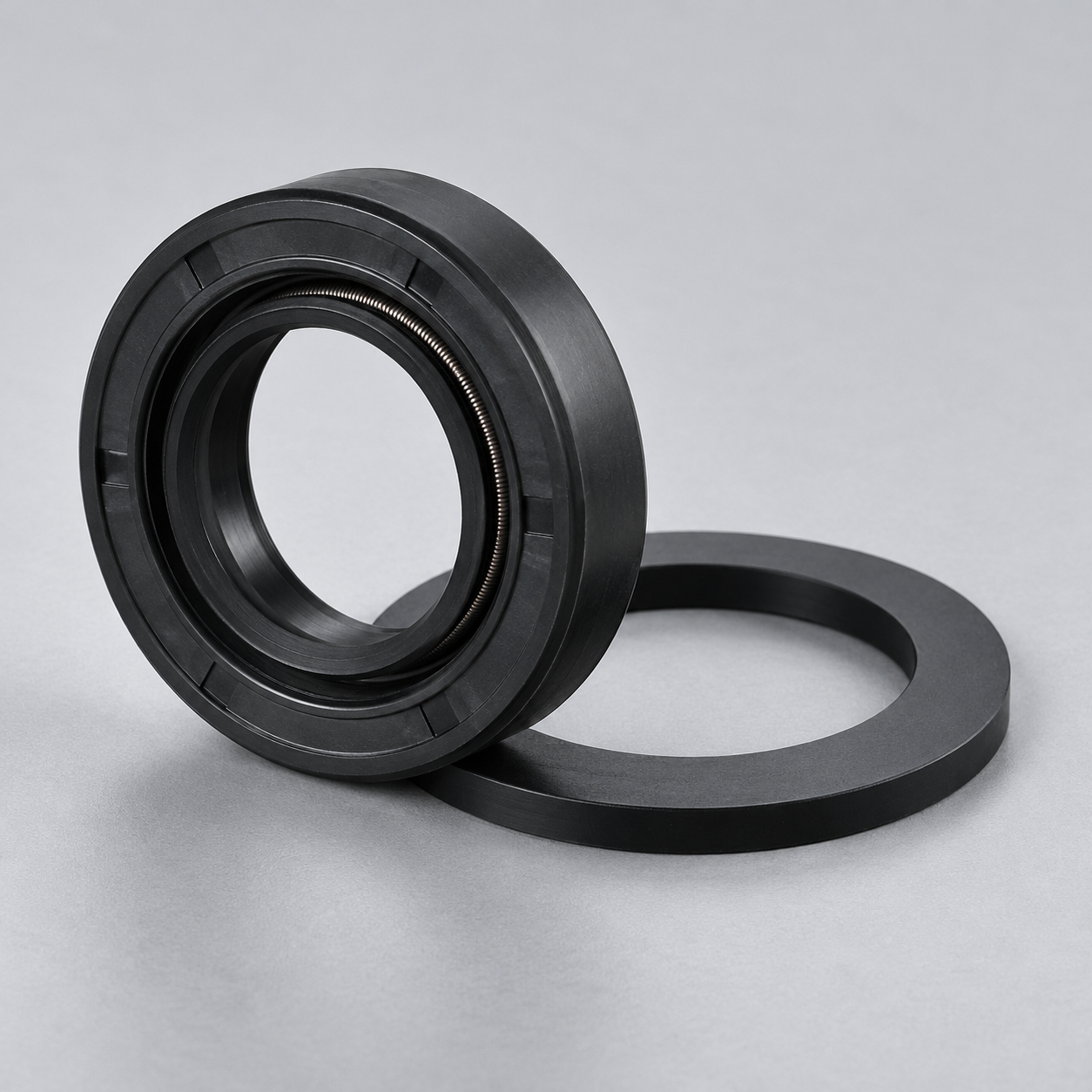 NBRReview oil and fuel exposure.›
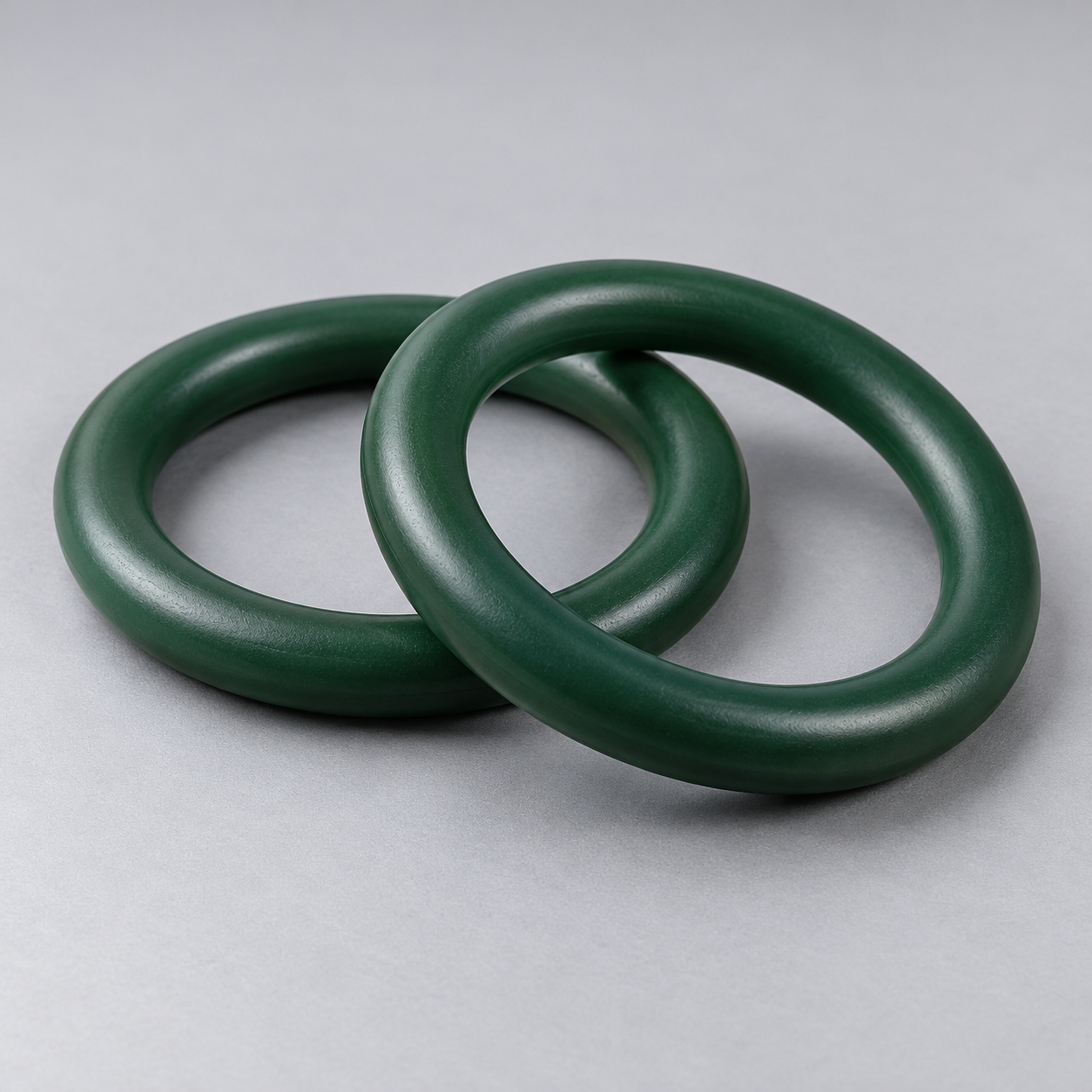 FKMReview temperature and chemical exposure.›
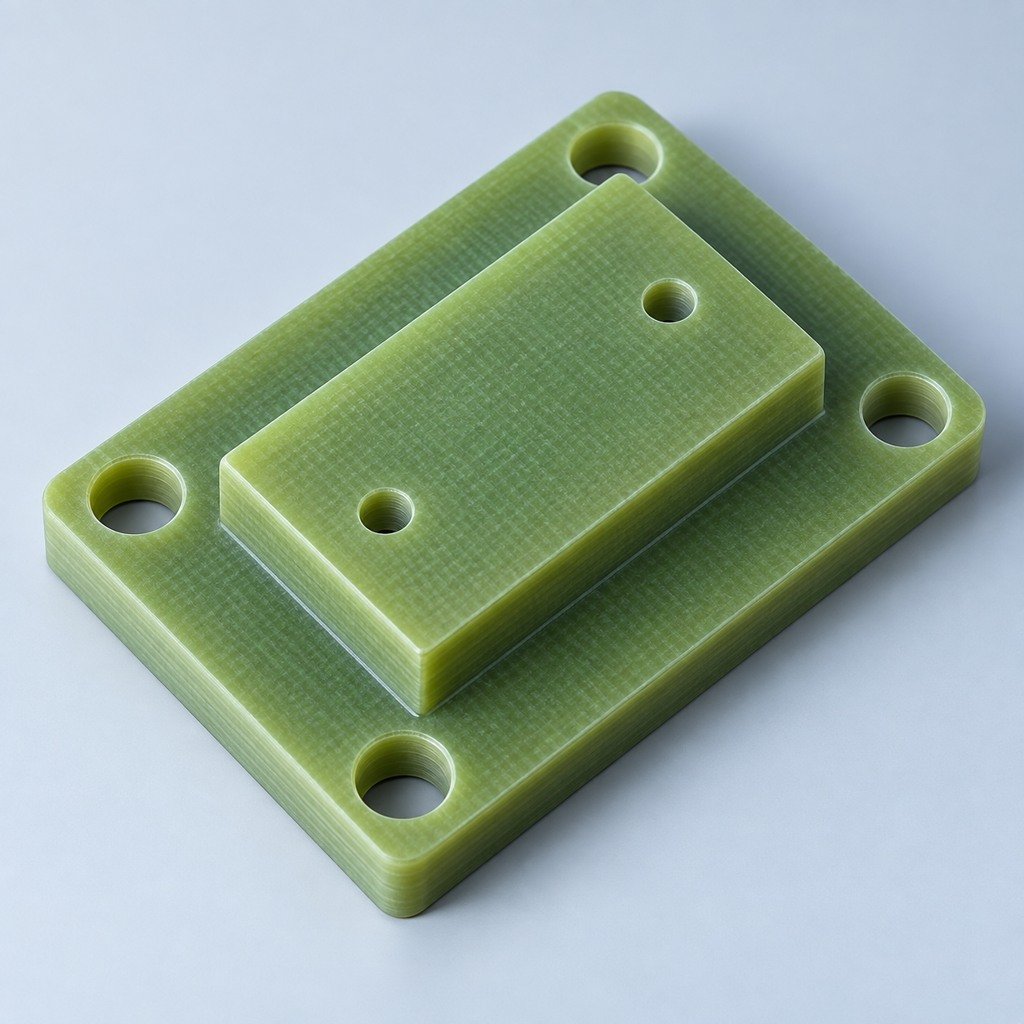 G10 / FR4Review insulation and laminate needs›
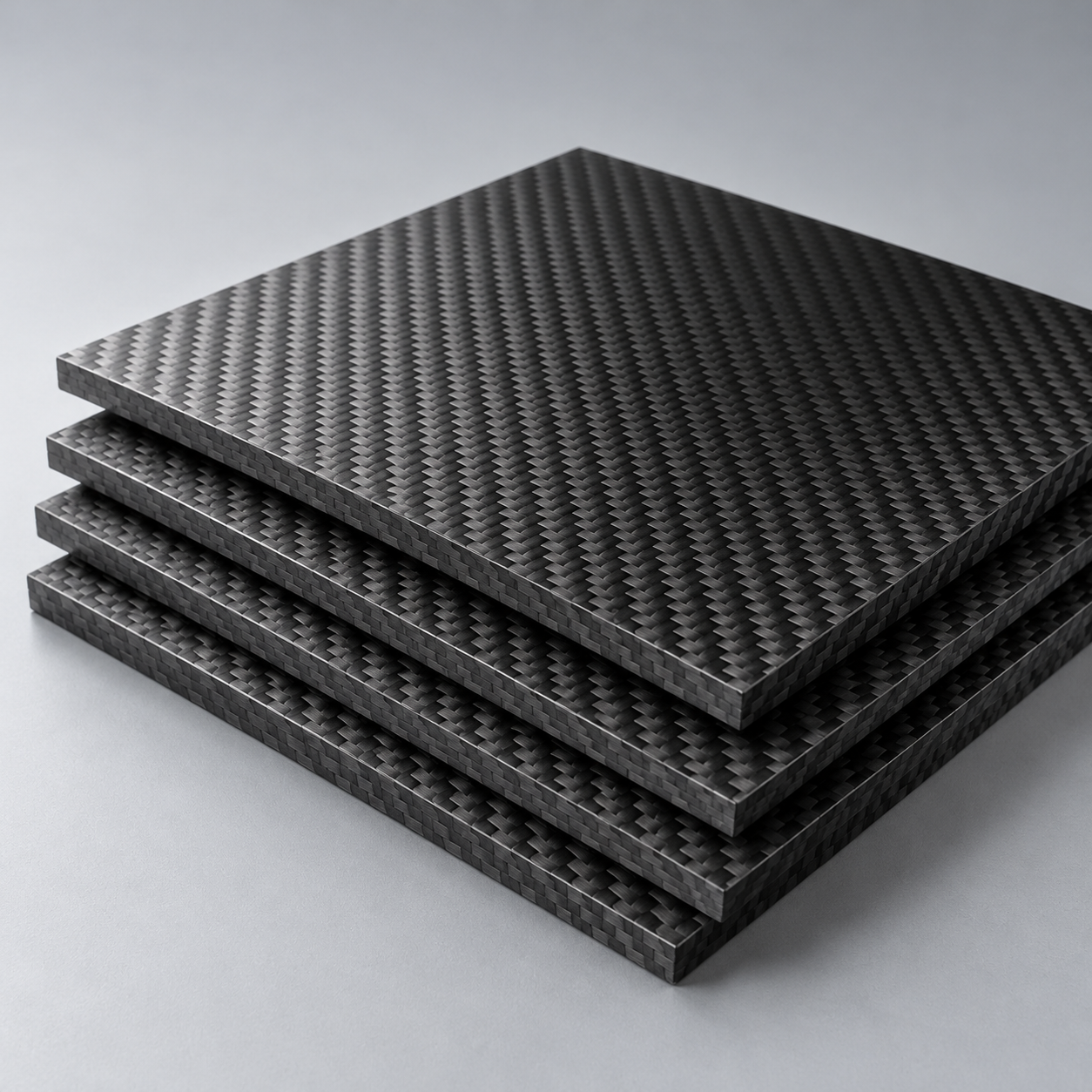 CompositesReview stiffness, weight and laminate.›Customer-Specified MaterialsConfirm your grade and requirements.›Other Specialty MaterialsDiscuss your application and grade.›
Practical guidance for your part geometry and material decisions.
Prepare your process, budget and sourcing questions.
Build your knowledge before production.
Learn who we are and how we operate.
Find our U.S. support team or start a conversation.
YOUR GRADE. YOUR CLARITY. YOUR FINISHED FIT.
Review your exact stock or resin, viewing faces and final fit. Agree cleaning exposure, edge finish and sample approval before production of your clear acrylic parts.
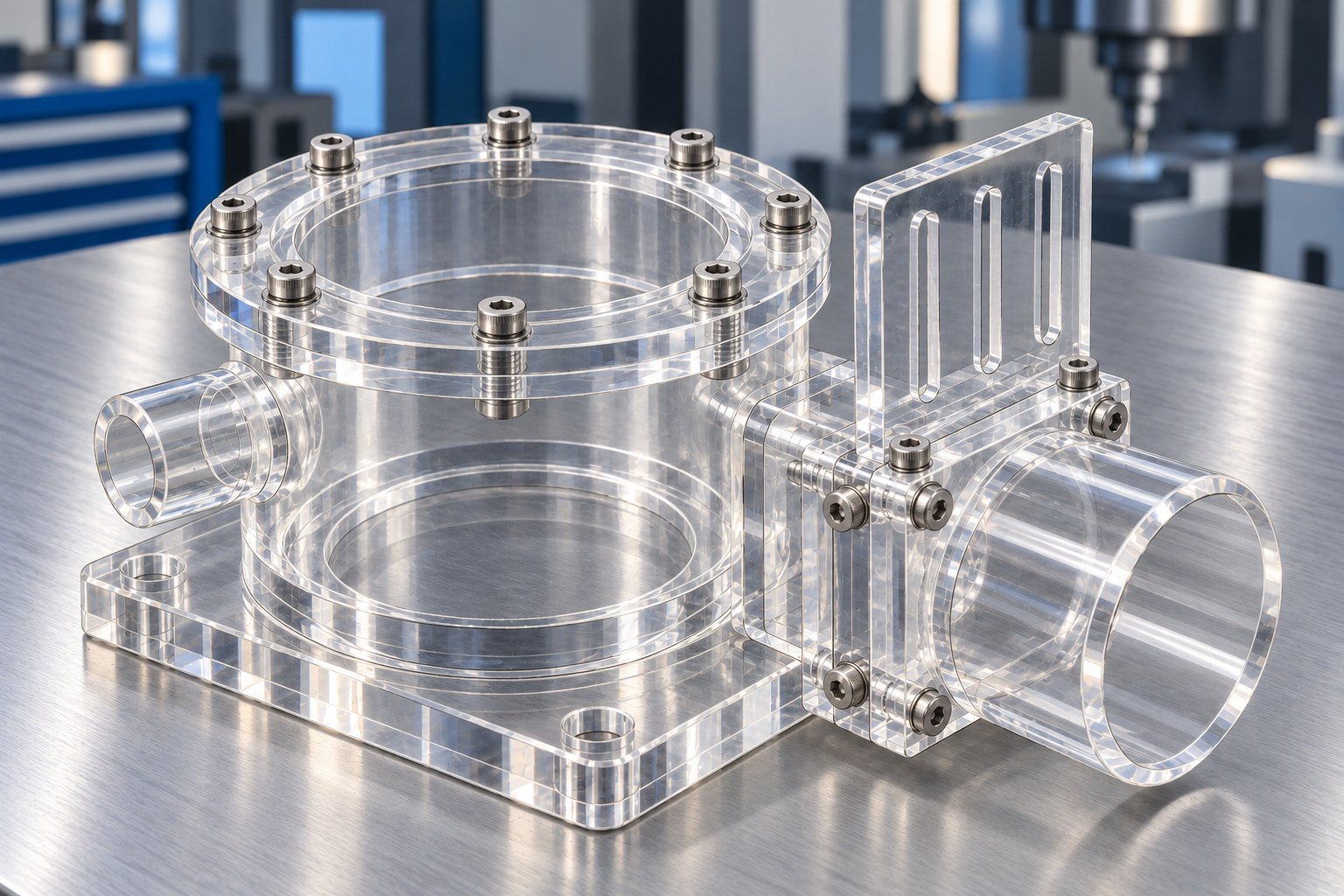
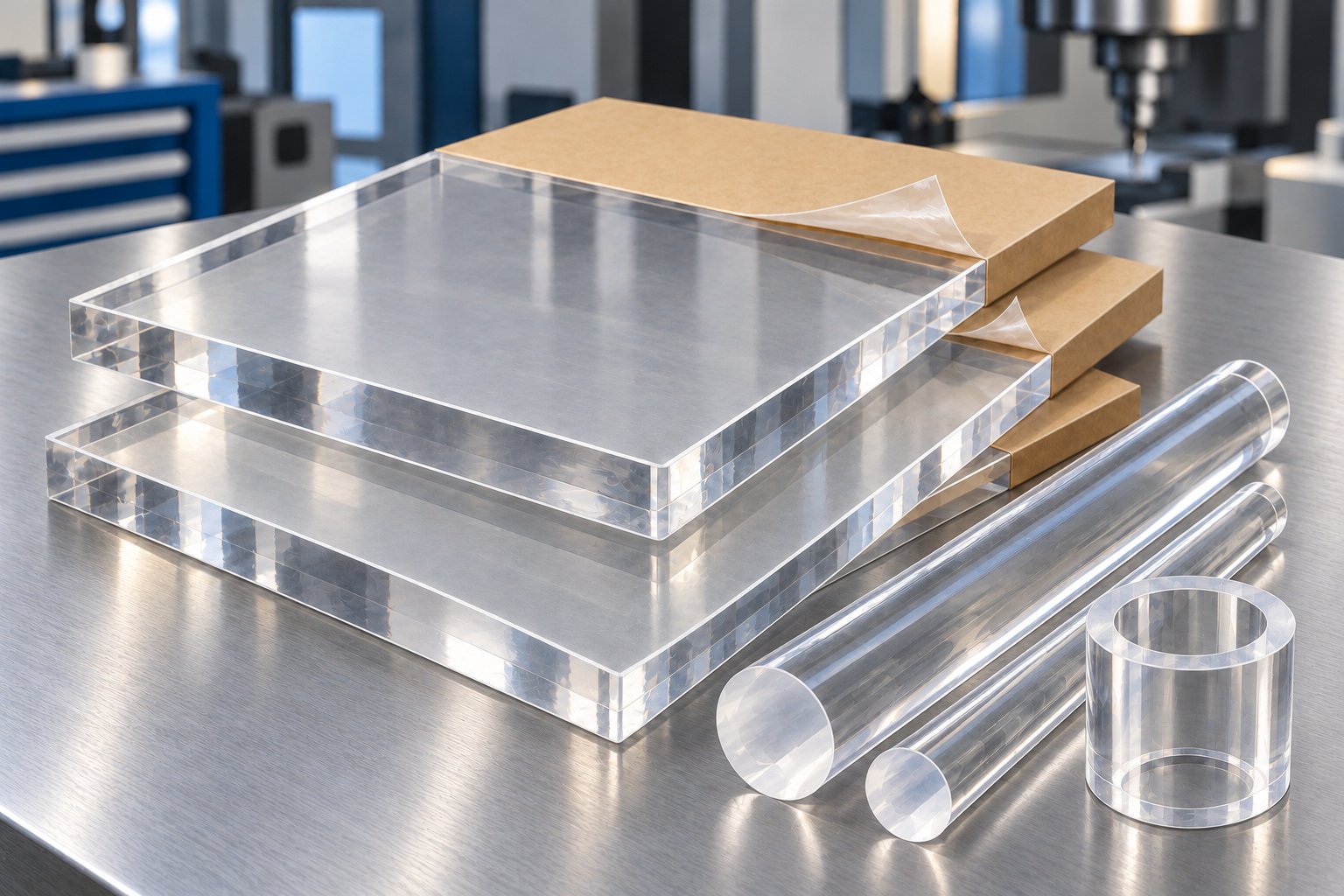
Confirm the actual sheet, rod or tube, thickness, color and stock-product record.
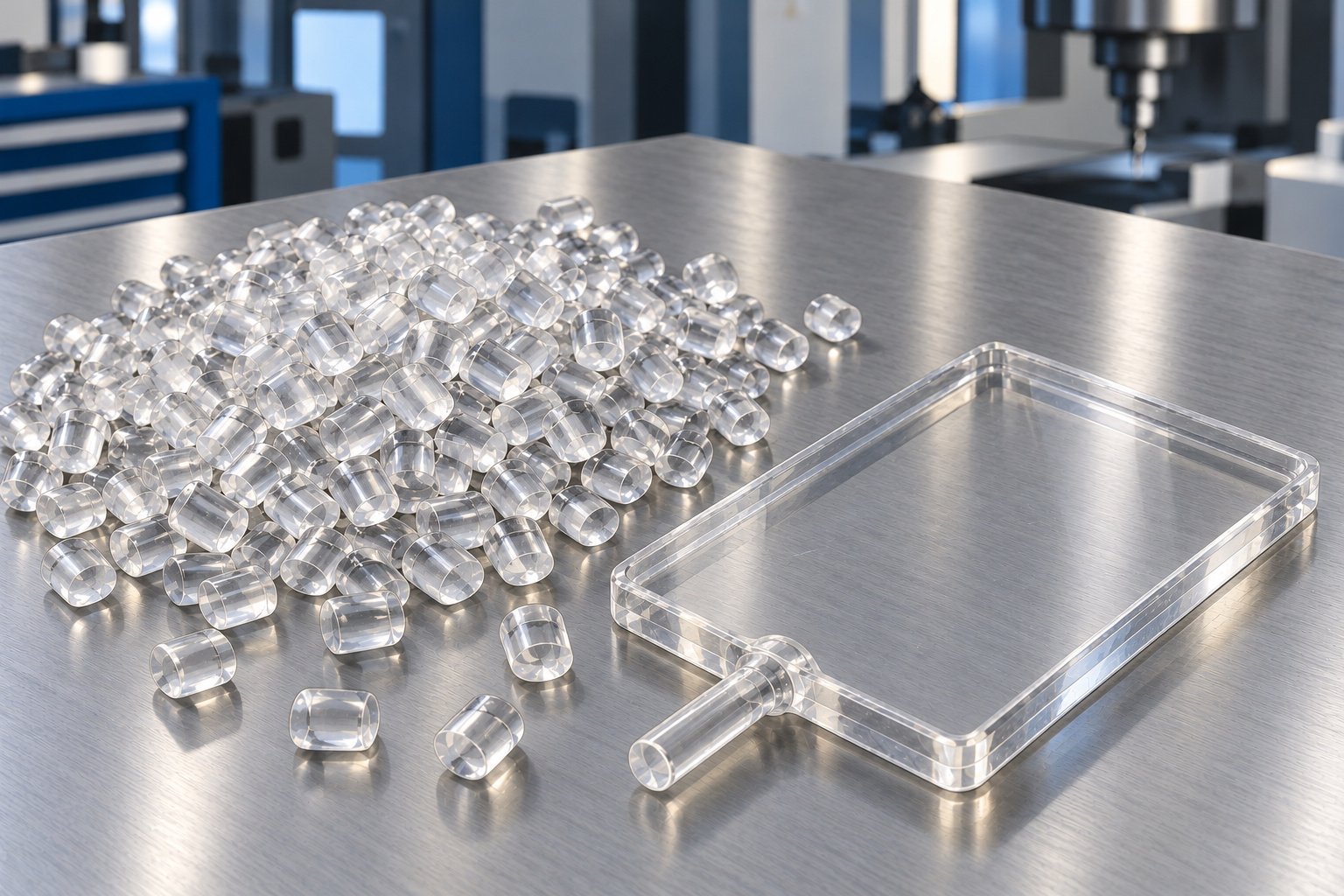
Confirm the resin designation, molding route and approved sample. A resin data sheet does not identify unspecified CNC stock.
Brand names do not authorize substitution. Material availability and manufacturing scope are confirmed for your drawing.
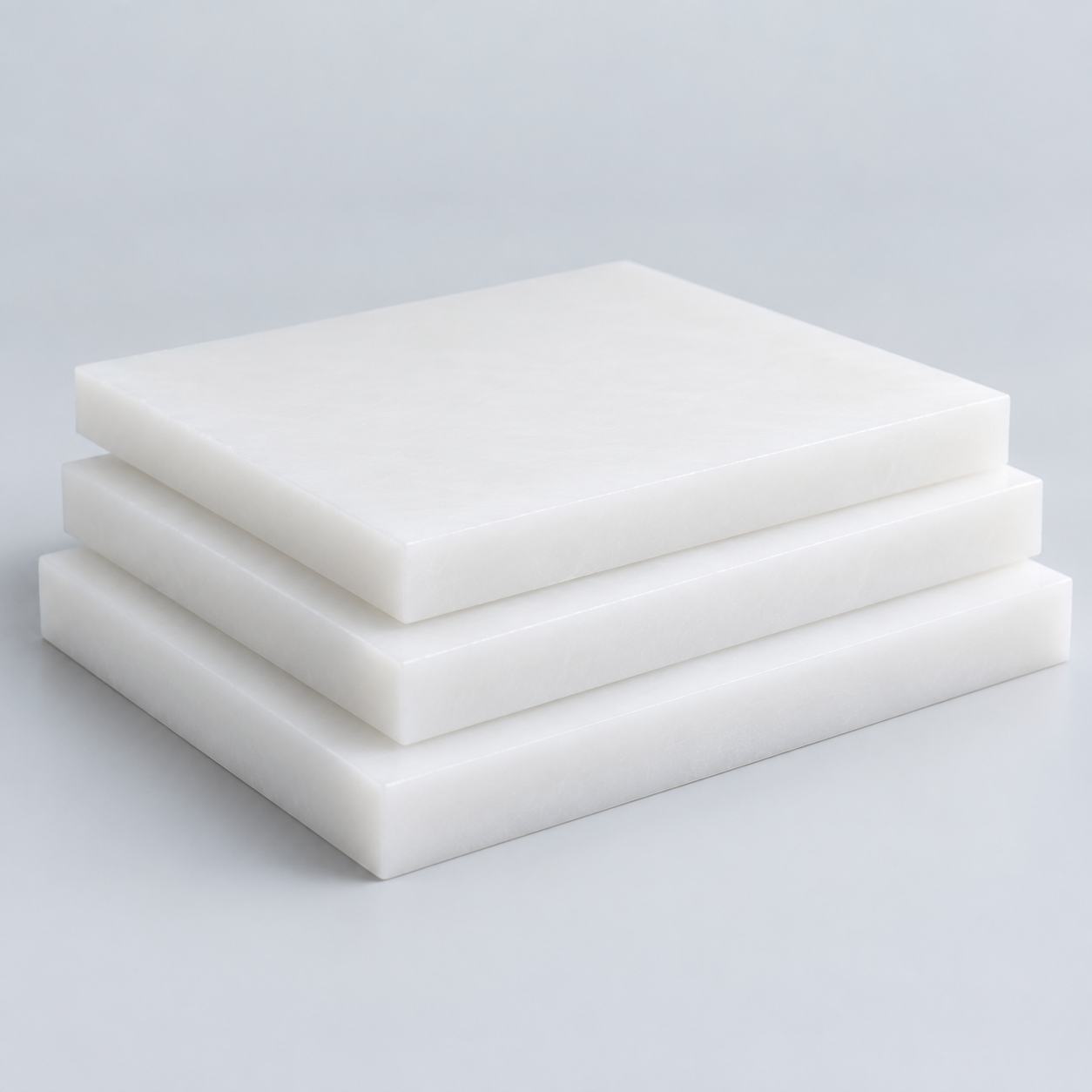
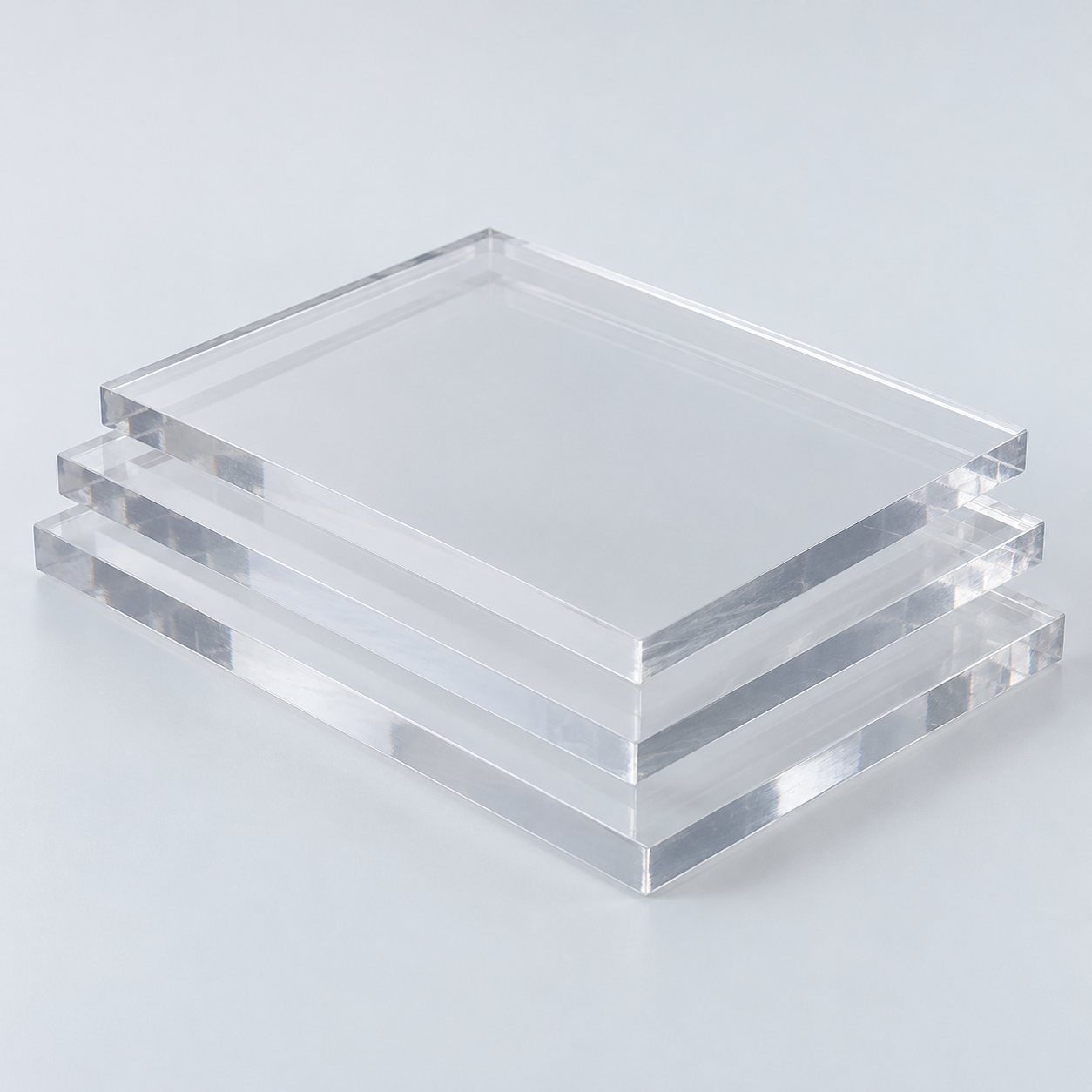
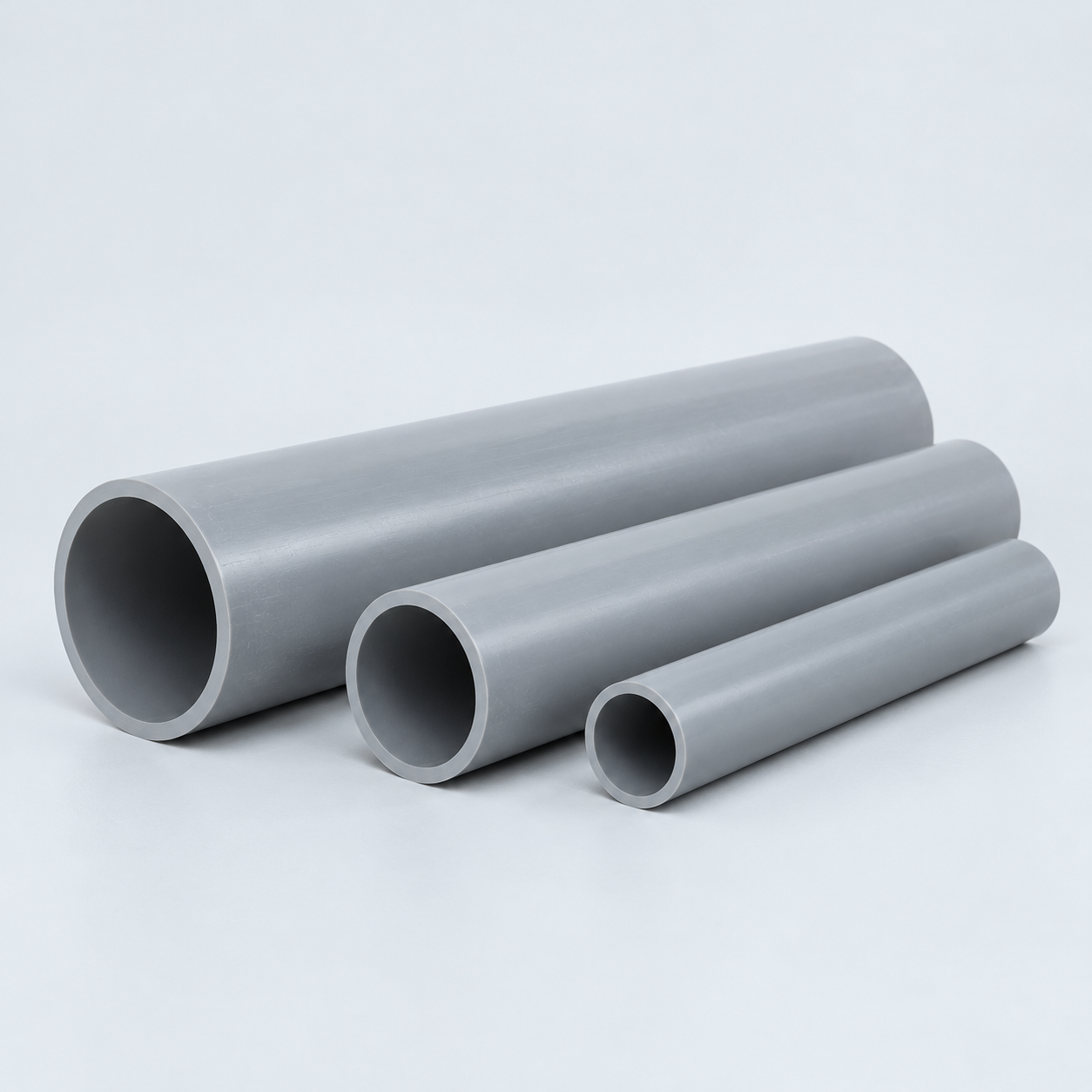
Four starting points — select the actual product form, not only the family name.
Review your visible faces and machined fit before cutting.
| Your reference | What to confirm |
|---|---|
| Material | PMMA cast sheet / stock |
| Your visible faces | Clarity, edge finish and approved sample |
| Your finished fit | Holes, datums and mating dimensions |
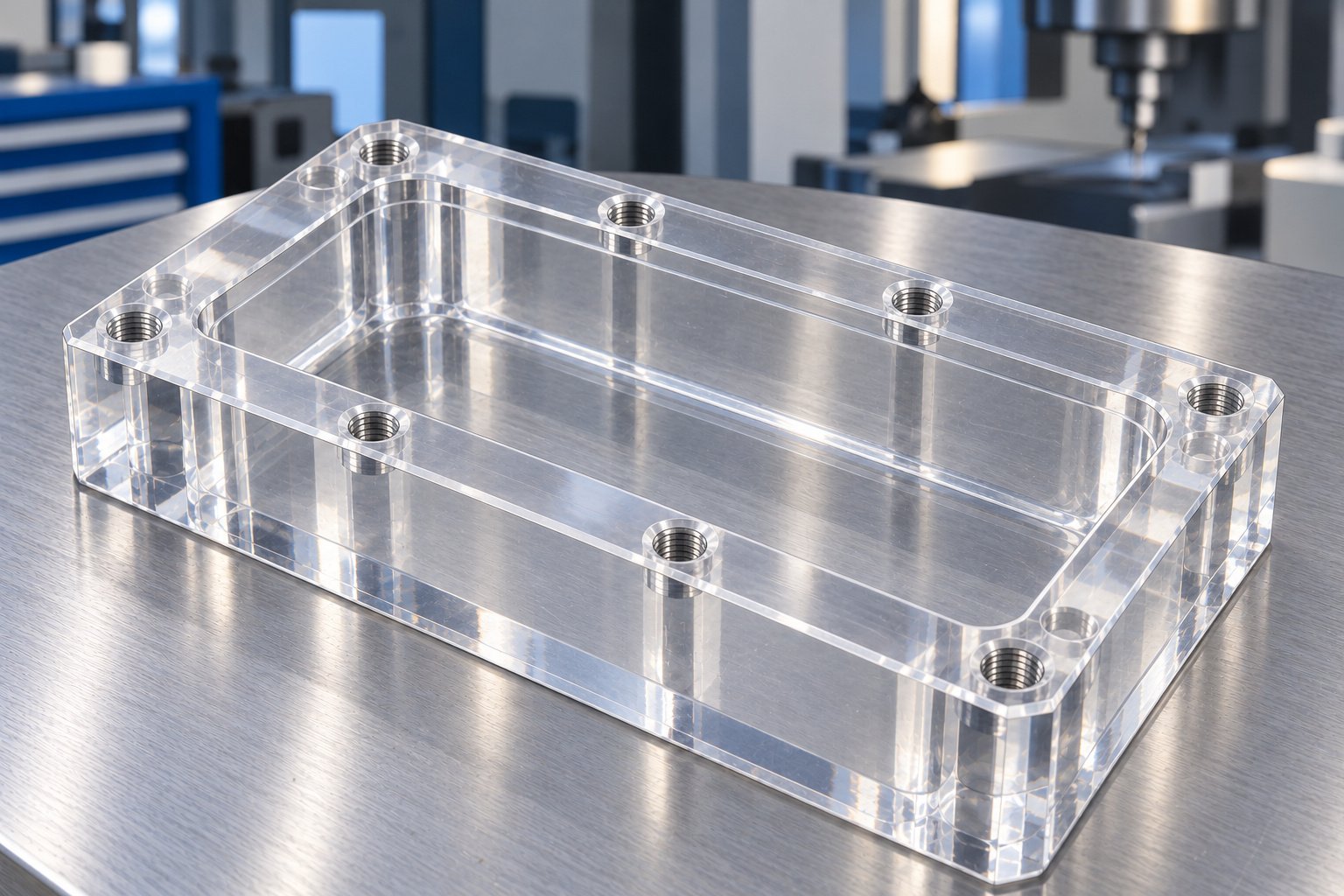
For PMMA optical components, specify the actual optical acceptance and verify project capability. Clear stock alone does not establish optical accuracy.
| Your reference | What to confirm |
|---|---|
| Appearance | Viewing direction, light, scratches and sample |
| Function | Transmission, haze or optical test when specified |
| Fit | Dimensions after the agreed finish |
For cast vs extruded acrylic machining, compare the exact stock, geometry, stress history and finish. Neither route is an automatic winner for every part.
| Your reference | What to confirm |
|---|---|
| Machining | Heat control, support and compatible coolants |
| Finishing | Accessible faces, removal allowance and sample |
| Molding | Resin, tooling, gate and approval evidence separately |
For PMMA (acrylic) stock or resin grade traceability, retain the full manufacturer product, color, form and batch. Material documentation is separate from finished-part approval.
| Your reference | What to confirm |
|---|---|
| Material | Product and lot corresponding to actual stock or resin |
| Appearance | Agreed viewing faces and protected surfaces |
| Records | Dimensions, sample and specified functional tests |
Confirm thickness, processing direction and stress history.
| Your reference | What to confirm |
|---|---|
| Material | PMMA extruded sheet / stock |
| Your visible faces | Clarity, edge finish and approved sample |
| Your finished fit | Holes, datums and mating dimensions |
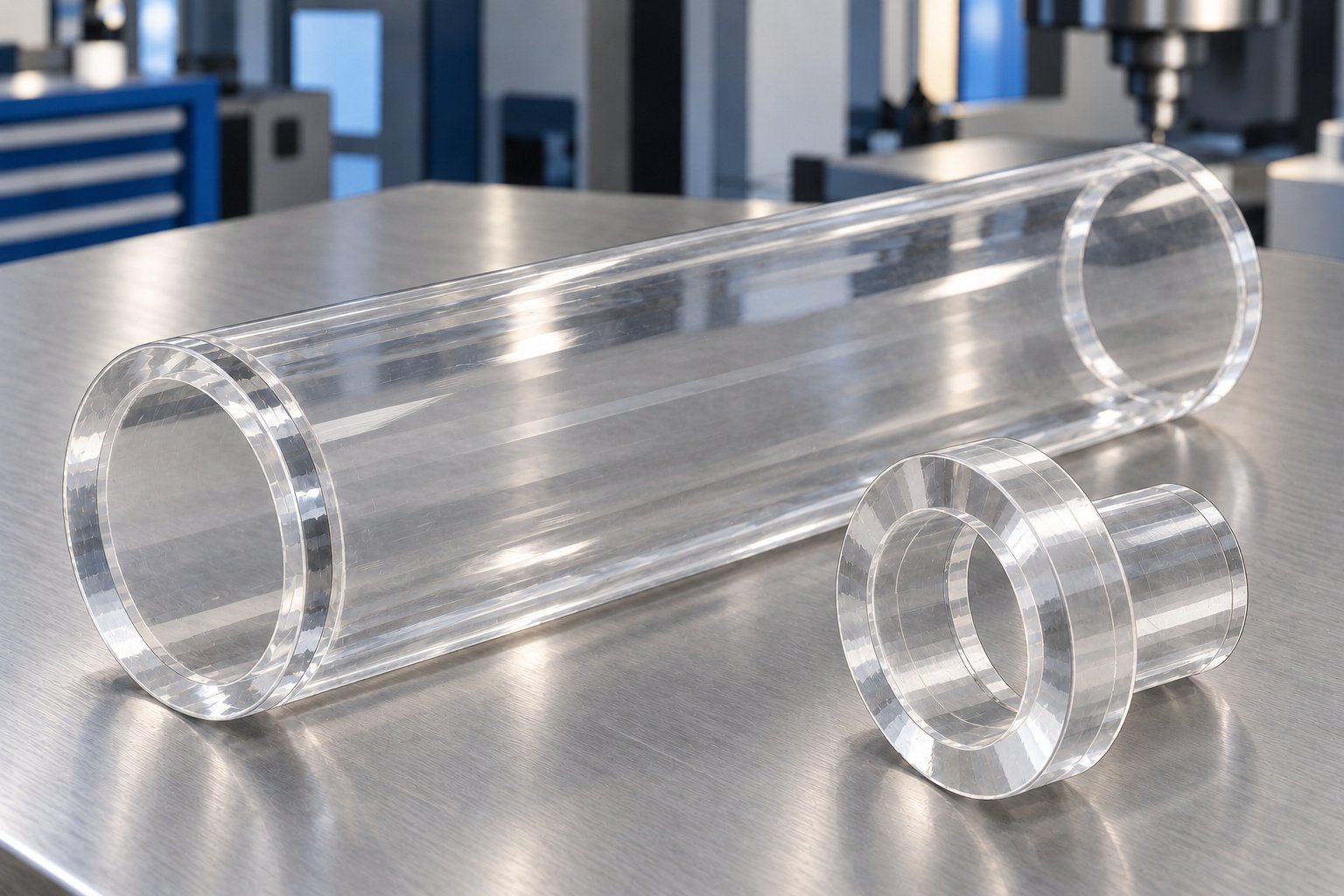
For PMMA optical components, specify the actual optical acceptance and verify project capability. Clear stock alone does not establish optical accuracy.
| Your reference | What to confirm |
|---|---|
| Appearance | Viewing direction, light, scratches and sample |
| Function | Transmission, haze or optical test when specified |
| Fit | Dimensions after the agreed finish |
For cast vs extruded acrylic machining, compare the exact stock, geometry, stress history and finish. Neither route is an automatic winner for every part.
| Your reference | What to confirm |
|---|---|
| Machining | Heat control, support and compatible coolants |
| Finishing | Accessible faces, removal allowance and sample |
| Molding | Resin, tooling, gate and approval evidence separately |
For PMMA (acrylic) stock or resin grade traceability, retain the full manufacturer product, color, form and batch. Material documentation is separate from finished-part approval.
| Your reference | What to confirm |
|---|---|
| Material | Product and lot corresponding to actual stock or resin |
| Appearance | Agreed viewing faces and protected surfaces |
| Records | Dimensions, sample and specified functional tests |
Review resin, mold finish and the approved molded sample.
| Your reference | What to confirm |
|---|---|
| Material | PMMA molding compound |
| Your visible faces | Clarity, edge finish and approved sample |
| Your finished fit | Holes, datums and mating dimensions |
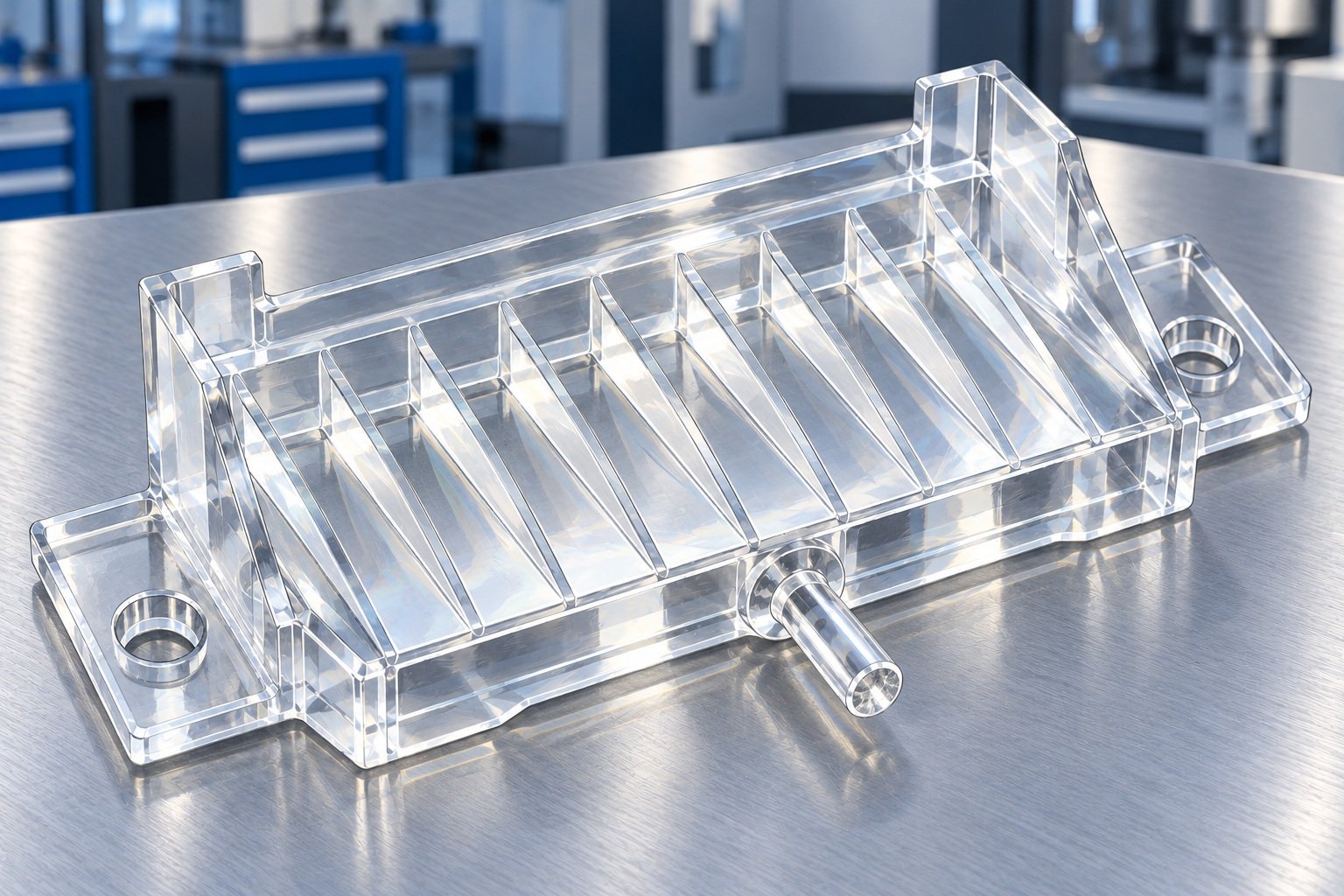
For PMMA optical components, specify the actual optical acceptance and verify project capability. Clear stock alone does not establish optical accuracy.
| Your reference | What to confirm |
|---|---|
| Appearance | Viewing direction, light, scratches and sample |
| Function | Transmission, haze or optical test when specified |
| Fit | Dimensions after the agreed finish |
For cast vs extruded acrylic machining, compare the exact stock, geometry, stress history and finish. Neither route is an automatic winner for every part.
| Your reference | What to confirm |
|---|---|
| Machining | Heat control, support and compatible coolants |
| Finishing | Accessible faces, removal allowance and sample |
| Molding | Resin, tooling, gate and approval evidence separately |
For PMMA (acrylic) stock or resin grade traceability, retain the full manufacturer product, color, form and batch. Material documentation is separate from finished-part approval.
| Your reference | What to confirm |
|---|---|
| Material | Product and lot corresponding to actual stock or resin |
| Appearance | Agreed viewing faces and protected surfaces |
| Records | Dimensions, sample and specified functional tests |
Confirm the complete CHIMEI resin grade, color and current data sheet.
| Your reference | What to confirm |
|---|---|
| Material | PMMA molding compound |
| Your visible faces | Clarity, edge finish and approved sample |
| Your finished fit | Holes, datums and mating dimensions |
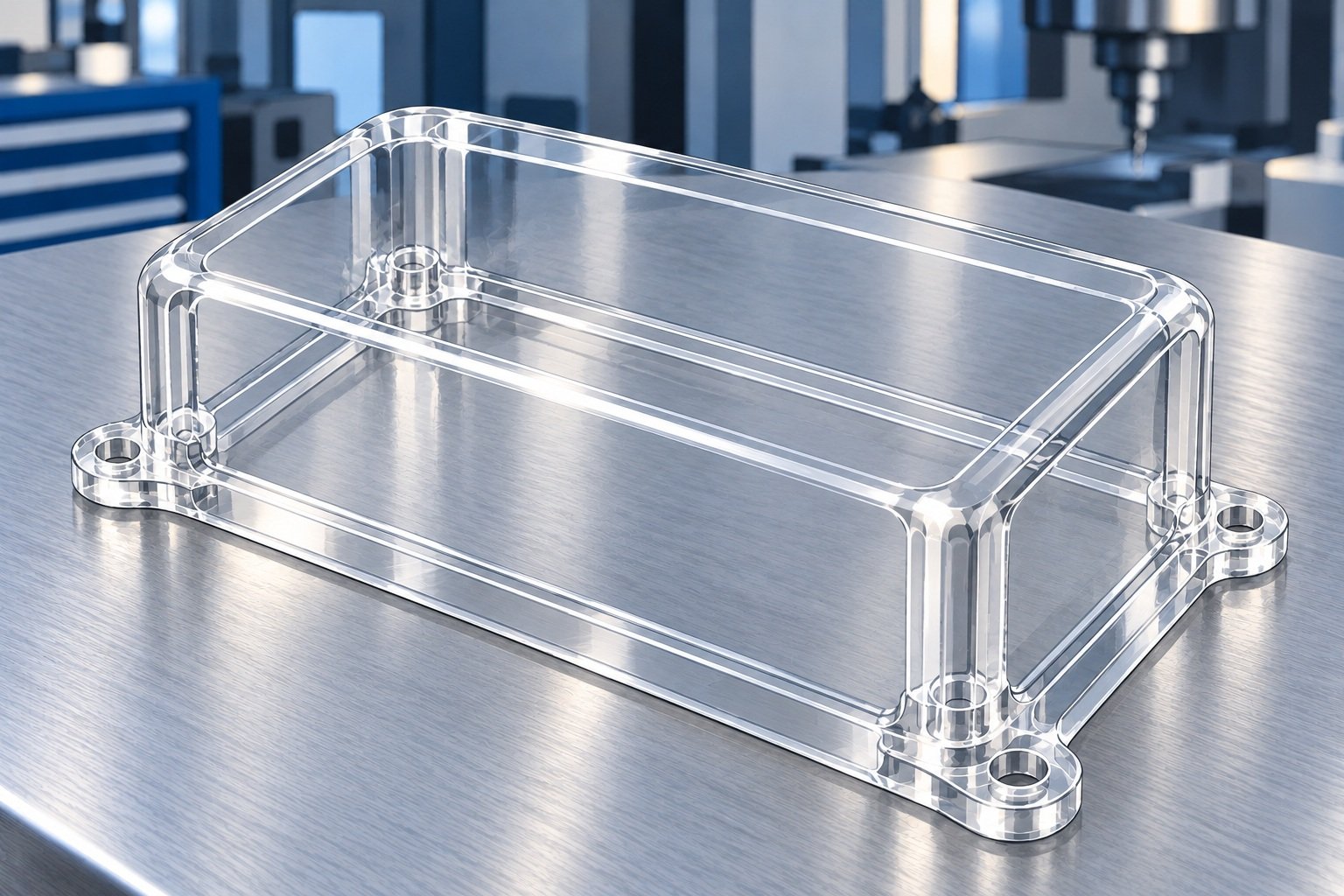
For PMMA optical components, specify the actual optical acceptance and verify project capability. Clear stock alone does not establish optical accuracy.
| Your reference | What to confirm |
|---|---|
| Appearance | Viewing direction, light, scratches and sample |
| Function | Transmission, haze or optical test when specified |
| Fit | Dimensions after the agreed finish |
For cast vs extruded acrylic machining, compare the exact stock, geometry, stress history and finish. Neither route is an automatic winner for every part.
| Your reference | What to confirm |
|---|---|
| Machining | Heat control, support and compatible coolants |
| Finishing | Accessible faces, removal allowance and sample |
| Molding | Resin, tooling, gate and approval evidence separately |
For PMMA (acrylic) stock or resin grade traceability, retain the full manufacturer product, color, form and batch. Material documentation is separate from finished-part approval.
| Your reference | What to confirm |
|---|---|
| Material | Product and lot corresponding to actual stock or resin |
| Appearance | Agreed viewing faces and protected surfaces |
| Records | Dimensions, sample and specified functional tests |
Three Röhm molding resins, one test condition. Higher MVR is not a strength, clarity or quality ranking.
230°C / 3.8 kg · ISO 1133 · cm³/10 min
Published resin references, not measurements of your part.
Source: Röhm PLEXIGLAS 6N, 7N and 8N product data. MVR is a processing comparison, not a continuous-use temperature or optical-performance guarantee.
Ten additional product references, grouped by the question they help you review.
Confirm the full stock product and thickness.
Review thickness, stress and forming.
Specify coated sides and exposed edges.
Review resin filling, walls and heat.
Confirm the exact modified product and approval.
Confirm resin, section and product evidence.
Product references are review candidates, not inventory, authorization or confirmed LK manufacturing capability.
| Your material record | What it identifies |
|---|---|
| Base polymer | PMMA · polymethyl methacrylate |
| Cast / extruded stock | Actual stock manufacturer, product, thickness and color |
| Modified / coated products | Exact modifier or coating; supplier-declared formulation |
| Composition report | Agreed method and actual lot; no percentage inferred from a photo |
For your acrylic machined surface finish, mark viewing faces and agree light, angle, permitted marks and an approved sample. Acrylic optical polishing requires a defined acceptance and confirmed process scope.
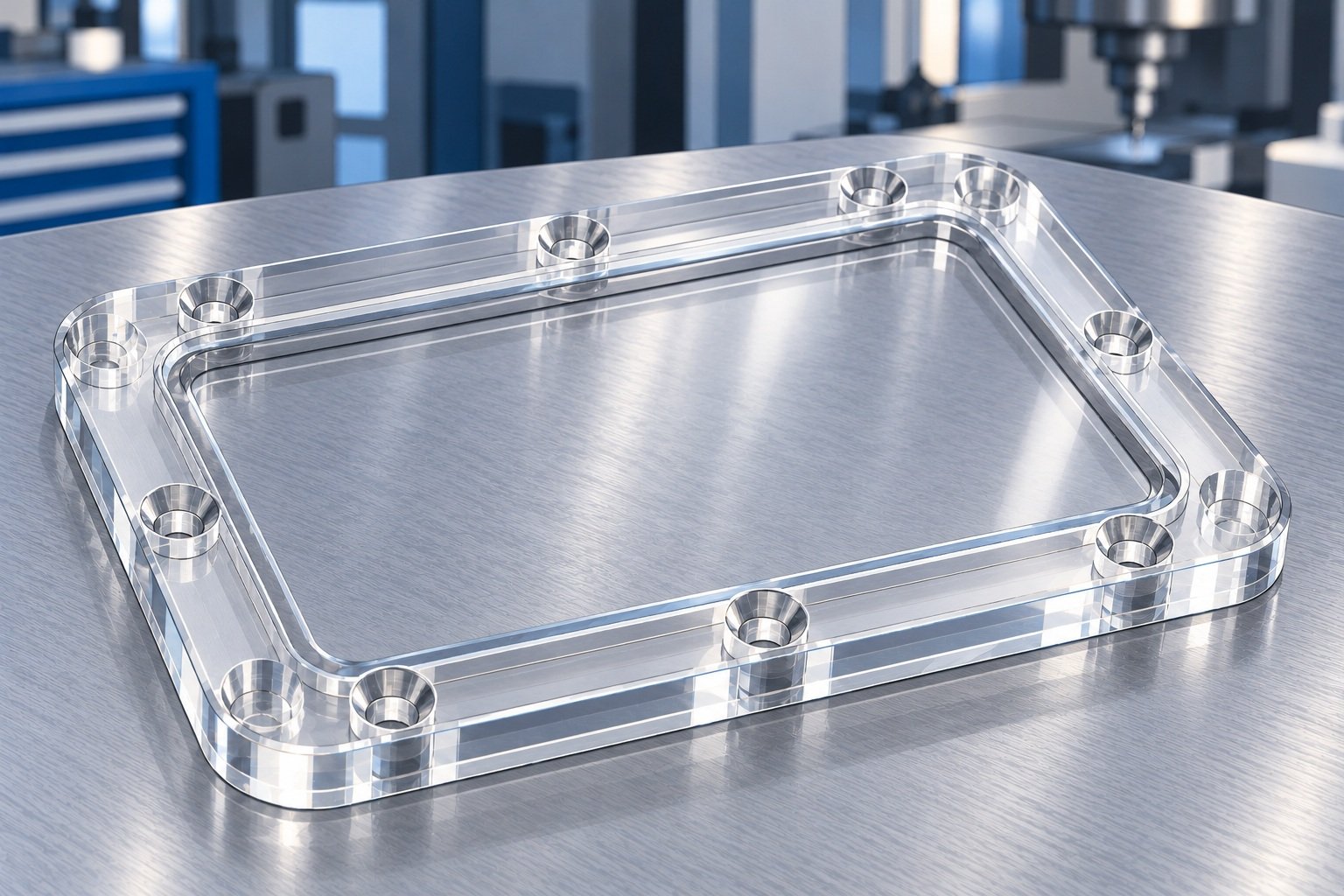
Polishing can remove material and change geometry. Review residual stress and cleaners; do not default to flame-polishing a bonding edge.
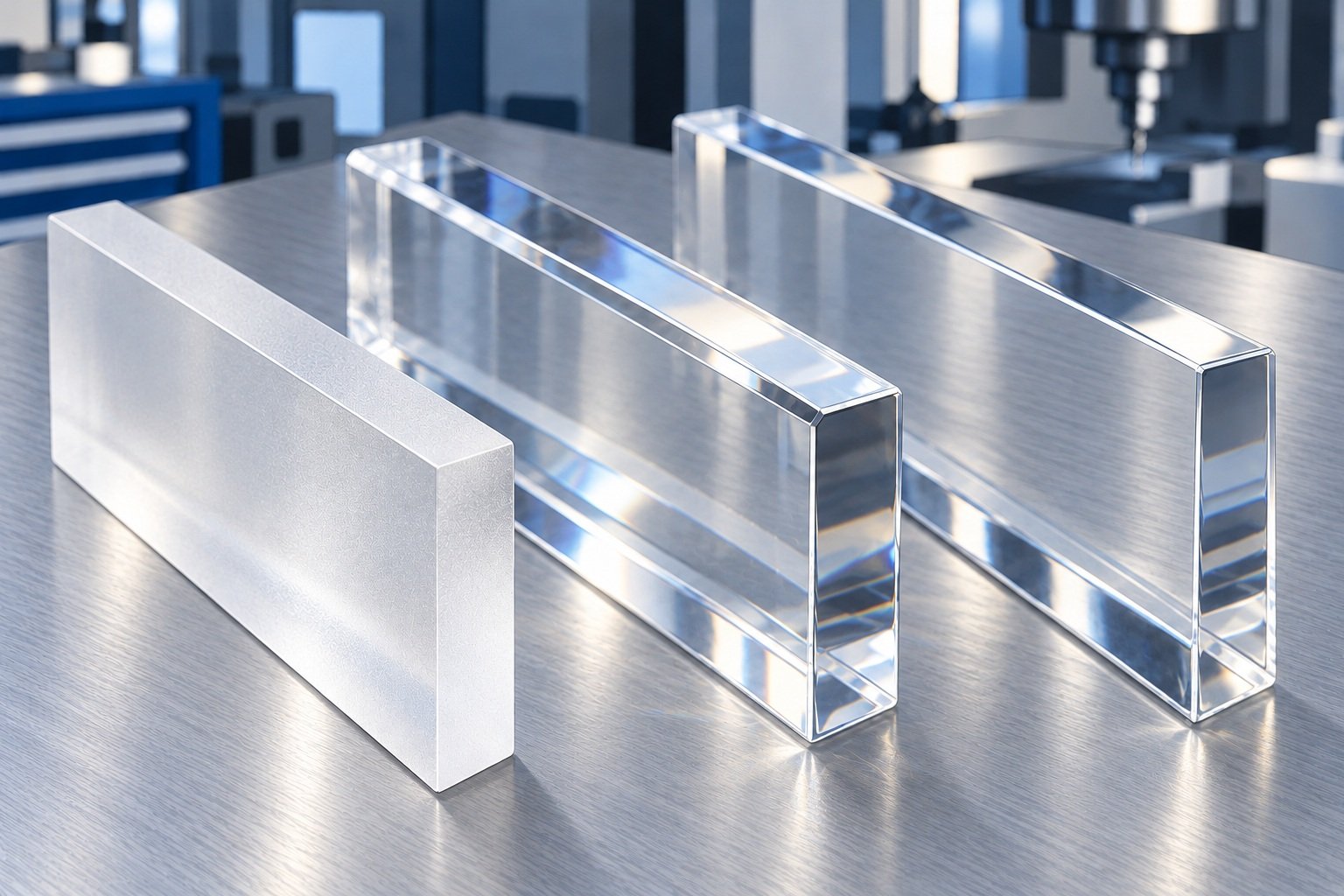
For acrylic tube internal polishing or a blind bore, send depth, diameter, access, wall and finish requirements. Do not assume an external polish reaches an internal face.
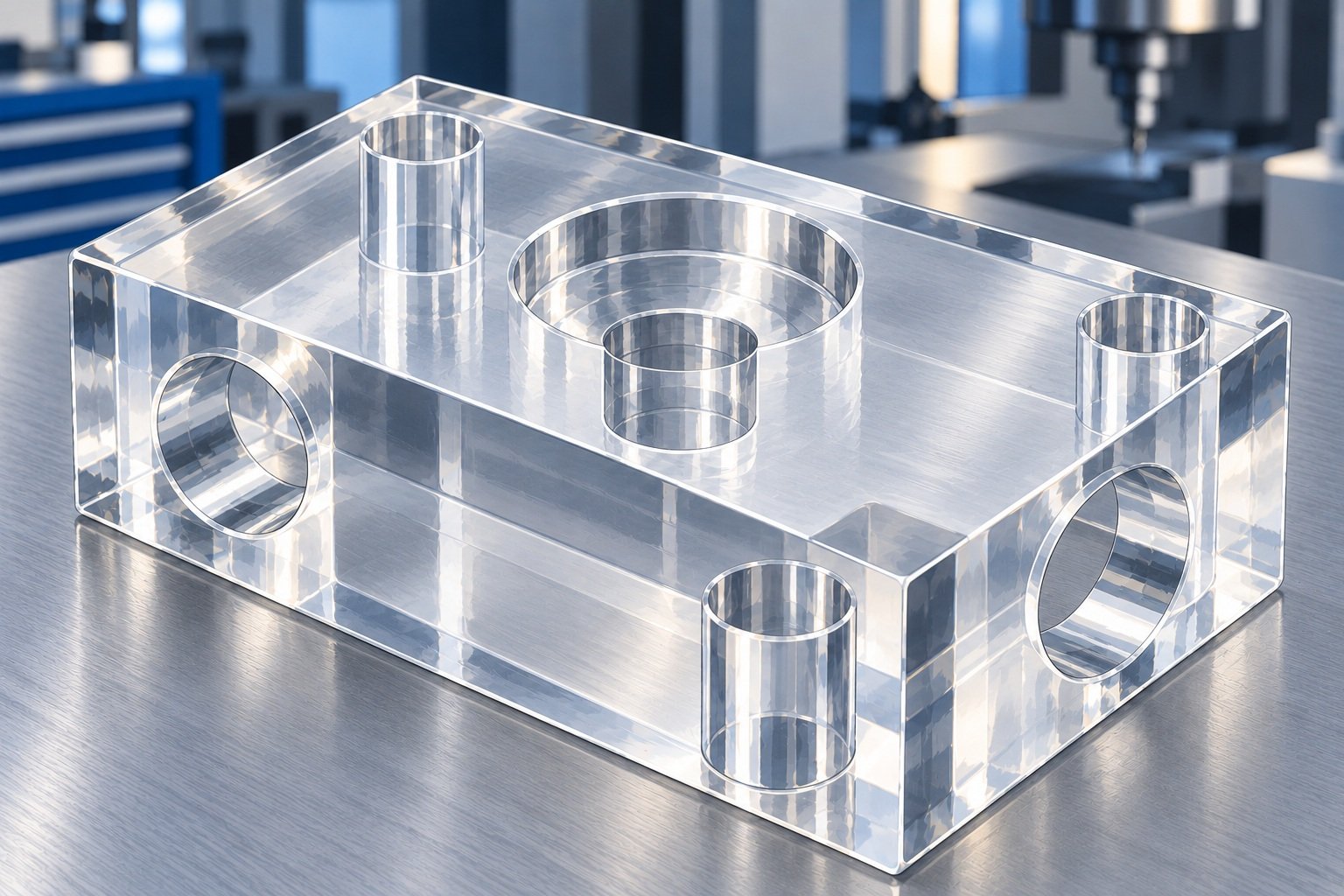
Acrylic stress cracking can involve residual stress, cleaners, adhesives and assembly loads. Review compatibility and the actual joint, not only the base polymer.
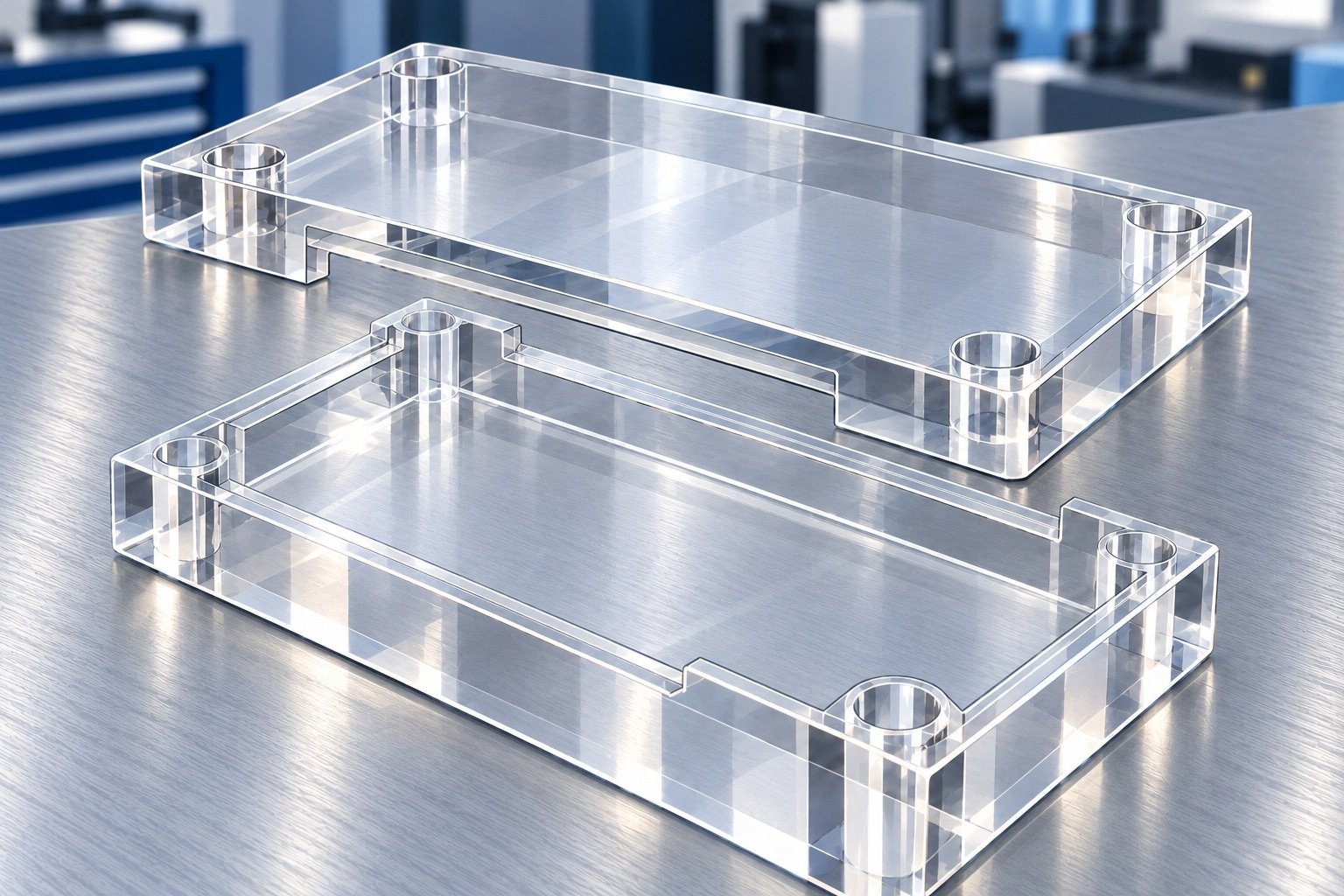
Evaluate temperature, mounting restraint and mating materials. Review product-specific annealing and stabilization before the final measurement.
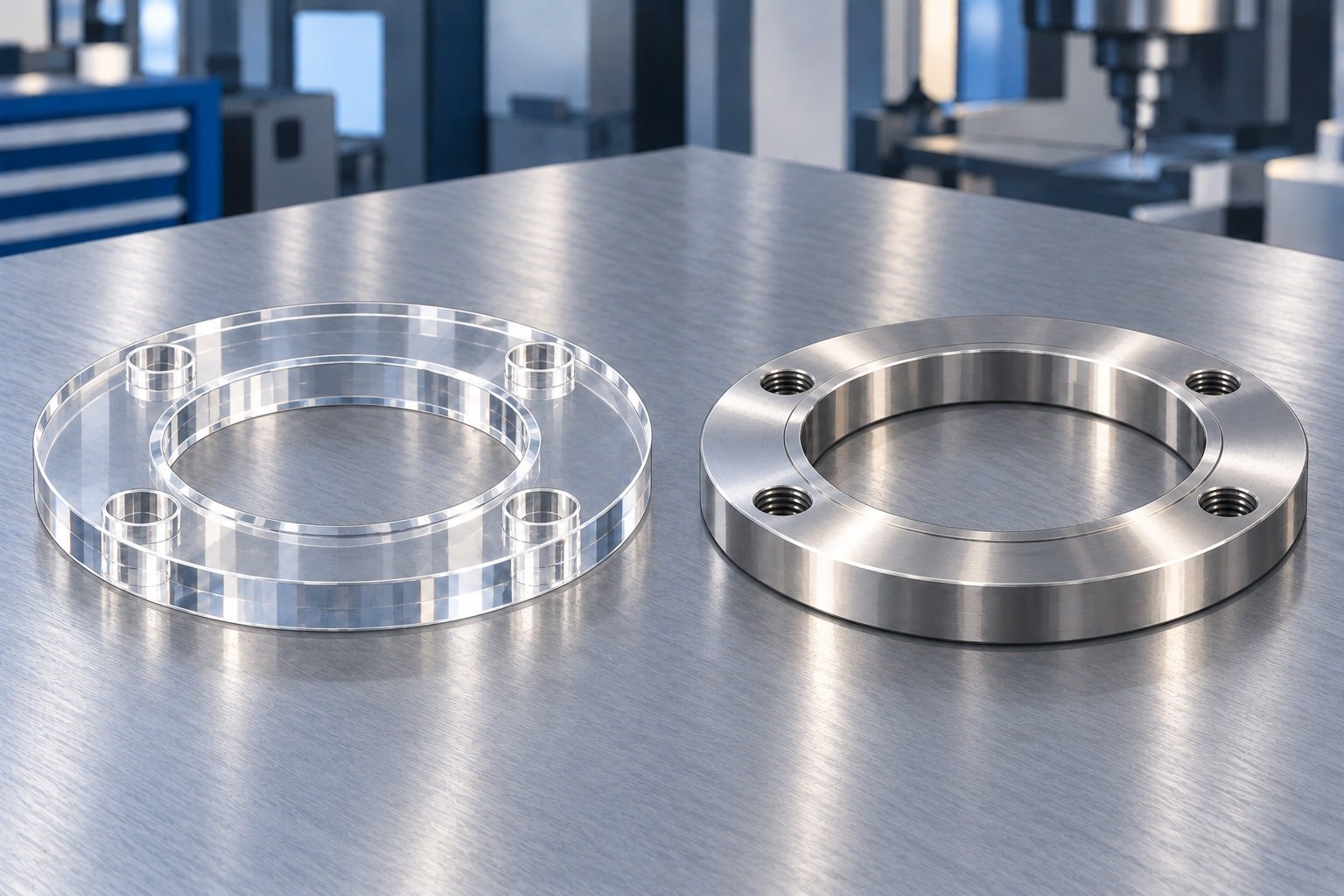
Specify compatible cleaning, handling, film or packing and the appearance check at receipt. A scratch-free sample needs protection through shipment.
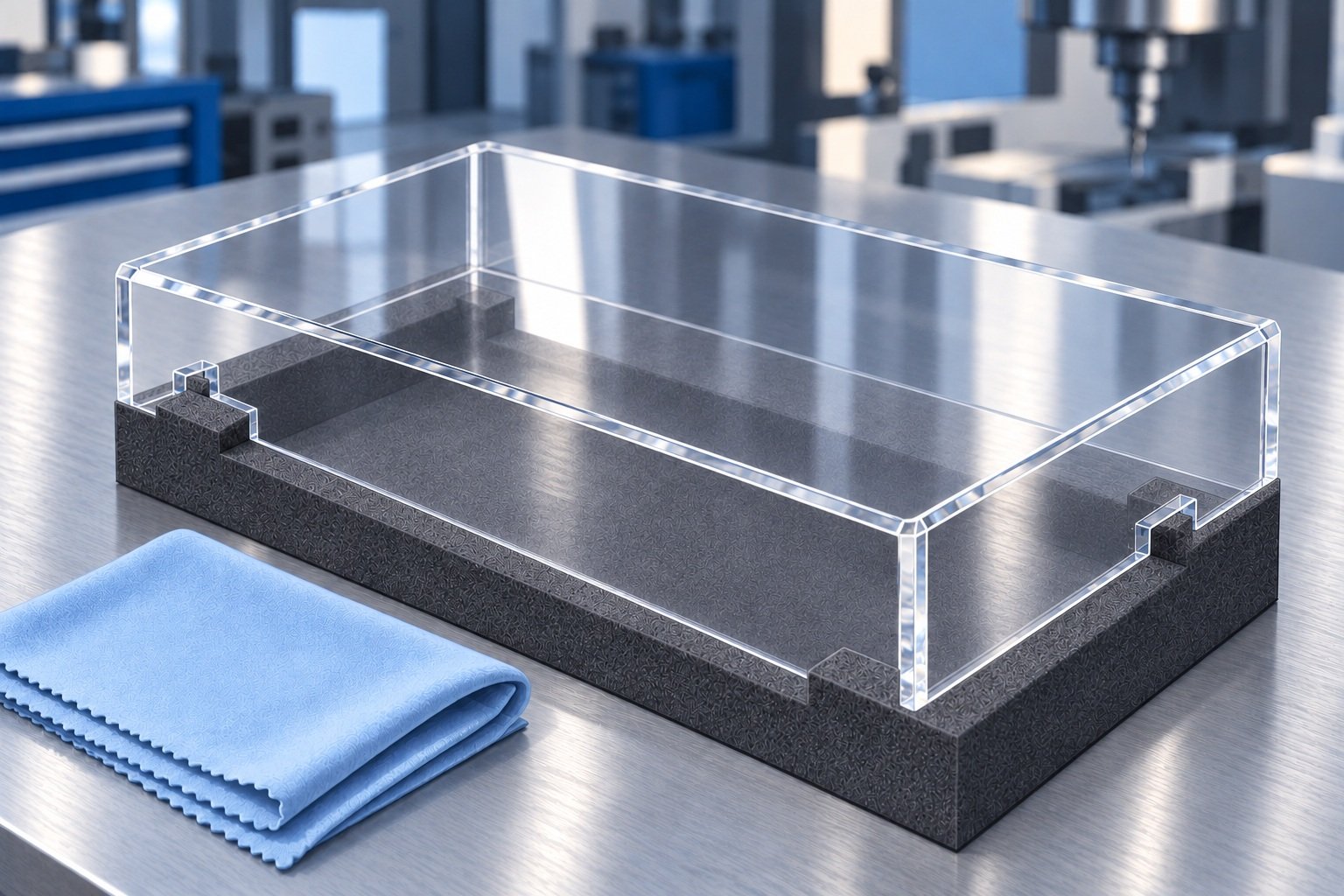
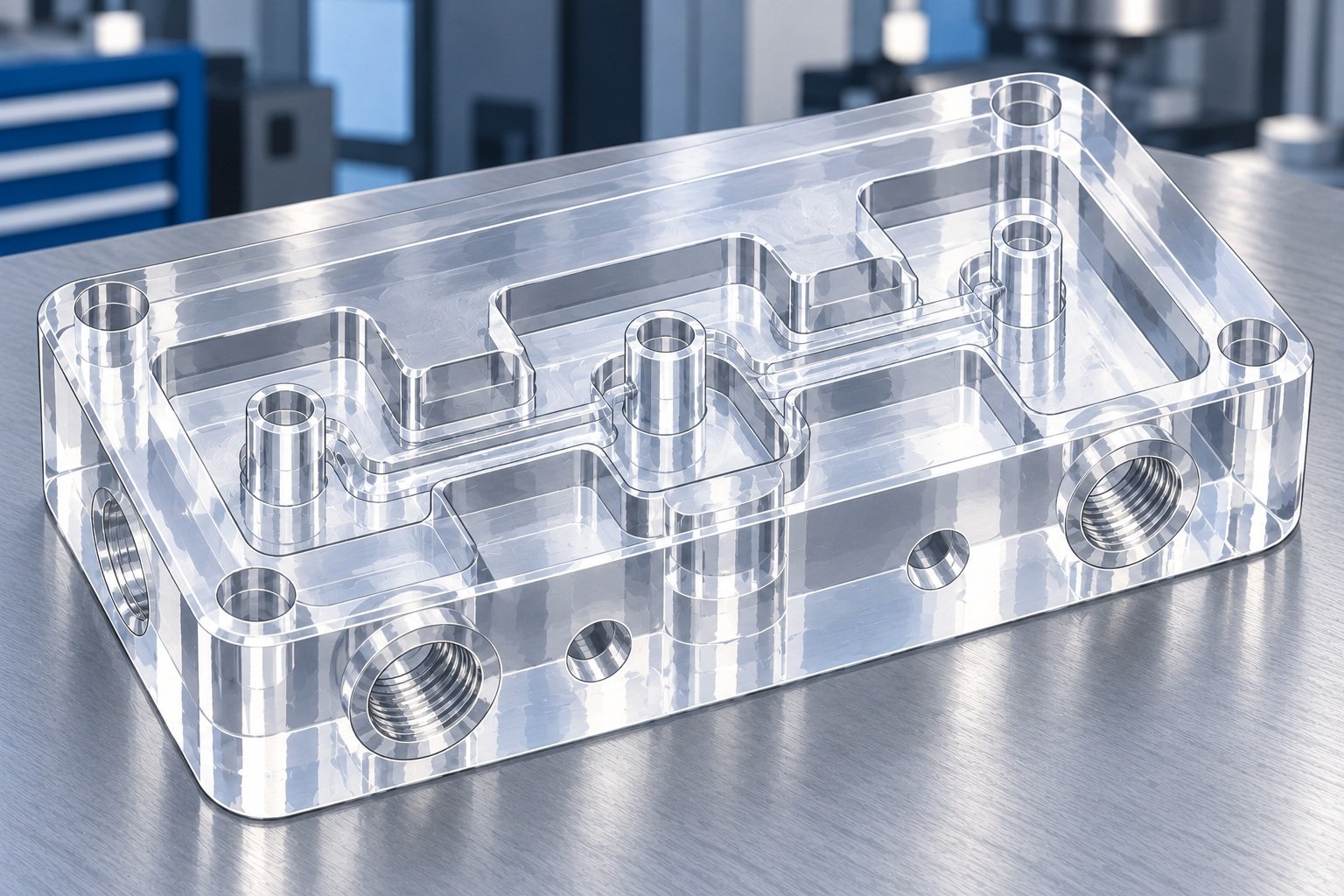
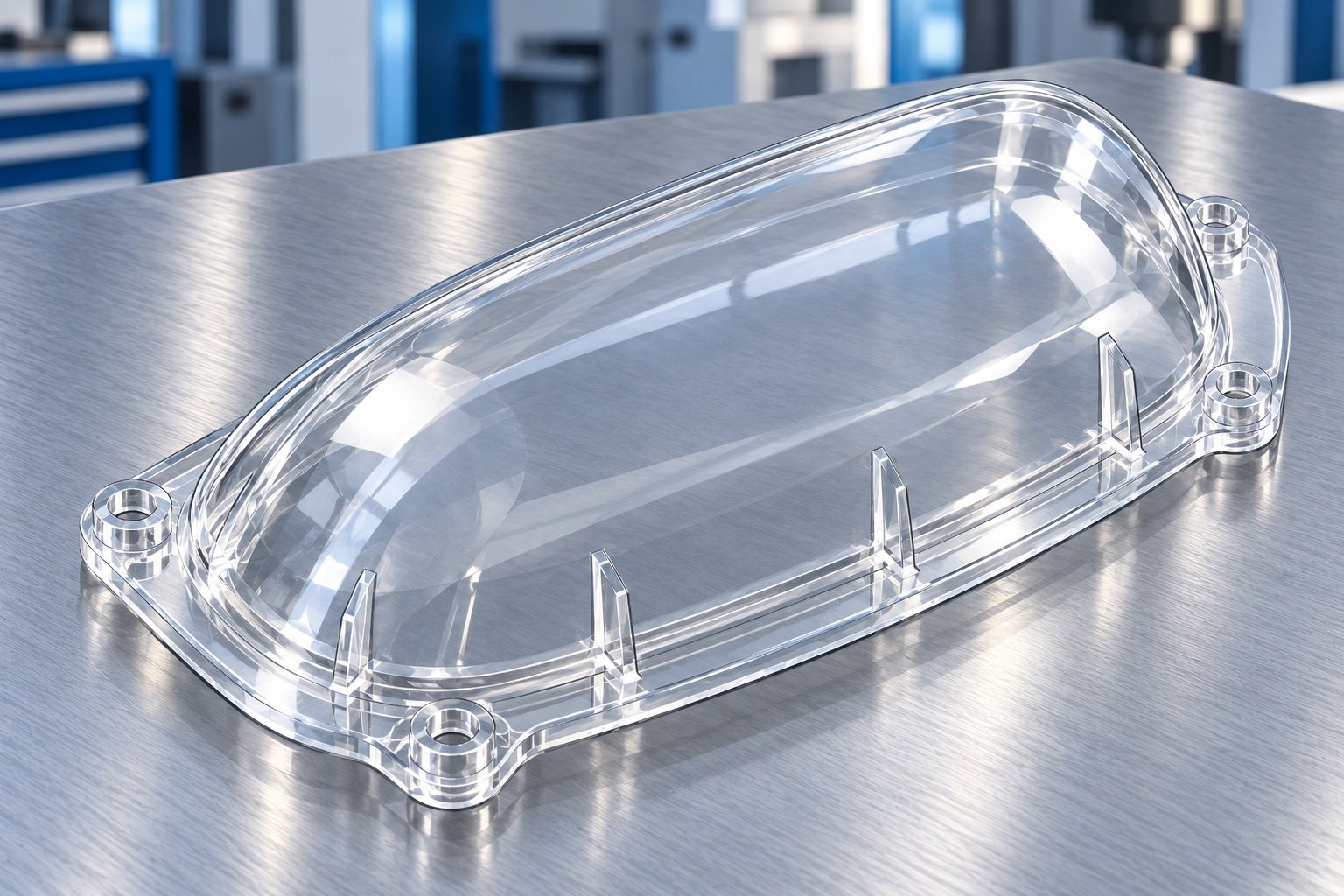
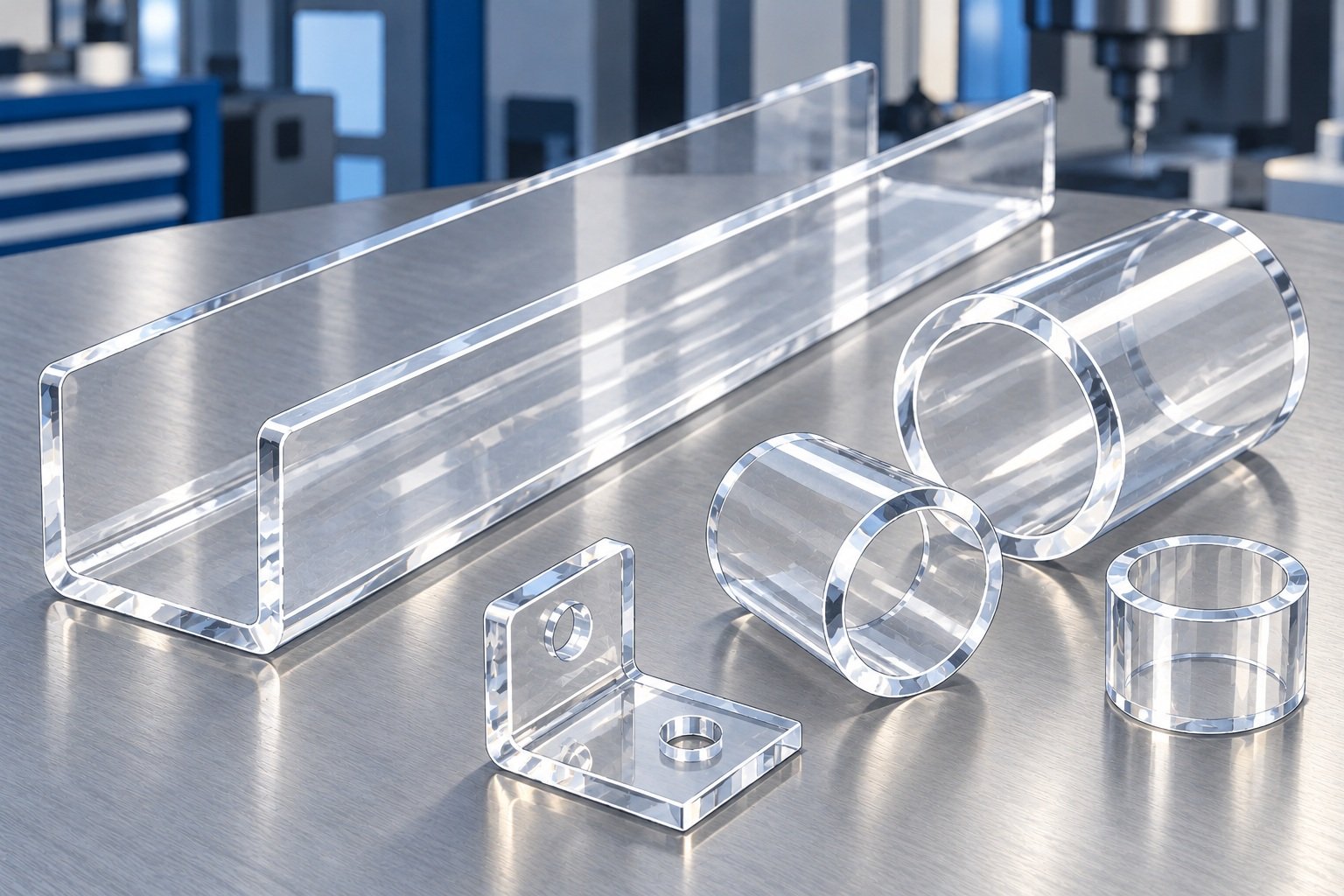
Illustrative concepts. Material, process and finishing scope are confirmed for your project.
| Your check | Evidence to agree |
|---|---|
| 01 · Material identity | Full product, color, form and batch. |
| 02 · Appearance & fit | Viewing faces, dimensions and protected edges. |
| 03 · Function & records | Specified tests, approved sample and documents. |
PMMA (acrylic) finished part inspection requirements should separate dimensions, appearance and functional evidence. Dimensional inspection alone does not establish optical performance.
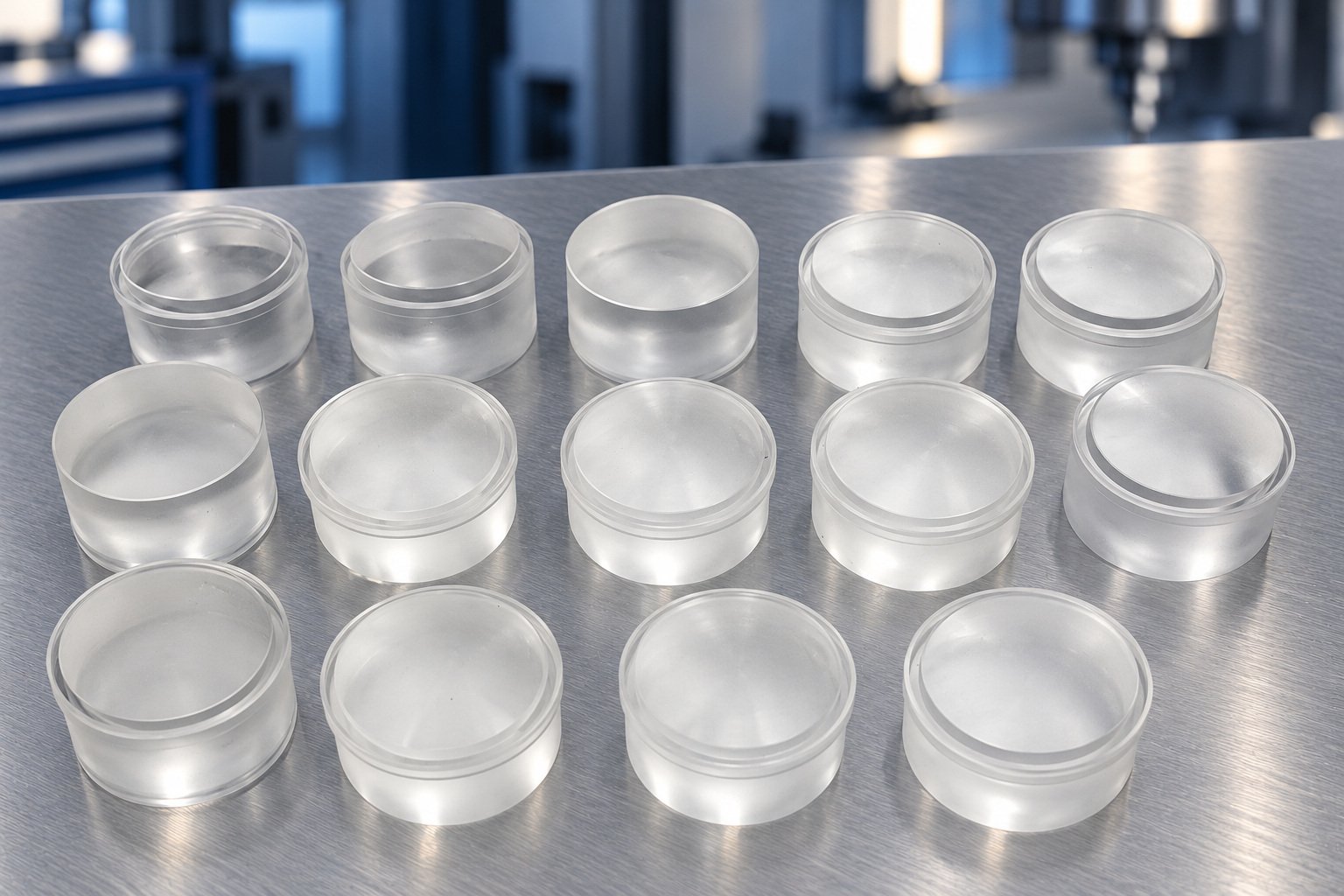
Material · Machining or molding · Finish · Inspection · Delivery
For your acrylic machining quote or PMMA injection molding quote, send CAD, controlled drawing, full product and color, stock or resin route, quantities, viewing faces, finish sample, critical dimensions, exposure and records.
Send channel geometry, dimensions, surface and bonding requirements for feasibility review. Material availability does not establish microfluidic, optical or regulated-device capability.
Yes, when the agreed machined appearance meets your requirement. Define viewing faces, permitted tool marks and a sample before removing a finishing step.
Agree transmission, haze, surface or other optical tests where required, with method, geometry and acceptance. Visual transparency is not an optical-grade finished-part approval.
Review residual and assembly stress, cleaner or adhesive compatibility, contact time and temperature. Trial the actual product and joint; no generic treatment guarantees crack-free use.
Review the exact product, machining, bonding and stress history with its manufacturer guidance. Agree support, stabilization and final inspection rather than applying one universal heat-treatment cycle.
Access, depth, diameter and remaining wall determine feasibility. Provide the actual bore and acceptance sample; blind internal faces require project review.
It can remove material or round edges. Plan allowance, protect datums and inspect after the agreed finishing sequence.
It can support selected geometry or assembly checks, but does not establish mold-surface replication, residual stress or molded optical performance. Validate the actual production route.
No. Review polymer, impact requirements, cleaning exposure and fit before approving a change.
No universal ranking fits every part. Confirm the stock product, thickness, stress, machining geometry, finish and cost scope.
Only after reviewing manufacturer, complete product, color, form and your finished-part requirements. Brand similarity does not authorize substitution.
Material references: POLYVANTIS / ACRYLITE / PLEXIGLAS · Röhm · CHIMEI · PERSPEX. Exact products, sources and limitations retained in the page records.
Engineering Plastics → PC → Quality Assurance →