Injection Molding
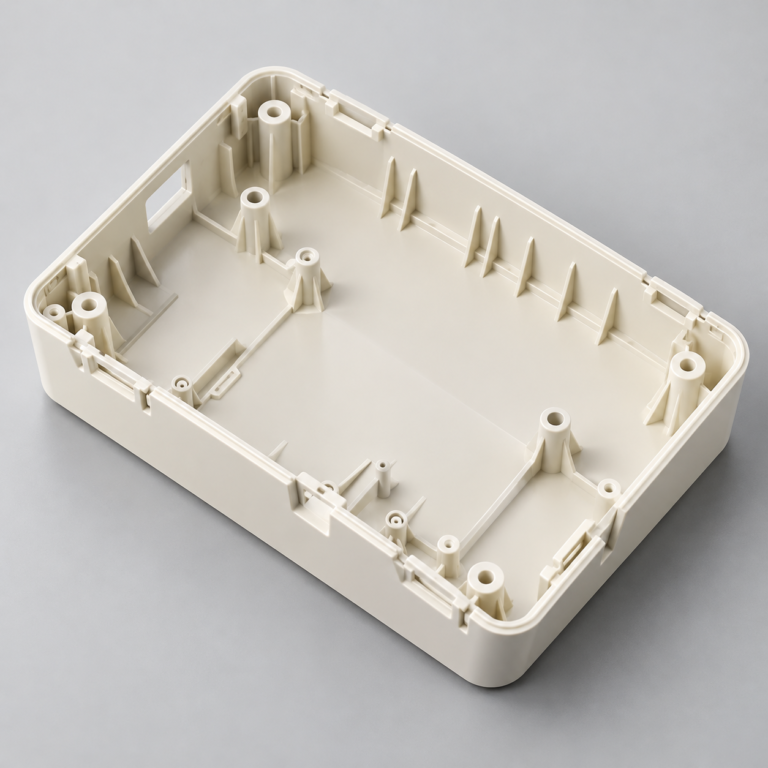
Tooling and molding for your repeat plastic parts.
From prototype to production, coordinated manufacturing solutions for your custom parts.
View All Services →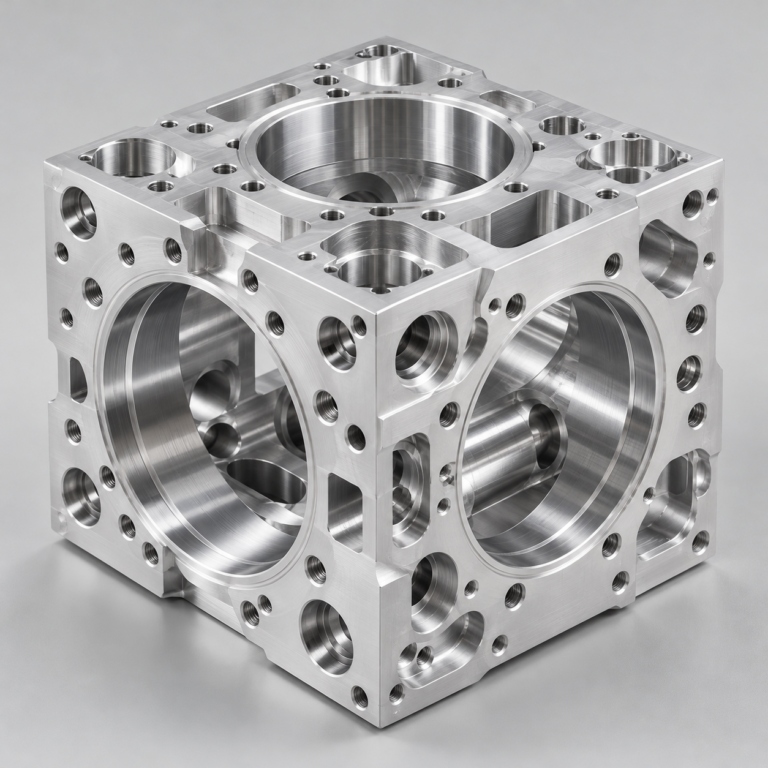
Precision parts for your tight tolerances and complex geometry.
Tooling and molding for your repeat plastic parts.
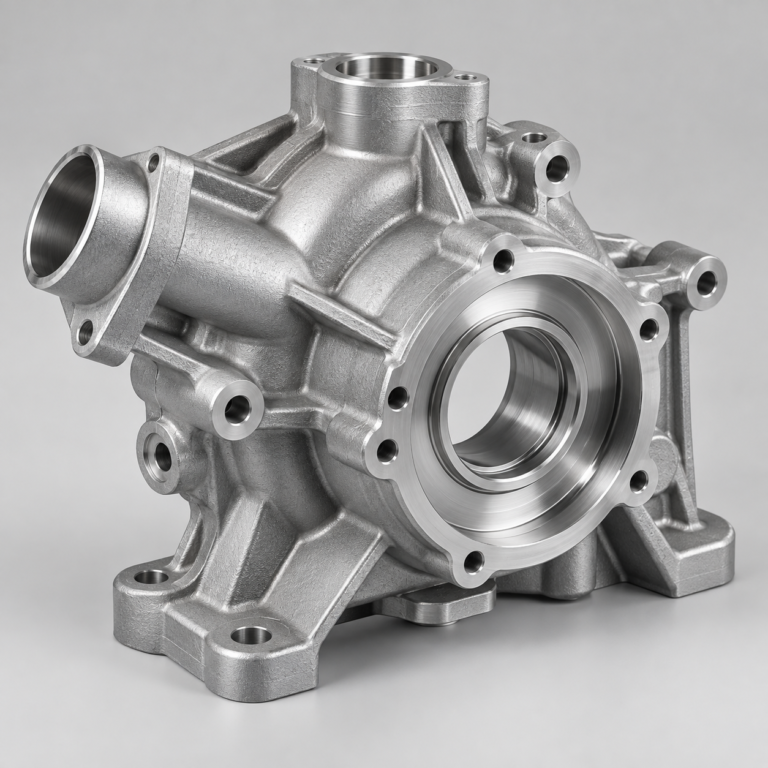
Metal casting options for your part and production volume.
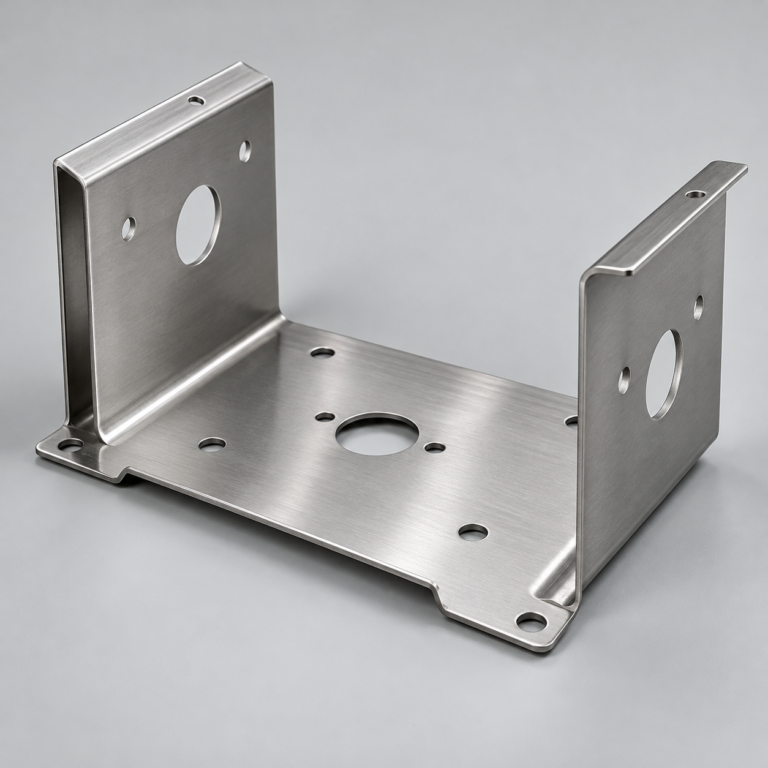
Cutting, forming and welding for your fabricated parts.
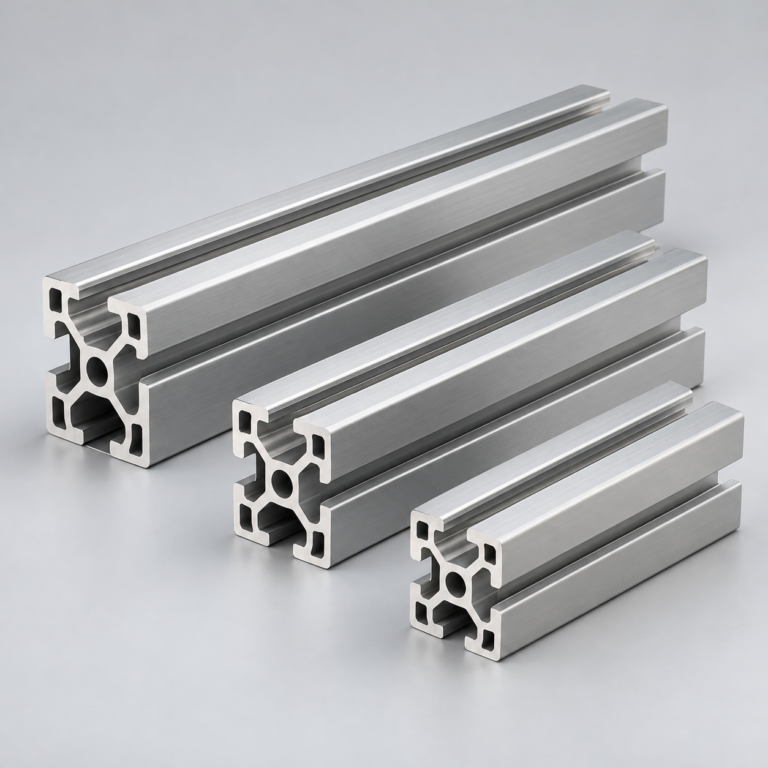
Custom profiles for your section, length and finish requirements.
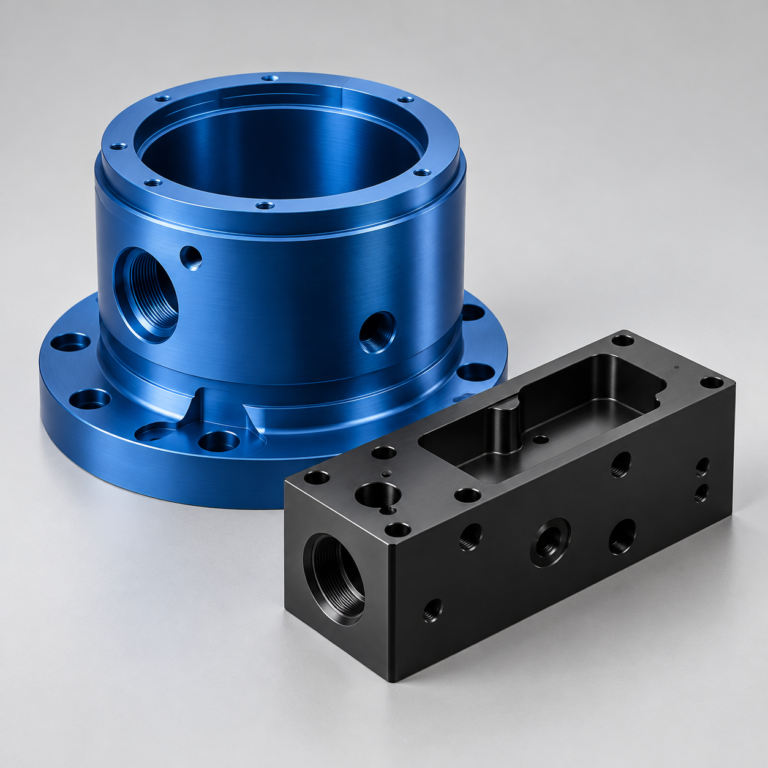
Finishes for your appearance, corrosion and wear requirements.
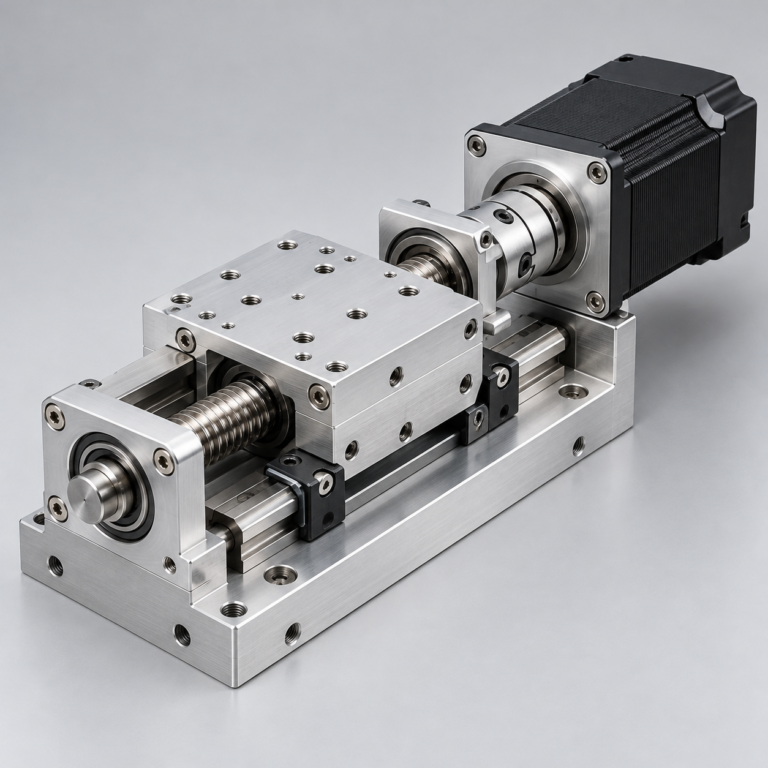
Sub-assemblies and final builds for your production program.
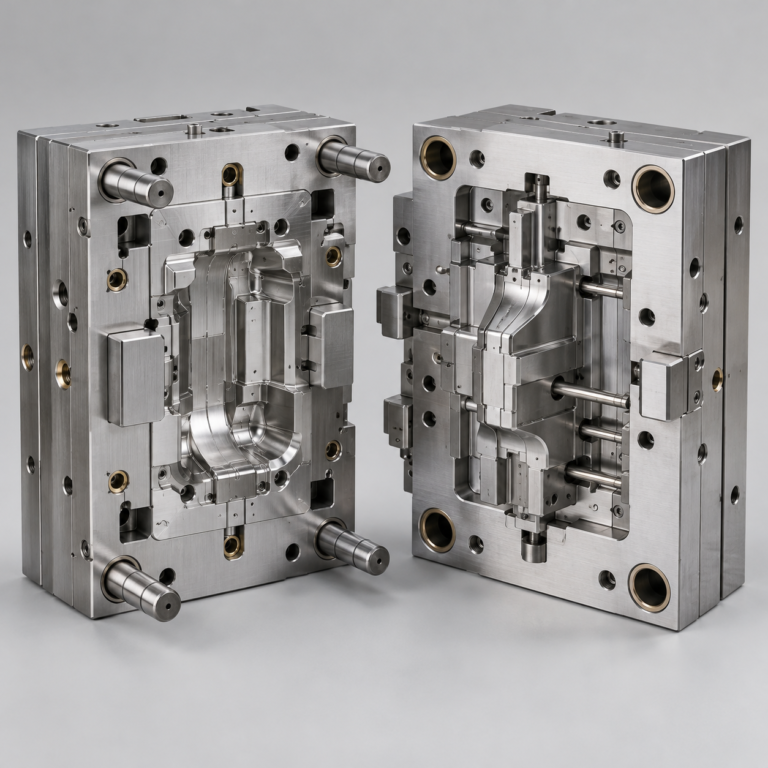
Production tooling built around your process and volume.
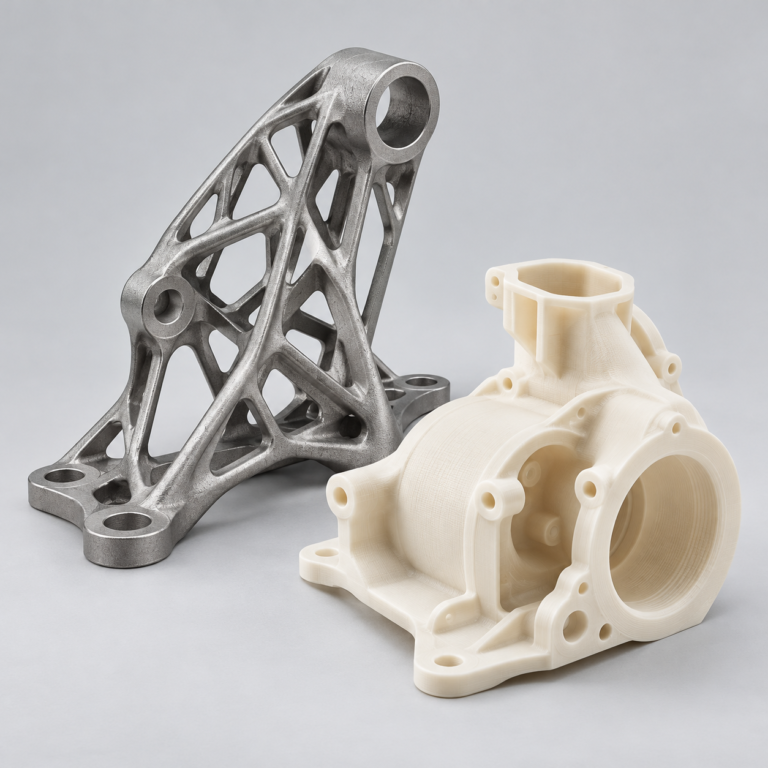
Prototype parts to check fit, function and design.
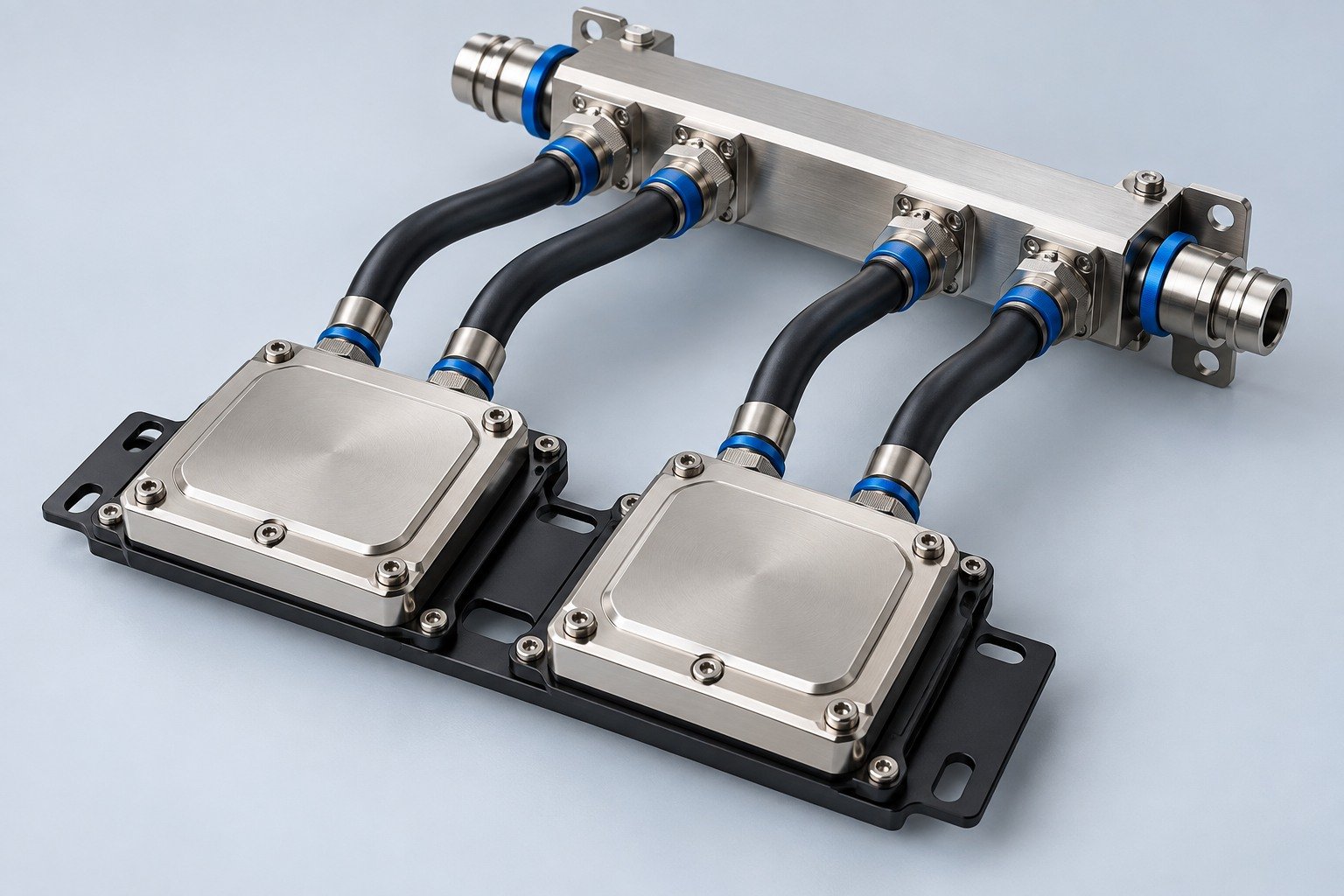
Choose air- or liquid-cooling components around your thermal and mechanical requirements.
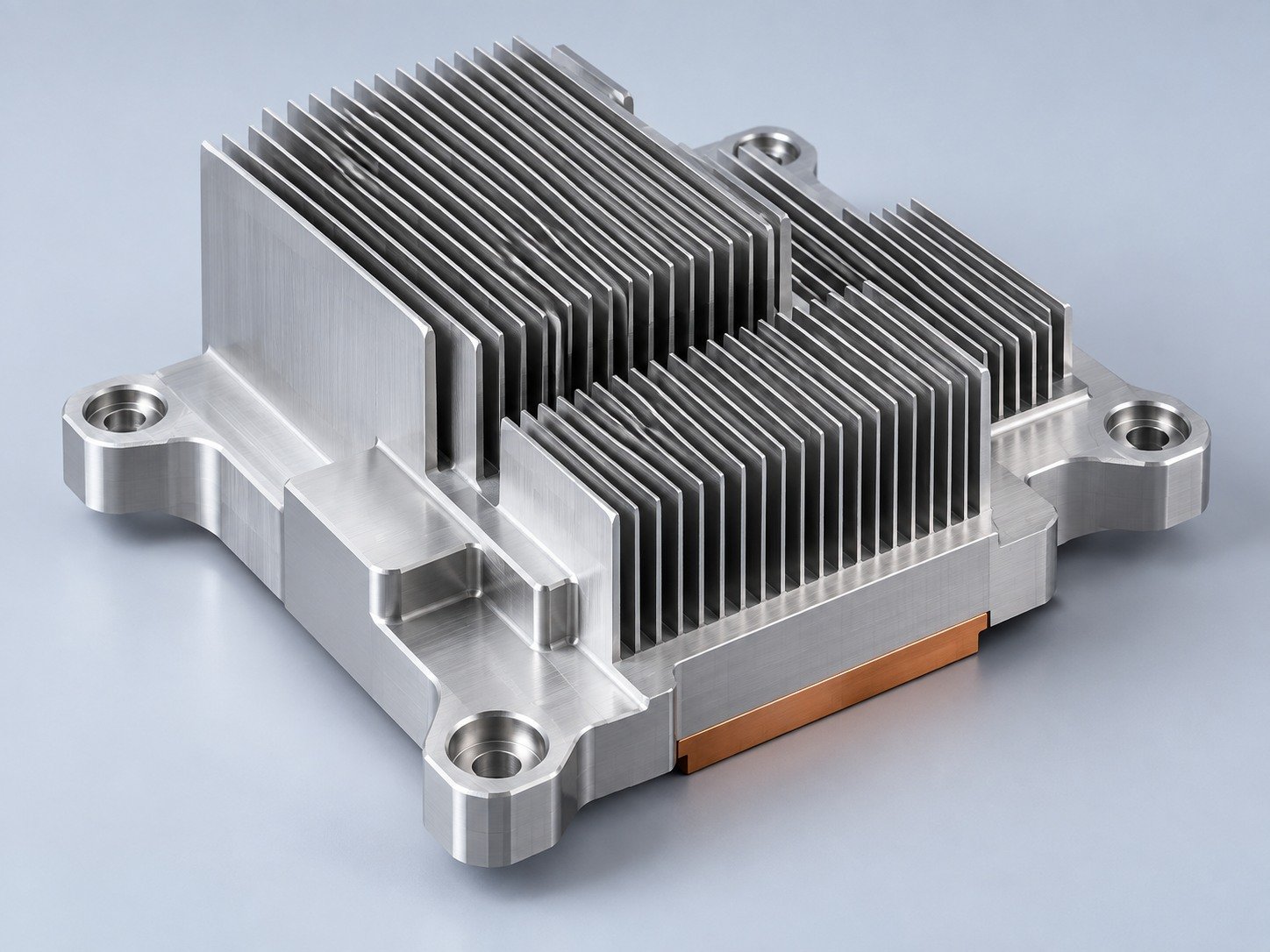
Manufacturing support for your cold plates, manifolds and cooling assemblies.
Find components for your power electronics, energy, laser and telecom application.
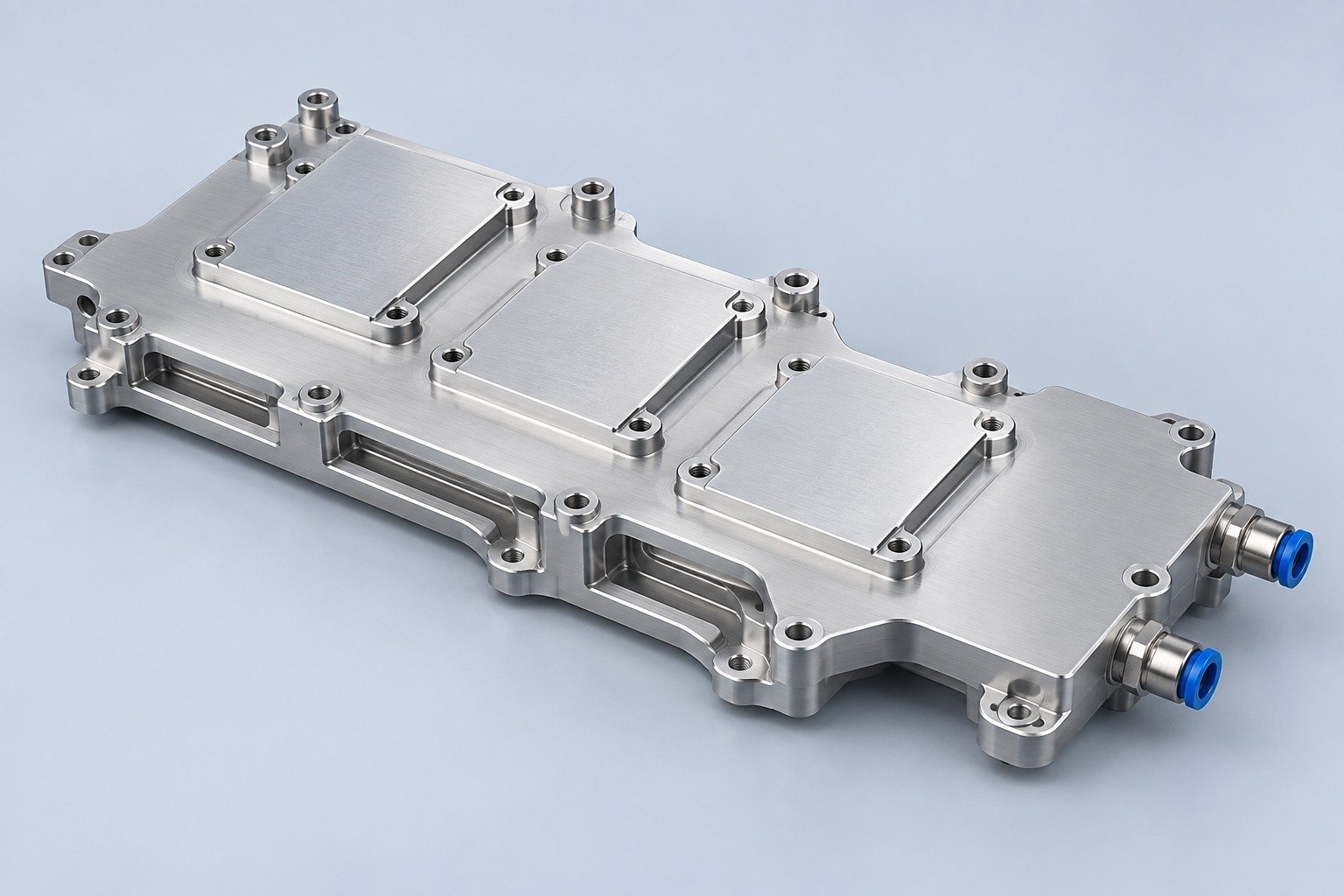
Components for your electronic systems.
Start with your functional and quality requirements.
Build around your operating environment.
From prototype to production, review material performance, manufacturability and cost for your part.
Review grade, temper and finish for your metal parts.
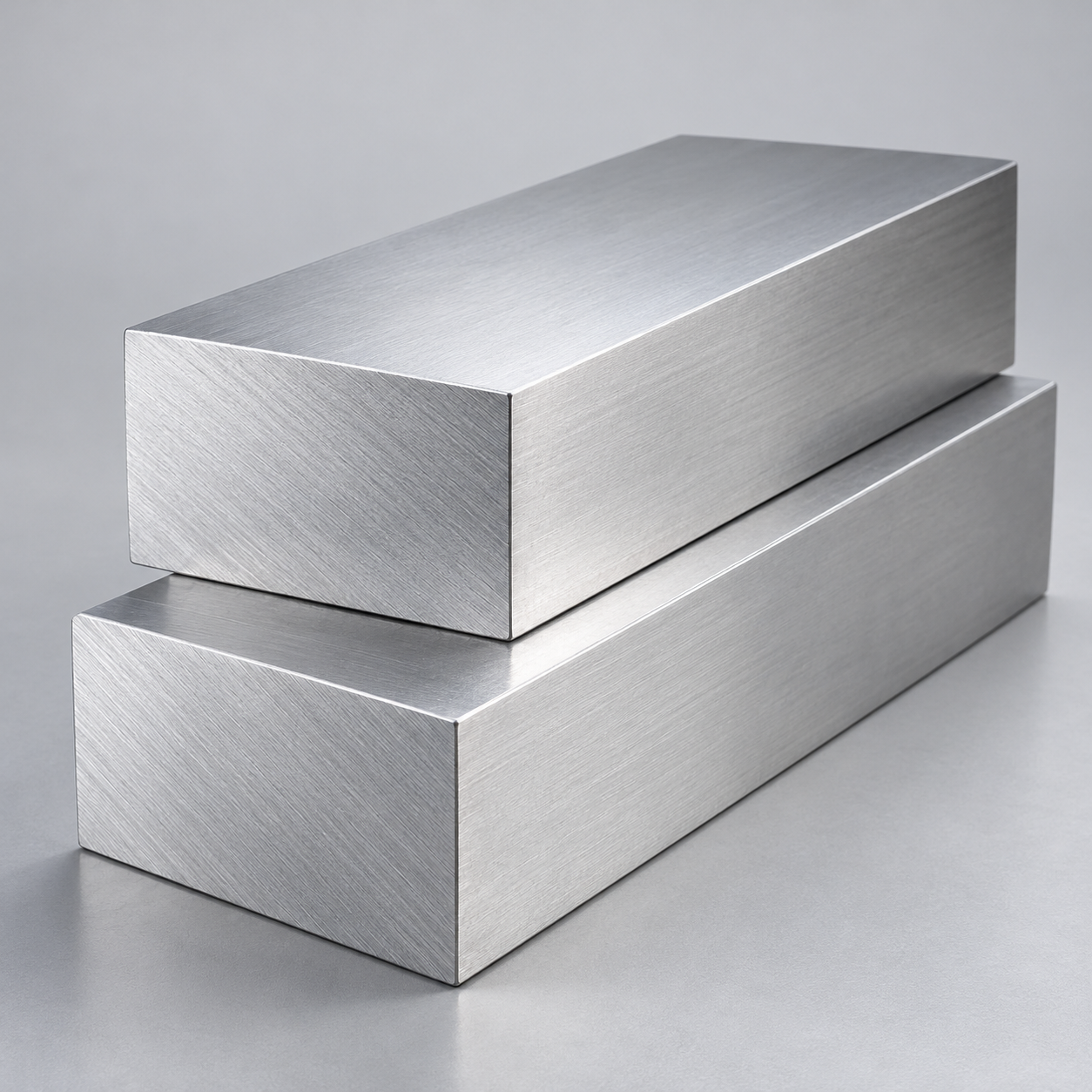 AluminumStrength, weight and machining›
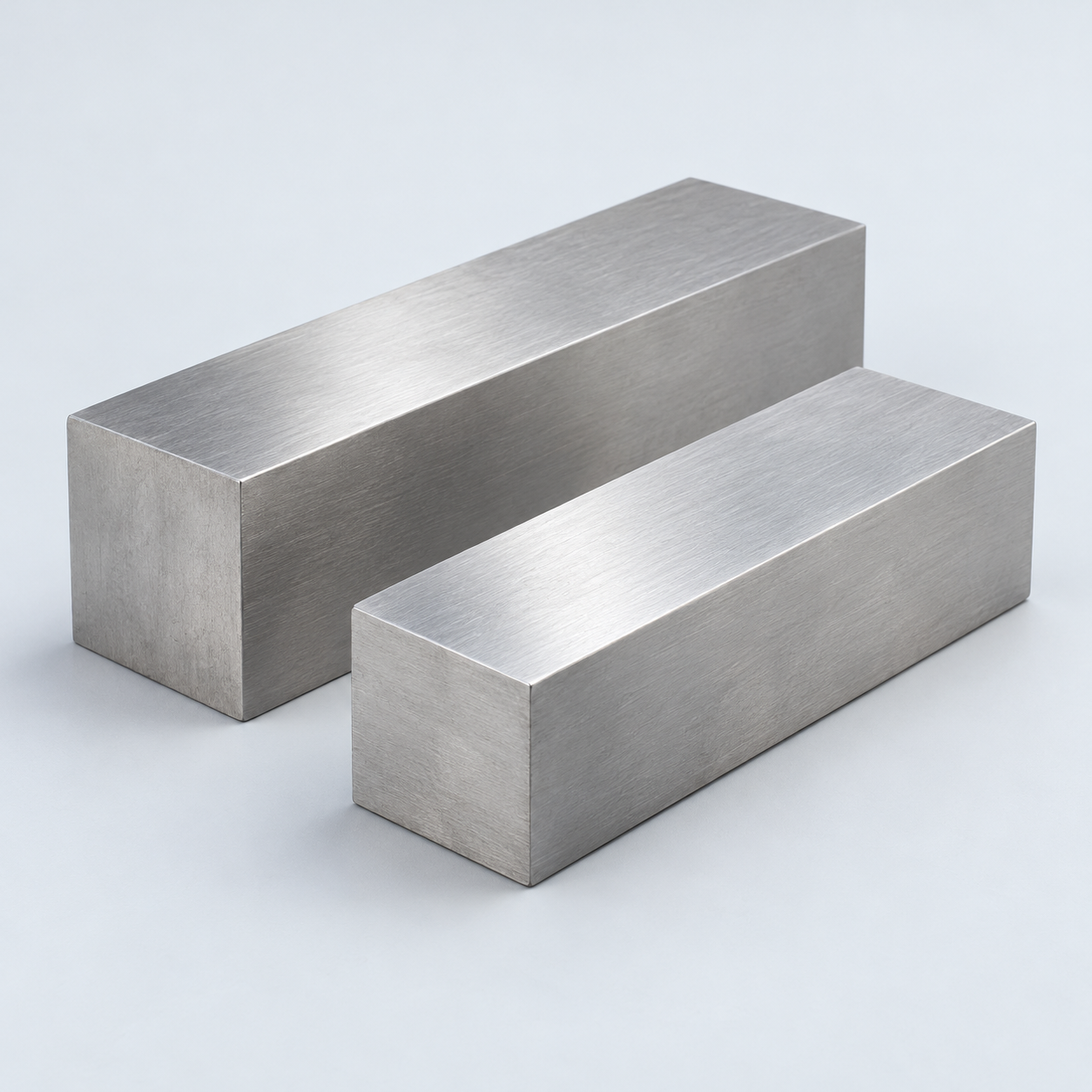 Stainless SteelCorrosion and finish requirements›
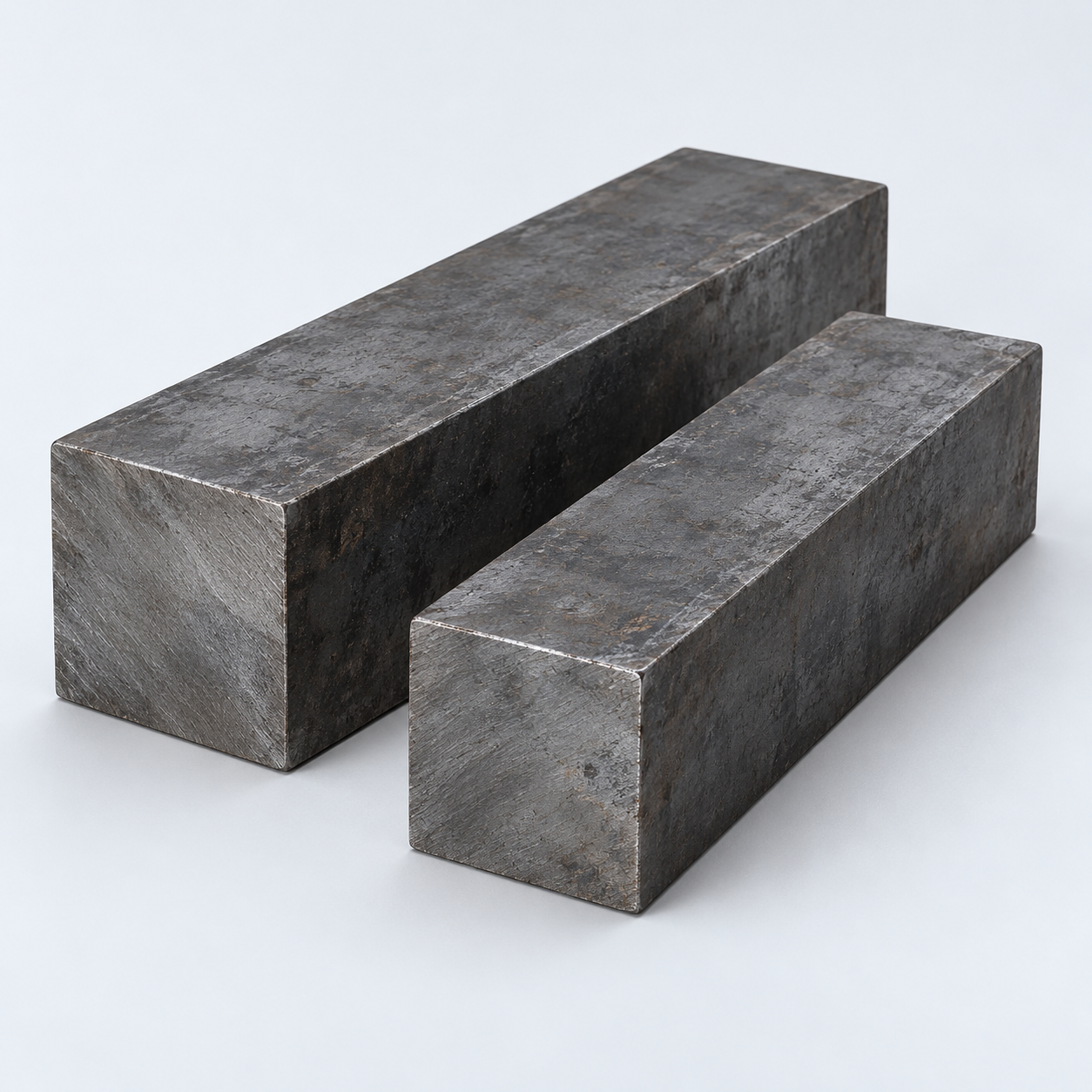 Carbon & Alloy SteelDiscuss grade and heat treatment›
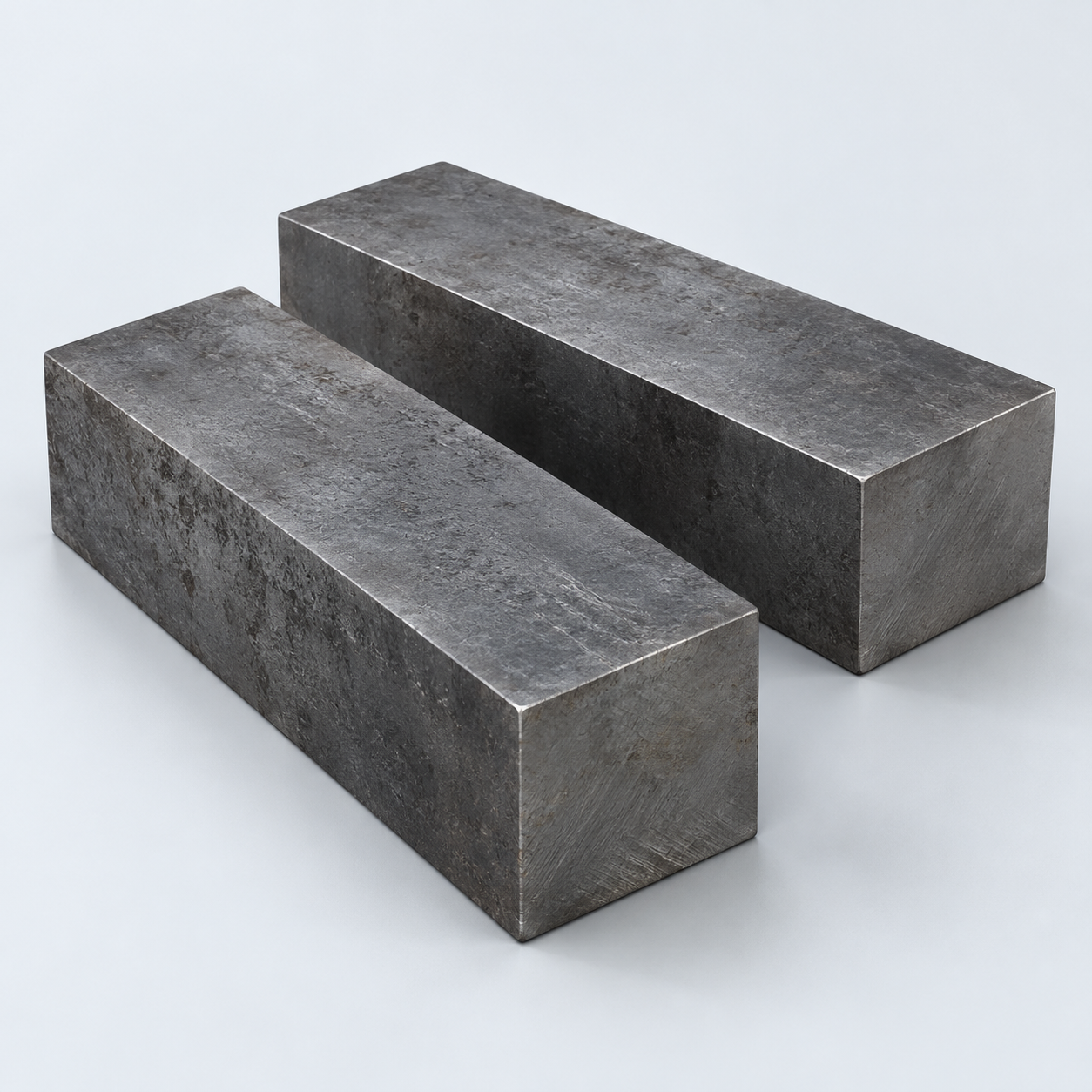 Tool SteelDiscuss tooling and wear needs›
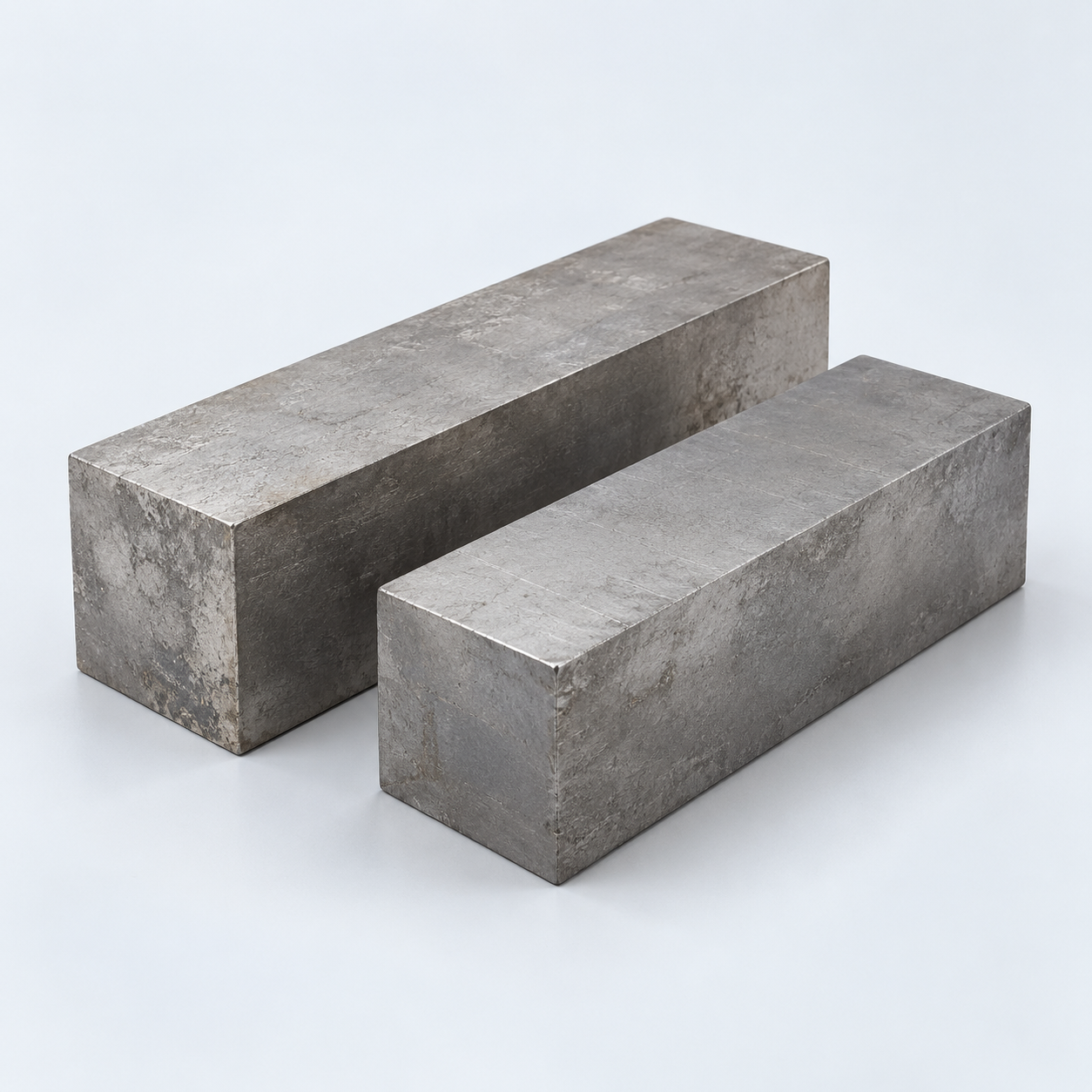 TitaniumReview grade and part geometry›
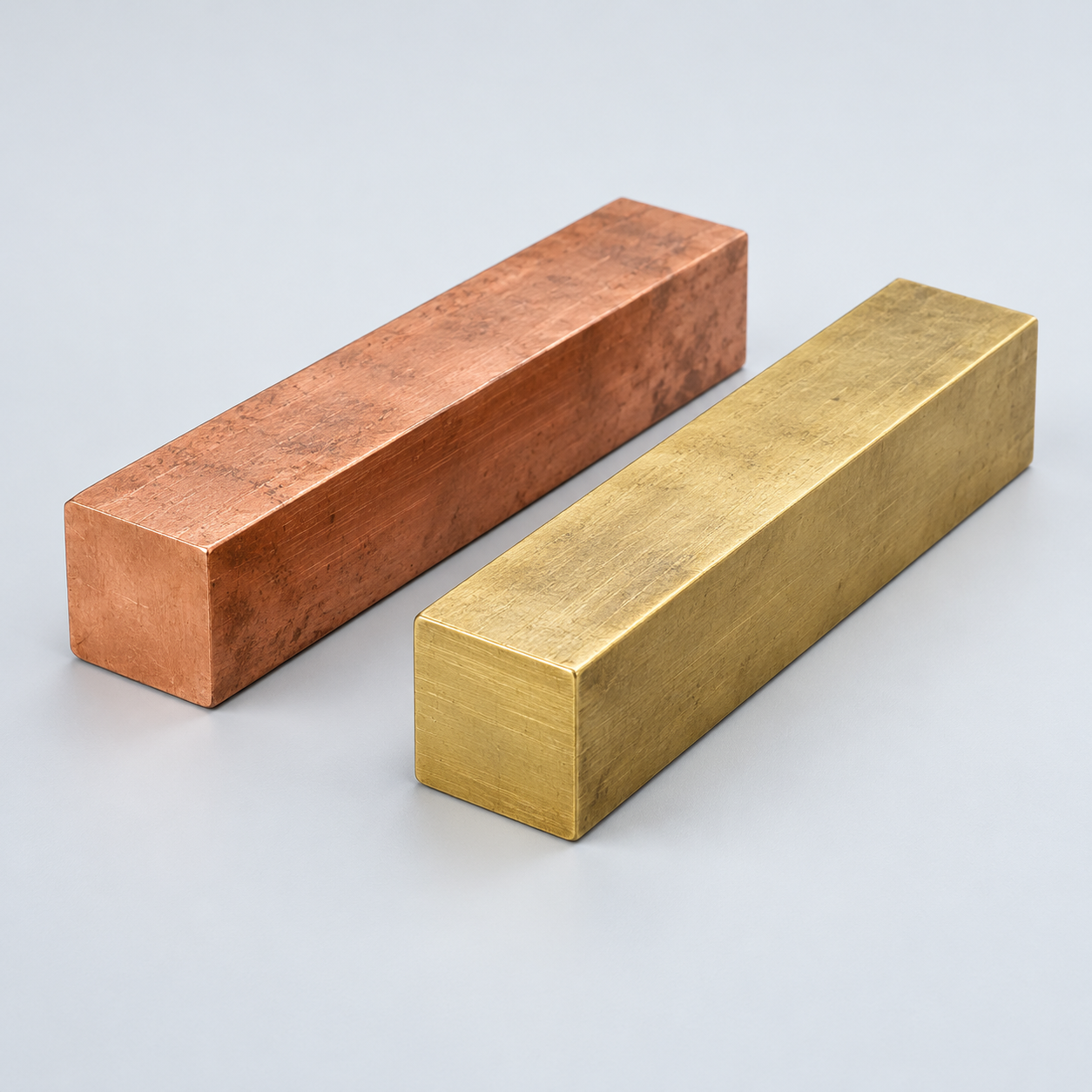 Copper & BrassDiscuss conductivity and machining›
Match your polymer to function, process and environment.
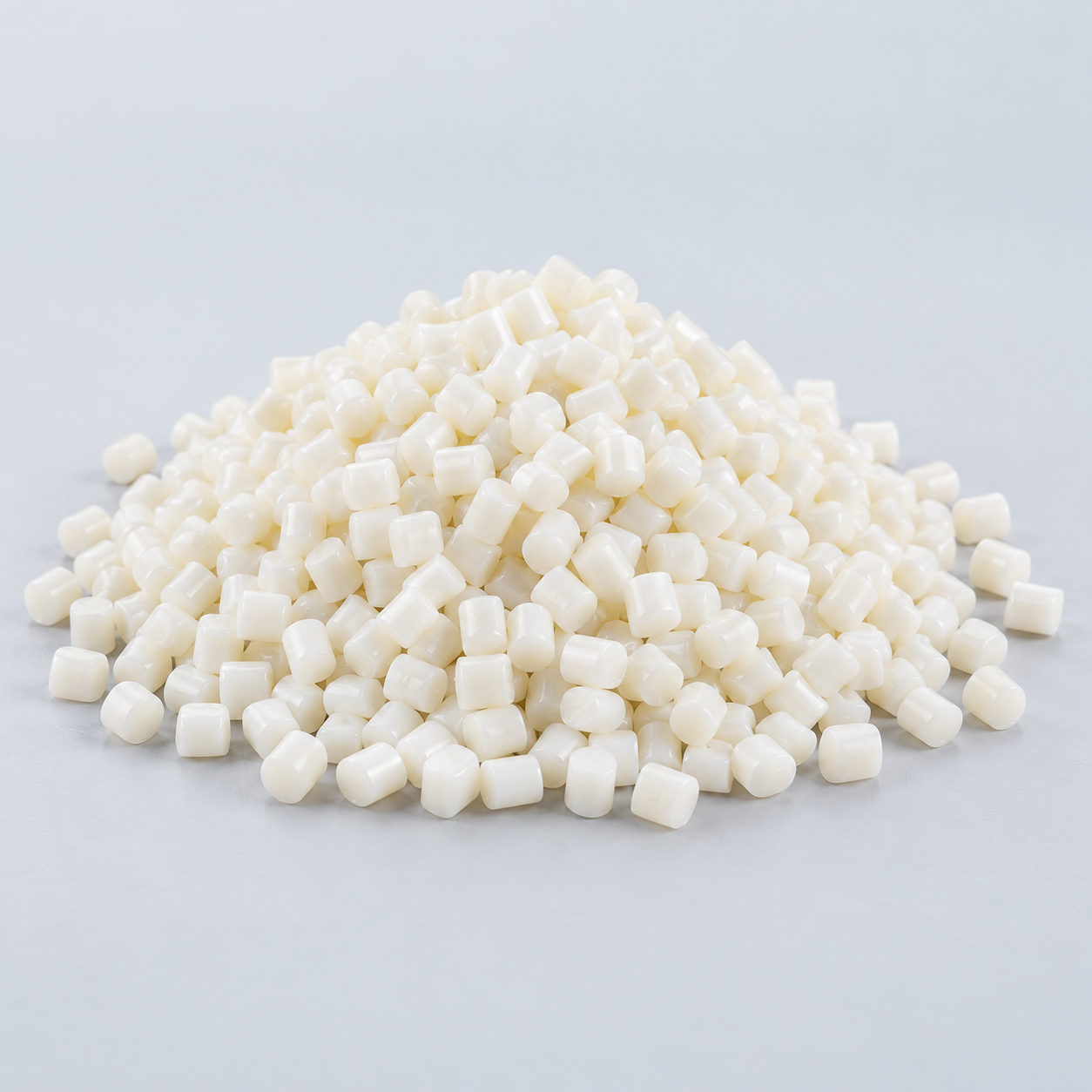 ABSReview enclosure and molding needs›
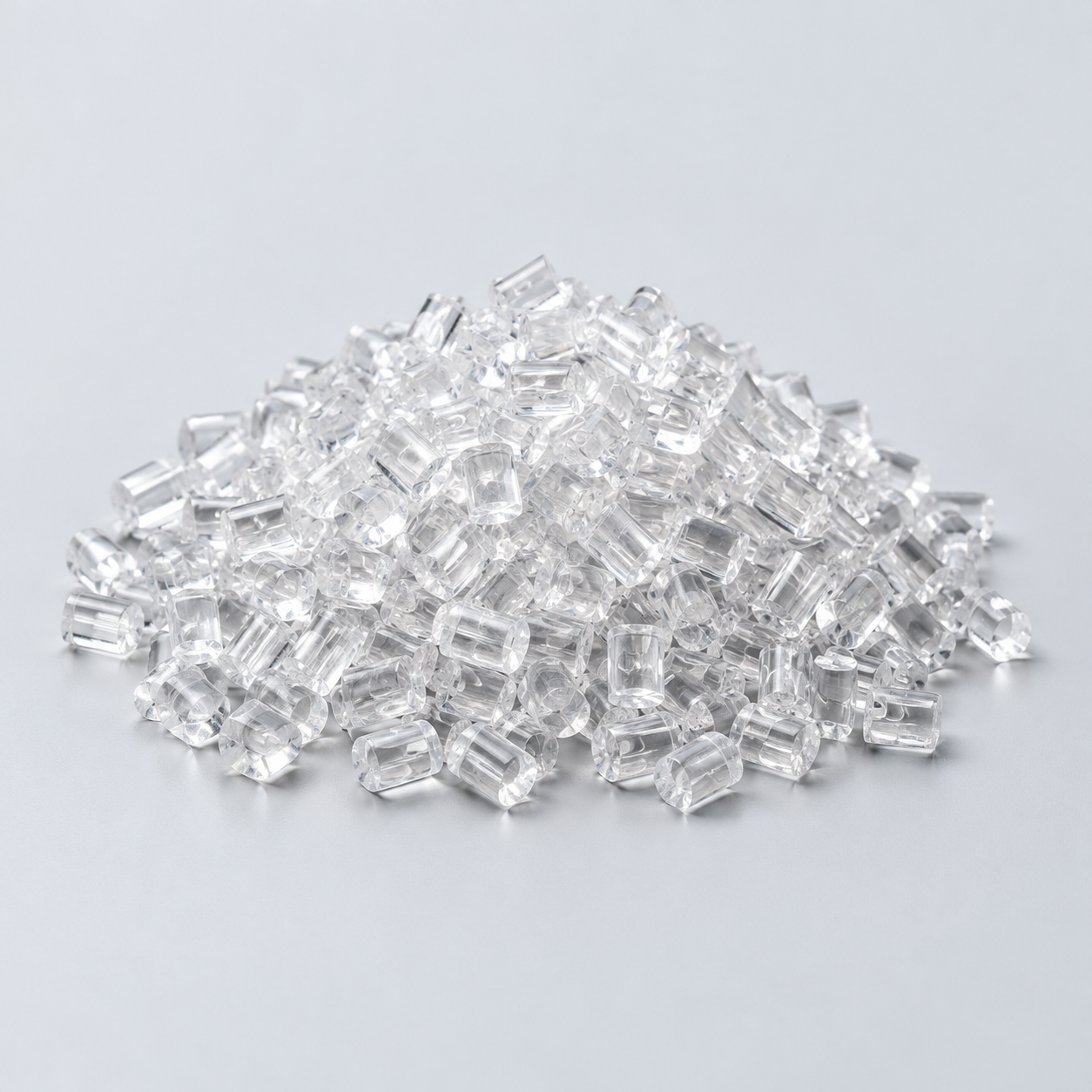 Polycarbonate (PC)Discuss clarity and impact needs›
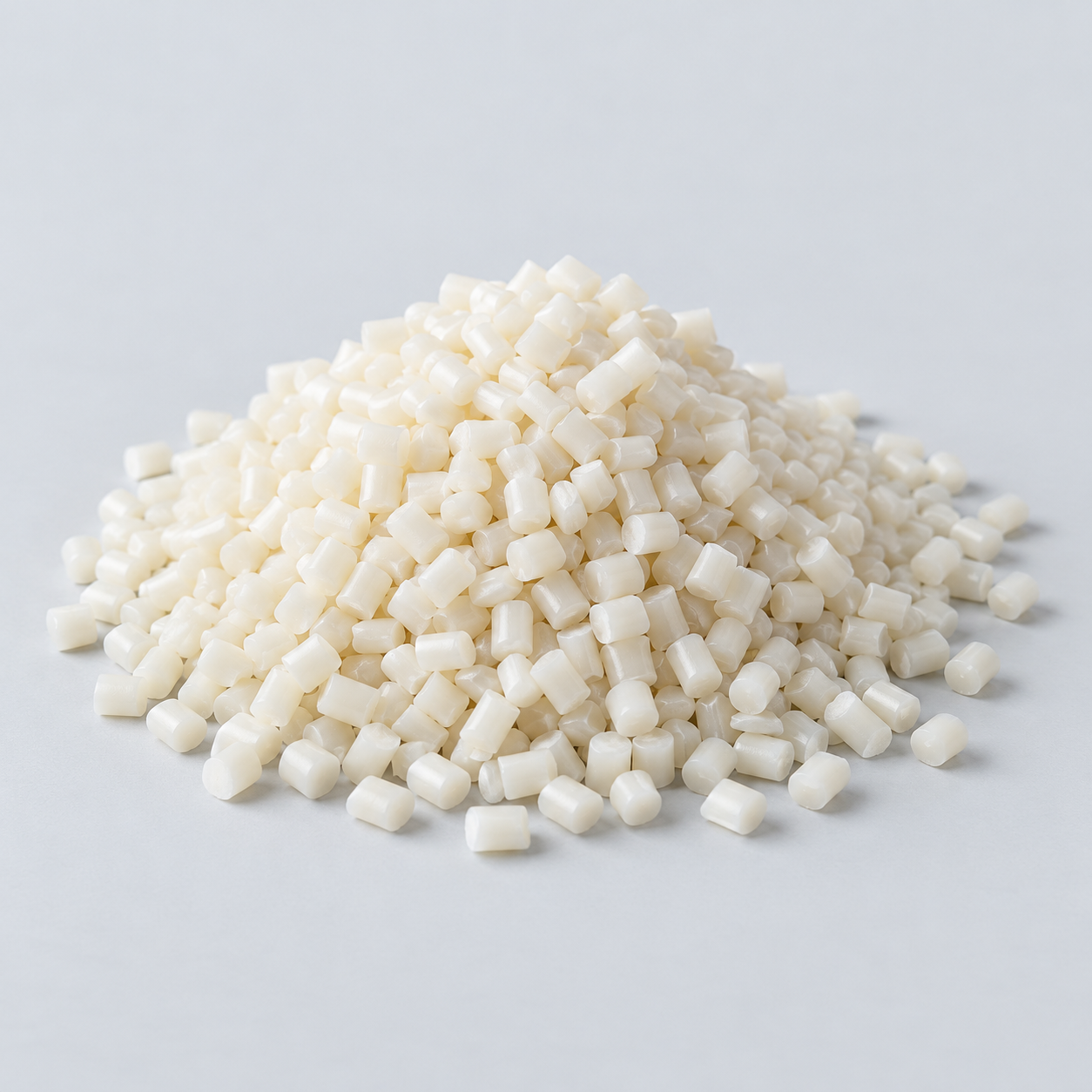 Nylon (PA)Review moisture and wear conditions›
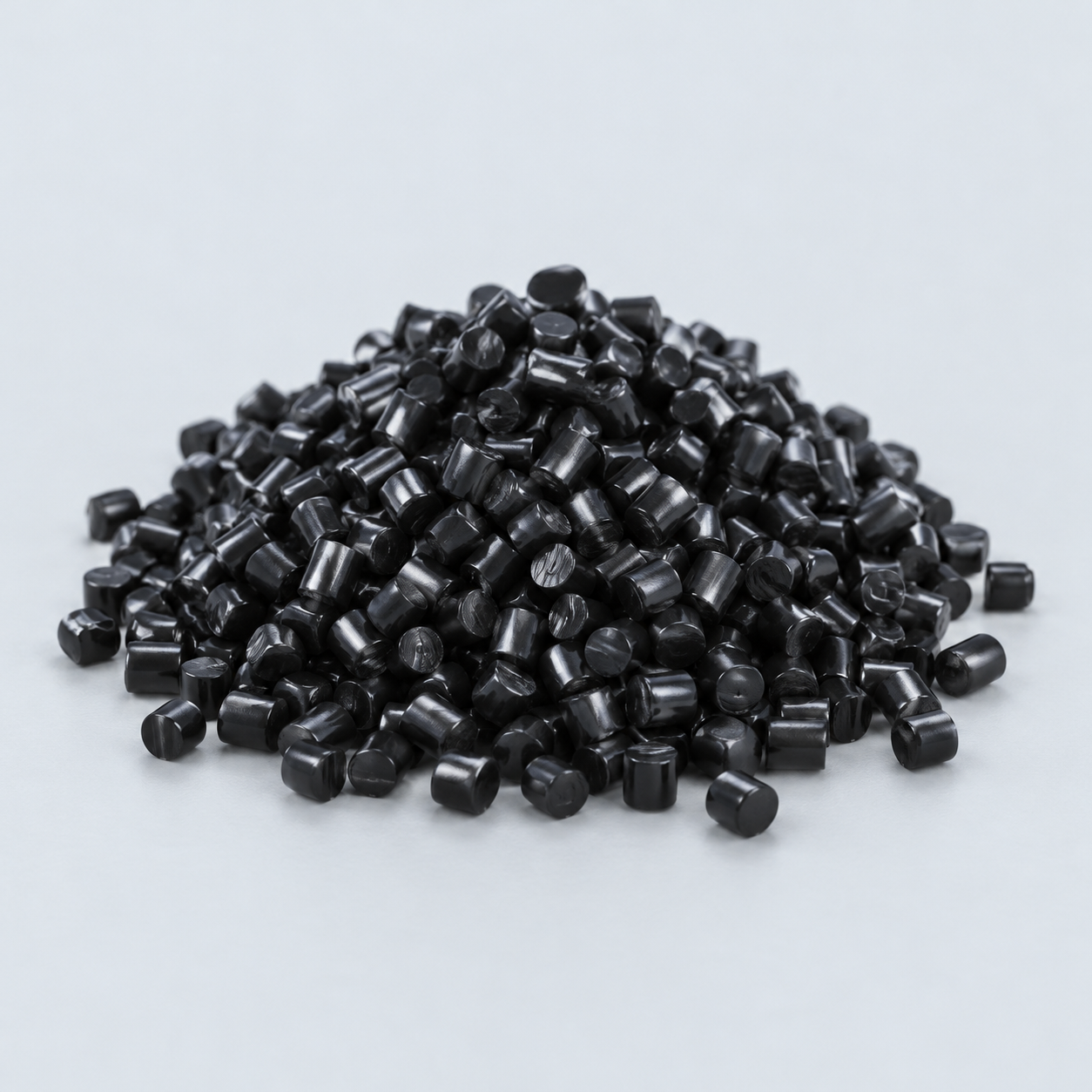 POM / AcetalReview fit and sliding features›
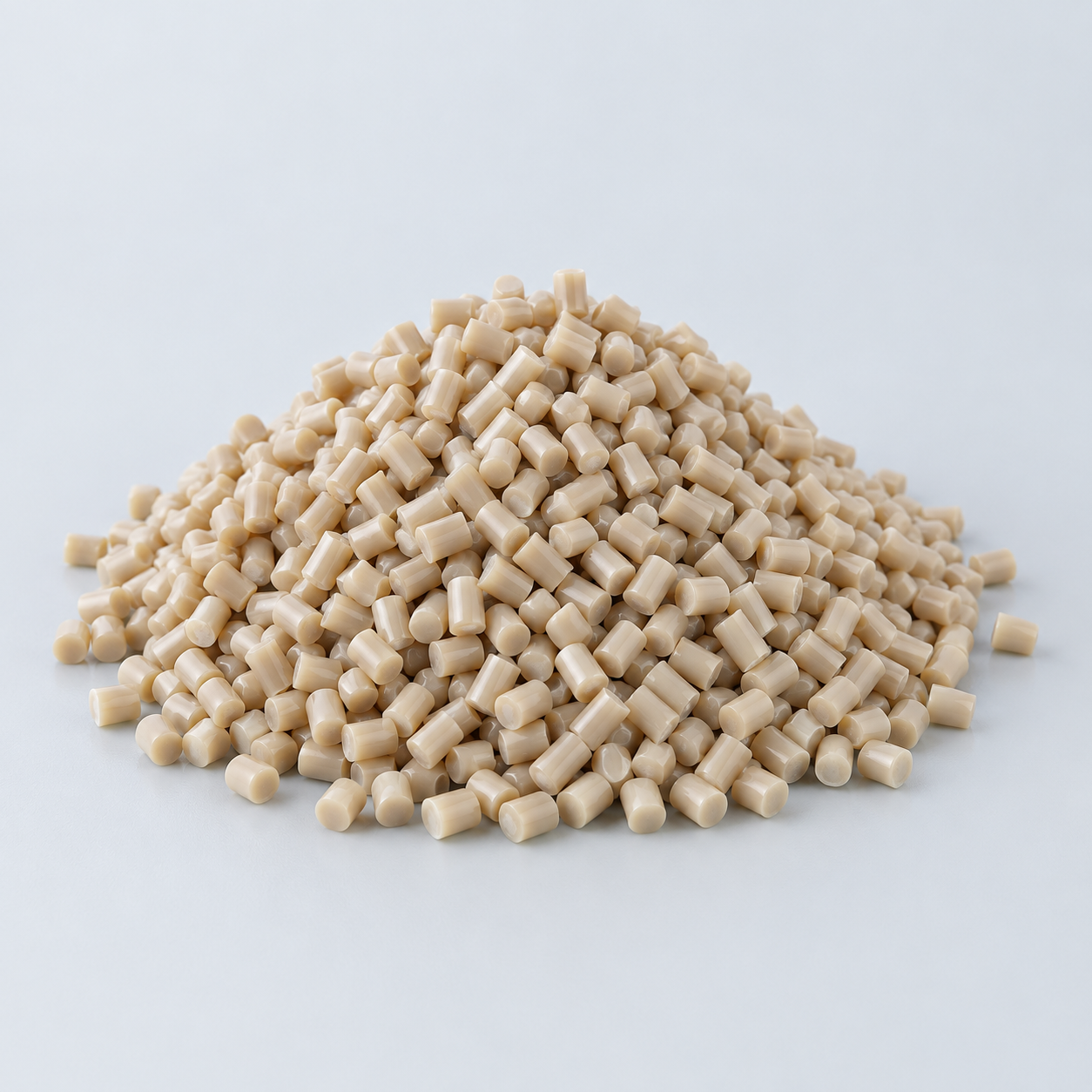 PEEKDiscuss operating conditions›
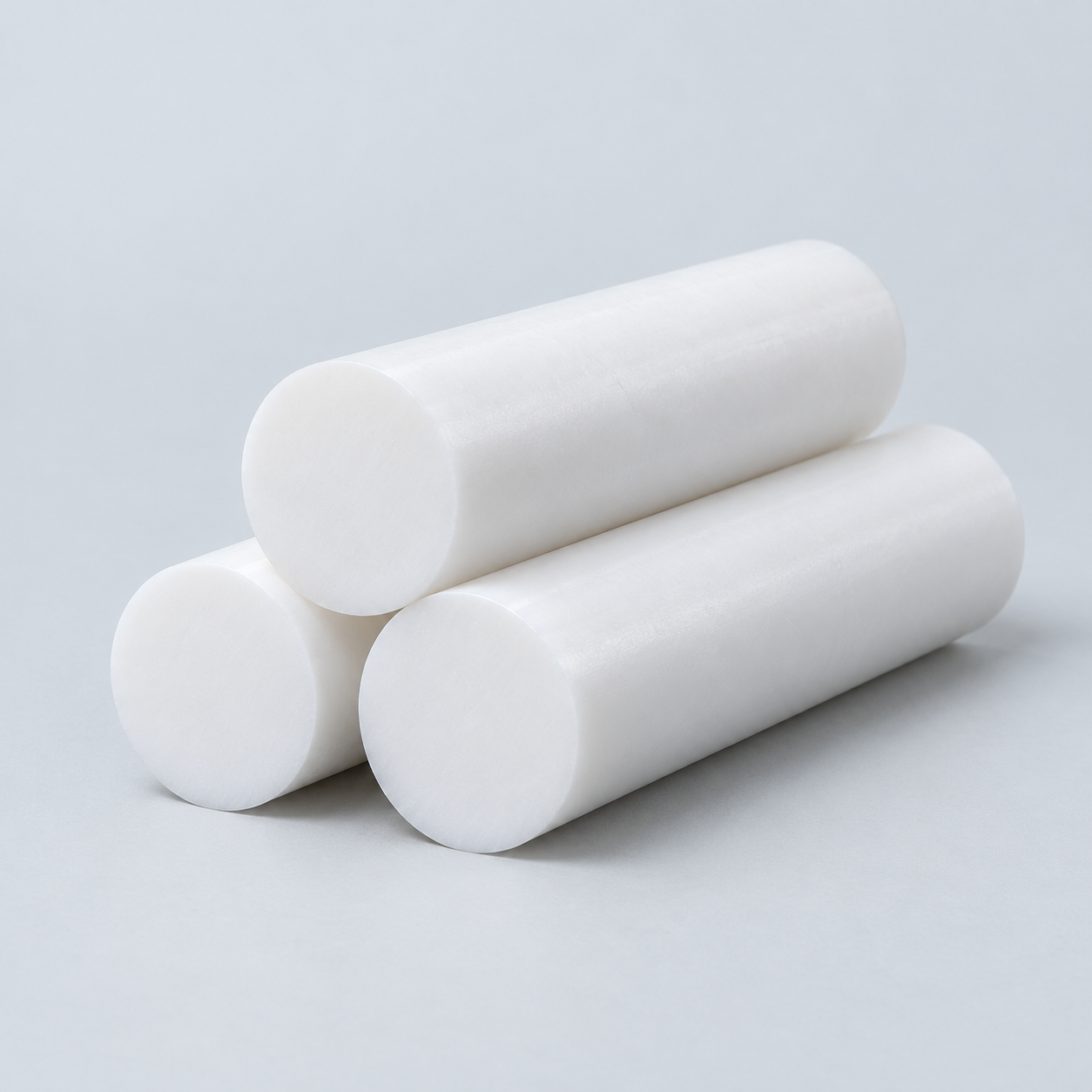 PTFEReview friction and chemical exposure›
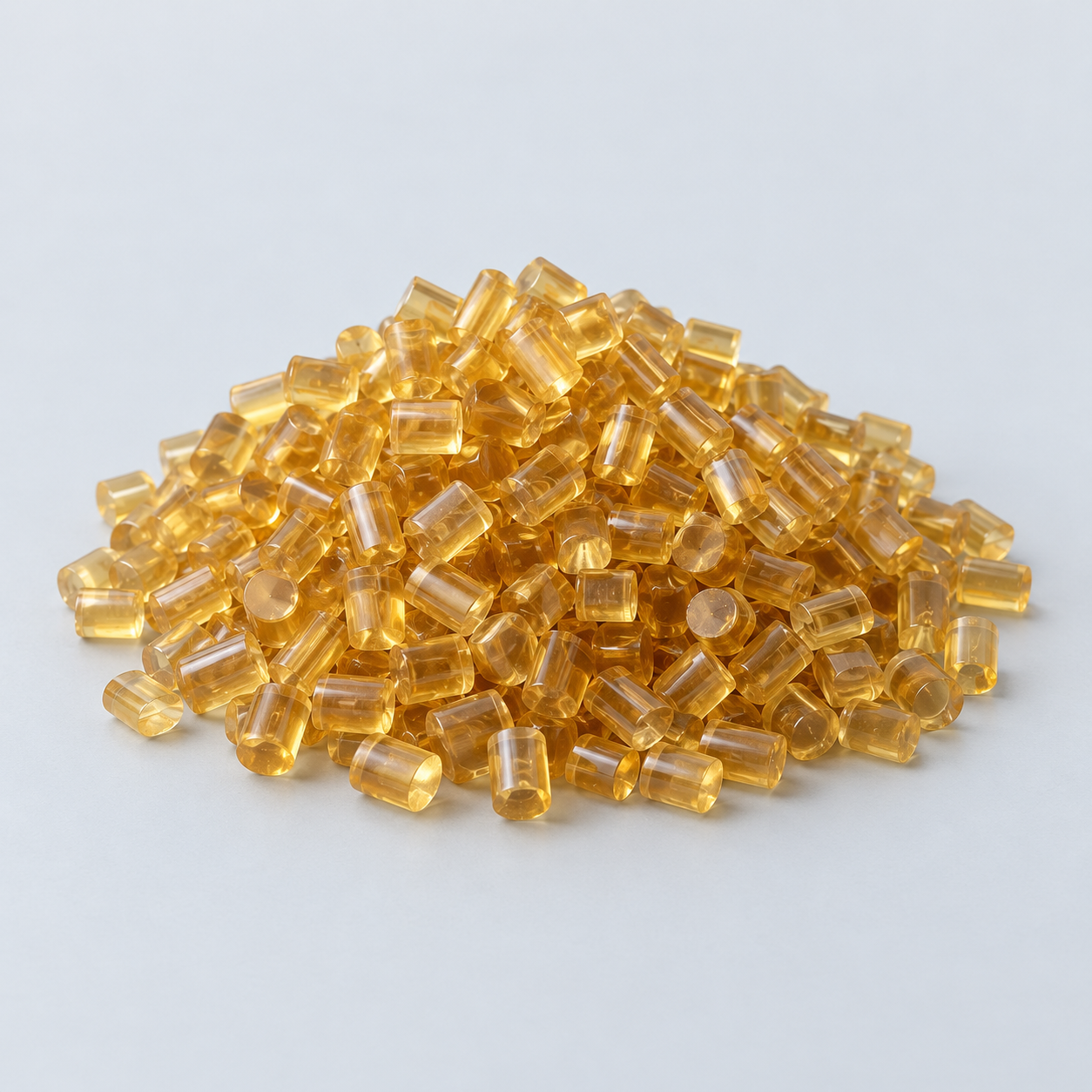 ULTEM / PEIDiscuss thermal and electrical needs›
Confirm grade availability and application requirements.
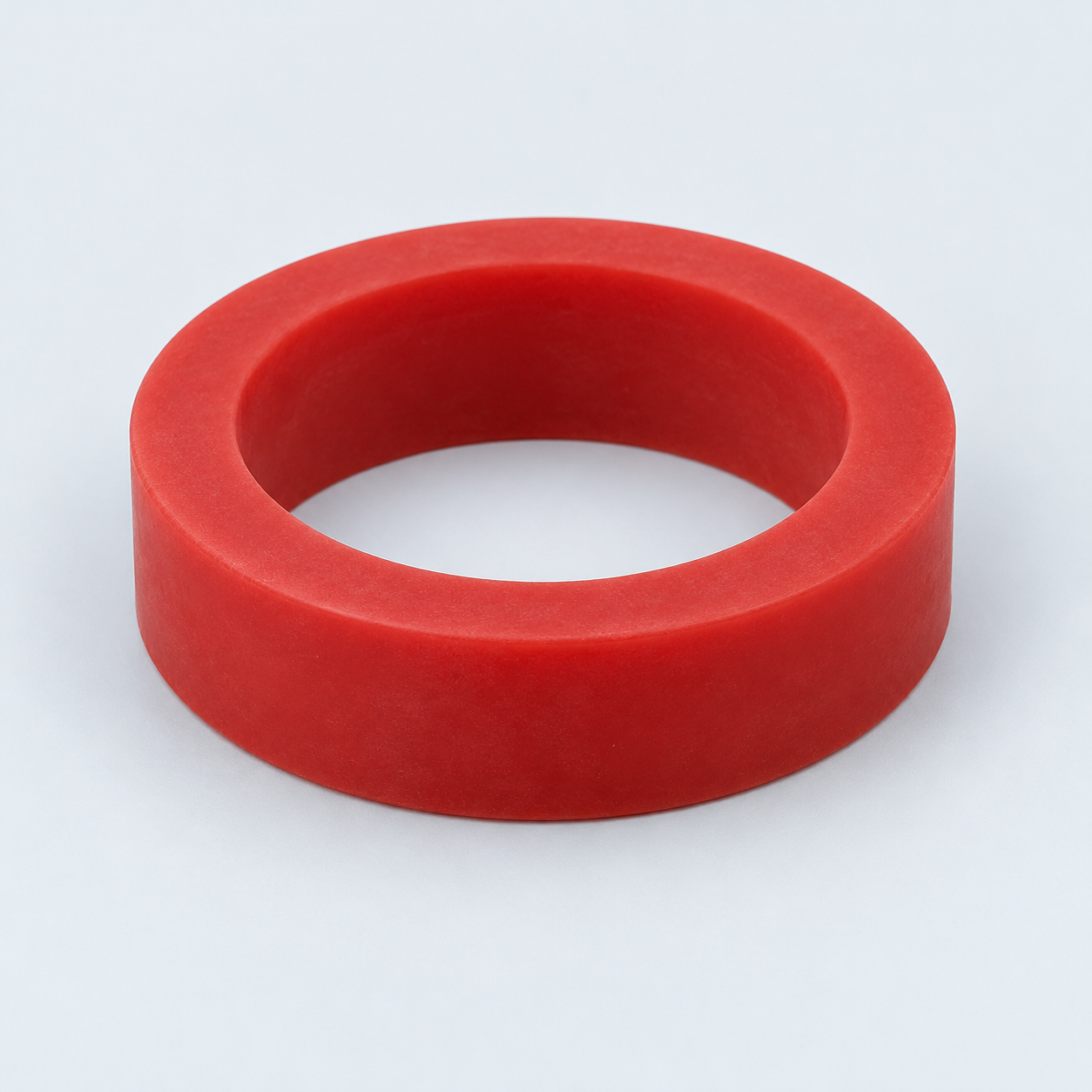 Silicone / LSRDiscuss flexible component needs›
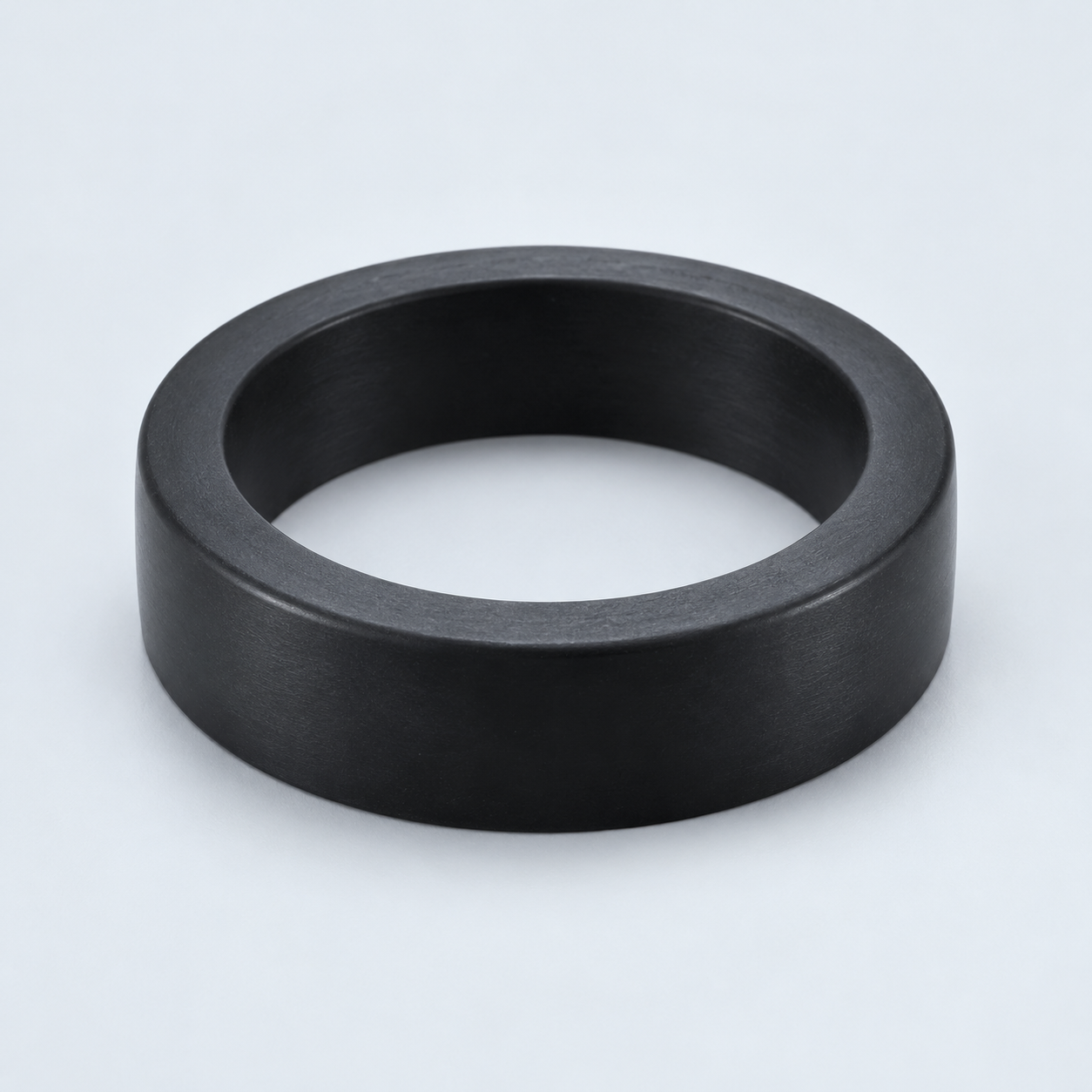 TPU / TPEReview flexibility and processing›
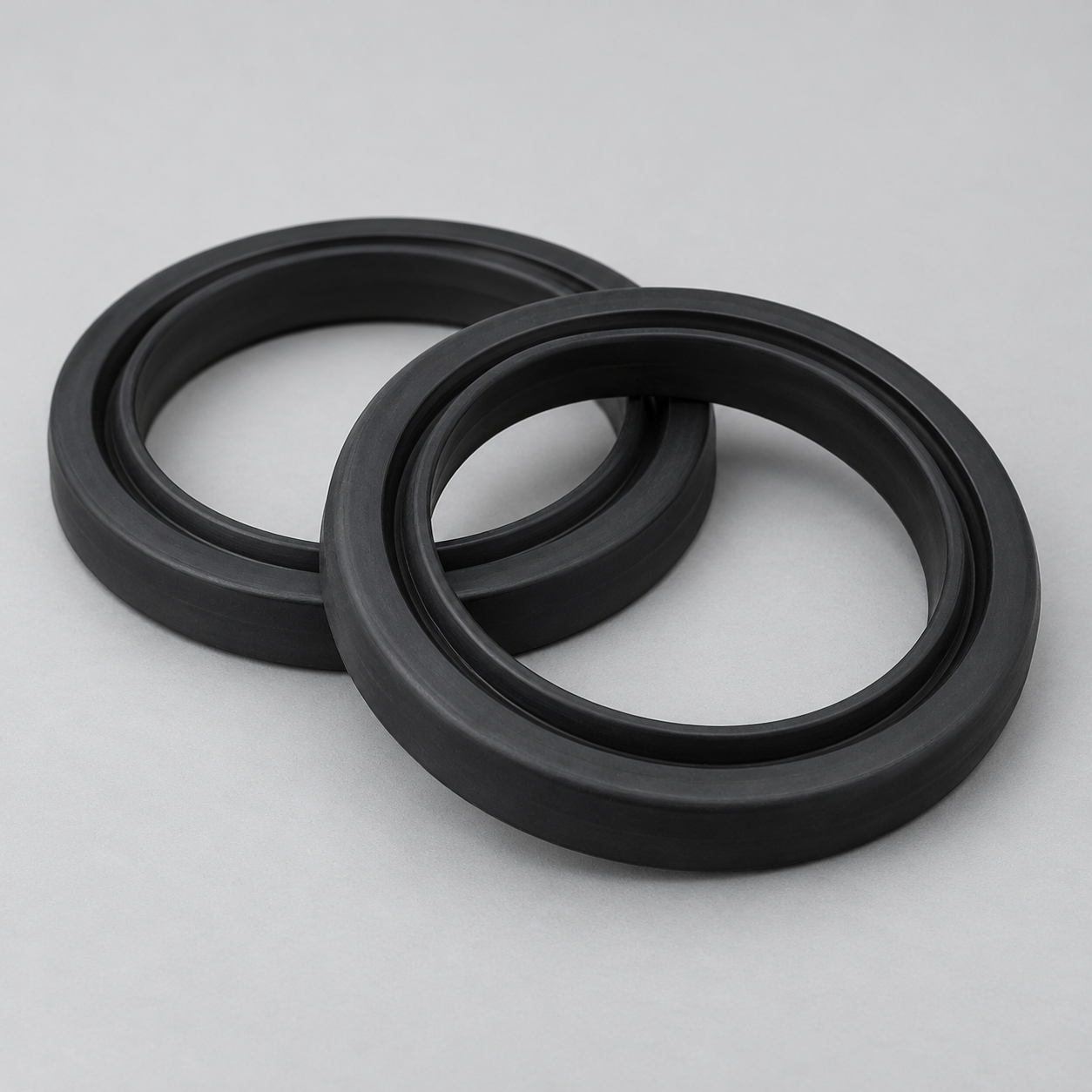 EPDMReview weathering and chemical exposure.›
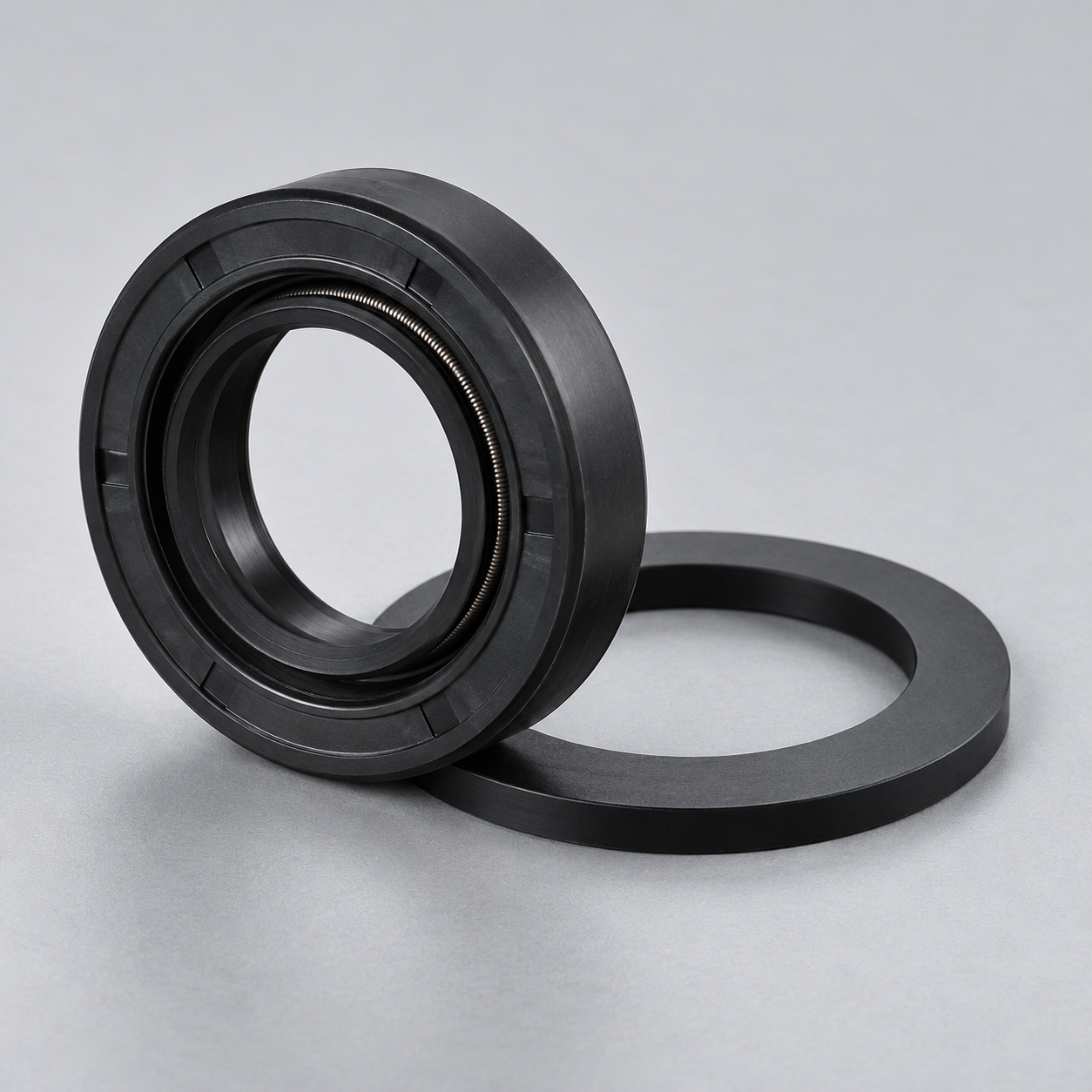 NBRReview oil and fuel exposure.›
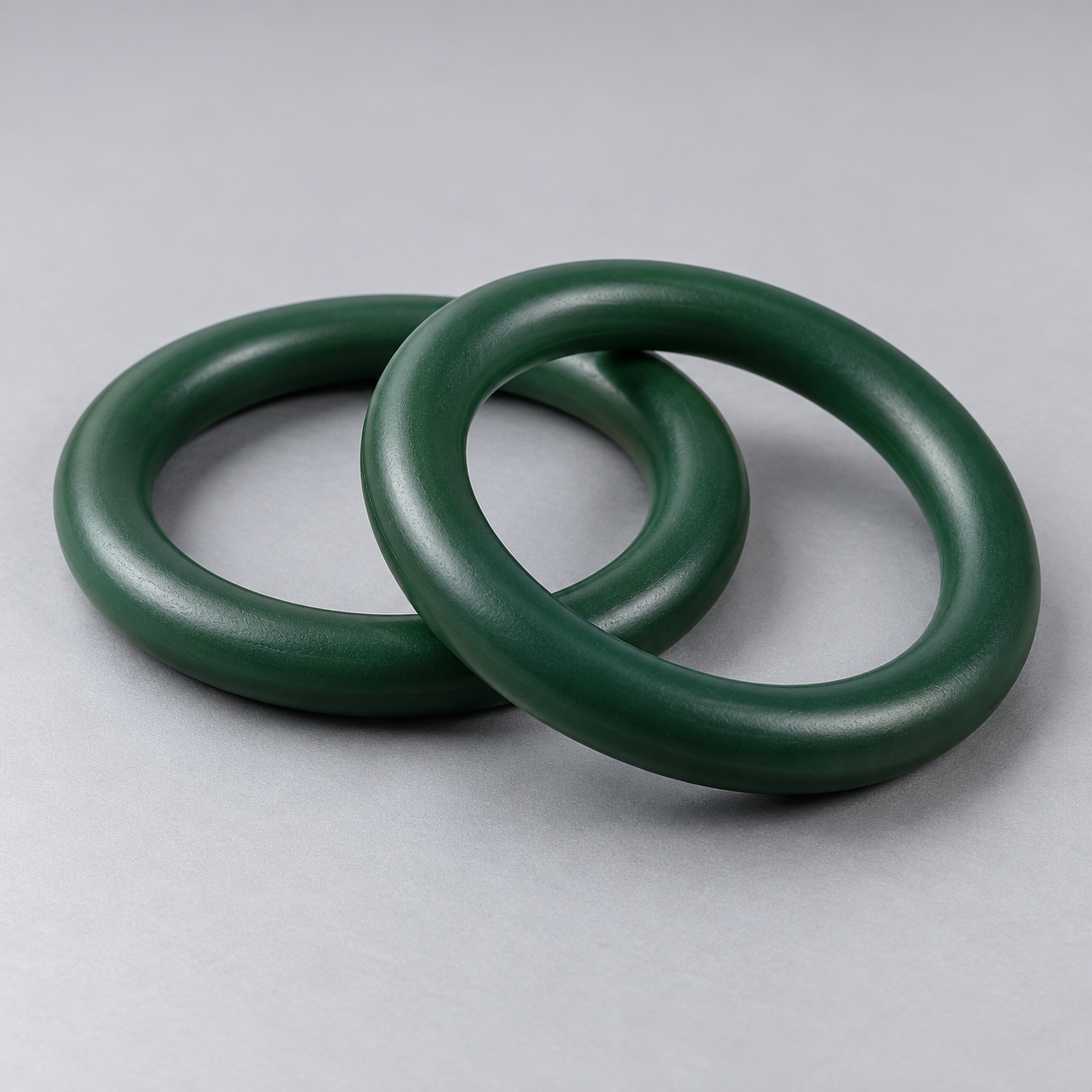 FKMReview temperature and chemical exposure.›
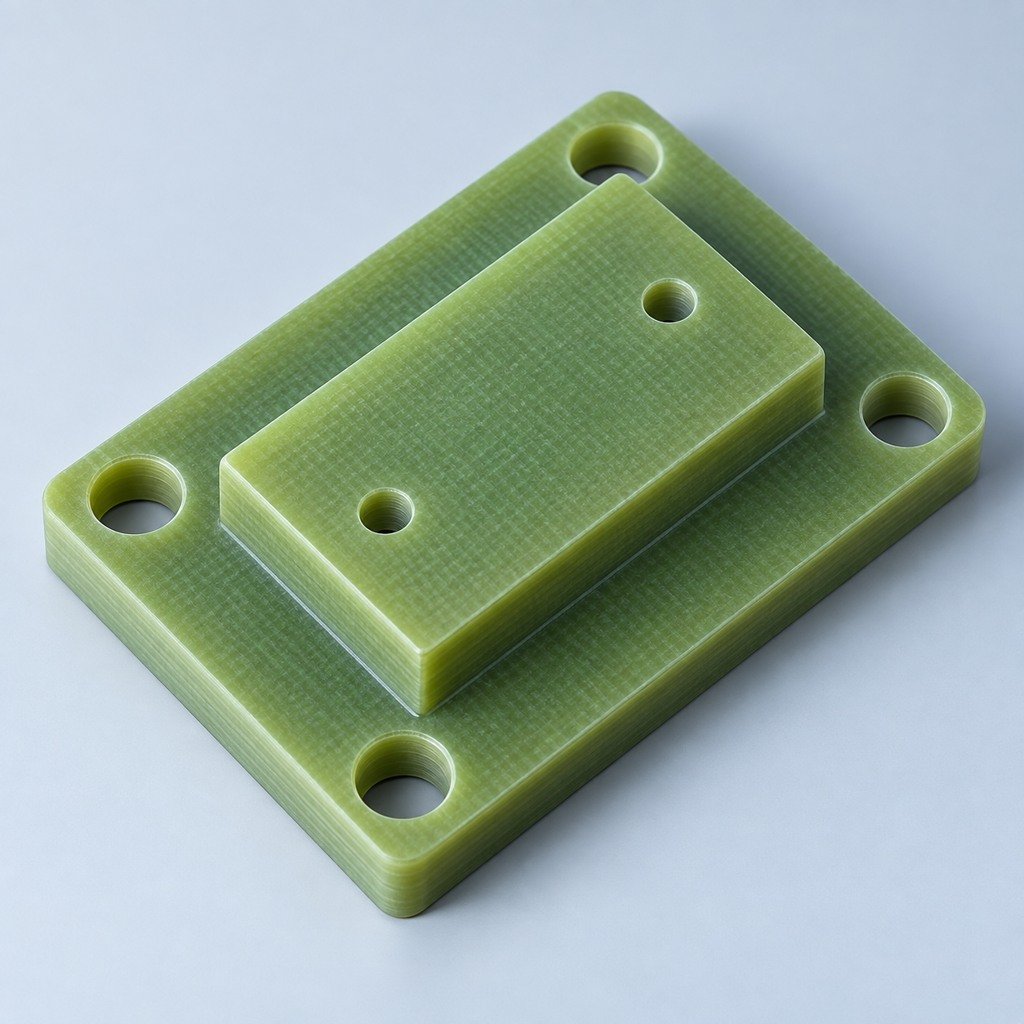 G10 / FR4Review insulation and laminate needs›
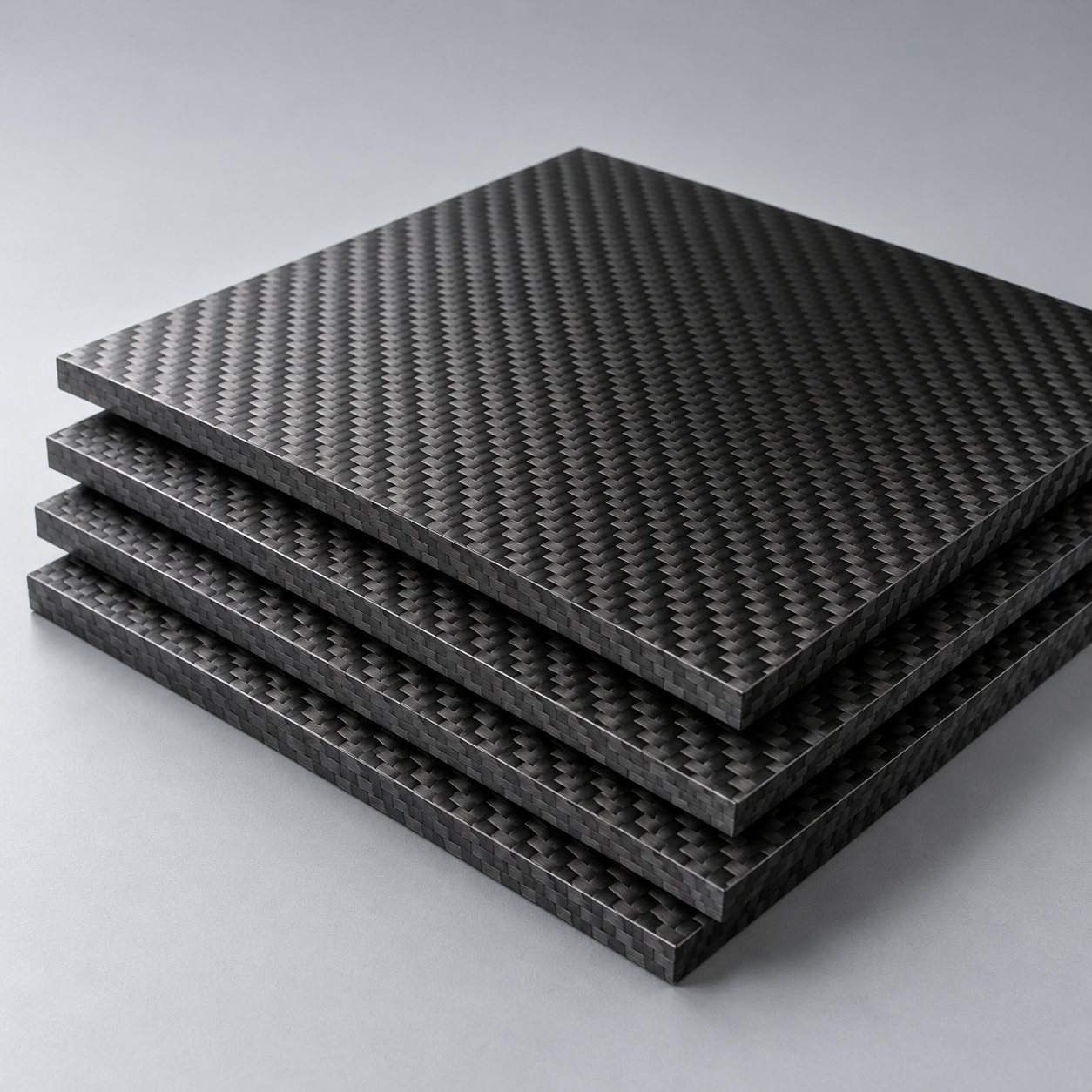 CompositesReview stiffness, weight and laminate.›Customer-Specified MaterialsConfirm your grade and requirements.›Other Specialty MaterialsDiscuss your application and grade.›
Practical guidance for your part geometry and material decisions.
Prepare your process, budget and sourcing questions.
Build your knowledge before production.
Learn who we are and how we operate.
Find our U.S. support team or start a conversation.
YOUR PART. YOUR PURPOSE. YOUR PRINTED RESULT.
Bring your model, mating parts and intended use into one review. Our plastic 3D printing services focus on the decisions that affect your fit, function and finish—before you approve a build.
Start with 1 CAD model + 1 controlled drawing. Confirm the exact process, material grade, delivered condition and scope in your quote.
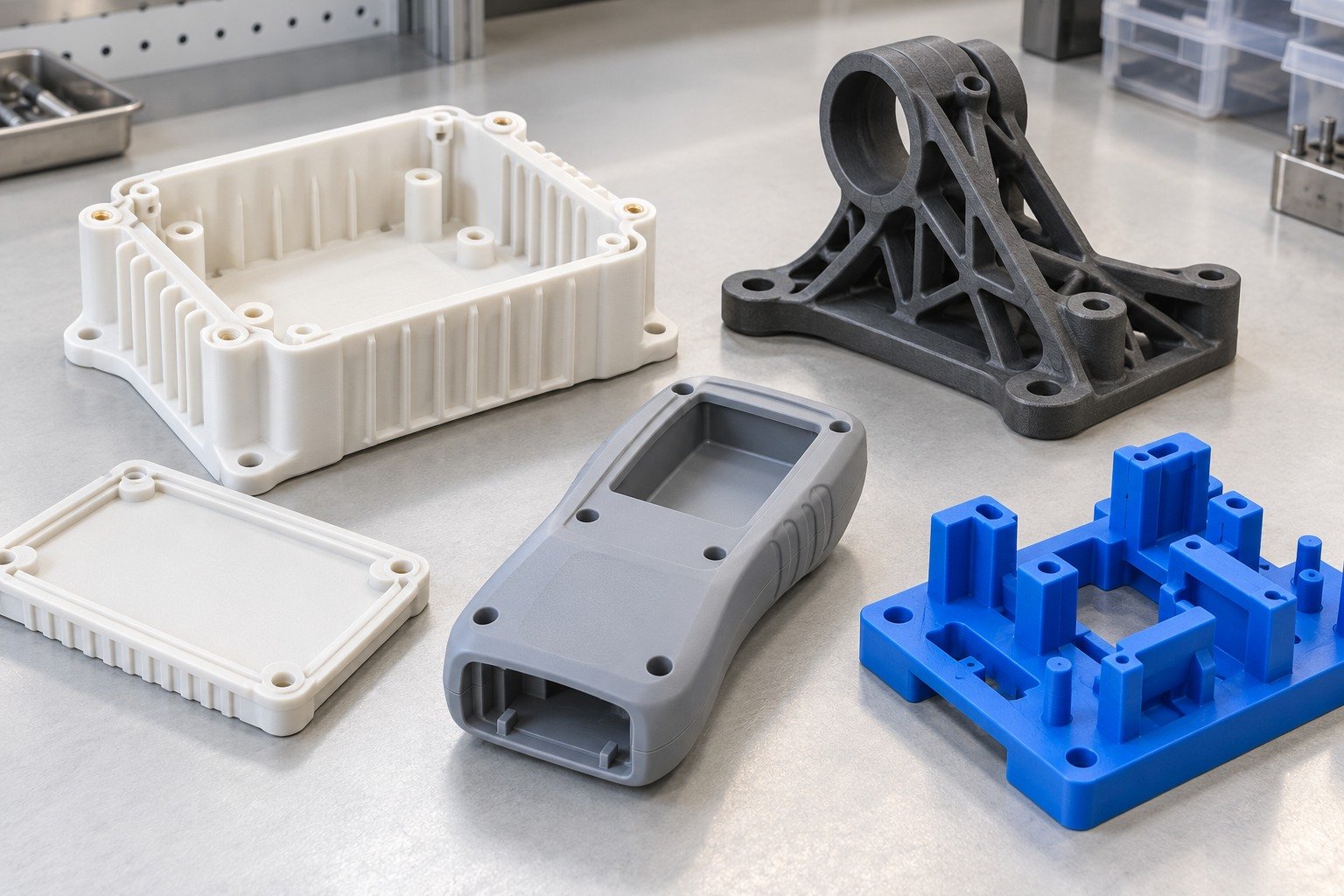
Choose around the job your part must do.
Confirm the grade and working conditions.
Mark interfaces, holes and inserts.
Agree visible faces and sample finish.
Dallas-area project communication.
Give your prototype a clear purpose so you can judge the result against the right requirements.
Appearance, assembly fit or functional use.
Exact grade, process and delivered state.
Critical features, surface and quantity.
Custom plastic 3D printing can help you test a design before tooling. Select your application, then review its material, finishing and acceptance details.
Use 3D printed plastic parts to review cable openings, screw access and mating edges. Share the components that must fit inside your enclosure.
| Your fit | Mating rim, board clearance and connector openings. |
|---|---|
| Your fastening | Bosses, screw access and insert locations. |
| Your check | Lid closure, cable routing and assembly sequence. |
Process and material availability are confirmed during drawing review; a concept image is not proof of a qualified production route.
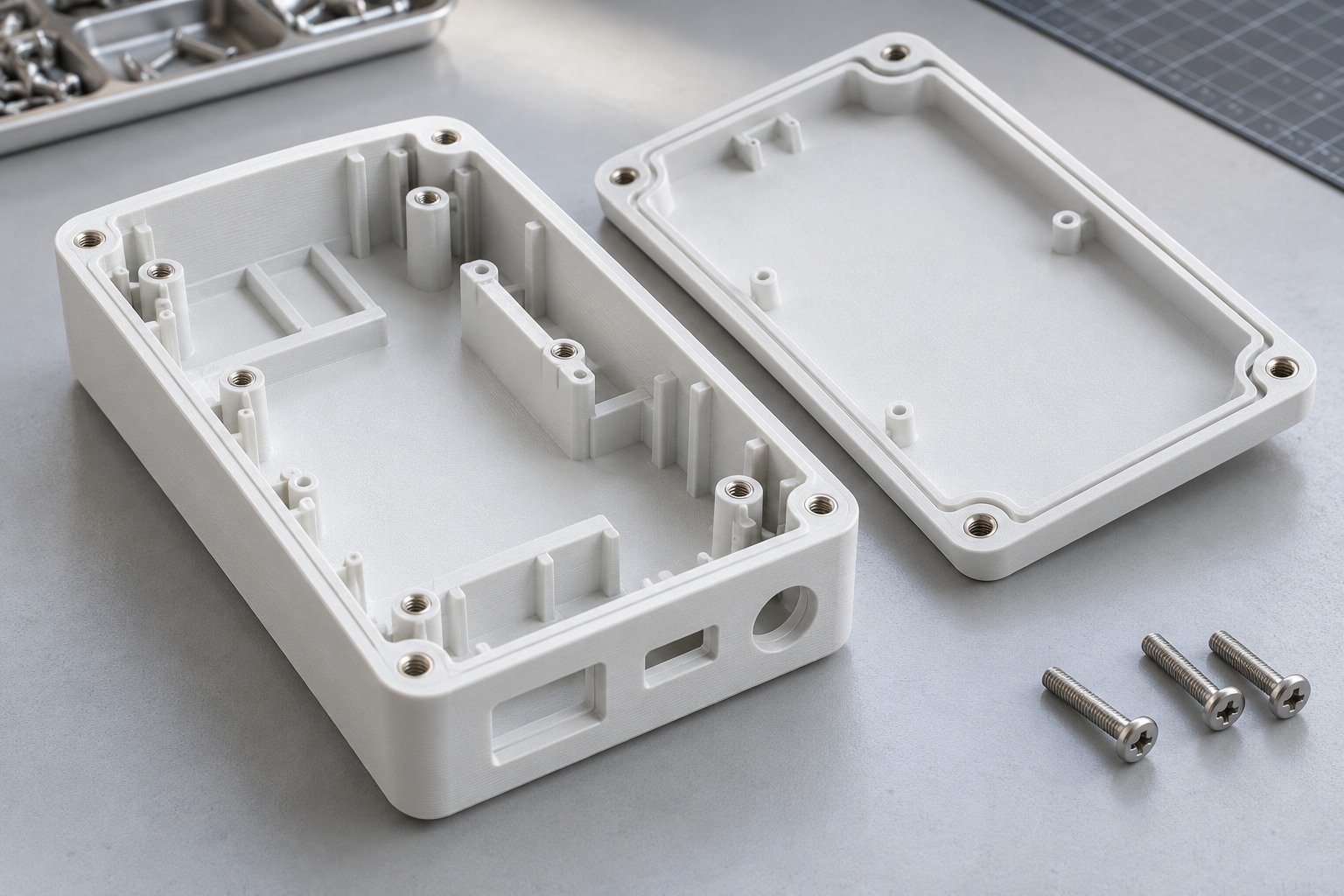
For your enclosure, compare resin detail with the material behavior of nylon or the chosen FDM polymer. Include interior clearance and mating-rim requirements.
| Your input | Function, environment and material preference. |
|---|---|
| Our review | Process, orientation and available material grade. |
| Your approval | Sample behavior in the intended application. |
Process and material availability are confirmed during drawing review; a concept image is not proof of a qualified production route.
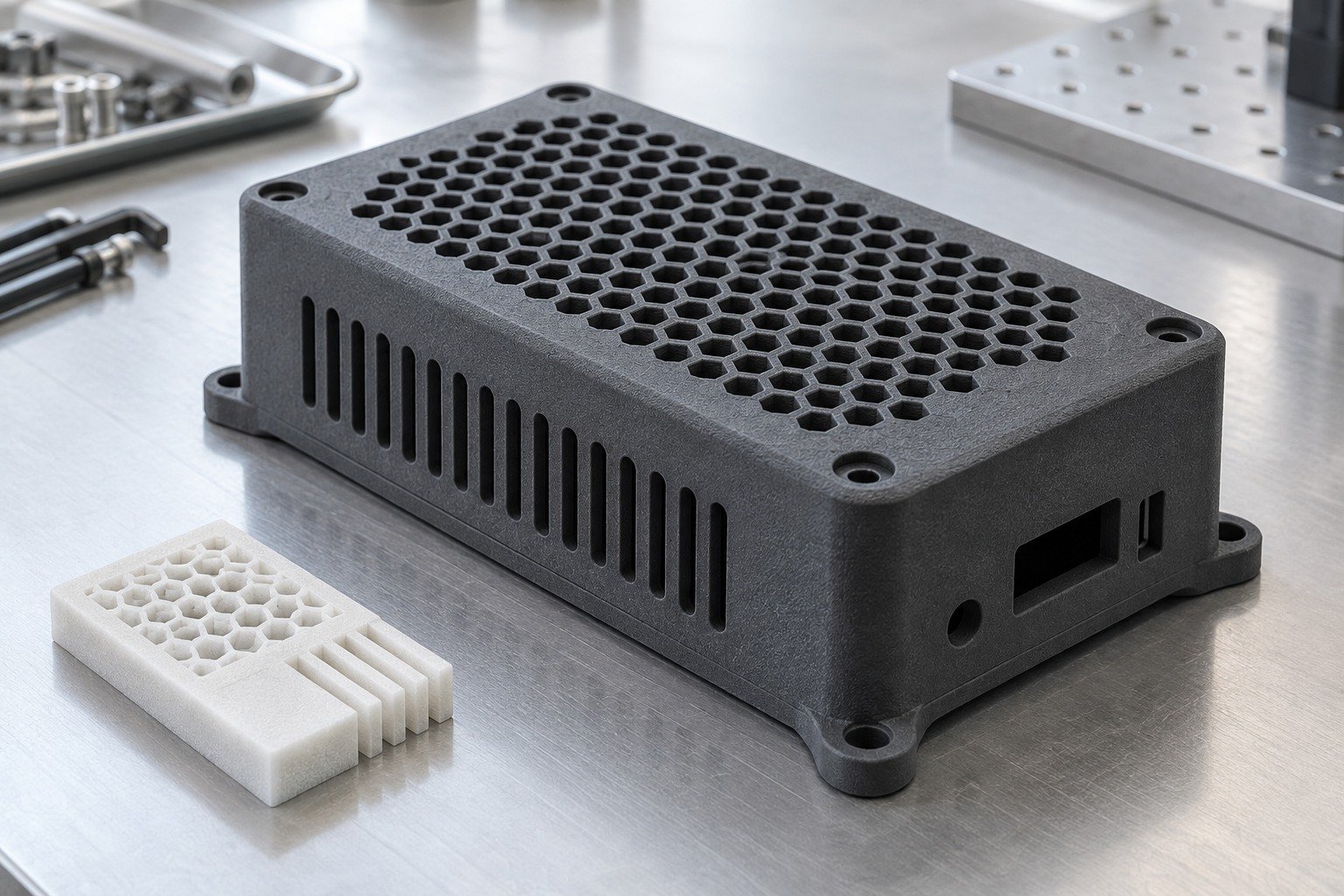
Define cleaning, support marks, insert installation and the coating-free mating rim. Keep residual resin or powder out of assembly features.
| Your surface | Visible faces and allowable support/contact marks. |
|---|---|
| Your interfaces | Holes, inserts, mating rims and finishing allowances. |
| Your scope | Cleanup, finish, assembly and inspection. |
Process and material availability are confirmed during drawing review; a concept image is not proof of a qualified production route.
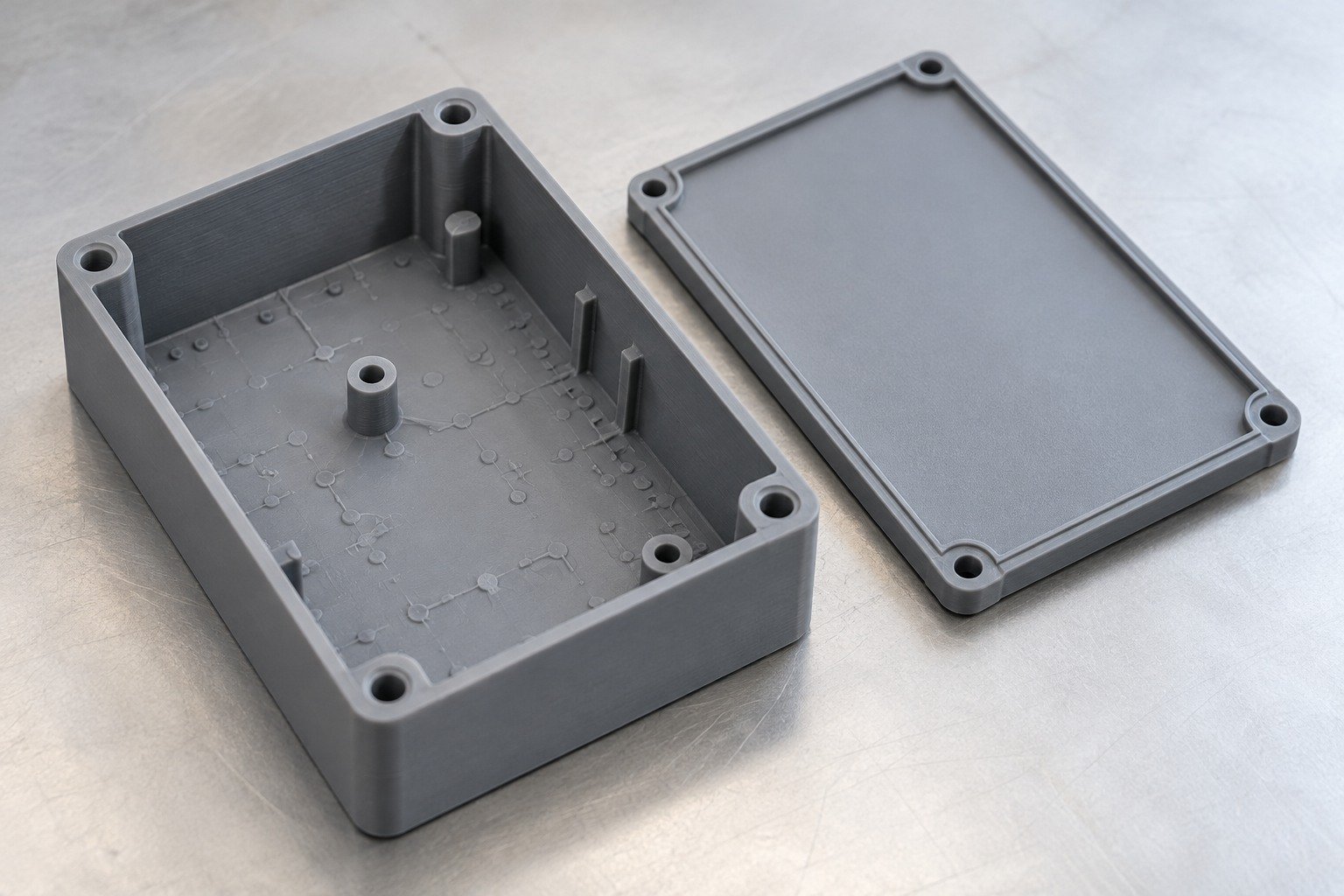
Check lid closure, connector access and the real internal components after finishing. Record the drawing revision used for the fit trial.
| Your drawing | Datums, critical dimensions and accepted revision. |
|---|---|
| Your sample | Fit and function in the finished condition. |
| Your release | Approved scope and evidence for repeat orders. |
Process and material availability are confirmed during drawing review; a concept image is not proof of a qualified production route.
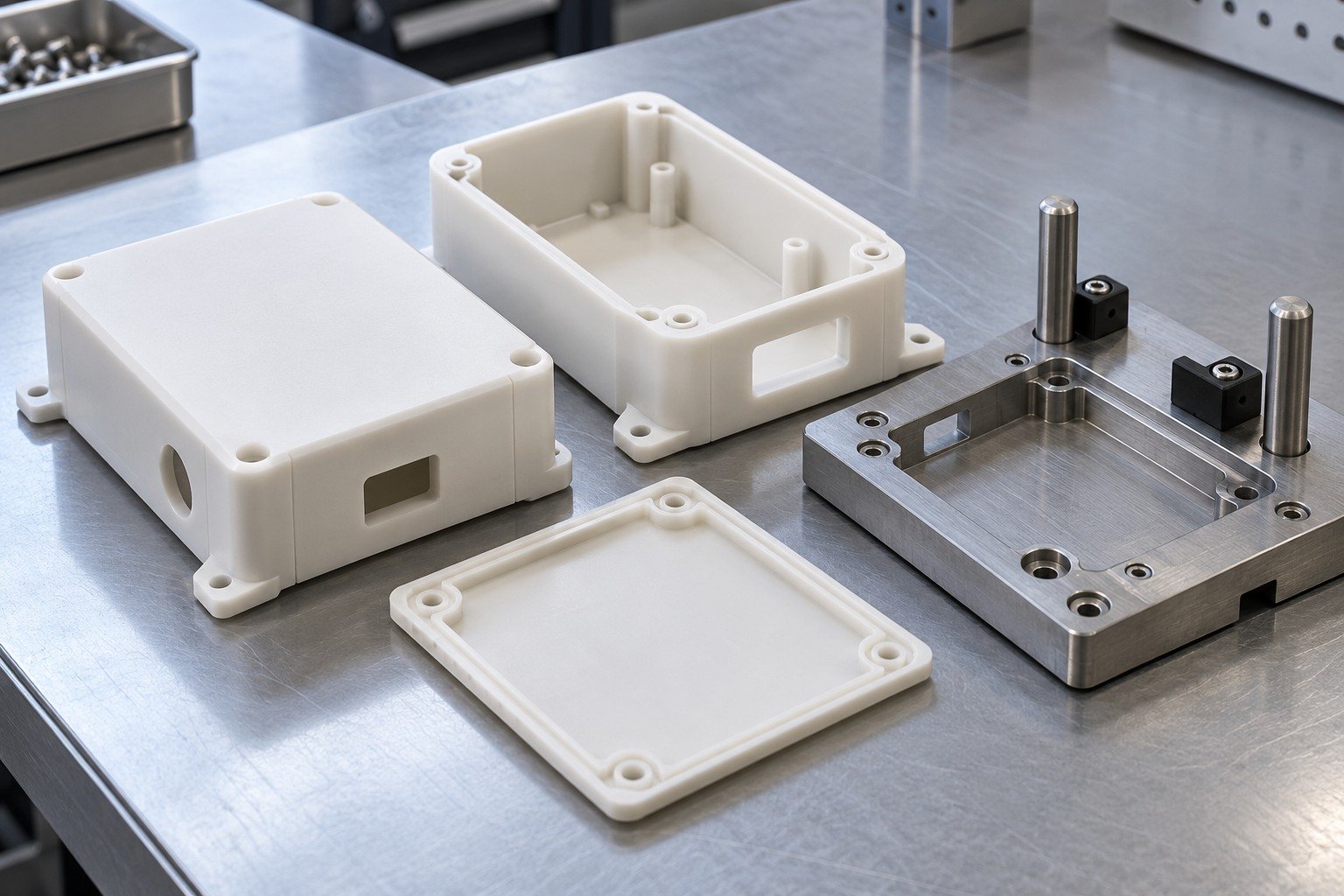
Define load direction, mounting faces and service conditions. A shape that assembles correctly still needs a separate strength and durability review.
| Your load | Direction, duration and load-bearing contacts. |
|---|---|
| Your orientation | Layer direction relative to the applied load. |
| Your check | Fit, working deflection and agreed functional trial. |
Process and material availability are confirmed during drawing review; a concept image is not proof of a qualified production route.
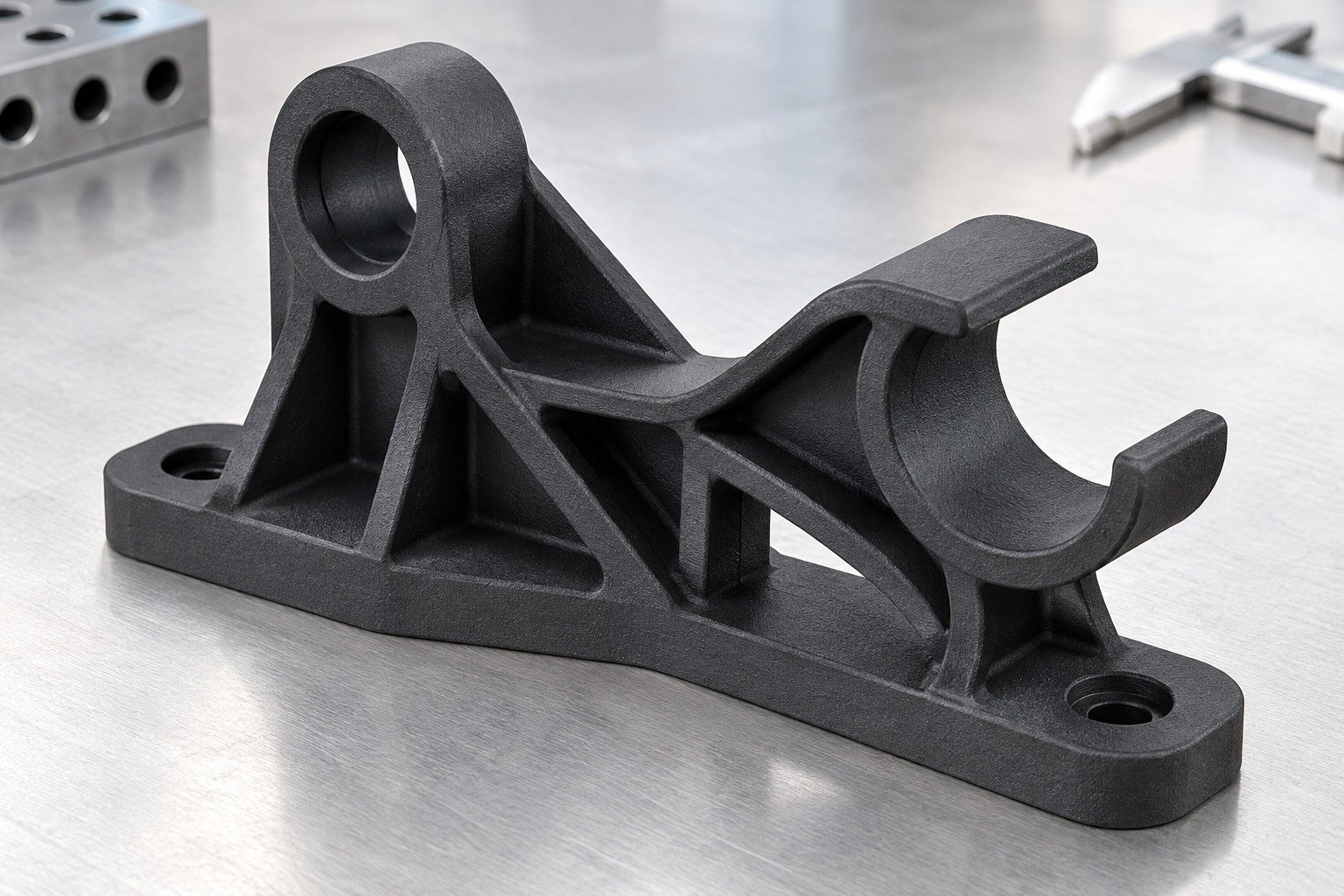
For your bracket, compare the proposed grade, layer direction, sustained load and working environment. A stiffness trial and an appearance trial may need different materials.
| Your input | Function, environment and material preference. |
|---|---|
| Our review | Process, orientation and available material grade. |
| Your approval | Sample behavior in the intended application. |
Process and material availability are confirmed during drawing review; a concept image is not proof of a qualified production route.
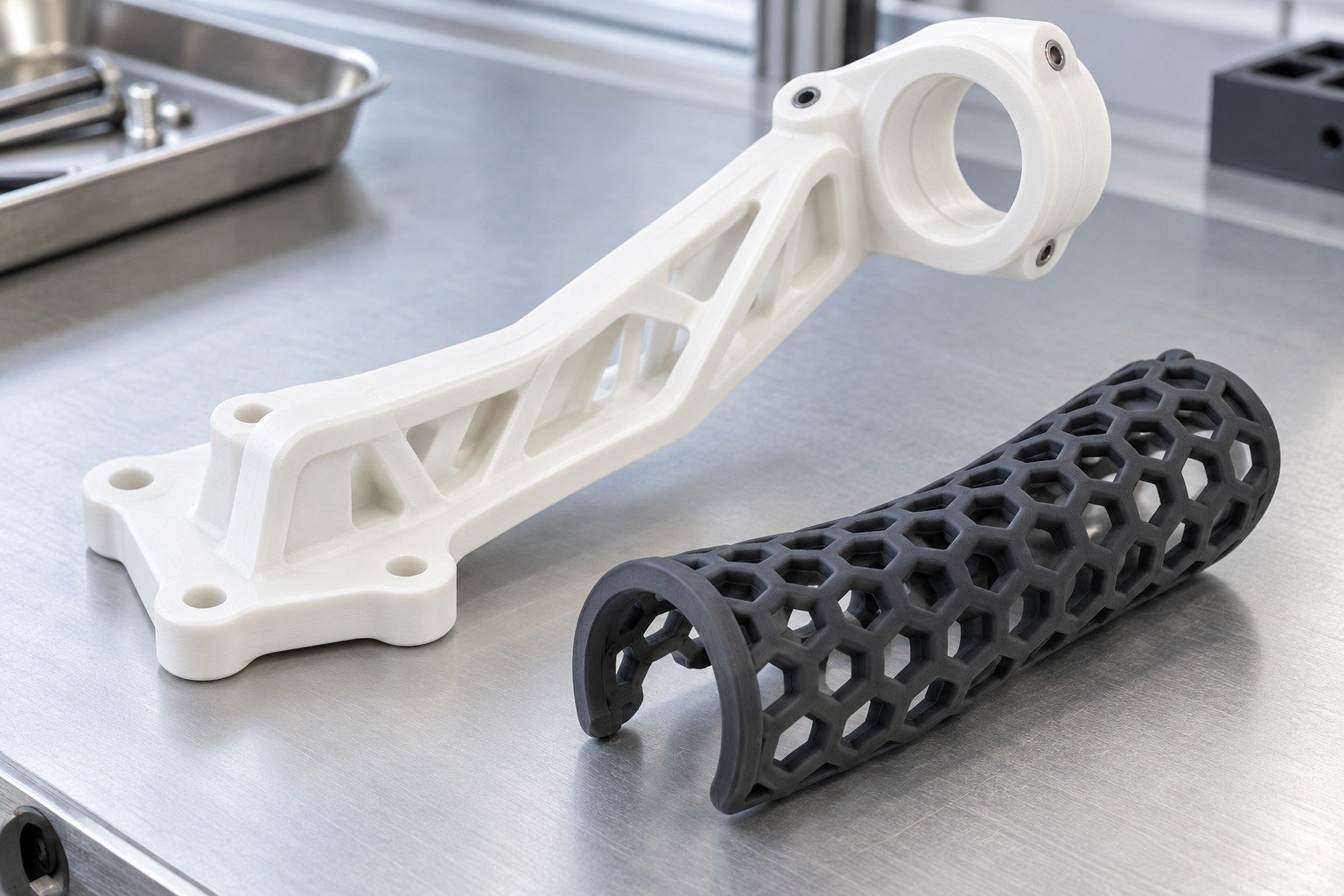
Review inserts, bearing contacts and finishing effects on your bracket holes. Confirm which secondary operations belong in the quote.
| Your surface | Visible faces and allowable support/contact marks. |
|---|---|
| Your interfaces | Holes, inserts, mating rims and finishing allowances. |
| Your scope | Cleanup, finish, assembly and inspection. |
Process and material availability are confirmed during drawing review; a concept image is not proof of a qualified production route.
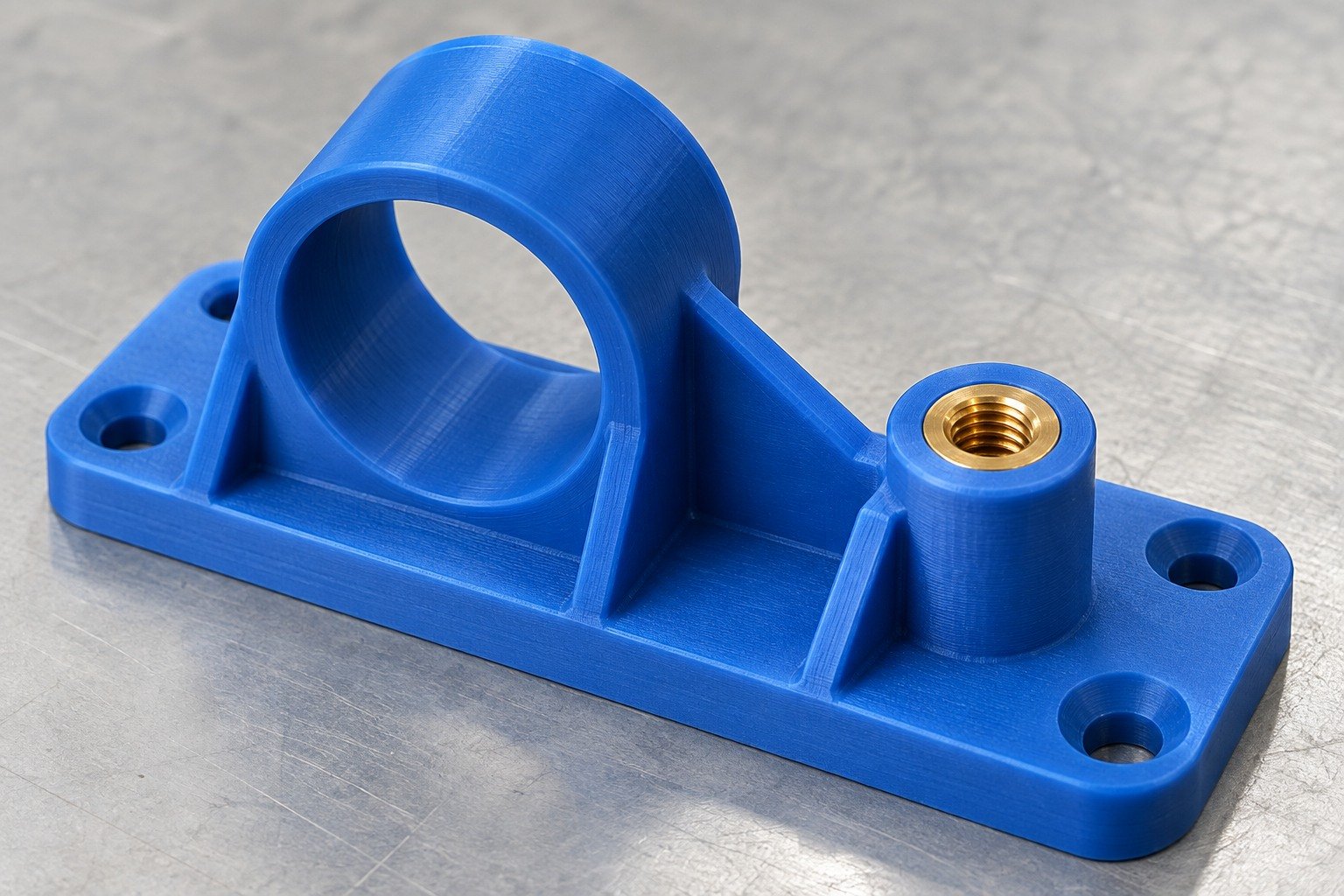
Inspect mounting dimensions and review the agreed loaded condition. Do not substitute a successful assembly check for a strength qualification.
| Your drawing | Datums, critical dimensions and accepted revision. |
|---|---|
| Your sample | Fit and function in the finished condition. |
| Your release | Approved scope and evidence for repeat orders. |
Process and material availability are confirmed during drawing review; a concept image is not proof of a qualified production route.
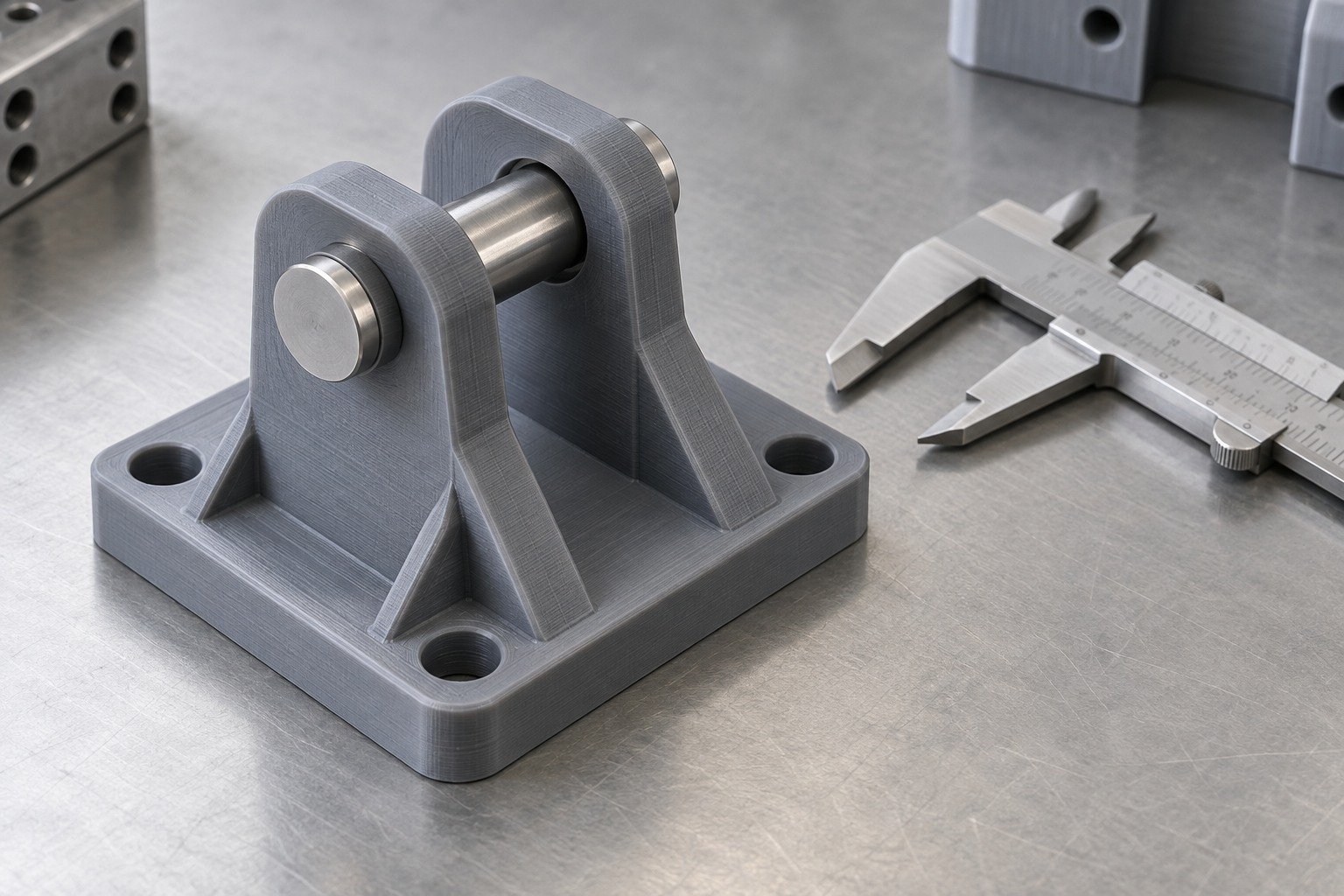
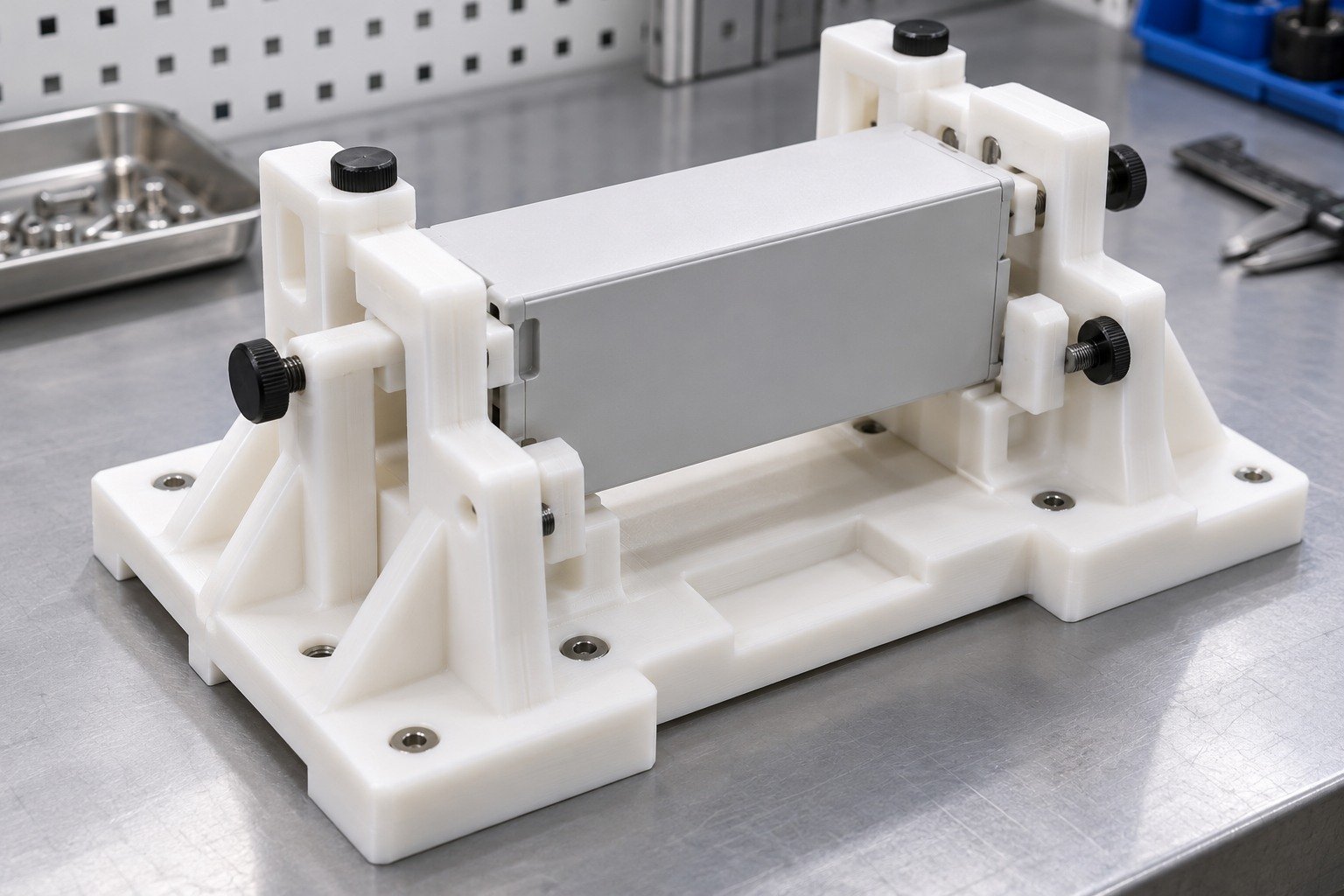
Plan locator positions, clamp access and replaceable contact points. Plastic rapid prototyping services can support a fixture trial before you commit to its final build.
| Your location | Datums, contact pads and counterpart geometry. |
|---|---|
| Your access | Clamp travel, tools and operator clearance. |
| Your check | Repeat placement and replaceable wear features. |
Process and material availability are confirmed during drawing review; a concept image is not proof of a qualified production route.
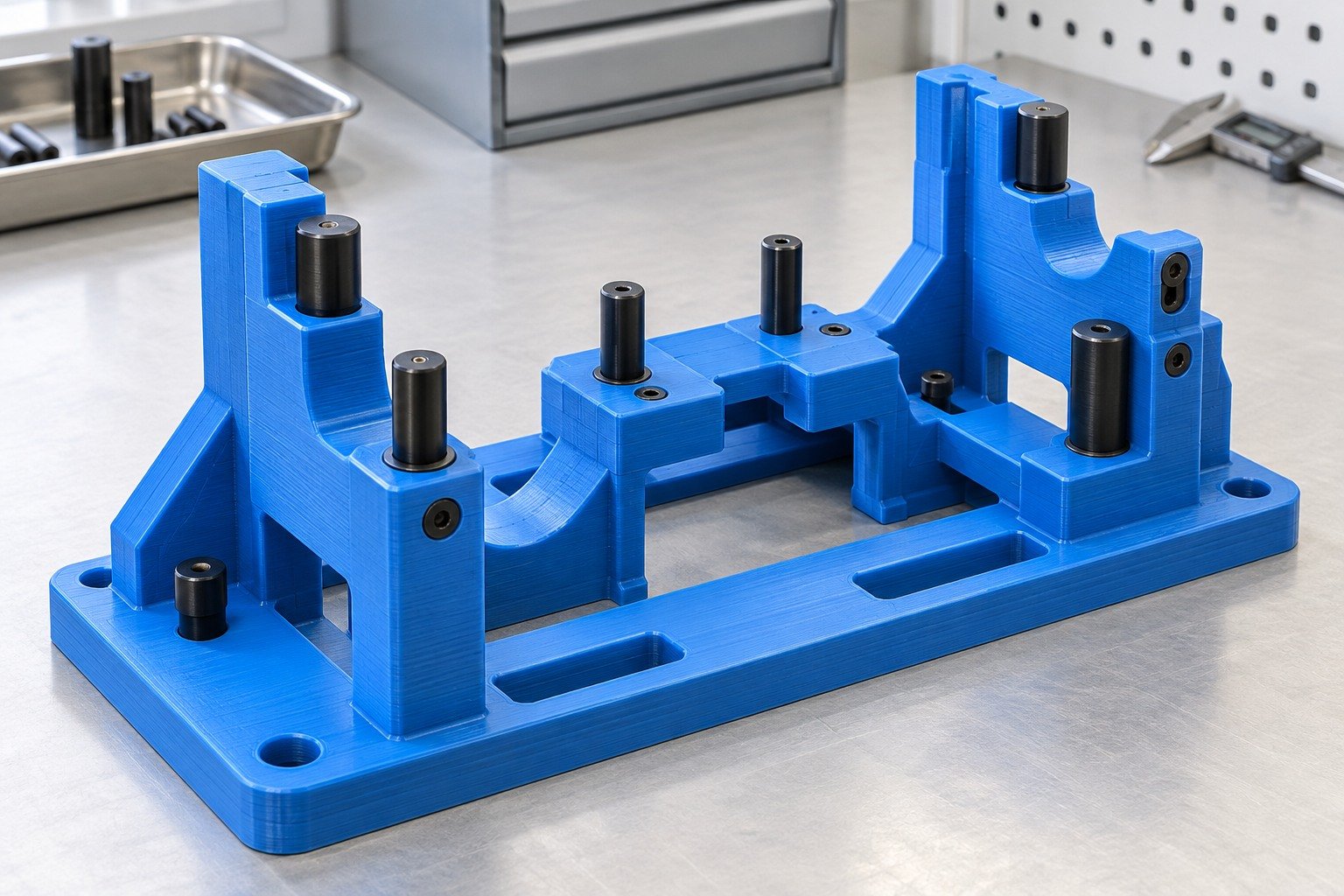
An FDM 3D printing service may suit a fixture trial when material and layer direction meet its function. Confirm actual process availability and contact wear requirements.
| Your input | Function, environment and material preference. |
|---|---|
| Our review | Process, orientation and available material grade. |
| Your approval | Sample behavior in the intended application. |
Process and material availability are confirmed during drawing review; a concept image is not proof of a qualified production route.
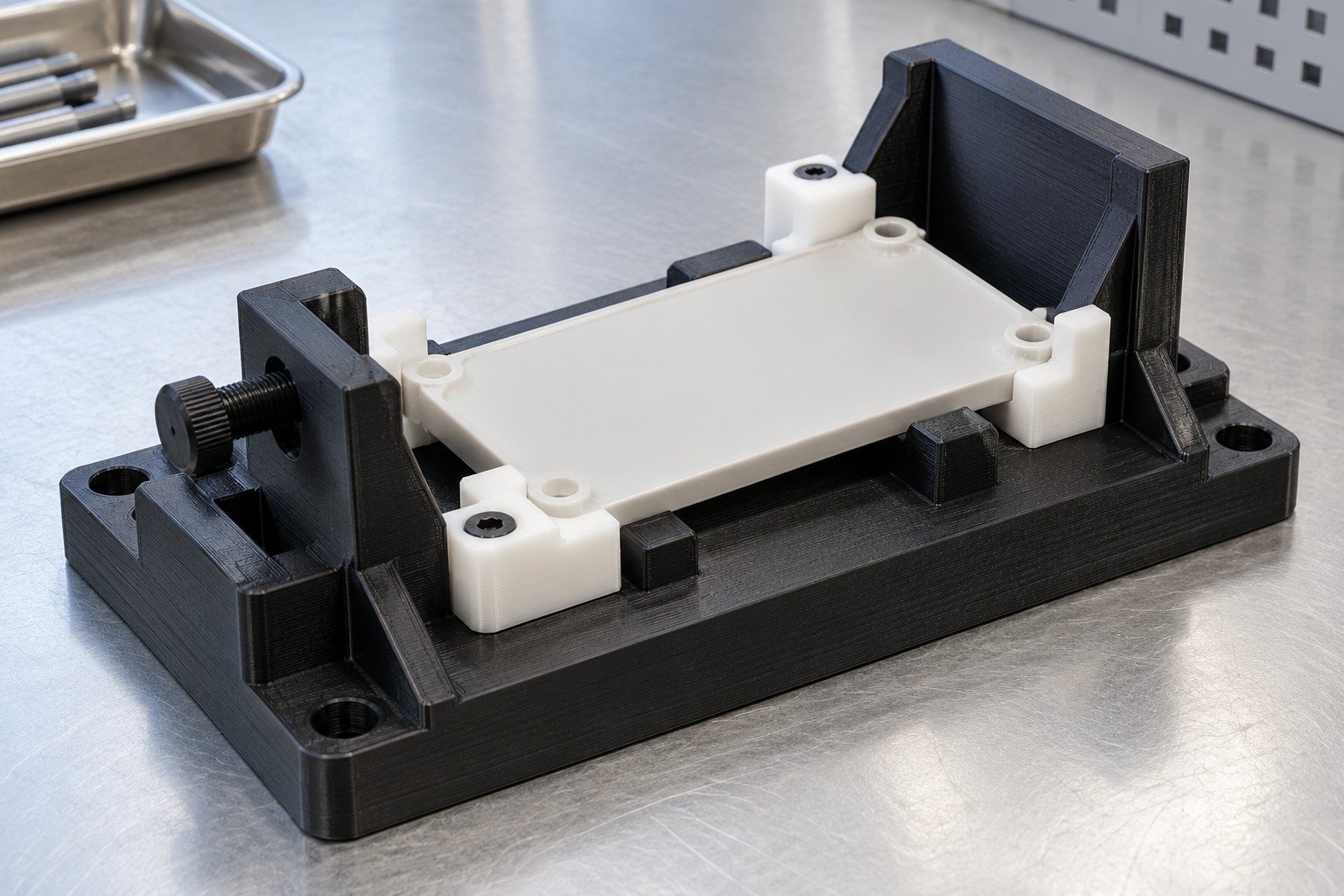
Allow access to install replaceable locator pins and inserts. Agree which contacts need finishing and how wear items will be replaced.
| Your surface | Visible faces and allowable support/contact marks. |
|---|---|
| Your interfaces | Holes, inserts, mating rims and finishing allowances. |
| Your scope | Cleanup, finish, assembly and inspection. |
Process and material availability are confirmed during drawing review; a concept image is not proof of a qualified production route.
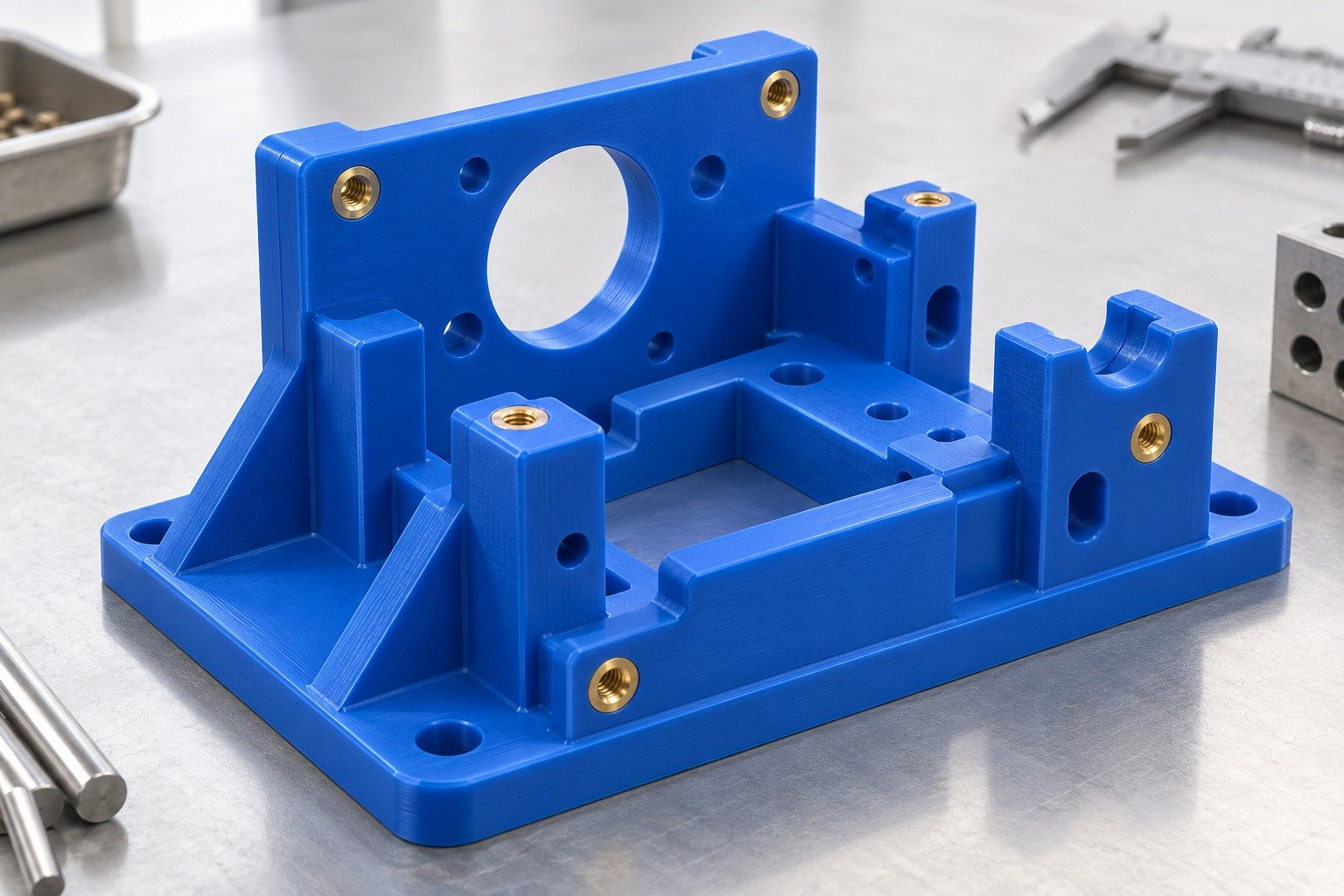
Try the fixture with your actual counterpart and tools. Confirm locating repeatability, clearances and clamping before repeat supply.
| Your drawing | Datums, critical dimensions and accepted revision. |
|---|---|
| Your sample | Fit and function in the finished condition. |
| Your release | Approved scope and evidence for repeat orders. |
Process and material availability are confirmed during drawing review; a concept image is not proof of a qualified production route.
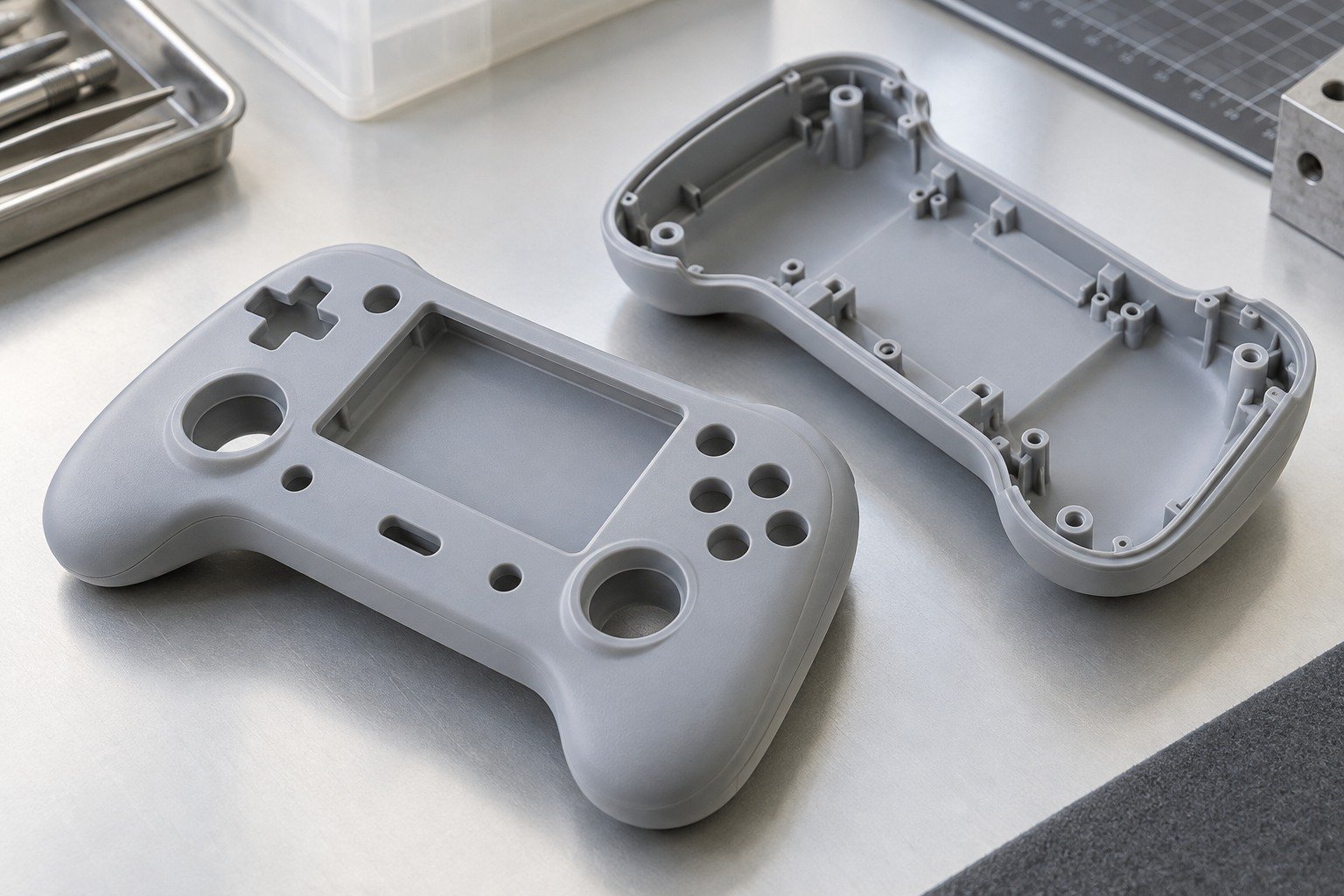
Show which surfaces buyers will see and touch. Review seams, color, gloss and transparent areas against an agreed sample rather than a screen image alone.
| Your appearance | Visible faces, viewing conditions and reference sample. |
|---|---|
| Your assembly | Seams, mounting points and removable covers. |
| Your check | Finished color, texture and accepted cosmetic zones. |
Process and material availability are confirmed during drawing review; a concept image is not proof of a qualified production route.
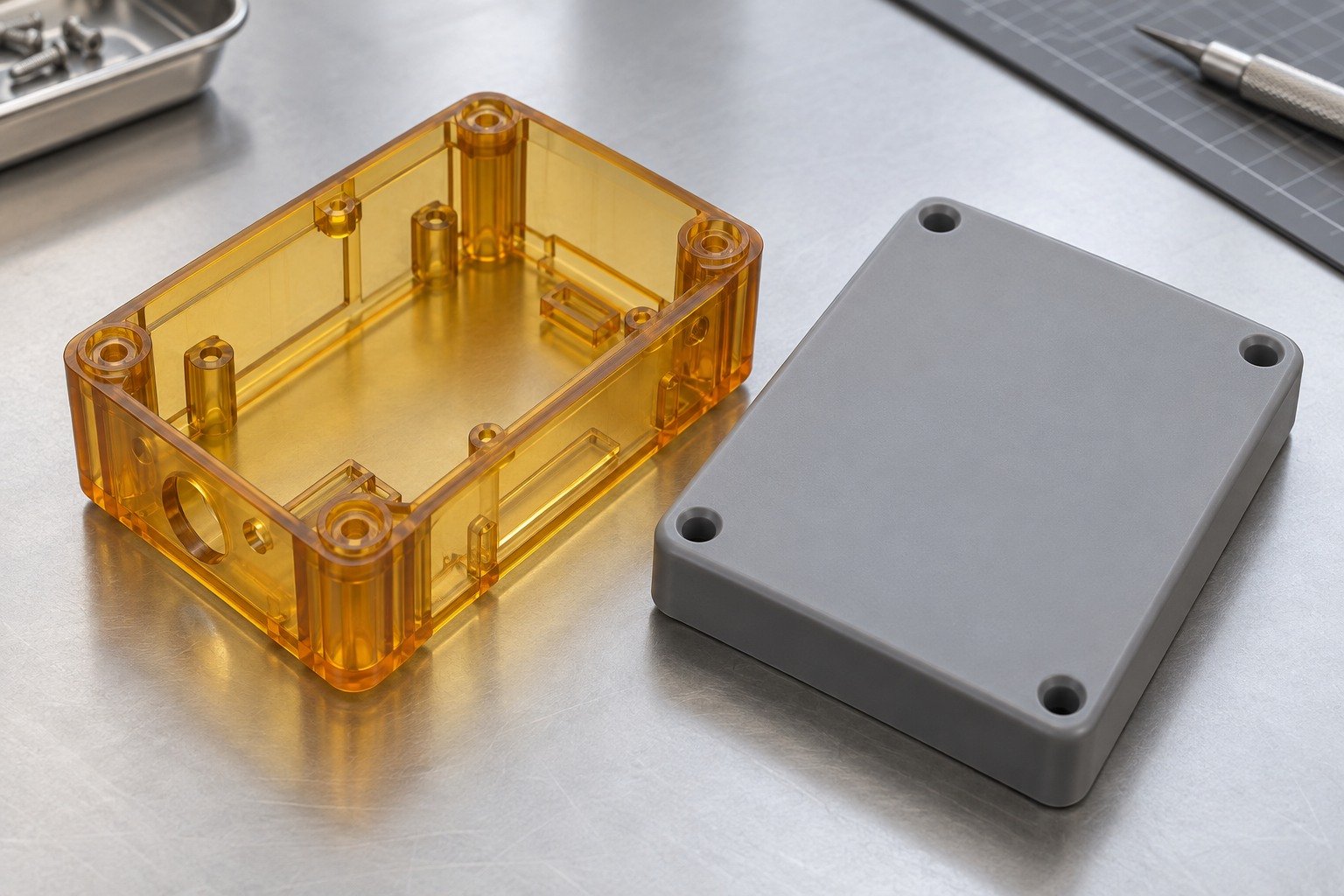
Review clear resin 3D printing against a finished sample when transparency matters. Support contacts, curing and surface work affect the visible result.
| Your input | Function, environment and material preference. |
|---|---|
| Our review | Process, orientation and available material grade. |
| Your approval | Sample behavior in the intended application. |
Process and material availability are confirmed during drawing review; a concept image is not proof of a qualified production route.
For 3D printed plastic parts painting, agree preparation, coating, color and cosmetic zones. A render alone cannot define an accepted finish.
| Your surface | Visible faces and allowable support/contact marks. |
|---|---|
| Your interfaces | Holes, inserts, mating rims and finishing allowances. |
| Your scope | Cleanup, finish, assembly and inspection. |
Process and material availability are confirmed during drawing review; a concept image is not proof of a qualified production route.
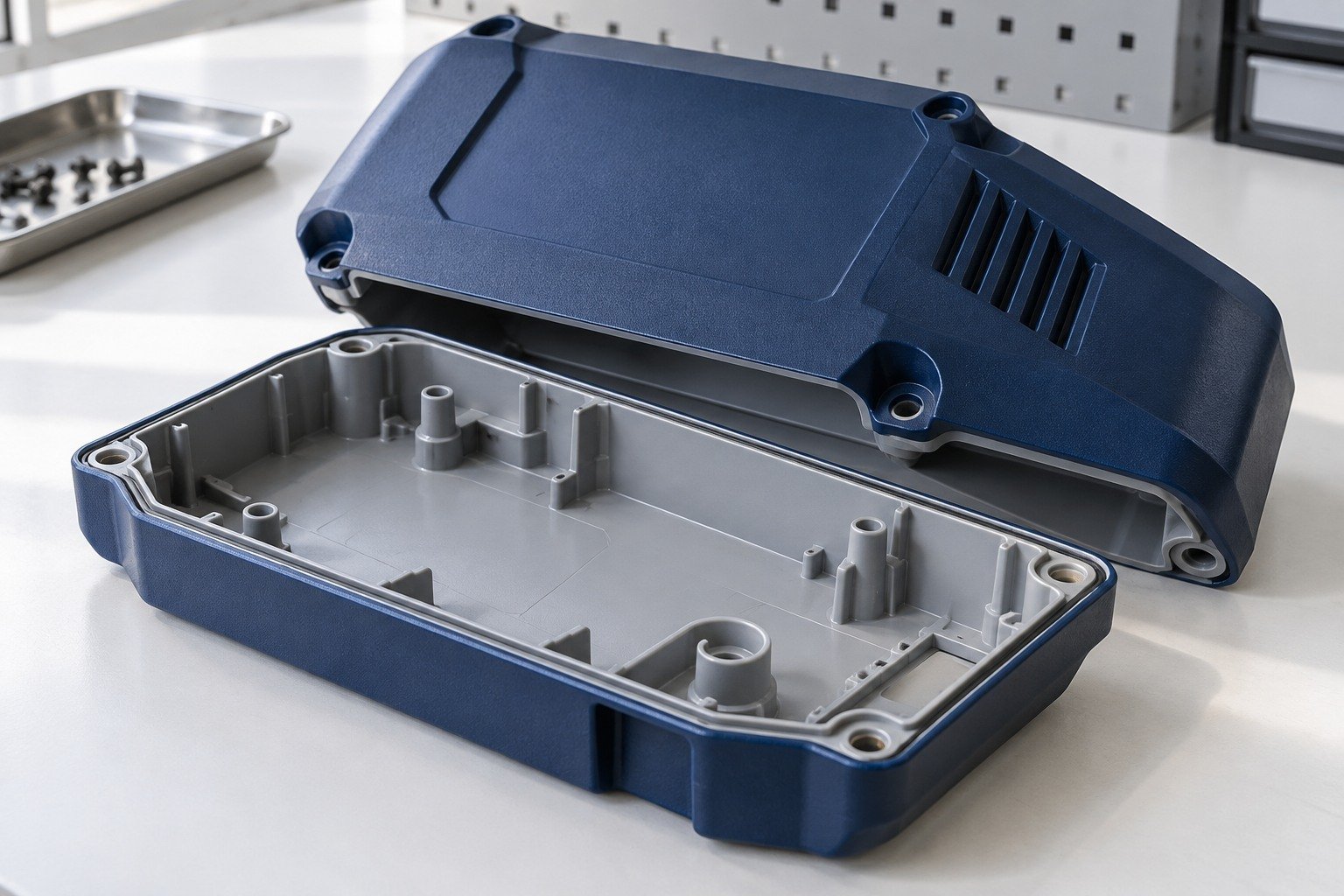
Approve the model in agreed lighting and viewing conditions. Record cosmetic exceptions, seam locations and the accepted reference sample.
| Your drawing | Datums, critical dimensions and accepted revision. |
|---|---|
| Your sample | Fit and function in the finished condition. |
| Your release | Approved scope and evidence for repeat orders. |
Process and material availability are confirmed during drawing review; a concept image is not proof of a qualified production route.
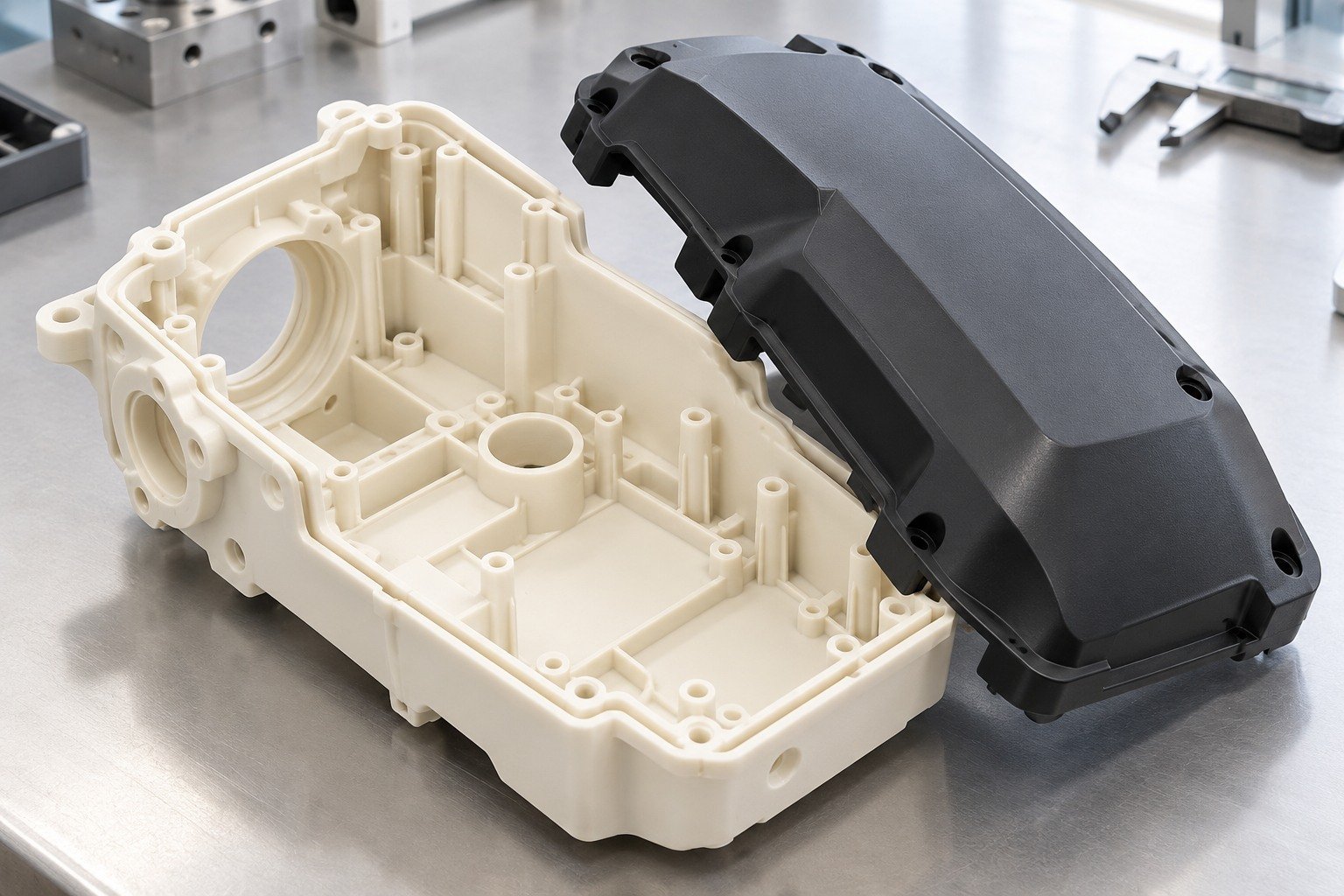
These are selection routes for review. Your quote must identify the available grade, process, finish and acceptance conditions.
| Route for review | Why you may consider it | What your review must resolve |
|---|---|---|
| SLA / photopolymer resin | Detailed models and cosmetic surfaces | Resin grade, supports, washing and post-curing |
| SLS / PA12 or PA11 nylon | Functional geometry and nested builds | Powder access, orientation and final surface |
| MJF / specified nylon grade | Repeat functional plastic components | Grade, build layout, cleanup and sample evidence |
| FDM / ABS, PETG or PC candidate | Fixtures and larger functional concepts | Layer direction, support access and actual grade |
| TPU / specified flexible route | Compliant contacts and flexible components | Hardness, wall design and agreed deformation test |
Stereolithography uses a light-cured resin; selective laser sintering fuses polymer powder. Multi Jet Fusion and fused deposition modeling use different build routes. None of these names alone specifies your finished part.
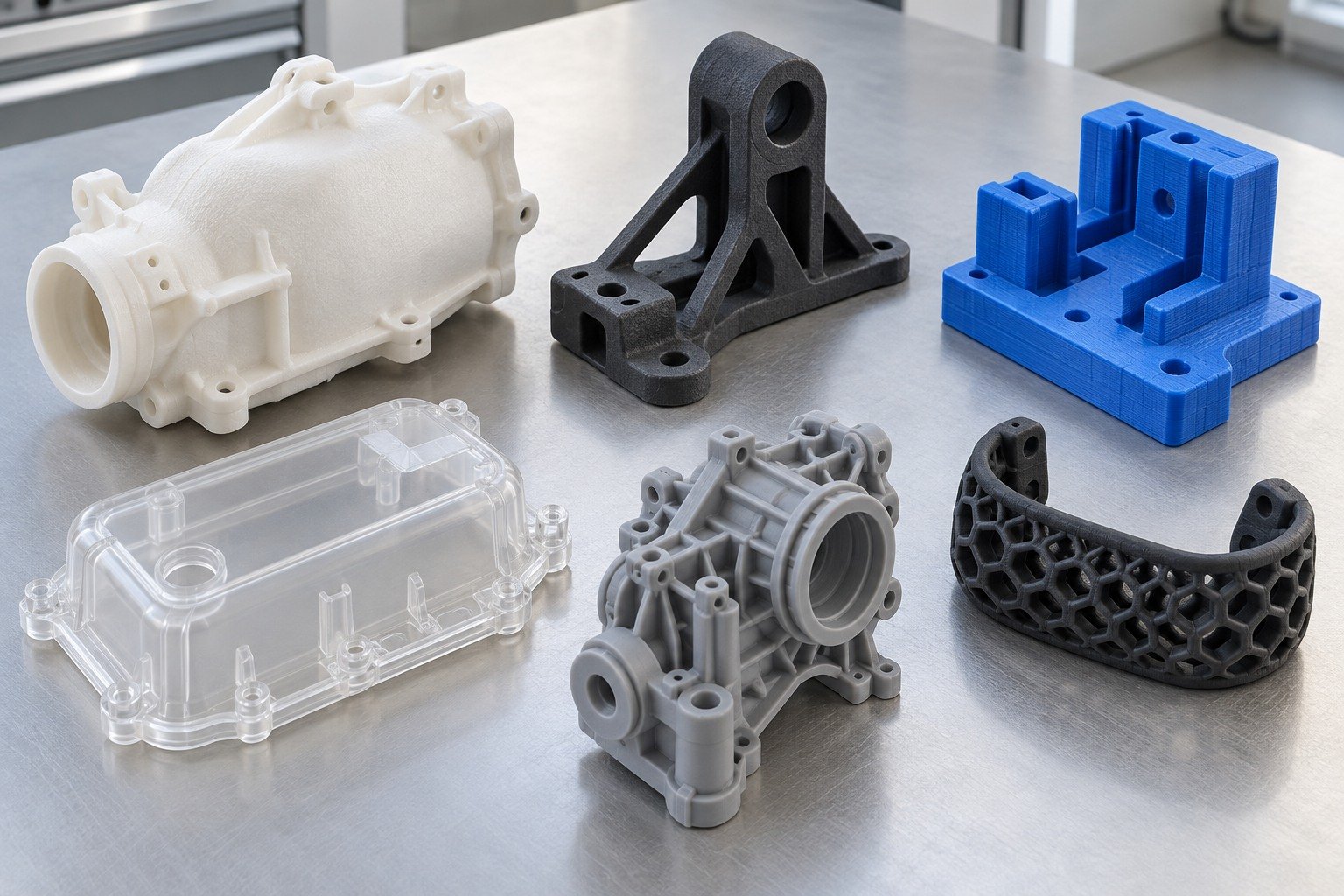
PLASTIC 3D PRINTING DESIGN GUIDELINES
Review support marks, trapped powder, distortion and interfaces around the features that matter to your assembly.
Build direction changes layer orientation and support contact locations. Identify your cosmetic and mating faces before the build plan is approved.
Mark visible, sealing and mating surfaces.
Review layer direction against function.
Allow removal without damaging features.
Check the final contact areas.
Numeric wall limits and tolerances depend on the chosen process, grade, geometry and final condition. Confirm project-specific requirements rather than a universal capability figure.
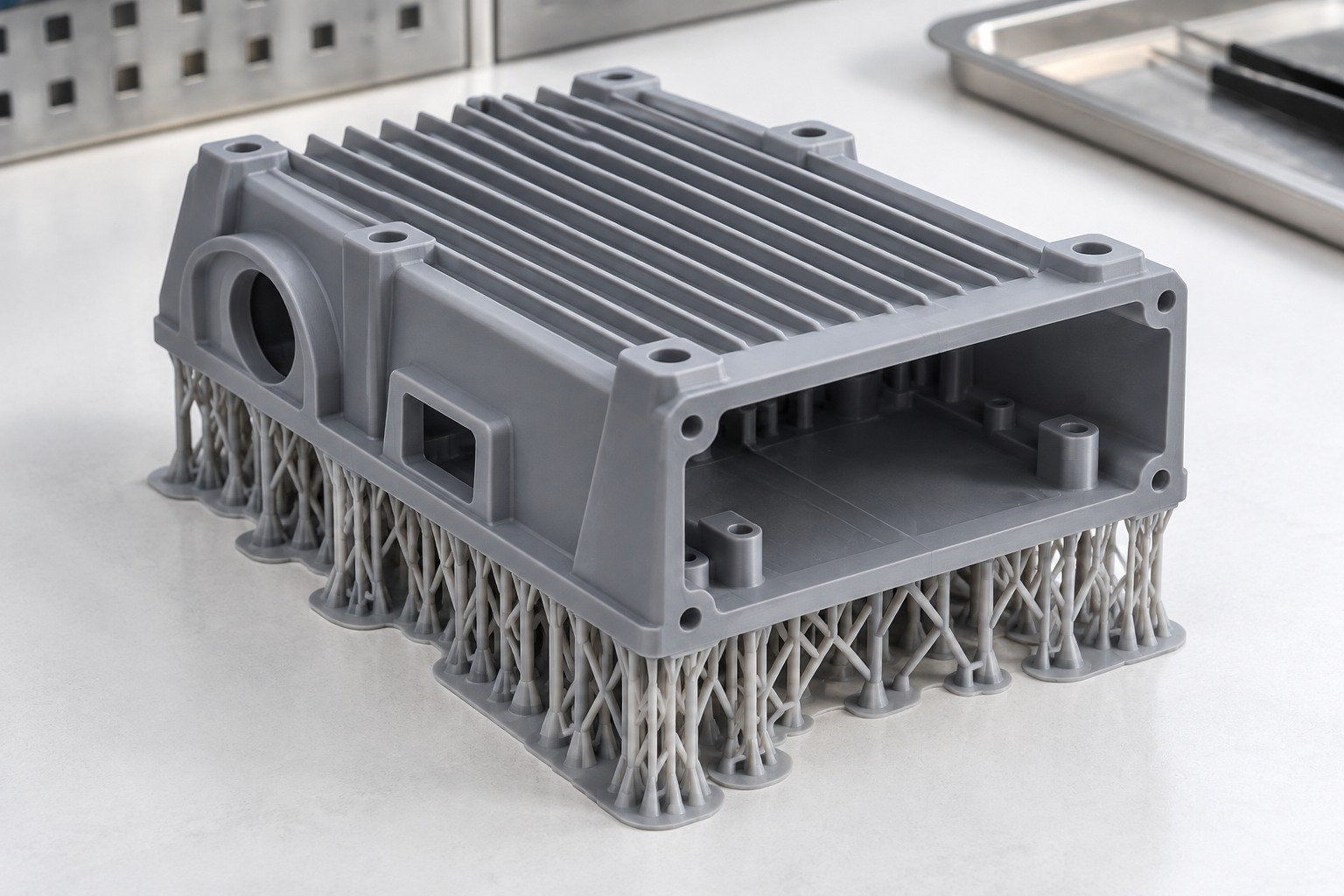
Review ribs, broad flat areas and abrupt thickness changes together. Specify the dimensions that matter after cooling and conditioning.
Identify the dimensions that control fit.
Review ribs and thick junctions.
Check warp-sensitive surfaces.
Agree when and how dimensions are measured.
Numeric wall limits and tolerances depend on the chosen process, grade, geometry and final condition. Confirm project-specific requirements rather than a universal capability figure.
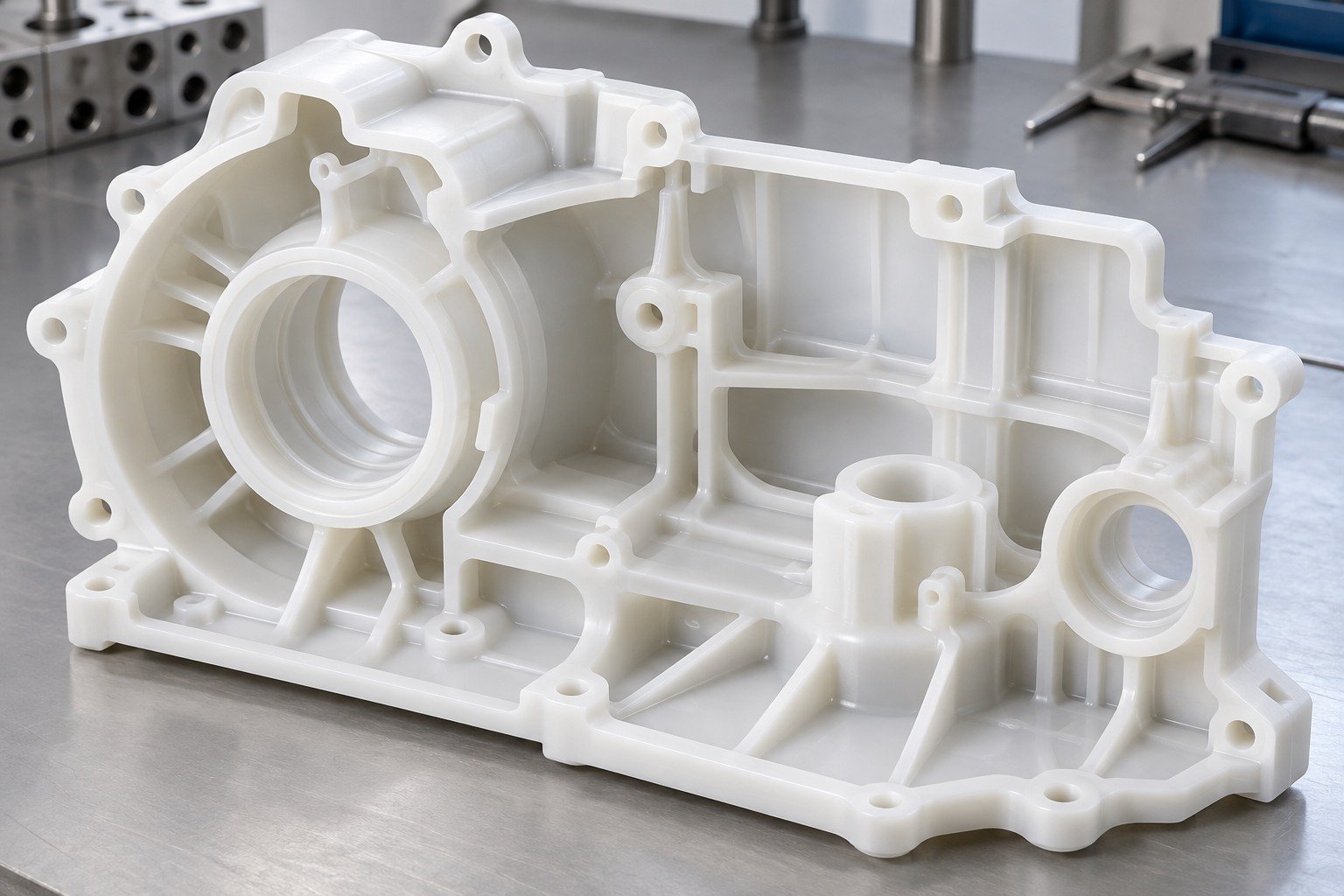
Hollow parts need accessible openings for uncured resin or loose powder removal, depending on the process. A closed passage may prevent effective cleaning.
Show every enclosed or internal region.
Confirm a usable cleanup path.
State where residual media is unacceptable.
Agree checks for inaccessible regions.
Numeric wall limits and tolerances depend on the chosen process, grade, geometry and final condition. Confirm project-specific requirements rather than a universal capability figure.
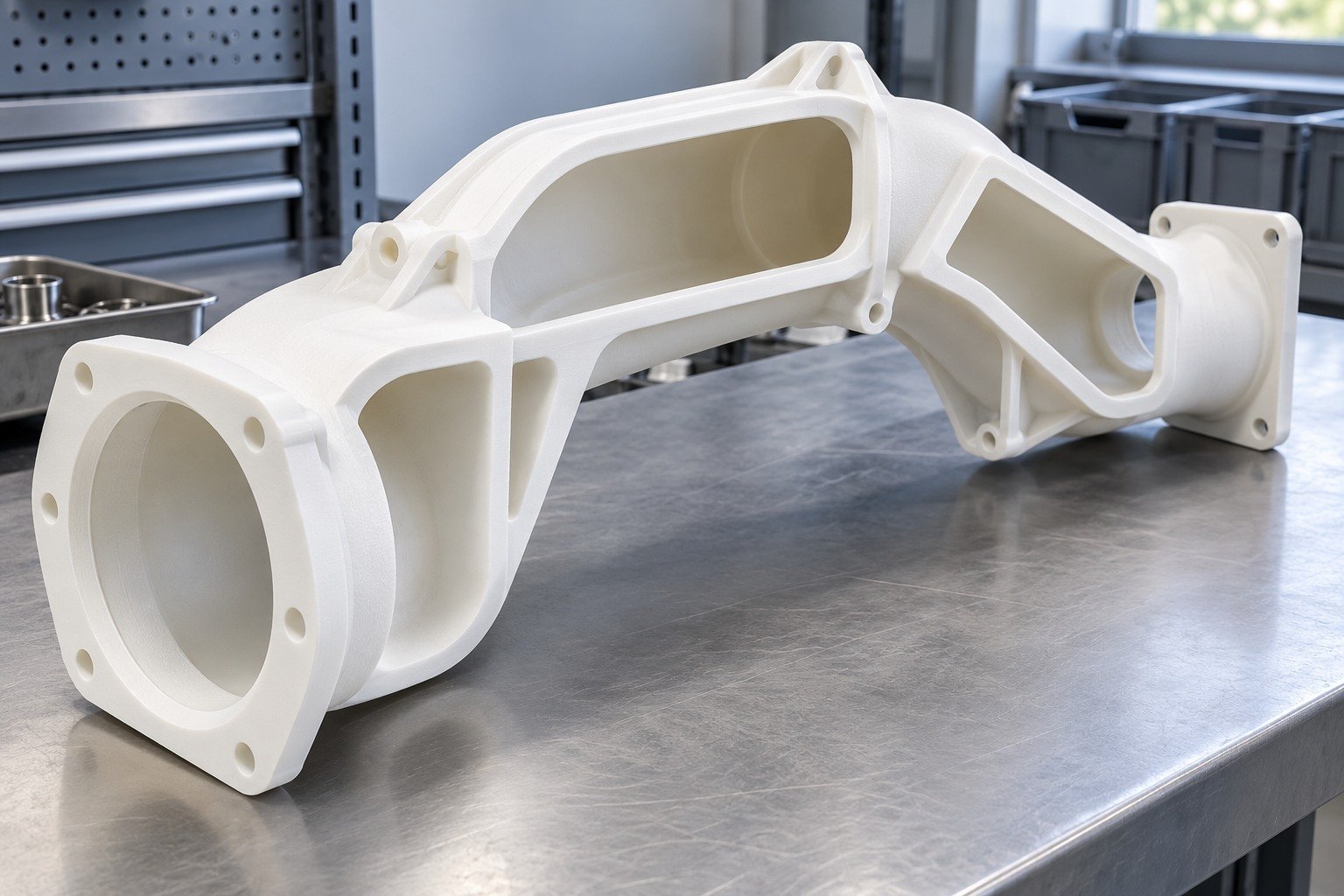
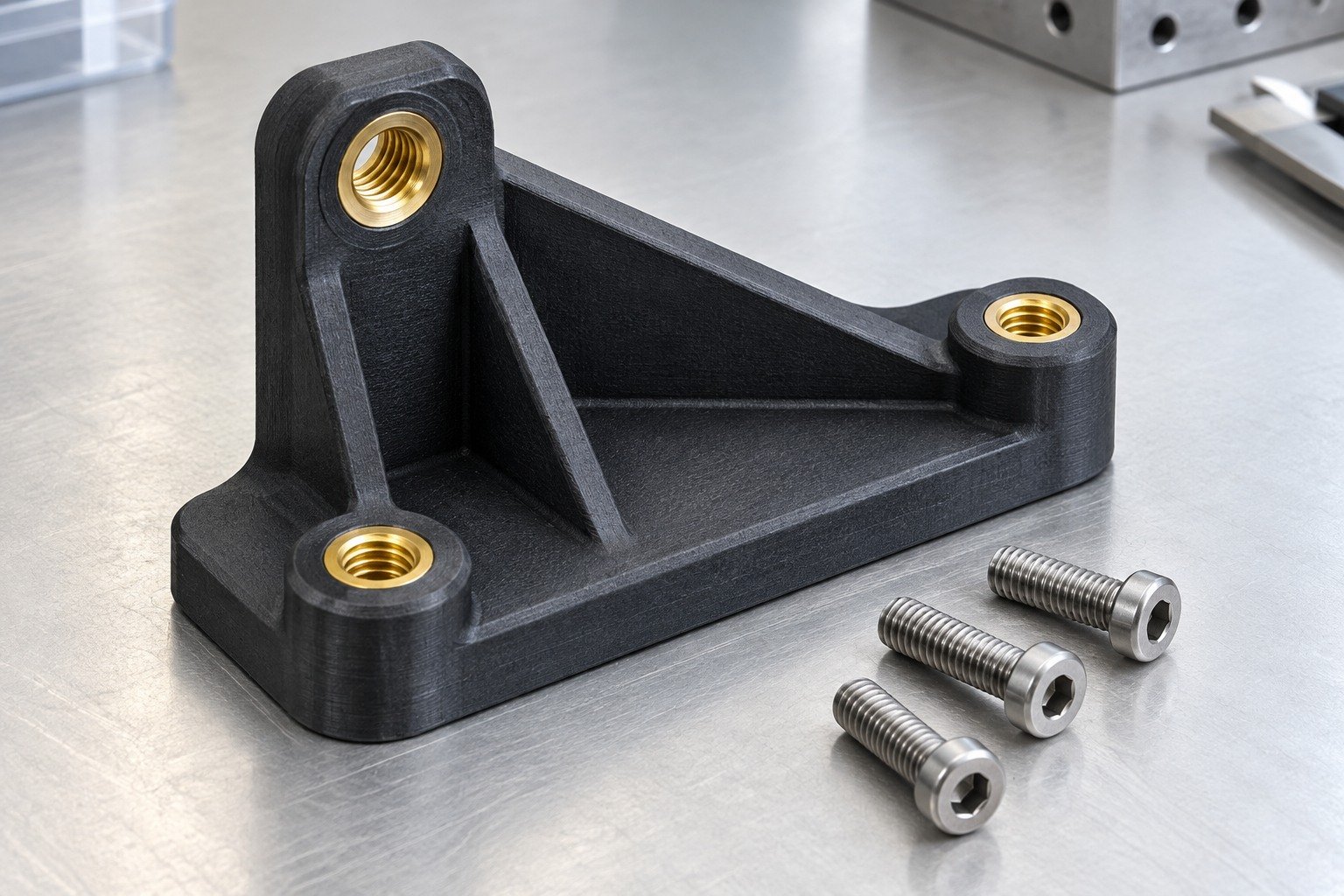
Can 3D printed plastic parts be threaded? Compare printed threads, post-machined features and inserts against the load, access and material.
State fastening and service loads.
Review wall, depth and edge distance.
Allow the installation tool to reach.
Verify engagement without forcing the fit.
Numeric wall limits and tolerances depend on the chosen process, grade, geometry and final condition. Confirm project-specific requirements rather than a universal capability figure.
A resin 3D printing service must identify washing and post-curing requirements. An ABS-like resin is not the same material as an ABS thermoplastic.
Confirm exact formulation and process.
Follow the specified material procedure.
Share temperature, UV and chemical exposure.
Test the delivered state, not a material nickname.
Numeric wall limits and tolerances depend on the chosen process, grade, geometry and final condition. Confirm project-specific requirements rather than a universal capability figure.
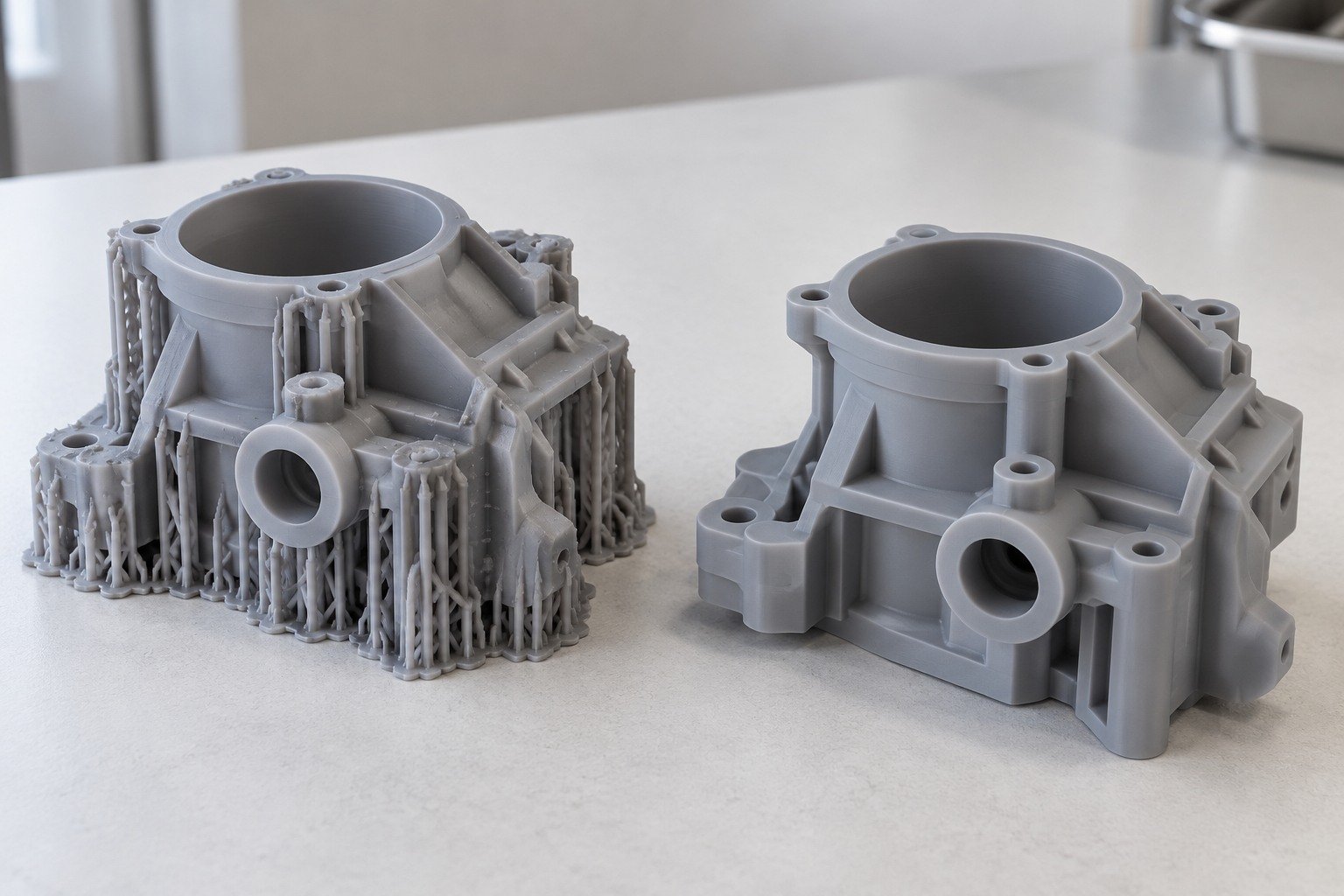
Plastic 3D printing surface finish affects appearance and mating features. Agree visible faces, finishing sequence and the condition used for dimensional acceptance.
Provide the target surface or color reference.
Review changes at holes and mating faces.
Mark contacts that must stay uncoated.
Inspect after the included finishing steps.
Numeric wall limits and tolerances depend on the chosen process, grade, geometry and final condition. Confirm project-specific requirements rather than a universal capability figure.
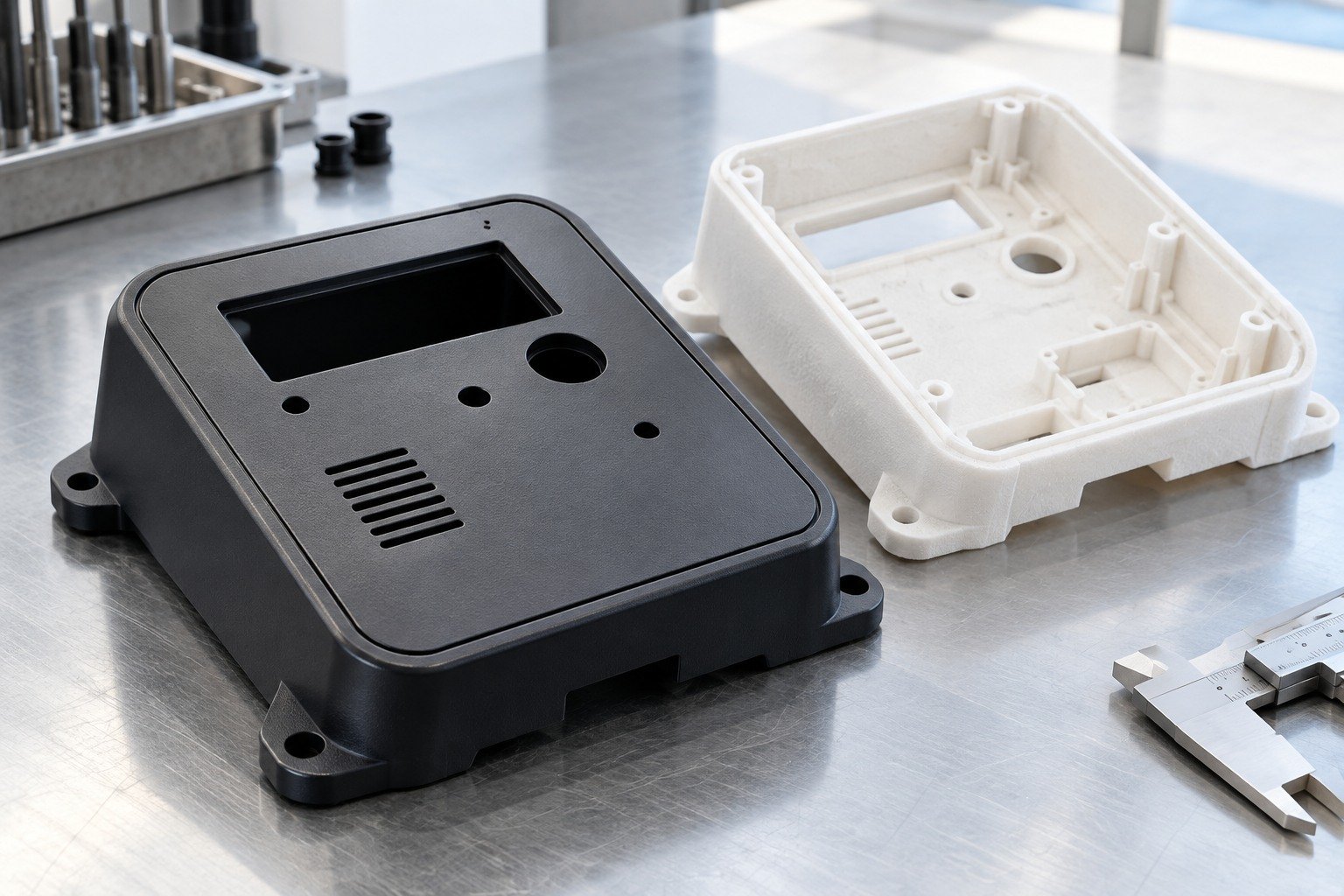
Separate as-printed acceptance from the finished component your team will assemble.
| Part state | Your drawing should define | Review focus |
|---|---|---|
| As-printed | Geometry, orientation and support/contact zones | Cleanup access, warp and build features |
| Finished | Mating dimensions, inserts, surfaces and datums | Fit after curing, finishing and conditioning |
Plastic 3D printing tolerances must be agreed by feature and delivered state. Layer thickness is not a finished-part tolerance.
Keep each operation visible in your order scope.
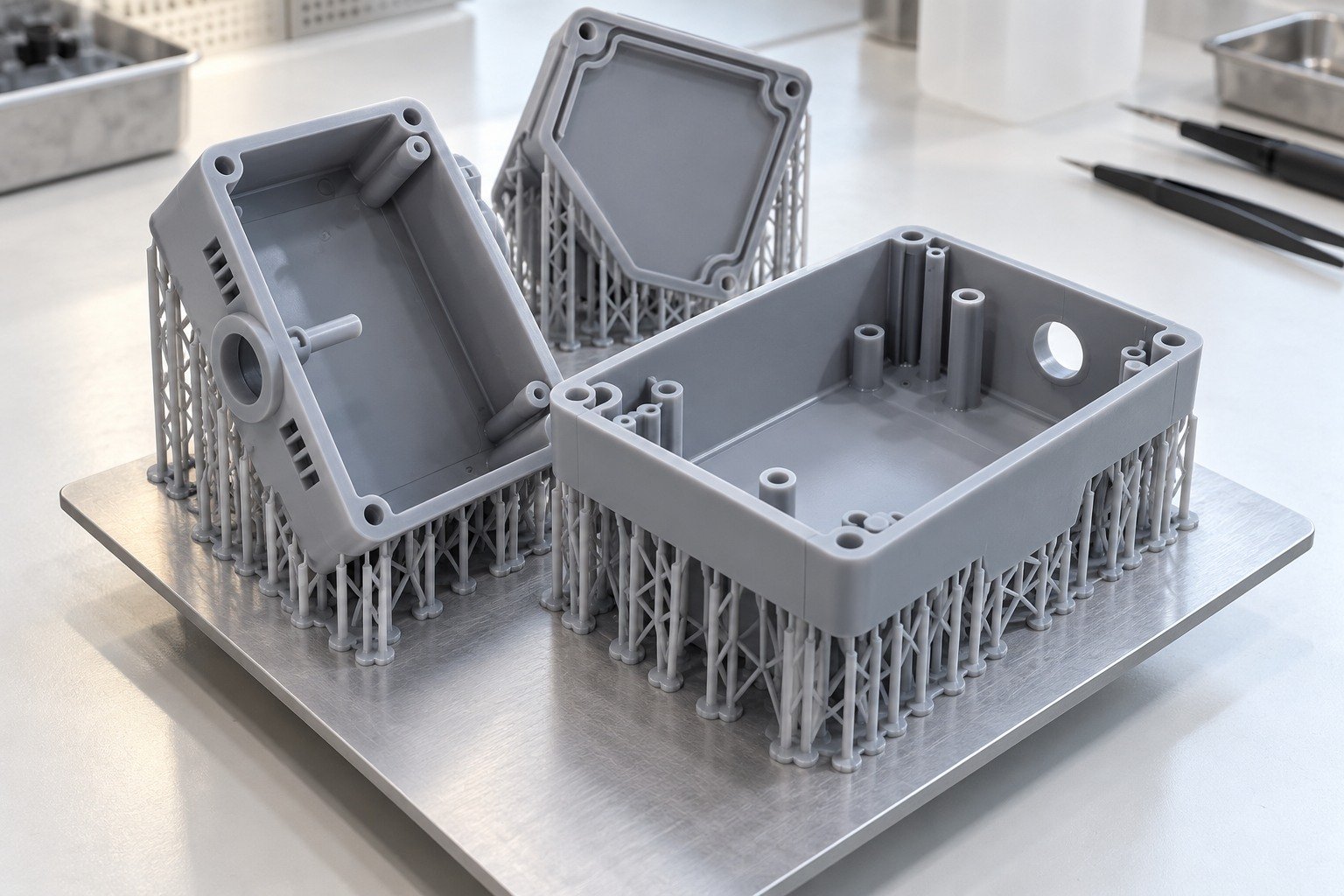
Build the agreed route; remove supports, resin or powder as applicable.
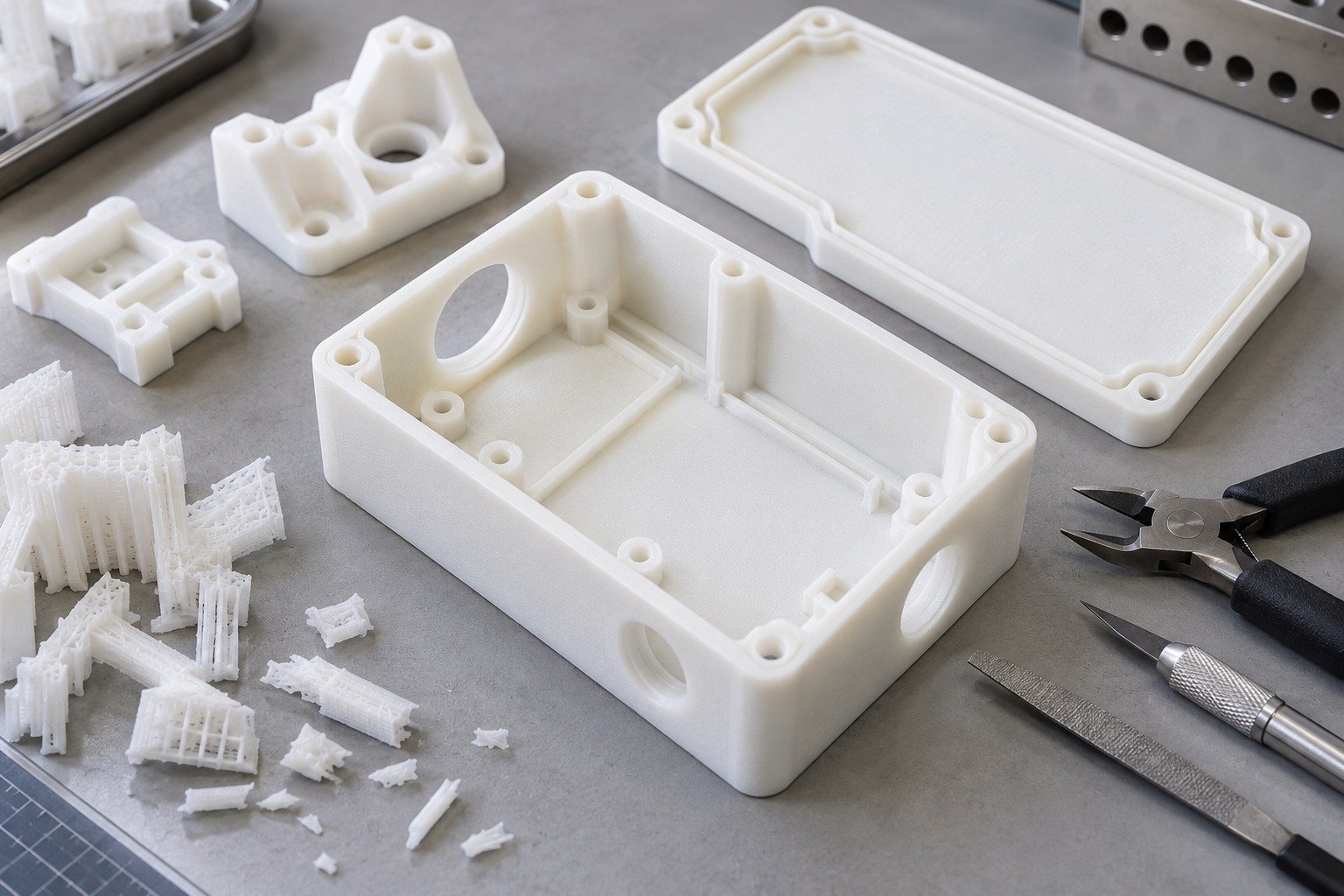
Complete the quoted surface work, inserts and assembly features.
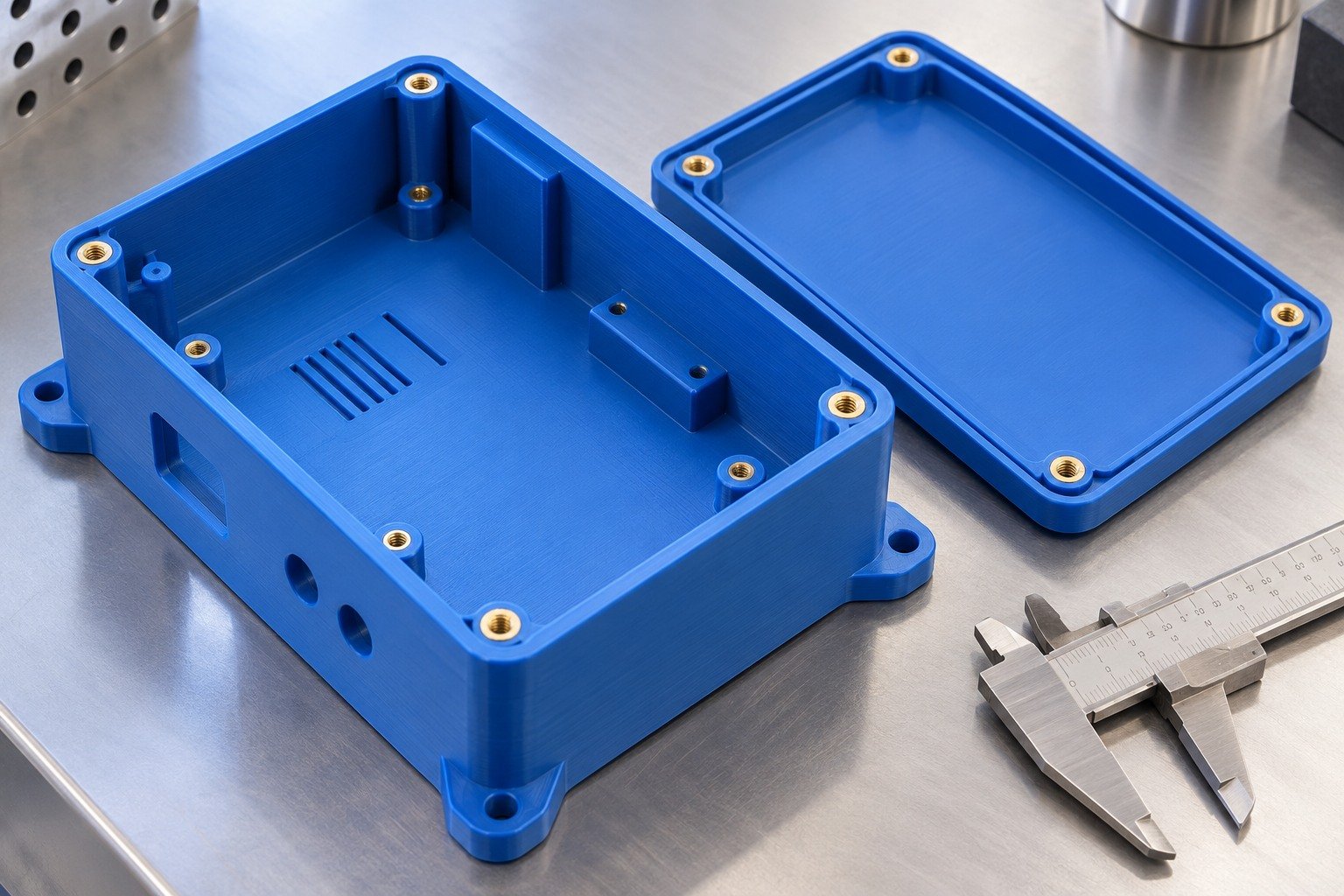
Check the final condition and protect critical surfaces for shipment.
3D printing vapor smoothing, dyeing, painting or machining is included only when specified and confirmed for your material. These operations can change dimensions.
Compare Injection Molding →Tie your sample approval to the material, final dimensions and actual use condition.
For a nylon 3D printing service, identify the polymer grade and build route. For resin, identify formulation and curing state. Material family names are not interchangeable qualifications.
A printed prototype does not by itself establish medical, food-contact, electrical or other application-specific qualification.
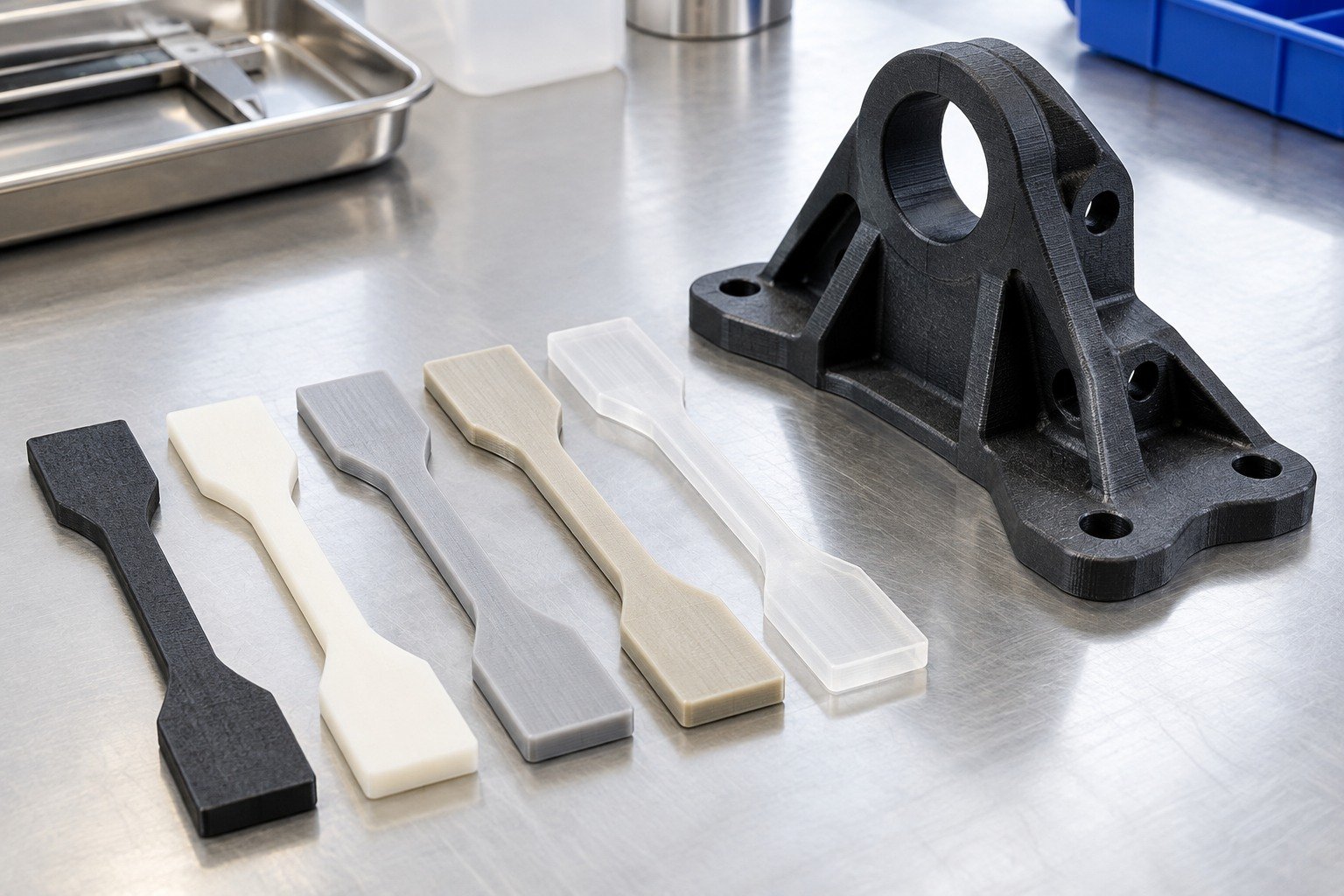
Review your critical dimensions, engagement and appearance after all included post-processing. Agree any functional trial before repeat production.
A printed prototype does not by itself establish medical, food-contact, electrical or other application-specific qualification.
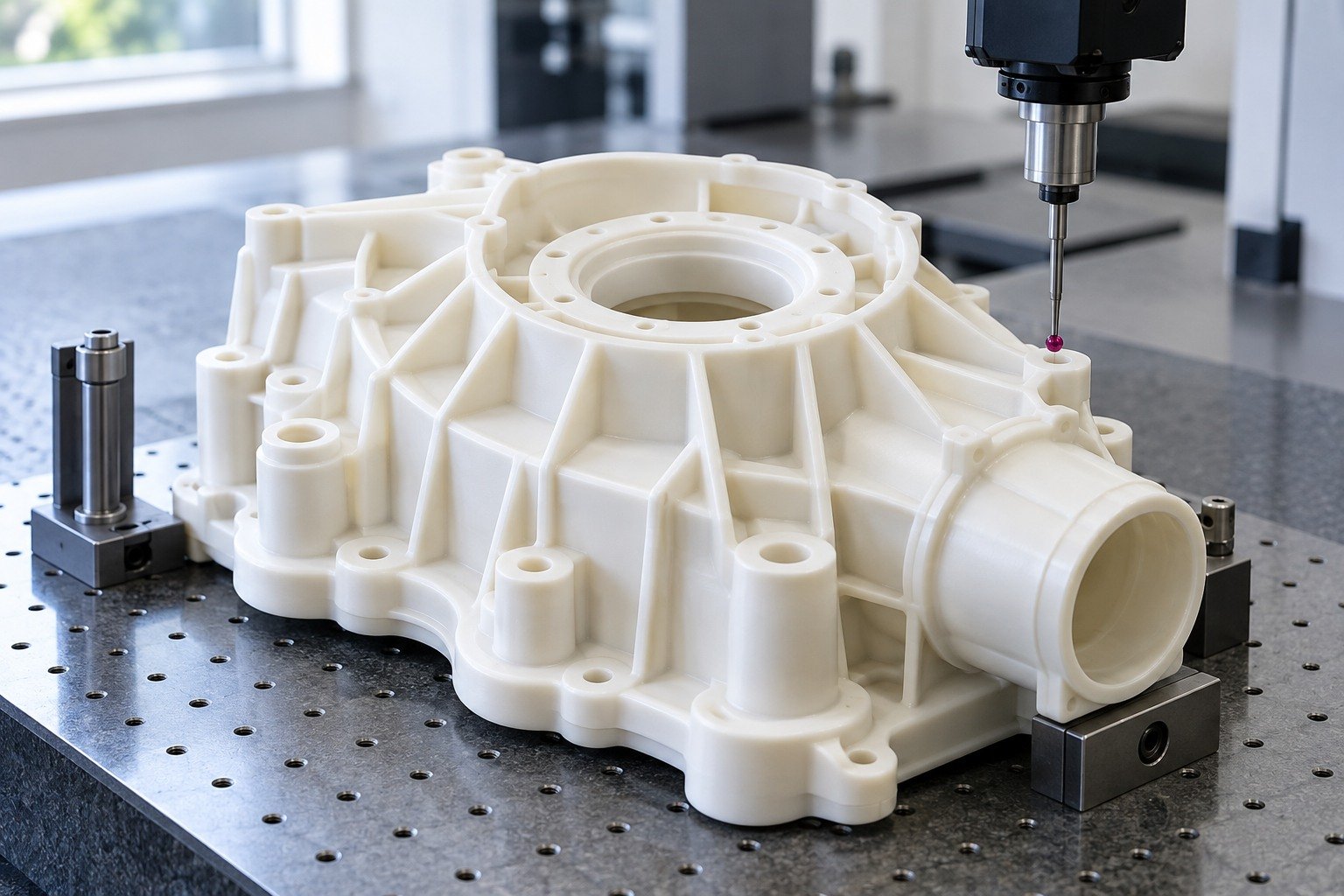
Track drawing revision, material choice, orientation and finishing scope. Approve changes that could affect your accepted result.
A printed prototype does not by itself establish medical, food-contact, electrical or other application-specific qualification.
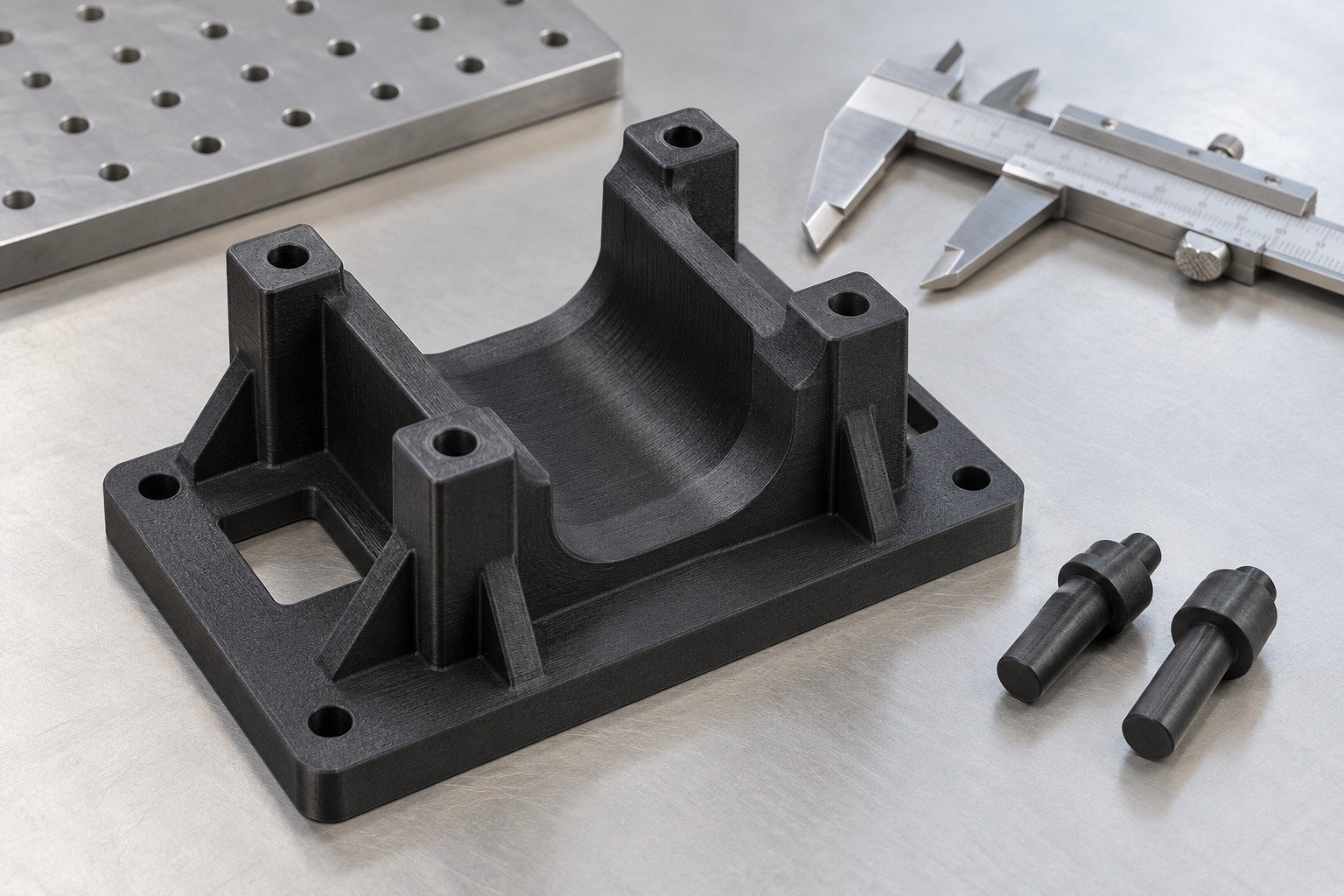
Agree inspection records, revision identification, packaging and quantity. Special tests and compliance evidence require an explicit agreed scope.
A printed prototype does not by itself establish medical, food-contact, electrical or other application-specific qualification.
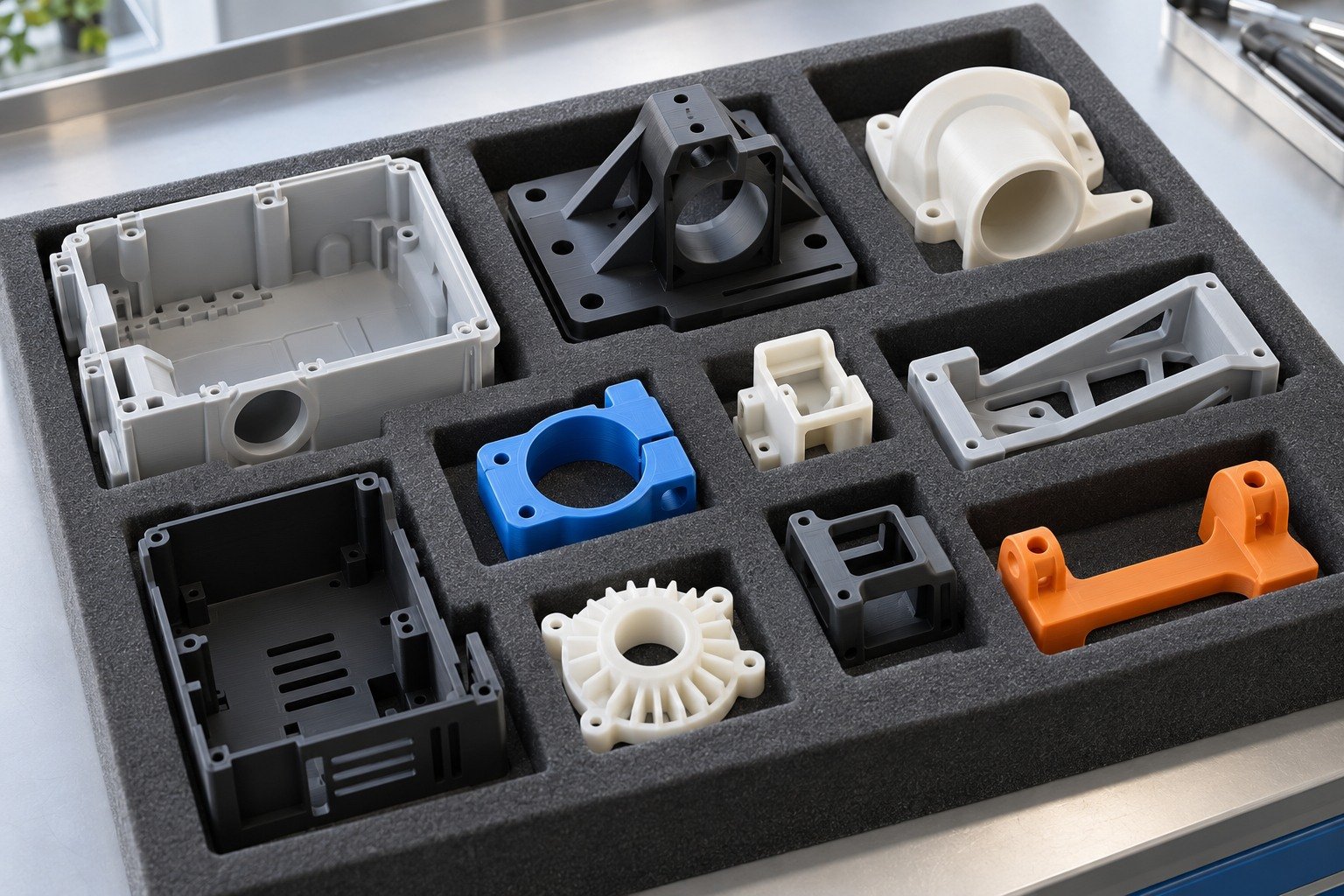
Low volume plastic 3D printing should be compared on the same material, finish and accepted scope.
RFQ EXAMPLES — NOT MINIMUM ORDERS
Design or fit sample
First functional batch
Repeat-order comparison
Engineering review
Printing & material
Secondary work
Surface finishing
Inspection
Packing & delivery
Replace these examples with your actual demand. Production plastic 3D printing requires an approved route, sample and acceptance plan; a batch count alone does not qualify the part.
Make the commercial scope match the component your team expects to receive.
Exact route, material formulation and delivered state.
Approval points and handling of revised geometry.
Cleanup, finish, inserts, inspection and packing.
Accepted revision, quantity and delivery basis.

Share your revision, sample decisions and delivery needs through your project contact. Confirm the responsible production route and agreed scope in your quotation.
Use an online plastic 3D printing service to send your project for review; file upload does not mean an instant or automatic price.
An SLA 3D printing service can support detailed resin models; an SLS 3D printing service uses polymer powder for a different combination of geometry, surface and material behavior. Compare your actual fit, function, cleanup and delivered state. Confirm availability for your project.
An MJF 3D printing service and SLS should be compared using the specified grade, build orientation, cleanup, finish and sample acceptance. Process names alone do not establish equivalent behavior or final dimensions.
Provide the CAD geometry and a controlled drawing with units, revision, datums, critical dimensions and finish notes. Identify the purpose of the trial, mating parts, quantities and delivery needs.
Plastic 3D printing cost depends on geometry, material, build arrangement, supports or powder cleanup, finishing, inserts, inspection and quantity. Ask for the same delivered scope when comparing quotes; no universal price is promised.
Engineering review, material availability, build scheduling, cleaning, curing, finishing, inspection and shipment all affect the schedule. Agree sample and production milestones for your actual order.
Compare design changes, demand, resin requirements, tooling investment and repeat-part expectations. Printed prototypes can inform an assembly decision, but they do not automatically reproduce molded material properties or process behavior.
No. ABS-like describes selected behavior of a resin; it does not make that resin the same thermoplastic as ABS. Specify the exact formulation, final cure state and working conditions before a functional comparison.
PA12 3D printing and nylon 12 3D printing refer to the same polymer family. PA11 3D printing requires its own grade review. An ABS 3D printing service, PETG 3D printing service, polycarbonate 3D printing service or TPU 3D printing service needs confirmation of the actual grade, route and intended use. Clear resin 3D printing needs a finished-sample review; transparency is not an optical-performance guarantee.