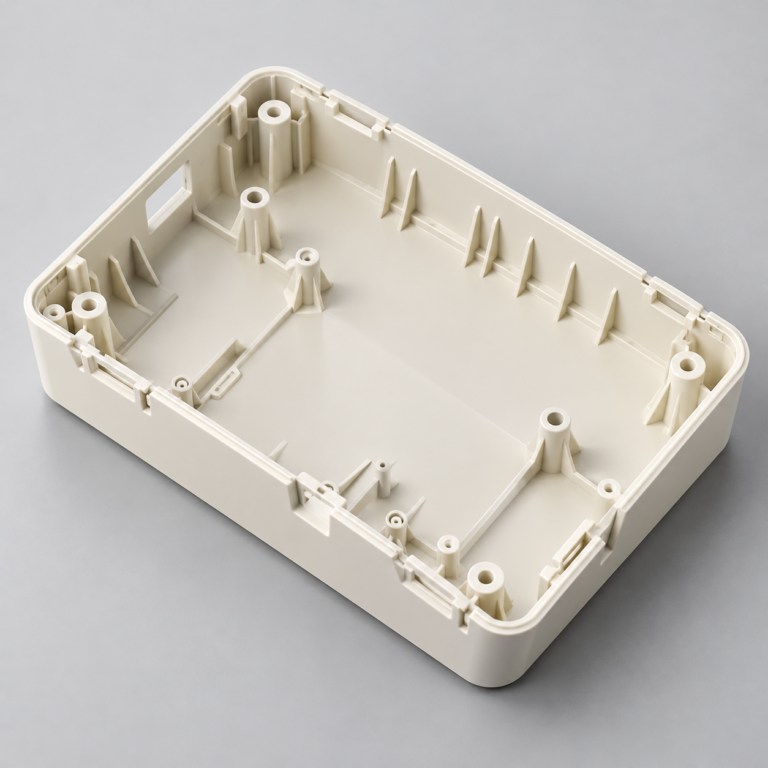
Injection Molding
Tooling and molding for your repeat plastic parts.
From prototype to production, coordinated manufacturing solutions for your custom parts.
View All Services →
Precision parts for your tight tolerances and complex geometry.
Tooling and molding for your repeat plastic parts.
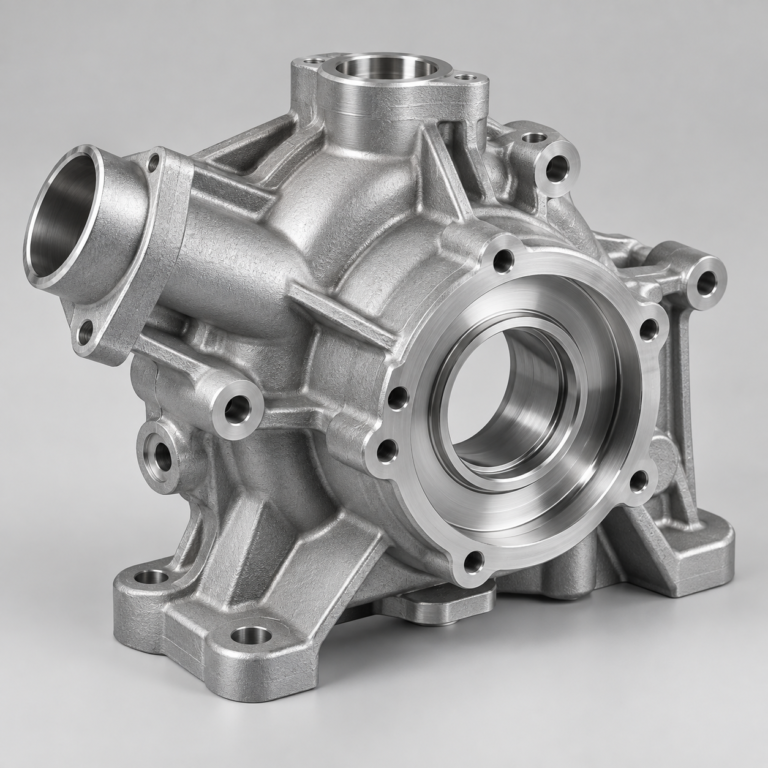
Metal casting options for your part and production volume.
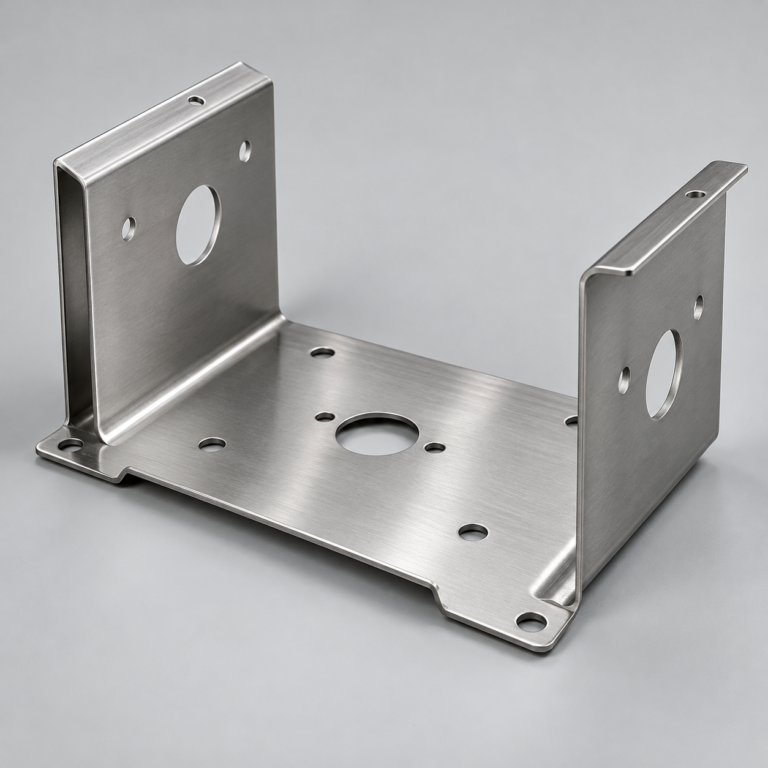
Cutting, forming and welding for your fabricated parts.
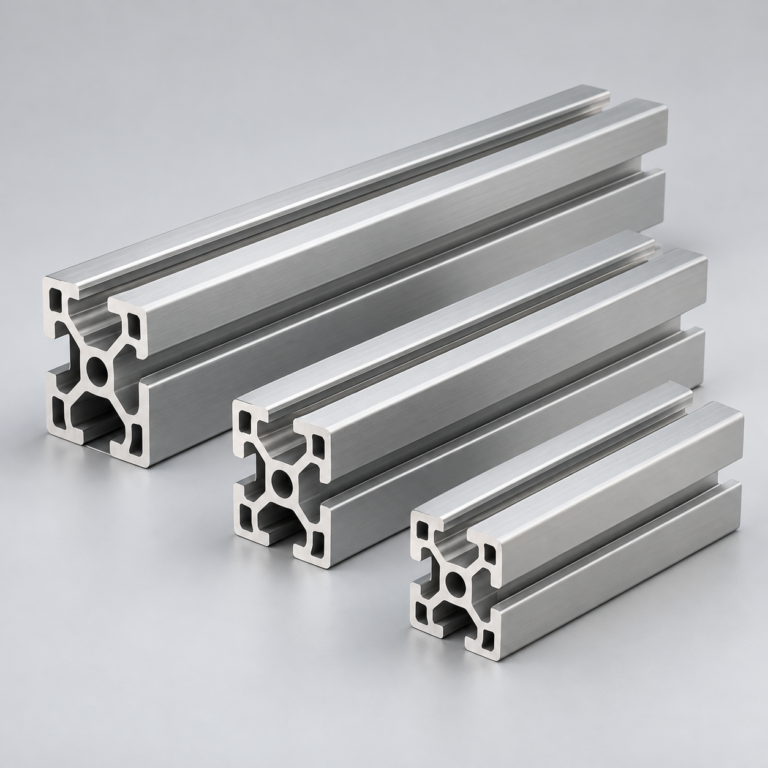
Custom profiles for your section, length and finish requirements.
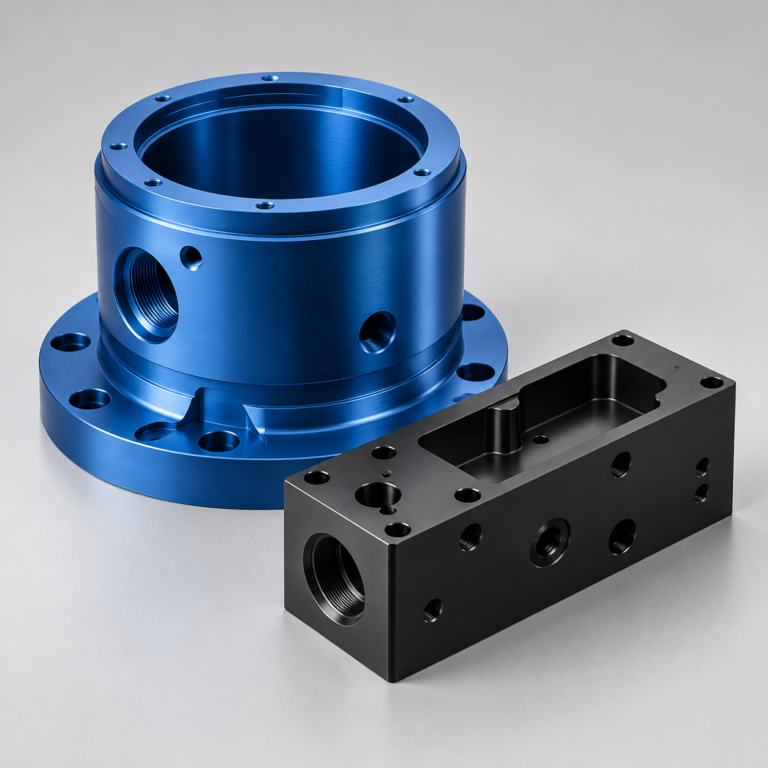
Finishes for your appearance, corrosion and wear requirements.
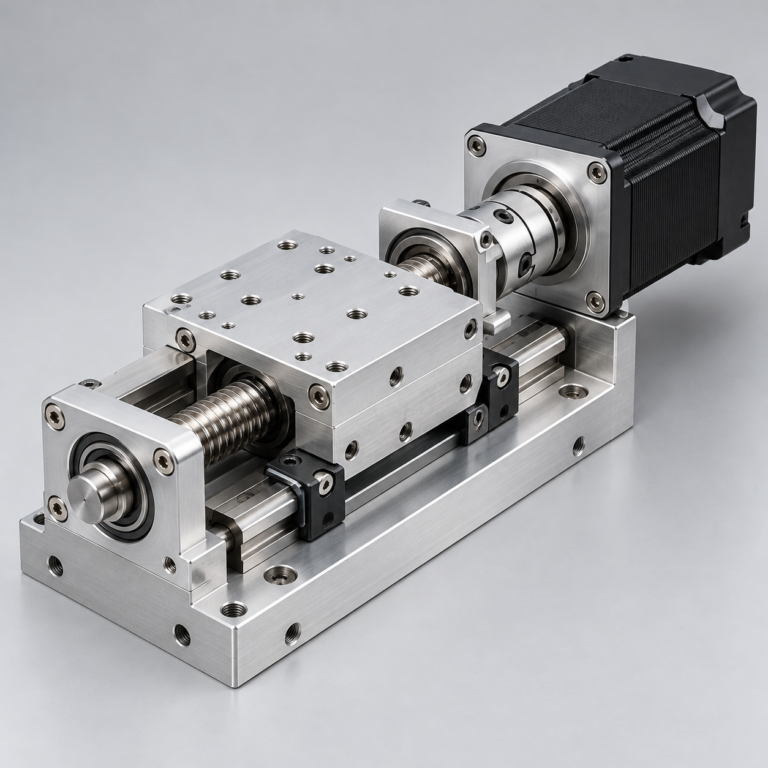
Sub-assemblies and final builds for your production program.
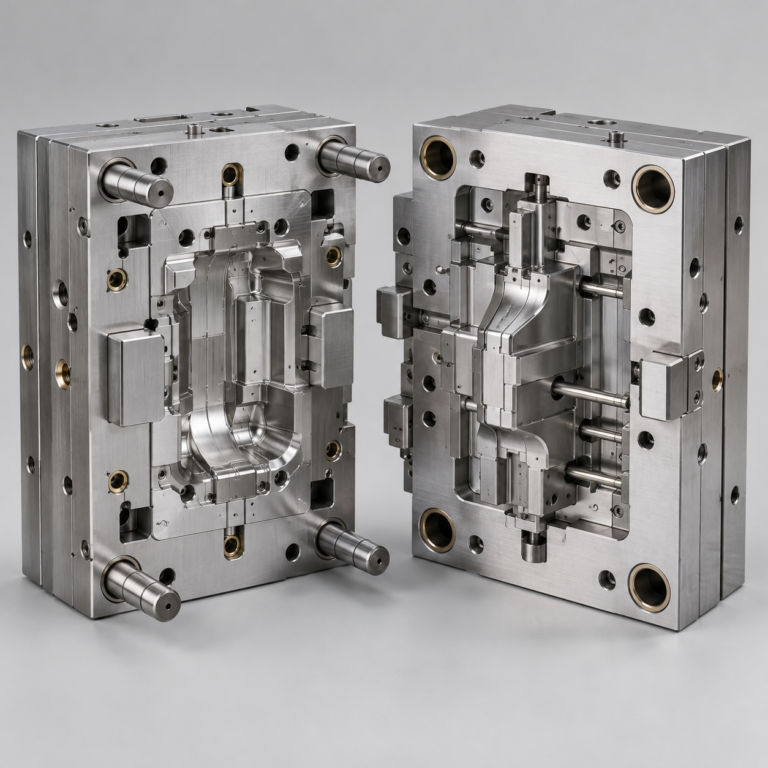
Production tooling built around your process and volume.
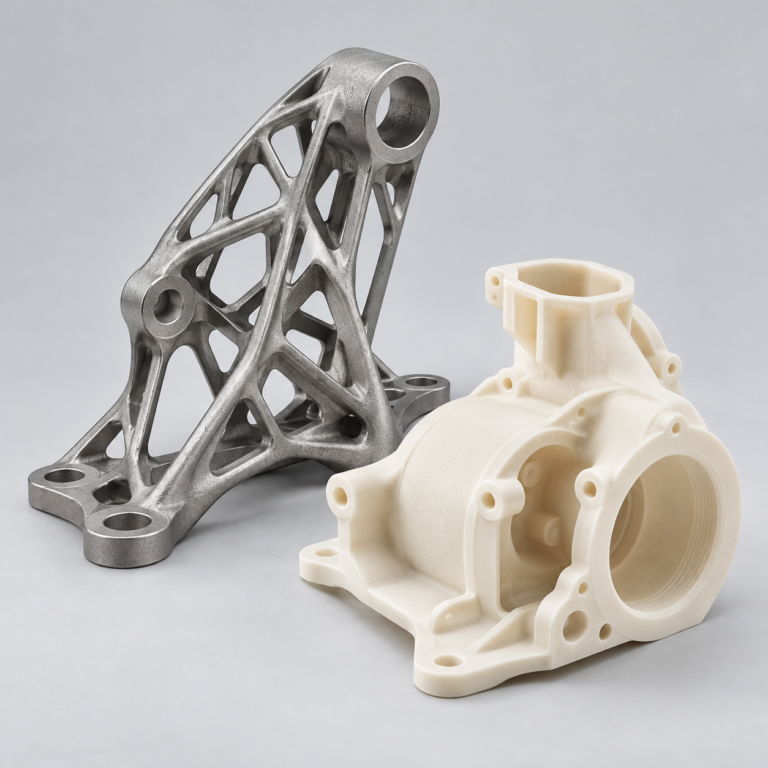
Prototype parts to check fit, function and design.
DFM, process planning and production support for your project.
Inspection, documentation, inventory and delivery planning for your program.
Choose air- or liquid-cooling components around your thermal and mechanical requirements.
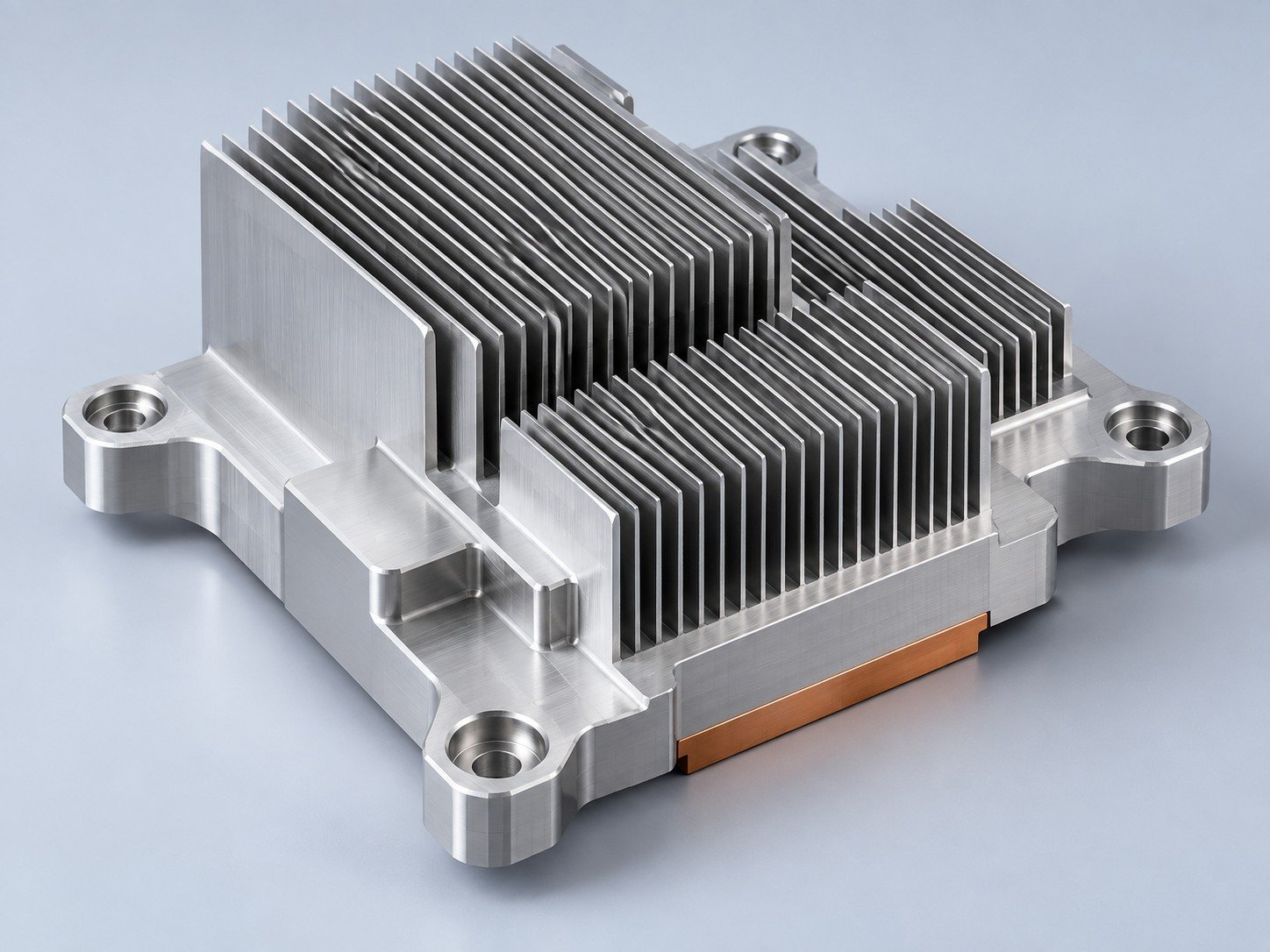
Manufacturing support for your cold plates, manifolds and cooling assemblies.
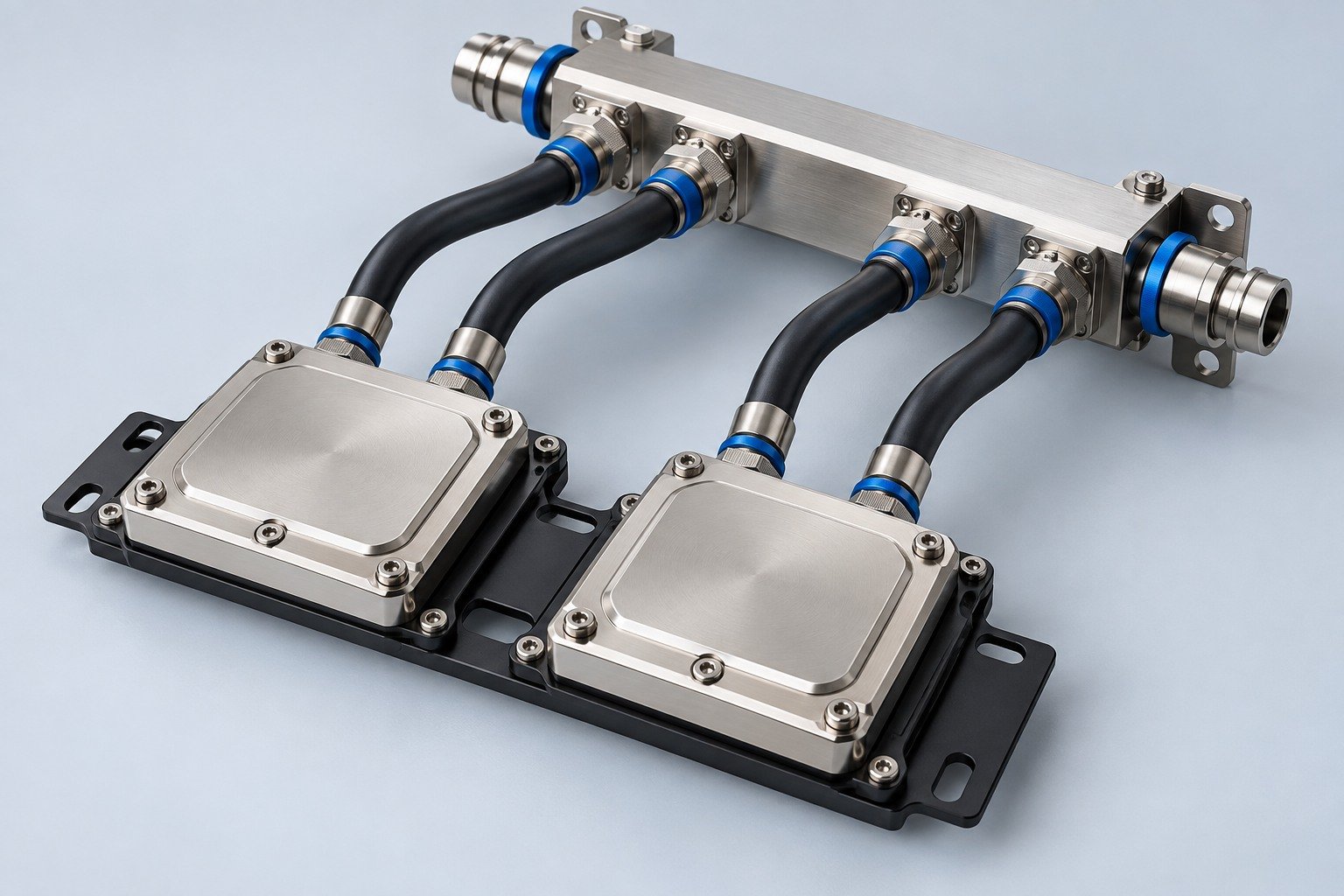
Find components for your power electronics, energy, laser and telecom application.
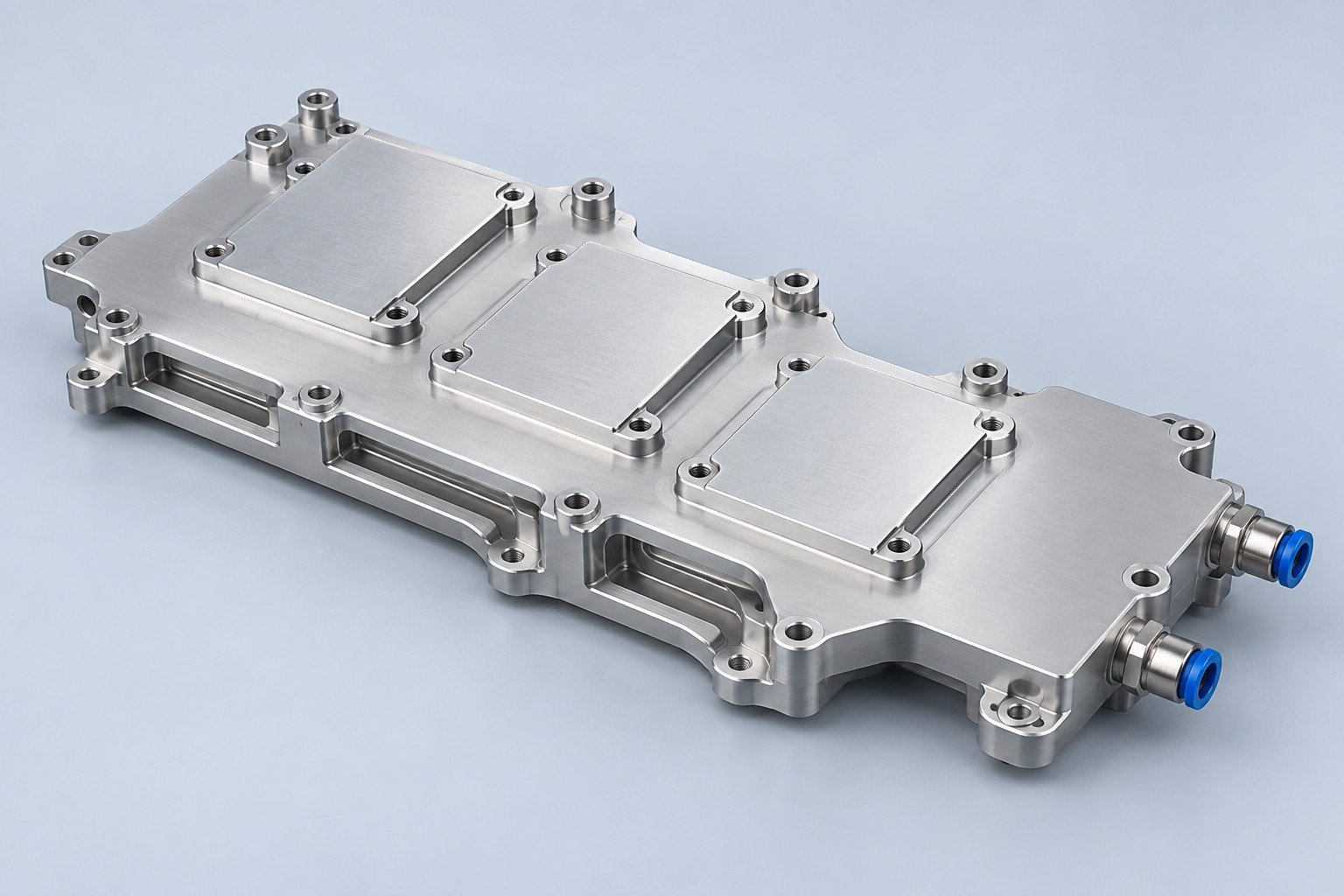
Components for your electronic systems.
Start with your functional and quality requirements.
Build around your operating environment.
From prototype to production, review material performance, manufacturability and cost for your part.
Review grade, temper and finish for your metal parts.
 AluminumStrength, weight and machining›
 Stainless SteelCorrosion and finish requirements›
 Carbon & Alloy SteelDiscuss grade and heat treatment›
 Tool SteelDiscuss tooling and wear needs›
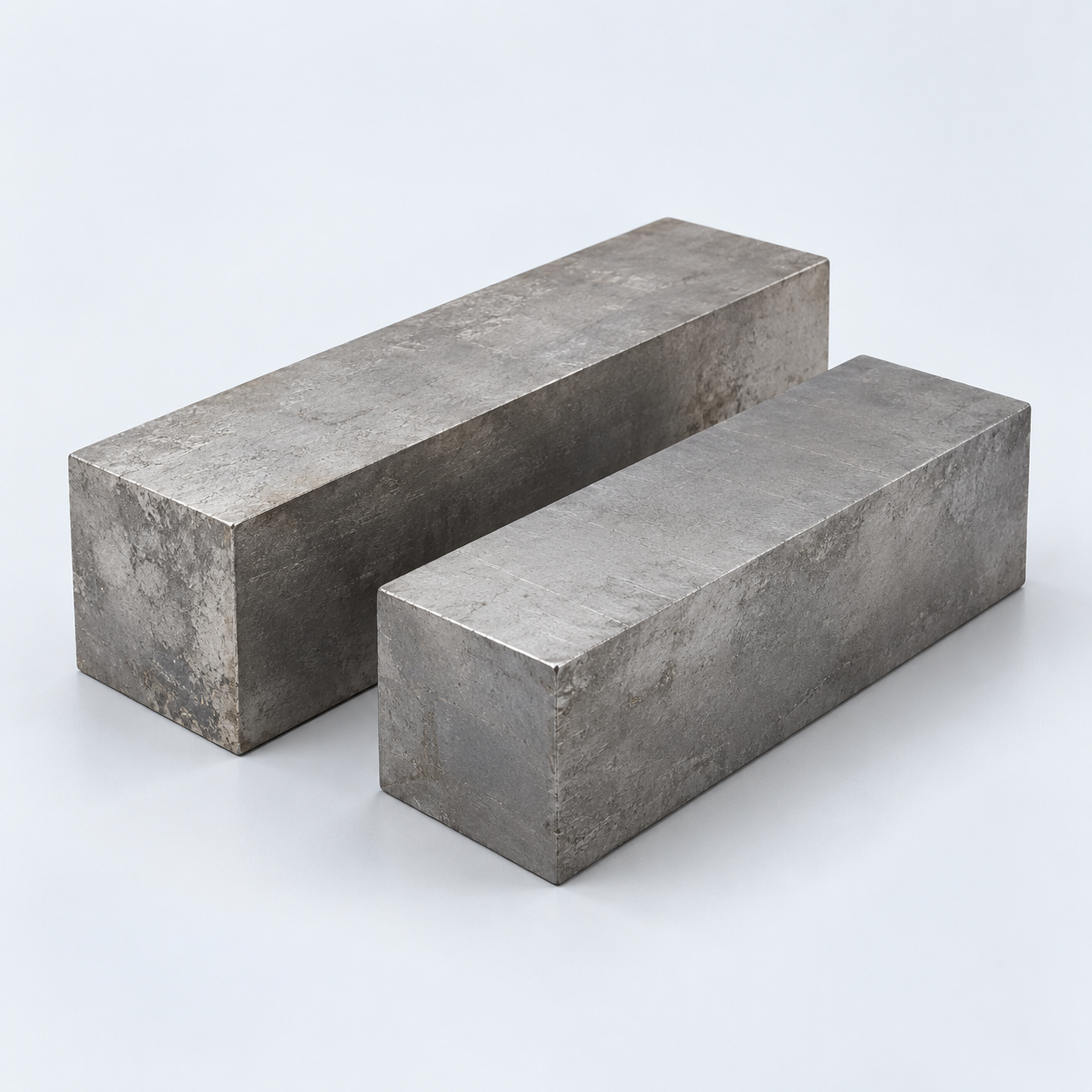 TitaniumReview grade and part geometry›
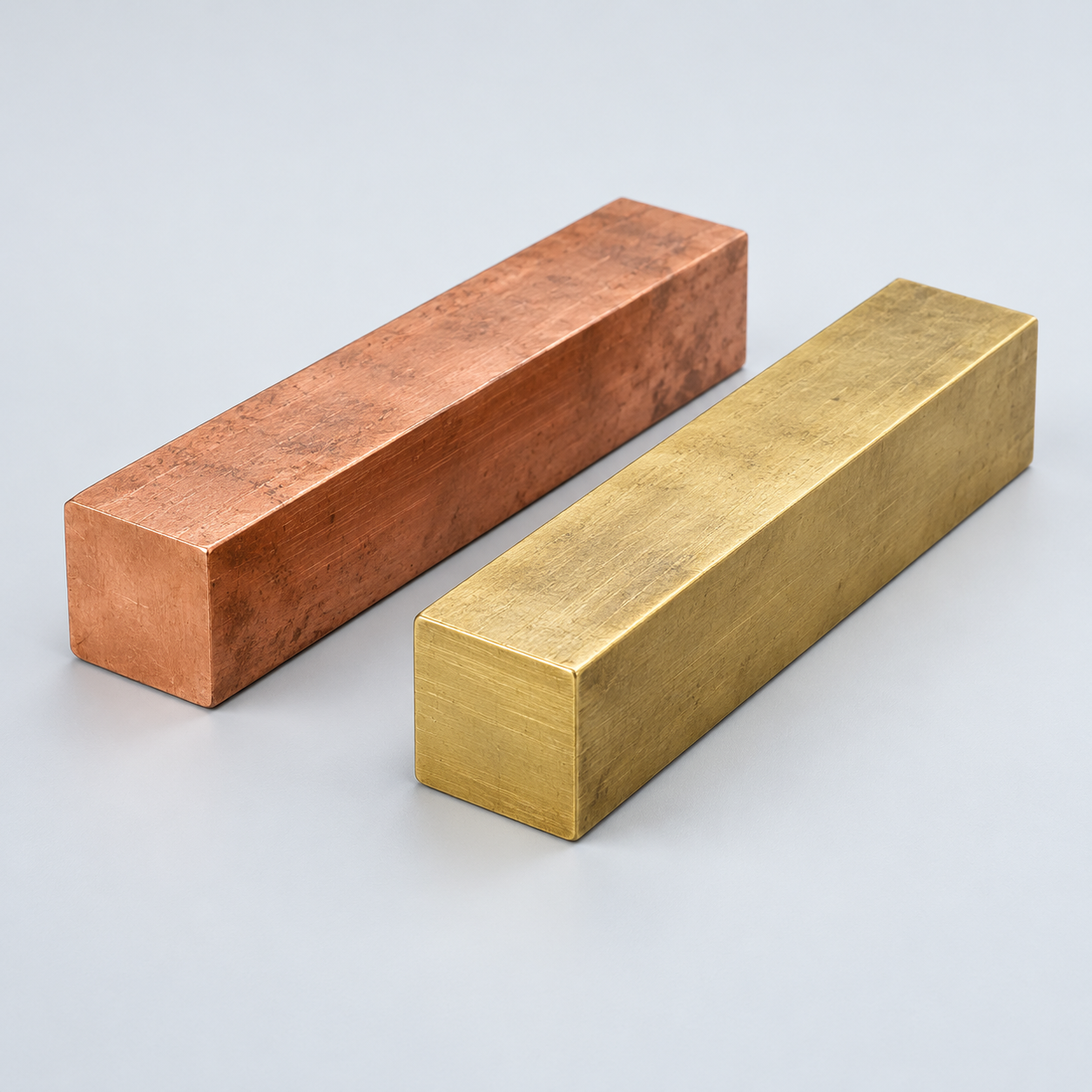 Copper & Brass & BronzeDiscuss conductivity and machining›
Match your polymer to function, process and environment.
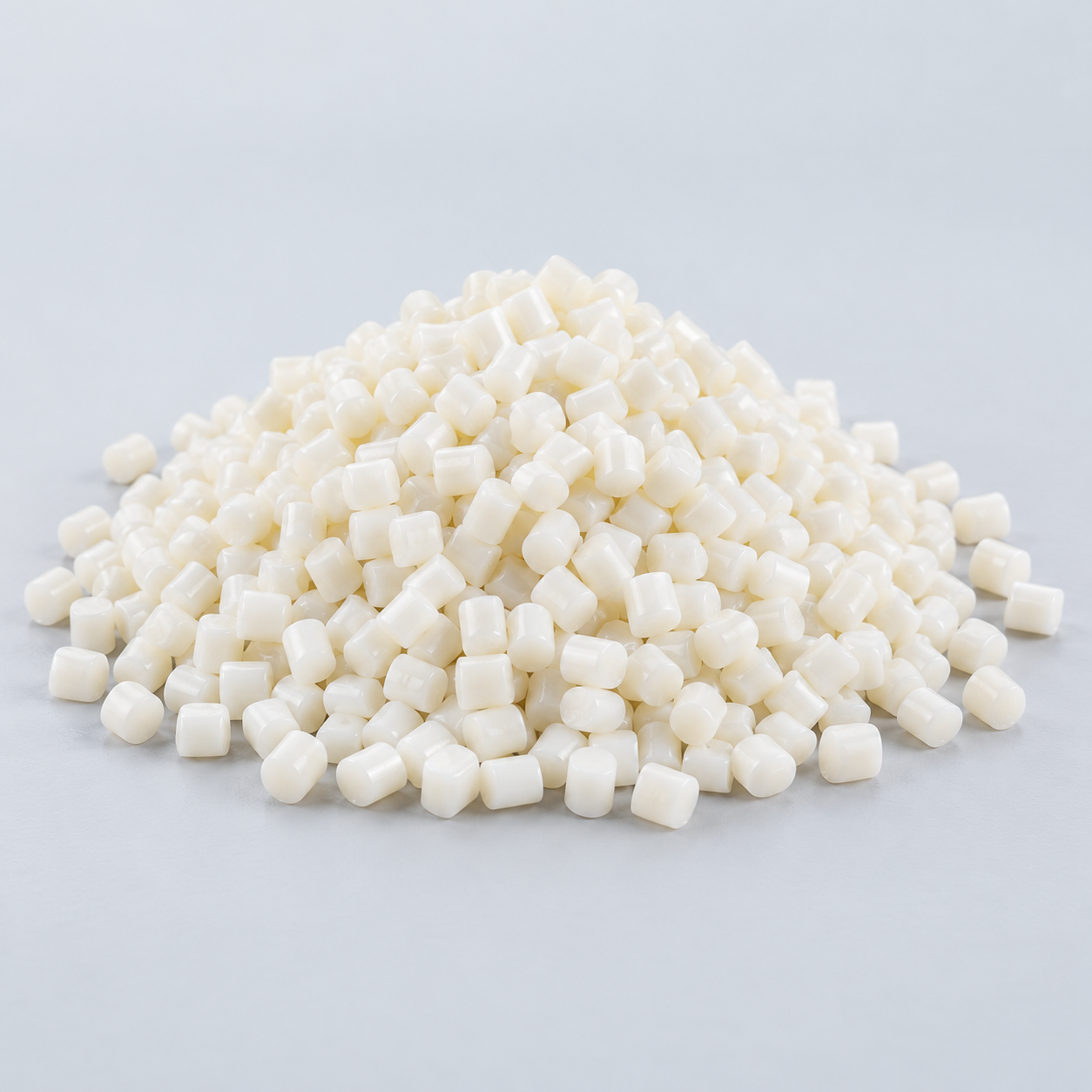 ABSReview enclosure and molding needs›
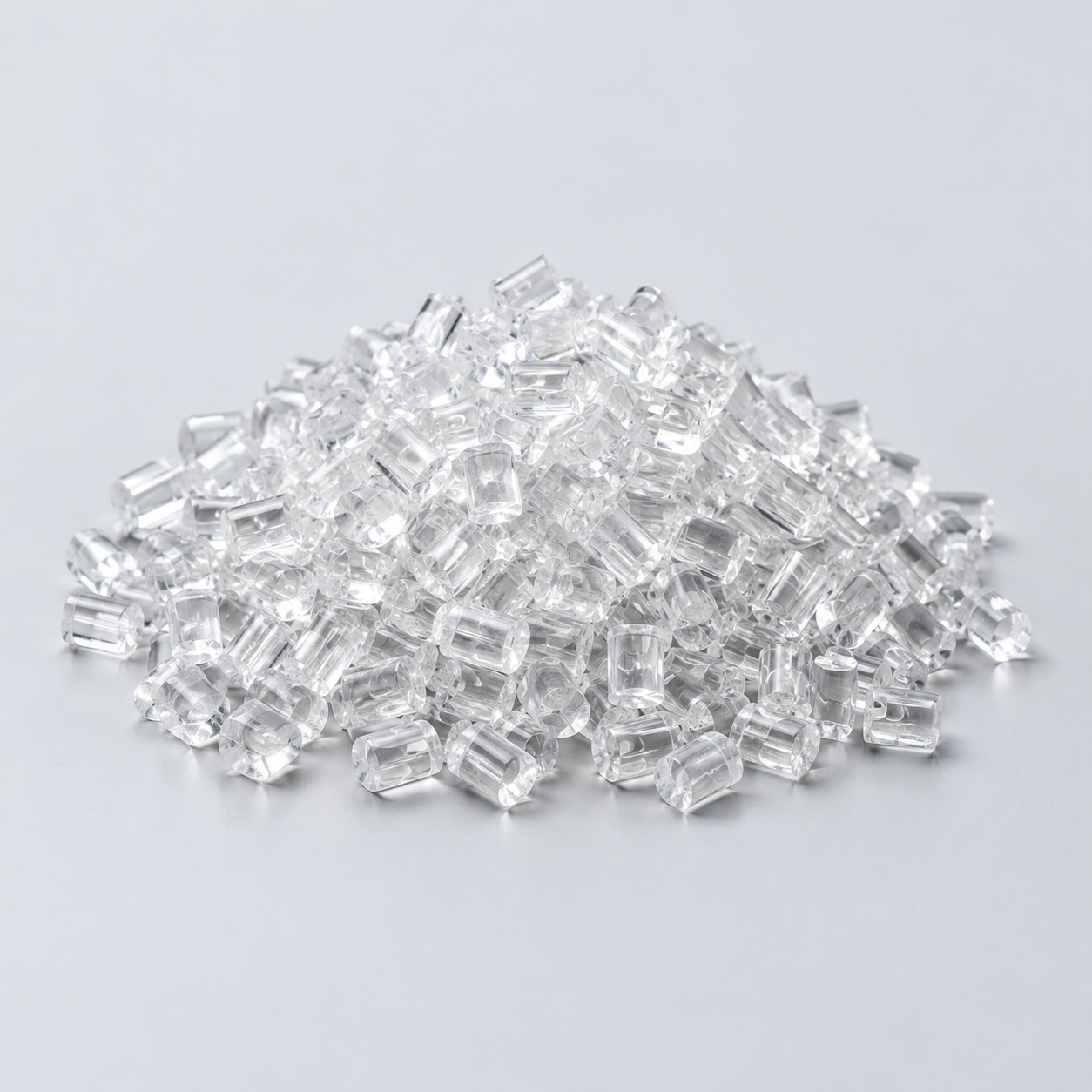 Polycarbonate (PC)Discuss clarity and impact needs›
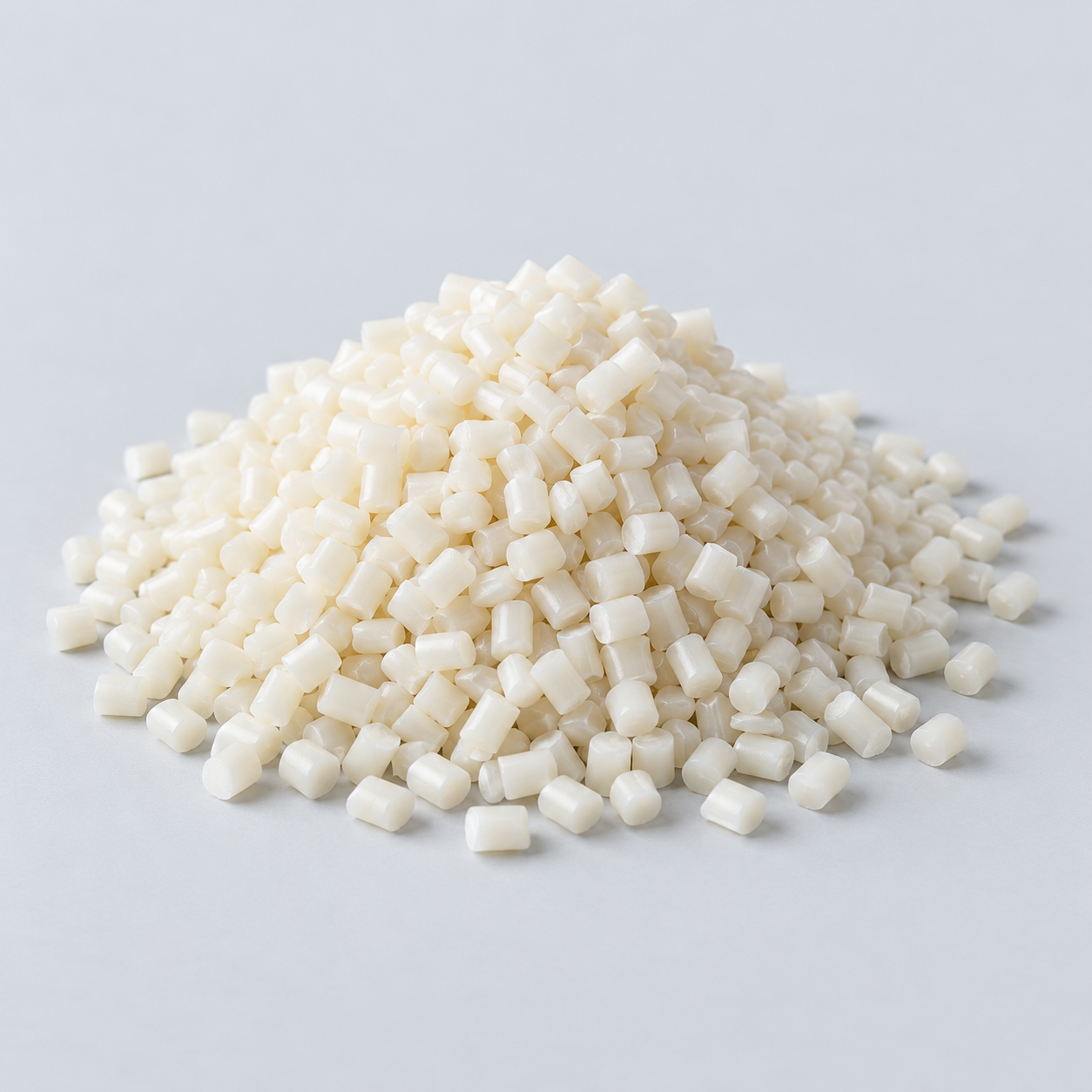 Nylon (PA)Review moisture and wear conditions›
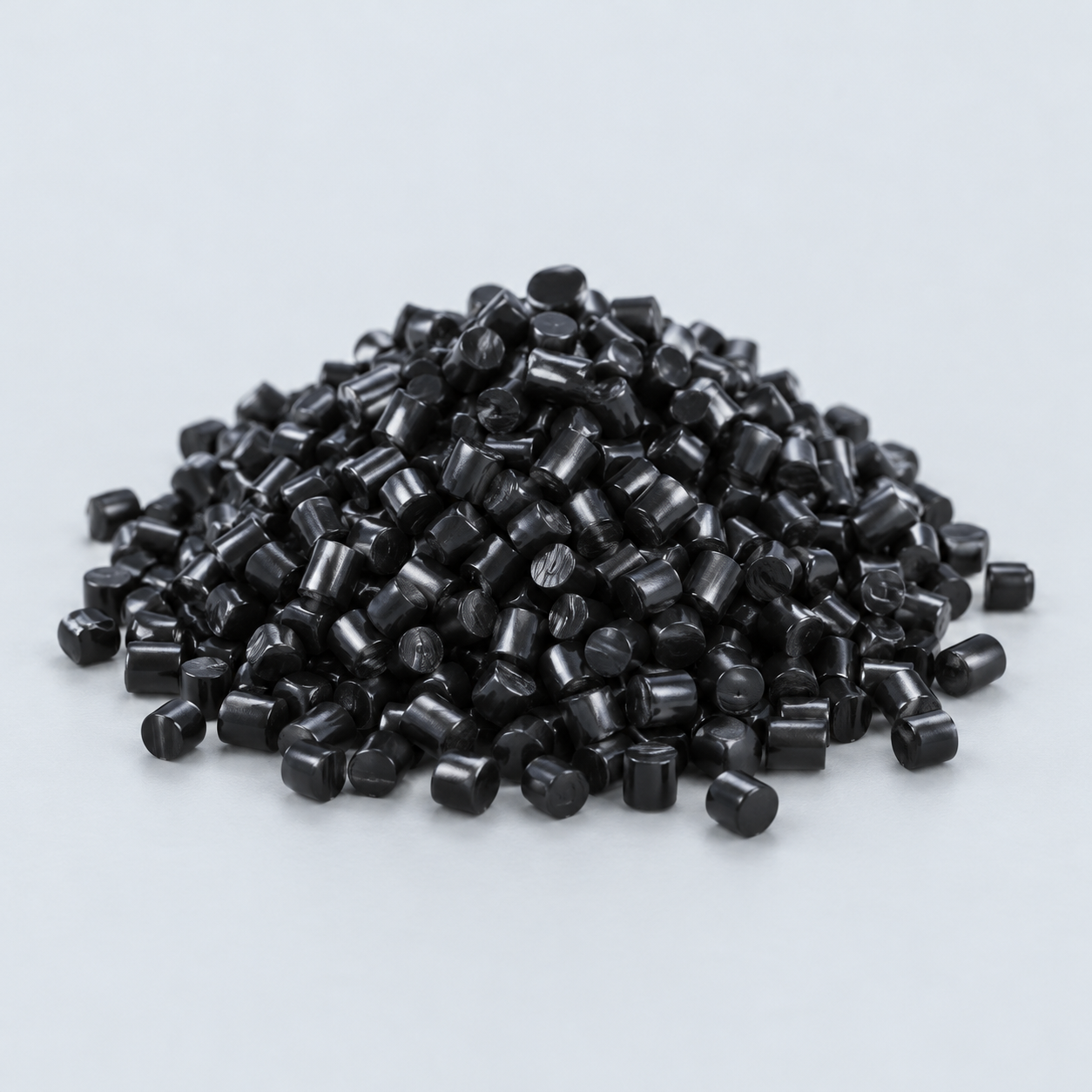 POM / AcetalReview fit and sliding features›
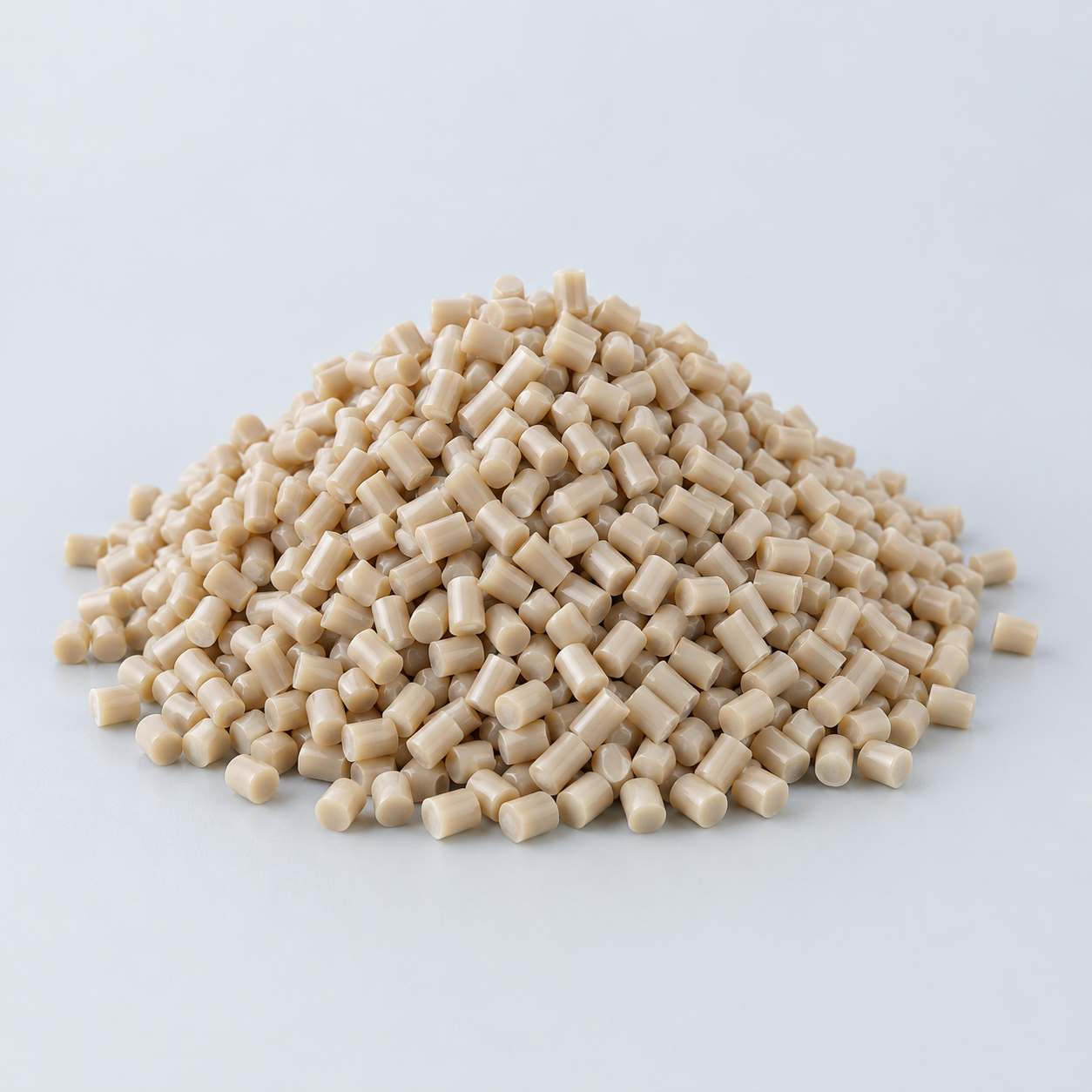 PEEKDiscuss operating conditions›
 PTFEReview friction and chemical exposure›
 ULTEM / PEIDiscuss thermal and electrical needs›
Confirm grade availability and application requirements.
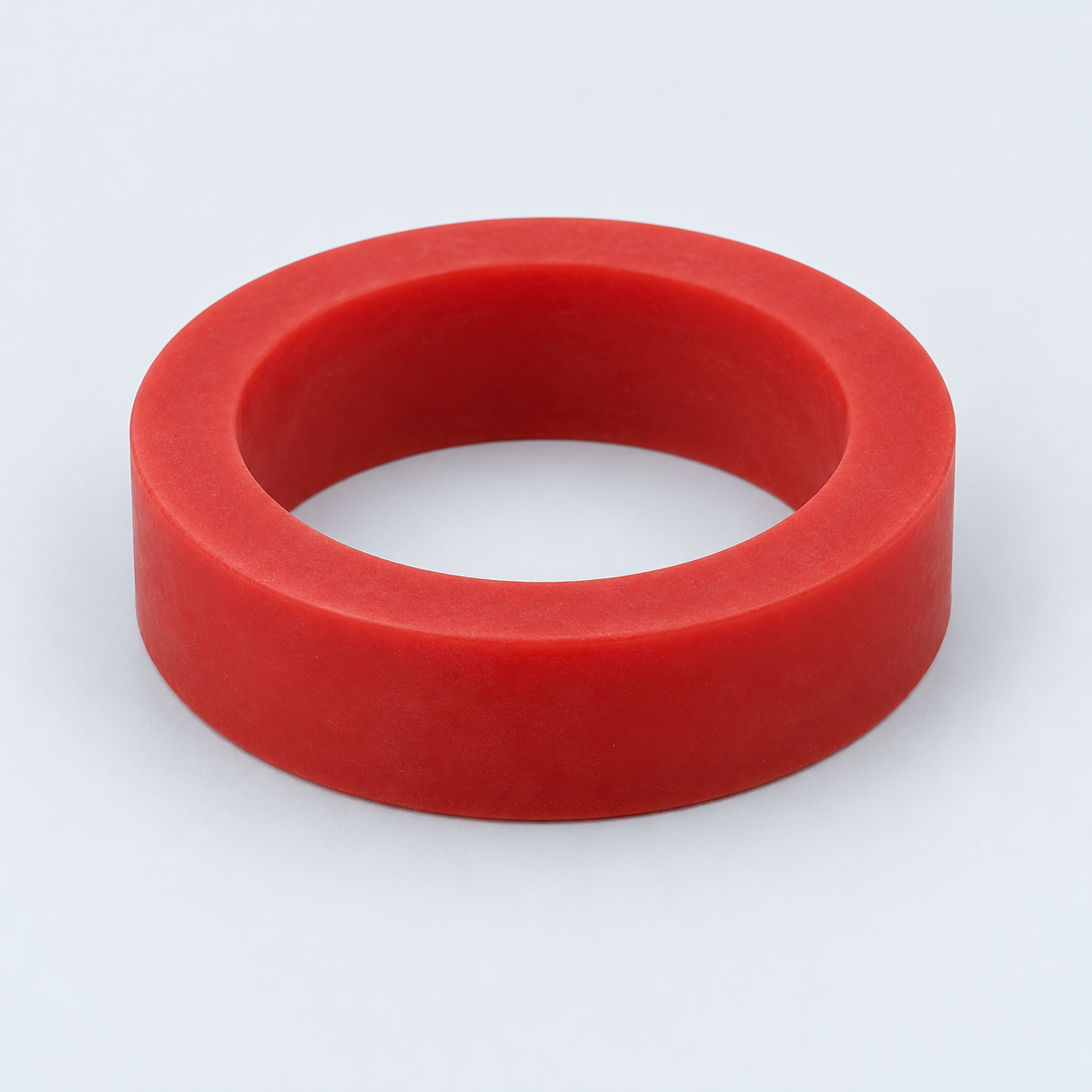 Silicone / LSRDiscuss flexible component needs›
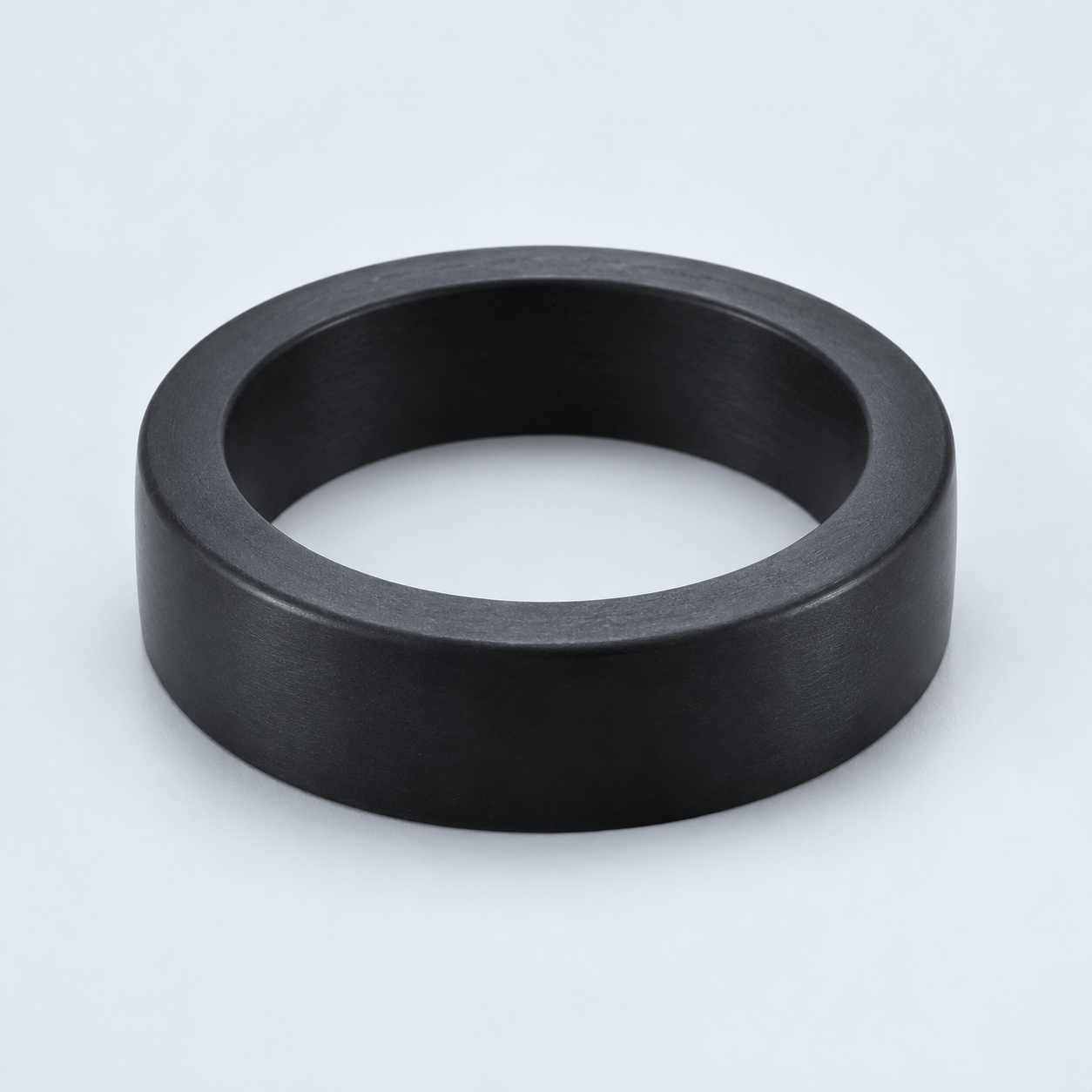 TPU / TPEReview flexibility and processing›
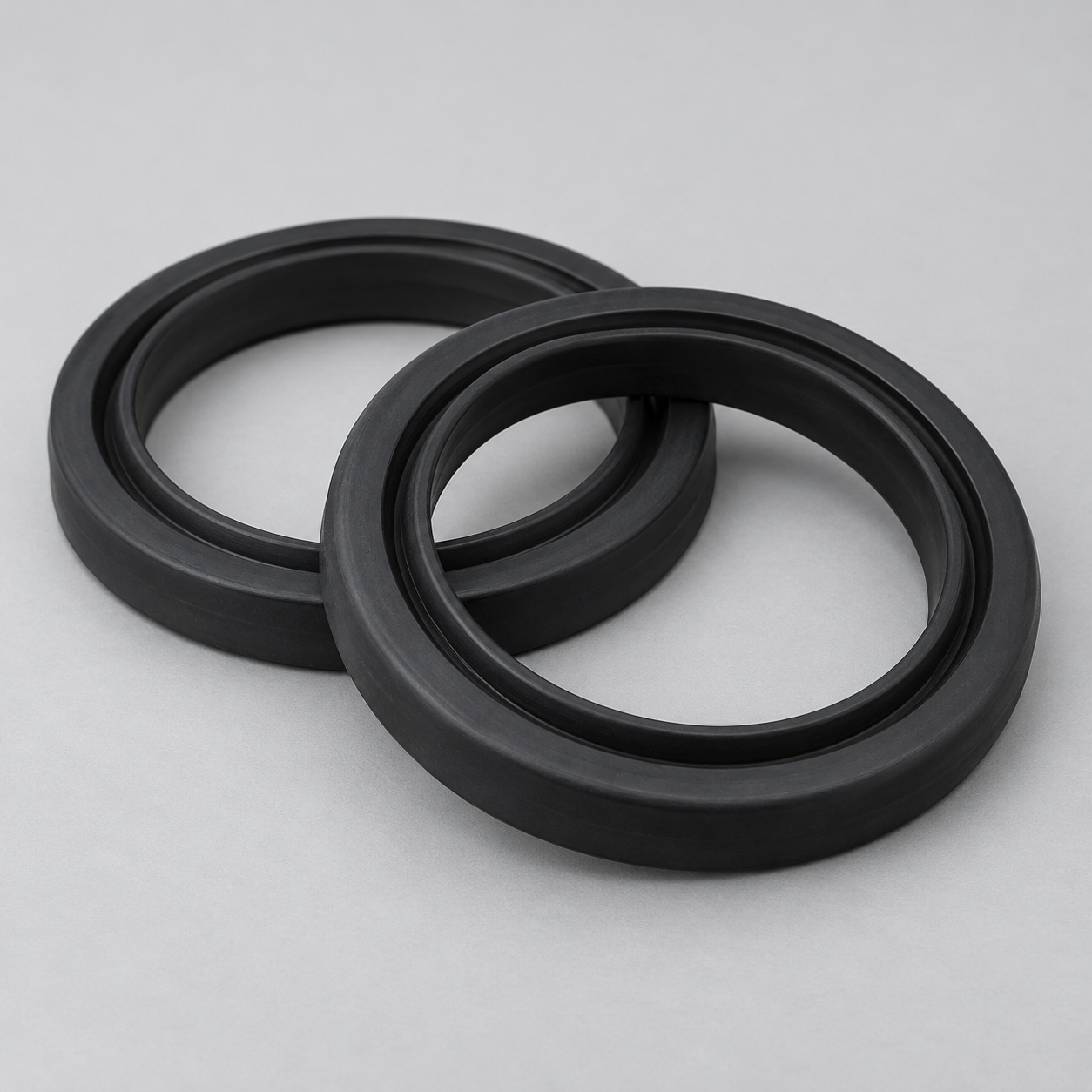 EPDMReview weathering and chemical exposure.›
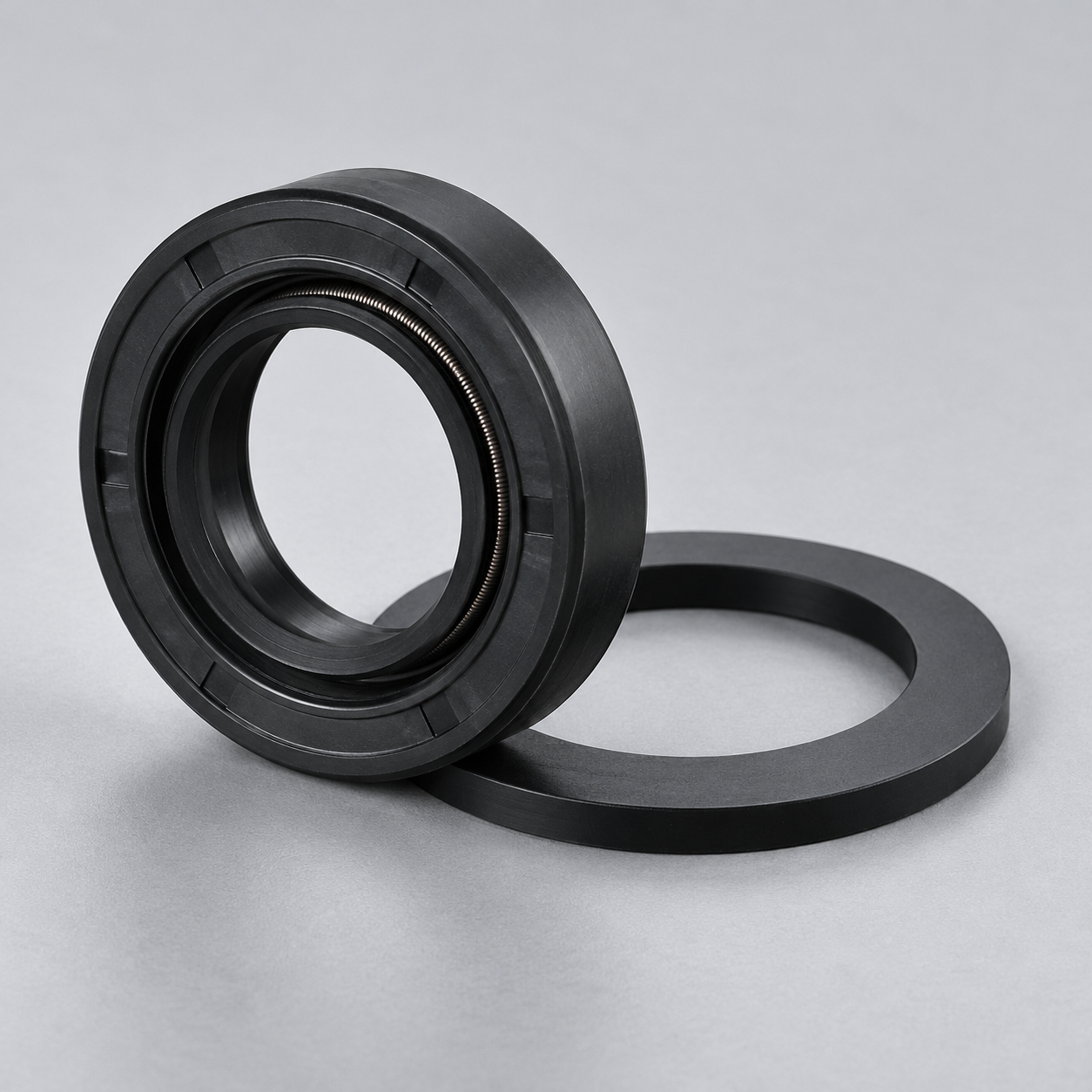 NBRReview oil and fuel exposure.›
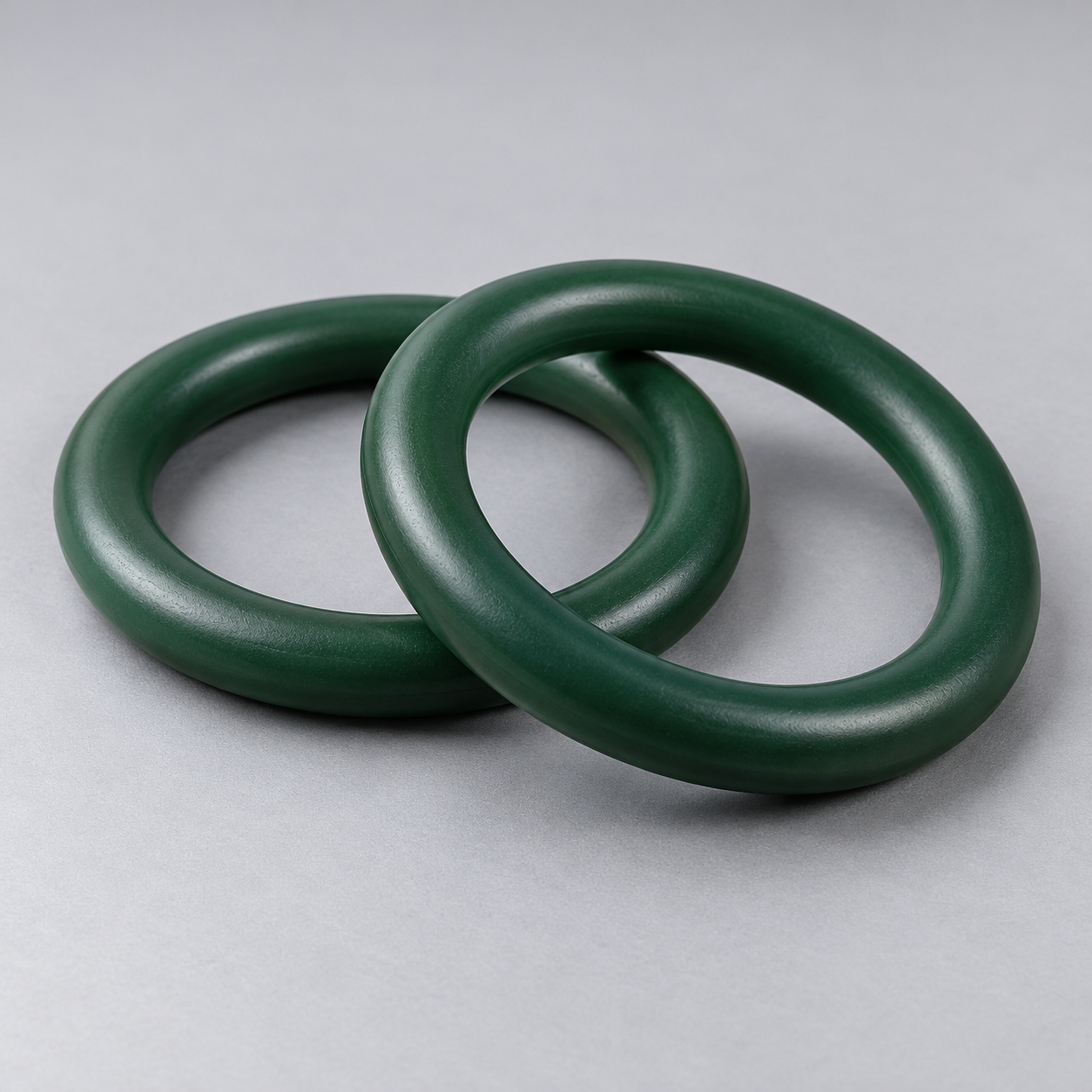 FKMReview temperature and chemical exposure.›
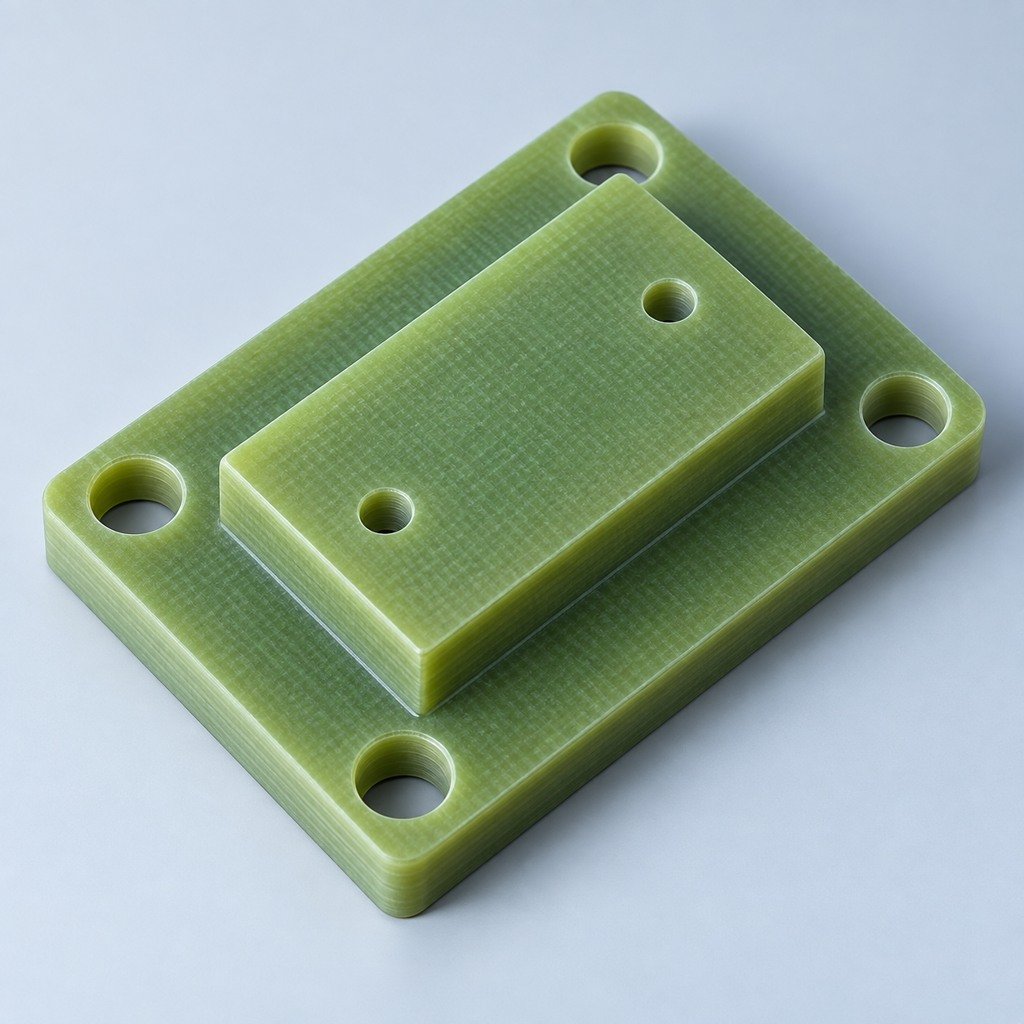 G10 / FR4Review insulation and laminate needs›
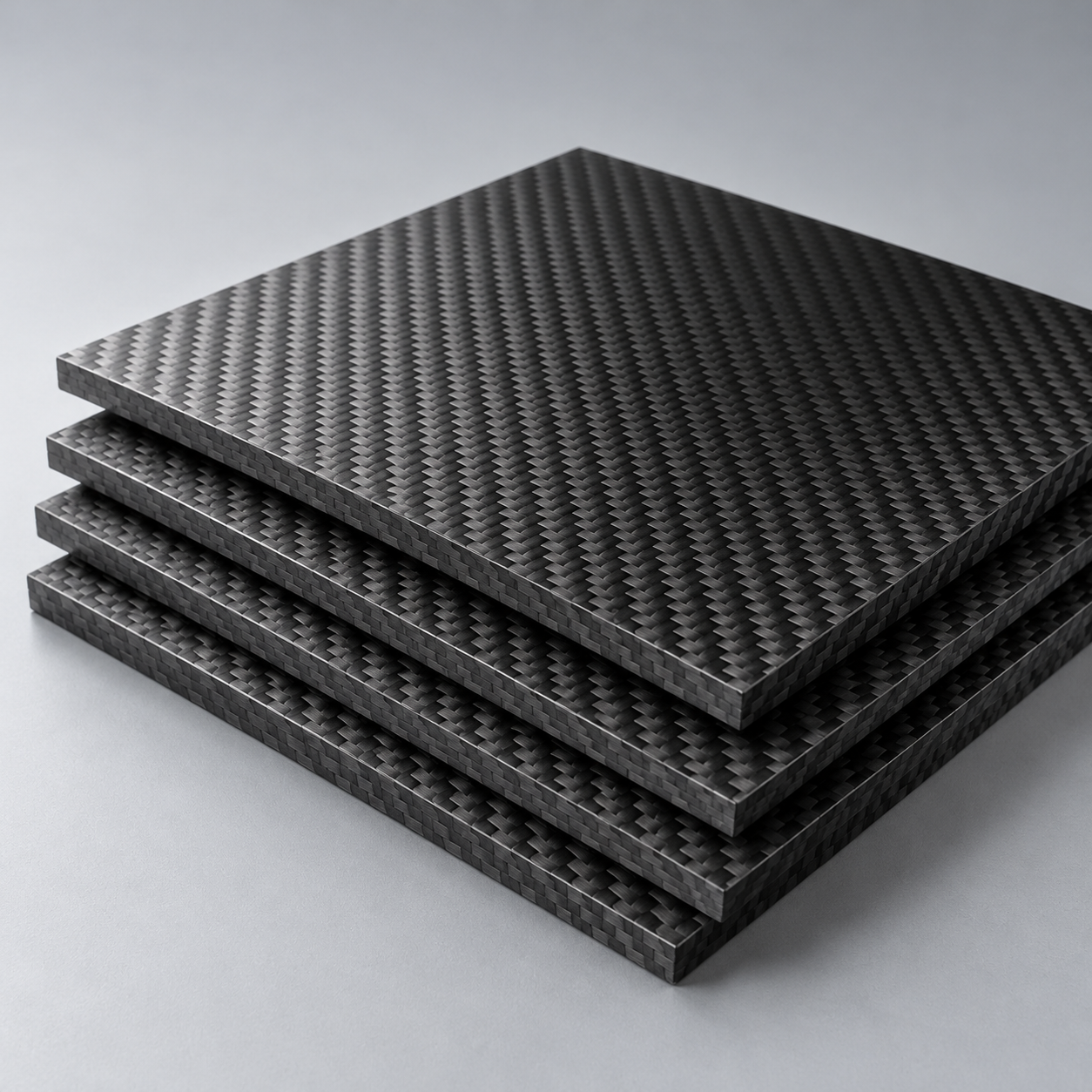 CompositesReview stiffness, weight and laminate.›Customer-Specified MaterialsConfirm your grade and requirements.›Other Specialty MaterialsDiscuss your application and grade.›
Practical guidance for your part geometry and material decisions.
Prepare your process, budget and sourcing questions.
Build your knowledge before production.
Learn who we are and how we operate.
Find our U.S. support team or start a conversation.

For your custom Zamak 5 parts, define the bore, mounting land and coated interface before choosing the machining route. Connect Zamak 5 CNC machining to supported casting features, accepted edges and the final assembly condition.
Your Zamak 5 die casting manufacturer and Zamak 5 casting supplier review starts with the drawing: identify casting geometry, machining access, quantities and final acceptance.
For your rounded drive case, define the side-port land, internal bridge bosses and perimeter mating face. Review Zamak 5 die cast housings around cutter access and the actual cover relationship. Review Zamak 5 electrical housings against the controlled assembly.
| Your fit | What to define |
|---|---|
| Working interface | Open cavity, side circular port, bridge bosses and six perimeter positions. |
| Your route | Casting product, usable stock and supported machining. |
| Your approval | Free or installed measurement state, finish and receiving records. |
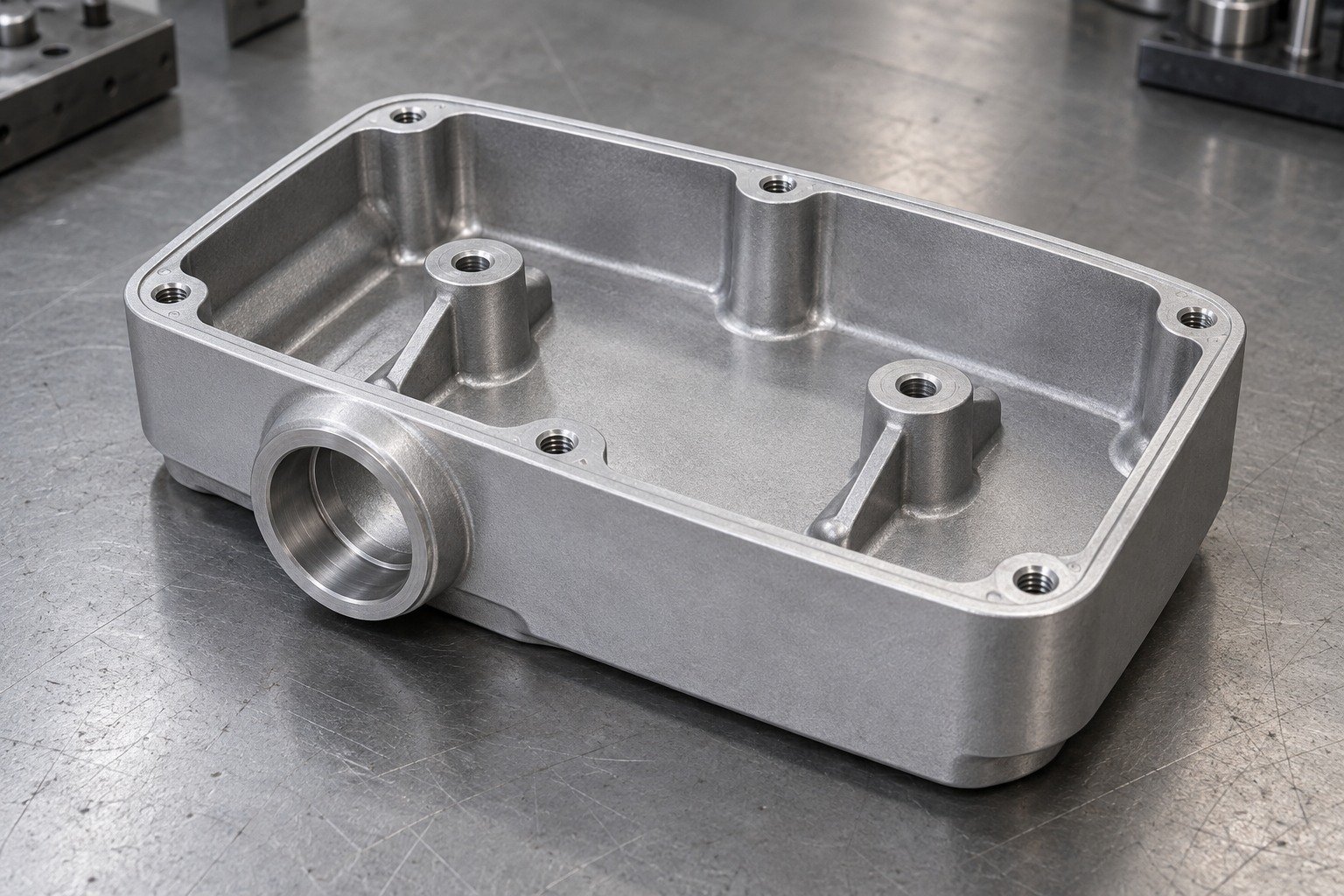
For your Zamak 5 machining review, connect usable stock and rigid support to the bore, flange or foot that sets assembly fit. Review any bending, riveting or crimping before final sizing and coating.
| Your fit | What to define |
|---|---|
| Working interface | Open cavity, side circular port, bridge bosses and six perimeter positions. |
| Your route | Casting product, usable stock and supported machining. |
| Your approval | Free or installed measurement state, finish and receiving records. |
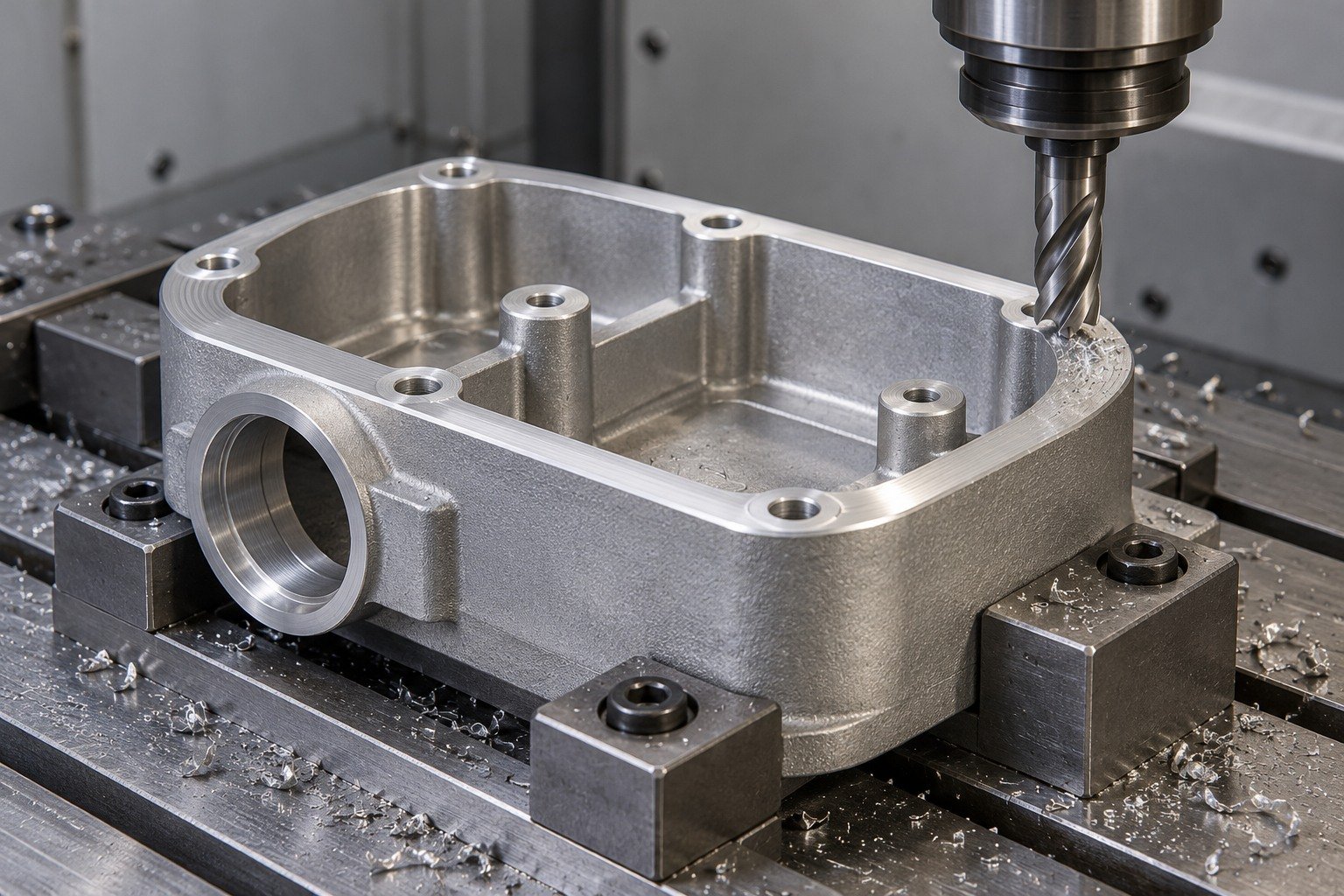
Specify the casting route, supplied state, usable allowance and secondary assembly operations and final-fit requirements. Inspect after the agreed complete route and final finish.
| Your fit | What to define |
|---|---|
| Working interface | Open cavity, side circular port, bridge bosses and six perimeter positions. |
| Your route | Casting product, usable stock and supported machining. |
| Your approval | Free or installed measurement state, finish and receiving records. |
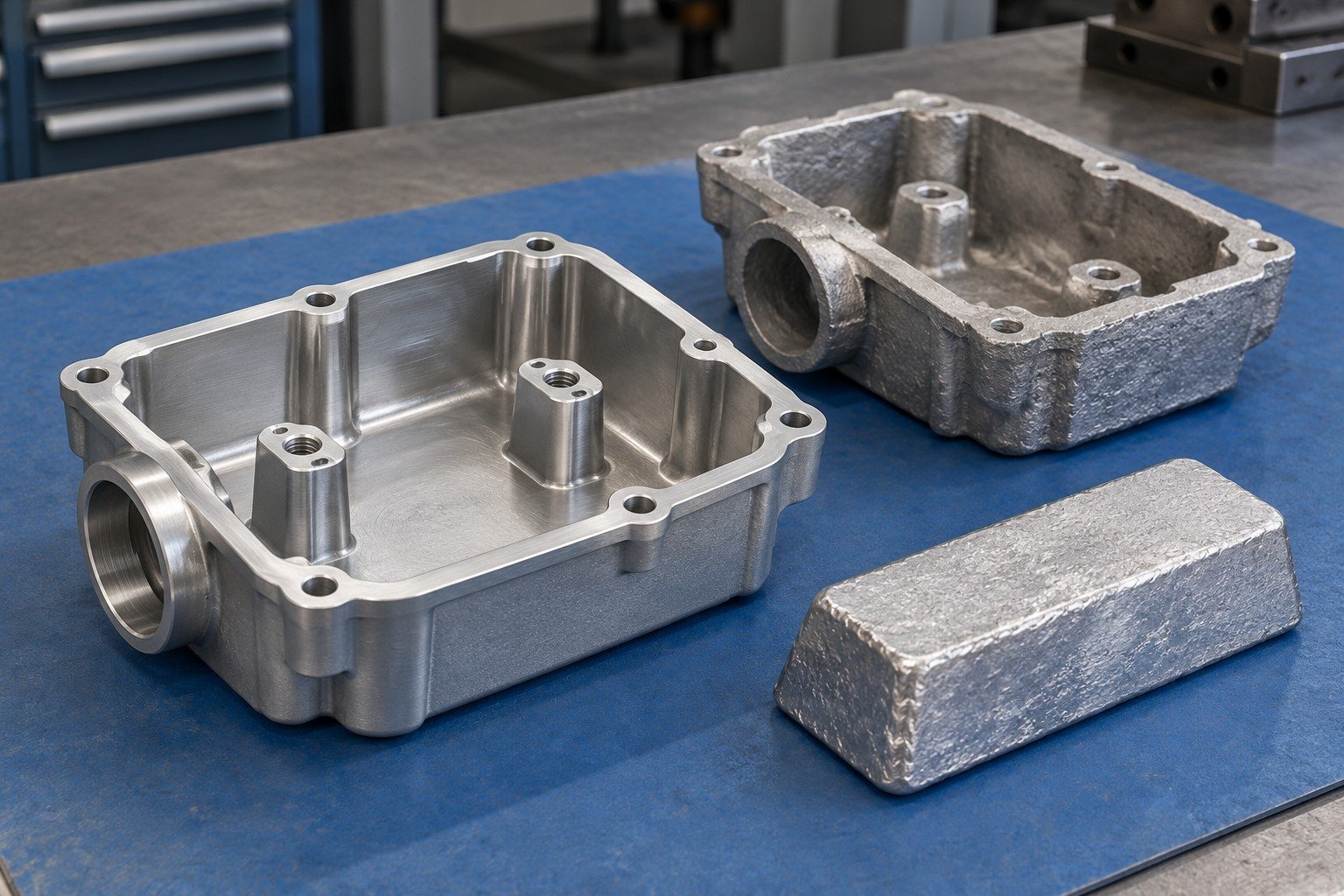
For your Zamak 5 machined parts, identify the material records, final dimensions, accepted edges, cleanliness and individual protection.
| Your fit | What to define |
|---|---|
| Working interface | Open cavity, side circular port, bridge bosses and six perimeter positions. |
| Your route | Casting product, usable stock and supported machining. |
| Your approval | Free or installed measurement state, finish and receiving records. |
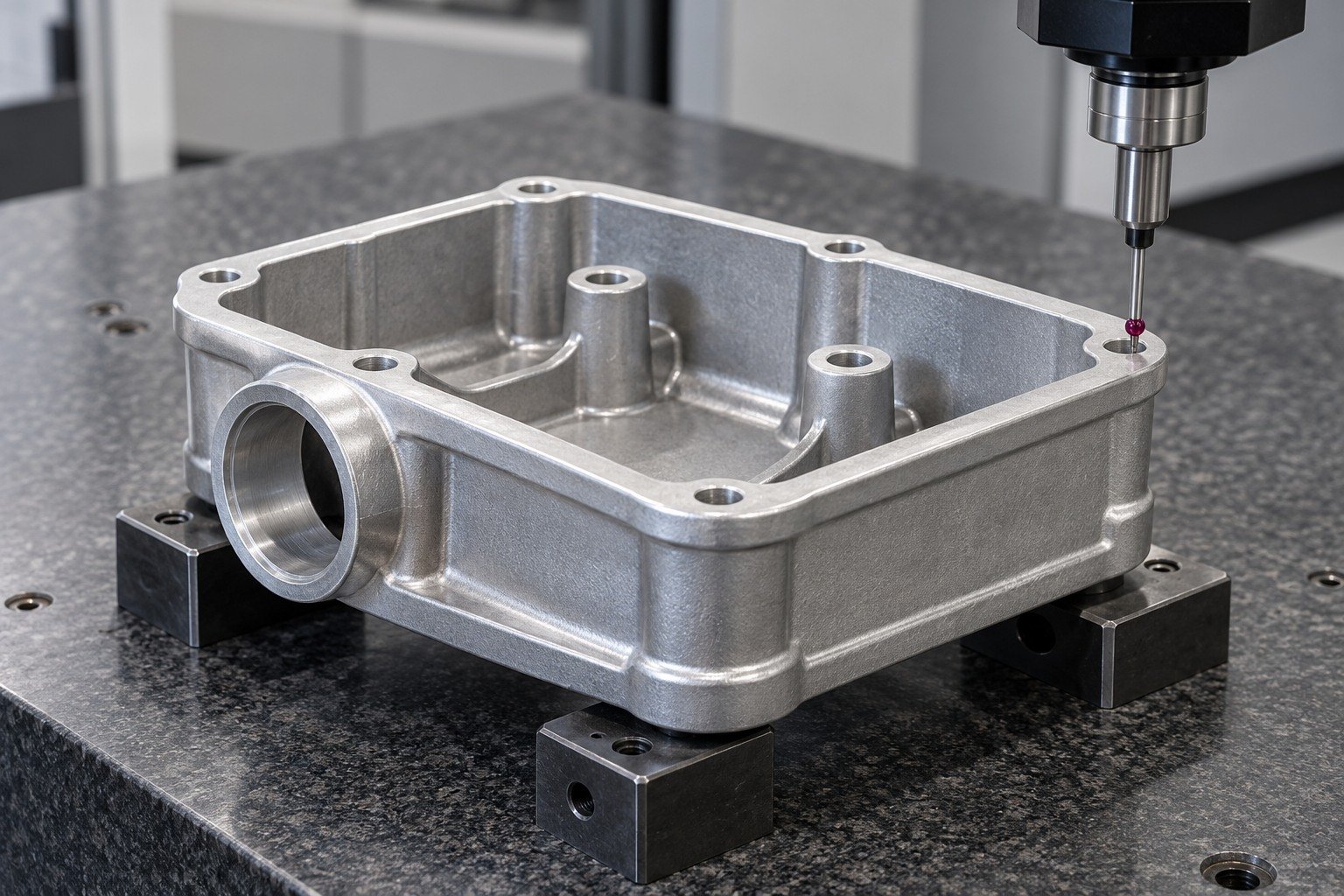
For your four-lug sleeve, identify the bore, outside locating steps, radial ports and mounting-lug faces. Agree free or installed inspection for the mating shaft. Review custom Zamak 5 bearing sleeves against the controlled assembly.
| Your fit | What to define |
|---|---|
| Working interface | Deep bore, four mounting lugs, stepped lands and two radial ports. |
| Your route | Casting product, usable stock and supported machining. |
| Your approval | Free or installed measurement state, finish and receiving records. |

For your Zamak 5 machining review, connect usable stock and rigid support to the bore, flange or foot that sets assembly fit. Review any bending, riveting or crimping before final sizing and coating.
| Your fit | What to define |
|---|---|
| Working interface | Deep bore, four mounting lugs, stepped lands and two radial ports. |
| Your route | Casting product, usable stock and supported machining. |
| Your approval | Free or installed measurement state, finish and receiving records. |

Specify the casting route, supplied state, usable allowance and secondary assembly operations and final-fit requirements. Inspect after the agreed complete route and final finish.
| Your fit | What to define |
|---|---|
| Working interface | Deep bore, four mounting lugs, stepped lands and two radial ports. |
| Your route | Casting product, usable stock and supported machining. |
| Your approval | Free or installed measurement state, finish and receiving records. |
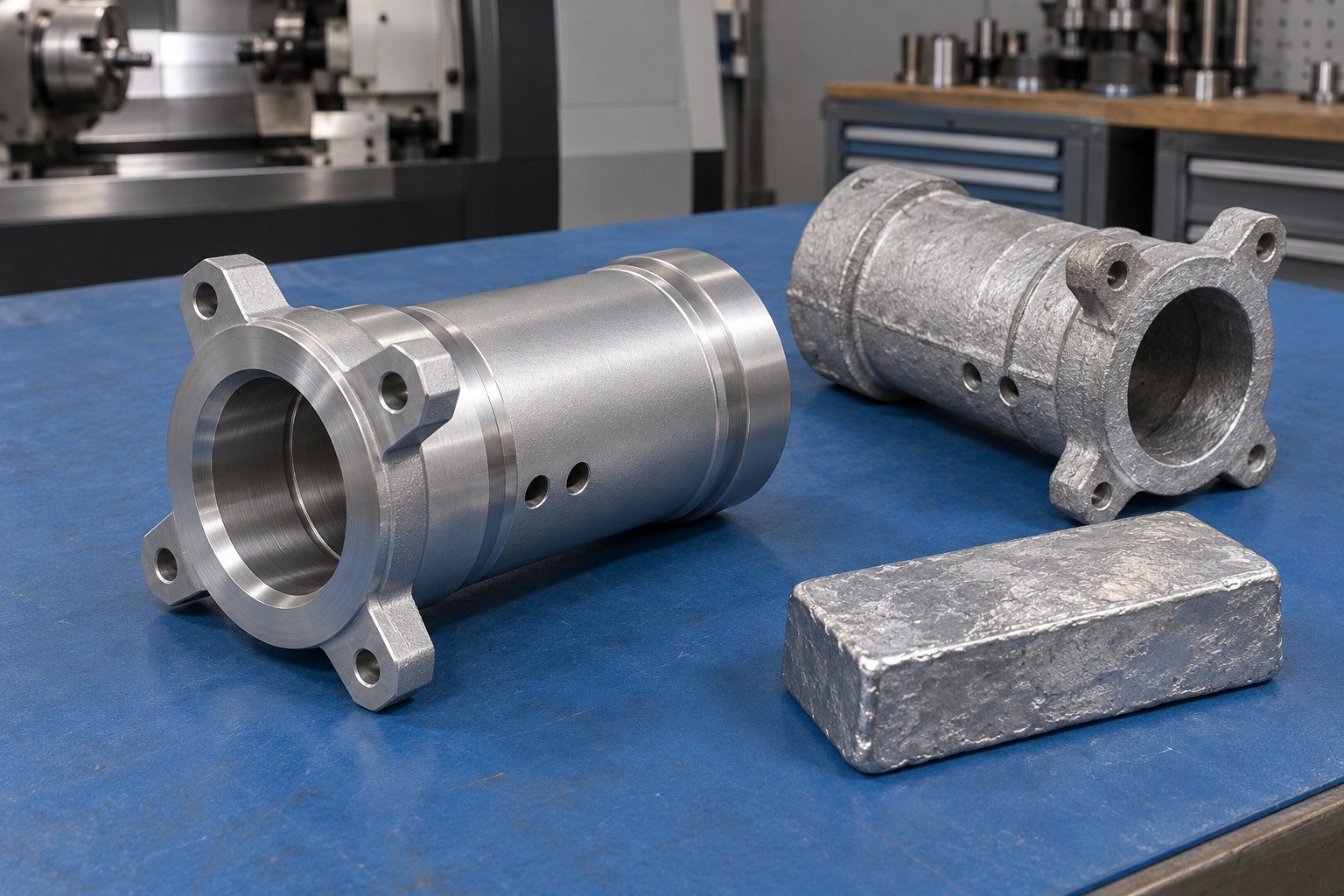
For your Zamak 5 machined parts, identify the material records, final dimensions, accepted edges, cleanliness and individual protection.
| Your fit | What to define |
|---|---|
| Working interface | Deep bore, four mounting lugs, stepped lands and two radial ports. |
| Your route | Casting product, usable stock and supported machining. |
| Your approval | Free or installed measurement state, finish and receiving records. |

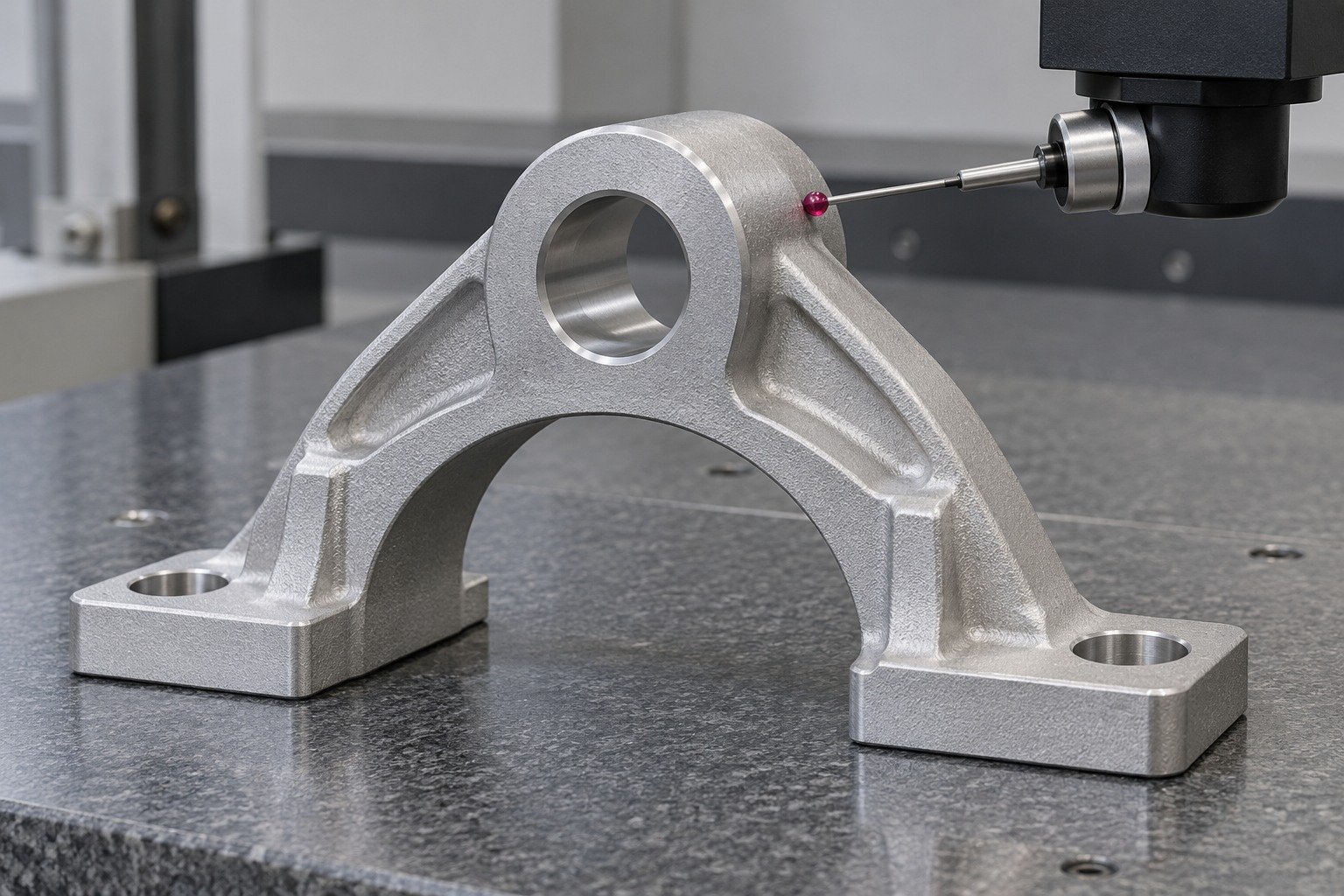
For your arched link support, connect the crossmember bore to both mounting feet and the actual service load. Application naming does not replace an agreed automotive acceptance plan. Review Zamak 5 automotive components against the controlled assembly.
| Your fit | What to define |
|---|---|
| Working interface | Upper crossmember bore, arched window, feet and mating pin. |
| Your route | Casting product, usable stock and supported machining. |
| Your approval | Free or installed measurement state, finish and receiving records. |

For your Zamak 5 machining review, connect usable stock and rigid support to the bore, flange or foot that sets assembly fit. Review any bending, riveting or crimping before final sizing and coating.
| Your fit | What to define |
|---|---|
| Working interface | Upper crossmember bore, arched window, feet and mating pin. |
| Your route | Casting product, usable stock and supported machining. |
| Your approval | Free or installed measurement state, finish and receiving records. |
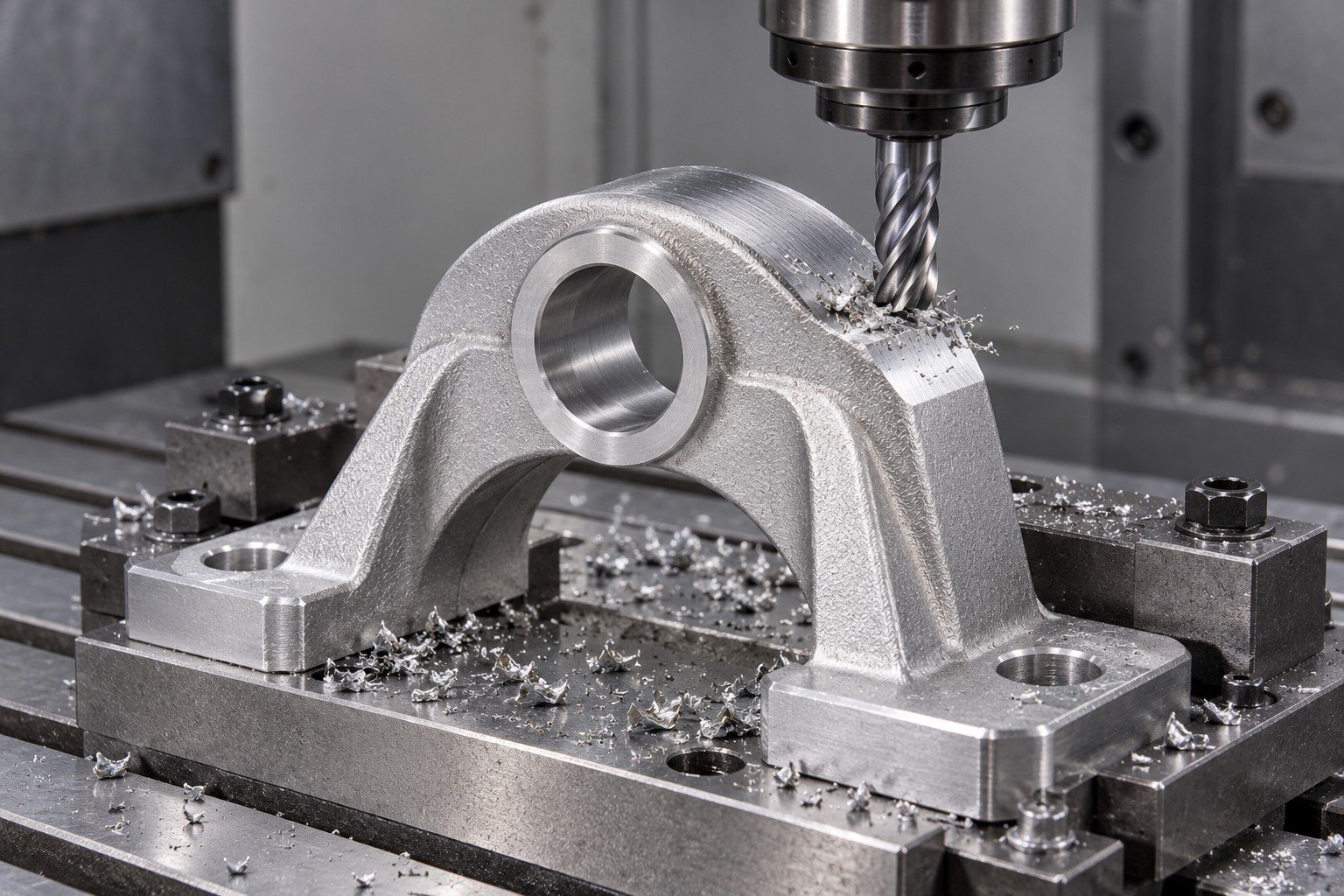
Specify the casting route, supplied state, usable allowance and secondary assembly operations and final-fit requirements. Inspect after the agreed complete route and final finish.
| Your fit | What to define |
|---|---|
| Working interface | Upper crossmember bore, arched window, feet and mating pin. |
| Your route | Casting product, usable stock and supported machining. |
| Your approval | Free or installed measurement state, finish and receiving records. |
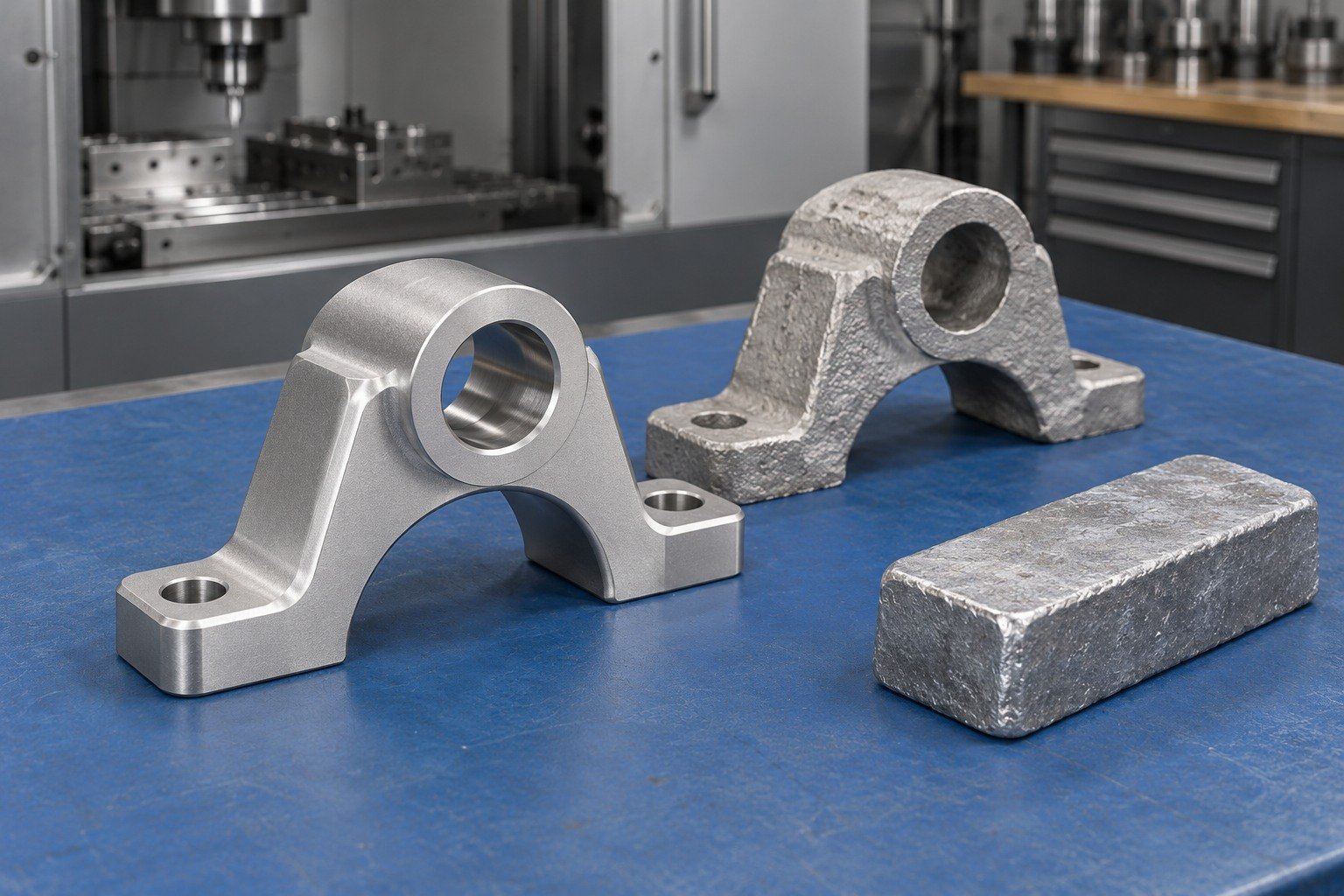
For your Zamak 5 machined parts, identify the material records, final dimensions, accepted edges, cleanliness and individual protection.
| Your fit | What to define |
|---|---|
| Working interface | Upper crossmember bore, arched window, feet and mating pin. |
| Your route | Casting product, usable stock and supported machining. |
| Your approval | Free or installed measurement state, finish and receiving records. |
For your round three-boss cover, identify drilling access, boss entrances, flange relationship and any sealing requirements. Agree a separate integrity test when needed. Review custom Zamak 5 service covers against the controlled assembly.
| Your fit | What to define |
|---|---|
| Working interface | Three service bosses, circular flange and eight-hole pattern. |
| Your route | Casting product, usable stock and supported machining. |
| Your approval | Free or installed measurement state, finish and receiving records. |

For your Zamak 5 machining review, connect usable stock and rigid support to the bore, flange or foot that sets assembly fit. Review any bending, riveting or crimping before final sizing and coating.
| Your fit | What to define |
|---|---|
| Working interface | Three service bosses, circular flange and eight-hole pattern. |
| Your route | Casting product, usable stock and supported machining. |
| Your approval | Free or installed measurement state, finish and receiving records. |
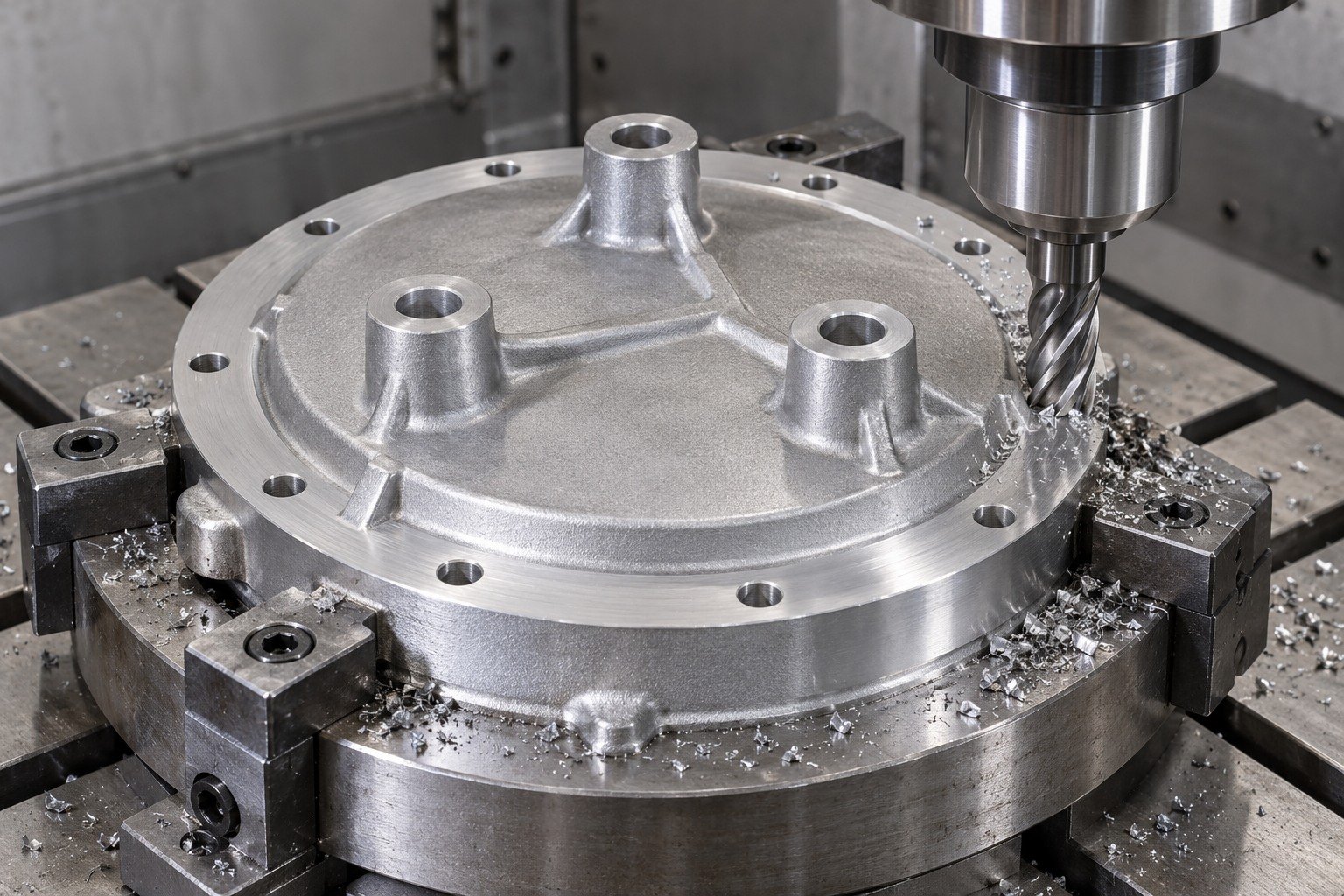
Specify the casting route, supplied state, usable allowance and secondary assembly operations and final-fit requirements. Inspect after the agreed complete route and final finish.
| Your fit | What to define |
|---|---|
| Working interface | Three service bosses, circular flange and eight-hole pattern. |
| Your route | Casting product, usable stock and supported machining. |
| Your approval | Free or installed measurement state, finish and receiving records. |

For your Zamak 5 machined parts, identify the material records, final dimensions, accepted edges, cleanliness and individual protection.
| Your fit | What to define |
|---|---|
| Working interface | Three service bosses, circular flange and eight-hole pattern. |
| Your route | Casting product, usable stock and supported machining. |
| Your approval | Free or installed measurement state, finish and receiving records. |
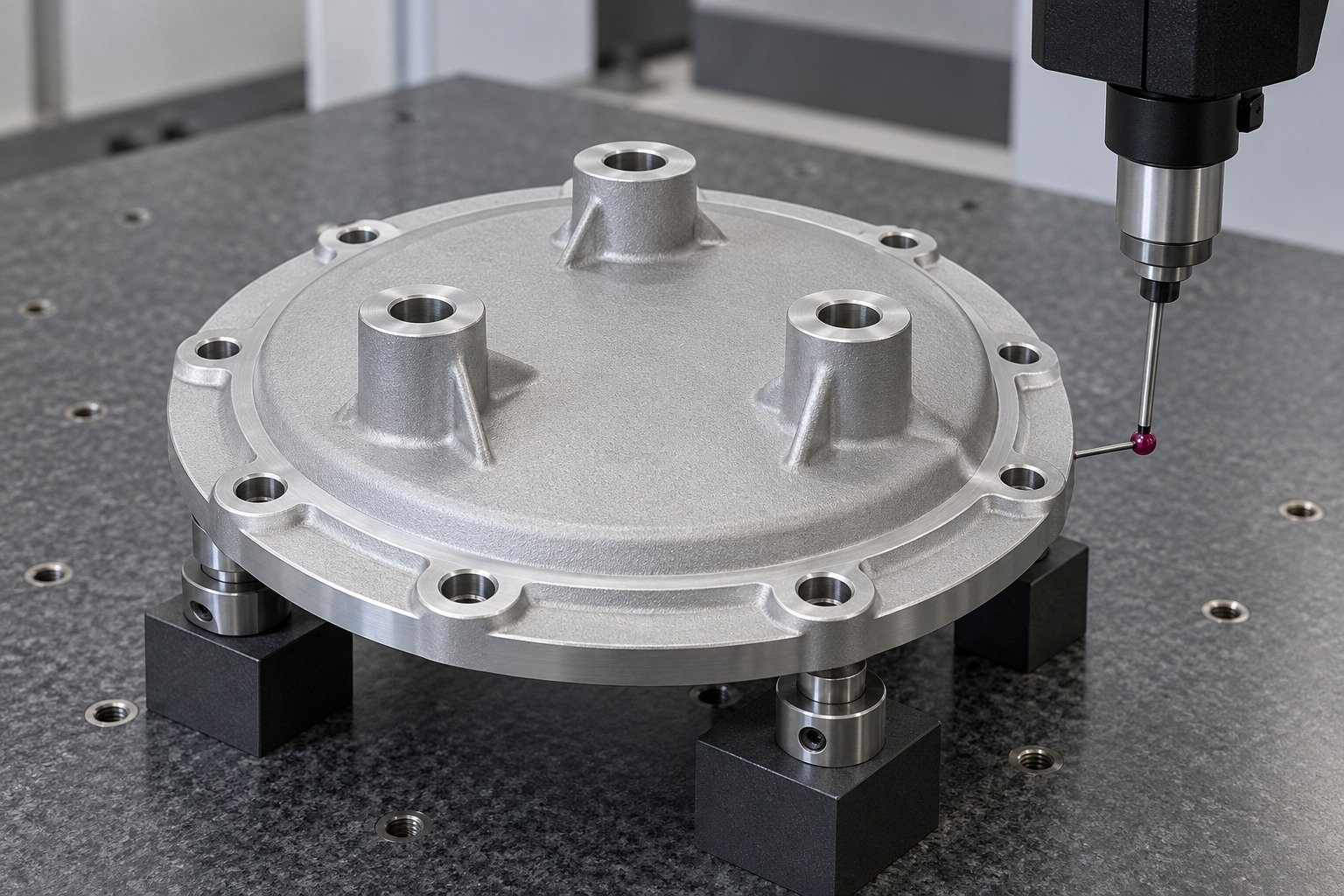
Define the assembly inputs before repeating quantities.
For your Zamac 5 die casting and Zamak 5 hot chamber die casting review, confirm the actual production route. Review Zamak 5 prototype casting separately: machined or differently cast samples do not automatically reproduce production properties.
Define shaft, housing and working surface.
Agree stock, support and lubrication access.
Inspect the defined final state.
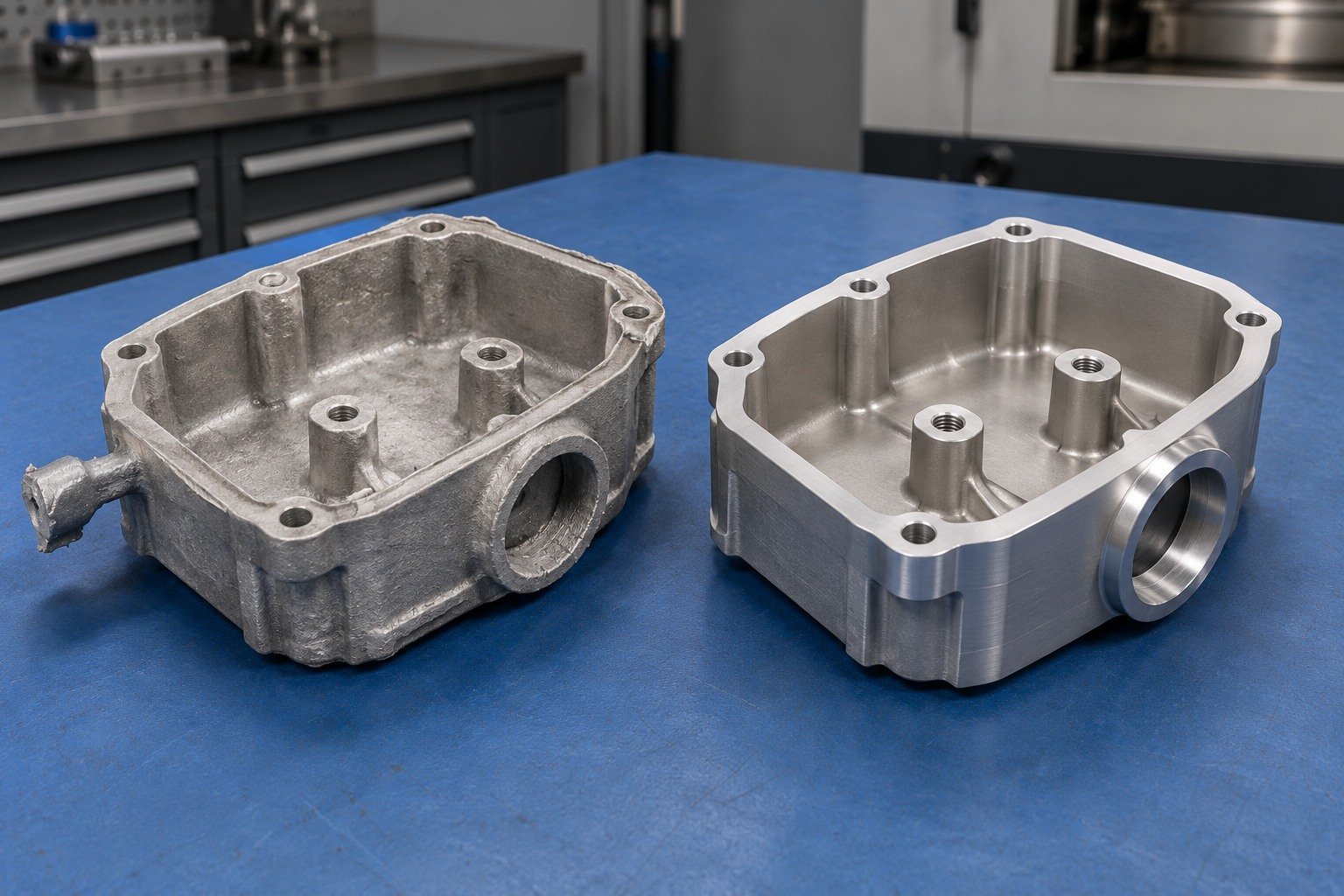
Define bore, locating diameter, mating material, lubrication and free or installed measurement. A material name alone does not approve bearing duty.
Define shaft, housing and working surface.
Agree stock, support and lubrication access.
Inspect the defined final state.

For your Zamak 5 properties review, connect load, temperature and duration to the actual geometry. Compared with Zamak 3, reduced ductility can affect secondary bending, riveting, swaging or crimping. Agree these operations before approving the finished assembly.
Define shaft, housing and working surface.
Agree stock, support and lubrication access.
Inspect the defined final state.
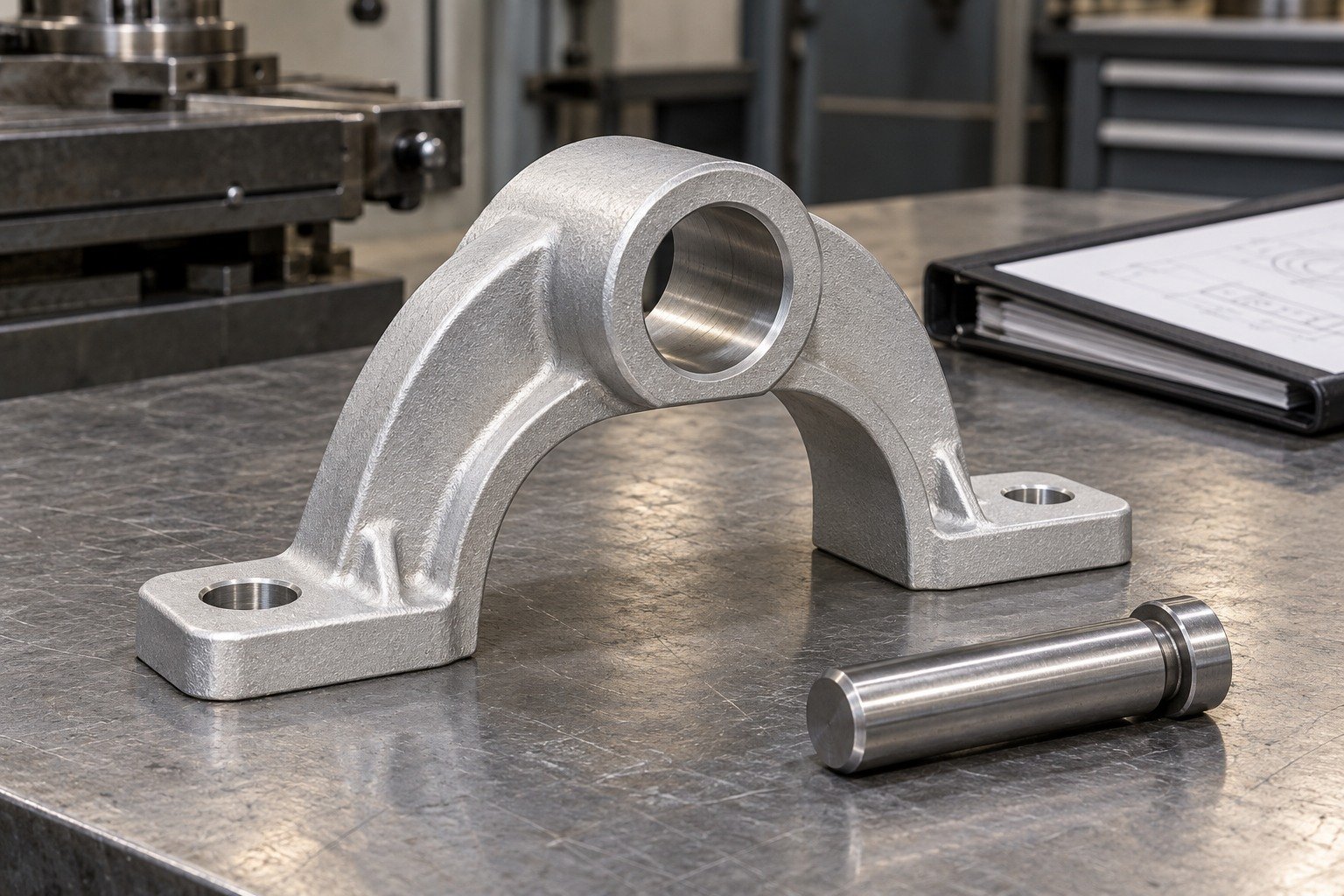
Specify thread engagement, blind-hole depth, port entrances and burr acceptance. Show the sealing and bearing lands that must remain intact.
Define shaft, housing and working surface.
Agree stock, support and lubrication access.
Inspect the defined final state.
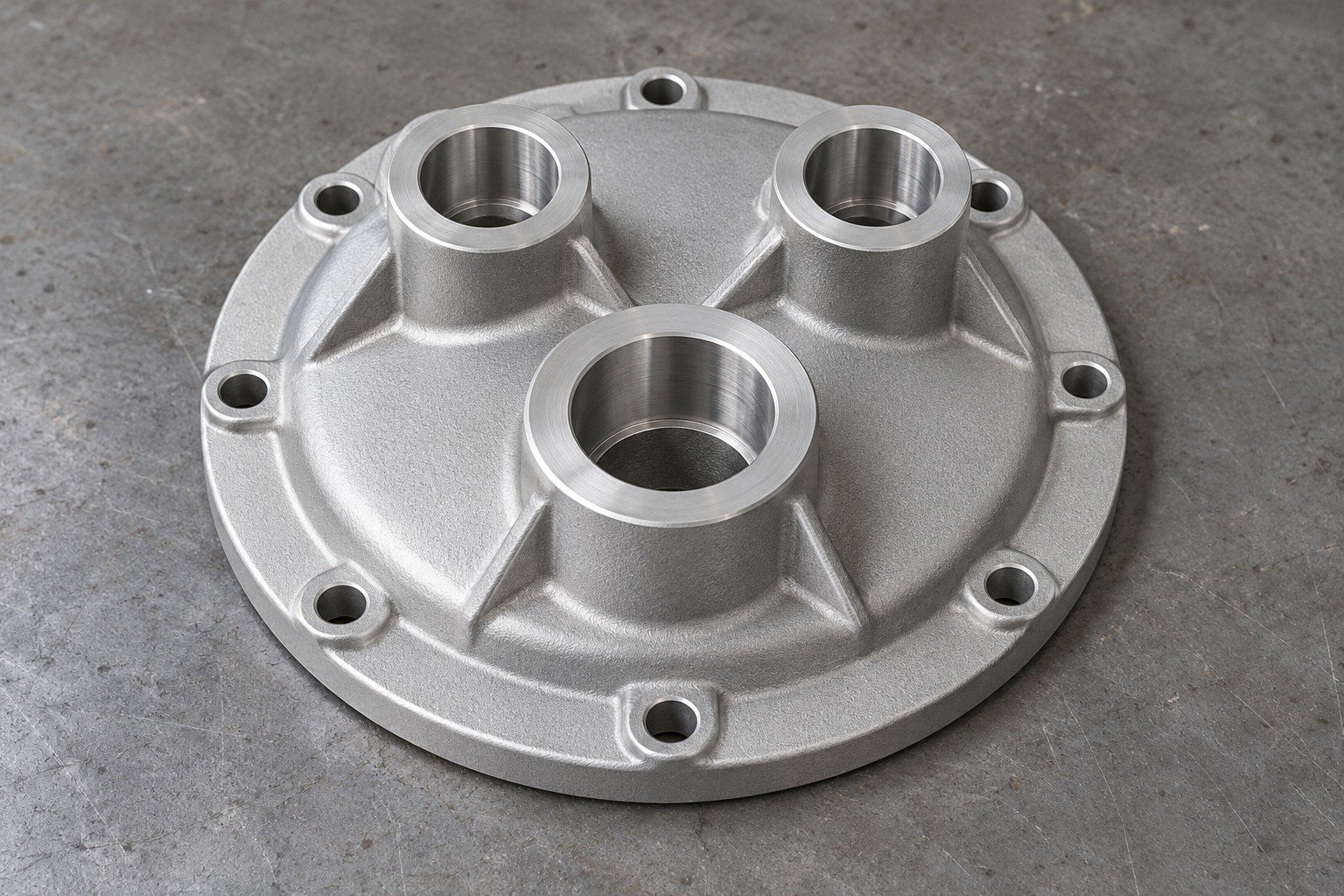
For your Zamak 5 plating or Zamak 5 powder coating, define preparation, coating system, adhesion and appearance acceptance, masks and final dimensions. Review Zamak 5 corrosion resistance against the actual exposure and finish system.
Define shaft, housing and working surface.
Agree stock, support and lubrication access.
Inspect the defined final state.

Your Zamak 5 die casting services review should agree lot identity, casting route, finish sample, inspection state and the separately required functional evidence.
Define shaft, housing and working surface.
Agree stock, support and lubrication access.
Inspect the defined final state.

Zamak 5 alloy and zinc alloy 5 appear in purchasing. Retain the complete ordered product requirements, casting route and final finish. Your Zamak 5 properties and Zamak 5 composition review still needs a product standard, casting route and agreed final state.
| Element | Casting reference | Ingot reference |
|---|---|---|
| Al | 3.7–4.3 | 3.9–4.3 |
| Cu | 0.7–1.2 | 0.7–1.1 |
| Mg | 0.02–0.06 | 0.03–0.06 |
| Fe | ≤0.05 | ≤0.035 |
| Pb | ≤0.005 | ≤0.004 |
| Cd | ≤0.004 | ≤0.003 |
| Sn | ≤0.002 | ≤0.0015 |
| Zn | Balance | Balance |
Selected Eastern Alloys ASTM B86 casting and ASTM B240 ingot references. Verify ordered standard and revision; do not use an ingot range as a finished-casting acceptance range. This is not your material-lot report.
| Callout | Your product review |
|---|---|
| ZP5 / ZP0410 | Casting reference associated with Zamak 5. |
| ZnAl4Cu1 | Alloy symbol; approve the complete ordered requirements. |
| ZL5 / ZL0410 | Ingot/liquid naming reference; distinguish from the finished casting product. |
| Zamak 5 hot chamber die casting | Hot-chamber die-casting review, with actual stock and geometry. |
| Zamak 5 gravity casting | Review sand or permanent-mold routes separately. |
Zamak 5 density is typically 6.6 g/cm³ in the selected Eastern Alloys die-cast data. A prototype from a different casting route does not automatically reproduce production properties.
Common scale 0–5
Common scale 0–4
Selected product references. Composition ranges do not establish your machining time, final price or load rating. Zamak 5 tensile strength and long-term dimensional changes require the actual product, age and test basis; typical values are not finished-part guarantees. Agree the same product route and acceptance when comparing materials.
NADCA casting data ↗ Eastern Alloys Zamak 5 ↗ Casting-route comparison ↗ IZA prototype product names ↗
For your Zamak 5 machining allowance review, identify where cast stock must clean up and how each critical feature is supported.

Define the sleeve bore, locating steps and mounting-lug faces in the supported route.
Review the Process →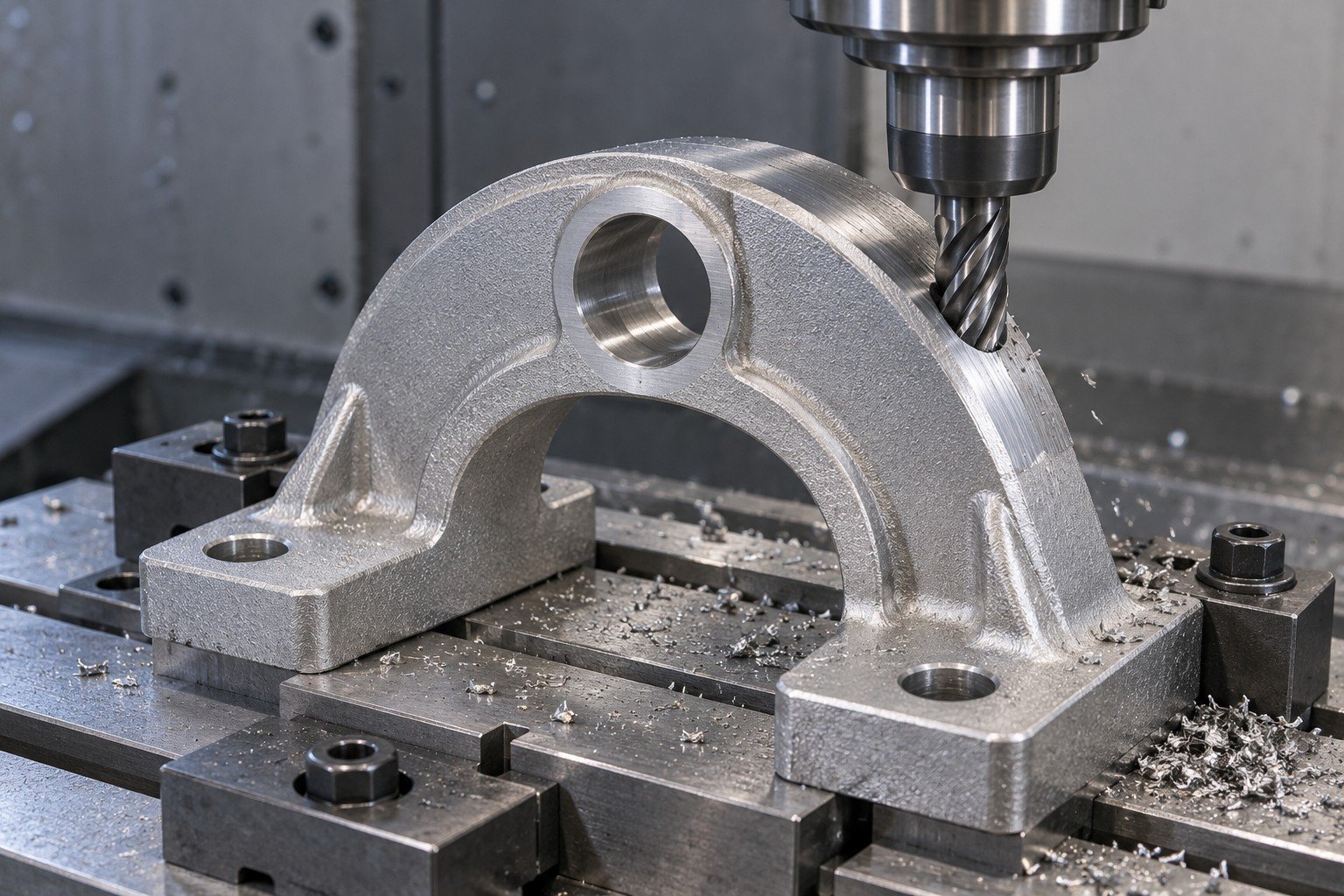
Support the arched crossmember and mounting feet while machining their datum faces.
Review the Process →
Define backed perimeter drilling and access around the three service bosses.
Review the Process →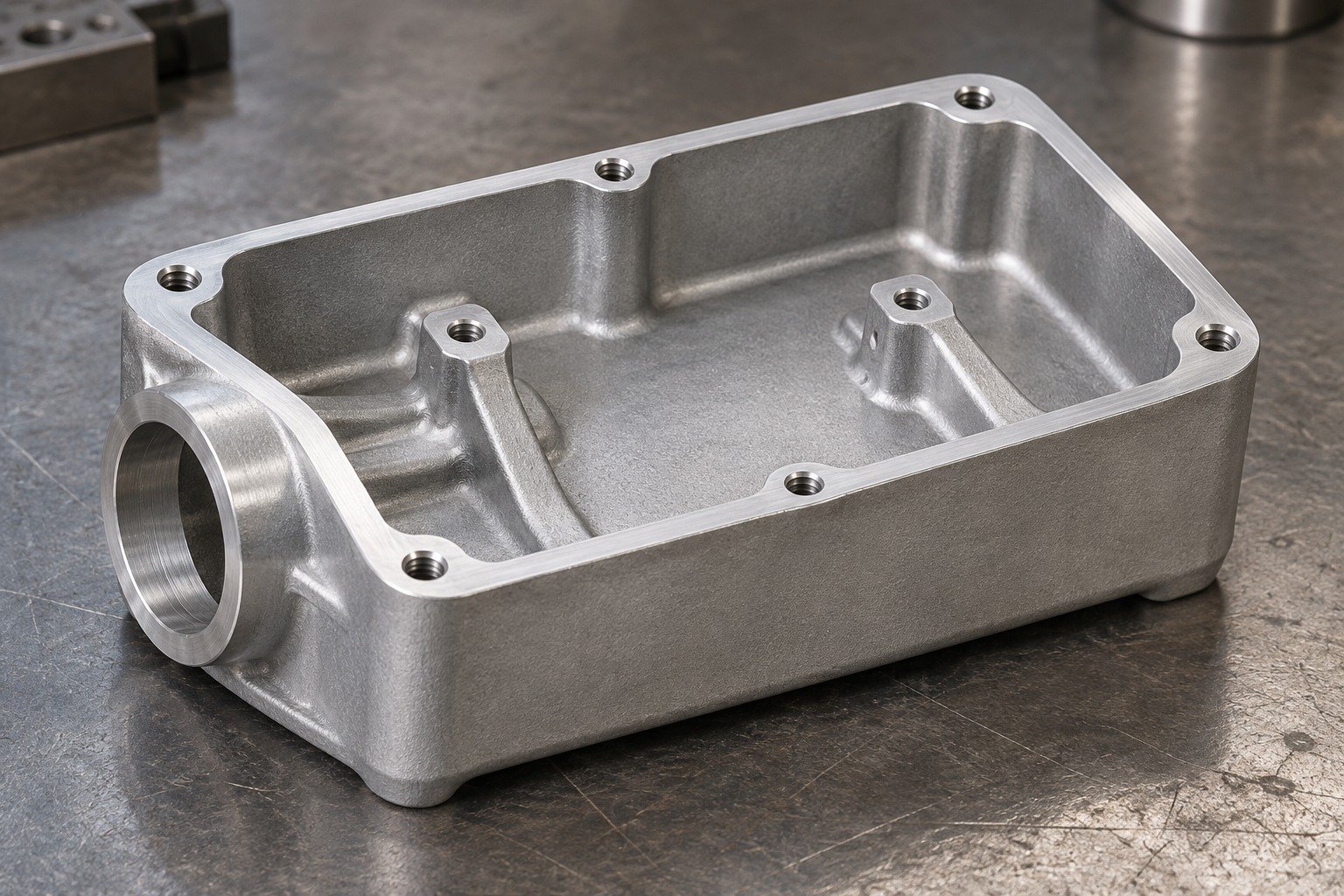
Review the drive-case side port and mating flange after casting.
Review the Process →Product identity and ordered requirements.
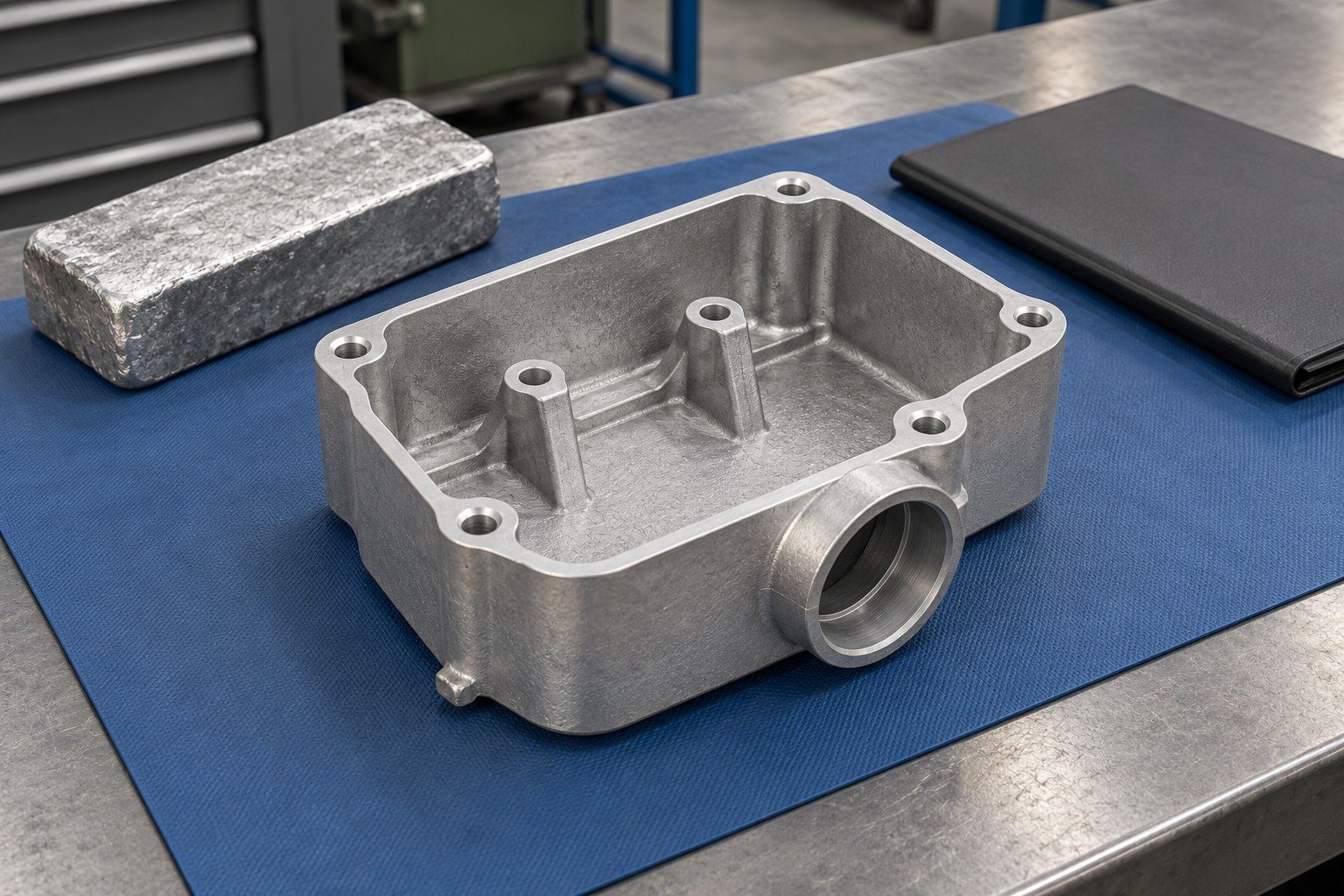
Complete route and locating relationship.
Final working surfaces and evidence.
Identify the Zamak 5 grade, ordered standard, revision, casting route, stock, lot identity and required records.
Approve flange, bore, foot and port relationships after the complete route. A first casting sample and a first finished-route sample answer different questions.

Verify the final sleeve bore, mounting-lug faces, service bosses or support-foot datums in the measurement state specified on your drawing.
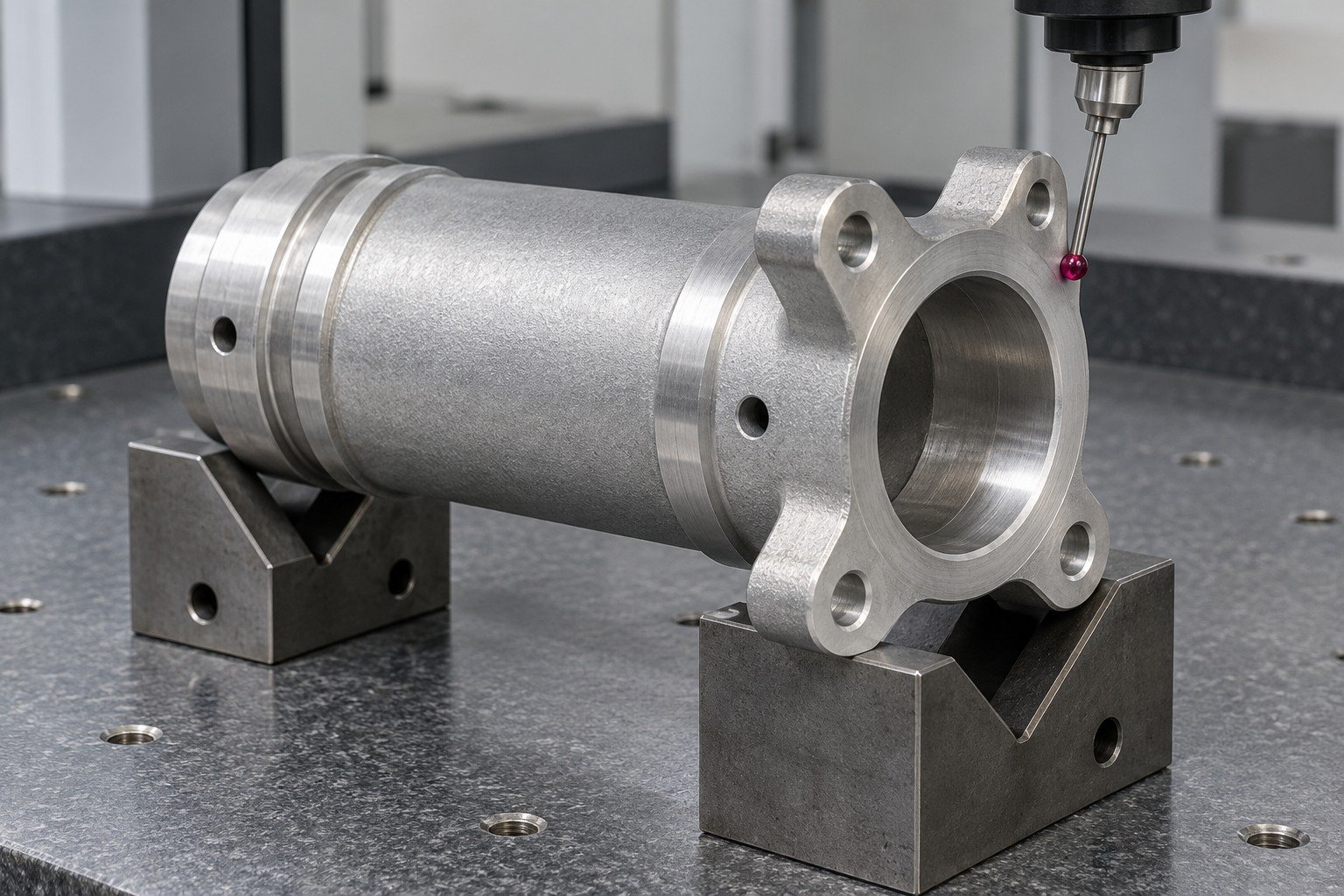
Agree protection, cleanliness, lot identity and receiving documents for the actual mating surfaces.


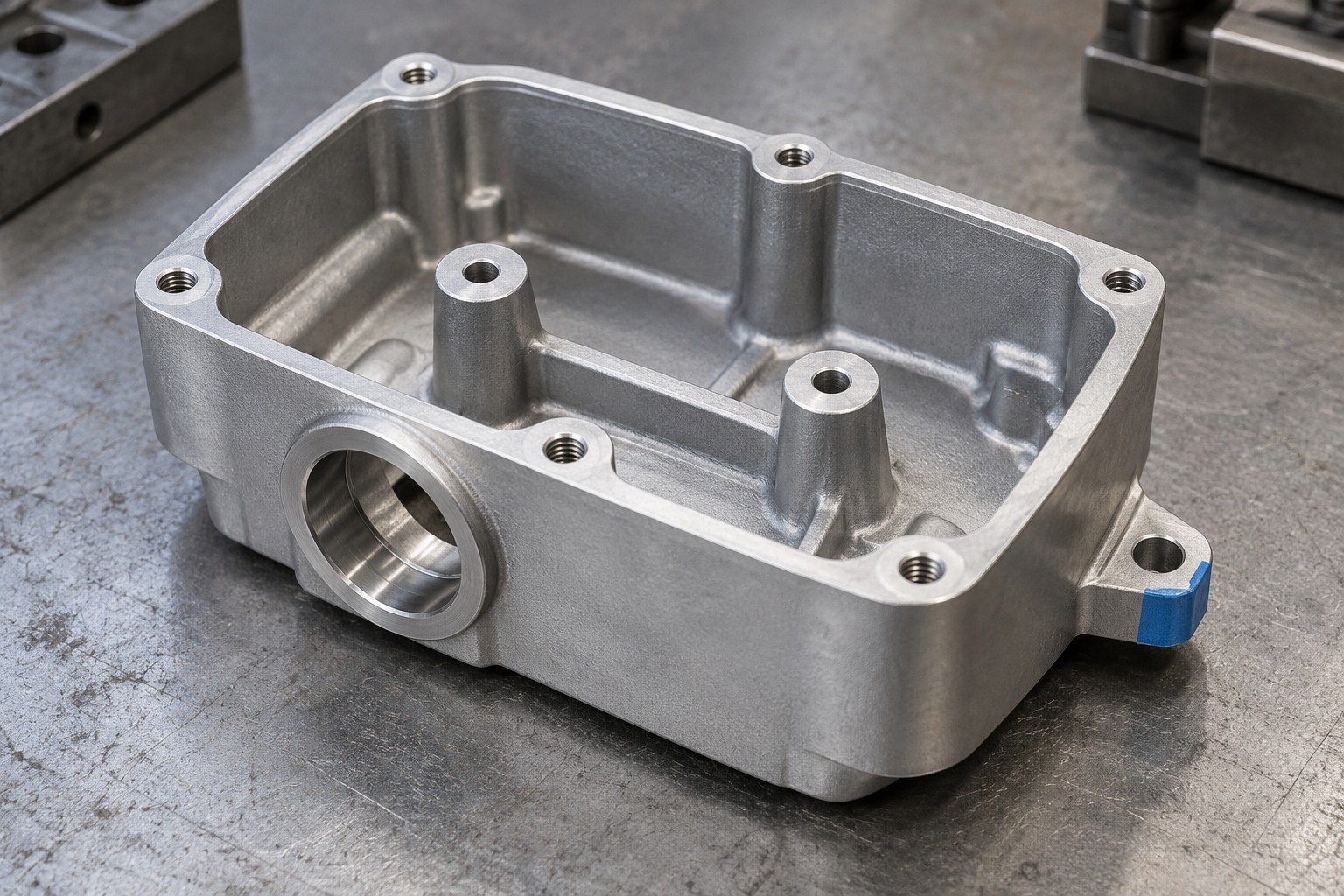

Agree visible marks, finish preparation, coating acceptance and protected delivery. Check dimensions in the final surface state.
Surface Finishing →| Your decision | What to confirm |
|---|---|
| Die casting or gravity route | Agree stock, geometry, tooling and inspection separately. |
| Prototype and production | Do not carry one route’s properties into another without review. |
| Bearing interface | Define load, speed, lubrication, mating material and final clearance. |
| Material change | Obtain drawing-authority approval and receiving criteria. |
Zamak 5 material identity does not establish bearing life or finished-part load capacity. Review Zamak 5 minimum wall thickness and Zamak 5 die casting tolerances against filling, support, geometry and the actual final finish. Your quote confirms the reviewed drawing; no universal wall or tolerance promise applies.
Compare Zinc Alloys →
Connect China manufacturing with Dallas-area coordination for drawing review, sample decisions and delivery requirements.
Your Zamak 5 casting quote should identify the same route, drawing revision, usable stock and final acceptance. Compare tooling and repeat demand on that basis.
Zamak 5 and zinc alloy 5 are associated naming references. ZP5 / ZP0410 and ZnAl4Cu1 describe casting references; ZL5 / ZL0410 is a separate ingot/liquid naming context. Confirm the product standard, revision and material records.
Yes. Define rigid support, usable allowance, cutter access, accepted burrs, final coating and the required age or conditioning state. Tie the working bore and mounting faces to your actual drawing.
Review the plating system, substrate preparation, adhesion, appearance sample, masks and final dimensions with the finisher. A material name alone does not establish the complete coating process or corrosion life.
Provide CAD, controlled drawing, grade and product standard, route, first and repeat quantities, loads, temperature, final finish, critical fits and receiving records.
Your reviewed geometry, cavity strategy, casting route, tool ownership, expected demand and change scope determine the quote. Compare tooling and repeat-piece cost on the same drawing and final acceptance basis.
Review local section changes, filling and solidification approach, venting and agreed defect limits with the caster. Identify critical machined bores or sealing faces and specify any separate integrity test.
Review actual load path, sustained load, time, temperature, impact duty and dimensional stability. Approve the finished geometry and appropriate test evidence; nominal alloy strength is not an assembly load rating.
Review the local geometry and deformation needed for the assembly operation. Zamak 5 has lower ductility than Zamak 3 in the cited supplier comparison, so do not assume a Zamak 3 riveting, bending or crimping operation transfers unchanged.