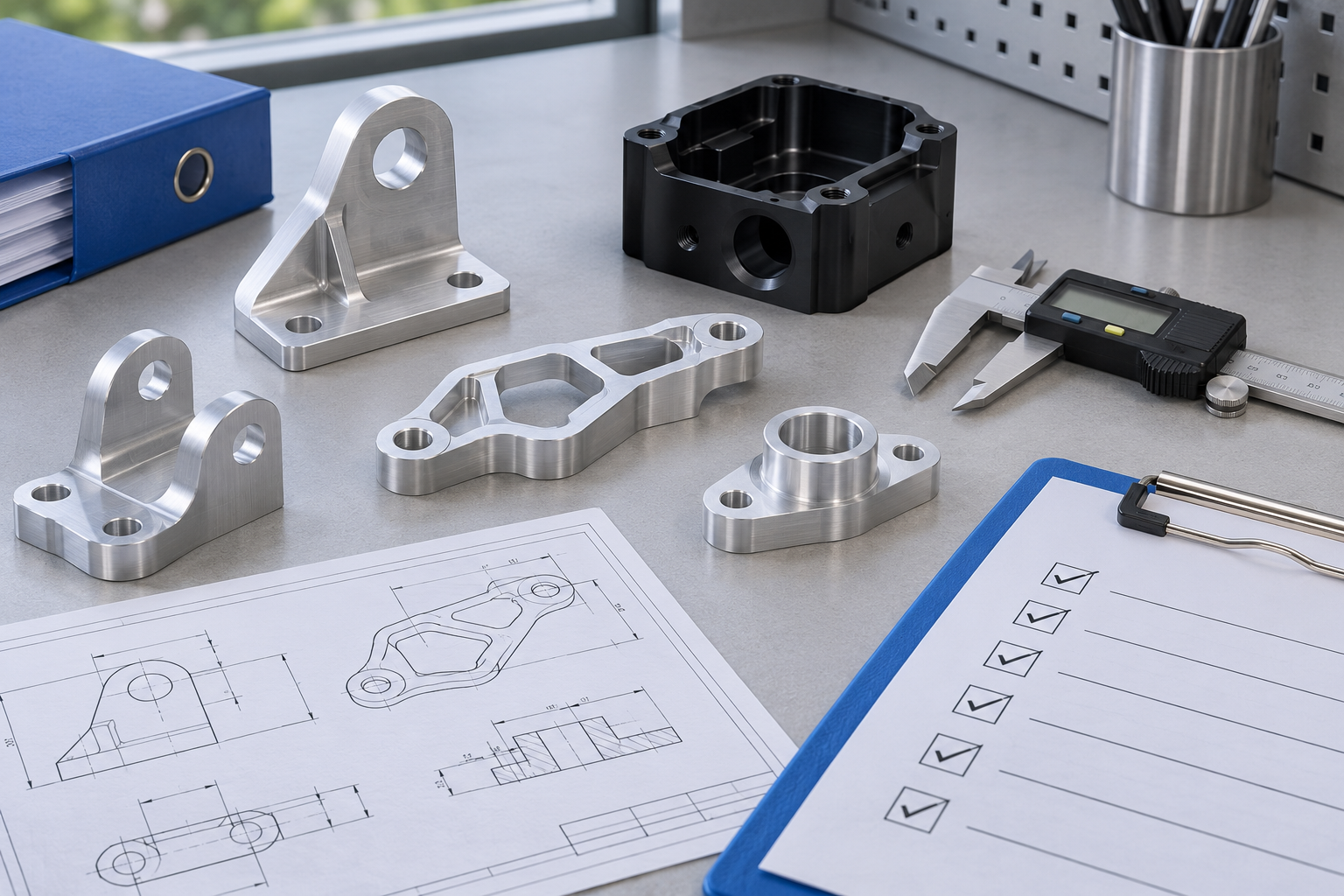
A productive SEMA conversation should end with evidence to review and a defined qualification step. A booth, polished sample, or low price alone cannot establish production readiness.
Start with the part, not the supplier presentation
SEMA week brings automotive businesses into the same conversation. For a buyer, the useful outcome is a shortlist that can be tested against an actual part requirement. Before discussing price, prepare a sourcing brief: drawing revision, material grade, finish, annual forecast, first-order quantity, delivery location, and features that determine fit or function.
Separate requirements from preferences. A mounting interface may require a defined tolerance, while a hidden cosmetic surface may allow alternatives. If engineering has not approved an alternative, ask the supplier to quote it separately. This prevents a cheaper proposal from quietly changing the product.
Ask who controls each manufacturing step
Ask the prospective supplier to map the route from raw material to packaged part. Which company performs machining, forming, molding, heat treatment, finishing, inspection, and assembly? Which operations are subcontracted? Who owns corrective actions when a subcontracted operation causes a failure?
A coordinated supply chain can be appropriate. The decision depends on visibility and responsibility. Request the manufacturing location and quality contact for the proposed route. Assess both factory and trading relationships against the same evidence requirements.
Request evidence tied to your application
A showroom sample demonstrates appearance. It does not demonstrate that your dimensions, material, or production quantity can be delivered consistently. Ask for a redacted inspection report, an example of material traceability, and an explanation of revision control. Accept redaction of confidential customer information.
If a certificate is relevant, check its named entity, site, scope, validity, and verification route. A certificate does not replace part-specific approval. For safety-related or regulated applications, have the responsible technical team define validation and documentation before selection.
| Check | Evidence to request | Next decision |
|---|---|---|
| Process fit | Proposed route and drawing comments | Technical review |
| Quality control | Redacted report and traceability example | Agree sample inspection |
| Delivery readiness | Material, capacity and approval assumptions | Conditional schedule |
| Commercial fit | Itemized quote and exclusions | Compare equivalent scope |
Five questions for your next meeting
- Which drawing features are most difficult to manufacture or inspect, and why?
- What information is missing before a complete quotation can be issued?
- What will be made internally and what will be subcontracted?
- What sample evidence will be provided before production approval?
- What happens if a shipment fails an agreed acceptance requirement?
Listen for drawing-specific answers and explicit assumptions. A relevant clarification can be more useful than an unconditional promise.
Leave with a controlled next step
Record open questions, evidence owners, and due dates. Distinguish an interesting contact from a candidate ready for sample evaluation. Send the same RFQ package to shortlisted suppliers so responses can be compared.
Authorize a sample or pilot only after its scope, price, acceptance criteria, and documentation are agreed. A successful meeting is the start of qualification. Approval follows evidence from the intended manufacturing route.
Supplier qualification: a decision report template
Method, not market research: The weights below are an editorial starting framework. They are not an industry benchmark or measured supplier results. No real supplier has been scored.
Process fit
Quality evidence
Delivery plan
Total cost
Accountability
Suggested review weights
| Area | Weight | Evidence |
|---|---|---|
| Technical and process fit | 25% | Drawing review, proposed route, critical feature controls |
| Quality and traceability | 30% | Inspection method, material records, corrective-action process |
| Delivery and continuity | 20% | Material availability, capacity assumptions, contingency |
| Comparable total cost | 15% | Parts, tooling, logistics, inspection and exclusions |
| Communication and responsibility | 10% | Named owners, revision control, escalation |
Score each area from 0 to 5 against criteria agreed before comparison. Calculate weighted points as weight × score ÷ 5, then sum the points. Missing evidence must remain visible. A high total cannot override a mandatory quality or technical requirement.
Complete one report for each candidate
| Supplier and site | Record legal entity, manufacturing site and accountable contact. |
|---|---|
| Assessment scope | Record part number, drawing revision, quantity and approval stage. |
| Evidence register | Record document, source, date, reviewer and verified / supplier-stated / missing status. |
| Mandatory gates | List unresolved critical specifications, material identity or required validation. |
| Recommendation | RFQ review / sample order / pilot / production; specify approval limits. |
| Action register | Assign each open action an owner, due date and closure evidence. |
Buyer takeaway: A well-supported sample order may be the correct next step even when production approval is not justified. Management should see both the evidence and the financial exposure before advancing.
Frequently asked questions
Does meeting a supplier at SEMA qualify it?
No. Qualification requires documented technical, quality, delivery, and commercial review for the intended part.
Should I choose only a supplier with its own factory?
Evaluate the proposed manufacturing route, visibility, and accountable organization. Ownership alone does not establish suitability.
Define your next sourcing conversation
Share your drawing revision, material, quantities, critical requirements, and delivery target with LK MFG.
Discuss Your Part Requirements →
Event context: SEMA 2026 takes place November 3–6. LK MFG lists meetings by appointment with no exhibit booth. This guide does not imply exhibiting or SEMA endorsement.